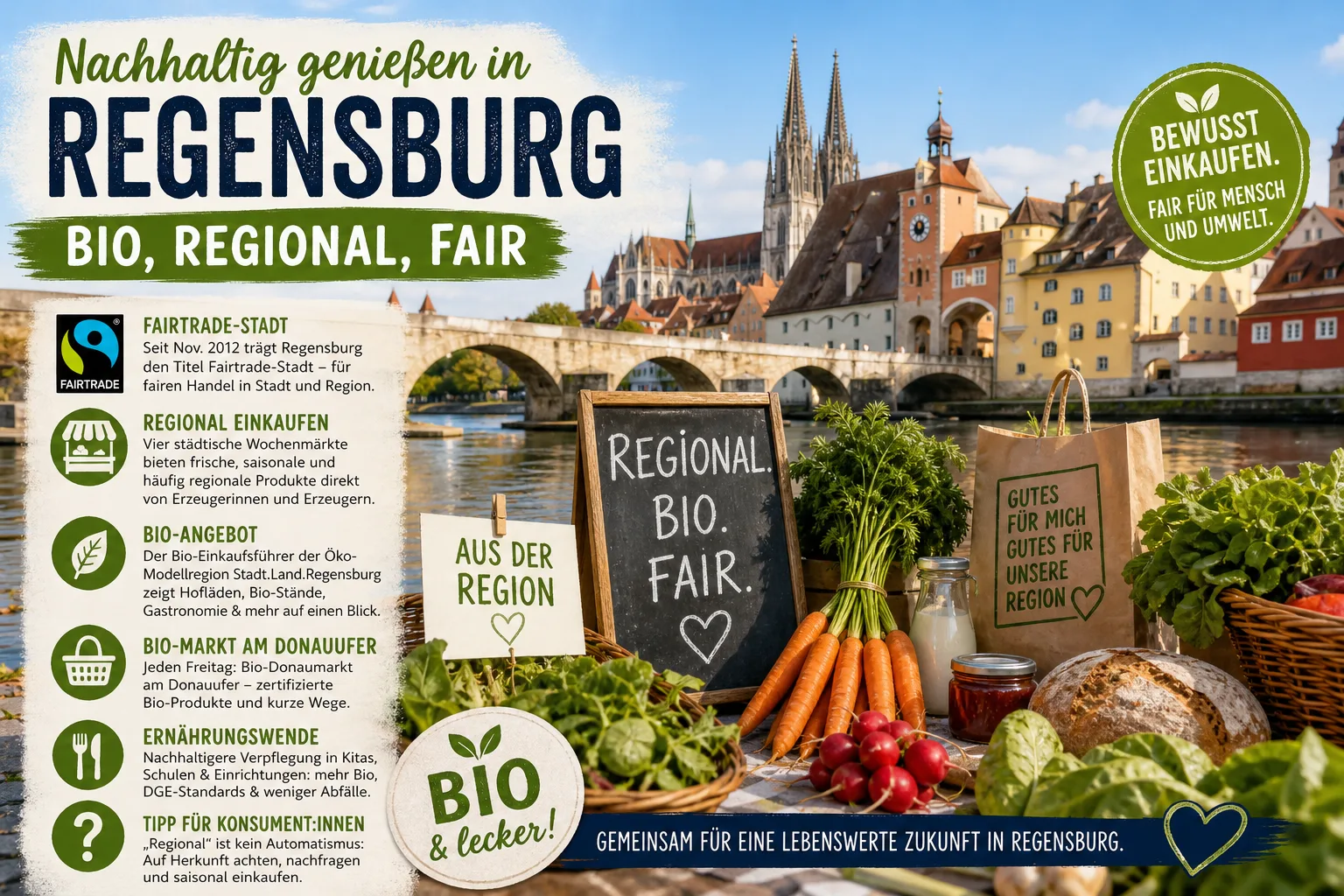
Sustainable Enjoyment in Regensburg: organic, regional, fair
Sustainable Enjoyment in Regensburg: What Awaits You in the Coming Months in Organic, Regional & Fair
If you plan to have a cappuccino by the Danube in Regensburg soon, plan a lunch snack in the old town, or want to reorganize your weekly shopping, you will have many opportunities in 2026/2027 to combine enjoyment with climate protection, regional agriculture, and fair trade. This guide compiles upcoming occasions and recurring formats that you can already prepare for.
Fairtrade: Actions & Moments of Enjoyment You Can Plan for in the Future
In the coming months, you will encounter Fairtrade action formats more frequently in many German cities (and presumably also in Regensburg): information stands, tastings, temporary offers in cafés, as well as themed weeks in retail and gastronomy. If you want to shop fair or enjoy eating out, these time windows will be especially practical, as Fairtrade products are often clearly labeled and easy to find then.
How to Recognize Fairtrade Offers When the Next Actions Start
- Ask specifically: When you are in cafés or hotels in 2026/2027, a quick question (“Do you have fair-trade coffee/cocoa/tea?”) will be particularly effective, as demand influences assortment decisions.
- Look for seals: When buying chocolate, coffee, tea, sugar, or bananas, you will find products certified according to Fairtrade standards more quickly with the Fairtrade seal.
- Plan ahead for the household: If you know you will have visitors in the coming weeks, you can plan fair-certified basics (coffee, cocoa, sugar) early instead of buying spontaneously.
Important for 2026/2027: Fairtrade is a global topic, organic and regionality are often local topics. In your everyday life, both will complement each other best if you shop regionally and seasonally where possible, and choose fair where products inevitably have to be imported (e.g., coffee, cocoa, tea).
Weekly Markets: How to Use the Next Market Season Strategically
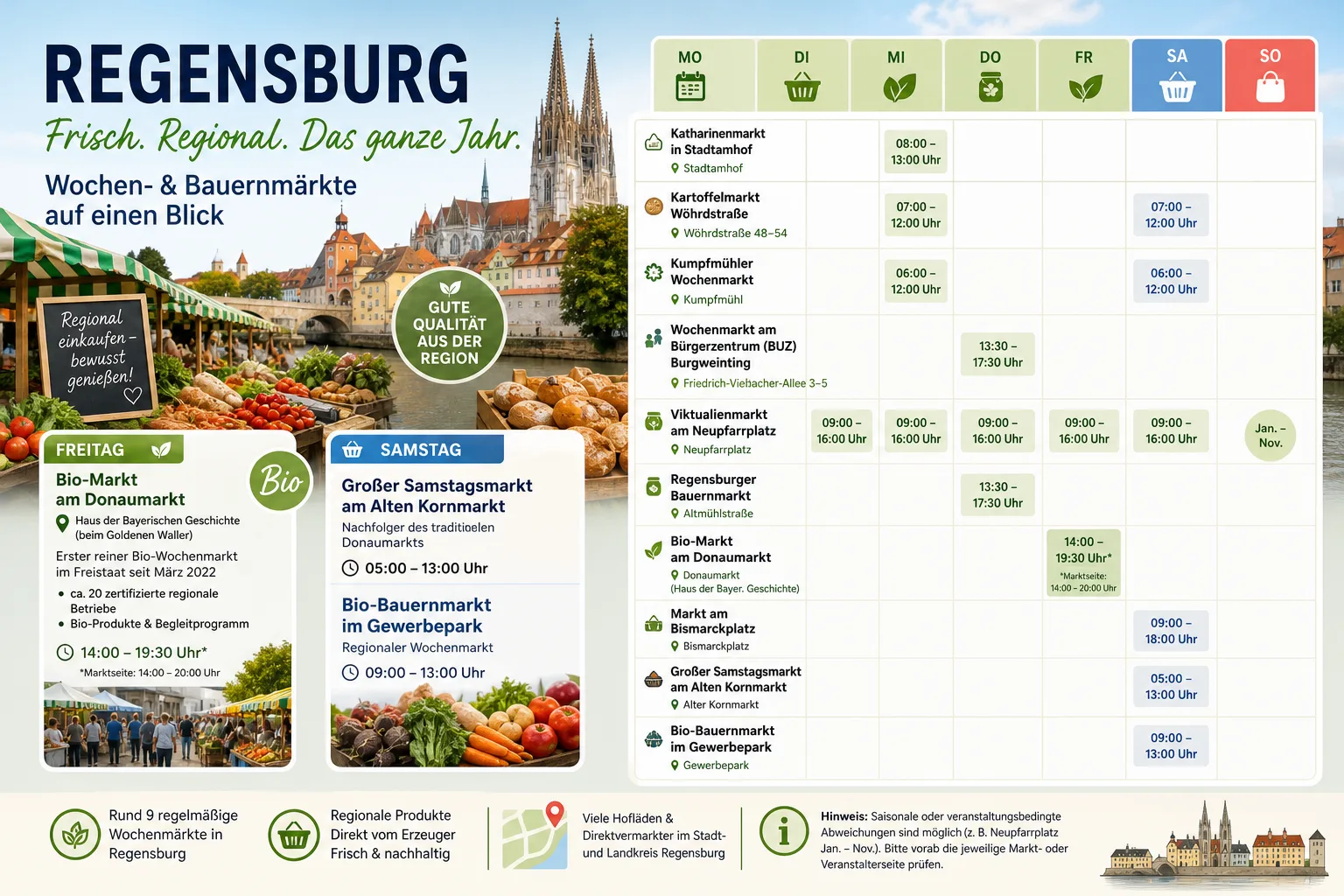
If you want to organize your shopping more sustainably in 2026/2027, a weekly market rhythm will be especially worthwhile: it will make seasonal selection easier, help reduce packaging, and enable conversations about origin. In the coming weeks, weekly markets will be particularly valuable if you shop with a seasonal focus (instead of “everything always”).
What You Will Do Specifically at Your Next Market Visit
- Use a seasonal list: Plan your next shopping list by season (autumn/winter 2026, spring 2027). This reduces the likelihood of energy-intensive stored goods or long transports.
- Clarify origin actively: Ask about the region and cultivation method for fruit/vegetables. A quick follow-up (“Which region is this from?” / “Organic certified?”) will help you more reliably than visual assumptions.
- Distinguish between “regional” and “organic”: For 2026/2027, the following applies: Regional is not automatically organic, organic is not automatically regional. Both together are possible, but you will have to check specifically (seal + origin).
- Plan leftovers from the start: Buy consciously so that you can cook a meal from leftovers the next day (e.g., oven vegetables, soup, stir-fry).
If you define a fixed weekday for the next few months (“market day”), sustainable shopping will be much more likely than with sporadic visits.
Organic Orientation 2026/2027: Seals, Shopping Guides & Good Decision Questions
The closer 2027 gets, the more important simple orientation in the organic range will become: you will see many labels in stores, gastronomy, and markets. To help you make good decisions more quickly in the coming months, two stable anchors help: organic seals and specific follow-up questions.
Which Organic Labels You Will Encounter Most Frequently in 2026/2027
- EU Organic Logo: You will encounter this logo as a minimum standard; it stands for compliance with the EU Organic Regulation.
- Association labels (e.g., Bioland, Naturland, Demeter): You will often find these at farm shops, organic specialist retailers, and individual market stalls; the requirements go beyond EU organic depending on the association.
The Three Questions You Will Routinely Ask About Organic & Regional in the Future
- “Is this organic certified – and by which control body?” (helps against unclear terms like “close to nature” or “from controlled cultivation”)
- “Where was it grown/produced?” (makes “regional” verifiable)
- “What is currently in season – and what do you recommend instead?” (often leads to better, fresher alternatives)
If you also work with a regional organic address directory (e.g., as a PDF/online list of the region), your shopping in 2026/2027 will be more plannable: you will find farm shops, organic specialist retailers, and gastronomy with an organic share more quickly without having to research each time.
Organic Flair by the River: How to Reserve Fridays for Organic Shopping in the Future
If you want to establish a fixed date for organic shopping in 2026/2027, a Friday ritual will be particularly suitable: shopping + a short walk + a conscious start to the weekend. Many organic-oriented market or stall formats are deliberately scheduled so that working people can use them before the weekend.
This Is How Friday (or Your Desired Day) Becomes a Sustainable Routine
- Fixed time block: Plan a recurring time block (e.g., early evening hours) so that shopping does not get “lost”.
- Define a standard basket: Set 6–10 products that you will almost always buy (seasonal vegetables, bread, dairy product/alternative, fruit, eggs/alternative, pantry goods).
- A pleasure component: Consciously add something to your shopping that really makes you happy (e.g., good bread, cheese, a vegetarian delicacy). This increases the chance that the routine will still be in place in 2027.
If you need imported pleasure products (e.g., coffee/cocoa), you will ideally complement this routine by also paying attention to fair-trade variants.
Food System Change Out of Home: What Will Be Relevant in 2027 in Daycares, Schools & Institutions
In 2027, the question of how food is cooked daily will become more important for many families, providers, and institutions: balanced, affordable, accepted – and at the same time more sustainable. In communal catering, improvements in practice will often be seen in three levers that you can specifically initiate or ask about in the coming months.
Three Levers Typically Implemented in 2026/2027 (and That You Can Actively Support)
- Nutritional standards: Institutions will increasingly align menus with recognized recommendations (e.g., DGE quality standard, depending on the setting).
- More organic share: Procurement will be gradually converted (e.g., individual product groups first). This is organizationally realistic and measurable.
- Less food waste: Better planning, more suitable portion sizes, and feedback systems will likely come more into focus in 2027, as they reduce costs and have climate effects.
If you are a parent or relative, you can use a simple conversation guide for 2026/2027: “Which standards are applied? What is the organic share in key product groups? What measures reduce waste?” These three questions are specific, friendly, and lead to verifiable answers.
Practical Plan for the Next 30 Days: How Sustainable Enjoyment Becomes Part of Your Everyday Life in Regensburg
To turn your intention for 2026/2027 into real routine, you will reach your goal faster with a 30-day plan than with “everything at once”.
-
Week 1: Set a Shopping Date
You will define a fixed weekly time (e.g., a market visit) and treat it like an appointment. In addition, you will use a seasonal list (autumn/winter) as a shopping aid.
-
Week 2: Consistently Switch Two Products
You will consistently buy two imported products in the household as Fairtrade variants (e.g., coffee and cocoa or tea and chocolate). This has an immediate effect without complicating the entire shopping process.
-
Week 3: Combine Regional & Organic Specifically
You will check both organic certification and origin for three fresh products per week. This trains routine without turning every shopping trip into research.
-
Week 4: Halve Waste – With a Simple System
You will introduce a “leftover box” in the fridge (everything that needs to be used soon is placed visibly at the front) and plan a fixed leftover day per week. This measurably reduces the discard rate.
If you start this plan by the end of 2026, you will enter the next season in 2027 with stable habits: fewer impulse purchases, more transparent origin – and enjoyment that better matches your values.