
André Hartmann
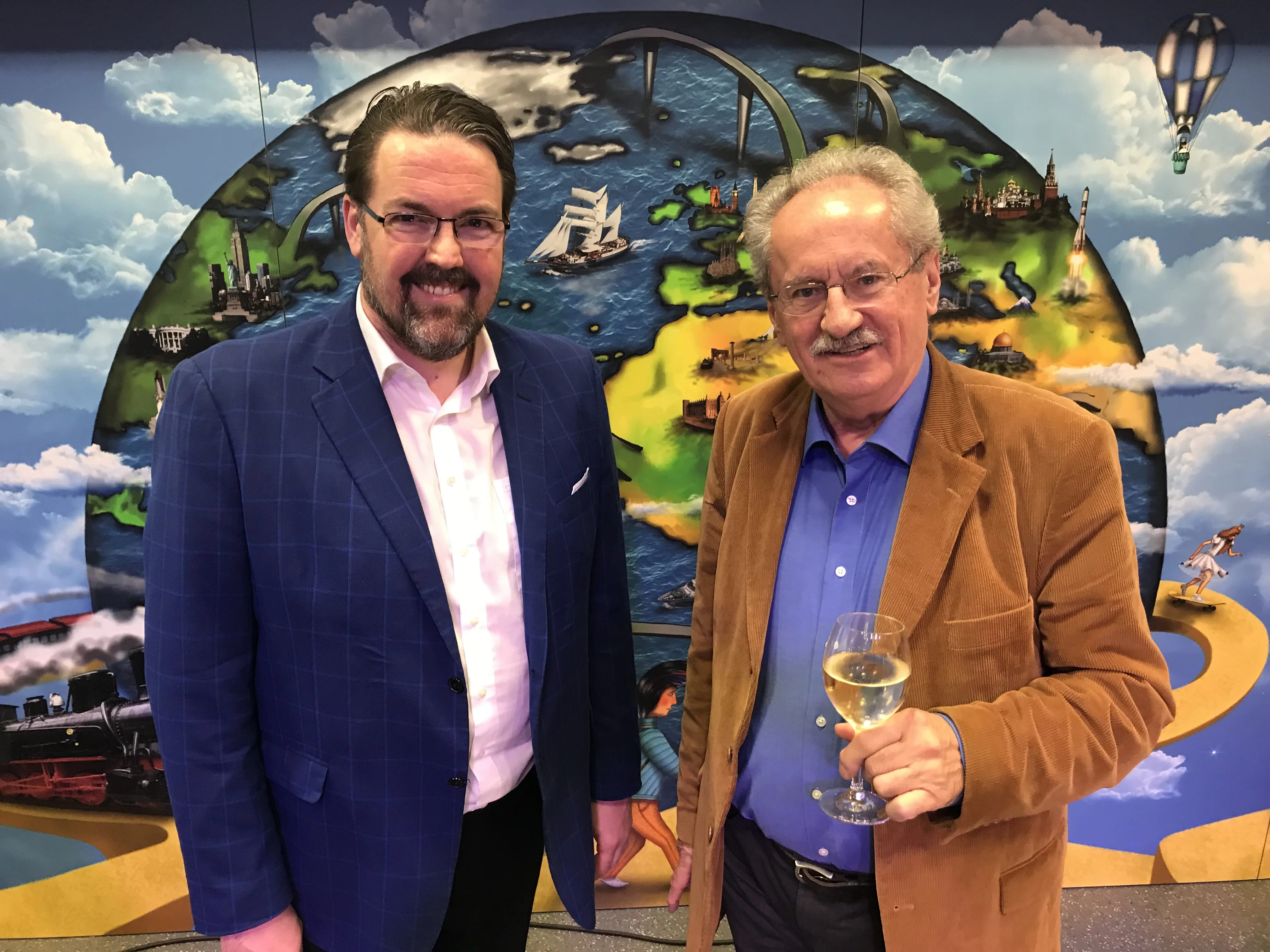
Image from Wikipedia
Image from Wikipedia
André Hartmann – Music Cabaret with a Sharp Ear, Clever Stage, and Bavarian Soul
An Artist Between Parody, Piano Art, and Cabaret Precision
André Hartmann, born in 1976 in Starnberg, is one of the defining voices of Bavarian music cabaret. The artist combines piano skills, voice impersonations, conference-style performances, and satirical observations into a stage form that entertains while also exposing truths. He became known to a wider audience primarily through his appearances at the Nockherberg Singspiel, where he celebrated his breakthrough in 2005 with his portrayal of Gerhard Schröder. ([de.wikipedia.org](https://de.wikipedia.org/wiki/Andr%C3%A9_Hartmann))
What sets Hartmann apart is the rare blend of musical discipline and comedic ease. His style thrives on keen observation, precise timing, and the ability to characterize political and societal figures through voice, posture, and rhythm. At the same time, he remains deeply rooted in Munich’s culture, where he has been present on renowned stages for years and has established his own tone as a host of discussion formats. ([de.wikipedia.org](https://de.wikipedia.org/wiki/Andr%C3%A9_Hartmann))
Biographical Roots and Musical Education
Hartmann discovered his talent for music cabaret during his studies at the University of Music and Performing Arts Munich. There, a classical education and piano routine evolved into a stage identity that uses musical virtuosity not as an end in itself but as a foundation for punchlines, role changes, and satirical conciseness. In an interview, he described himself as a pianist who works very hard but refuses to be reduced to just one thing. ([de.wikipedia.org](https://de.wikipedia.org/wiki/Andr%C3%A9_Hartmann))
This early connection of music, language, and presentation clarifies why Hartmann is perceived not merely as an imitator but as a complete stage artist. His repertoire lives from a precise handling of timbres, body language, and presence—elements that link good cabaret and strong musical entertainment. The basis for this is an education that has provided him not only with technique but also with an awareness of form and stylistic flexibility. ([de.wikipedia.org](https://de.wikipedia.org/wiki/Andr%C3%A9_Hartmann))
The Breakthrough at Nockherberg and the Art of Voice
The real career boost came in 2005 with Hartmann's portrayal of Gerhard Schröder at the Singspiel on the Nockherberg. He later impersonated Christian Ude there, further solidifying his reputation as a sharply witty voice imitator. These roles made him a mainstay of the political and cultural humor of Munich, where imitation is not merely mimicry but character study. ([de.wikipedia.org](https://de.wikipedia.org/wiki/Andr%C3%A9_Hartmann))
Hartmann’s strength lies in not just recognizing public figures but musically translating their idiosyncrasies. He works with precise nuances, emphases, pauses, and a voice control that is almost instrumental. His special stage presence arises precisely from this: The audience experiences not merely a parody but a comical condensation of political and societal stereotypes. ([de.wikipedia.org](https://de.wikipedia.org/wiki/Andr%C3%A9_Hartmann))
Munich as a Stage: From Cabaret to Conference
In Munich, André Hartmann has been performing for years at venues such as the Lach- und Schießgesellschaft, the Theater Heppel & Ettlich, and the Künstlerhaus am Lenbachplatz. Additionally, he works as a moderator for the annual Sigi-Sommer-Taler awards at the Schlachthof. These stops show that his career has grown far beyond the individual Nockherberg moment and unfolds within a dense network of cabaret, music, and discourse culture. ([de.wikipedia.org](https://de.wikipedia.org/wiki/Andr%C3%A9_Hartmann))
Since 2018, he has been the host and conference master of a monthly talk round at the Hofspielhaus. On his official website, he documents these evenings as "Ratschkartell," where he discusses current topics, city life, and entertainment with guests from politics, culture, and media. Here, Hartmann’s artistic development is particularly evident: he does not remain just an imitator but becomes a curatorial host with a keen sense for atmosphere and dialogue. ([andrehartmann.de](https://www.andrehartmann.de/))
Programs, Roles, and Musical Storytelling
His programs since 2018 include “Rikscha Sightseeing A to Z” and the homage to Monaco Franze at the Hofspielhaus titled “Monaco & Fränz.” These works showcase his affinity for Munich’s city history, local color, and characters that fluctuate between style, irony, and everyday observation. Hartmann combines musical storytelling with cabaret sharpness, creating evenings that are both regionally and universally resonant. ([de.wikipedia.org](https://de.wikipedia.org/wiki/Andr%C3%A9_Hartmann))
He also plays the role of “Duke Kasimir III” at celebrations of the Damische Ritter, emphasizing Hartmann’s deep roots in Bavarian festive and stage culture without becoming stagnant in folklore. Rather, he utilizes tradition as material for the present, for humor, and for the controlled elevation that characterizes good music cabaret. ([de.wikipedia.org](https://de.wikipedia.org/wiki/Andr%C3%A9_Hartmann))
Style, Musical Signature, and Artistic Development
Hartmann’s style is less characterized by a classical discography than by a vibrant stage biography. As a music cabaret artist and pianist, he works with musical directness, concise articulation, and a conference that bridges word and music. The combination of voice imitation, piano, and satirical observation gives his performance a clear signature that is rarely executed so consistently in the German-speaking cabaret scene. ([de.wikipedia.org](https://de.wikipedia.org/wiki/Andr%C3%A9_Hartmann))
His artistic development also shows a conscious shift: Hartmann has previously worked as a teacher and has increasingly focused on the stage. At the same time, he announced that he would gradually move away from pure imitation, indicating a maturation of his artistic self-understanding. From voice imitator, he has thus become a versatile stage artist who views formats, conversations, and musical entertainment as interconnected arts. ([hallo-muenchen.de](https://www.hallo-muenchen.de/interview/interview-andre-hartmann-wer-klavier-spielt-glueck-frauen-12697390.html))
Recognition, Awards, and Cultural Status
André Hartmann has been awarded multiple times, including with the Kabarett Kaktus, the promotion award of the Sudeten Germans' Association, the Golden Weißwurst, the Fränkischer Kabarettpreis, the AZ-Star of the Week, and the Schwabinger Kunstpreis. These awards mark a career that is not only locally beloved but also professionally recognized. Particularly, the Schwabinger Kunstpreis underscores his grounding in Munich culture and his significance as a voice of urban cabaret. ([de.wikipedia.org](https://de.wikipedia.org/wiki/Andr%C3%A9_Hartmann))
His social engagement is also part of the artist’s profile. Since 1998, Hartmann has supported school projects for underprivileged children in Nepal and founded Nepalhilfe Starnberg e.V.; furthermore, a documentary film about these projects was released in 2016. This expands his profile to include a human and social dimension, which further strengthens his artistic authority. ([de.wikipedia.org](https://de.wikipedia.org/wiki/Andr%C3%A9_Hartmann))
Discography, Recordings, and Media Presence
A classical musical discography in the strict sense is not at the center of André Hartmann’s public presence. His work unfolds primarily live, in stage programs, television appearances, and discussion formats that convey his pianistic and parodistic strengths. The official website particularly documents his talk and stage formats, while further references identify him as a well-known figure in Bavarian broadcasting and Munich cultural public life. ([andrehartmann.de](https://www.andrehartmann.de/))
This form of artistic production is typical for Hartmann: no rigid album career, but an organically grown stage work. This makes him interesting for music lovers who seek not only recordings but also performative quality, relevance, and improvisational intelligence. His artistic work emerges in the moment of performance and gains its strongest impact there. ([andrehartmann.de](https://www.andrehartmann.de/))
Cultural Influence and Audience Success
Hartmann is one of those artists who embody regional culture so precisely that it remains intelligible beyond local boundaries. He has performed in over 20 countries, demonstrating that music cabaret with clear stance, precise language, and strong stage presence also functions outside of the Bavarian context. His closeness to Munich themes, his observational skills, and his musical wit make him an important mediator between entertainment and cultural critique. ([de.wikipedia.org](https://de.wikipedia.org/wiki/Andr%C3%A9_Hartmann))
The media perception also affirms this status. The website mentions him as known from Bayerischer Rundfunk, Süddeutsche Zeitung, and Lach- und Schießgesellschaft, while interviews highlight his blend of seriousness, humor, and piano artistry. Thus, the image of an artist emerges who does not need to be loud to remain present, and whose impact arises from accuracy, experience, and musical instinct. ([andrehartmann.de](https://www.andrehartmann.de/))
Conclusion: A Stage Artist with Character, Wit, and Substance
André Hartmann is fascinating because he encapsulates multiple levels of the music and cabaret scene in one person: pianist, voice imitator, conference master, host, and cultural observer. His career shows how a distinct artist profile can emerge from musical education, regional roots, and satirical sensitivity. Anyone experiencing Hartmann live will receive not just a series of acts but a pointed, musically intelligent world of performance infused with character and heart. ([de.wikipedia.org](https://de.wikipedia.org/wiki/Andr%C3%A9_Hartmann))
This is precisely where his particular strength lies: he connects entertainment with observation, local color with social critique, and musical precision with cabaret elegance. For music lovers and cabaret enthusiasts, André Hartmann remains an artist who should not only be known but experienced on stage. His presence thrives on direct encounters, and it is precisely here that his talent unfolds its greatest impact. ([de.wikipedia.org](https://de.wikipedia.org/wiki/Andr%C3%A9_Hartmann))
Official Channels of André Hartmann:
- Instagram: No official profile found
- Facebook: No official profile found
- YouTube: No official profile found
- Spotify: No official profile found
- TikTok: No official profile found
Sources:
- André Hartmann – Official Website
- Wikipedia – André Hartmann
- Hallo München – Interview: André Hartmann, June 26, 2019
- Wikipedia: Image and text source
Upcoming Events
The Ratschkartell: André Hartmann's Talk with Markus Blume and Uschi Ackermann