
Bader
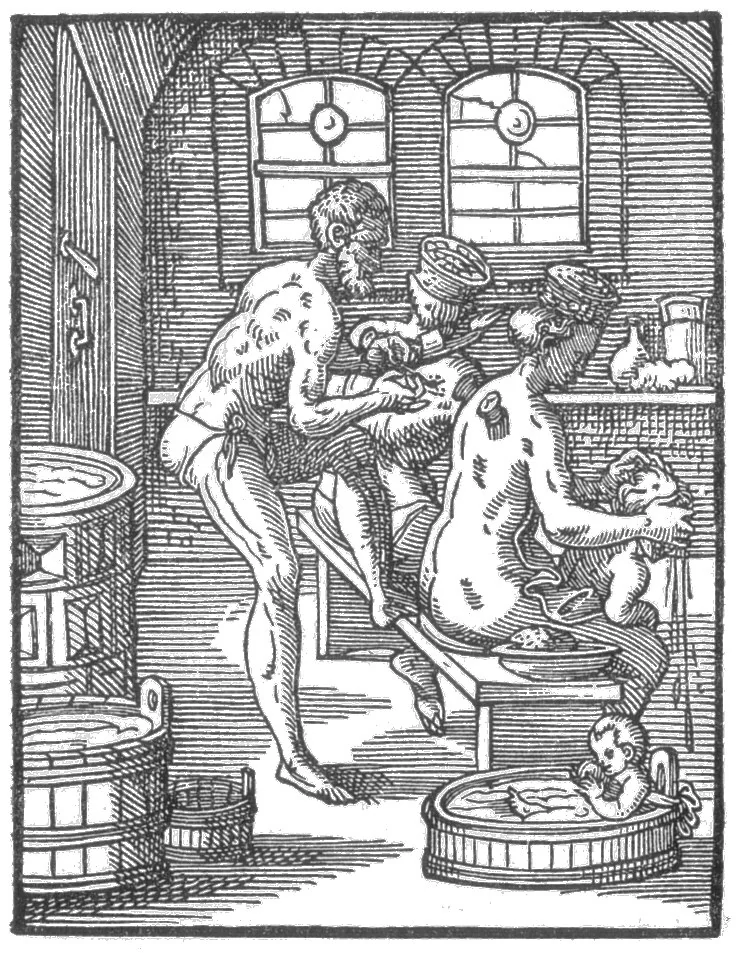
Image from Wikipedia
Image from Wikipedia
Bader: The Historical Healing Profession Between Bathhouse, Cosmetics, and Early Surgery
A Profession from the Middle Ages that Combined Body Care and Healing Arts
The Bader is one of the most intriguing historical job titles in the German-speaking world because he was much more than just an operator of a bathhouse. In the Middle Ages, he took on tasks related to bathing, body care, cosmetics, as well as portions of an early, craft-based healing art. This included practices such as bloodletting, cupping, and treating minor wounds. ([de.wikipedia.org](https://de.wikipedia.org/wiki/Bader?utm_source=openai))
In the history of society and medicine, the Bader holds an intermediate position: on one hand, he was a "doctor of the common people," and on the other, he was an important assistant to the academically trained medical profession. This dual function makes the profession a key term for understanding pre-modern healthcare. The Bader thus represents a time when practical experience, guild knowledge, and public bathhouses shaped medical life. ([de.wikipedia.org](https://de.wikipedia.org/wiki/Bader?utm_source=openai))
Historical Origin and Social Significance
The word Bader derives from Middle High German badaere and referred to the owner or employee of a bathhouse who served bathers, let blood, applied cupping, and took care of their hair. In addition to the female form balneatrix, older terms such as Stübner or the Latin balneator also appear. The profession has been documented since the Middle Ages and remained legally regulated in Germany until the 1950s. ([de.wikipedia.org](https://de.wikipedia.org/wiki/Bader?utm_source=openai))
Especially in an era when academically trained doctors were unaffordable for many people, the Bader had enormous everyday relevance. He worked closely with the needs of the population and combined health, hygiene, and cosmetic services. In historical perception, it was a highly respected profession, even though academic medicine did not fully acknowledge it. ([de.wikipedia.org](https://de.wikipedia.org/wiki/Bader?utm_source=openai))
Bathhouse, Craft, and Early Medicine
The bathhouse was the central workplace of the Bader and also a social meeting point. Here, body care, haircuts, beard grooming, and medical assistance blended together. Often, a shearer or barber worked alongside, responsible for cutting hair and trimming beards, making it difficult to separate the professions. ([de.wikipedia.org](https://de.wikipedia.org/wiki/Bader?utm_source=openai))
From a medical historical perspective, this closeness to practical treatment is crucial. Until the rise of academic surgery, Baders and wound doctors with craft training performed surgical procedures. From this environment, the craft surgeon and the wound doctor later developed, representing professional forms that played a central role in the transition from medieval practice to early modern medicine. ([de.wikipedia.org](https://de.wikipedia.org/wiki/Chirurgie?utm_source=openai))
Between Recognition and Distinction
The Bader enjoyed a high level of trust in everyday life, even though he was not scientifically accredited. It is precisely this tension that makes the profession so interesting from a cultural historical perspective: it marks the boundary between learned medicine and craft-organized healing practice. In sources regarding the history of surgery, the Bader appears as a practical specialist who stepped in where academic doctors were not yet widely present. ([hls-dhs-dss.ch](https://hls-dhs-dss.ch/de/articles/027816/?utm_source=openai))
The medical work of the Bader extended beyond mere bathing and encompassed early forms of surgery, dentistry, and ophthalmology in a broader sense. This breadth explains why historical texts often mention the Bader alongside barbers, field shearers, and wound doctors. The profession was not a marginal phenomenon, but part of a functional supply network in pre-modern society. ([de.wikipedia.org](https://de.wikipedia.org/wiki/Bader?utm_source=openai))
From Bader to Wundarzt: The Development of the Craft
Over time, the field of work of the Bader gave rise to the craft surgeon, later referred to as the wound doctor. This development shows how surgical and practical healing procedures gradually separated from academic teaching and transitioned into craft structures. The profession of the Bader thus became a historical precursor to modern medical specializations. ([dewiki.de](https://dewiki.de/Lexikon/Handwerkschirurg?utm_source=openai))
This is particularly evident in the separation between internal medicine and surgery. While university doctors focused more on theory and education, the actual treatment of wounds, interventions, and simple ailments remained long in the hands of practical healers. The Bader thus exemplifies a medical division of labor that has profoundly shaped European health history. ([hls-dhs-dss.ch](https://hls-dhs-dss.ch/de/articles/027816/?utm_source=openai))
Cultural Influence and Contemporary Context
Although the Bader is not an artist in the modern sense, the occupational title holds significant cultural resonance. It recalls a time when public baths, body care, and medical services were more closely linked than in modern society. The term also lives on in historical literature and in the study of ancient health professions. ([de.wikipedia.org](https://de.wikipedia.org/wiki/Bader?utm_source=openai))
For cultural history, the Bader is particularly fascinating because he unified craft, hygiene, medical knowledge, and social closeness. In this role, everyday history and medical history are equally reflected. Anyone looking to understand the development of barbers, hairdressers, wound doctors, and surgery cannot overlook the Bader as a historical point of origin. ([tophair.de](https://www.tophair.de/wissen/wissen-detailseite/bader-die-vorfahren-von-friseur-barbier-und-chirurg/?utm_source=openai))
Discography and Current Projects
For the term Bader in the sense of the historical job title, there is no discography, no musical career, and no current musical projects. Chart successes, albums, singles, tours, or collaborations cannot be documented here because it pertains not to a musician, but to an old occupational title. Instead, web research confirms the historical and medical historical classification of the term. ([de.wikipedia.org](https://de.wikipedia.org/wiki/Bader?utm_source=openai))
Conclusion: A Term with Remarkable Historical Depth
The Bader is a fascinating example of how a seemingly unremarkable job name brings entire epochs of social and medical history to light. Between bathhouse, body care, minor surgery, and craft healing art, an important chapter of European everyday culture condenses here. For those seeking to understand the roots of modern medical professions, the Bader reveals itself as a central historical precursor. ([de.wikipedia.org](https://de.wikipedia.org/wiki/Bader?utm_source=openai))
For this reason, the Bader remains captivating: he tells of closeness to people, practical knowledge, and a time when health was still strongly rooted in local crafts. As a historical subject, he is worthwhile for anyone who thinks about cultural history, medical history, and social practice together. There is no live experience, but engaging with this profession opens an unobstructed view into the world of the Middle Ages and the Early Modern Period. ([de.wikipedia.org](https://de.wikipedia.org/wiki/Bader?utm_source=openai))
Official Channels of Bader:
- Instagram: No official profile found
- Facebook: No official profile found
- YouTube: No official profile found
- Spotify: No official profile found
- TikTok: No official profile found
Sources:
Upcoming Events
La Serenata: Brunnenhof Concert in Augsburg
A Murder Story – Open Air Performance
50 Jahre Laienspielgruppe Badersfeld - A Mordsgschicht
Concert of the Bader Ensemble
Concert of the Bader Ensemble in the Wandelhalle
Buchi meets...Sid Bader

Border Experiences - Multimedia Show of a Cycling Tour "The Pamir Mountains"
Photo and Object Exhibition Hermann Bader – Strong Women, Aunt Lina
Request Concert in the Wandelhalle