
Barbi Marković
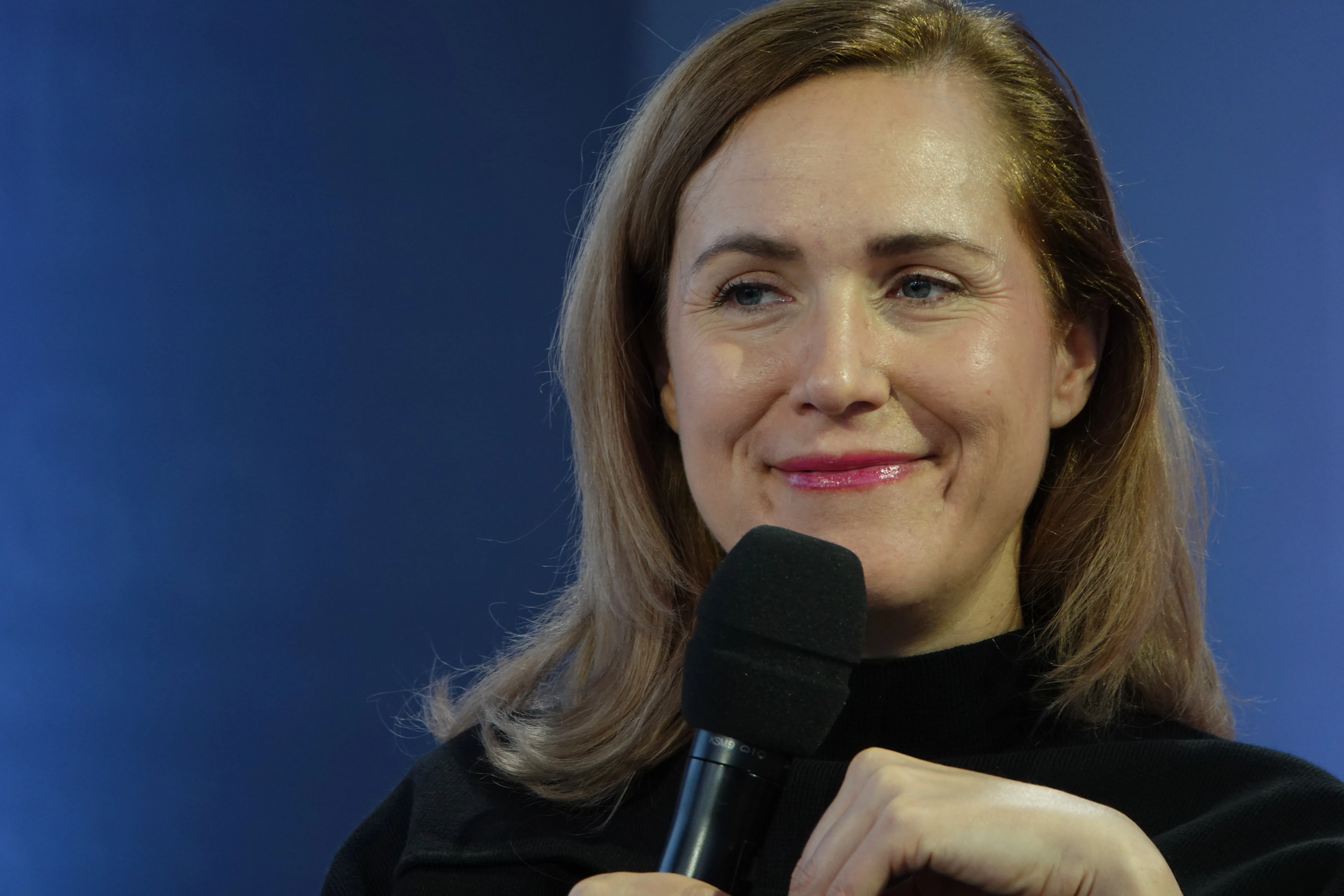
Image from Wikipedia
Image from Wikipedia
Barbi Marković: The Serbian-Austrian Author between Wordplay, Border Experience, and Literary Radicalism
One of the Most Exciting Voices in Contemporary Literature
Barbi Marković, born in 1980 in Belgrade, has established herself in German-language literature as an author with a distinctive style. Her texts combine precise everyday observations, grotesque humor, and formal experimentation into a literature that is playful, sharp, and emotionally charged. Since moving to Vienna in 2006, she has developed a body of work that extraordinary brings together biographical experience, cultural displacement, and linguistic curiosity. ([literaturfestival.com](https://literaturfestival.com/authors/barbi-markovic/))
Biography: From Belgrade to Vienna, from Translation to Her Own Literary Voice
Marković studied German studies in Belgrade and Vienna and initially worked as an editor in Belgrade. Early in her career, languages, environments, and literary traditions intertwined, shaping her later style decisively. Her debut Ausgehen was published in 2009 as a translation from Serbo-Croatian, drawing attention to an author who connects pop culture, literary references, and contemporary language with unusual confidence. ([literaturfestival.com](https://literaturfestival.com/authors/barbi-markovic/))
The move to Vienna in 2006 was particularly formative, as it broadened her perspective on language and belonging. The author did not settle for a one-time literary debut but consistently developed her writing through short stories, plays, and radio dramas. This versatility explains why Barbi Marković is often described in the literary scene as an author who not only knows the boundaries of form but also transcends them productively. ([literaturfestival.com](https://literaturfestival.com/authors/barbi-markovic/))
The Literary Breakthrough: Humor, Horror, and the Art of Intensification
The bigger breakthrough came with Superheldinnen in 2016, a novel written partly in German and partly in Serbian. The book earned Marković several awards, including the Alpha Literature Prize, the Adelbert von Chamisso Prize, the Georg Saiko Travel Grant, and the Reinhard Priessnitz Prize. With this work, she positioned herself as an author who understands identity not as static origin but as a dynamic literary process. ([literaturfestival.com](https://literaturfestival.com/authors/barbi-markovic/))
Her style gained further sharpness in Die verschissene Zeit and especially in Minihorror, which won the Prize of the Leipzig Book Fair in 2024. The jury and the press highlighted the mixture of comedy, bitterness, and the horror of everyday life; the texts depict Mini and Miki in a world where banal situations devolve into nightmarish miniatures. It is precisely this ability to transform the familiar into grotesque tension that makes Marković's literature so distinctive and recognizable. ([zeit.de](https://www.zeit.de/kultur/literatur/2024-03/serbische-autorin-barbi-markovi-erhaelt-belletristikpreis-der-leipziger-buchmesse))
Current Projects: Poetics, Essays, and Literary Self-Examination
With Stehlen, Schimpfen, Spielen, a new essay collection was released in 2025, presenting itself as both comical and reflective. The book revolves around writing itself, authorship, influence, appropriation, and the question of how literary form arises when rules are intentionally broken. Rowohlt describes the collection as a work about writing that is unacademic, hilarious, and intellectually precise. ([rowohlt.de](https://www.rowohlt.de/buch/barbi-markovic-stehlen-schimpfen-spielen-9783498007591?utm_source=openai))
Marković will also remain in the conversation in 2026: Rowohlt announced that the essay collection was nominated for the Helena Adler Prize for rebellious literature and the Förderpreis Komische Literatur, and it appeared again on best-seller lists and longlists. Additionally, there were readings and award ceremonies in Salzburg and Dornbirn, showing how present her work is in the current literary scene. This ongoing resonance underscores that Marković is not just an awarded author but a continually relevant voice in contemporary literature. ([rowohlt.de](https://www.rowohlt.de/magazin/ausgezeichnet/barbi-markovic-erhaelt-den-helena-adler-preis-fuer-rebellische-literatur-2026?utm_source=openai))
Discography in the Literary Sense: Books, Stories, Theater, Radio Plays
The central bibliography includes Ausgehen (2009), Superheldinnen (2016), Die verschissene Zeit (2021), Minihorror (2023), Piksi-Buch (2024), and Stehlen, Schimpfen, Spielen (2025). In addition, there are short stories, theater works, and radio plays that present Marković's work not as a linear path of novels but as an open literary field. This shift in forms enhances the impression of an author who explores new dimensions with each book. ([literaturfestival.com](https://literaturfestival.com/authors/barbi-markovic/))
Piksi-Buch also received attention as an autofictional narrative about a childhood on the football field, dealing with themes of violence, masculinity, and the aftermath of Yugoslav history. The book reached number 10 on the ORF best-seller list in 2025 and was chosen as the football book of the year. Such milestones demonstrate that Marković does not treat cultural memory as a museum artifact but utilizes it as dynamic, conflict-laden material for literature. ([de.wikipedia.org](https://de.wikipedia.org/wiki/Barbi_Markovi%C4%87?utm_source=openai))
Style and Poetics: Comedy as a Method of Understanding
Barbi Marković's texts thrive on an extraordinary balance of lightness and challenge. Several reviewers and publisher's notes emphasize her stylistic freedom, surprising genre combinations, and the linguistic humor that intertwines everyday life, horror, and social criticism. This creates a poetics in which humor is never mere decoration but a means of understanding that makes social conditions visible. ([rowohlt.de](https://www.rowohlt.de/magazin/ausgezeichnet/barbi-markovic-erhaelt-den-foerderpreis-komische-literatur-2026?utm_source=openai))
The press also describes her writing as original, sharp, and idiosyncratic. In the review of Minihorror, it was referred to as a "fantastically funny book," while other voices highlighted the courage to steal and break conventions. These critiques strike at the core of her work: Marković does not simply write about the present but dissects its surfaces until the absurdity beneath becomes visible. ([rowohlt.de](https://www.rowohlt.de/buch/barbi-markovic-minihorror-9783499016929))
Cultural Influence and Awards: Recognition Beyond the German-Speaking World
Marković's work is already institutionally recognized. She has received, among others, the Art Prize Berlin for Literature, the Outstanding Artist Award, and in 2024, the Prize of the Leipzig Book Fair and the Carl Amery Literary Prize. Previously, she was awarded the Alpha Literature Prize, the Adelbert von Chamisso Prize, and further scholarships that have accompanied her literary development. ([literaturfestival.com](https://literaturfestival.com/authors/barbi-markovic/))
Her significance extends beyond award lists because she transfers experiential spaces from Serbia and Austria, multilingualism, pop references, and contemporary satire into a shared literary system. Critiques in ZEIT, SWR, NZZ, and other cultural sections describe an author who merges humor and seriousness, formal boldness and emotional precision. This is exactly where her cultural influence lies: Marković expands the boundaries of what can be considered comical, political, and formally daring in German-language literature. ([zeit.de](https://www.zeit.de/kultur/literatur/2024-03/serbische-autorin-barbi-markovi-erhaelt-belletristikpreis-der-leipziger-buchmesse))
Conclusion: Why Barbi Marković Remains So Exciting
Barbi Marković is exciting because with each publication, she demonstrates how vibrant literature can be when language, humor, and social experience intersect. Her books are not smooth narratives but precisely constructed literary spaces full of potential, rhythm, and intellectual energy. Those seeking contemporary literature that simultaneously entertains, provokes, and reverberates will find in her an author of extraordinary individuality. An evening live with Barbi Marković promises just that: wise, comical, and unmistakably concentrated literature delivered directly. ([rowohlt.de](https://www.rowohlt.de/buch/barbi-markovic-stehlen-schimpfen-spielen-9783498007591?utm_source=openai))
Official Channels of Barbi Marković:
- Instagram: No official profile found
- Facebook: No official profile found
- YouTube: No official profile found
- Spotify: No official profile found
- TikTok: No official profile found
Sources:
- Rowohlt Verlag – Barbi Marković
- Rowohlt Verlag – Minihorror
- Rowohlt Verlag – Stehlen, Schimpfen, Spielen
- International Literature Festival Berlin – Barbi Marković
- DIE ZEIT – Serbian Author: Barbi Marković Receives the Fiction Prize at the Leipzig Book Fair
- Rowohlt Verlag – Barbi Marković Receives the Helena Adler Prize for Rebellious Literature 2026
- Rowohlt Verlag – Barbi Marković Receives the Förderpreis Komische Literatur 2026
- Rowohlt Verlag – Stehlen, Schimpfen, Spielen on the ORF Bestsellers List in July
- Wikipedia: Image and Text Source