
Der Nino aus Wien
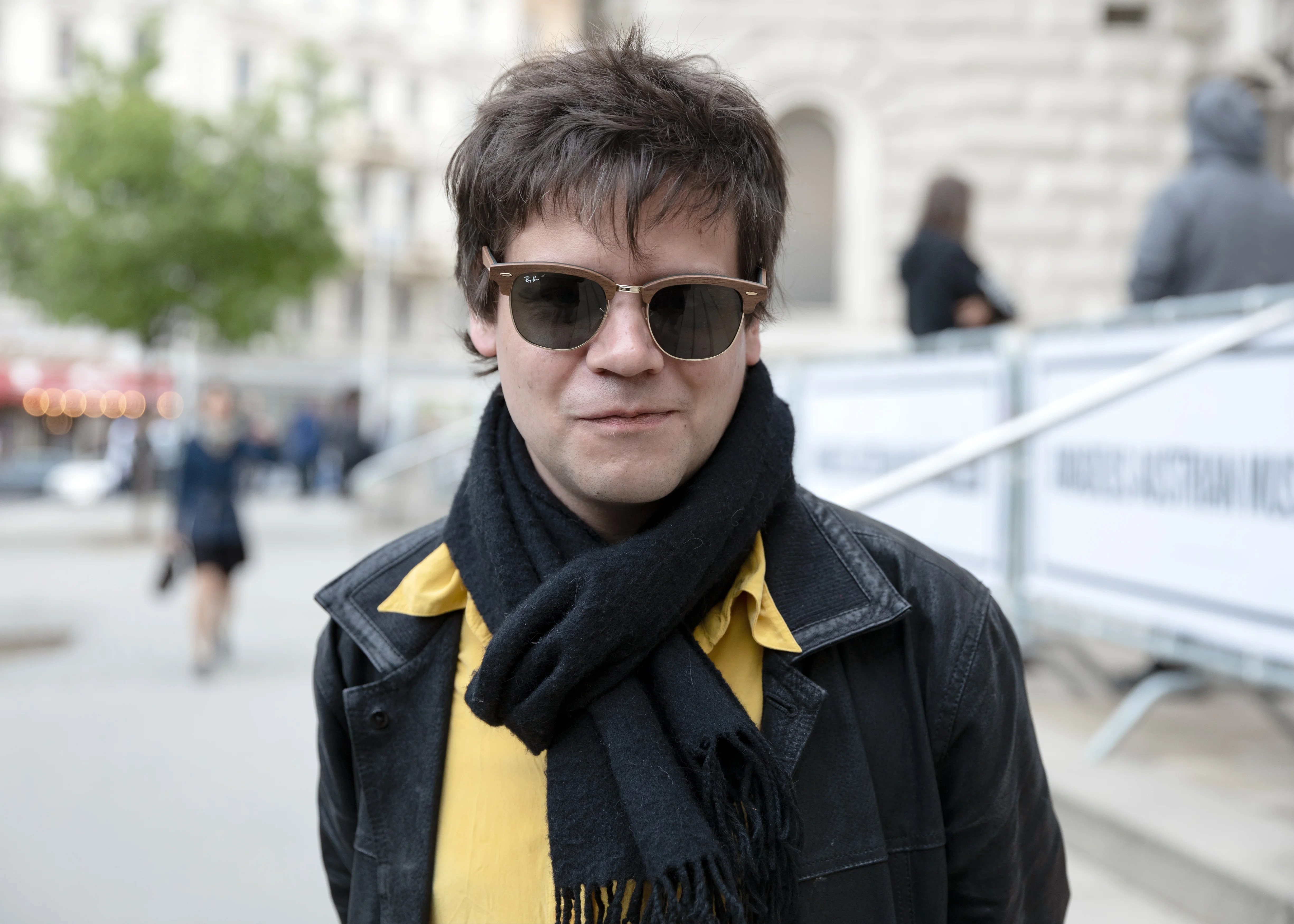
Image from Wikipedia
Image from Wikipedia
Der Nino aus Wien – Viennese Singer-Songwriter with Literary Impact and Laconical Charm
An artist who not only sings about Vienna but also re-measures it
Der Nino aus Wien, born Nino Mandl, is one of the most distinctive voices in contemporary Austrian music. Since his early releases, he has blended songcraft, literature, and a distinctly Viennese tone into an artistic signature that oscillates between chanson, indie-folk, and poetic pop. Born on May 22, 1987, in Vienna, he developed into a musician whose works are as profoundly influenced by the urban landscape as they are by language, observation, and subtle irony. His music has been released for years within the Vienna independent scene surrounding Problembär Records; later, the album Ocker Mond was added through MedienManufaktur Wien. ([de.wikipedia.org](https://de.wikipedia.org/wiki/Der_Nino_aus_Wien?utm_source=openai))
From Vienna to his own aesthetic
The artistic development of Der Nino aus Wien can be read as a consistent condensation: From early, often directly impactful songs emerged a language that connects everyday life, melancholy, and urban experience with surprising precision. Even in his first albums, a sense for laconic imagery, quirky phrasing, and a sound that consciously avoids smoothing out rough edges was apparent. It is from this very quality that the stage presence that shapes his music career arises: a performance style that appears unhurried yet captivates immediately. ([de.wikipedia.org](https://de.wikipedia.org/wiki/Der_Nino_aus_Wien?utm_source=openai))
The breakthrough: an author of small observations
He gained early attention not through calculated pop strategies but through the quality of his writing and the uniqueness of his musical form. In 2009, he participated in the Protestsongcontest with Spinat Song; in 2010 and 2012, he received nominations for the Amadeus in the categories of “Alternative” and “FM4 Award.” Such milestones demonstrate how early his position solidified between alternative pop culture, singer-songwriter tradition, and the Viennese linguistic landscape. As a literate musician, he continues to navigate that intersection where text and composition are equally significant. ([de.wikipedia.org](https://de.wikipedia.org/wiki/Der_Nino_aus_Wien?utm_source=openai))
Discography as a chronicle of continuous evolution
The artist's discography outlines a remarkably consistent development. Following The Ocelot Show from 2008 and Down in Albern from 2009 came Schwunder (2011), Bulbureal (2012), Träume and Bäume (both 2014), Immer noch besser als Spinat and Adria (both 2015/2016), Wach (2017), the self-titled album Der Nino aus Wien (2018), Ocker Mond (2020), Eis Zeit (2022), and Endlich Wienerlieder (2024). Additionally, there are collaborations such as Unser Österreich with Ernst Molden, Das Grüne Album with Natalie Ofenböck, and Zirkus also with Ernst Molden. ([derninoauswien.at](https://www.derninoauswien.at/))
These releases are not merely entries in an album list, but they mark different phases of his artistic development. While early works are more characterized by spontaneous observation and poetic directness, later productions often appear more concentrated, reduced, and text-conscious. Collaborations with other artists expand the soundscape without blurring the distinctive voice. This is where a central appeal of his music career lies: he remains recognizable without repeating himself. ([hhv-mag.com](https://www.hhv-mag.com/review/der-nino-aus-wien-baeume-traeume/?utm_source=openai))
Current projects: productive, present, touring
In the years 2024 and 2025, Der Nino aus Wien continues to be highly active. The official website lists Endlich Wienerlieder as a 2024 release, while for 2025, the EP Wilde Zeit is documented, which was written in January 2025 and produced by Manuel Poppe in Vienna. Simultaneously, the website and current reporting feature numerous live dates, including performances with the AusWienBand, joint concerts with Ernst Molden, as well as further dates in Austria and Germany. ([derninoauswien.at](https://www.derninoauswien.at/))
Notably, he connects new music with physical special formats. For the Arena Wien Open Air, a limited CD has been announced, which he himself burned and designed—details that reveal much about his artistic approach. Here, quick marketability is not the focus, but rather the craftsmanship and personal aspect of a release. This aligns with a musician who sees his discography as a living archive rather than a mere content chain. ([puls24.at](https://www.puls24.at/news/entertainment/der-nino-aus-wien-besingt-die-wilde-zeit/428002?utm_source=openai))
Musical style: between Viennese Schmäh, melancholy, and clarity of arrangement
The stylistic core of Der Nino aus Wien lies in the combination of linguistic idiosyncrasy and sonic restraint. An early review describes his music as carrying “cheerful to cloudy laconicism”; acoustic sounds play with harmony and dissonance, while later works vary more with voice and language. On Ocker Mond, he noticeably moved closer to acoustics again and referred to Nick Drake as a reference point in an interview. The result is not nostalgic folk but contemporary song art with precise production and fine arrangement. ([hhv-mag.com](https://www.hhv-mag.com/review/der-nino-aus-wien-baeume-traeume/?utm_source=openai))
His songs often thrive on small shifts: an ironic image break, an unexpected rhyme, a line that tips between everyday speech and literary prose. This is precisely what makes his music feel approachable yet artfully constructed. Der Nino aus Wien is not a volume artist but an author who achieves great impact through reduction. His compositional strength lies in translating seemingly casual observations into enduring musical forms. ([hhv-mag.com](https://www.hhv-mag.com/review/der-nino-aus-wien-baeume-traeume/?utm_source=openai))
Collaborations and the Viennese network
A significant part of his authority in the Austrian music scene arises from collaborations. Joint albums with Ernst Molden and Natalie Ofenböck demonstrate how flexibly his voice integrates into other aesthetic contexts without losing its profile. These works broaden the view of his music career: not only is a solo artist visible here but a connected singer-songwriter who finds additional colors in dialogue with other interpreters and authors. Especially in Vienna, where tradition and present intertwine closely, this form of cooperation serves as an important cultural marker. ([kaput-mag.com](https://kaput-mag.com/stories-de/nino-aus-wien/?utm_source=openai))
Cultural influence: Vienna as soundspace, language as material
Der Nino aus Wien has become a formative figure in music that does not romanticize Vienna folklorically but depicts it in its contemporary language. His lyrics and titles are deeply rooted in the local linguistic landscape, yet they remain comprehensible beyond the city because they capture precise emotional fundamentals. In this way, he stands in a tradition of Austrian songcraft that combines intimacy, wit, and existential depth. His cultural impact is also evident in the regular presence of his releases in music press, media reports, and concert announcements. ([musik-austria.at](https://musik-austria.at/wp-content/uploads/2026/02/13.-ausgabe-wienerlied-magazin.pdf?utm_source=openai))
The official website also points to a consciously designed artistic world with videos, tour dates, and shop articles. Titles like Es geht immer ums Vollenden or Du Oasch showcase the tone where humor, stance, and Viennese directness converge. This mixture makes his artistic development so interesting: it is accessible but never complacent; quirky but never arbitrary. This is precisely where the enduring value of his music lies. ([derninoauswien.at](https://www.derninoauswien.at/))
Conclusion: A singer-songwriter with a distinctive signature
Der Nino aus Wien remains compelling because he transforms the seemingly small into something grand: everyday life, linguistic wit, the Viennese milieu, and melancholic images merge into a distinctive art form. His music career showcases a rare consistency in which literary quality, intelligent production, and strong stage presence mutually enhance each other. Anyone wishing to understand what contemporary Austrian song culture sounds like today cannot overlook him. A live experience with Der Nino aus Wien vividly reveals how precise and lively these songs perform on stage. ([hhv-mag.com](https://www.hhv-mag.com/review/der-nino-aus-wien-baeume-traeume/?utm_source=openai))
Voices of the fans
The public response on his official channels and tour announcements reveals a loyal, long-standing audience that closely follows new releases and live dates. Particularly, the strong identity between Viennese language, personal signature, and direct concert presence ensures that the artist is perceived as an authentic voice within his community. ([derninoauswien.at](https://www.derninoauswien.at/))
Official channels of Der Nino aus Wien:
- Instagram: https://www.instagram.com/nino_aus_wien/
- Facebook: https://www.facebook.com/DerNinoAusWien/
- YouTube: https://youtube.com/user/LeMrOninin
- Spotify: https://open.spotify.com/
- TikTok: No official profile found
Sources:
- Der Nino aus Wien – Official Website
- Der Nino aus Wien – Contact / Management, Booking & Label
- Der Nino aus Wien – Dates, Finished Works, Videos
- Wikipedia: Der Nino aus Wien
- PULS 24 – Der Nino aus Wien sings about the "Wilde Zeit"
- Kronen Zeitung – Interview about “Ocker Mond”
- NICOROLA – Review of “Adria”
- HHV Mag – Review of “Bäume/Träume”
- Kaput Mag – Interview / Discography Context
- Linktree – thisisnino
Upcoming Events
The Nino from Vienna in the Prüfeninger Schlossgarten