
Eduard Mörike
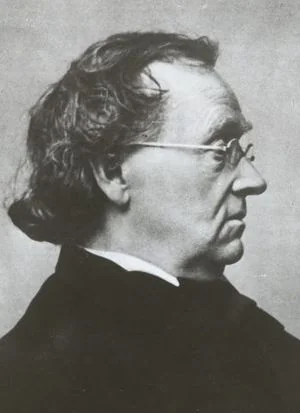
Image from Wikipedia
Image from Wikipedia
Eduard Mörike – the Master of Subtle Tones between Romanticism, Biedermeier, and Musical Aftereffect
A Poet of Quiet Radiance, Whose Language Resonates to This Day
Eduard Friedrich Mörike belongs to those German authors whose work does not make a loud entrance yet remains extraordinarily enduring. Born on September 8, 1804, in Ludwigsburg, and dying on June 4, 1875, in Stuttgart, he exemplifies a sensitive, vividly pictorial, and musically thinking poet, who is attributed to both the Swabian School and Biedermeier literature. His texts blend nature observation, intimacy, fine irony, and a remarkably clear linguistic style that continues to attract readers, interpreters, and composers to this day. (de.wikipedia.org)
Biographical Roots: Swabia, Theology, and Inner Distance from the Clerical Profession
Mörike grew up in a Württemberg milieu shaped by education, religiosity, and social expectations. After a mediocre exam and a church examination by the Württemberg Consistory, he began an eight-year phase as a vicar and church administrator in 1826, which took him through numerous places including Oberboihingen, Möhringen, Köngen, Pflummern, Plattenhardt, Owen, Eltingen, Ochsenwang, Weilheim an der Teck, and Ötlingen. These years were marked by a sense of duty, health burdens, and growing skepticism towards the clerical profession. (de.wikipedia.org)
The sources portray the young Mörike as a person striving for literary freedom but not daring to take the step into the secure existence of a free writer. A contract with Friedrich Gottlob Franckh for regular contributions to the "Damen-Zeitung" was only temporarily upheld. In 1834, Mörike finally took over the parish office in Cleversulzbach, where he lived with his mother and sister in the parsonage, yet even there, the internal tension between the office and artistic calling was palpable. (de.wikipedia.org)
Artistic Development: From the Parsonage to Literary Independence
What makes Mörike so special is the quiet consistency of his artistic development. German biographies describe him as a poet whose muse stands far from the hustle and bustle of the world and whose language requires no cliché, no cheap sentimentality, and no obtrusive gesture. Instead, his work unfolds in song, fairy tale, and idyll, in a mixture of ancient grace, folk song tone, and finely measured fantasy. This very restraint gives his literature a timeless elegance that sets him apart from many contemporaries. (deutsche-biographie.de)
Mörike's writing draws from nature, memory, mythical allusions, and religious motifs, without ever appearing cumbersome. The Carus-Verlag emphasizes that his texts are characterized by deep emotionality and musical quality, which is why numerous composers have set them to music. This blend of literary precision and sonic openness makes Mörike a key figure in the dialogue between literature and music. (carus-verlag.com)
Works and "Discography" in a Broader Sense: Poems, Novellas, and Lasting Reception
Eduard Mörike does not possess a proper discography as a writer, yet his works have inspired an exceptionally broad musical reception. Among his most well-known texts are the novel Maler Nolten, the novella Mozart auf der Reise nach Prag, and the popular poem Er ist’s. Additionally, poems such as Auf eine Lampe, An eine Äolsharfe, and Um Mitternacht are much regarded pieces of his oeuvre. (carus-verlag.com)
The reception extends far beyond the literary history. Historical Mörike research already records numerous musical settings of his poetry, with composers of songs like Robert Schumann, Max Bruch, Max Reger, Josef Gabriel Rheinberger, Hugo Wolf, and Peter Schindler drawing upon his texts. Particularly, Hugo Wolf's Mörike-Lieder are considered a milestone of the German art song and show how much Mörike's language is predestined for musical condensation. (carus-verlag.com)
Style and Literary Signature: Delicacy with Depth
Mörike's literary signature appears calm at first glance but unfolds enormous subtlety upon closer reading. His poems thrive on sound, imagery, rhythm, and a controlled emotionality that never veers into the decorative. German Biographie emphasizes his closeness to folk songs, fairy tales, and idyls, as well as his sense for the mysterious and the wonderful, while research simultaneously highlights his delicate view of nature and his distance from grand political themes. (deutsche-biographie.de)
It is precisely in this that his enduring significance lies: Mörike connects simple forms with high artistic discipline. His texts possess a musical construction that one could almost describe as compositional, as they work with repetition, variation, and tonal fine-tuning. For literature lovers as well as music lovers, he remains an author who nearly dissolves the boundary between poetry and music. (carus-verlag.com)
Cultural Influence: Between Canon and Inspiring Niche
Mörike's cultural influence lies not in mass success but in the lasting impact on German-speaking intellectual and music culture. His poems have been included in anthologies, commented on, discussed, and repeatedly set to music. The collection of settings documented by LEO-BW shows how systematically his works were captured reception-historically already by the 100th anniversary of his death. This makes Mörike an author who not only wants to be read but also to be heard. (leo-bw.de)
His role as a representative of the Biedermeier era is also culturally significant. While many contemporaries relied on political public life or pathos-driven programmatic expressions, Mörike cultivated the small space, inner observation, and the beauty of details. This very aspect embodies his modernity: he demonstrates how much expressiveness can emerge from restraint, precision, and atmosphere. (deutsche-biographie.de)
Why Eduard Mörike Continues to Fascinate Today
Eduard Mörike remains captivating because he embodies the art of quiet intensity. His biography tells of duty fulfillment and inner resistance, his work of linguistic delicacy and musical openness, and his impact of an extraordinary sustainability across the history of literature and music. Those who read or hear Mörike encounter an artist who creates maximum atmosphere with minimal means. (de.wikipedia.org)
For this reason, engaging with his work is always worthwhile. Mörike speaks to people who do not seek spectacle in art but rather depth, form, and resonance. Experiencing his texts in literary evenings, readings, or musical interpretations reveals a classic with astonishing relevance. (carus-verlag.com)
Official Channels of Eduard Mörike:
- Instagram: no official profile found
- Facebook: no official profile found
- YouTube: no official profile found
- Spotify: no official profile found
- TikTok: no official profile found