
Friedrich Hölderlin
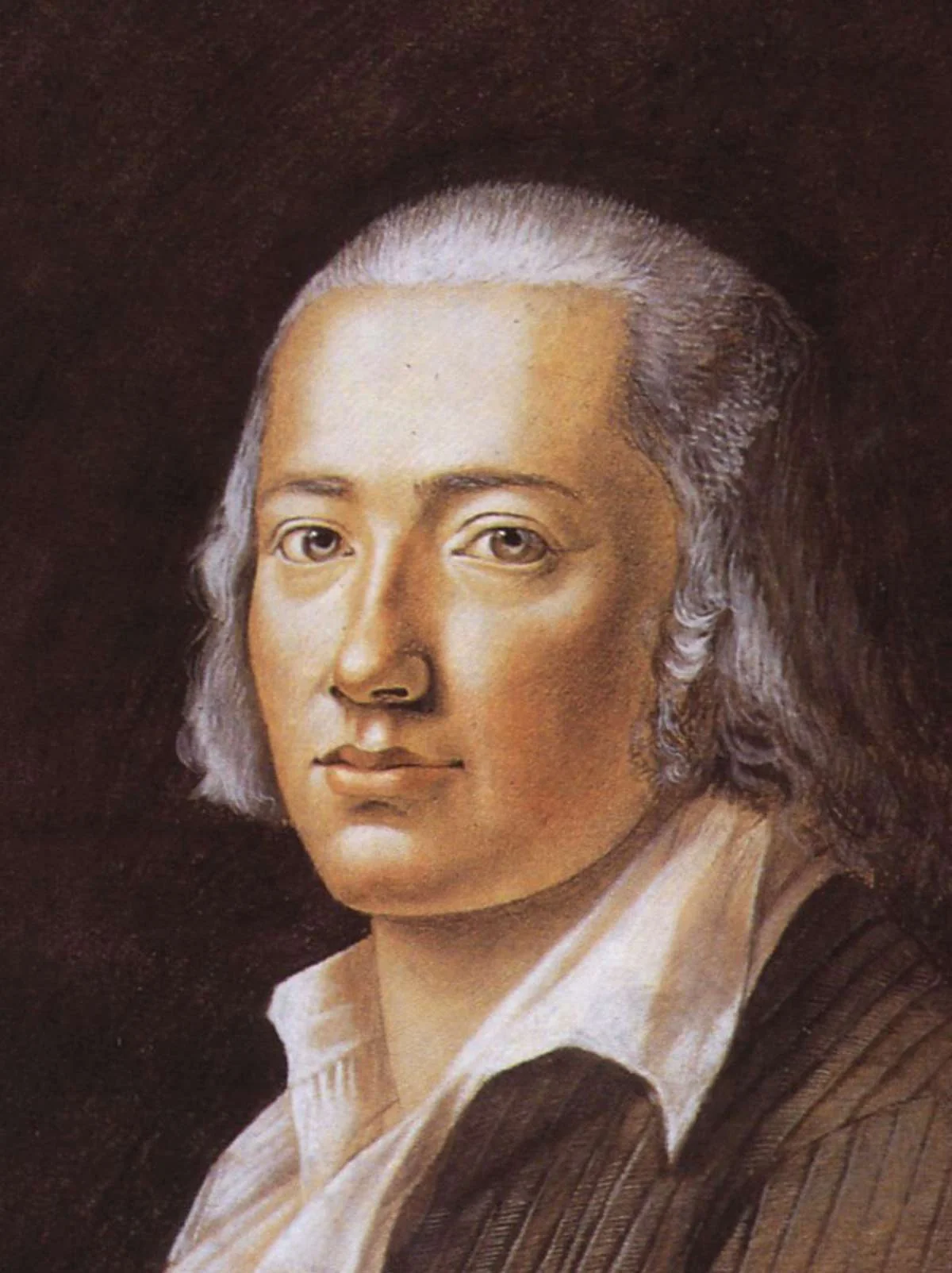
Image from Wikipedia
Image from Wikipedia
Friedrich Hölderlin – The Poet of Extreme Sensation and Linguistic Transformation
A Lyrical Anomaly Between Classicism, Early Romanticism, and Modern Reception History
Johann Christian Friedrich Hölderlin is one of the great boundary crossers of German literature. Born on March 20, 1770, in Lauffen am Neckar and died on June 7, 1843, in Tübingen, he developed a language of extraordinary musical power that unites classical formal rigor with romantic inwardness. Britannica describes him as a lyricist who brought the forms of ancient Greek verse into the German language, merging Christian and classical themes; the German Wikipedia simultaneously emphasizes that his work around 1800 cannot be clearly categorized as either Weimar Classicism or Romanticism. ([britannica.com](https://www.britannica.com/biography/Friedrich-Holderlin))
Biographical Beginnings: Education, Influences, and Intellectual Horizon
Hölderlin's early years were marked by loss, religious influences, and a high ethos of education. His father died in 1772, his mother remarried, and the young Hölderlin grew up in Nürtingen, where the school and the Protestant environment significantly shaped his intellectual development. Britannica describes this background as crucial for his later desire to enter the ministry, although Hölderlin early on unfolded as an independent poetic voice. ([britannica.com](https://www.britannica.com/biography/Friedrich-Holderlin))
His studies and initial literary contacts brought him to the center of German intellectual life. Through Schiller's recommendation, Hölderlin obtained his first position as a private tutor in 1793; Schiller not only published Hölderlin's poems in his Neue Thalia but also a fragment from the novel Hyperion. This marked Hölderlin's entry into a literary realm where philosophical reflection, aesthetic form, and political aspiration intertwined. ([britannica.com](https://www.britannica.com/biography/Friedrich-Holderlin))
The Breakthrough: Hyperion, Odes, and the Great Internal Tension
The real artistic breakthrough did not lie in a single bestseller, but in a series of highly condensed works that establish Hölderlin's stature to this day. In Frankfurt and the late 1790s, the second half of Hyperion, the tragedy The Death of Empedocles, and the great elegies and odes such as Menon's Lament for Diotima and Bread and Wine were created. Britannica highlights that the years from 1798 to 1801 were a phase of intense creativity during which Hölderlin developed a language of elegiac force and philosophical tension. ([britannica.com](https://www.britannica.com/biography/Friedrich-Holderlin))
Literarily fascinating is the inner dynamics of these texts: Hölderlin writes not only about love, Greece, nature, and history but composes spiritual landscapes where longing, hope, and estrangement meet. His language often resembles a musical arrangement of long arcs, rhythmic densities, and sudden image shifts. This very combination makes him so exciting for readers even today and essential for literary history. ([britannica.com](https://www.britannica.com/biography/Friedrich-Holderlin))
Exile, Crisis, and the Late Hymns
After his time in Frankfurt, Hölderlin's emotional burdens intensified, although his poetic productivity did not immediately cease. In 1801 he went to Bordeaux, but left the place in 1802 and returned to Germany; shortly thereafter, he received the news of the death of Susette Gontard, who had become a central figure in Hölderlin's work as Diotima. Britannica narrates that he returned home exhausted and in an advanced state of serious illness. ([britannica.com](https://www.britannica.com/biography/Friedrich-Holderlin))
The late years brought forth texts of visionary brilliance, including Peace Celebration, The Only One, and Patmos. The German Wikipedia notes that after his hospitalization in 1807, Hölderlin was discharged as "incurable" and subsequently lived in the Tübingen tower room or in the household of the carpenter Ernst Zimmer. Despite these living conditions, he continued to write; his late poems are characterized by a peculiar calmness, cycles of nature, and timeless perspectives. ([de.wikipedia.org](https://de.wikipedia.org/wiki/Friedrich_H%C3%B6lderlin))
Discography, Musical Reception, and Cultural Impact
A classic discography in the pop or rock sense does not exist for Hölderlin; his "publications" are the literary works he left behind. However, for music history, it is crucial that Hölderlin's poetry has sparked an enormous history of musical adaptations. The Pierre Boulez Saal program for 2025 explicitly points out that only a few composers engaged with Hölderlin's work into the 20th century and that his language later appeared particularly suitable for musical modernity. ([boulezsaal.de](https://www.boulezsaal.de/Press%20materials/Press%20releases/Pictures%20Press%20Releases/Season%2024-25/PBS_2425_Saison_AsPrinted.pdf))
Particularly revealing is the list of composers mentioned in connection with Hölderlin programs: Peter Cornelius, Hans Pfitzner, Paul Hindemith, Hanns Eisler, Viktor Ullmann, and Benjamin Britten. These names illustrate the vast reach of his impact—from late Romanticism through the 20th century to contemporary concert formats. The musical reception of Hölderlin is thus evidence of the extraordinary acoustic openness of his language. ([boulezsaal.de](https://www.boulezsaal.de/Press%20materials/Press%20releases/Pictures%20Press%20Releases/Season%2024-25/PBS_2425_Saison_AsPrinted.pdf))
Modern concert and broadcast contexts also read Hölderlin as an author with particular relevance today. The Pierre Boulez Saal program speaks of the "multifaceted musical engagement" with Hölderlin and connects his texts with readings and musical adaptations. In music historical perspective, Hölderlin represents not only literature but also a type of spiritual libretto: His words carry rhythm, breath, tension, and acoustic architecture within them. ([boulezsaal.de](https://www.boulezsaal.de/Press%20materials/Press%20releases/Pictures%20Press%20Releases/Season%2024-25/PBS_2425_Saison_AsPrinted.pdf))
Style, Language, and Poetic Handwriting
Hölderlin's style is characterized by an extraordinary combination of formal awareness and existential risk. Britannica emphasizes that he naturalized classical Greek verse forms in German and linked Christian themes with ancient topics; this creates that peculiar mixture of sublimity and vulnerability that makes his poems unmistakable. His verses often do not seek smooth harmony but the moment when language approaches the limit of the sayable. ([britannica.com](https://www.britannica.com/biography/Friedrich-Holderlin))
Formally, Hölderlin works with wide syntactic arcs, strong imagery, and a language that unites nature, history, and myth in a single resonance space. This poetic architecture resembles a grand composition: motifs recur, are varied, condensed, and transformed into new tonalities. In this lies his modernity, as Hölderlin composes not merely decorative literature but an art of internal amplification. ([britannica.com](https://www.britannica.com/biography/Friedrich-Holderlin))
Cultural Influence: Why Hölderlin Continues to Fascinate Today
Hölderlin’s cultural influence extends far beyond German studies. His work inspires philosophy, music, theater, and modern readings because it combines intellectual radicalism with emotional openness. The later reception, as reported by Britannica and the German Wikipedia, presents him today as one of the most significant German lyricists ever—not despite, but because of the tensions in his life and writing. ([britannica.com](https://www.britannica.com/biography/Friedrich-Holderlin))
Particularly exciting remains his ability to transform historical experience into timeless language. In his odes and hymns, nature is not merely described but experienced as a living order; love does not appear sentimental but as an enlightening force; home is never naive but always permeated by loss and memory. This depth explains why Hölderlin maintains an exceptional position in literature, music, and cultural discourse to this day. ([britannica.com](https://www.britannica.com/biography/Friedrich-Holderlin))
As a cultural figure, Hölderlin embodies the rare connection of artistic consequence and biographical tragedy. It is precisely this tension that makes his biography so captivating and his texts so present. Those who read Hölderlin or experience him in musical adaptations encounter an author who pushes language to its outer possibilities and has inspired generations of artists. ([de.wikipedia.org](https://de.wikipedia.org/wiki/Friedrich_H%C3%B6lderlin))
Conclusion: A Poet of Rare Intensity
Friedrich Hölderlin remains compelling because he led German poetry into a realm of highest concentration and beauty. His works unite classical rigor, romantic longing, and an unmistakable spiritual energy that resonates to this day. Engaging with Hölderlin means discovering not a museum classic, but an author whose language still vibrates. ([britannica.com](https://www.britannica.com/biography/Friedrich-Holderlin))
His lyricism demands attention, but rewards with extraordinary depth and musical presence. Especially live in readings, concert formats, and musical adaptations, Hölderlin reveals the power that has made him one of the most significant voices in German literature. Experiencing him means encountering language in its most intense form. ([boulezsaal.de](https://www.boulezsaal.de/Press%20materials/Press%20releases/Pictures%20Press%20Releases/Season%2024-25/PBS_2425_Saison_AsPrinted.pdf))
Official Channels of Friedrich Hölderlin:
- Instagram: No official profile found
- Facebook: No official profile found
- YouTube: No official profile found
- Spotify: No official profile found
- TikTok: No official profile found
Sources:
Upcoming Events
Hölderlin's Birthday Table in Lauffen am Neckar
Lyrics are not hard - Friedrich Hölderlin
Friedrich Hölderlin