
Lisa Bassenge
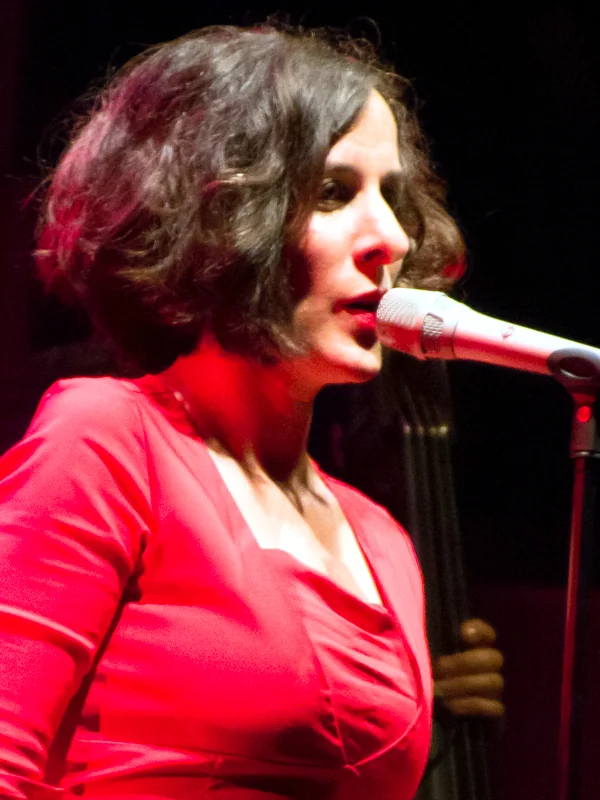
Image from Wikipedia
Image from Wikipedia
Lisa Bassenge – The Versatile Voice Between Jazz, Chanson, Pop, and Electronic Elegance
A Berlin Artist with Profile, Depth, and Enormous Stylistic Range
Lisa Bassenge is one of the most prominent German jazz singers of her generation. Born in 1974 in Berlin, she has developed a music career that cannot be reduced to a single genre: Jazz forms her home base, but blues, chanson, pop, soul, and singer-songwriter aesthetics also shape her artistic profile. Her voice resonates as warm, distinctive, and masterfully phrased, earning her recognition in the music press and among a style-conscious audience for years. ([lisa-bassenge.de](https://lisa-bassenge.de/))
Biography: Berlin Background, Musical Curiosity, and Early Influences
Lisa Bassenge discovered her love for singing and music as a teenager. Jazzthing describes her as born in Berlin in 1974; according to the same biographical details, she turned to music as a reliable source of support around the age of 16. She later studied jazz singing at the Hochschule für Musik Hanns Eisler in Berlin, a significant step for her technical development and subsequent stage presence. ([jazzthing.de](https://www.jazzthing.de/heft/97/editorial-97/?utm_source=openai))
This early training forms the foundation of an artist who combines musical intuition with analytical precision. Bassenge represents a performance style that relies not only on sound but also on text comprehension, timing, and atmosphere. It is precisely in this tension between jazzy improvisational culture and clarity that serves the song where the quality that defines her albums and live performances emerges. ([lisa-bassenge.de](https://lisa-bassenge.de/))
Career Beginnings: Trio, Club Sound, and Path to the Scene
Her professional journey began with the Lisa-Bassenge-Trio, which was founded in 1995 and gained early shape with the albums Going Home (2000), A Sigh, a Song (2002), and Three (2004). Concurrently, she became active with Micatone starting in 1999, a project that, according to its official website, was among the first to combine electronic breakbeats and club sounds with a live band around the turn of the millennium. This early positioning set Bassenge apart from a traditional understanding of jazz. ([lisa-bassenge.de](https://lisa-bassenge.de/))
This duality is central to her artistic development: On one side stands the reduced, intimate form of the trio, and on the other, the open, stylistically hybrid club aesthetic of Micatone. From this breadth, Bassenge developed an artistic language that is not directed by market logic but by musical necessity. ([lisa-bassenge.de](https://lisa-bassenge.de/))
Micatone and Nylon: Between Electronics, Chanson, and Contemporary Pop
According to band history, Micatone became a defining Berlin Nu-Jazz formation where Bassenge’s voice merged with pop songs, jazz sounds, and club tracks. On their albums, they collaborated with artists like Stuart Staples from Tindersticks, Demba Nabé from Seeed, and jazz musicians such as David Friedman and Gerard Presencer. The official website emphasizes that the band presented a highly modern longplayer with The Crack, which unfolds cinematic pop music between dark blues, joy, and melancholy. ([lisa-bassenge.de](https://lisa-bassenge.de/))
Nylon, the collaborative project with members of Micatone, showcased Bassenge’s enthusiasm for reinterpretation. The ensemble dressed old evergreen songs and chansons in a contemporary pop outfit, releasing works like Die Liebe kommt, Eine kleine Sehnsucht, and 10 Lieder über die Liebe. Thus, a repertoire emerged that respects musical traditions while modernizing them with electronic color, stylistic lightness, and urban elegance. ([de.wikipedia.org](https://de.wikipedia.org/wiki/Nylon_%28Band%29?utm_source=openai))
Solo Albums: From Songbook to Personal Signature
As a solo artist, Bassenge has released a series of distinctive albums that document her development into an independent songwriter and interpreter. Key milestones include A Little Loving (2006), Won’t Be Home Tonight – Live (2008), Nur fort (2011), Wolke 8 (2013), Canyon Songs (2015), Borrowed and Blue (2018), Mothers (2020), and Wildflowers (2023). Her official website lists a total of 18 released albums across various projects. ([de.wikipedia.org](https://de.wikipedia.org/wiki/Lisa_Bassenge?utm_source=openai))
Notably, Canyon Songs marks an aesthetic turning point. The album was created with Larry Klein, who previously worked with Joni Mitchell, Melody Gardot, Madeleine Peyroux, and Herbie Hancock; LA studio musicians also contributed. This combination of international production expertise and Bassenge’s lyrical voice shows how seriously she regards the album format as an artistic statement. ([mps-music.com](https://www.mps-music.com/releases/canyon-songs/?utm_source=openai))
Current Projects: Wildflowers and a New Chapter in 2026
With Wildflowers, Bassenge completed the trio trilogy in 2023 with Jacob Karlzon on piano and Andreas Lang on bass; preceding it were Borrowed and Blue and Mothers. The official site describes the record as an expression of curiosity and a willingness to experiment, while NDR Culture portrays her in 2026 as an artist traversing multiple genres and remaining active as a songwriter. Thus, her music career is by no means retrospective but continuously evolving. ([lisa-bassenge.de](https://lisa-bassenge.de/))
Particularly exciting is the announcement of her current programming on her website: for 2026, she names the project Two-Whole-Summers – Half-A-Life and lists concerts in Vienna and Toronto. Such information affirms that Bassenge continues to perform internationally and maintain her stage presence in the live sector. For a jazz singer, this connection between studio work and concert practice is a crucial part of her authority. ([lisa-bassenge.de](https://lisa-bassenge.de/))
Style, Sound Language, and Cultural Influence
Lisa Bassenge moves gracefully between jazz, pop, soul, and singer-songwriter traditions. The official website emphasizes her expressive singing style and describes her as an artist who operates beyond the mainstream. In practice, this means: she shapes songs not only through melody but also via arrangement, dynamics, and narrative precision. ([lisa-bassenge.de](https://lisa-bassenge.de/))
Her collaborations with the WDR and NDR big bands, as well as with Vinnie Colaiuta, Stuart Staples, and Larry Klein, underscore her authority within the tension of jazz, pop, and sophisticated studio production. MPS calls her one of the best German jazz vocalists, and the music press recognizes her ability to transform foreign material into personal dramaturgy. This is where her cultural value lies: Bassenge translates stylistic openness into a tangible stance. ([lisa-bassenge.de](https://lisa-bassenge.de/))
Discography and Reception: Continuity, Quality, and Artistic Coherence
Lisa Bassenge's discography showcases rare consistency. From the trio releases to Micatone and Nylon, up to her solo albums, her work consciously transcends genre boundaries while maintaining a clear signature. In reception, she repeatedly appears as a singer with an extraordinary timbre, whose repertoire mediates between cover interpretation, original songwriting, and stylistic redefinition. ([lisa-bassenge.de](https://lisa-bassenge.de/))
Even though Bassenge does not pursue a classic chart-topping career in the pop sense, her strength lies in the consistency of artistic quality. Her albums are reviewed in specialized media, her projects featured in concert programs, and her voice is described as a defining element. This represents a form of success that particularly counts in jazz: credibility, independence, and an unmistakable tone. ([jazzthing.de](https://www.jazzthing.de/review/lisa-bassenge-mothers/?utm_source=openai))
Voices of the Fans
The official presence on Instagram, Facebook, Spotify, and YouTube reveals an active listener base, indicating that Bassenge also engages an audience digitally. Her community primarily follows the mix of intimate songwriting, sophisticated production, and a liveable personality. For an artist like Lisa Bassenge, fan engagement arises less from loud posturing and more from authenticity, recognizability, and musical substance. ([lisa-bassenge.de](https://lisa-bassenge.de/))
Conclusion: Lisa Bassenge is exciting because she perceives jazz not as a boundary but as a starting point. Her career connects Berlin's music biography, international collaborations, strong stage presence, and a discography with a clear profile. Anyone who appreciates demanding singing, stylistic openness, and genuine artistic development should experience Lisa Bassenge live. ([lisa-bassenge.de](https://lisa-bassenge.de/))
Official Channels of Lisa Bassenge:
- Instagram: https://instagram.com/lisabassenge?igshid=YmMyMTA2M2Y%3D
- Facebook: https://www.facebook.com/l.bassenge
- YouTube: https://www.youtube.com/channel/UCaTDRuLGSYsuo3d9N3Oibtw
- Spotify: https://open.spotify.com/artist/2Tu3n9U5KukRqEgdruLGWg
- TikTok: No official profile found
Sources:
- Lisa Bassenge – Official Website
- Wikipedia – Lisa Bassenge
- NDR Culture – Wildflowers: Lisa Bassenge Trio Presents New Album
- MPS Music – Lisa Bassenge Artist Page
- Jazz thing & Blue Rhythm – Short Biography
- Wikipedia – Micatone
- Wikipedia – Nylon (Band)
- Musikexpress – Lisa Bassenge Artist Archive
- Jazz thing & Blue Rhythm – Review of Mothers
- Wikipedia: Image and Text Source