
Sullivan Fortner
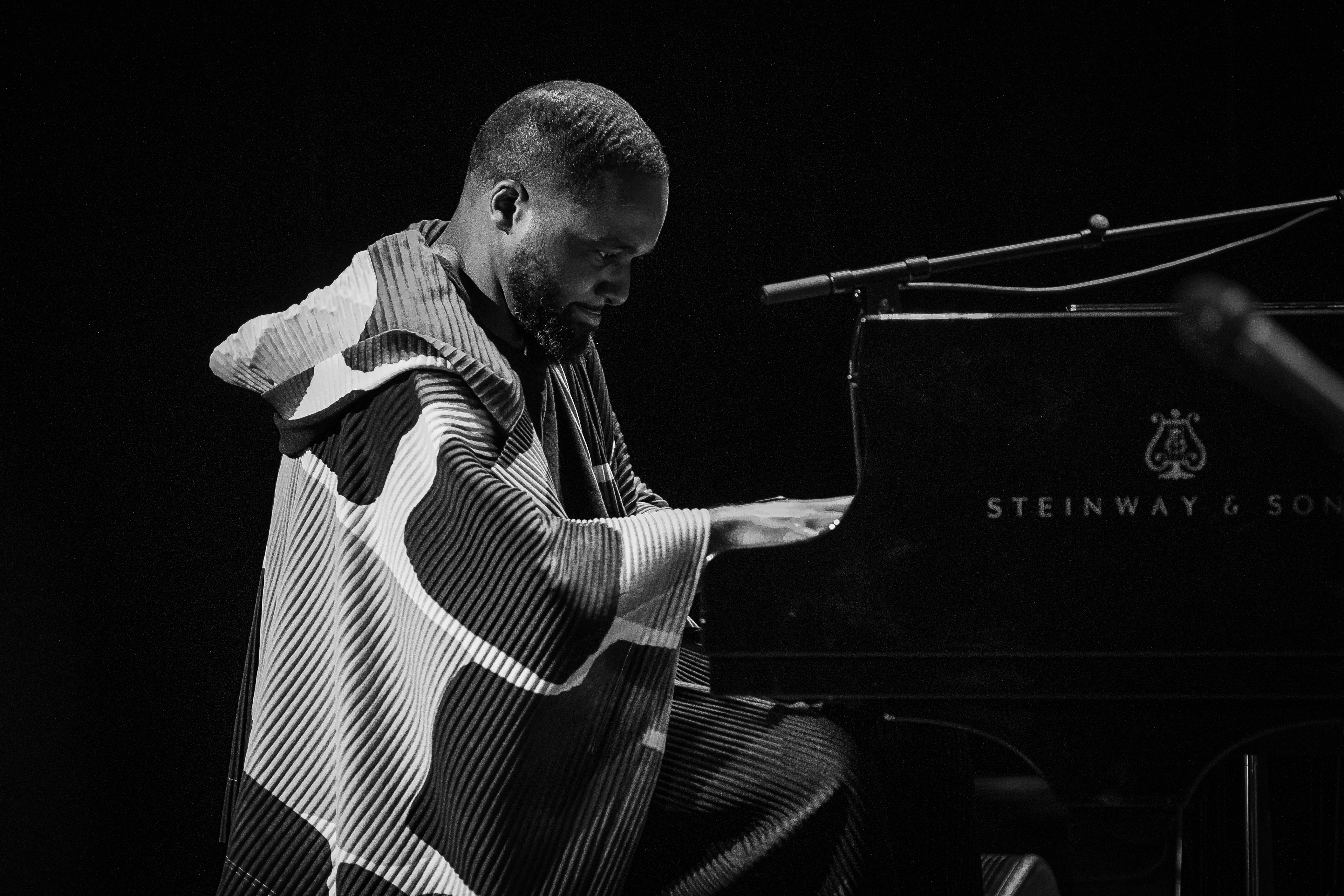
Image from Wikipedia
Image from Wikipedia
Sullivan Fortner: The Jazzy Visionary from New Orleans Between Tradition, Risk, and Virtuosic Renewal
A Pianist, Composer, and Sound Architect with a Distinct Signature
Sullivan Joseph Fortner belongs to that rare generation of jazz musicians who seamlessly combine technical mastery, historical awareness, and spontaneous creativity. Born in 1986 in New Orleans, the pianist grew up in a city whose musical DNA consists of gospel, blues, brass band culture, and improvisational freedom. His artistic development took him from church piano to academic training, eventually landing him at the forefront of contemporary jazz. (de.wikipedia.org)
Fortner is regarded as an outstanding pianist of his generation, comfortably navigating piano, keyboards, Hammond B3, Moog, vocoder, celesta, and percussion. This instrumental versatility shapes not only his musical career but also his compositional thinking: he thinks in colors, textures, and rhythmic tensions, not just in chords. It is precisely from this blend of elegance, adventurous spirit, and improvisational clarity that his name has become so prominent in the international jazz scene. (de.wikipedia.org)
Early Influences in New Orleans: Music as a Lived Language
Fortner began playing the piano at the age of four, inspired by church music and the immediate presence of the instrument in the everyday life of his hometown. New Orleans is not only his birthplace but also a stylistic foundation: musicians learn early on that music carries social function, spiritual depth, and festive energy all at once. This early influence is still reflected in his playing, which often sounds warm, singing, and simultaneously rhythmically dynamic. (de.wikipedia.org)
His education also reflects the profile of a musician who takes craft seriously. Fortner studied at the Oberlin Conservatory of Music and then completed a master's degree at the Manhattan School of Music. Teachers like Jason Moran and Fred Hersch recognized his talent early on, and these encounters highlight the stylistic openness of his playing: Fortner stands in the tradition of modern jazz piano without allowing himself to be confined by it. (de.wikipedia.org)
The Path to the International Scene: Accompanist, Soloist, Bandleader
His professional breakthrough developed through work with defining ensembles and artists. In 2009, Fortner was part of Stefon Harris's band, and later he became the regular pianist in Roy Hargrove's quintet for seven years. This period was central to his artistic maturation as it placed him in the service of a highly energetic yet tradition-conscious modern jazz approach. Anyone who plays with Hargrove must possess a sense of form, reaction speed, and stylistic breadth—qualities that Fortner visibly consolidated there. (de.wikipedia.org)
At the same time, he worked with artists such as Cécile McLorin Salvant, Ambrose Akinmusire, Billy Hart, Gary Bartz, Donald Harrison, Christian Scott, Theo Croker, and Nicholas Payton. His role as an accompanist has been particularly highlighted by critics: Fortner does not simply accompany; he comments, contrasts, and expands. His presence on stage is characterized by fine humor, great attentiveness, and a playing style that maintains air and transparency even in dense arrangements. (de.wikipedia.org)
Awards, Recognition, and Institutional Authority
Fortner's reputation is based on artistic achievement and tangible accolades. In 2015, he won the Cole Porter Fellowship in Jazz from the American Pianists Association, which includes funding, a recording opportunity, and career services. He has received further honors such as the Leonore Annenberg Arts Fellowship, the Lincoln Center Award for Emerging Artists, and the Shifting Foundation Grant for artistic career development. These awards not only mark success but also confirm his importance in the jazz landscape. (en.wikipedia.org)
Grammy history is also central for Fortner. Current sources reveal several nominations and awards associated with his collaborations with Samara Joy, his solo material, and his trio work. The specialized press describes him as one of the most significant pianists of his generation; names such as Brad Mehldau, Fred Hersch, and Jason Moran are mentioned as reference points for his innovative power. (jazzterrassa.org)
Discography: From Debut to New Trio Concepts
As a leader, Fortner has developed a discographical line that clearly distinguishes itself from mere accompaniment. His major releases include Aria (2015), Moments Preserved (2018), Tea for Two (2020), Solo Game (2023), Wildflowers, Vol. 1 (2024), Southern Nights (2025), Play (2025), and Leave That In There (2026). These releases show an evolution from a focused debut to concept-driven solo projects and finally to a free, more experimental trio aesthetic. (music.apple.com)
Aria was widely regarded as an Impulse! debut and solidified Fortner's reputation as a sensitive, highly educated jazz artist with a smooth tone. Moments Preserved centered on Roy Hargrove and documented a close artistic relationship. Solo Game continued this trajectory and opened up space for a dual-focused solo concept, where Fortner radically expanded his sound language on piano, Fender Rhodes, Hammond organ, synthesizers, and percussion. (music.apple.com)
With Southern Nights, he returned to the trio format in 2025 while also connecting to his New Orleans roots. Critics described the album as a tribute to the musical history of the South and as a vibrant, stylistically open work. Leave That In There in 2026 goes even further, presenting trio work that is more modernist and experimental, balancing nostalgia with a futuristic openness. (music.apple.com)
Style and Sound Language: Tradition as a Starting Point, Not a Boundary
Fortner's style is deeply rooted in jazz, yet it is never museum-like. His improvisations connect post-bop-based harmony with rhythmic fluidity, gospel-infused phrasing, and remarkable clarity in structure. Critics repeatedly highlight that he does not simply quote tradition but reinterprets it in real time. This is where his special authority as a musician lies: he knows the history of jazz piano but uses it as material for contemporary music. (open.spotify.com)
His sound palette also contributes to his uniqueness. The use of Hammond B3, Moog, vocoder, and celesta opens the spectrum far beyond the classic trio sound. On Solo Game and in newer trio projects, a musician emerges who conceptually blends electronic and acoustic colors into an organic dramaturgy. This ability makes his music exciting for listeners who appreciate both deep jazz historical references and open formats. (sullivanfortnermusic.com)
Collaborations, Influence, and Cultural Embeddedness
Fortner's cultural influence extends far beyond his role as a soloist. He has been involved in projects with Cécile McLorin Salvant, including multiple acclaimed recordings that established his reputation as a sensitive partner with great harmonic insight. His collaboration with Samara Joy has further enhanced his visibility in international jazz. Such partnerships demonstrate that Fortner is not only a virtuosic interpreter but also a musician who considers vocal lines, dramatic form, and ensemble balance. (open.spotify.com)
His roots in New Orleans remain a crucial resonance space. Various sources emphasize how strongly his music is shaped by the city’s history—from church music and blues to the open, collective spirit of Southern tradition. At the same time, Fortner has developed a transatlantic perspective through studies, tours, and international collaborations. The result is a jazz that feels locally rooted and globally connected. (de.wikipedia.org)
Current Projects and Artistic Present
In recent sources, Fortner's trio work and new releases appear as a central chapter in his ongoing career. 2025 and 2026 mark a productive phase with releases, tour dates, and festival appearances in Europe and the USA. Notably, the trio formation with Tyrone Allen and Kayvon Gordon has been highlighted multiple times, described as an independent, distinct entity. (jazzterrassa.org)
Furthermore, the international press perceives Fortner as an expressive, genre-open jazz musician with a strong profile. Particularly Southern Nights and Leave That In There show that he defines his music career not through routine but through risk and evolution. Experiencing Fortner live means encountering not just a performer of a mere repertoire but an artist who sees every form as an invitation to rediscovery. (jazzterrassa.org)
Conclusion: Why Sullivan Fortner Remains So Exciting
Sullivan Fortner represents a jazz that knows its history yet continuously pushes forward. His artistic development unifies New Orleans, academic excellence, outstanding accompaniment, and an increasingly independent leader personality. It is precisely this tension between control and freedom, between spirituality and modern form, that makes him one of the most fascinating pianists of his generation. (de.wikipedia.org)
For those seeking advanced jazz with soul, intelligence, and rhythmic energy, Fortner is a musician of extraordinary depth. His albums, concerts, and collaborations showcase an artist who actively shapes the present of jazz. Experiencing Sullivan Fortner live means listening to a pianist who makes every motif into a story. (downbeat.com)
Official Channels of Sullivan Fortner:
- Instagram: https://www.instagram.com/sullivanfortnerjr/
- Facebook: https://www.facebook.com/sullivanfortner
- YouTube: https://music.youtube.com/channel/UCRzuxR0TjjUOdwPNwZ7BQJw
- Spotify: https://open.spotify.com/artist/2kQZjl1wnD42U6rKhAHmz5
- TikTok: No official profile found
Sources:
- SULLIVAN JOSEPH FORTNER JR - Artist Website
- SULLIVAN JOSEPH FORTNER JR - Management/Booking
- Wikipedia - Sullivan Fortner
- Wikipedia - Sullivan Fortner (English)
- Jazz Terrassa - Sullivan Fortner Trio
- AllMusic - Sullivan Fortner Biography
- Apple Music - Sullivan Fortner
- Spotify - Sullivan Fortner
- DownBeat - Sullivan Fortner Trio: Collective Imagination
- DownBeat Reviews - Southern Nights
- The Guardian - Sullivan Fortner on Leave That In There
- SRF - Pianist Sullivan Fortner