Minoan Crete in Regensburg: Experience the Art and History of the Bronze Age
Date and Time
Location
Price
About this Event
Mood
Venue Type
Minoan Crete: A Fascinating Journey into the Bronze Age
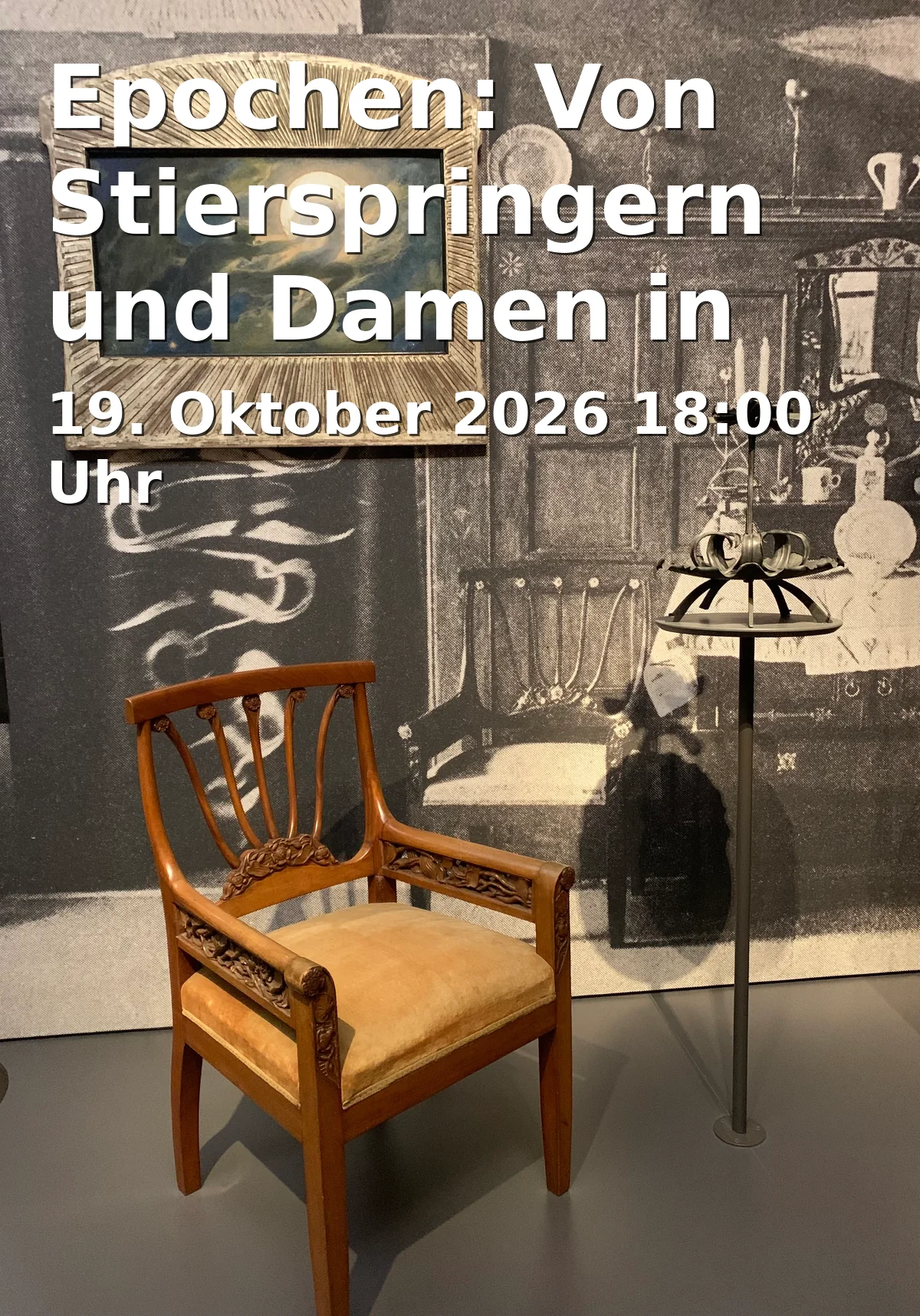
On October 19, 2026, the lecture Eras: From Bull-Leapers and Ladies in Blue – Minoan Crete will open an impressive access to one of the earliest high cultures of the Aegean. Prof. Dr. Gerhard Waldherr, city heritage curator, will guide through the cultural world of Crete at the Thon-Dittmer-Palais, connecting archaeological evidence with art historical and societal historical perspectives.
Between Palace Architecture and Colorful Imagery
The Minoan era spans from the end of the 4th millennium to about the 13th century BC. Its material culture is indicative of a highly developed civilization, whose urban lifestyle and architectural accomplishments continue to fascinate today. Palace complexes, artistically designed ceramics, colorful wall paintings, and impressive cult objects convey the image of a society that was closely connected to the Eastern Mediterranean.
Bull-Leapers, Ladies in Blue, and the Aesthetics of Movement
The title refers to two iconic motifs of Minoan art. Representations of bull-leapers connect body, animal, and space into a dynamic composition. The so-called Ladies in Blue symbolize the elegant, color-intensive imagery of Minoan wall painting. In the analysis of the works, line direction, ornamentation, materiality, and color effects emerge as central elements of an aesthetic experience.
Crete in Exchange with High Cultures
The island was not an isolated cultural area. Material and intellectual exchange with Egypt and the Assyrian Empire shaped trade, art, and architecture. The lecture places the Minoan art style within the history of the Bronze Age and makes visible how economic networking, religious concepts, and courtly culture interacted.
Archaeology, Writing, and Cultural Education
A special allure of Minoan culture lies in the tension between visible legacies and open research questions. The native writing systems have not yet been fully deciphered. Thus, architecture, sculpture, painting, ceramics, and installation contexts become increasingly important as sources for historical interpretation. The event thus offers cultural education, scientific classification, and a vivid artistic experience.
Conclusion: A Journey to the Origins of the Aegean
Visitors can expect an informative evening about a culture whose imagery resonates through movement, color, and enigmatic signs to the present day. Anyone interested in art history, archaeology, and the aesthetic experience of past epochs will find an inspiring access to Minoan Crete at the Thon-Dittmer-Palais.
Official Channels of Prof. Dr. Gerhard Waldherr:
- Instagram: no official profile found
- Facebook: no official profile found
- YouTube: no official profile found
- Website: no official profile found