
Regensburg
Obermünsterstraße 3, 93047 Regensburg, Deutschland
Apollonia's Garden | Regensburg & Obermünsterviertel
Apollonia's Garden is not a classical concert hall and not a large event venue, but a newly conceived, publicly accessible urban oasis in the Obermünsterviertel of Regensburg. This is exactly what makes the place so interesting for many inquiries: Those searching for Apollonia's Garden Regensburg, Obermünsterstraße 3, green oasis, or consumption-free place often seek not just an address, but a clear classification within the urban structure. The area connects greenery, tranquility, social encounters, and memory, making it a good example of how a city center can become not only denser but also more livable. Apollonia's Garden has emerged from a previous interim use and today stands for a conscious change in public space. The place shows that a small area can have a big impact when design, greening, mobility, and neighborhood development are thought together. For visitors, it is a quiet anchor point in the old town, for residents a visible sign of upgrading, and for the city a real laboratory with signaling effect.([oth-regensburg.de](https://www.oth-regensburg.de/die-oth/einrichtungen/stabsstelle-kommunikation/stadtnah))
Apollonia's Garden in Regensburg: Location, Address, and Classification
The official address is Obermünsterstraße 3, 93047 Regensburg. At the same time, the city describes the place as part of the western Obermünsterstraße and thus as part of a neighborhood that has been consciously rethought in recent years. Those visiting Apollonia's Garden find themselves in the middle of the old town, but not in a classic tourist hotspot with dense traffic flow, but in an urban space that focuses on staying rather than passing through. This is important for local searches because many users want to know if the place is easy to locate, in which neighborhood it is situated, and how it differs from an ordinary green island. The answer is clear: Apollonia's Garden is a small but distinctive building block in the Obermünsterviertel, embedded in an urban development project that reorganizes paths, squares, and uses. This location makes the place interesting for all those who are interested in Regensburg city center, Obermünsterplatz, or a quiet break in the center.([oth-regensburg.de](https://www.oth-regensburg.de/die-oth/einrichtungen/stabsstelle-kommunikation/stadtnah))
The environment is also part of the narrative. In the Obermünsterviertel, four thematic zones have been made visible with the temporary guiding system: Schlemmermeile, Under Trees, Obermünsterplatz, and Apollonia's Garden. This creates an easily readable urban space where orientation and atmosphere complement each other. Those walking through the neighborhood quickly realize that Apollonia's Garden did not arise by chance, but as a consciously marked place of stay as part of a larger urban choreography. For SEO, this classification is particularly valuable because searchers often use very specific terms but actually expect an intuitive answer: Where exactly is the place, what is different there, and why is a visit worthwhile? Apollonia's Garden provides a good answer to this because it does not appear as an isolated facility but as part of a city center that is visibly changing.([regensburg.de](https://www.regensburg.de/regensburg-507/kurz-knapp/leitsystem-im-obermuensterquartier))
From the Demolition of the Green Oasis to the New Place of Stay
The story of Apollonia's Garden does not begin with the new name but with the earlier Green Oasis. This was created in 2015 under the motto More Green Instead of Concrete by Transition e.V. and quickly developed into a popular meeting point. At the same time, problems arose over time, including noise, vandalism, and usage conflicts. The city describes that the facility no longer met the requirements for standing and traffic safety. Therefore, it was demolished in spring 2025 and further developed as a new, more robust interim use. From this process, Apollonia's Garden emerged, meaning not just a mere renaming but a substantive and design-oriented re-establishment. For people searching for Apollonia's Garden Regensburg, this story is important because it explains why the place today appears as it does: quiet, clearly structured, greener, and more focused on an orderly public stay.([regensburg.de](https://www.regensburg.de/rathaus/aemteruebersicht/planungs-u-baureferat/amt-fuer-stadtplanung-und-mobilitaet/projekte-und-konzepte/neugestaltung-obermuensterplatz-und-obermuensterstrasse))
The new name was chosen through an online survey and won decisively against other suggestions. Apollonia's Garden thus connects to a citizen participation process that shapes not only the place but also its significance. The name refers to Apollonia Diepenbrock and makes her role in public space visible. This is more than a symbol: it connects today's quality of stay with a historical women's story that has long been too little visible in Regensburg. Therefore, when visiting the place, one encounters not only a small green oasis but also a consciously set culture of remembrance. This connection between present and history gives the square depth. The facility is not merely decorative but tells a story of care, change, and civic design.([mein.regensburg.de](https://mein.regensburg.de/obermuensterviertel?projekt_phase_id=182))
Apollonia Diepenbrock, Josephshäuschen, and the Story Behind the Name
The namesake Apollonia Diepenbrock lived from 1799 to 1880 and shaped the social history of Regensburg in a special way. According to available information, she founded the Josephshäuschen at Obermünsterplatz 5 in 1845, a house for single, poor, sick, and disabled women without entitlement to municipal support. Sources describe that she lived in Regensburg for many years, initially caring for patients in her apartment and later building a house where she herself contributed to care, organization, and financing. For an unmarried woman of her time, this was an extraordinary path. That is precisely why the name Apollonia's Garden is so aptly chosen: it does not refer to an abstract figure but to a concrete woman who took responsibility and practiced social help.([mein.regensburg.de](https://mein.regensburg.de/obermuensterviertel?projekt_phase_id=182))
This historical dimension is very important for the perception of the place. Those only looking for a pretty green space easily overlook that the name was deliberately chosen to make women's history visible in urban space. The city also formulates it this way: With the new name, the life achievement of Apollonia Diepenbrock is honored and a piece of Regensburg's history is brought back into everyday life. This makes Apollonia's Garden a place with an identity-forming function. In the SEO context, this is particularly valuable because users often ask about the meaning, origin, and history of a place. Here, the answer cannot be superficial. Apollonia's Garden stands for remembrance, socio-historical classification, and the idea that a public square can be more than just space. It can become a narrative space.([mein.regensburg.de](https://mein.regensburg.de/obermuensterviertel?projekt_phase_id=182))
Design, Greening, and Quality of Stay on Site
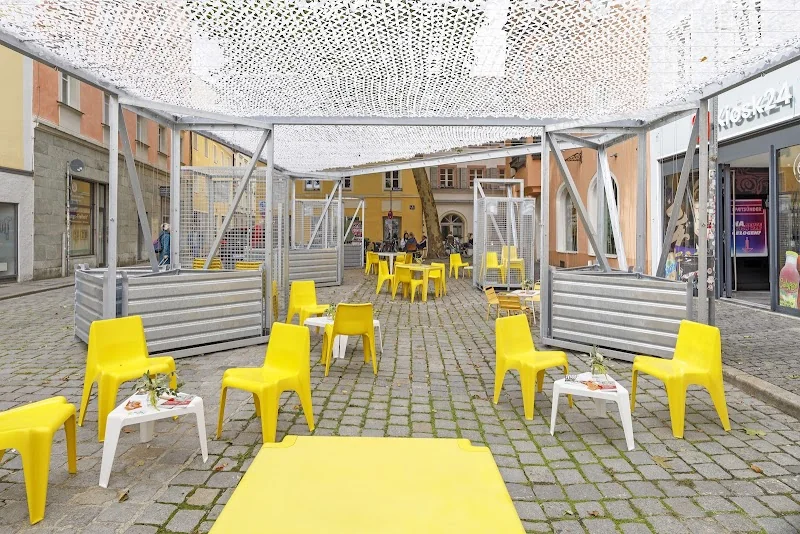
Design-wise, Apollonia's Garden follows a clear principle: robust, modular, and flexible. The architecture firm studio emde developed a concept together with the city planning office, gardening office, and the laboratory of creative minds that relies on steel constructions with climbing frameworks. These constructions are greened with climbing plants such as hops, bindweed, and akebia. During the day, chairs and tables are available, including the well-known Bofinger chairs from the 1960s. In the evening, the furniture is stored away so that the area truly functions as a daytime place. This daytime use is not coincidental but part of the organizational idea behind the place. For visitors, this means a clear usage logic: in the morning and during the day, a quiet area for staying, in the evening less furniture and thus more protection and structure. Apollonia's Garden is therefore not a spontaneous open space but a consciously designed urban space with a recognizable signature.([regensburg.de](https://www.regensburg.de/rathaus/aemteruebersicht/planungs-u-baureferat/amt-fuer-stadtplanung-und-mobilitaet/projekte-und-konzepte/neugestaltung-obermuensterplatz-und-obermuensterstrasse))
The quality of stay also includes the new furnishings and plant elements created as part of the immediate measures in Obermünsterstraße and at Obermünsterplatz. The city mentions, among other things, 20 seating options, 26 planting beds, six mobile trees, a bicycle repair station, and additional bike parking options. In addition, there are e-scooter sharing stations and parking spaces for cargo bikes. This mix is particularly valuable for an inner-city location because it not only looks nice but also facilitates everyday life. Those taking a break there find greenery, shade, and opportunities for short stays. Those traveling by bike benefit from additional parking and service offers. Those interested in urban quality of stay immediately recognize: Here, decoration was not simply added, but a contemporary urban space was purposefully developed where furniture, greening, and mobility are coordinated.([regensburg.de](https://www.regensburg.de/rathaus/aemteruebersicht/planungs-u-baureferat/amt-fuer-stadtplanung-und-mobilitaet/projekte-und-konzepte/neugestaltung-obermuensterplatz-und-obermuensterstrasse))
Access, Parking, and Orientation in the Obermünsterviertel
When it comes to access and parking, it is important that the city has explicitly calmed traffic in the area and removed public parking spaces in Obermünsterstraße. At the same time, the accessibility of shops, residences, and barrier-free parking spaces is ensured. Parking options for residents and persons with limited mobility remain on the eastern Obermünsterplatz; for visitors, there are no dedicated parking spaces directly at the oasis. For guests, this means primarily: Apollonia's Garden is not a place with classic parking spaces right at the door, but an urban space that should rather be understood as a destination for a walk, a short stay, or a conscious stopover. This relief from car traffic contributes to the atmosphere. The place thus appears more open, quieter, and more focused on people.([regensburg.de](https://www.regensburg.de/rathaus/aemteruebersicht/planungs-u-baureferat/amt-fuer-stadtplanung-und-mobilitaet/projekte-und-konzepte/neugestaltung-obermuensterplatz-und-obermuensterstrasse))
Orientation has also become clearer. The temporary guiding system in the Obermünsterviertel marks four zones and supports the perception of the neighborhood with signs, wayfinding, information areas, and QR codes. This is helpful for searchers because Apollonia's Garden no longer appears as an elusive interim use but as a clearly named place within an urban route. So, for those wondering how to find Apollonia's Garden, where the square is located within the Obermünsterviertel, and why so much construction and transitional character is currently visible there, the guiding system provides a very good answer. It also shows that the place is not meant to be hidden. On the contrary: it is deliberately made readable as a station in the neighborhood. This is pleasant for visitors and very relevant for local searches for Obermünsterplatz, Apollonia's Garden, or Regensburg city center.([regensburg.de](https://www.regensburg.de/regensburg-507/kurz-knapp/leitsystem-im-obermuensterquartier))
Redesign from 2028: What is Planned Long-Term in the Neighborhood
In the long term, Apollonia's Garden is part of a larger redesign that is to be implemented from 2028. The city plans a barrier-free demolition and a transformation of Obermünsterstraße into a traffic-calmed area. Among other things, a multifunctional band with existing gastronomic outdoor seating, new green and water areas, and additional elements such as the Vitus stream and a fountain square are planned. The plans thus focus not only on beauty but also on climate resilience, accessibility, and quality of stay. For Apollonia's Garden, this means: The current square is intended as a temporary but meaningful transitional solution. It is meant to show how a calmed urban space functions in everyday life and at the same time provide experiences that will flow into the final planning. That is why the place is so exciting: it is already usable but not yet at the end of its development.([regensburg.de](https://www.regensburg.de/rathaus/aemteruebersicht/planungs-u-baureferat/amt-fuer-stadtplanung-und-mobilitaet/projekte-und-konzepte/neugestaltung-obermuensterplatz-und-obermuensterstrasse))
This perspective also makes Apollonia's Garden interesting for future visitors. Those who come today experience not only a green oasis but a place under construction where urban development becomes visible. The city emphasizes that the measures for greening, traffic calming, and improving the stay quality serve as a test laboratory and will be accompanied by further participation. For practice, this means: Apollonia's Garden will continue to play a role in the neighborhood, but with the character of an interim use that leads to a better final solution. Those who know Regensburg know that such places are often particularly formative because they make the transition between old and new, between planning and everyday life, between memory and future tangible. Exactly this is happening here. The place is small, but it tells a lot about the direction in which the city center is moving.([regensburg.de](https://www.regensburg.de/rathaus/aemteruebersicht/planungs-u-baureferat/amt-fuer-stadtplanung-und-mobilitaet/projekte-und-konzepte/neugestaltung-obermuensterplatz-und-obermuensterstrasse))
In summary, Apollonia's Garden combines location, history, greenery, and urban development in one place. The address on Obermünsterstraße makes the oasis easily findable, the reference to Apollonia Diepenbrock gives it cultural depth, and the current immediate measures provide it with a clear function in the everyday life of the neighborhood. Therefore, those searching for Apollonia's Garden Regensburg will find not only a name but a part of urban renewal that is already visible today and will continue to develop until 2028. Especially for visitors looking for a quiet break in the old town, this is a strong added value: Apollonia's Garden is not loud, not overly staged, and not consumption-oriented, but a place to arrive, linger, and perceive.([oth-regensburg.de](https://www.oth-regensburg.de/die-oth/einrichtungen/stabsstelle-kommunikation/stadtnah))
Sources:
Mehr anzeigenWeniger anzeigen
Apollonia's Garden | Regensburg & Obermünsterviertel
Apollonia's Garden is not a classical concert hall and not a large event venue, but a newly conceived, publicly accessible urban oasis in the Obermünsterviertel of Regensburg. This is exactly what makes the place so interesting for many inquiries: Those searching for Apollonia's Garden Regensburg, Obermünsterstraße 3, green oasis, or consumption-free place often seek not just an address, but a clear classification within the urban structure. The area connects greenery, tranquility, social encounters, and memory, making it a good example of how a city center can become not only denser but also more livable. Apollonia's Garden has emerged from a previous interim use and today stands for a conscious change in public space. The place shows that a small area can have a big impact when design, greening, mobility, and neighborhood development are thought together. For visitors, it is a quiet anchor point in the old town, for residents a visible sign of upgrading, and for the city a real laboratory with signaling effect.([oth-regensburg.de](https://www.oth-regensburg.de/die-oth/einrichtungen/stabsstelle-kommunikation/stadtnah))
Apollonia's Garden in Regensburg: Location, Address, and Classification
The official address is Obermünsterstraße 3, 93047 Regensburg. At the same time, the city describes the place as part of the western Obermünsterstraße and thus as part of a neighborhood that has been consciously rethought in recent years. Those visiting Apollonia's Garden find themselves in the middle of the old town, but not in a classic tourist hotspot with dense traffic flow, but in an urban space that focuses on staying rather than passing through. This is important for local searches because many users want to know if the place is easy to locate, in which neighborhood it is situated, and how it differs from an ordinary green island. The answer is clear: Apollonia's Garden is a small but distinctive building block in the Obermünsterviertel, embedded in an urban development project that reorganizes paths, squares, and uses. This location makes the place interesting for all those who are interested in Regensburg city center, Obermünsterplatz, or a quiet break in the center.([oth-regensburg.de](https://www.oth-regensburg.de/die-oth/einrichtungen/stabsstelle-kommunikation/stadtnah))
The environment is also part of the narrative. In the Obermünsterviertel, four thematic zones have been made visible with the temporary guiding system: Schlemmermeile, Under Trees, Obermünsterplatz, and Apollonia's Garden. This creates an easily readable urban space where orientation and atmosphere complement each other. Those walking through the neighborhood quickly realize that Apollonia's Garden did not arise by chance, but as a consciously marked place of stay as part of a larger urban choreography. For SEO, this classification is particularly valuable because searchers often use very specific terms but actually expect an intuitive answer: Where exactly is the place, what is different there, and why is a visit worthwhile? Apollonia's Garden provides a good answer to this because it does not appear as an isolated facility but as part of a city center that is visibly changing.([regensburg.de](https://www.regensburg.de/regensburg-507/kurz-knapp/leitsystem-im-obermuensterquartier))
From the Demolition of the Green Oasis to the New Place of Stay
The story of Apollonia's Garden does not begin with the new name but with the earlier Green Oasis. This was created in 2015 under the motto More Green Instead of Concrete by Transition e.V. and quickly developed into a popular meeting point. At the same time, problems arose over time, including noise, vandalism, and usage conflicts. The city describes that the facility no longer met the requirements for standing and traffic safety. Therefore, it was demolished in spring 2025 and further developed as a new, more robust interim use. From this process, Apollonia's Garden emerged, meaning not just a mere renaming but a substantive and design-oriented re-establishment. For people searching for Apollonia's Garden Regensburg, this story is important because it explains why the place today appears as it does: quiet, clearly structured, greener, and more focused on an orderly public stay.([regensburg.de](https://www.regensburg.de/rathaus/aemteruebersicht/planungs-u-baureferat/amt-fuer-stadtplanung-und-mobilitaet/projekte-und-konzepte/neugestaltung-obermuensterplatz-und-obermuensterstrasse))
The new name was chosen through an online survey and won decisively against other suggestions. Apollonia's Garden thus connects to a citizen participation process that shapes not only the place but also its significance. The name refers to Apollonia Diepenbrock and makes her role in public space visible. This is more than a symbol: it connects today's quality of stay with a historical women's story that has long been too little visible in Regensburg. Therefore, when visiting the place, one encounters not only a small green oasis but also a consciously set culture of remembrance. This connection between present and history gives the square depth. The facility is not merely decorative but tells a story of care, change, and civic design.([mein.regensburg.de](https://mein.regensburg.de/obermuensterviertel?projekt_phase_id=182))
Apollonia Diepenbrock, Josephshäuschen, and the Story Behind the Name
The namesake Apollonia Diepenbrock lived from 1799 to 1880 and shaped the social history of Regensburg in a special way. According to available information, she founded the Josephshäuschen at Obermünsterplatz 5 in 1845, a house for single, poor, sick, and disabled women without entitlement to municipal support. Sources describe that she lived in Regensburg for many years, initially caring for patients in her apartment and later building a house where she herself contributed to care, organization, and financing. For an unmarried woman of her time, this was an extraordinary path. That is precisely why the name Apollonia's Garden is so aptly chosen: it does not refer to an abstract figure but to a concrete woman who took responsibility and practiced social help.([mein.regensburg.de](https://mein.regensburg.de/obermuensterviertel?projekt_phase_id=182))
This historical dimension is very important for the perception of the place. Those only looking for a pretty green space easily overlook that the name was deliberately chosen to make women's history visible in urban space. The city also formulates it this way: With the new name, the life achievement of Apollonia Diepenbrock is honored and a piece of Regensburg's history is brought back into everyday life. This makes Apollonia's Garden a place with an identity-forming function. In the SEO context, this is particularly valuable because users often ask about the meaning, origin, and history of a place. Here, the answer cannot be superficial. Apollonia's Garden stands for remembrance, socio-historical classification, and the idea that a public square can be more than just space. It can become a narrative space.([mein.regensburg.de](https://mein.regensburg.de/obermuensterviertel?projekt_phase_id=182))
Design, Greening, and Quality of Stay on Site
Design-wise, Apollonia's Garden follows a clear principle: robust, modular, and flexible. The architecture firm studio emde developed a concept together with the city planning office, gardening office, and the laboratory of creative minds that relies on steel constructions with climbing frameworks. These constructions are greened with climbing plants such as hops, bindweed, and akebia. During the day, chairs and tables are available, including the well-known Bofinger chairs from the 1960s. In the evening, the furniture is stored away so that the area truly functions as a daytime place. This daytime use is not coincidental but part of the organizational idea behind the place. For visitors, this means a clear usage logic: in the morning and during the day, a quiet area for staying, in the evening less furniture and thus more protection and structure. Apollonia's Garden is therefore not a spontaneous open space but a consciously designed urban space with a recognizable signature.([regensburg.de](https://www.regensburg.de/rathaus/aemteruebersicht/planungs-u-baureferat/amt-fuer-stadtplanung-und-mobilitaet/projekte-und-konzepte/neugestaltung-obermuensterplatz-und-obermuensterstrasse))
The quality of stay also includes the new furnishings and plant elements created as part of the immediate measures in Obermünsterstraße and at Obermünsterplatz. The city mentions, among other things, 20 seating options, 26 planting beds, six mobile trees, a bicycle repair station, and additional bike parking options. In addition, there are e-scooter sharing stations and parking spaces for cargo bikes. This mix is particularly valuable for an inner-city location because it not only looks nice but also facilitates everyday life. Those taking a break there find greenery, shade, and opportunities for short stays. Those traveling by bike benefit from additional parking and service offers. Those interested in urban quality of stay immediately recognize: Here, decoration was not simply added, but a contemporary urban space was purposefully developed where furniture, greening, and mobility are coordinated.([regensburg.de](https://www.regensburg.de/rathaus/aemteruebersicht/planungs-u-baureferat/amt-fuer-stadtplanung-und-mobilitaet/projekte-und-konzepte/neugestaltung-obermuensterplatz-und-obermuensterstrasse))
Access, Parking, and Orientation in the Obermünsterviertel
When it comes to access and parking, it is important that the city has explicitly calmed traffic in the area and removed public parking spaces in Obermünsterstraße. At the same time, the accessibility of shops, residences, and barrier-free parking spaces is ensured. Parking options for residents and persons with limited mobility remain on the eastern Obermünsterplatz; for visitors, there are no dedicated parking spaces directly at the oasis. For guests, this means primarily: Apollonia's Garden is not a place with classic parking spaces right at the door, but an urban space that should rather be understood as a destination for a walk, a short stay, or a conscious stopover. This relief from car traffic contributes to the atmosphere. The place thus appears more open, quieter, and more focused on people.([regensburg.de](https://www.regensburg.de/rathaus/aemteruebersicht/planungs-u-baureferat/amt-fuer-stadtplanung-und-mobilitaet/projekte-und-konzepte/neugestaltung-obermuensterplatz-und-obermuensterstrasse))
Orientation has also become clearer. The temporary guiding system in the Obermünsterviertel marks four zones and supports the perception of the neighborhood with signs, wayfinding, information areas, and QR codes. This is helpful for searchers because Apollonia's Garden no longer appears as an elusive interim use but as a clearly named place within an urban route. So, for those wondering how to find Apollonia's Garden, where the square is located within the Obermünsterviertel, and why so much construction and transitional character is currently visible there, the guiding system provides a very good answer. It also shows that the place is not meant to be hidden. On the contrary: it is deliberately made readable as a station in the neighborhood. This is pleasant for visitors and very relevant for local searches for Obermünsterplatz, Apollonia's Garden, or Regensburg city center.([regensburg.de](https://www.regensburg.de/regensburg-507/kurz-knapp/leitsystem-im-obermuensterquartier))
Redesign from 2028: What is Planned Long-Term in the Neighborhood
In the long term, Apollonia's Garden is part of a larger redesign that is to be implemented from 2028. The city plans a barrier-free demolition and a transformation of Obermünsterstraße into a traffic-calmed area. Among other things, a multifunctional band with existing gastronomic outdoor seating, new green and water areas, and additional elements such as the Vitus stream and a fountain square are planned. The plans thus focus not only on beauty but also on climate resilience, accessibility, and quality of stay. For Apollonia's Garden, this means: The current square is intended as a temporary but meaningful transitional solution. It is meant to show how a calmed urban space functions in everyday life and at the same time provide experiences that will flow into the final planning. That is why the place is so exciting: it is already usable but not yet at the end of its development.([regensburg.de](https://www.regensburg.de/rathaus/aemteruebersicht/planungs-u-baureferat/amt-fuer-stadtplanung-und-mobilitaet/projekte-und-konzepte/neugestaltung-obermuensterplatz-und-obermuensterstrasse))
This perspective also makes Apollonia's Garden interesting for future visitors. Those who come today experience not only a green oasis but a place under construction where urban development becomes visible. The city emphasizes that the measures for greening, traffic calming, and improving the stay quality serve as a test laboratory and will be accompanied by further participation. For practice, this means: Apollonia's Garden will continue to play a role in the neighborhood, but with the character of an interim use that leads to a better final solution. Those who know Regensburg know that such places are often particularly formative because they make the transition between old and new, between planning and everyday life, between memory and future tangible. Exactly this is happening here. The place is small, but it tells a lot about the direction in which the city center is moving.([regensburg.de](https://www.regensburg.de/rathaus/aemteruebersicht/planungs-u-baureferat/amt-fuer-stadtplanung-und-mobilitaet/projekte-und-konzepte/neugestaltung-obermuensterplatz-und-obermuensterstrasse))
In summary, Apollonia's Garden combines location, history, greenery, and urban development in one place. The address on Obermünsterstraße makes the oasis easily findable, the reference to Apollonia Diepenbrock gives it cultural depth, and the current immediate measures provide it with a clear function in the everyday life of the neighborhood. Therefore, those searching for Apollonia's Garden Regensburg will find not only a name but a part of urban renewal that is already visible today and will continue to develop until 2028. Especially for visitors looking for a quiet break in the old town, this is a strong added value: Apollonia's Garden is not loud, not overly staged, and not consumption-oriented, but a place to arrive, linger, and perceive.([oth-regensburg.de](https://www.oth-regensburg.de/die-oth/einrichtungen/stabsstelle-kommunikation/stadtnah))
Sources:
Apollonia's Garden | Regensburg & Obermünsterviertel
Apollonia's Garden is not a classical concert hall and not a large event venue, but a newly conceived, publicly accessible urban oasis in the Obermünsterviertel of Regensburg. This is exactly what makes the place so interesting for many inquiries: Those searching for Apollonia's Garden Regensburg, Obermünsterstraße 3, green oasis, or consumption-free place often seek not just an address, but a clear classification within the urban structure. The area connects greenery, tranquility, social encounters, and memory, making it a good example of how a city center can become not only denser but also more livable. Apollonia's Garden has emerged from a previous interim use and today stands for a conscious change in public space. The place shows that a small area can have a big impact when design, greening, mobility, and neighborhood development are thought together. For visitors, it is a quiet anchor point in the old town, for residents a visible sign of upgrading, and for the city a real laboratory with signaling effect.([oth-regensburg.de](https://www.oth-regensburg.de/die-oth/einrichtungen/stabsstelle-kommunikation/stadtnah))
Apollonia's Garden in Regensburg: Location, Address, and Classification
The official address is Obermünsterstraße 3, 93047 Regensburg. At the same time, the city describes the place as part of the western Obermünsterstraße and thus as part of a neighborhood that has been consciously rethought in recent years. Those visiting Apollonia's Garden find themselves in the middle of the old town, but not in a classic tourist hotspot with dense traffic flow, but in an urban space that focuses on staying rather than passing through. This is important for local searches because many users want to know if the place is easy to locate, in which neighborhood it is situated, and how it differs from an ordinary green island. The answer is clear: Apollonia's Garden is a small but distinctive building block in the Obermünsterviertel, embedded in an urban development project that reorganizes paths, squares, and uses. This location makes the place interesting for all those who are interested in Regensburg city center, Obermünsterplatz, or a quiet break in the center.([oth-regensburg.de](https://www.oth-regensburg.de/die-oth/einrichtungen/stabsstelle-kommunikation/stadtnah))
The environment is also part of the narrative. In the Obermünsterviertel, four thematic zones have been made visible with the temporary guiding system: Schlemmermeile, Under Trees, Obermünsterplatz, and Apollonia's Garden. This creates an easily readable urban space where orientation and atmosphere complement each other. Those walking through the neighborhood quickly realize that Apollonia's Garden did not arise by chance, but as a consciously marked place of stay as part of a larger urban choreography. For SEO, this classification is particularly valuable because searchers often use very specific terms but actually expect an intuitive answer: Where exactly is the place, what is different there, and why is a visit worthwhile? Apollonia's Garden provides a good answer to this because it does not appear as an isolated facility but as part of a city center that is visibly changing.([regensburg.de](https://www.regensburg.de/regensburg-507/kurz-knapp/leitsystem-im-obermuensterquartier))
From the Demolition of the Green Oasis to the New Place of Stay
The story of Apollonia's Garden does not begin with the new name but with the earlier Green Oasis. This was created in 2015 under the motto More Green Instead of Concrete by Transition e.V. and quickly developed into a popular meeting point. At the same time, problems arose over time, including noise, vandalism, and usage conflicts. The city describes that the facility no longer met the requirements for standing and traffic safety. Therefore, it was demolished in spring 2025 and further developed as a new, more robust interim use. From this process, Apollonia's Garden emerged, meaning not just a mere renaming but a substantive and design-oriented re-establishment. For people searching for Apollonia's Garden Regensburg, this story is important because it explains why the place today appears as it does: quiet, clearly structured, greener, and more focused on an orderly public stay.([regensburg.de](https://www.regensburg.de/rathaus/aemteruebersicht/planungs-u-baureferat/amt-fuer-stadtplanung-und-mobilitaet/projekte-und-konzepte/neugestaltung-obermuensterplatz-und-obermuensterstrasse))
The new name was chosen through an online survey and won decisively against other suggestions. Apollonia's Garden thus connects to a citizen participation process that shapes not only the place but also its significance. The name refers to Apollonia Diepenbrock and makes her role in public space visible. This is more than a symbol: it connects today's quality of stay with a historical women's story that has long been too little visible in Regensburg. Therefore, when visiting the place, one encounters not only a small green oasis but also a consciously set culture of remembrance. This connection between present and history gives the square depth. The facility is not merely decorative but tells a story of care, change, and civic design.([mein.regensburg.de](https://mein.regensburg.de/obermuensterviertel?projekt_phase_id=182))
Apollonia Diepenbrock, Josephshäuschen, and the Story Behind the Name
The namesake Apollonia Diepenbrock lived from 1799 to 1880 and shaped the social history of Regensburg in a special way. According to available information, she founded the Josephshäuschen at Obermünsterplatz 5 in 1845, a house for single, poor, sick, and disabled women without entitlement to municipal support. Sources describe that she lived in Regensburg for many years, initially caring for patients in her apartment and later building a house where she herself contributed to care, organization, and financing. For an unmarried woman of her time, this was an extraordinary path. That is precisely why the name Apollonia's Garden is so aptly chosen: it does not refer to an abstract figure but to a concrete woman who took responsibility and practiced social help.([mein.regensburg.de](https://mein.regensburg.de/obermuensterviertel?projekt_phase_id=182))
This historical dimension is very important for the perception of the place. Those only looking for a pretty green space easily overlook that the name was deliberately chosen to make women's history visible in urban space. The city also formulates it this way: With the new name, the life achievement of Apollonia Diepenbrock is honored and a piece of Regensburg's history is brought back into everyday life. This makes Apollonia's Garden a place with an identity-forming function. In the SEO context, this is particularly valuable because users often ask about the meaning, origin, and history of a place. Here, the answer cannot be superficial. Apollonia's Garden stands for remembrance, socio-historical classification, and the idea that a public square can be more than just space. It can become a narrative space.([mein.regensburg.de](https://mein.regensburg.de/obermuensterviertel?projekt_phase_id=182))
Design, Greening, and Quality of Stay on Site
Design-wise, Apollonia's Garden follows a clear principle: robust, modular, and flexible. The architecture firm studio emde developed a concept together with the city planning office, gardening office, and the laboratory of creative minds that relies on steel constructions with climbing frameworks. These constructions are greened with climbing plants such as hops, bindweed, and akebia. During the day, chairs and tables are available, including the well-known Bofinger chairs from the 1960s. In the evening, the furniture is stored away so that the area truly functions as a daytime place. This daytime use is not coincidental but part of the organizational idea behind the place. For visitors, this means a clear usage logic: in the morning and during the day, a quiet area for staying, in the evening less furniture and thus more protection and structure. Apollonia's Garden is therefore not a spontaneous open space but a consciously designed urban space with a recognizable signature.([regensburg.de](https://www.regensburg.de/rathaus/aemteruebersicht/planungs-u-baureferat/amt-fuer-stadtplanung-und-mobilitaet/projekte-und-konzepte/neugestaltung-obermuensterplatz-und-obermuensterstrasse))
The quality of stay also includes the new furnishings and plant elements created as part of the immediate measures in Obermünsterstraße and at Obermünsterplatz. The city mentions, among other things, 20 seating options, 26 planting beds, six mobile trees, a bicycle repair station, and additional bike parking options. In addition, there are e-scooter sharing stations and parking spaces for cargo bikes. This mix is particularly valuable for an inner-city location because it not only looks nice but also facilitates everyday life. Those taking a break there find greenery, shade, and opportunities for short stays. Those traveling by bike benefit from additional parking and service offers. Those interested in urban quality of stay immediately recognize: Here, decoration was not simply added, but a contemporary urban space was purposefully developed where furniture, greening, and mobility are coordinated.([regensburg.de](https://www.regensburg.de/rathaus/aemteruebersicht/planungs-u-baureferat/amt-fuer-stadtplanung-und-mobilitaet/projekte-und-konzepte/neugestaltung-obermuensterplatz-und-obermuensterstrasse))
Access, Parking, and Orientation in the Obermünsterviertel
When it comes to access and parking, it is important that the city has explicitly calmed traffic in the area and removed public parking spaces in Obermünsterstraße. At the same time, the accessibility of shops, residences, and barrier-free parking spaces is ensured. Parking options for residents and persons with limited mobility remain on the eastern Obermünsterplatz; for visitors, there are no dedicated parking spaces directly at the oasis. For guests, this means primarily: Apollonia's Garden is not a place with classic parking spaces right at the door, but an urban space that should rather be understood as a destination for a walk, a short stay, or a conscious stopover. This relief from car traffic contributes to the atmosphere. The place thus appears more open, quieter, and more focused on people.([regensburg.de](https://www.regensburg.de/rathaus/aemteruebersicht/planungs-u-baureferat/amt-fuer-stadtplanung-und-mobilitaet/projekte-und-konzepte/neugestaltung-obermuensterplatz-und-obermuensterstrasse))
Orientation has also become clearer. The temporary guiding system in the Obermünsterviertel marks four zones and supports the perception of the neighborhood with signs, wayfinding, information areas, and QR codes. This is helpful for searchers because Apollonia's Garden no longer appears as an elusive interim use but as a clearly named place within an urban route. So, for those wondering how to find Apollonia's Garden, where the square is located within the Obermünsterviertel, and why so much construction and transitional character is currently visible there, the guiding system provides a very good answer. It also shows that the place is not meant to be hidden. On the contrary: it is deliberately made readable as a station in the neighborhood. This is pleasant for visitors and very relevant for local searches for Obermünsterplatz, Apollonia's Garden, or Regensburg city center.([regensburg.de](https://www.regensburg.de/regensburg-507/kurz-knapp/leitsystem-im-obermuensterquartier))
Redesign from 2028: What is Planned Long-Term in the Neighborhood
In the long term, Apollonia's Garden is part of a larger redesign that is to be implemented from 2028. The city plans a barrier-free demolition and a transformation of Obermünsterstraße into a traffic-calmed area. Among other things, a multifunctional band with existing gastronomic outdoor seating, new green and water areas, and additional elements such as the Vitus stream and a fountain square are planned. The plans thus focus not only on beauty but also on climate resilience, accessibility, and quality of stay. For Apollonia's Garden, this means: The current square is intended as a temporary but meaningful transitional solution. It is meant to show how a calmed urban space functions in everyday life and at the same time provide experiences that will flow into the final planning. That is why the place is so exciting: it is already usable but not yet at the end of its development.([regensburg.de](https://www.regensburg.de/rathaus/aemteruebersicht/planungs-u-baureferat/amt-fuer-stadtplanung-und-mobilitaet/projekte-und-konzepte/neugestaltung-obermuensterplatz-und-obermuensterstrasse))
This perspective also makes Apollonia's Garden interesting for future visitors. Those who come today experience not only a green oasis but a place under construction where urban development becomes visible. The city emphasizes that the measures for greening, traffic calming, and improving the stay quality serve as a test laboratory and will be accompanied by further participation. For practice, this means: Apollonia's Garden will continue to play a role in the neighborhood, but with the character of an interim use that leads to a better final solution. Those who know Regensburg know that such places are often particularly formative because they make the transition between old and new, between planning and everyday life, between memory and future tangible. Exactly this is happening here. The place is small, but it tells a lot about the direction in which the city center is moving.([regensburg.de](https://www.regensburg.de/rathaus/aemteruebersicht/planungs-u-baureferat/amt-fuer-stadtplanung-und-mobilitaet/projekte-und-konzepte/neugestaltung-obermuensterplatz-und-obermuensterstrasse))
In summary, Apollonia's Garden combines location, history, greenery, and urban development in one place. The address on Obermünsterstraße makes the oasis easily findable, the reference to Apollonia Diepenbrock gives it cultural depth, and the current immediate measures provide it with a clear function in the everyday life of the neighborhood. Therefore, those searching for Apollonia's Garden Regensburg will find not only a name but a part of urban renewal that is already visible today and will continue to develop until 2028. Especially for visitors looking for a quiet break in the old town, this is a strong added value: Apollonia's Garden is not loud, not overly staged, and not consumption-oriented, but a place to arrive, linger, and perceive.([oth-regensburg.de](https://www.oth-regensburg.de/die-oth/einrichtungen/stabsstelle-kommunikation/stadtnah))
Sources:
Upcoming Events
No events found
Frequently Asked Questions
Reviews
No reviews found