
Regensburg
Obermünsterpl. 7, 93047 Regensburg, Deutschland
Diocesan Center Obermünster | Directions & Parking
The Diocesan Center Obermünster is much more than just an administrative seat in Regensburg. At Obermünsterplatz 7, ecclesiastical presence meets a historically exceptional environment that still holds special significance for the city today. The official administration of the Diocesan Center is located here, as well as various service and pastoral work areas of the diocese. In close proximity, there are also other defining institutions of the Obermünster area, including the Central Library, Central Archive, and Museum Obermünster. Therefore, those who visit this place experience not just an address but an ensemble where pastoral care, knowledge, memory, and encounters overlap. This very mixture makes the location so interesting for employees, guests, seekers of advice, and visitors. It is situated in the middle of the old town, in a historically significant district that is simultaneously quiet, compact, and functionally accessible. The Diocesan Center is thus a place for the everyday life of the church and at the same time an entry point into the history of the city and church of Regensburg. ([bistum-regensburg.de](https://bistum-regensburg.de/bistum/einrichtungen-a-z/dioezesanzentrum-obermuenster?utm_source=openai))
Which institutions operate in the Diocesan Center Obermünster?
The most important function of the house is clear: it consolidates ecclesiastical work at one location. Officially, the administration of the Diocesan Center is based there; furthermore, the leadership of the pastoral office of the diocese has been relocated to the complex at Obermünsterplatz to spatially bring together numerous associated offices. This concentration is no coincidence but rather an expression of a conscious structural decision: in the historic old town, paths should remain short, workflows should be better interlinked, and pastoral as well as administrative tasks should be closer together. Therefore, anyone searching for Diocesan Center Obermünster, Pastoral Office Regensburg, or Administration Obermünster will find themselves in an environment that is entirely focused on ecclesiastical services. In the official communications of the diocese, the location is repeatedly mentioned as a place where meetings, blessings, discussions, and internal coordination take place. Thus, the DZO is not only an address for files and offices but also a place where ecclesiastical content is prepared, accompanied, and organized outwardly. This makes the complex as relevant for the daily work of the diocese as for visitors seeking a specific contact person. ([bistum-regensburg.de](https://bistum-regensburg.de/bistum/einrichtungen-a-z/dioezesanzentrum-obermuenster?utm_source=openai))
However, the Obermünster area includes much more than just the DZO itself. The Bishop's Central Library was opened in 1972 on the grounds of the former ladies' convent Obermünster and sees itself as a central storage and development site for ecclesiastical book collections. The Bishop's Central Archive is also closely linked to the Obermünster area and preserves a large part of the institutional memory of the diocese. The Museum Obermünster, in turn, utilizes historical spaces of the former economic wing and primarily serves depot management, workshops, and museum educational formats today. For visitors, it is important to understand that there is no monolithic single building here, but rather an ecclesiastical quarter with multiple functions: administration, research, preservation, education, and cultural use intertwine. This very mixture makes the location unique because the Obermünster cannot be reduced to a single use. It is a historically grown working and memory space that connects the present of the diocese with its archived and museum collections. ([bistum-regensburg.de](https://bistum-regensburg.de/bistum/einrichtungen-a-z/bischoefliche-zentralbibliothek-regensburg?utm_source=openai))
Directions and Parking at Obermünsterplatz 7
For directions, the official address is the most important anchor: Obermünsterplatz 7, 93047 Regensburg. This address is officially listed in the administration of the DZO as well as in several diocesan-owned offices. Those arriving by car should note that the location is in the middle of the old town and parking is therefore not as convenient as at a location on the outskirts of the city. A clear orientation is provided by the Mentorat of the Diocese of Regensburg, which directly points its visitors to paid parking options in the parking garage at Petersweg nearby. Additionally, the diocese specifies concrete parking options at the Alten Kornmarkt and in the Petersweg parking garage for events. This is helpful for first-time visitors as it shows that the best way is not to look for a free spot directly in front of the building but to specifically head for one of the nearby parking garages. Those who already know the area benefit from the short distance on foot; those who are new to the city should plan their paths through the old town with a bit more time. This way, arrival is stress-free, and the visit begins not with searching for a parking space but with a calm entry into the historic district. ([bistum-regensburg.de](https://bistum-regensburg.de/bistum/einrichtungen-a-z/dioezesanzentrum-obermuenster?utm_source=openai))
The location in the Obermünster district is part of the experience. The city of Regensburg describes Obermünsterplatz as a quiet, green place to stay in a historic environment, thereby emphasizing the special character of the quarter. This fits well with the Diocesan Center because here, loud, fast through traffic does not dominate, but rather an urban space that is more suitable for targeted visits and focused appointments. This atmosphere is pleasant, especially for people coming for a conversation, consultation, or event: they do not enter an anonymous office complex but a place with old town character and ecclesiastical history. At the same time, the location is functional because central points of the city center are easily accessible and the paths between the individual institutions remain short. Therefore, anyone bringing concerns about directions, parking, and orientation will find at Obermünsterplatz 7 not an event arena but a city center address that is very well embedded for ecclesiastical and scientific work. Exactly therein lies the practical value of the location: close enough to the center to be quickly reachable and quiet enough to allow conversations and appointments in an orderly framework. ([regensburg.de](https://www.regensburg.de/rathaus/aemteruebersicht/planungs-u-baureferat/amt-fuer-stadtplanung-und-mobilitaet/projekte-und-konzepte/neugestaltung-obermuensterplatz-und-obermuensterstrasse?utm_source=openai))
History of the Area from the Ladies' Convent Obermünster
Historically, the Diocesan Center Obermünster is closely linked to the former ladies' convent Obermünster, that is, to an ecclesiastical and noble women's convent whose history dates back far before its current use. The current rooms stand on an area that has been shaped by convent and economic structures for centuries. The art collections of the diocese describe the building of the Museum Obermünster as the former economic wing of the free noble ladies' convent Obermünster; this makes it clear how deeply the current use is rooted in the historical topography. The Bishop's Central Library also reports that its new building was opened in 1972 on the grounds of the former ladies' convent. This shows that the spiritual and scientific use of the place is not a modern invention but a further development of a site that has long been ecclesiastically shaped. For visitors, this is important because one sees the place with different eyes when one knows that there is not simply a new building standing here but a building complex whose function and significance have been reinterpreted multiple times without losing the connection to ecclesiastical tradition. The area is therefore an example of how Regensburg transfers historical places into today’s structures without erasing their identity. ([domschatz-regensburg.de](https://www.domschatz-regensburg.de/museen/museum-obermuenster.html?utm_source=openai))
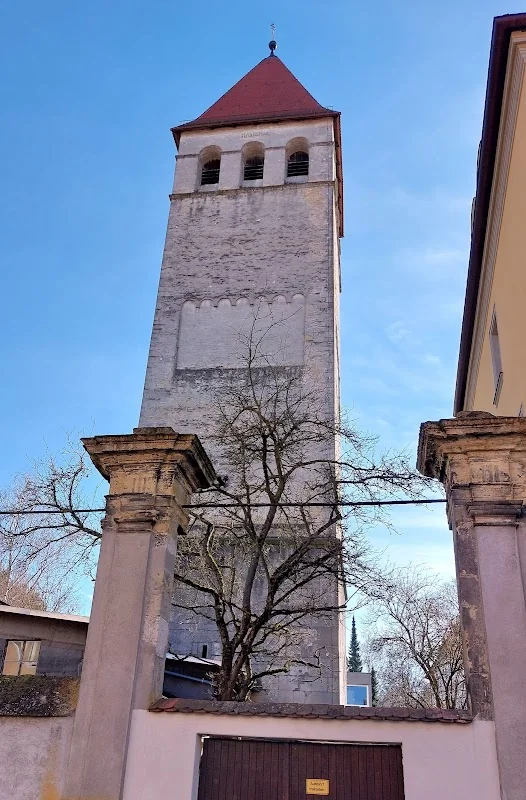
A particularly beautiful detail is the Obermünster Fountain in the courtyard of the former convent. The city of Regensburg dates it to 1544/45 and describes it as a sandstone fountain by Leonhard Sinniger in the northern convent courtyard, precisely in the area that is now perceived as the forecourt of the Diocesan Center. This kind of detail shows how strongly the place is shaped by historical layers: what is now experienced as a functional forecourt was once part of a dense sequence of convent spaces with fountain, courtyard, buildings, and spiritual life. Additionally, the building complex borders the ruins of Obermünster and the Diocesan Museum after renovation. The connection between the ruins, the museum, and the DZO makes Obermünster an ensemble that tells not only about its current use but also about its visible and invisible historical traces. Therefore, those interested in city history will find here a particularly compact example of how much Regensburg consists of overlapping times. The past is not museum-like excluded but remains spatially present and continues to shape everyday life to this day. ([regensburg.de](https://www.regensburg.de/kultur/kulturdatenbank/eintrag/118999?utm_source=openai))
The more recent construction and usage history is also remarkable. The diocese reported that the Diocesan Center was renovated from July 2017 to November 2019 over a period of 29 months, during which time temporary spaces were used in the former Protestant hospital. At the same time, the renovation modernized a building complex located in the midst of the historic old town and bordering significant neighboring sites. This is important for the present of the location because it has created the basis for today’s functionality: today the building is not only historically connected but also technically up to date. This is a crucial point for anyone searching for the history or renovation of the Diocesan Center Obermünster. The place stands not merely symbolically for tradition but shows very concretely how a historic ensemble can be made usable for modern ecclesiastical work through careful construction measures. The history of the DZO is therefore not only a story of the past but also a story of renewal. ([bistum-regensburg.de](https://bistum-regensburg.de/news/dioezesanzentrum-obermuenster-feiert-richtfest-6321?utm_source=openai))
Conferences, Receptions, and Ecclesiastical Events
The Diocesan Center Obermünster is regularly used for ecclesiastical events and meetings, which particularly highlights its function as a place of encounter. In the official news of the diocese, the house appears as a venue for Caritas New Year's receptions, study days, health days, liturgical training, and other formats. For example, a New Year's reception of Caritas for the Diocese of Regensburg took place at the DZO, where around 150 guests were welcomed. A study day of the KEB was also held there, as well as various themed events, training offers, and discussion formats. This shows that the house is not just an office location but a lively event venue where networking, information, and substantive exchange take place. For SEO search queries like events Regensburg, conference room Obermünster, or ecclesiastical events Regensburg, this mix is particularly relevant. Those looking for a location with a quiet, serious atmosphere will find here not a commercial event hall but a space strongly shaped by content for ecclesiastical and social topics. This makes the DZO particularly suitable for conferences, meetings, and both internal and external encounters. ([bistum-regensburg.de](https://bistum-regensburg.de/news/neujahrsempfang-der-caritas-fuer-die-dioezese-regensburg?utm_source=openai))
An interesting detail is the mention of the conference room under a brick vault. In a report about a new discussion format in the Diocesan Center, this very room was mentioned, where a moderated discussion format took place under the vault. Such hints are valuable because they make the atmosphere of the house concrete: it is not sterile standard architecture but rooms with character. This is a real advantage for events, as the environment often significantly contributes to how discussions are perceived. In the DZO, this seems to succeed: the architectural dignity of the place supports the factual work without overwhelming it. This also fits with the diverse ecclesiastical uses that are repeatedly documented in the diocese. Therefore, anyone searching for a conference room, a place for study days, or a location for ecclesiastical meetings will find here not only functionality but also spatial impact. The mixture of historical ambiance and professional use is an essential part of the profile. It explains why the Diocesan Center is regularly chosen as an event venue in Regensburg, despite or precisely because of its quiet location. ([bistum-regensburg.de](https://bistum-regensburg.de/news/kirche-als-kitt-neues-gespraechsformat-im-dioezesanzentrum-bietet-raum-fuer-dialog?utm_source=openai))
Facilities, Chapel, and Sustainable Renovation
The renovation of the Diocesan Center has significantly strengthened the location technically and organizationally. The diocese mentioned in its report a chapel, a total of 930 square meters of archive space, large traffic areas, and a net total area of 10,547 square meters. Additionally, there are 42 parking spaces for the Diocesan Center and ten more spaces for the youth office, as well as bicycle parking spaces. Charging points have been provided for electric vehicles and e-bikes. This makes it clear that the location is not only historically and organizationally relevant but has also been practically well equipped. Especially in a location in the old town, such details are significant because they noticeably ease access for employees and guests. The ecological aspect is particularly interesting: as early as 2009, a powerful pellet boiler was installed, replacing a large part of fossil energy sources; modern technology was additionally retrofitted during the construction measure. The diocese also reported a significant reduction in CO2 emissions. For an ecclesiastical administrative center, this is more than just a construction footnote, as sustainability and resource conservation are visibly part of the location strategy here. The DZO demonstrates that historical substance and modern energy and usage concepts can be reconciled. ([bistum-regensburg.de](https://bistum-regensburg.de/news/dioezesanzentrum-obermuenster-feiert-richtfest-6321?utm_source=openai))
The internal functional logic of the house is also remarkable. During the renovation phase, employees were temporarily accommodated in the former Protestant hospital; after the completion of the work, Catholic employees were able to return to the complex. In the building complex, spatial conditions were created that bring administrative and pastoral tasks closer together. This is especially useful for visitors who are looking for contacts or coming for discussions: the paths are clearer, the assignment of offices is easier to understand, and the place overall appears more orderly. For external perception, it is also significant that the building complex is located in the middle of the historic old town and borders the Diocesan Museum and the ruins of Obermünster. This creates a very clearly readable overall picture: here, spiritual administration connects with cultural and historical surroundings. Therefore, anyone visiting the Diocesan Center Obermünster enters a place that is meant to function efficiently while also carrying forward the grown identity of the Obermünster site. This combination is what makes its relevance, both in the everyday life of the diocese and for all who want to get to know an authentic place of ecclesiastical city history in Regensburg. ([bistum-regensburg.de](https://bistum-regensburg.de/news/dioezesanzentrum-obermuenster-feiert-richtfest-6321?utm_source=openai))
In summary, the Diocesan Center Obermünster is a place for ecclesiastical organization, historical continuity, and practical encounters. Those coming here will find a concrete address for administration and pastoral care, good orientation for directions, sensible parking options nearby, and an environment that, through its history, points far beyond the purpose of a normal office building. Especially in Regensburg, a city with a dense historical core, such a location is more than just practically infrastructural: it tells of continuity, repurposing, and conscious care of cultural heritage. This makes the DZO exciting for visitors, employees, and interested parties alike. ([bistum-regensburg.de](https://bistum-regensburg.de/bistum/einrichtungen-a-z/dioezesanzentrum-obermuenster?utm_source=openai))
Sources:
- Diocese of Regensburg - Diocesan Center Obermünster
- Mentorat Diocese Regensburg - Directions
- City of Regensburg - Cultural Database - Obermünster Fountain
- Diocese of Regensburg - After Completion of the Renovation
- Domschatz Regensburg - Museum Obermünster
- Diocese of Regensburg - Bishop's Central Library Regensburg
- Diocese of Regensburg - Bishop's Central Archive Regensburg
Mehr anzeigenWeniger anzeigen
Diocesan Center Obermünster | Directions & Parking
The Diocesan Center Obermünster is much more than just an administrative seat in Regensburg. At Obermünsterplatz 7, ecclesiastical presence meets a historically exceptional environment that still holds special significance for the city today. The official administration of the Diocesan Center is located here, as well as various service and pastoral work areas of the diocese. In close proximity, there are also other defining institutions of the Obermünster area, including the Central Library, Central Archive, and Museum Obermünster. Therefore, those who visit this place experience not just an address but an ensemble where pastoral care, knowledge, memory, and encounters overlap. This very mixture makes the location so interesting for employees, guests, seekers of advice, and visitors. It is situated in the middle of the old town, in a historically significant district that is simultaneously quiet, compact, and functionally accessible. The Diocesan Center is thus a place for the everyday life of the church and at the same time an entry point into the history of the city and church of Regensburg. ([bistum-regensburg.de](https://bistum-regensburg.de/bistum/einrichtungen-a-z/dioezesanzentrum-obermuenster?utm_source=openai))
Which institutions operate in the Diocesan Center Obermünster?
The most important function of the house is clear: it consolidates ecclesiastical work at one location. Officially, the administration of the Diocesan Center is based there; furthermore, the leadership of the pastoral office of the diocese has been relocated to the complex at Obermünsterplatz to spatially bring together numerous associated offices. This concentration is no coincidence but rather an expression of a conscious structural decision: in the historic old town, paths should remain short, workflows should be better interlinked, and pastoral as well as administrative tasks should be closer together. Therefore, anyone searching for Diocesan Center Obermünster, Pastoral Office Regensburg, or Administration Obermünster will find themselves in an environment that is entirely focused on ecclesiastical services. In the official communications of the diocese, the location is repeatedly mentioned as a place where meetings, blessings, discussions, and internal coordination take place. Thus, the DZO is not only an address for files and offices but also a place where ecclesiastical content is prepared, accompanied, and organized outwardly. This makes the complex as relevant for the daily work of the diocese as for visitors seeking a specific contact person. ([bistum-regensburg.de](https://bistum-regensburg.de/bistum/einrichtungen-a-z/dioezesanzentrum-obermuenster?utm_source=openai))
However, the Obermünster area includes much more than just the DZO itself. The Bishop's Central Library was opened in 1972 on the grounds of the former ladies' convent Obermünster and sees itself as a central storage and development site for ecclesiastical book collections. The Bishop's Central Archive is also closely linked to the Obermünster area and preserves a large part of the institutional memory of the diocese. The Museum Obermünster, in turn, utilizes historical spaces of the former economic wing and primarily serves depot management, workshops, and museum educational formats today. For visitors, it is important to understand that there is no monolithic single building here, but rather an ecclesiastical quarter with multiple functions: administration, research, preservation, education, and cultural use intertwine. This very mixture makes the location unique because the Obermünster cannot be reduced to a single use. It is a historically grown working and memory space that connects the present of the diocese with its archived and museum collections. ([bistum-regensburg.de](https://bistum-regensburg.de/bistum/einrichtungen-a-z/bischoefliche-zentralbibliothek-regensburg?utm_source=openai))
Directions and Parking at Obermünsterplatz 7
For directions, the official address is the most important anchor: Obermünsterplatz 7, 93047 Regensburg. This address is officially listed in the administration of the DZO as well as in several diocesan-owned offices. Those arriving by car should note that the location is in the middle of the old town and parking is therefore not as convenient as at a location on the outskirts of the city. A clear orientation is provided by the Mentorat of the Diocese of Regensburg, which directly points its visitors to paid parking options in the parking garage at Petersweg nearby. Additionally, the diocese specifies concrete parking options at the Alten Kornmarkt and in the Petersweg parking garage for events. This is helpful for first-time visitors as it shows that the best way is not to look for a free spot directly in front of the building but to specifically head for one of the nearby parking garages. Those who already know the area benefit from the short distance on foot; those who are new to the city should plan their paths through the old town with a bit more time. This way, arrival is stress-free, and the visit begins not with searching for a parking space but with a calm entry into the historic district. ([bistum-regensburg.de](https://bistum-regensburg.de/bistum/einrichtungen-a-z/dioezesanzentrum-obermuenster?utm_source=openai))
The location in the Obermünster district is part of the experience. The city of Regensburg describes Obermünsterplatz as a quiet, green place to stay in a historic environment, thereby emphasizing the special character of the quarter. This fits well with the Diocesan Center because here, loud, fast through traffic does not dominate, but rather an urban space that is more suitable for targeted visits and focused appointments. This atmosphere is pleasant, especially for people coming for a conversation, consultation, or event: they do not enter an anonymous office complex but a place with old town character and ecclesiastical history. At the same time, the location is functional because central points of the city center are easily accessible and the paths between the individual institutions remain short. Therefore, anyone bringing concerns about directions, parking, and orientation will find at Obermünsterplatz 7 not an event arena but a city center address that is very well embedded for ecclesiastical and scientific work. Exactly therein lies the practical value of the location: close enough to the center to be quickly reachable and quiet enough to allow conversations and appointments in an orderly framework. ([regensburg.de](https://www.regensburg.de/rathaus/aemteruebersicht/planungs-u-baureferat/amt-fuer-stadtplanung-und-mobilitaet/projekte-und-konzepte/neugestaltung-obermuensterplatz-und-obermuensterstrasse?utm_source=openai))
History of the Area from the Ladies' Convent Obermünster
Historically, the Diocesan Center Obermünster is closely linked to the former ladies' convent Obermünster, that is, to an ecclesiastical and noble women's convent whose history dates back far before its current use. The current rooms stand on an area that has been shaped by convent and economic structures for centuries. The art collections of the diocese describe the building of the Museum Obermünster as the former economic wing of the free noble ladies' convent Obermünster; this makes it clear how deeply the current use is rooted in the historical topography. The Bishop's Central Library also reports that its new building was opened in 1972 on the grounds of the former ladies' convent. This shows that the spiritual and scientific use of the place is not a modern invention but a further development of a site that has long been ecclesiastically shaped. For visitors, this is important because one sees the place with different eyes when one knows that there is not simply a new building standing here but a building complex whose function and significance have been reinterpreted multiple times without losing the connection to ecclesiastical tradition. The area is therefore an example of how Regensburg transfers historical places into today’s structures without erasing their identity. ([domschatz-regensburg.de](https://www.domschatz-regensburg.de/museen/museum-obermuenster.html?utm_source=openai))
A particularly beautiful detail is the Obermünster Fountain in the courtyard of the former convent. The city of Regensburg dates it to 1544/45 and describes it as a sandstone fountain by Leonhard Sinniger in the northern convent courtyard, precisely in the area that is now perceived as the forecourt of the Diocesan Center. This kind of detail shows how strongly the place is shaped by historical layers: what is now experienced as a functional forecourt was once part of a dense sequence of convent spaces with fountain, courtyard, buildings, and spiritual life. Additionally, the building complex borders the ruins of Obermünster and the Diocesan Museum after renovation. The connection between the ruins, the museum, and the DZO makes Obermünster an ensemble that tells not only about its current use but also about its visible and invisible historical traces. Therefore, those interested in city history will find here a particularly compact example of how much Regensburg consists of overlapping times. The past is not museum-like excluded but remains spatially present and continues to shape everyday life to this day. ([regensburg.de](https://www.regensburg.de/kultur/kulturdatenbank/eintrag/118999?utm_source=openai))
The more recent construction and usage history is also remarkable. The diocese reported that the Diocesan Center was renovated from July 2017 to November 2019 over a period of 29 months, during which time temporary spaces were used in the former Protestant hospital. At the same time, the renovation modernized a building complex located in the midst of the historic old town and bordering significant neighboring sites. This is important for the present of the location because it has created the basis for today’s functionality: today the building is not only historically connected but also technically up to date. This is a crucial point for anyone searching for the history or renovation of the Diocesan Center Obermünster. The place stands not merely symbolically for tradition but shows very concretely how a historic ensemble can be made usable for modern ecclesiastical work through careful construction measures. The history of the DZO is therefore not only a story of the past but also a story of renewal. ([bistum-regensburg.de](https://bistum-regensburg.de/news/dioezesanzentrum-obermuenster-feiert-richtfest-6321?utm_source=openai))
Conferences, Receptions, and Ecclesiastical Events
The Diocesan Center Obermünster is regularly used for ecclesiastical events and meetings, which particularly highlights its function as a place of encounter. In the official news of the diocese, the house appears as a venue for Caritas New Year's receptions, study days, health days, liturgical training, and other formats. For example, a New Year's reception of Caritas for the Diocese of Regensburg took place at the DZO, where around 150 guests were welcomed. A study day of the KEB was also held there, as well as various themed events, training offers, and discussion formats. This shows that the house is not just an office location but a lively event venue where networking, information, and substantive exchange take place. For SEO search queries like events Regensburg, conference room Obermünster, or ecclesiastical events Regensburg, this mix is particularly relevant. Those looking for a location with a quiet, serious atmosphere will find here not a commercial event hall but a space strongly shaped by content for ecclesiastical and social topics. This makes the DZO particularly suitable for conferences, meetings, and both internal and external encounters. ([bistum-regensburg.de](https://bistum-regensburg.de/news/neujahrsempfang-der-caritas-fuer-die-dioezese-regensburg?utm_source=openai))
An interesting detail is the mention of the conference room under a brick vault. In a report about a new discussion format in the Diocesan Center, this very room was mentioned, where a moderated discussion format took place under the vault. Such hints are valuable because they make the atmosphere of the house concrete: it is not sterile standard architecture but rooms with character. This is a real advantage for events, as the environment often significantly contributes to how discussions are perceived. In the DZO, this seems to succeed: the architectural dignity of the place supports the factual work without overwhelming it. This also fits with the diverse ecclesiastical uses that are repeatedly documented in the diocese. Therefore, anyone searching for a conference room, a place for study days, or a location for ecclesiastical meetings will find here not only functionality but also spatial impact. The mixture of historical ambiance and professional use is an essential part of the profile. It explains why the Diocesan Center is regularly chosen as an event venue in Regensburg, despite or precisely because of its quiet location. ([bistum-regensburg.de](https://bistum-regensburg.de/news/kirche-als-kitt-neues-gespraechsformat-im-dioezesanzentrum-bietet-raum-fuer-dialog?utm_source=openai))
Facilities, Chapel, and Sustainable Renovation
The renovation of the Diocesan Center has significantly strengthened the location technically and organizationally. The diocese mentioned in its report a chapel, a total of 930 square meters of archive space, large traffic areas, and a net total area of 10,547 square meters. Additionally, there are 42 parking spaces for the Diocesan Center and ten more spaces for the youth office, as well as bicycle parking spaces. Charging points have been provided for electric vehicles and e-bikes. This makes it clear that the location is not only historically and organizationally relevant but has also been practically well equipped. Especially in a location in the old town, such details are significant because they noticeably ease access for employees and guests. The ecological aspect is particularly interesting: as early as 2009, a powerful pellet boiler was installed, replacing a large part of fossil energy sources; modern technology was additionally retrofitted during the construction measure. The diocese also reported a significant reduction in CO2 emissions. For an ecclesiastical administrative center, this is more than just a construction footnote, as sustainability and resource conservation are visibly part of the location strategy here. The DZO demonstrates that historical substance and modern energy and usage concepts can be reconciled. ([bistum-regensburg.de](https://bistum-regensburg.de/news/dioezesanzentrum-obermuenster-feiert-richtfest-6321?utm_source=openai))
The internal functional logic of the house is also remarkable. During the renovation phase, employees were temporarily accommodated in the former Protestant hospital; after the completion of the work, Catholic employees were able to return to the complex. In the building complex, spatial conditions were created that bring administrative and pastoral tasks closer together. This is especially useful for visitors who are looking for contacts or coming for discussions: the paths are clearer, the assignment of offices is easier to understand, and the place overall appears more orderly. For external perception, it is also significant that the building complex is located in the middle of the historic old town and borders the Diocesan Museum and the ruins of Obermünster. This creates a very clearly readable overall picture: here, spiritual administration connects with cultural and historical surroundings. Therefore, anyone visiting the Diocesan Center Obermünster enters a place that is meant to function efficiently while also carrying forward the grown identity of the Obermünster site. This combination is what makes its relevance, both in the everyday life of the diocese and for all who want to get to know an authentic place of ecclesiastical city history in Regensburg. ([bistum-regensburg.de](https://bistum-regensburg.de/news/dioezesanzentrum-obermuenster-feiert-richtfest-6321?utm_source=openai))
In summary, the Diocesan Center Obermünster is a place for ecclesiastical organization, historical continuity, and practical encounters. Those coming here will find a concrete address for administration and pastoral care, good orientation for directions, sensible parking options nearby, and an environment that, through its history, points far beyond the purpose of a normal office building. Especially in Regensburg, a city with a dense historical core, such a location is more than just practically infrastructural: it tells of continuity, repurposing, and conscious care of cultural heritage. This makes the DZO exciting for visitors, employees, and interested parties alike. ([bistum-regensburg.de](https://bistum-regensburg.de/bistum/einrichtungen-a-z/dioezesanzentrum-obermuenster?utm_source=openai))
Sources:
- Diocese of Regensburg - Diocesan Center Obermünster
- Mentorat Diocese Regensburg - Directions
- City of Regensburg - Cultural Database - Obermünster Fountain
- Diocese of Regensburg - After Completion of the Renovation
- Domschatz Regensburg - Museum Obermünster
- Diocese of Regensburg - Bishop's Central Library Regensburg
- Diocese of Regensburg - Bishop's Central Archive Regensburg
Diocesan Center Obermünster | Directions & Parking
The Diocesan Center Obermünster is much more than just an administrative seat in Regensburg. At Obermünsterplatz 7, ecclesiastical presence meets a historically exceptional environment that still holds special significance for the city today. The official administration of the Diocesan Center is located here, as well as various service and pastoral work areas of the diocese. In close proximity, there are also other defining institutions of the Obermünster area, including the Central Library, Central Archive, and Museum Obermünster. Therefore, those who visit this place experience not just an address but an ensemble where pastoral care, knowledge, memory, and encounters overlap. This very mixture makes the location so interesting for employees, guests, seekers of advice, and visitors. It is situated in the middle of the old town, in a historically significant district that is simultaneously quiet, compact, and functionally accessible. The Diocesan Center is thus a place for the everyday life of the church and at the same time an entry point into the history of the city and church of Regensburg. ([bistum-regensburg.de](https://bistum-regensburg.de/bistum/einrichtungen-a-z/dioezesanzentrum-obermuenster?utm_source=openai))
Which institutions operate in the Diocesan Center Obermünster?
The most important function of the house is clear: it consolidates ecclesiastical work at one location. Officially, the administration of the Diocesan Center is based there; furthermore, the leadership of the pastoral office of the diocese has been relocated to the complex at Obermünsterplatz to spatially bring together numerous associated offices. This concentration is no coincidence but rather an expression of a conscious structural decision: in the historic old town, paths should remain short, workflows should be better interlinked, and pastoral as well as administrative tasks should be closer together. Therefore, anyone searching for Diocesan Center Obermünster, Pastoral Office Regensburg, or Administration Obermünster will find themselves in an environment that is entirely focused on ecclesiastical services. In the official communications of the diocese, the location is repeatedly mentioned as a place where meetings, blessings, discussions, and internal coordination take place. Thus, the DZO is not only an address for files and offices but also a place where ecclesiastical content is prepared, accompanied, and organized outwardly. This makes the complex as relevant for the daily work of the diocese as for visitors seeking a specific contact person. ([bistum-regensburg.de](https://bistum-regensburg.de/bistum/einrichtungen-a-z/dioezesanzentrum-obermuenster?utm_source=openai))
However, the Obermünster area includes much more than just the DZO itself. The Bishop's Central Library was opened in 1972 on the grounds of the former ladies' convent Obermünster and sees itself as a central storage and development site for ecclesiastical book collections. The Bishop's Central Archive is also closely linked to the Obermünster area and preserves a large part of the institutional memory of the diocese. The Museum Obermünster, in turn, utilizes historical spaces of the former economic wing and primarily serves depot management, workshops, and museum educational formats today. For visitors, it is important to understand that there is no monolithic single building here, but rather an ecclesiastical quarter with multiple functions: administration, research, preservation, education, and cultural use intertwine. This very mixture makes the location unique because the Obermünster cannot be reduced to a single use. It is a historically grown working and memory space that connects the present of the diocese with its archived and museum collections. ([bistum-regensburg.de](https://bistum-regensburg.de/bistum/einrichtungen-a-z/bischoefliche-zentralbibliothek-regensburg?utm_source=openai))
Directions and Parking at Obermünsterplatz 7
For directions, the official address is the most important anchor: Obermünsterplatz 7, 93047 Regensburg. This address is officially listed in the administration of the DZO as well as in several diocesan-owned offices. Those arriving by car should note that the location is in the middle of the old town and parking is therefore not as convenient as at a location on the outskirts of the city. A clear orientation is provided by the Mentorat of the Diocese of Regensburg, which directly points its visitors to paid parking options in the parking garage at Petersweg nearby. Additionally, the diocese specifies concrete parking options at the Alten Kornmarkt and in the Petersweg parking garage for events. This is helpful for first-time visitors as it shows that the best way is not to look for a free spot directly in front of the building but to specifically head for one of the nearby parking garages. Those who already know the area benefit from the short distance on foot; those who are new to the city should plan their paths through the old town with a bit more time. This way, arrival is stress-free, and the visit begins not with searching for a parking space but with a calm entry into the historic district. ([bistum-regensburg.de](https://bistum-regensburg.de/bistum/einrichtungen-a-z/dioezesanzentrum-obermuenster?utm_source=openai))
The location in the Obermünster district is part of the experience. The city of Regensburg describes Obermünsterplatz as a quiet, green place to stay in a historic environment, thereby emphasizing the special character of the quarter. This fits well with the Diocesan Center because here, loud, fast through traffic does not dominate, but rather an urban space that is more suitable for targeted visits and focused appointments. This atmosphere is pleasant, especially for people coming for a conversation, consultation, or event: they do not enter an anonymous office complex but a place with old town character and ecclesiastical history. At the same time, the location is functional because central points of the city center are easily accessible and the paths between the individual institutions remain short. Therefore, anyone bringing concerns about directions, parking, and orientation will find at Obermünsterplatz 7 not an event arena but a city center address that is very well embedded for ecclesiastical and scientific work. Exactly therein lies the practical value of the location: close enough to the center to be quickly reachable and quiet enough to allow conversations and appointments in an orderly framework. ([regensburg.de](https://www.regensburg.de/rathaus/aemteruebersicht/planungs-u-baureferat/amt-fuer-stadtplanung-und-mobilitaet/projekte-und-konzepte/neugestaltung-obermuensterplatz-und-obermuensterstrasse?utm_source=openai))
History of the Area from the Ladies' Convent Obermünster
Historically, the Diocesan Center Obermünster is closely linked to the former ladies' convent Obermünster, that is, to an ecclesiastical and noble women's convent whose history dates back far before its current use. The current rooms stand on an area that has been shaped by convent and economic structures for centuries. The art collections of the diocese describe the building of the Museum Obermünster as the former economic wing of the free noble ladies' convent Obermünster; this makes it clear how deeply the current use is rooted in the historical topography. The Bishop's Central Library also reports that its new building was opened in 1972 on the grounds of the former ladies' convent. This shows that the spiritual and scientific use of the place is not a modern invention but a further development of a site that has long been ecclesiastically shaped. For visitors, this is important because one sees the place with different eyes when one knows that there is not simply a new building standing here but a building complex whose function and significance have been reinterpreted multiple times without losing the connection to ecclesiastical tradition. The area is therefore an example of how Regensburg transfers historical places into today’s structures without erasing their identity. ([domschatz-regensburg.de](https://www.domschatz-regensburg.de/museen/museum-obermuenster.html?utm_source=openai))
A particularly beautiful detail is the Obermünster Fountain in the courtyard of the former convent. The city of Regensburg dates it to 1544/45 and describes it as a sandstone fountain by Leonhard Sinniger in the northern convent courtyard, precisely in the area that is now perceived as the forecourt of the Diocesan Center. This kind of detail shows how strongly the place is shaped by historical layers: what is now experienced as a functional forecourt was once part of a dense sequence of convent spaces with fountain, courtyard, buildings, and spiritual life. Additionally, the building complex borders the ruins of Obermünster and the Diocesan Museum after renovation. The connection between the ruins, the museum, and the DZO makes Obermünster an ensemble that tells not only about its current use but also about its visible and invisible historical traces. Therefore, those interested in city history will find here a particularly compact example of how much Regensburg consists of overlapping times. The past is not museum-like excluded but remains spatially present and continues to shape everyday life to this day. ([regensburg.de](https://www.regensburg.de/kultur/kulturdatenbank/eintrag/118999?utm_source=openai))
The more recent construction and usage history is also remarkable. The diocese reported that the Diocesan Center was renovated from July 2017 to November 2019 over a period of 29 months, during which time temporary spaces were used in the former Protestant hospital. At the same time, the renovation modernized a building complex located in the midst of the historic old town and bordering significant neighboring sites. This is important for the present of the location because it has created the basis for today’s functionality: today the building is not only historically connected but also technically up to date. This is a crucial point for anyone searching for the history or renovation of the Diocesan Center Obermünster. The place stands not merely symbolically for tradition but shows very concretely how a historic ensemble can be made usable for modern ecclesiastical work through careful construction measures. The history of the DZO is therefore not only a story of the past but also a story of renewal. ([bistum-regensburg.de](https://bistum-regensburg.de/news/dioezesanzentrum-obermuenster-feiert-richtfest-6321?utm_source=openai))
Conferences, Receptions, and Ecclesiastical Events
The Diocesan Center Obermünster is regularly used for ecclesiastical events and meetings, which particularly highlights its function as a place of encounter. In the official news of the diocese, the house appears as a venue for Caritas New Year's receptions, study days, health days, liturgical training, and other formats. For example, a New Year's reception of Caritas for the Diocese of Regensburg took place at the DZO, where around 150 guests were welcomed. A study day of the KEB was also held there, as well as various themed events, training offers, and discussion formats. This shows that the house is not just an office location but a lively event venue where networking, information, and substantive exchange take place. For SEO search queries like events Regensburg, conference room Obermünster, or ecclesiastical events Regensburg, this mix is particularly relevant. Those looking for a location with a quiet, serious atmosphere will find here not a commercial event hall but a space strongly shaped by content for ecclesiastical and social topics. This makes the DZO particularly suitable for conferences, meetings, and both internal and external encounters. ([bistum-regensburg.de](https://bistum-regensburg.de/news/neujahrsempfang-der-caritas-fuer-die-dioezese-regensburg?utm_source=openai))
An interesting detail is the mention of the conference room under a brick vault. In a report about a new discussion format in the Diocesan Center, this very room was mentioned, where a moderated discussion format took place under the vault. Such hints are valuable because they make the atmosphere of the house concrete: it is not sterile standard architecture but rooms with character. This is a real advantage for events, as the environment often significantly contributes to how discussions are perceived. In the DZO, this seems to succeed: the architectural dignity of the place supports the factual work without overwhelming it. This also fits with the diverse ecclesiastical uses that are repeatedly documented in the diocese. Therefore, anyone searching for a conference room, a place for study days, or a location for ecclesiastical meetings will find here not only functionality but also spatial impact. The mixture of historical ambiance and professional use is an essential part of the profile. It explains why the Diocesan Center is regularly chosen as an event venue in Regensburg, despite or precisely because of its quiet location. ([bistum-regensburg.de](https://bistum-regensburg.de/news/kirche-als-kitt-neues-gespraechsformat-im-dioezesanzentrum-bietet-raum-fuer-dialog?utm_source=openai))
Facilities, Chapel, and Sustainable Renovation
The renovation of the Diocesan Center has significantly strengthened the location technically and organizationally. The diocese mentioned in its report a chapel, a total of 930 square meters of archive space, large traffic areas, and a net total area of 10,547 square meters. Additionally, there are 42 parking spaces for the Diocesan Center and ten more spaces for the youth office, as well as bicycle parking spaces. Charging points have been provided for electric vehicles and e-bikes. This makes it clear that the location is not only historically and organizationally relevant but has also been practically well equipped. Especially in a location in the old town, such details are significant because they noticeably ease access for employees and guests. The ecological aspect is particularly interesting: as early as 2009, a powerful pellet boiler was installed, replacing a large part of fossil energy sources; modern technology was additionally retrofitted during the construction measure. The diocese also reported a significant reduction in CO2 emissions. For an ecclesiastical administrative center, this is more than just a construction footnote, as sustainability and resource conservation are visibly part of the location strategy here. The DZO demonstrates that historical substance and modern energy and usage concepts can be reconciled. ([bistum-regensburg.de](https://bistum-regensburg.de/news/dioezesanzentrum-obermuenster-feiert-richtfest-6321?utm_source=openai))
The internal functional logic of the house is also remarkable. During the renovation phase, employees were temporarily accommodated in the former Protestant hospital; after the completion of the work, Catholic employees were able to return to the complex. In the building complex, spatial conditions were created that bring administrative and pastoral tasks closer together. This is especially useful for visitors who are looking for contacts or coming for discussions: the paths are clearer, the assignment of offices is easier to understand, and the place overall appears more orderly. For external perception, it is also significant that the building complex is located in the middle of the historic old town and borders the Diocesan Museum and the ruins of Obermünster. This creates a very clearly readable overall picture: here, spiritual administration connects with cultural and historical surroundings. Therefore, anyone visiting the Diocesan Center Obermünster enters a place that is meant to function efficiently while also carrying forward the grown identity of the Obermünster site. This combination is what makes its relevance, both in the everyday life of the diocese and for all who want to get to know an authentic place of ecclesiastical city history in Regensburg. ([bistum-regensburg.de](https://bistum-regensburg.de/news/dioezesanzentrum-obermuenster-feiert-richtfest-6321?utm_source=openai))
In summary, the Diocesan Center Obermünster is a place for ecclesiastical organization, historical continuity, and practical encounters. Those coming here will find a concrete address for administration and pastoral care, good orientation for directions, sensible parking options nearby, and an environment that, through its history, points far beyond the purpose of a normal office building. Especially in Regensburg, a city with a dense historical core, such a location is more than just practically infrastructural: it tells of continuity, repurposing, and conscious care of cultural heritage. This makes the DZO exciting for visitors, employees, and interested parties alike. ([bistum-regensburg.de](https://bistum-regensburg.de/bistum/einrichtungen-a-z/dioezesanzentrum-obermuenster?utm_source=openai))
Sources:
- Diocese of Regensburg - Diocesan Center Obermünster
- Mentorat Diocese Regensburg - Directions
- City of Regensburg - Cultural Database - Obermünster Fountain
- Diocese of Regensburg - After Completion of the Renovation
- Domschatz Regensburg - Museum Obermünster
- Diocese of Regensburg - Bishop's Central Library Regensburg
- Diocese of Regensburg - Bishop's Central Archive Regensburg
Upcoming Events
No events found
Frequently Asked Questions
Reviews
Marija Šestak
16. August 2022
Super
Svenja
15. November 2025
Very nicely renovated and equipped. Parking is difficult due to the location.
Harry_up
3. September 2022
The early Gothic church of St. Ulrich, built between 1220 and 1230, was originally intended as a ducal palace chapel, but from 1240 it has served as the cathedral parish church. The interior of the church is decorated with frescoes from the 13th to 16th centuries. In 1824, the church was deconsecrated. After several renovations, it housed the exhibits of the diocesan museum from 1986 and also served as a statio church for the Regensburg cathedral chapter. Due to extensive restoration work, the St. Ulrich Museum is currently closed and is only temporarily used for special exhibitions. The last exhibition there was "Two Towers for the King" in summer 2019, celebrating the 150th anniversary of the completion of the Regensburg cathedral towers.
Daniel st****
11. December 2018
I work here with my colleagues, I'm still an apprentice myself, it's a beautiful building that has elevators and even a church. It's very spacious and has a gorgeous staircase.
M. Schneider
5. July 2022
Great location for lectures and courses!