
Regensburg
Donaumarkt 4, 93047 Regensburg, Deutschland
Donaumarkt Regensburg | Parking & Weekly Market
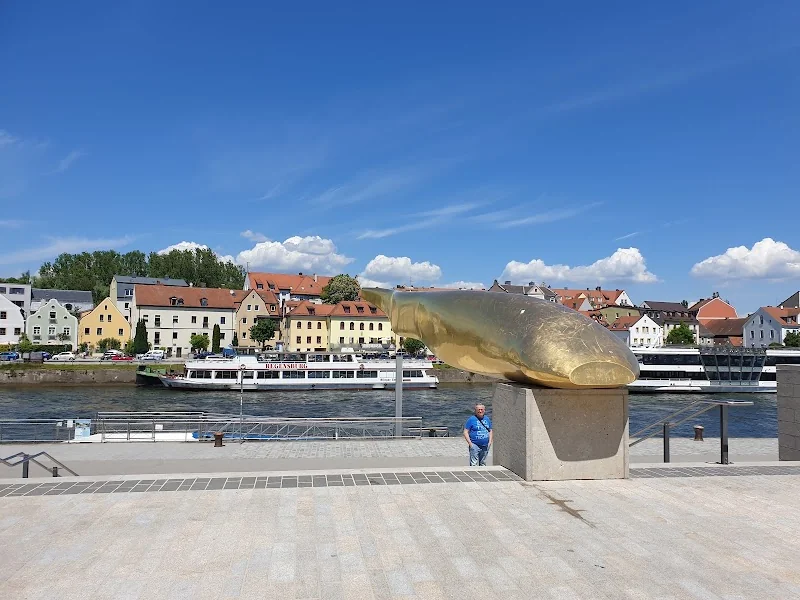
Donaumarkt Regensburg is much more than a place in the center of the old town. The location on the southern banks of the Danube connects the weekly market, museum, riverside promenade, and paths through the UNESCO World Heritage Site in a compact space. This mixture of everyday life, culture, and urban space makes Donaumarkt one of the most prominent addresses in Regensburg: morning market and shopping, daytime museum and stroll, later an open area with a view of the Danube and short paths to many points in the old town. At the same time, the place shows how Regensburg thinks about historical surroundings, modern open space design, and technical requirements such as flood protection. For visitors, this is practical because orientation, experience, and short distances can be ideally combined here. For the city, it is a showcase of how a former residual area can become a vibrant, open urban space. ([regensburg.de](https://www.regensburg.de/regensburg-507/kurz-knapp/archiv-kurz-knapp/hochwasserschutz-donaumarkt))
The name Donaumarkt is not a coincidence in Regensburg, but a place with a clear urban development and a strong connection to the Danube. In urban planning, the area is described as part of the Regensburg old town in the listed ensemble of the UNESCO World Heritage Site. Its location is central, its function multiple: it is a market place, a space for staying, a connection to the Danube bank, and today also a cultural forecourt for one of the city's most important museums. Therefore, those searching for Donaumarkt Regensburg are often looking not just for an address, but a place with changing uses, a significant history, and a high importance for the cityscape. This is precisely where the special value of this place arises, as it connects the historical core of Regensburg with a modern, everyday usable function. ([regensburg.de](https://www.regensburg.de/sixcms/media.php/121/donaumarkt-beschlussvorlage-25-02-2014.pdf))
Location, History, and Change at Donaumarkt
The development of Donaumarkt is closely linked to the post-war history of Regensburg. The city describes the area in a resolution as a space that emerged after World War II. Later, a parking lot was established on the site, which was used until 2012. At the same time, the weekly market developed there, which was moved to the Old Corn Market in 2012 due to archaeological excavations. This makes it clear that today's Donaumarkt should not be understood as a classic, unchanged square for centuries, but as an urban space with several phases of use. This sequence makes it interesting: first a provisional post-war area, then a parking lot and market space, finally a newly designed public space with a clear urban planning intention. Therefore, those walking here today see not just an open area, but a piece of Regensburg's urban development that visibly brings together several decades. ([regensburg.de](https://www.regensburg.de/sixcms/media.php/121/donaumarkt-beschlussvorlage-25-02-2014.pdf))
With approximately 0.8 hectares, the area of Donaumarkt is centrally located in the old town. The city explicitly points out that the area is located within the listed ensemble of the Regensburg old town with Stadtamhof and thus belongs to the UNESCO World Heritage Site. This is not just a formal note, but also explains why the place was planned so carefully. In a UNESCO environment, sightlines, material choice, proportions, and the relationship to the surrounding buildings play a significant role. The city also describes the area as a previously urbanistically and aesthetically unsatisfactory gap in the densely built old town structure. This is precisely why the current shape of the square is so important: it not only fills this gap functionally but also creates a space with quality for staying that consciously integrates into the historical environment. For visitors, this creates a place where one can not only observe the old town but actually use it. ([regensburg.de](https://www.regensburg.de/sixcms/media.php/121/donaumarkt-beschlussvorlage-25-02-2014.pdf))
The visible change began with a strategic planning process that was not left to chance. The city of Regensburg states that in 2006 a Europe-wide urban and landscape architectural procedure was successfully completed. The resulting concept was designed by a landscape architecture firm and implemented between 2014 and 2019. The clearly structured spatial design, integration into the urban environment with sight references, precise natural stone design, and the selection of local materials are particularly highlighted. In practice, this means: Donaumarkt today does not appear as a residual area between buildings, but as a consciously composed urban space between the Danube, old town, and museum building. This quality is perceived not only visually but also in walking, lingering, and orienting. The square is thus a good example of how urban development can work in a historical environment when it does not work against the place but emerges from it. ([regensburg.de](https://www.regensburg.de/regensburg-507/kurz-knapp/archiv-kurz-knapp/hochwasserschutz-donaumarkt))
The design quality has now also been professionally recognized. The flood protection project Regensburg-Donaumarkt was awarded the Bavarian Landscape Architecture Prize in the category of Urbanity, Existing Structures, City, and Square. The jury emphasized both the urban-aesthetic qualities of the redesigned Donaumarkt and its flood protection significance within the framework of climate adaptation. This is particularly important for the location because design and safety are not treated as opposites here. The square has thus not only become more beautiful but also more resilient and functional. This combination of public space, protective function, and high quality for staying explains why Donaumarkt in Regensburg is often cited as an example of successful urban space design today. It is not just a backdrop but a concretely usable, technically well-thought-out, and simultaneously attractive place. ([regensburg.de](https://www.regensburg.de/rathaus/aemteruebersicht/planungs-u-baureferat/stadtplanungsamt/projekte-und-konzepte/hochwasserschutz-regensburg-donaumarkt))
Weekly Market and Organic Donaumarkt at the Old Corn Market
When Donaumarkt is mentioned, many people first think of the market itself. In the city's market overview, Regensburg lists the Donaumarkt at the Old Corn Market as a municipal market with market hours on Saturdays from 05:00 to 13:00. This is particularly interesting for visitors because the square thus has a clear weekly rhythm. Early risers will find a concentrated market offering here that can be well combined with a stroll through the old town. The name Donaumarkt at the Old Corn Market appears in the administration precisely because it summarizes the market character and the central location in Regensburg's historical center. Those who come here on Saturdays experience not just a shopping place but a small urban routine that is firmly anchored in the city's everyday life. For the search intent of parking, access, and maps, this information is as important as for all those who understand the market as a lively meeting point. ([regensburg.de](https://www.regensburg.de/buergerservice/dienstleistungen/15509/marktwesen-wochenmaerkte-und-maerkte-auf-staedtischen-plaetzen.html))
A second core area is the Organic Donaumarkt. The city of Regensburg describes it as a market set against a picturesque backdrop on the southern banks of the Danube, where visitors can purchase a variety of regional organic products. Mentioned are, among other things, classic market stalls with vegetables, meat, or eggs, but also special products like hemp bars or handmade soaps. In addition, there is a varied cultural program with clowning, puppet theater, music, and other offerings. For Donaumarkt, this is an important point because the place is thus perceived not only as a sales area but also as an experience space. One does not come solely to shop but also to linger, watch, and spontaneously participate. This mix makes the square so attractive on weekends: the market becomes a meeting point, and the meeting point remains open for people with very different interests. ([regensburg.de](https://www.regensburg.de/leben/umwelt/oeko-modellregion/bio-donaumarkt))
The city and the organic model region also emphasize the regional and ecological dimension. According to the city, producers and processors from the region are supported in selling their organic products, consumers receive high-quality food without long transport routes, and nature benefits from ecological management. For the Donaumarkt location, this is more than a marketing idea. It shows that Regensburg understands its city center not only as a tourist space but also as a place for regional value creation and sustainable consumption. Especially in a place that attracts many visitors, this connection of quality, transparency, and proximity is particularly credible. The Donaumarkt thus becomes an example of how market life in an old town can look today: compact, regional, atmospheric, and at the same time open to culture and encounter. ([regensburg.de](https://www.regensburg.de/leben/umwelt/oeko-modellregion/bio-donaumarkt))
House of Bavarian History at Donaumarkt
Directly at the square, the House of Bavarian History significantly shapes the perception of Donaumarkt. The museum at Donaumarkt 1 showcases the path of Bavaria to the modern state over 2,500 square meters, from the beginning of the kingdom in 1806 to the present day. The exhibition works with 40 stages and eight cultural cabinets, making historical themes not only chronologically but also visually and thematically tangible. Therefore, those visiting Donaumarkt encounter not just a square but a cultural focal point that expands the old town with an important building block. The location thus functions as a hinge between city history, state history, and urban everyday life. For guests, this is pleasant because one can experience the museum, square, and Danube bank in quick succession. For the city, it is a strong signal that culture does not take place away from but in the middle of urban space. ([regensburg.de](https://www.regensburg.de/museen/unsere-museen/weitere-museen/haus-der-bayerischen-geschichte))
The access to the museum is also designed for openness and orientation. The city of Regensburg describes a 17-meter-high foyer and a freely accessible panorama room where a 360-degree film is shown as an introduction to the permanent exhibition. This is helpful for first-time visitors because the museum visit does not begin with a closed threshold but already has an open character in the entrance area. Especially in a heavily frequented urban area, this is an advantage: those walking along Donaumarkt can quickly understand what the museum is about and plan their visit in peace. Together with the location by the water, a place emerges where culture and public space intertwine. The square thus becomes not only an address for exhibitions but also a pleasant starting point for longer walks through the old town. ([regensburg.de](https://www.regensburg.de/museen/unsere-museen/weitere-museen/haus-der-bayerischen-geschichte))
The surroundings of the museum are also actively used for events. The city of Regensburg explicitly mentions the beer garden and the opening events and receptions of the House of Bavarian History museum as examples of how Donaumarkt functions as a space for staying and events. For visitors, this is important because the square thus does not remain a mere transit area. It is rather a place where one can sit, watch, wait, arrive, and continue. This variety of uses is particularly valuable in a historical city center because it does not overload the space but expands it. Therefore, those visiting Donaumarkt often experience several levels at once: museum architecture, market operations, strolling by the water, and an atmosphere that consciously moves between everyday life and culture. ([regensburg.de](https://www.regensburg.de/regensburg-507/kurz-knapp/archiv-kurz-knapp/hochwasserschutz-donaumarkt))
Parking and Access to Donaumarkt
When it comes to the keyword parking, it quickly becomes clear that Donaumarkt no longer functions as a classic large parking lot. The city's resolution explicitly states that a parking lot was established on the site of Donaumarkt after the war, which was used until 2012. Therefore, for today's visitors, the surrounding parking options are more important than direct parking spaces at the square. Those coming by car should therefore consider the way into the old town from the outset. This is typical for a historically sensitive urban area: one does not drive right into the center but approaches via suitable parking and footpaths. This is precisely why terms like parking, maps, and access often appear in search queries related to Donaumarkt. The location is central enough to be relevant but is no longer thought of as a pure car area. ([regensburg.de](https://www.regensburg.de/sixcms/media.php/121/donaumarkt-beschlussvorlage-25-02-2014.pdf))
As concrete official options, the city names the Wöhrdstraße parking lot and the Dachauplatz parking garage. The Wöhrdstraße parking lot is open around the clock, offers short-term parking for up to three hours, and has different rates during the day and on Saturdays; it is free at night and on Saturdays after 14:00 and on Sundays. The Dachauplatz parking garage is located at D.-Martin-Luther-Straße 2, is operated by the Stadtwerk Regensburg, and offers, among other things, charging points for electric vehicles and disabled parking spaces. For a visit to the old town area, these are practical options because they connect the access to the city center with a subsequent short walk. Thus, the actual Donaumarkt remains free as a place for staying and meeting from the traffic that once dominated there. ([regensburg.de](https://www.regensburg.de/leben/verkehr-u-mobilitaet/parken/parkplatz-woehrdstrasse))
With the current traffic regulation, this separation of accessibility and staying space becomes even clearer. The city announced on April 22, 2026, that the area around the House of Bavarian History, especially Donaumarkt, Trunzergasse, and Klostermeyergasse, will be transformed into a pedestrian zone. At the same time, access for authorized traffic such as residents, delivery traffic, and emergency services will remain possible. Thus, the location is not closed to cars but clearly oriented towards pedestrians, cyclists, and sensitive access. For visitors, this means: Donaumarkt is now a place that one consciously approaches and then experiences on foot. This is part of its quality because the square is not overshadowed by traffic but can play out its location directly at the old town and the Danube bank. ([regensburg.de](https://www.regensburg.de/aktuelles/pressemitteilungen/159998/610451/neue-fussgaengerzone-und-neue-wohnverkehrsstrasse-sorgen-ab-22-april-fuer-mehr-aufenthaltsqualitaet-in-der-altstadt.html))
Pedestrian Zone, Flood Protection, and Quality of Stay
The new pedestrian zone around Donaumarkt is an expression of a larger urban strategy. The city of Regensburg names as a goal the traffic calming of the old town, a reorganization of central areas, and more quality for staying. It is particularly important that Donaumarkt, Trunzergasse, and Klostermeyergasse are not viewed in isolation but together with the surroundings of the House of Bavarian History. This creates a coherent urban space in which the old town, Danube bank, and cultural institutions can connect better. For visitors, this is noticeable: paths become clearer, the stay becomes more pleasant, and orientation between museum building, market, and water becomes easier. The topic of cycling also plays a role, as it has been allowed in pedestrian zones here since 2015, albeit at walking speed and with mutual consideration. ([regensburg.de](https://www.regensburg.de/aktuelles/pressemitteilungen/159998/610451/neue-fussgaengerzone-und-neue-wohnverkehrsstrasse-sorgen-ab-22-april-fuer-mehr-aufenthaltsqualitaet-in-der-altstadt.html))
Important for access and logistics are the rules for delivery traffic and private parking spaces. The city names delivery times in the morning from 6:00 to 10:30 and in the evening from 17:30 to 19:30. Access to private parking spaces remains unrestricted, as does access for disabled parking spaces. This makes Donaumarkt an example of how a historically sensitive urban space can be organized modernly without completely giving up everyday accessibility. For visitors, this is helpful because the quality of stay improves without the location losing its functions. This balance is crucial in an old town: the square should be lively but not dominated by traffic. The official regulation shows that Regensburg implements this claim at Donaumarkt very concretely. ([regensburg.de](https://www.regensburg.de/aktuelles/pressemitteilungen/159998/610451/neue-fussgaengerzone-und-neue-wohnverkehrsstrasse-sorgen-ab-22-april-fuer-mehr-aufenthaltsqualitaet-in-der-altstadt.html))
The flood protection is another central part of the design at Donaumarkt. The city describes the redesigned section as an attractive area with high quality for staying that also provides protection against flooding. The project was not only perceived as urbanistically successful but also awarded as a necessary measure within the framework of climate adaptation. This is particularly important for the location because the Danube location is not only scenically beautiful but also brings planning requirements. Therefore, Donaumarkt shows that good urban design can do more than just look nice. It can create safety, enhance public space, and preserve integration into the historical environment. In this combination lies the actual strength of the place: it is a market area, cultural site, promenade area, and protective space at the same time. Therefore, those visiting Donaumarkt today experience not only a beautiful piece of Regensburg but also a carefully developed urban solution for a sensitive place. ([regensburg.de](https://www.regensburg.de/regensburg-507/kurz-knapp/archiv-kurz-knapp/hochwasserschutz-donaumarkt))
In the end, Donaumarkt can best be described as a dense urban space where Regensburg brings together much of what characterizes the city: Danube, old town, market, culture, and contemporary open space planning. The place has left behind its history as a post-war area and parking lot without losing its function as a practical meeting point. This is precisely what makes it so interesting for visitors. One can shop on Saturdays, visit the museum during the week, stroll by the water, experience the new pedestrian zone, and understand urban development almost incidentally. Therefore, those searching for Donaumarkt Regensburg find not only an address but a small overview of the city's self-understanding: historically grown, design-oriented, and practically usable in everyday life. ([regensburg.de](https://www.regensburg.de/regensburg-507/kurz-knapp/archiv-kurz-knapp/hochwasserschutz-donaumarkt))
Sources:
- City of Regensburg – Flood Protection Donaumarkt
- City of Regensburg – Flood Protection Regensburg Donaumarkt
- City of Regensburg – Museum of the House of Bavarian History
- City of Regensburg – Market Activities, Weekly Markets, and Markets in Urban Squares
- City of Regensburg – Wöhrdstraße Parking Lot
- City of Regensburg – Dachauplatz Parking Garage
- City of Regensburg – Organic Donaumarkt
- City of Regensburg – New Pedestrian Zone at Donaumarkt
Mehr anzeigenWeniger anzeigen
Donaumarkt Regensburg | Parking & Weekly Market
Donaumarkt Regensburg is much more than a place in the center of the old town. The location on the southern banks of the Danube connects the weekly market, museum, riverside promenade, and paths through the UNESCO World Heritage Site in a compact space. This mixture of everyday life, culture, and urban space makes Donaumarkt one of the most prominent addresses in Regensburg: morning market and shopping, daytime museum and stroll, later an open area with a view of the Danube and short paths to many points in the old town. At the same time, the place shows how Regensburg thinks about historical surroundings, modern open space design, and technical requirements such as flood protection. For visitors, this is practical because orientation, experience, and short distances can be ideally combined here. For the city, it is a showcase of how a former residual area can become a vibrant, open urban space. ([regensburg.de](https://www.regensburg.de/regensburg-507/kurz-knapp/archiv-kurz-knapp/hochwasserschutz-donaumarkt))
The name Donaumarkt is not a coincidence in Regensburg, but a place with a clear urban development and a strong connection to the Danube. In urban planning, the area is described as part of the Regensburg old town in the listed ensemble of the UNESCO World Heritage Site. Its location is central, its function multiple: it is a market place, a space for staying, a connection to the Danube bank, and today also a cultural forecourt for one of the city's most important museums. Therefore, those searching for Donaumarkt Regensburg are often looking not just for an address, but a place with changing uses, a significant history, and a high importance for the cityscape. This is precisely where the special value of this place arises, as it connects the historical core of Regensburg with a modern, everyday usable function. ([regensburg.de](https://www.regensburg.de/sixcms/media.php/121/donaumarkt-beschlussvorlage-25-02-2014.pdf))
Location, History, and Change at Donaumarkt
The development of Donaumarkt is closely linked to the post-war history of Regensburg. The city describes the area in a resolution as a space that emerged after World War II. Later, a parking lot was established on the site, which was used until 2012. At the same time, the weekly market developed there, which was moved to the Old Corn Market in 2012 due to archaeological excavations. This makes it clear that today's Donaumarkt should not be understood as a classic, unchanged square for centuries, but as an urban space with several phases of use. This sequence makes it interesting: first a provisional post-war area, then a parking lot and market space, finally a newly designed public space with a clear urban planning intention. Therefore, those walking here today see not just an open area, but a piece of Regensburg's urban development that visibly brings together several decades. ([regensburg.de](https://www.regensburg.de/sixcms/media.php/121/donaumarkt-beschlussvorlage-25-02-2014.pdf))
With approximately 0.8 hectares, the area of Donaumarkt is centrally located in the old town. The city explicitly points out that the area is located within the listed ensemble of the Regensburg old town with Stadtamhof and thus belongs to the UNESCO World Heritage Site. This is not just a formal note, but also explains why the place was planned so carefully. In a UNESCO environment, sightlines, material choice, proportions, and the relationship to the surrounding buildings play a significant role. The city also describes the area as a previously urbanistically and aesthetically unsatisfactory gap in the densely built old town structure. This is precisely why the current shape of the square is so important: it not only fills this gap functionally but also creates a space with quality for staying that consciously integrates into the historical environment. For visitors, this creates a place where one can not only observe the old town but actually use it. ([regensburg.de](https://www.regensburg.de/sixcms/media.php/121/donaumarkt-beschlussvorlage-25-02-2014.pdf))
The visible change began with a strategic planning process that was not left to chance. The city of Regensburg states that in 2006 a Europe-wide urban and landscape architectural procedure was successfully completed. The resulting concept was designed by a landscape architecture firm and implemented between 2014 and 2019. The clearly structured spatial design, integration into the urban environment with sight references, precise natural stone design, and the selection of local materials are particularly highlighted. In practice, this means: Donaumarkt today does not appear as a residual area between buildings, but as a consciously composed urban space between the Danube, old town, and museum building. This quality is perceived not only visually but also in walking, lingering, and orienting. The square is thus a good example of how urban development can work in a historical environment when it does not work against the place but emerges from it. ([regensburg.de](https://www.regensburg.de/regensburg-507/kurz-knapp/archiv-kurz-knapp/hochwasserschutz-donaumarkt))
The design quality has now also been professionally recognized. The flood protection project Regensburg-Donaumarkt was awarded the Bavarian Landscape Architecture Prize in the category of Urbanity, Existing Structures, City, and Square. The jury emphasized both the urban-aesthetic qualities of the redesigned Donaumarkt and its flood protection significance within the framework of climate adaptation. This is particularly important for the location because design and safety are not treated as opposites here. The square has thus not only become more beautiful but also more resilient and functional. This combination of public space, protective function, and high quality for staying explains why Donaumarkt in Regensburg is often cited as an example of successful urban space design today. It is not just a backdrop but a concretely usable, technically well-thought-out, and simultaneously attractive place. ([regensburg.de](https://www.regensburg.de/rathaus/aemteruebersicht/planungs-u-baureferat/stadtplanungsamt/projekte-und-konzepte/hochwasserschutz-regensburg-donaumarkt))
Weekly Market and Organic Donaumarkt at the Old Corn Market
When Donaumarkt is mentioned, many people first think of the market itself. In the city's market overview, Regensburg lists the Donaumarkt at the Old Corn Market as a municipal market with market hours on Saturdays from 05:00 to 13:00. This is particularly interesting for visitors because the square thus has a clear weekly rhythm. Early risers will find a concentrated market offering here that can be well combined with a stroll through the old town. The name Donaumarkt at the Old Corn Market appears in the administration precisely because it summarizes the market character and the central location in Regensburg's historical center. Those who come here on Saturdays experience not just a shopping place but a small urban routine that is firmly anchored in the city's everyday life. For the search intent of parking, access, and maps, this information is as important as for all those who understand the market as a lively meeting point. ([regensburg.de](https://www.regensburg.de/buergerservice/dienstleistungen/15509/marktwesen-wochenmaerkte-und-maerkte-auf-staedtischen-plaetzen.html))
A second core area is the Organic Donaumarkt. The city of Regensburg describes it as a market set against a picturesque backdrop on the southern banks of the Danube, where visitors can purchase a variety of regional organic products. Mentioned are, among other things, classic market stalls with vegetables, meat, or eggs, but also special products like hemp bars or handmade soaps. In addition, there is a varied cultural program with clowning, puppet theater, music, and other offerings. For Donaumarkt, this is an important point because the place is thus perceived not only as a sales area but also as an experience space. One does not come solely to shop but also to linger, watch, and spontaneously participate. This mix makes the square so attractive on weekends: the market becomes a meeting point, and the meeting point remains open for people with very different interests. ([regensburg.de](https://www.regensburg.de/leben/umwelt/oeko-modellregion/bio-donaumarkt))
The city and the organic model region also emphasize the regional and ecological dimension. According to the city, producers and processors from the region are supported in selling their organic products, consumers receive high-quality food without long transport routes, and nature benefits from ecological management. For the Donaumarkt location, this is more than a marketing idea. It shows that Regensburg understands its city center not only as a tourist space but also as a place for regional value creation and sustainable consumption. Especially in a place that attracts many visitors, this connection of quality, transparency, and proximity is particularly credible. The Donaumarkt thus becomes an example of how market life in an old town can look today: compact, regional, atmospheric, and at the same time open to culture and encounter. ([regensburg.de](https://www.regensburg.de/leben/umwelt/oeko-modellregion/bio-donaumarkt))
House of Bavarian History at Donaumarkt
Directly at the square, the House of Bavarian History significantly shapes the perception of Donaumarkt. The museum at Donaumarkt 1 showcases the path of Bavaria to the modern state over 2,500 square meters, from the beginning of the kingdom in 1806 to the present day. The exhibition works with 40 stages and eight cultural cabinets, making historical themes not only chronologically but also visually and thematically tangible. Therefore, those visiting Donaumarkt encounter not just a square but a cultural focal point that expands the old town with an important building block. The location thus functions as a hinge between city history, state history, and urban everyday life. For guests, this is pleasant because one can experience the museum, square, and Danube bank in quick succession. For the city, it is a strong signal that culture does not take place away from but in the middle of urban space. ([regensburg.de](https://www.regensburg.de/museen/unsere-museen/weitere-museen/haus-der-bayerischen-geschichte))
The access to the museum is also designed for openness and orientation. The city of Regensburg describes a 17-meter-high foyer and a freely accessible panorama room where a 360-degree film is shown as an introduction to the permanent exhibition. This is helpful for first-time visitors because the museum visit does not begin with a closed threshold but already has an open character in the entrance area. Especially in a heavily frequented urban area, this is an advantage: those walking along Donaumarkt can quickly understand what the museum is about and plan their visit in peace. Together with the location by the water, a place emerges where culture and public space intertwine. The square thus becomes not only an address for exhibitions but also a pleasant starting point for longer walks through the old town. ([regensburg.de](https://www.regensburg.de/museen/unsere-museen/weitere-museen/haus-der-bayerischen-geschichte))
The surroundings of the museum are also actively used for events. The city of Regensburg explicitly mentions the beer garden and the opening events and receptions of the House of Bavarian History museum as examples of how Donaumarkt functions as a space for staying and events. For visitors, this is important because the square thus does not remain a mere transit area. It is rather a place where one can sit, watch, wait, arrive, and continue. This variety of uses is particularly valuable in a historical city center because it does not overload the space but expands it. Therefore, those visiting Donaumarkt often experience several levels at once: museum architecture, market operations, strolling by the water, and an atmosphere that consciously moves between everyday life and culture. ([regensburg.de](https://www.regensburg.de/regensburg-507/kurz-knapp/archiv-kurz-knapp/hochwasserschutz-donaumarkt))
Parking and Access to Donaumarkt
When it comes to the keyword parking, it quickly becomes clear that Donaumarkt no longer functions as a classic large parking lot. The city's resolution explicitly states that a parking lot was established on the site of Donaumarkt after the war, which was used until 2012. Therefore, for today's visitors, the surrounding parking options are more important than direct parking spaces at the square. Those coming by car should therefore consider the way into the old town from the outset. This is typical for a historically sensitive urban area: one does not drive right into the center but approaches via suitable parking and footpaths. This is precisely why terms like parking, maps, and access often appear in search queries related to Donaumarkt. The location is central enough to be relevant but is no longer thought of as a pure car area. ([regensburg.de](https://www.regensburg.de/sixcms/media.php/121/donaumarkt-beschlussvorlage-25-02-2014.pdf))
As concrete official options, the city names the Wöhrdstraße parking lot and the Dachauplatz parking garage. The Wöhrdstraße parking lot is open around the clock, offers short-term parking for up to three hours, and has different rates during the day and on Saturdays; it is free at night and on Saturdays after 14:00 and on Sundays. The Dachauplatz parking garage is located at D.-Martin-Luther-Straße 2, is operated by the Stadtwerk Regensburg, and offers, among other things, charging points for electric vehicles and disabled parking spaces. For a visit to the old town area, these are practical options because they connect the access to the city center with a subsequent short walk. Thus, the actual Donaumarkt remains free as a place for staying and meeting from the traffic that once dominated there. ([regensburg.de](https://www.regensburg.de/leben/verkehr-u-mobilitaet/parken/parkplatz-woehrdstrasse))
With the current traffic regulation, this separation of accessibility and staying space becomes even clearer. The city announced on April 22, 2026, that the area around the House of Bavarian History, especially Donaumarkt, Trunzergasse, and Klostermeyergasse, will be transformed into a pedestrian zone. At the same time, access for authorized traffic such as residents, delivery traffic, and emergency services will remain possible. Thus, the location is not closed to cars but clearly oriented towards pedestrians, cyclists, and sensitive access. For visitors, this means: Donaumarkt is now a place that one consciously approaches and then experiences on foot. This is part of its quality because the square is not overshadowed by traffic but can play out its location directly at the old town and the Danube bank. ([regensburg.de](https://www.regensburg.de/aktuelles/pressemitteilungen/159998/610451/neue-fussgaengerzone-und-neue-wohnverkehrsstrasse-sorgen-ab-22-april-fuer-mehr-aufenthaltsqualitaet-in-der-altstadt.html))
Pedestrian Zone, Flood Protection, and Quality of Stay
The new pedestrian zone around Donaumarkt is an expression of a larger urban strategy. The city of Regensburg names as a goal the traffic calming of the old town, a reorganization of central areas, and more quality for staying. It is particularly important that Donaumarkt, Trunzergasse, and Klostermeyergasse are not viewed in isolation but together with the surroundings of the House of Bavarian History. This creates a coherent urban space in which the old town, Danube bank, and cultural institutions can connect better. For visitors, this is noticeable: paths become clearer, the stay becomes more pleasant, and orientation between museum building, market, and water becomes easier. The topic of cycling also plays a role, as it has been allowed in pedestrian zones here since 2015, albeit at walking speed and with mutual consideration. ([regensburg.de](https://www.regensburg.de/aktuelles/pressemitteilungen/159998/610451/neue-fussgaengerzone-und-neue-wohnverkehrsstrasse-sorgen-ab-22-april-fuer-mehr-aufenthaltsqualitaet-in-der-altstadt.html))
Important for access and logistics are the rules for delivery traffic and private parking spaces. The city names delivery times in the morning from 6:00 to 10:30 and in the evening from 17:30 to 19:30. Access to private parking spaces remains unrestricted, as does access for disabled parking spaces. This makes Donaumarkt an example of how a historically sensitive urban space can be organized modernly without completely giving up everyday accessibility. For visitors, this is helpful because the quality of stay improves without the location losing its functions. This balance is crucial in an old town: the square should be lively but not dominated by traffic. The official regulation shows that Regensburg implements this claim at Donaumarkt very concretely. ([regensburg.de](https://www.regensburg.de/aktuelles/pressemitteilungen/159998/610451/neue-fussgaengerzone-und-neue-wohnverkehrsstrasse-sorgen-ab-22-april-fuer-mehr-aufenthaltsqualitaet-in-der-altstadt.html))
The flood protection is another central part of the design at Donaumarkt. The city describes the redesigned section as an attractive area with high quality for staying that also provides protection against flooding. The project was not only perceived as urbanistically successful but also awarded as a necessary measure within the framework of climate adaptation. This is particularly important for the location because the Danube location is not only scenically beautiful but also brings planning requirements. Therefore, Donaumarkt shows that good urban design can do more than just look nice. It can create safety, enhance public space, and preserve integration into the historical environment. In this combination lies the actual strength of the place: it is a market area, cultural site, promenade area, and protective space at the same time. Therefore, those visiting Donaumarkt today experience not only a beautiful piece of Regensburg but also a carefully developed urban solution for a sensitive place. ([regensburg.de](https://www.regensburg.de/regensburg-507/kurz-knapp/archiv-kurz-knapp/hochwasserschutz-donaumarkt))
In the end, Donaumarkt can best be described as a dense urban space where Regensburg brings together much of what characterizes the city: Danube, old town, market, culture, and contemporary open space planning. The place has left behind its history as a post-war area and parking lot without losing its function as a practical meeting point. This is precisely what makes it so interesting for visitors. One can shop on Saturdays, visit the museum during the week, stroll by the water, experience the new pedestrian zone, and understand urban development almost incidentally. Therefore, those searching for Donaumarkt Regensburg find not only an address but a small overview of the city's self-understanding: historically grown, design-oriented, and practically usable in everyday life. ([regensburg.de](https://www.regensburg.de/regensburg-507/kurz-knapp/archiv-kurz-knapp/hochwasserschutz-donaumarkt))
Sources:
- City of Regensburg – Flood Protection Donaumarkt
- City of Regensburg – Flood Protection Regensburg Donaumarkt
- City of Regensburg – Museum of the House of Bavarian History
- City of Regensburg – Market Activities, Weekly Markets, and Markets in Urban Squares
- City of Regensburg – Wöhrdstraße Parking Lot
- City of Regensburg – Dachauplatz Parking Garage
- City of Regensburg – Organic Donaumarkt
- City of Regensburg – New Pedestrian Zone at Donaumarkt
Donaumarkt Regensburg | Parking & Weekly Market
Donaumarkt Regensburg is much more than a place in the center of the old town. The location on the southern banks of the Danube connects the weekly market, museum, riverside promenade, and paths through the UNESCO World Heritage Site in a compact space. This mixture of everyday life, culture, and urban space makes Donaumarkt one of the most prominent addresses in Regensburg: morning market and shopping, daytime museum and stroll, later an open area with a view of the Danube and short paths to many points in the old town. At the same time, the place shows how Regensburg thinks about historical surroundings, modern open space design, and technical requirements such as flood protection. For visitors, this is practical because orientation, experience, and short distances can be ideally combined here. For the city, it is a showcase of how a former residual area can become a vibrant, open urban space. ([regensburg.de](https://www.regensburg.de/regensburg-507/kurz-knapp/archiv-kurz-knapp/hochwasserschutz-donaumarkt))
The name Donaumarkt is not a coincidence in Regensburg, but a place with a clear urban development and a strong connection to the Danube. In urban planning, the area is described as part of the Regensburg old town in the listed ensemble of the UNESCO World Heritage Site. Its location is central, its function multiple: it is a market place, a space for staying, a connection to the Danube bank, and today also a cultural forecourt for one of the city's most important museums. Therefore, those searching for Donaumarkt Regensburg are often looking not just for an address, but a place with changing uses, a significant history, and a high importance for the cityscape. This is precisely where the special value of this place arises, as it connects the historical core of Regensburg with a modern, everyday usable function. ([regensburg.de](https://www.regensburg.de/sixcms/media.php/121/donaumarkt-beschlussvorlage-25-02-2014.pdf))
Location, History, and Change at Donaumarkt
The development of Donaumarkt is closely linked to the post-war history of Regensburg. The city describes the area in a resolution as a space that emerged after World War II. Later, a parking lot was established on the site, which was used until 2012. At the same time, the weekly market developed there, which was moved to the Old Corn Market in 2012 due to archaeological excavations. This makes it clear that today's Donaumarkt should not be understood as a classic, unchanged square for centuries, but as an urban space with several phases of use. This sequence makes it interesting: first a provisional post-war area, then a parking lot and market space, finally a newly designed public space with a clear urban planning intention. Therefore, those walking here today see not just an open area, but a piece of Regensburg's urban development that visibly brings together several decades. ([regensburg.de](https://www.regensburg.de/sixcms/media.php/121/donaumarkt-beschlussvorlage-25-02-2014.pdf))
With approximately 0.8 hectares, the area of Donaumarkt is centrally located in the old town. The city explicitly points out that the area is located within the listed ensemble of the Regensburg old town with Stadtamhof and thus belongs to the UNESCO World Heritage Site. This is not just a formal note, but also explains why the place was planned so carefully. In a UNESCO environment, sightlines, material choice, proportions, and the relationship to the surrounding buildings play a significant role. The city also describes the area as a previously urbanistically and aesthetically unsatisfactory gap in the densely built old town structure. This is precisely why the current shape of the square is so important: it not only fills this gap functionally but also creates a space with quality for staying that consciously integrates into the historical environment. For visitors, this creates a place where one can not only observe the old town but actually use it. ([regensburg.de](https://www.regensburg.de/sixcms/media.php/121/donaumarkt-beschlussvorlage-25-02-2014.pdf))
The visible change began with a strategic planning process that was not left to chance. The city of Regensburg states that in 2006 a Europe-wide urban and landscape architectural procedure was successfully completed. The resulting concept was designed by a landscape architecture firm and implemented between 2014 and 2019. The clearly structured spatial design, integration into the urban environment with sight references, precise natural stone design, and the selection of local materials are particularly highlighted. In practice, this means: Donaumarkt today does not appear as a residual area between buildings, but as a consciously composed urban space between the Danube, old town, and museum building. This quality is perceived not only visually but also in walking, lingering, and orienting. The square is thus a good example of how urban development can work in a historical environment when it does not work against the place but emerges from it. ([regensburg.de](https://www.regensburg.de/regensburg-507/kurz-knapp/archiv-kurz-knapp/hochwasserschutz-donaumarkt))
The design quality has now also been professionally recognized. The flood protection project Regensburg-Donaumarkt was awarded the Bavarian Landscape Architecture Prize in the category of Urbanity, Existing Structures, City, and Square. The jury emphasized both the urban-aesthetic qualities of the redesigned Donaumarkt and its flood protection significance within the framework of climate adaptation. This is particularly important for the location because design and safety are not treated as opposites here. The square has thus not only become more beautiful but also more resilient and functional. This combination of public space, protective function, and high quality for staying explains why Donaumarkt in Regensburg is often cited as an example of successful urban space design today. It is not just a backdrop but a concretely usable, technically well-thought-out, and simultaneously attractive place. ([regensburg.de](https://www.regensburg.de/rathaus/aemteruebersicht/planungs-u-baureferat/stadtplanungsamt/projekte-und-konzepte/hochwasserschutz-regensburg-donaumarkt))
Weekly Market and Organic Donaumarkt at the Old Corn Market
When Donaumarkt is mentioned, many people first think of the market itself. In the city's market overview, Regensburg lists the Donaumarkt at the Old Corn Market as a municipal market with market hours on Saturdays from 05:00 to 13:00. This is particularly interesting for visitors because the square thus has a clear weekly rhythm. Early risers will find a concentrated market offering here that can be well combined with a stroll through the old town. The name Donaumarkt at the Old Corn Market appears in the administration precisely because it summarizes the market character and the central location in Regensburg's historical center. Those who come here on Saturdays experience not just a shopping place but a small urban routine that is firmly anchored in the city's everyday life. For the search intent of parking, access, and maps, this information is as important as for all those who understand the market as a lively meeting point. ([regensburg.de](https://www.regensburg.de/buergerservice/dienstleistungen/15509/marktwesen-wochenmaerkte-und-maerkte-auf-staedtischen-plaetzen.html))
A second core area is the Organic Donaumarkt. The city of Regensburg describes it as a market set against a picturesque backdrop on the southern banks of the Danube, where visitors can purchase a variety of regional organic products. Mentioned are, among other things, classic market stalls with vegetables, meat, or eggs, but also special products like hemp bars or handmade soaps. In addition, there is a varied cultural program with clowning, puppet theater, music, and other offerings. For Donaumarkt, this is an important point because the place is thus perceived not only as a sales area but also as an experience space. One does not come solely to shop but also to linger, watch, and spontaneously participate. This mix makes the square so attractive on weekends: the market becomes a meeting point, and the meeting point remains open for people with very different interests. ([regensburg.de](https://www.regensburg.de/leben/umwelt/oeko-modellregion/bio-donaumarkt))
The city and the organic model region also emphasize the regional and ecological dimension. According to the city, producers and processors from the region are supported in selling their organic products, consumers receive high-quality food without long transport routes, and nature benefits from ecological management. For the Donaumarkt location, this is more than a marketing idea. It shows that Regensburg understands its city center not only as a tourist space but also as a place for regional value creation and sustainable consumption. Especially in a place that attracts many visitors, this connection of quality, transparency, and proximity is particularly credible. The Donaumarkt thus becomes an example of how market life in an old town can look today: compact, regional, atmospheric, and at the same time open to culture and encounter. ([regensburg.de](https://www.regensburg.de/leben/umwelt/oeko-modellregion/bio-donaumarkt))
House of Bavarian History at Donaumarkt
Directly at the square, the House of Bavarian History significantly shapes the perception of Donaumarkt. The museum at Donaumarkt 1 showcases the path of Bavaria to the modern state over 2,500 square meters, from the beginning of the kingdom in 1806 to the present day. The exhibition works with 40 stages and eight cultural cabinets, making historical themes not only chronologically but also visually and thematically tangible. Therefore, those visiting Donaumarkt encounter not just a square but a cultural focal point that expands the old town with an important building block. The location thus functions as a hinge between city history, state history, and urban everyday life. For guests, this is pleasant because one can experience the museum, square, and Danube bank in quick succession. For the city, it is a strong signal that culture does not take place away from but in the middle of urban space. ([regensburg.de](https://www.regensburg.de/museen/unsere-museen/weitere-museen/haus-der-bayerischen-geschichte))
The access to the museum is also designed for openness and orientation. The city of Regensburg describes a 17-meter-high foyer and a freely accessible panorama room where a 360-degree film is shown as an introduction to the permanent exhibition. This is helpful for first-time visitors because the museum visit does not begin with a closed threshold but already has an open character in the entrance area. Especially in a heavily frequented urban area, this is an advantage: those walking along Donaumarkt can quickly understand what the museum is about and plan their visit in peace. Together with the location by the water, a place emerges where culture and public space intertwine. The square thus becomes not only an address for exhibitions but also a pleasant starting point for longer walks through the old town. ([regensburg.de](https://www.regensburg.de/museen/unsere-museen/weitere-museen/haus-der-bayerischen-geschichte))
The surroundings of the museum are also actively used for events. The city of Regensburg explicitly mentions the beer garden and the opening events and receptions of the House of Bavarian History museum as examples of how Donaumarkt functions as a space for staying and events. For visitors, this is important because the square thus does not remain a mere transit area. It is rather a place where one can sit, watch, wait, arrive, and continue. This variety of uses is particularly valuable in a historical city center because it does not overload the space but expands it. Therefore, those visiting Donaumarkt often experience several levels at once: museum architecture, market operations, strolling by the water, and an atmosphere that consciously moves between everyday life and culture. ([regensburg.de](https://www.regensburg.de/regensburg-507/kurz-knapp/archiv-kurz-knapp/hochwasserschutz-donaumarkt))
Parking and Access to Donaumarkt
When it comes to the keyword parking, it quickly becomes clear that Donaumarkt no longer functions as a classic large parking lot. The city's resolution explicitly states that a parking lot was established on the site of Donaumarkt after the war, which was used until 2012. Therefore, for today's visitors, the surrounding parking options are more important than direct parking spaces at the square. Those coming by car should therefore consider the way into the old town from the outset. This is typical for a historically sensitive urban area: one does not drive right into the center but approaches via suitable parking and footpaths. This is precisely why terms like parking, maps, and access often appear in search queries related to Donaumarkt. The location is central enough to be relevant but is no longer thought of as a pure car area. ([regensburg.de](https://www.regensburg.de/sixcms/media.php/121/donaumarkt-beschlussvorlage-25-02-2014.pdf))
As concrete official options, the city names the Wöhrdstraße parking lot and the Dachauplatz parking garage. The Wöhrdstraße parking lot is open around the clock, offers short-term parking for up to three hours, and has different rates during the day and on Saturdays; it is free at night and on Saturdays after 14:00 and on Sundays. The Dachauplatz parking garage is located at D.-Martin-Luther-Straße 2, is operated by the Stadtwerk Regensburg, and offers, among other things, charging points for electric vehicles and disabled parking spaces. For a visit to the old town area, these are practical options because they connect the access to the city center with a subsequent short walk. Thus, the actual Donaumarkt remains free as a place for staying and meeting from the traffic that once dominated there. ([regensburg.de](https://www.regensburg.de/leben/verkehr-u-mobilitaet/parken/parkplatz-woehrdstrasse))
With the current traffic regulation, this separation of accessibility and staying space becomes even clearer. The city announced on April 22, 2026, that the area around the House of Bavarian History, especially Donaumarkt, Trunzergasse, and Klostermeyergasse, will be transformed into a pedestrian zone. At the same time, access for authorized traffic such as residents, delivery traffic, and emergency services will remain possible. Thus, the location is not closed to cars but clearly oriented towards pedestrians, cyclists, and sensitive access. For visitors, this means: Donaumarkt is now a place that one consciously approaches and then experiences on foot. This is part of its quality because the square is not overshadowed by traffic but can play out its location directly at the old town and the Danube bank. ([regensburg.de](https://www.regensburg.de/aktuelles/pressemitteilungen/159998/610451/neue-fussgaengerzone-und-neue-wohnverkehrsstrasse-sorgen-ab-22-april-fuer-mehr-aufenthaltsqualitaet-in-der-altstadt.html))
Pedestrian Zone, Flood Protection, and Quality of Stay
The new pedestrian zone around Donaumarkt is an expression of a larger urban strategy. The city of Regensburg names as a goal the traffic calming of the old town, a reorganization of central areas, and more quality for staying. It is particularly important that Donaumarkt, Trunzergasse, and Klostermeyergasse are not viewed in isolation but together with the surroundings of the House of Bavarian History. This creates a coherent urban space in which the old town, Danube bank, and cultural institutions can connect better. For visitors, this is noticeable: paths become clearer, the stay becomes more pleasant, and orientation between museum building, market, and water becomes easier. The topic of cycling also plays a role, as it has been allowed in pedestrian zones here since 2015, albeit at walking speed and with mutual consideration. ([regensburg.de](https://www.regensburg.de/aktuelles/pressemitteilungen/159998/610451/neue-fussgaengerzone-und-neue-wohnverkehrsstrasse-sorgen-ab-22-april-fuer-mehr-aufenthaltsqualitaet-in-der-altstadt.html))
Important for access and logistics are the rules for delivery traffic and private parking spaces. The city names delivery times in the morning from 6:00 to 10:30 and in the evening from 17:30 to 19:30. Access to private parking spaces remains unrestricted, as does access for disabled parking spaces. This makes Donaumarkt an example of how a historically sensitive urban space can be organized modernly without completely giving up everyday accessibility. For visitors, this is helpful because the quality of stay improves without the location losing its functions. This balance is crucial in an old town: the square should be lively but not dominated by traffic. The official regulation shows that Regensburg implements this claim at Donaumarkt very concretely. ([regensburg.de](https://www.regensburg.de/aktuelles/pressemitteilungen/159998/610451/neue-fussgaengerzone-und-neue-wohnverkehrsstrasse-sorgen-ab-22-april-fuer-mehr-aufenthaltsqualitaet-in-der-altstadt.html))
The flood protection is another central part of the design at Donaumarkt. The city describes the redesigned section as an attractive area with high quality for staying that also provides protection against flooding. The project was not only perceived as urbanistically successful but also awarded as a necessary measure within the framework of climate adaptation. This is particularly important for the location because the Danube location is not only scenically beautiful but also brings planning requirements. Therefore, Donaumarkt shows that good urban design can do more than just look nice. It can create safety, enhance public space, and preserve integration into the historical environment. In this combination lies the actual strength of the place: it is a market area, cultural site, promenade area, and protective space at the same time. Therefore, those visiting Donaumarkt today experience not only a beautiful piece of Regensburg but also a carefully developed urban solution for a sensitive place. ([regensburg.de](https://www.regensburg.de/regensburg-507/kurz-knapp/archiv-kurz-knapp/hochwasserschutz-donaumarkt))
In the end, Donaumarkt can best be described as a dense urban space where Regensburg brings together much of what characterizes the city: Danube, old town, market, culture, and contemporary open space planning. The place has left behind its history as a post-war area and parking lot without losing its function as a practical meeting point. This is precisely what makes it so interesting for visitors. One can shop on Saturdays, visit the museum during the week, stroll by the water, experience the new pedestrian zone, and understand urban development almost incidentally. Therefore, those searching for Donaumarkt Regensburg find not only an address but a small overview of the city's self-understanding: historically grown, design-oriented, and practically usable in everyday life. ([regensburg.de](https://www.regensburg.de/regensburg-507/kurz-knapp/archiv-kurz-knapp/hochwasserschutz-donaumarkt))
Sources:
- City of Regensburg – Flood Protection Donaumarkt
- City of Regensburg – Flood Protection Regensburg Donaumarkt
- City of Regensburg – Museum of the House of Bavarian History
- City of Regensburg – Market Activities, Weekly Markets, and Markets in Urban Squares
- City of Regensburg – Wöhrdstraße Parking Lot
- City of Regensburg – Dachauplatz Parking Garage
- City of Regensburg – Organic Donaumarkt
- City of Regensburg – New Pedestrian Zone at Donaumarkt
Upcoming Events
No events found
Frequently Asked Questions
Reviews
Es
6. October 2025
A fun sculpture
Richard Anderson
25. July 2019
Regensburg is a nice place to visit, off the boat. The new museum however looked out of place
Adi Pardut
7. June 2019
Very nice.
Tony Ynot (YnoTTonY)
27. September 2020
Beautiful place love the environment there.
Christian Schmid
7. August 2023
Nice view of the river danube