
Regensburg
Am Ölberg 1, 93047 Regensburg, Deutschland
Trinity Church Regensburg | Concerts & Events
The Trinity Church in Regensburg is much more than a historical place of worship: it is a site of music, memory, and reformation architectural history in the heart of the old town. The early Baroque hall church is one of the first Protestant-Lutheran church buildings in Bavaria and is considered the first originally Protestant church building in Southern Germany. Its interior is designed so that the pulpit and altar are clearly visible from all seats, making the reformation idea of preaching and community orientation tangible to this day. With more than 1,000 seats, the distinctive north tower, the Bach organ, and the envoy cemetery, the Trinity Church has a profile that appeals to both culture-interested visitors and people seeking quiet places. The church is located in the heart of the UNESCO World Heritage Site of Regensburg's old town and combines architecture, musical life, and urban history into a unique ensemble. Those searching for Trinity Church Regensburg, events, concerts, tower, history, or envoy cemetery will find a place here with depth, atmosphere, and a surprisingly vibrant program. ([tourismus.regensburg.de](https://tourismus.regensburg.de/erleben-entdecken/unesco-welterbe-sehenswuerdigkeiten/dreieinigkeitskirche))
Events, Services, and Concerts at Trinity Church
The current life of the Trinity Church is most clearly reflected in the official program of the congregation. There, services, concerts, spiritual offerings, and cultural events are collected and regularly updated. The page makes it clear that the church is not just a monument but an active community space with a clear musical and spiritual orientation. Particularly relevant for visitors searching for Trinity Church Regensburg events or Trinity Church Regensburg concerts is the close connection between liturgical life and music. The congregation explicitly points out organ concerts, the hour of church music, choirs, ensembles, and other musical formats. This is also important for culture enthusiasts because the church is perceived as a lively event venue in Regensburg's city center and not just as a mere sight. The events range from services to vocal and instrumental programs to special formats such as thematic devotions or tours with musical references. In this way, the Trinity Church fulfills exactly the role that many visitors indicate in their search queries: it is a place where historical architecture, spiritual use, and cultural offerings intertwine. Those who follow the program experience the church best in its present, not just in its past. ([dreieinigkeitskirche.de](https://www.dreieinigkeitskirche.de/unser-programm))
From an SEO and content perspective, this topic area is particularly strong because several search intentions converge around the keyword program: people are looking for current dates, concerts, special events, musical series, and services. Here, the Trinity Church scores with a clear structure on the website. The congregation explicitly describes its offerings as an invitation for children, families, youth, culture enthusiasts, music lovers, and seekers. This makes it clear that the location is not just a classic church but an open house for different target groups. Particularly in conjunction with the old town location, an attractive visiting model emerges: a morning visit, an afternoon stroll through the old town, and an evening concert or spiritual event. Therefore, those searching for Trinity Church Regensburg program, events, or concerts will land at a real, active, and continuously used place. The official program page is therefore the best point of contact for current dates, while the church page provides the context. ([dreieinigkeitskirche.de](https://www.dreieinigkeitskirche.de/unser-programm))
History and Architecture of the First Protestant Church Building in Southern Germany
The history of the Trinity Church begins with the Reformation in Regensburg. After the introduction of the Reformation in 1542, the Protestant community initially had limited church space available; due to political and confessional shifts, particularly the loss of the Dominican Church in 1628, there was a significant shortage of space. In February 1627, the congregation therefore decided to build a new church. Construction began in July of the same year and was completed in December 1631. The Trinity Church was conceived as a bright, column-free hall building and is considered an early example of reformation church architecture. This architectural idea is still visible today: the surrounding gallery, the round-arched windows, and the clear orientation towards the pulpit and altar make the space functional and impressive at the same time. The official history page emphasizes that the church has been largely preserved unchanged. Thus, the Trinity Church becomes a rare testimony to religious, urban, and architectural development in Southern Germany. ([neupfarr-dreieinigkeitskirche.de](https://www.neupfarr-dreieinigkeitskirche.de/unsere-kirchen/dreieinigkeitskirche/geschichte))
The furnishings also tell a story. The altar from 1637 represents central themes such as communion and baptism, which play a central role in the reformation understanding of worship. The pulpit bears a dove as a symbol of the Holy Spirit, and the seating reflects the societal order of the time, where citizens, magistrates, and imperial envoys had their own places. In 1755, the sacristy was added, in 1758 the church received a new organ from Franz Jakob Späth, and in 1790 a private oratory was established for Therese of Thurn and Taxis. These architectural and furnishing historical stages show that the church has been further developed over centuries without losing its core. Today, those searching for Trinity Church Regensburg history will find not only a monument but a living document of urban and church history. Particularly exciting is that the interior, despite its age, appears modern: open, bright, clear, and designed for participation. This combination of early novelty and today's authenticity makes the location so attractive for visitors, musicians, and history enthusiasts. ([neupfarr-dreieinigkeitskirche.de](https://www.neupfarr-dreieinigkeitskirche.de/unsere-kirchen/dreieinigkeitskirche/geschichte))
Tower, Old Town View, and Visitor Information
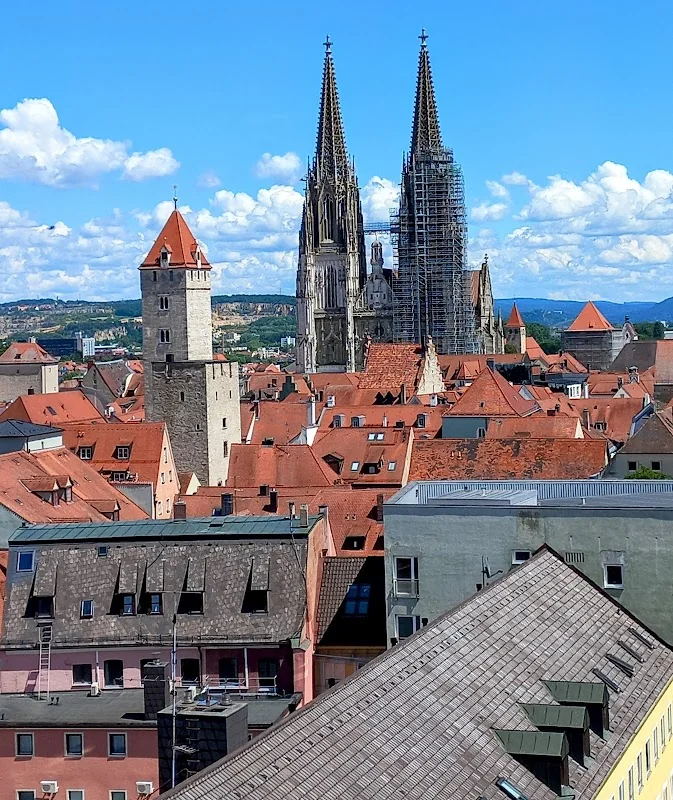
A special attraction is the north tower of the Trinity Church. The official tower page describes it as an eight-story building that is open to visitors during the summer months. Those who climb the steps are rewarded with a wide view over the Regensburg old town, the cathedral, and the surrounding area. Thus, the tower fulfills exactly the search intention behind terms like Trinity Church Regensburg tower or old town view: visitors want not only to see the church but to experience the city from above. The tower is both a small museum and a viewpoint. The west gallery contains exhibits on the history and significance of the church; thus, not only the view is offered, but also knowledge is imparted. The opening hours are regulated seasonally: in the summer months, from the last weekend in March to the last weekend in October, the tower is open from Tuesday to Sunday between 12:00 and 18:00. The entrance fee is deliberately kept low to ensure that the tower remains accessible and the proceeds serve the maintenance of the building. For many visitors, this is a convincing argument, as it combines the enjoyment of the view with the preservation of the monument. ([neupfarr-dreieinigkeitskirche.de](https://www.neupfarr-dreieinigkeitskirche.de/unsere-kirchen/dreieinigkeitskirche/turm-der-dreieinigkeitskirche))
Furthermore, the Trinity Church is a place where the view over the city meets the perception of the church space. The official page emphasizes that visitors to the World Heritage Site are welcomed in Gesandtenstraße and that climbing the tower, the church space, services, and concerts belong together. This connection is important for the positioning of the location: the church is not only worth seeing from the outside but also offers a clear spatial effect inside, characterized by the absence of columns and open sightlines. Those interested in Regensburg experience a very compact overview of the city landscape, the rooftops, the historical towers, and the location within the old town from the tower. For travelers seeking a cultural day destination, the combination of climbing the tower, visiting, and attending an event is particularly attractive. Therefore, the keyword triangle of tower, old town, and Regensburg fits very well with this location. The church's website also points out that there may be short-term closures during church events; visitors should therefore pay attention to the notices on site. This is practically relevant and also shows that the place is actively used. ([neupfarr-dreieinigkeitskirche.de](https://www.neupfarr-dreieinigkeitskirche.de/unsere-kirchen/dreieinigkeitskirche/turm-der-dreieinigkeitskirche))
Envoy Cemetery: Diet, Culture of Remembrance, and Baroque Funerary Art
The envoy cemetery is one of the strongest unique features of the Trinity Church. It is located on the east and south sides of the church and is the only cemetery still preserved on imperial city grounds today. Historically, it is closely linked to the Permanent Diet, which met permanently in Regensburg from 1663. Deceased envoys could be buried here, while Catholic envoys could purchase a privileged burial place in St. Emmeram for a fee. After lengthy disputes, Protestant envoys were buried in the churchyard of Trinity Church. This created a place that uniquely combines politics, religion, and representation. Today, visitors find simple grave slabs in the ground and elaborately designed epitaphs on the walls. The site tells not only of death and remembrance but also of rank, identity, and diplomatic presence in the Holy Roman Empire. For this reason, the envoy cemetery is particularly relevant for search queries regarding Trinity Church Regensburg envoy cemetery. ([dreieinigkeitskirche.de](https://www.dreieinigkeitskirche.de/unsere-kirchen/gesandtenfriedhof))
From an art historical perspective, the cemetery is of exceptional quality. The congregation describes the approximately 300 square meter area as a monument with 20 baroque epitaphs and 37 large grave slabs. The epitaphs are considered major works of sepulchral sculpture in Regensburg and are classified as an almost European art monument with political-historical background. Particularly noteworthy is that not only individual grave monuments are preserved here but an entire ensemble. The cemetery thus acts as an open-air archive of the 17th and 18th centuries. The construction and renovation history is also clearly documented: 1631 inauguration of the church, 1633 first burial, 1653 end of a longer burial ban, 1735 paving, 1805 the last burial, later renovations, and 2023 the beginning of a comprehensive restoration. For visitors, this means: the envoy cemetery is not a marginal detail but a central part of the church ensemble. Those interested in history, culture of representation, old inscriptions, or baroque funerary art receive a particularly dense impression of how significant Regensburg was as a diet city in European terms. ([dreieinigkeitskirche.de](https://www.dreieinigkeitskirche.de/unsere-kirchen/gesandtenfriedhof))
Bach Organ, Church Music, and Tours
Music is the second major centerpiece of the Trinity Church. Even in the 18th century, the organ played an important role: in 1758, the church received a large organ from Franz Jakob Späth. Today, only the historical case and a few pipes of this instrument are preserved. After long planning, the new Bach organ by Hendrik Ahrend was installed in this case in spring 2020 and was ceremoniously inaugurated on September 27, 2020. The instrument was built with 30 registers and around 2,500 pipes. The congregation describes the Bach organ as deliberately oriented towards Johann Sebastian Bach and the central German organ tradition. This fits excellently with the church's profile, as Regensburg traditionally sees itself as a city of church music. In immediate proximity and in the broader cityscape, there are other significant organs and music venues, making the Trinity Church part of a larger acoustic network. For search queries regarding Trinity Church Regensburg Bach organ or concert, this creates a very strong thematic environment. ([neupfarr-dreieinigkeitskirche.de](https://www.neupfarr-dreieinigkeitskirche.de/unsere-kirchen/dreieinigkeitskirche/bachorgel))
It is particularly interesting that the church treats its organ not only as a historical object but as a living sound instrument. After the inauguration, a festive week followed with daily organ concerts by renowned organists, and since then there has been an extensive program of organ concerts, tours, and informational events. This connection between music culture and education is very attractive for visitors because it makes the instrument not only audible but also explainable. The official tour page offers several formats: a tour of the church and envoy cemetery, special tours of the cemetery, art historical tours to Oswald Church, combined walks, a city tour through the imperial city-Protestant Regensburg, an organ tour of the Späth organ, and a special tour of the new Bach organ. The mentioned times and group sizes show that the offerings are deliberately designed for visitor mediation and also work well for groups. For practical visits, this means: those who want to delve deeper can not only look at the church but also understand it academically. Particularly in conjunction with concerts, tower climbing, and cemetery tours, a very complete visitor experience is created. The Trinity Church is thus not just a sound space but a place of learning for music history, architecture, and Protestant culture. ([neupfarr-dreieinigkeitskirche.de](https://www.neupfarr-dreieinigkeitskirche.de/unsere-kirchen/dreieinigkeitskirche/bachorgel))
Location, Access, and Parking in Regensburg's Old Town
The Trinity Church is located in the middle of Regensburg's old town and welcomes visitors to the UNESCO World Heritage Site in Gesandtenstraße; for tourist access, Am Ölberg 1 is also mentioned. This location is a significant part of its charm, as it combines a historically dense urban area with an extremely compact sightseeing destination. Those searching for Trinity Church Regensburg access or parking should therefore know that they are moving in a sensitive city center area where Regensburg has clear traffic and parking regulations. The city pursues a parking space concept for the city center that aims to secure the accessibility of the old town while simultaneously strengthening pedestrian traffic, cycling, and public transport. This is important for visitors because the old town remains easily accessible, but the parking situation is deliberately regulated by urban planning. Practically, this means: for the visit, one should plan a little more time and check the inner-city parking options in advance. This is especially sensible for events, concerts, or tower visits, as the old town is not intended as a classic car hub but as a historical center with priority for pedestrians. ([tourismus.regensburg.de](https://tourismus.regensburg.de/erleben-entdecken/unesco-welterbe-sehenswuerdigkeiten/dreieinigkeitskirche))
From a visitor's perspective, the location is still very attractive because the church can be excellently integrated into a round tour of the old town. The city points out its general parking and traffic regulations, parking in Regensburg, and parking options for the city center. This means for guests: those arriving by car should not rely on spontaneous direct access but should use the official parking infrastructure. Those arriving on foot or by public transport benefit from the short distance to other old town destinations. Particularly at the Trinity Church, this planning is worthwhile because the location offers several visiting occasions simultaneously: church, tower, envoy cemetery, concert, or tour. Thus, it is an ideal destination for a cultural half-day or evening visit. The location in the historical center is also an advantage for groups, as the offer can be combined with city tours and other sights. Search terms like access, parking, or old town are therefore not just side questions but part of the concrete visitor experience. The Trinity Church exemplifies how a historical place in a modern city center can remain both accessible and worthy of protection. ([regensburg.de](https://www.regensburg.de/rathaus/aemteruebersicht/planungs-u-baureferat/stadtplanungsamt/informationen-verkehrsplanung/parkraumkonzept-innenstadt?utm_source=openai))
Why Trinity Church Regensburg is So Unique
The Trinity Church is a rare example of how architecture, music, urban history, and culture of remembrance can condense in a single place. It is early Baroque, Protestant in character, historically closely linked to the Reformation, and at the same time an active event venue. The open hall building with its clear view of the altar and pulpit makes the reformation fundamental idea immediately tangible, while the tower opens the city from above and the envoy cemetery tells the European history of the diet. The Bach organ, in turn, connects the historical case with modern sound culture. This complexity explains why the Trinity Church frequently appears in online searches with terms like Regensburg, concert, program, tower, history, parking, or tours. Visitors are not just looking for a building but for a place with significance and atmosphere. The Trinity Church delivers both. It is a monument that does not close its history but continues to live on. And it is a cultural place whose events ensure that the old architectural form remains audible and experienceable today. Those visiting Regensburg should therefore not only view this place as a church but as an ensemble of space, sound, and memory. ([neupfarr-dreieinigkeitskirche.de](https://www.neupfarr-dreieinigkeitskirche.de/unsere-kirchen/dreieinigkeitskirche/geschichte))
Sources:
- Evangelical-Lutheran Neupfarr and Trinity Church Regensburg – History
- Evangelical-Lutheran Neupfarr and Trinity Church Regensburg – Tower of Trinity Church
- Evangelical-Lutheran Neupfarr and Trinity Church Regensburg – Bach Organ
- Evangelical-Lutheran Trinity Church Regensburg – Envoy Cemetery
- Regensburg Tourism GmbH – Trinity Church
- City of Regensburg – Parking in Regensburg
Mehr anzeigenWeniger anzeigen
Trinity Church Regensburg | Concerts & Events
The Trinity Church in Regensburg is much more than a historical place of worship: it is a site of music, memory, and reformation architectural history in the heart of the old town. The early Baroque hall church is one of the first Protestant-Lutheran church buildings in Bavaria and is considered the first originally Protestant church building in Southern Germany. Its interior is designed so that the pulpit and altar are clearly visible from all seats, making the reformation idea of preaching and community orientation tangible to this day. With more than 1,000 seats, the distinctive north tower, the Bach organ, and the envoy cemetery, the Trinity Church has a profile that appeals to both culture-interested visitors and people seeking quiet places. The church is located in the heart of the UNESCO World Heritage Site of Regensburg's old town and combines architecture, musical life, and urban history into a unique ensemble. Those searching for Trinity Church Regensburg, events, concerts, tower, history, or envoy cemetery will find a place here with depth, atmosphere, and a surprisingly vibrant program. ([tourismus.regensburg.de](https://tourismus.regensburg.de/erleben-entdecken/unesco-welterbe-sehenswuerdigkeiten/dreieinigkeitskirche))
Events, Services, and Concerts at Trinity Church
The current life of the Trinity Church is most clearly reflected in the official program of the congregation. There, services, concerts, spiritual offerings, and cultural events are collected and regularly updated. The page makes it clear that the church is not just a monument but an active community space with a clear musical and spiritual orientation. Particularly relevant for visitors searching for Trinity Church Regensburg events or Trinity Church Regensburg concerts is the close connection between liturgical life and music. The congregation explicitly points out organ concerts, the hour of church music, choirs, ensembles, and other musical formats. This is also important for culture enthusiasts because the church is perceived as a lively event venue in Regensburg's city center and not just as a mere sight. The events range from services to vocal and instrumental programs to special formats such as thematic devotions or tours with musical references. In this way, the Trinity Church fulfills exactly the role that many visitors indicate in their search queries: it is a place where historical architecture, spiritual use, and cultural offerings intertwine. Those who follow the program experience the church best in its present, not just in its past. ([dreieinigkeitskirche.de](https://www.dreieinigkeitskirche.de/unser-programm))
From an SEO and content perspective, this topic area is particularly strong because several search intentions converge around the keyword program: people are looking for current dates, concerts, special events, musical series, and services. Here, the Trinity Church scores with a clear structure on the website. The congregation explicitly describes its offerings as an invitation for children, families, youth, culture enthusiasts, music lovers, and seekers. This makes it clear that the location is not just a classic church but an open house for different target groups. Particularly in conjunction with the old town location, an attractive visiting model emerges: a morning visit, an afternoon stroll through the old town, and an evening concert or spiritual event. Therefore, those searching for Trinity Church Regensburg program, events, or concerts will land at a real, active, and continuously used place. The official program page is therefore the best point of contact for current dates, while the church page provides the context. ([dreieinigkeitskirche.de](https://www.dreieinigkeitskirche.de/unser-programm))
History and Architecture of the First Protestant Church Building in Southern Germany
The history of the Trinity Church begins with the Reformation in Regensburg. After the introduction of the Reformation in 1542, the Protestant community initially had limited church space available; due to political and confessional shifts, particularly the loss of the Dominican Church in 1628, there was a significant shortage of space. In February 1627, the congregation therefore decided to build a new church. Construction began in July of the same year and was completed in December 1631. The Trinity Church was conceived as a bright, column-free hall building and is considered an early example of reformation church architecture. This architectural idea is still visible today: the surrounding gallery, the round-arched windows, and the clear orientation towards the pulpit and altar make the space functional and impressive at the same time. The official history page emphasizes that the church has been largely preserved unchanged. Thus, the Trinity Church becomes a rare testimony to religious, urban, and architectural development in Southern Germany. ([neupfarr-dreieinigkeitskirche.de](https://www.neupfarr-dreieinigkeitskirche.de/unsere-kirchen/dreieinigkeitskirche/geschichte))
The furnishings also tell a story. The altar from 1637 represents central themes such as communion and baptism, which play a central role in the reformation understanding of worship. The pulpit bears a dove as a symbol of the Holy Spirit, and the seating reflects the societal order of the time, where citizens, magistrates, and imperial envoys had their own places. In 1755, the sacristy was added, in 1758 the church received a new organ from Franz Jakob Späth, and in 1790 a private oratory was established for Therese of Thurn and Taxis. These architectural and furnishing historical stages show that the church has been further developed over centuries without losing its core. Today, those searching for Trinity Church Regensburg history will find not only a monument but a living document of urban and church history. Particularly exciting is that the interior, despite its age, appears modern: open, bright, clear, and designed for participation. This combination of early novelty and today's authenticity makes the location so attractive for visitors, musicians, and history enthusiasts. ([neupfarr-dreieinigkeitskirche.de](https://www.neupfarr-dreieinigkeitskirche.de/unsere-kirchen/dreieinigkeitskirche/geschichte))
Tower, Old Town View, and Visitor Information
A special attraction is the north tower of the Trinity Church. The official tower page describes it as an eight-story building that is open to visitors during the summer months. Those who climb the steps are rewarded with a wide view over the Regensburg old town, the cathedral, and the surrounding area. Thus, the tower fulfills exactly the search intention behind terms like Trinity Church Regensburg tower or old town view: visitors want not only to see the church but to experience the city from above. The tower is both a small museum and a viewpoint. The west gallery contains exhibits on the history and significance of the church; thus, not only the view is offered, but also knowledge is imparted. The opening hours are regulated seasonally: in the summer months, from the last weekend in March to the last weekend in October, the tower is open from Tuesday to Sunday between 12:00 and 18:00. The entrance fee is deliberately kept low to ensure that the tower remains accessible and the proceeds serve the maintenance of the building. For many visitors, this is a convincing argument, as it combines the enjoyment of the view with the preservation of the monument. ([neupfarr-dreieinigkeitskirche.de](https://www.neupfarr-dreieinigkeitskirche.de/unsere-kirchen/dreieinigkeitskirche/turm-der-dreieinigkeitskirche))
Furthermore, the Trinity Church is a place where the view over the city meets the perception of the church space. The official page emphasizes that visitors to the World Heritage Site are welcomed in Gesandtenstraße and that climbing the tower, the church space, services, and concerts belong together. This connection is important for the positioning of the location: the church is not only worth seeing from the outside but also offers a clear spatial effect inside, characterized by the absence of columns and open sightlines. Those interested in Regensburg experience a very compact overview of the city landscape, the rooftops, the historical towers, and the location within the old town from the tower. For travelers seeking a cultural day destination, the combination of climbing the tower, visiting, and attending an event is particularly attractive. Therefore, the keyword triangle of tower, old town, and Regensburg fits very well with this location. The church's website also points out that there may be short-term closures during church events; visitors should therefore pay attention to the notices on site. This is practically relevant and also shows that the place is actively used. ([neupfarr-dreieinigkeitskirche.de](https://www.neupfarr-dreieinigkeitskirche.de/unsere-kirchen/dreieinigkeitskirche/turm-der-dreieinigkeitskirche))
Envoy Cemetery: Diet, Culture of Remembrance, and Baroque Funerary Art
The envoy cemetery is one of the strongest unique features of the Trinity Church. It is located on the east and south sides of the church and is the only cemetery still preserved on imperial city grounds today. Historically, it is closely linked to the Permanent Diet, which met permanently in Regensburg from 1663. Deceased envoys could be buried here, while Catholic envoys could purchase a privileged burial place in St. Emmeram for a fee. After lengthy disputes, Protestant envoys were buried in the churchyard of Trinity Church. This created a place that uniquely combines politics, religion, and representation. Today, visitors find simple grave slabs in the ground and elaborately designed epitaphs on the walls. The site tells not only of death and remembrance but also of rank, identity, and diplomatic presence in the Holy Roman Empire. For this reason, the envoy cemetery is particularly relevant for search queries regarding Trinity Church Regensburg envoy cemetery. ([dreieinigkeitskirche.de](https://www.dreieinigkeitskirche.de/unsere-kirchen/gesandtenfriedhof))
From an art historical perspective, the cemetery is of exceptional quality. The congregation describes the approximately 300 square meter area as a monument with 20 baroque epitaphs and 37 large grave slabs. The epitaphs are considered major works of sepulchral sculpture in Regensburg and are classified as an almost European art monument with political-historical background. Particularly noteworthy is that not only individual grave monuments are preserved here but an entire ensemble. The cemetery thus acts as an open-air archive of the 17th and 18th centuries. The construction and renovation history is also clearly documented: 1631 inauguration of the church, 1633 first burial, 1653 end of a longer burial ban, 1735 paving, 1805 the last burial, later renovations, and 2023 the beginning of a comprehensive restoration. For visitors, this means: the envoy cemetery is not a marginal detail but a central part of the church ensemble. Those interested in history, culture of representation, old inscriptions, or baroque funerary art receive a particularly dense impression of how significant Regensburg was as a diet city in European terms. ([dreieinigkeitskirche.de](https://www.dreieinigkeitskirche.de/unsere-kirchen/gesandtenfriedhof))
Bach Organ, Church Music, and Tours
Music is the second major centerpiece of the Trinity Church. Even in the 18th century, the organ played an important role: in 1758, the church received a large organ from Franz Jakob Späth. Today, only the historical case and a few pipes of this instrument are preserved. After long planning, the new Bach organ by Hendrik Ahrend was installed in this case in spring 2020 and was ceremoniously inaugurated on September 27, 2020. The instrument was built with 30 registers and around 2,500 pipes. The congregation describes the Bach organ as deliberately oriented towards Johann Sebastian Bach and the central German organ tradition. This fits excellently with the church's profile, as Regensburg traditionally sees itself as a city of church music. In immediate proximity and in the broader cityscape, there are other significant organs and music venues, making the Trinity Church part of a larger acoustic network. For search queries regarding Trinity Church Regensburg Bach organ or concert, this creates a very strong thematic environment. ([neupfarr-dreieinigkeitskirche.de](https://www.neupfarr-dreieinigkeitskirche.de/unsere-kirchen/dreieinigkeitskirche/bachorgel))
It is particularly interesting that the church treats its organ not only as a historical object but as a living sound instrument. After the inauguration, a festive week followed with daily organ concerts by renowned organists, and since then there has been an extensive program of organ concerts, tours, and informational events. This connection between music culture and education is very attractive for visitors because it makes the instrument not only audible but also explainable. The official tour page offers several formats: a tour of the church and envoy cemetery, special tours of the cemetery, art historical tours to Oswald Church, combined walks, a city tour through the imperial city-Protestant Regensburg, an organ tour of the Späth organ, and a special tour of the new Bach organ. The mentioned times and group sizes show that the offerings are deliberately designed for visitor mediation and also work well for groups. For practical visits, this means: those who want to delve deeper can not only look at the church but also understand it academically. Particularly in conjunction with concerts, tower climbing, and cemetery tours, a very complete visitor experience is created. The Trinity Church is thus not just a sound space but a place of learning for music history, architecture, and Protestant culture. ([neupfarr-dreieinigkeitskirche.de](https://www.neupfarr-dreieinigkeitskirche.de/unsere-kirchen/dreieinigkeitskirche/bachorgel))
Location, Access, and Parking in Regensburg's Old Town
The Trinity Church is located in the middle of Regensburg's old town and welcomes visitors to the UNESCO World Heritage Site in Gesandtenstraße; for tourist access, Am Ölberg 1 is also mentioned. This location is a significant part of its charm, as it combines a historically dense urban area with an extremely compact sightseeing destination. Those searching for Trinity Church Regensburg access or parking should therefore know that they are moving in a sensitive city center area where Regensburg has clear traffic and parking regulations. The city pursues a parking space concept for the city center that aims to secure the accessibility of the old town while simultaneously strengthening pedestrian traffic, cycling, and public transport. This is important for visitors because the old town remains easily accessible, but the parking situation is deliberately regulated by urban planning. Practically, this means: for the visit, one should plan a little more time and check the inner-city parking options in advance. This is especially sensible for events, concerts, or tower visits, as the old town is not intended as a classic car hub but as a historical center with priority for pedestrians. ([tourismus.regensburg.de](https://tourismus.regensburg.de/erleben-entdecken/unesco-welterbe-sehenswuerdigkeiten/dreieinigkeitskirche))
From a visitor's perspective, the location is still very attractive because the church can be excellently integrated into a round tour of the old town. The city points out its general parking and traffic regulations, parking in Regensburg, and parking options for the city center. This means for guests: those arriving by car should not rely on spontaneous direct access but should use the official parking infrastructure. Those arriving on foot or by public transport benefit from the short distance to other old town destinations. Particularly at the Trinity Church, this planning is worthwhile because the location offers several visiting occasions simultaneously: church, tower, envoy cemetery, concert, or tour. Thus, it is an ideal destination for a cultural half-day or evening visit. The location in the historical center is also an advantage for groups, as the offer can be combined with city tours and other sights. Search terms like access, parking, or old town are therefore not just side questions but part of the concrete visitor experience. The Trinity Church exemplifies how a historical place in a modern city center can remain both accessible and worthy of protection. ([regensburg.de](https://www.regensburg.de/rathaus/aemteruebersicht/planungs-u-baureferat/stadtplanungsamt/informationen-verkehrsplanung/parkraumkonzept-innenstadt?utm_source=openai))
Why Trinity Church Regensburg is So Unique
The Trinity Church is a rare example of how architecture, music, urban history, and culture of remembrance can condense in a single place. It is early Baroque, Protestant in character, historically closely linked to the Reformation, and at the same time an active event venue. The open hall building with its clear view of the altar and pulpit makes the reformation fundamental idea immediately tangible, while the tower opens the city from above and the envoy cemetery tells the European history of the diet. The Bach organ, in turn, connects the historical case with modern sound culture. This complexity explains why the Trinity Church frequently appears in online searches with terms like Regensburg, concert, program, tower, history, parking, or tours. Visitors are not just looking for a building but for a place with significance and atmosphere. The Trinity Church delivers both. It is a monument that does not close its history but continues to live on. And it is a cultural place whose events ensure that the old architectural form remains audible and experienceable today. Those visiting Regensburg should therefore not only view this place as a church but as an ensemble of space, sound, and memory. ([neupfarr-dreieinigkeitskirche.de](https://www.neupfarr-dreieinigkeitskirche.de/unsere-kirchen/dreieinigkeitskirche/geschichte))
Sources:
- Evangelical-Lutheran Neupfarr and Trinity Church Regensburg – History
- Evangelical-Lutheran Neupfarr and Trinity Church Regensburg – Tower of Trinity Church
- Evangelical-Lutheran Neupfarr and Trinity Church Regensburg – Bach Organ
- Evangelical-Lutheran Trinity Church Regensburg – Envoy Cemetery
- Regensburg Tourism GmbH – Trinity Church
- City of Regensburg – Parking in Regensburg
Trinity Church Regensburg | Concerts & Events
The Trinity Church in Regensburg is much more than a historical place of worship: it is a site of music, memory, and reformation architectural history in the heart of the old town. The early Baroque hall church is one of the first Protestant-Lutheran church buildings in Bavaria and is considered the first originally Protestant church building in Southern Germany. Its interior is designed so that the pulpit and altar are clearly visible from all seats, making the reformation idea of preaching and community orientation tangible to this day. With more than 1,000 seats, the distinctive north tower, the Bach organ, and the envoy cemetery, the Trinity Church has a profile that appeals to both culture-interested visitors and people seeking quiet places. The church is located in the heart of the UNESCO World Heritage Site of Regensburg's old town and combines architecture, musical life, and urban history into a unique ensemble. Those searching for Trinity Church Regensburg, events, concerts, tower, history, or envoy cemetery will find a place here with depth, atmosphere, and a surprisingly vibrant program. ([tourismus.regensburg.de](https://tourismus.regensburg.de/erleben-entdecken/unesco-welterbe-sehenswuerdigkeiten/dreieinigkeitskirche))
Events, Services, and Concerts at Trinity Church
The current life of the Trinity Church is most clearly reflected in the official program of the congregation. There, services, concerts, spiritual offerings, and cultural events are collected and regularly updated. The page makes it clear that the church is not just a monument but an active community space with a clear musical and spiritual orientation. Particularly relevant for visitors searching for Trinity Church Regensburg events or Trinity Church Regensburg concerts is the close connection between liturgical life and music. The congregation explicitly points out organ concerts, the hour of church music, choirs, ensembles, and other musical formats. This is also important for culture enthusiasts because the church is perceived as a lively event venue in Regensburg's city center and not just as a mere sight. The events range from services to vocal and instrumental programs to special formats such as thematic devotions or tours with musical references. In this way, the Trinity Church fulfills exactly the role that many visitors indicate in their search queries: it is a place where historical architecture, spiritual use, and cultural offerings intertwine. Those who follow the program experience the church best in its present, not just in its past. ([dreieinigkeitskirche.de](https://www.dreieinigkeitskirche.de/unser-programm))
From an SEO and content perspective, this topic area is particularly strong because several search intentions converge around the keyword program: people are looking for current dates, concerts, special events, musical series, and services. Here, the Trinity Church scores with a clear structure on the website. The congregation explicitly describes its offerings as an invitation for children, families, youth, culture enthusiasts, music lovers, and seekers. This makes it clear that the location is not just a classic church but an open house for different target groups. Particularly in conjunction with the old town location, an attractive visiting model emerges: a morning visit, an afternoon stroll through the old town, and an evening concert or spiritual event. Therefore, those searching for Trinity Church Regensburg program, events, or concerts will land at a real, active, and continuously used place. The official program page is therefore the best point of contact for current dates, while the church page provides the context. ([dreieinigkeitskirche.de](https://www.dreieinigkeitskirche.de/unser-programm))
History and Architecture of the First Protestant Church Building in Southern Germany
The history of the Trinity Church begins with the Reformation in Regensburg. After the introduction of the Reformation in 1542, the Protestant community initially had limited church space available; due to political and confessional shifts, particularly the loss of the Dominican Church in 1628, there was a significant shortage of space. In February 1627, the congregation therefore decided to build a new church. Construction began in July of the same year and was completed in December 1631. The Trinity Church was conceived as a bright, column-free hall building and is considered an early example of reformation church architecture. This architectural idea is still visible today: the surrounding gallery, the round-arched windows, and the clear orientation towards the pulpit and altar make the space functional and impressive at the same time. The official history page emphasizes that the church has been largely preserved unchanged. Thus, the Trinity Church becomes a rare testimony to religious, urban, and architectural development in Southern Germany. ([neupfarr-dreieinigkeitskirche.de](https://www.neupfarr-dreieinigkeitskirche.de/unsere-kirchen/dreieinigkeitskirche/geschichte))
The furnishings also tell a story. The altar from 1637 represents central themes such as communion and baptism, which play a central role in the reformation understanding of worship. The pulpit bears a dove as a symbol of the Holy Spirit, and the seating reflects the societal order of the time, where citizens, magistrates, and imperial envoys had their own places. In 1755, the sacristy was added, in 1758 the church received a new organ from Franz Jakob Späth, and in 1790 a private oratory was established for Therese of Thurn and Taxis. These architectural and furnishing historical stages show that the church has been further developed over centuries without losing its core. Today, those searching for Trinity Church Regensburg history will find not only a monument but a living document of urban and church history. Particularly exciting is that the interior, despite its age, appears modern: open, bright, clear, and designed for participation. This combination of early novelty and today's authenticity makes the location so attractive for visitors, musicians, and history enthusiasts. ([neupfarr-dreieinigkeitskirche.de](https://www.neupfarr-dreieinigkeitskirche.de/unsere-kirchen/dreieinigkeitskirche/geschichte))
Tower, Old Town View, and Visitor Information
A special attraction is the north tower of the Trinity Church. The official tower page describes it as an eight-story building that is open to visitors during the summer months. Those who climb the steps are rewarded with a wide view over the Regensburg old town, the cathedral, and the surrounding area. Thus, the tower fulfills exactly the search intention behind terms like Trinity Church Regensburg tower or old town view: visitors want not only to see the church but to experience the city from above. The tower is both a small museum and a viewpoint. The west gallery contains exhibits on the history and significance of the church; thus, not only the view is offered, but also knowledge is imparted. The opening hours are regulated seasonally: in the summer months, from the last weekend in March to the last weekend in October, the tower is open from Tuesday to Sunday between 12:00 and 18:00. The entrance fee is deliberately kept low to ensure that the tower remains accessible and the proceeds serve the maintenance of the building. For many visitors, this is a convincing argument, as it combines the enjoyment of the view with the preservation of the monument. ([neupfarr-dreieinigkeitskirche.de](https://www.neupfarr-dreieinigkeitskirche.de/unsere-kirchen/dreieinigkeitskirche/turm-der-dreieinigkeitskirche))
Furthermore, the Trinity Church is a place where the view over the city meets the perception of the church space. The official page emphasizes that visitors to the World Heritage Site are welcomed in Gesandtenstraße and that climbing the tower, the church space, services, and concerts belong together. This connection is important for the positioning of the location: the church is not only worth seeing from the outside but also offers a clear spatial effect inside, characterized by the absence of columns and open sightlines. Those interested in Regensburg experience a very compact overview of the city landscape, the rooftops, the historical towers, and the location within the old town from the tower. For travelers seeking a cultural day destination, the combination of climbing the tower, visiting, and attending an event is particularly attractive. Therefore, the keyword triangle of tower, old town, and Regensburg fits very well with this location. The church's website also points out that there may be short-term closures during church events; visitors should therefore pay attention to the notices on site. This is practically relevant and also shows that the place is actively used. ([neupfarr-dreieinigkeitskirche.de](https://www.neupfarr-dreieinigkeitskirche.de/unsere-kirchen/dreieinigkeitskirche/turm-der-dreieinigkeitskirche))
Envoy Cemetery: Diet, Culture of Remembrance, and Baroque Funerary Art
The envoy cemetery is one of the strongest unique features of the Trinity Church. It is located on the east and south sides of the church and is the only cemetery still preserved on imperial city grounds today. Historically, it is closely linked to the Permanent Diet, which met permanently in Regensburg from 1663. Deceased envoys could be buried here, while Catholic envoys could purchase a privileged burial place in St. Emmeram for a fee. After lengthy disputes, Protestant envoys were buried in the churchyard of Trinity Church. This created a place that uniquely combines politics, religion, and representation. Today, visitors find simple grave slabs in the ground and elaborately designed epitaphs on the walls. The site tells not only of death and remembrance but also of rank, identity, and diplomatic presence in the Holy Roman Empire. For this reason, the envoy cemetery is particularly relevant for search queries regarding Trinity Church Regensburg envoy cemetery. ([dreieinigkeitskirche.de](https://www.dreieinigkeitskirche.de/unsere-kirchen/gesandtenfriedhof))
From an art historical perspective, the cemetery is of exceptional quality. The congregation describes the approximately 300 square meter area as a monument with 20 baroque epitaphs and 37 large grave slabs. The epitaphs are considered major works of sepulchral sculpture in Regensburg and are classified as an almost European art monument with political-historical background. Particularly noteworthy is that not only individual grave monuments are preserved here but an entire ensemble. The cemetery thus acts as an open-air archive of the 17th and 18th centuries. The construction and renovation history is also clearly documented: 1631 inauguration of the church, 1633 first burial, 1653 end of a longer burial ban, 1735 paving, 1805 the last burial, later renovations, and 2023 the beginning of a comprehensive restoration. For visitors, this means: the envoy cemetery is not a marginal detail but a central part of the church ensemble. Those interested in history, culture of representation, old inscriptions, or baroque funerary art receive a particularly dense impression of how significant Regensburg was as a diet city in European terms. ([dreieinigkeitskirche.de](https://www.dreieinigkeitskirche.de/unsere-kirchen/gesandtenfriedhof))
Bach Organ, Church Music, and Tours
Music is the second major centerpiece of the Trinity Church. Even in the 18th century, the organ played an important role: in 1758, the church received a large organ from Franz Jakob Späth. Today, only the historical case and a few pipes of this instrument are preserved. After long planning, the new Bach organ by Hendrik Ahrend was installed in this case in spring 2020 and was ceremoniously inaugurated on September 27, 2020. The instrument was built with 30 registers and around 2,500 pipes. The congregation describes the Bach organ as deliberately oriented towards Johann Sebastian Bach and the central German organ tradition. This fits excellently with the church's profile, as Regensburg traditionally sees itself as a city of church music. In immediate proximity and in the broader cityscape, there are other significant organs and music venues, making the Trinity Church part of a larger acoustic network. For search queries regarding Trinity Church Regensburg Bach organ or concert, this creates a very strong thematic environment. ([neupfarr-dreieinigkeitskirche.de](https://www.neupfarr-dreieinigkeitskirche.de/unsere-kirchen/dreieinigkeitskirche/bachorgel))
It is particularly interesting that the church treats its organ not only as a historical object but as a living sound instrument. After the inauguration, a festive week followed with daily organ concerts by renowned organists, and since then there has been an extensive program of organ concerts, tours, and informational events. This connection between music culture and education is very attractive for visitors because it makes the instrument not only audible but also explainable. The official tour page offers several formats: a tour of the church and envoy cemetery, special tours of the cemetery, art historical tours to Oswald Church, combined walks, a city tour through the imperial city-Protestant Regensburg, an organ tour of the Späth organ, and a special tour of the new Bach organ. The mentioned times and group sizes show that the offerings are deliberately designed for visitor mediation and also work well for groups. For practical visits, this means: those who want to delve deeper can not only look at the church but also understand it academically. Particularly in conjunction with concerts, tower climbing, and cemetery tours, a very complete visitor experience is created. The Trinity Church is thus not just a sound space but a place of learning for music history, architecture, and Protestant culture. ([neupfarr-dreieinigkeitskirche.de](https://www.neupfarr-dreieinigkeitskirche.de/unsere-kirchen/dreieinigkeitskirche/bachorgel))
Location, Access, and Parking in Regensburg's Old Town
The Trinity Church is located in the middle of Regensburg's old town and welcomes visitors to the UNESCO World Heritage Site in Gesandtenstraße; for tourist access, Am Ölberg 1 is also mentioned. This location is a significant part of its charm, as it combines a historically dense urban area with an extremely compact sightseeing destination. Those searching for Trinity Church Regensburg access or parking should therefore know that they are moving in a sensitive city center area where Regensburg has clear traffic and parking regulations. The city pursues a parking space concept for the city center that aims to secure the accessibility of the old town while simultaneously strengthening pedestrian traffic, cycling, and public transport. This is important for visitors because the old town remains easily accessible, but the parking situation is deliberately regulated by urban planning. Practically, this means: for the visit, one should plan a little more time and check the inner-city parking options in advance. This is especially sensible for events, concerts, or tower visits, as the old town is not intended as a classic car hub but as a historical center with priority for pedestrians. ([tourismus.regensburg.de](https://tourismus.regensburg.de/erleben-entdecken/unesco-welterbe-sehenswuerdigkeiten/dreieinigkeitskirche))
From a visitor's perspective, the location is still very attractive because the church can be excellently integrated into a round tour of the old town. The city points out its general parking and traffic regulations, parking in Regensburg, and parking options for the city center. This means for guests: those arriving by car should not rely on spontaneous direct access but should use the official parking infrastructure. Those arriving on foot or by public transport benefit from the short distance to other old town destinations. Particularly at the Trinity Church, this planning is worthwhile because the location offers several visiting occasions simultaneously: church, tower, envoy cemetery, concert, or tour. Thus, it is an ideal destination for a cultural half-day or evening visit. The location in the historical center is also an advantage for groups, as the offer can be combined with city tours and other sights. Search terms like access, parking, or old town are therefore not just side questions but part of the concrete visitor experience. The Trinity Church exemplifies how a historical place in a modern city center can remain both accessible and worthy of protection. ([regensburg.de](https://www.regensburg.de/rathaus/aemteruebersicht/planungs-u-baureferat/stadtplanungsamt/informationen-verkehrsplanung/parkraumkonzept-innenstadt?utm_source=openai))
Why Trinity Church Regensburg is So Unique
The Trinity Church is a rare example of how architecture, music, urban history, and culture of remembrance can condense in a single place. It is early Baroque, Protestant in character, historically closely linked to the Reformation, and at the same time an active event venue. The open hall building with its clear view of the altar and pulpit makes the reformation fundamental idea immediately tangible, while the tower opens the city from above and the envoy cemetery tells the European history of the diet. The Bach organ, in turn, connects the historical case with modern sound culture. This complexity explains why the Trinity Church frequently appears in online searches with terms like Regensburg, concert, program, tower, history, parking, or tours. Visitors are not just looking for a building but for a place with significance and atmosphere. The Trinity Church delivers both. It is a monument that does not close its history but continues to live on. And it is a cultural place whose events ensure that the old architectural form remains audible and experienceable today. Those visiting Regensburg should therefore not only view this place as a church but as an ensemble of space, sound, and memory. ([neupfarr-dreieinigkeitskirche.de](https://www.neupfarr-dreieinigkeitskirche.de/unsere-kirchen/dreieinigkeitskirche/geschichte))
Sources:
- Evangelical-Lutheran Neupfarr and Trinity Church Regensburg – History
- Evangelical-Lutheran Neupfarr and Trinity Church Regensburg – Tower of Trinity Church
- Evangelical-Lutheran Neupfarr and Trinity Church Regensburg – Bach Organ
- Evangelical-Lutheran Trinity Church Regensburg – Envoy Cemetery
- Regensburg Tourism GmbH – Trinity Church
- City of Regensburg – Parking in Regensburg
Upcoming Events
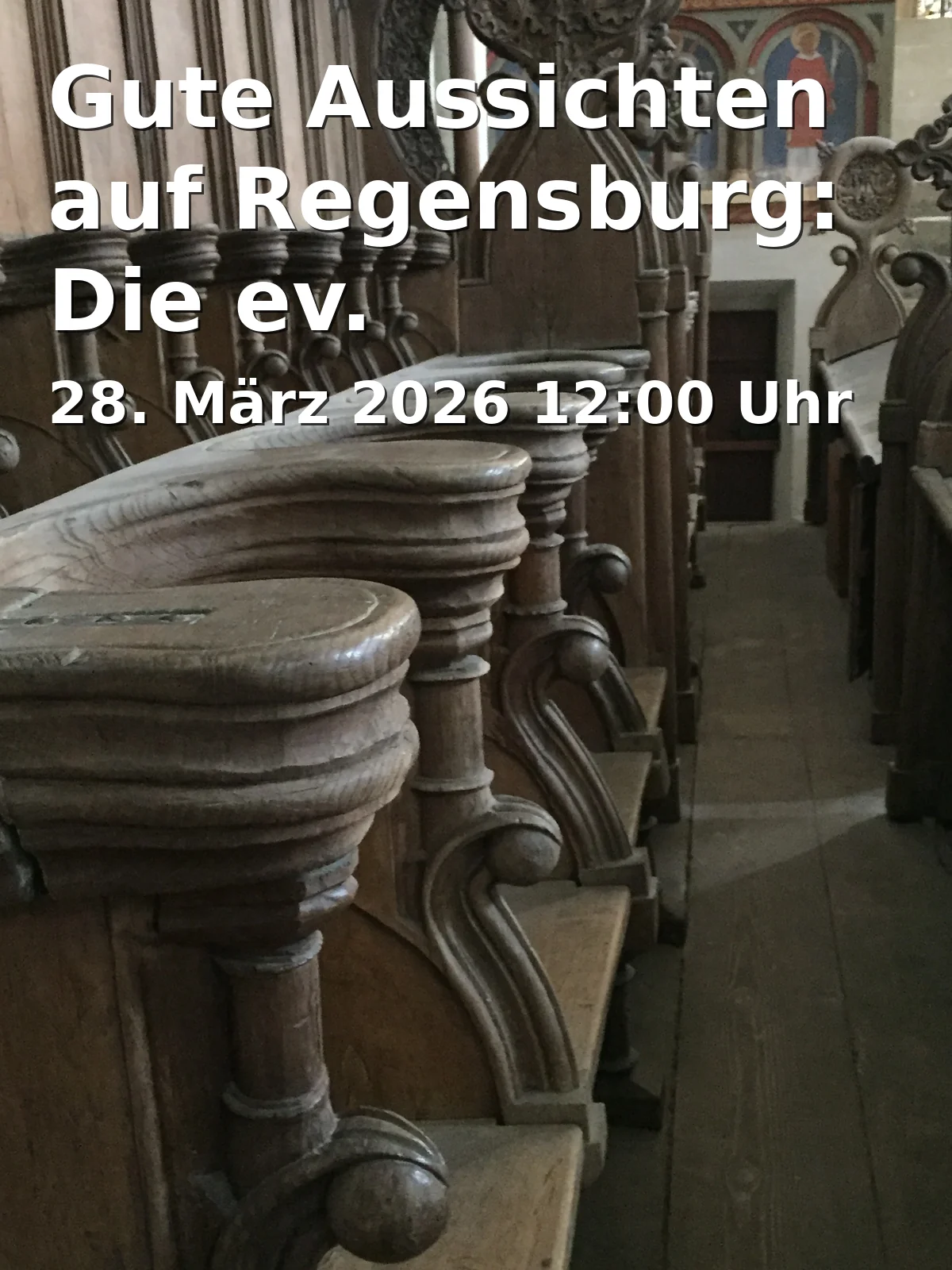
Good Views of Regensburg: The Protestant Trinity Church with Tower and Diplomat Cemetery
Experience Regensburg from Above: Trinity Church, tower view, and diplomat cemetery in one visit. 28.03.-01.11.2026, free admission, tower from 3 €. #Regensburg
Anniversary Concert "Thank you Lord – 30 Years of Deliverance"
30 Years of Deliverance in the Trinity Church: Gospel, community, and goosebumps in Regensburg. Admission free, donations welcome. #Regensburg #Gospel
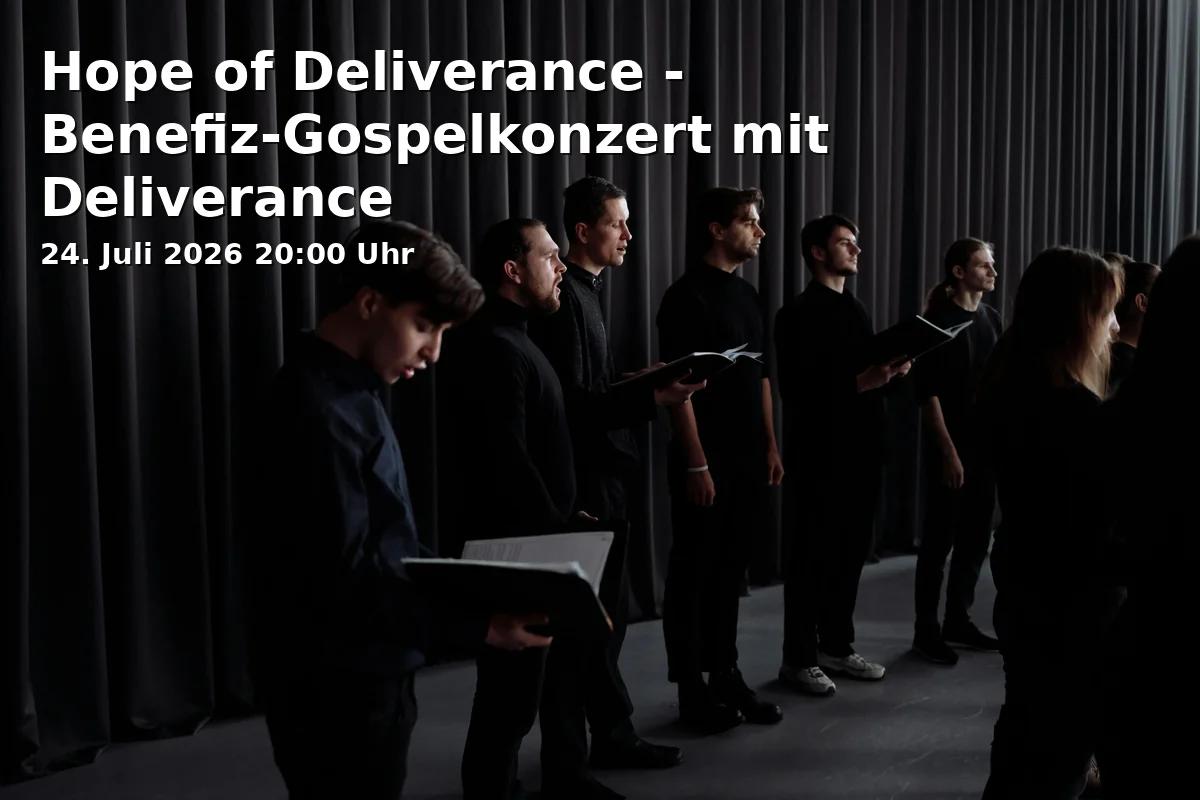
Hope of Deliverance - Benefit Gospel Concert with Deliverance
A summer evening full of gospel, goosebumps, and benefits in Regensburg: Deliverance sings in the Trinity Church for the Envoy Cemetery. 07/24/2026, free admission. #Regensburg #Gospel
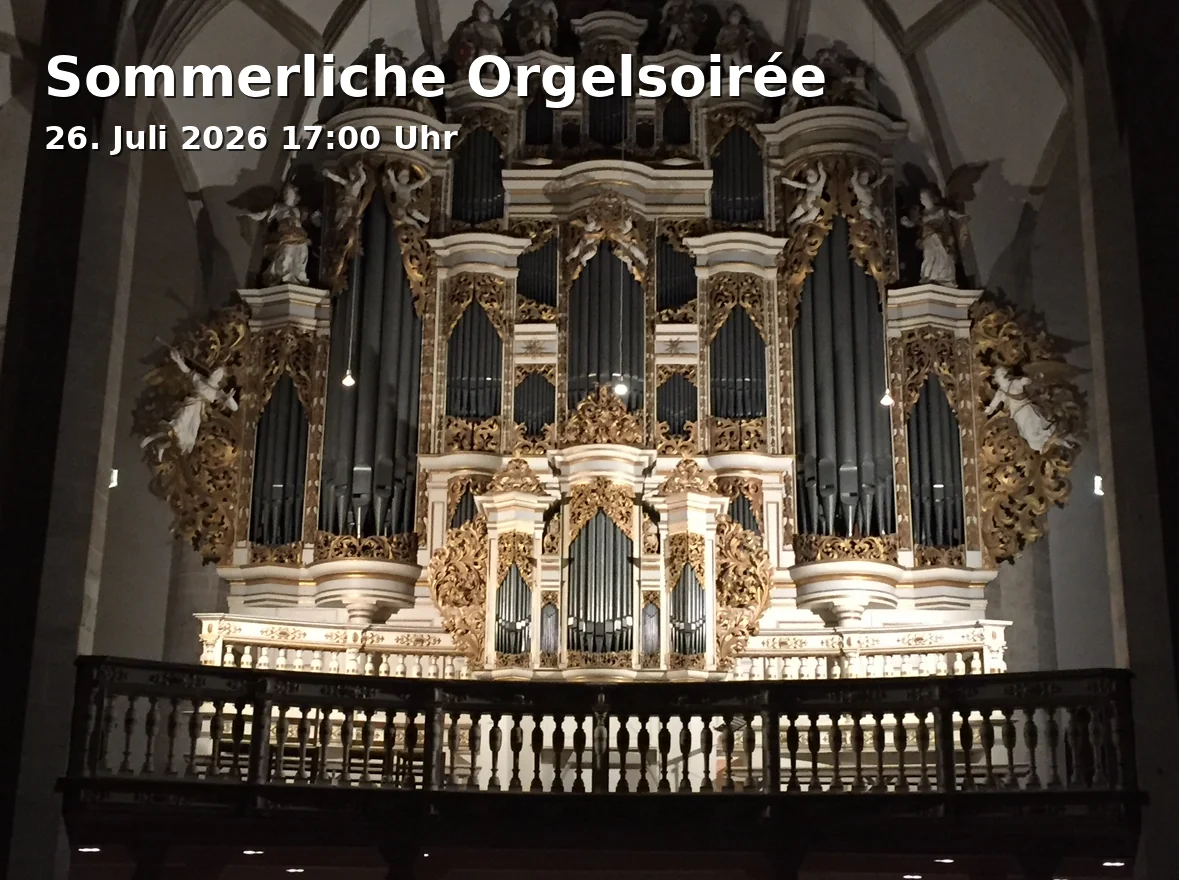
Summer Organ Soirée
A summer evening full of organ sound in the Trinity Church Regensburg: baroque ambiance, calm concert atmosphere, and free admission. #Regensburg
Frequently Asked Questions
Reviews
but. sorryforseen
16. January 2024
The church is well maintained and provides a peaceful atmosphere for visitors. Inside, there are stained-glass windows that let in a soft, colourful light. The church is also known for its impressive organ, which adds a majestic touch to the overall experience, as well as the view from the top of the tower, which for only €2.5 you can capture a unique view of the city. There's a book with reviews inside the church as well, so please be kind to leave one over there as well!
Ria
23. April 2023
The church was built from 1627 to 1631 according to plans by Hanns Carl and was one of the first new Evangelical Lutheran churches to be built in Bavaria. The church is considered to be the largest new church building in the then free imperial city of Regensburg. Opens after 12pm.
Mariana Wijayanti
27. September 2017
Evangelical Lutheran Holy Trinity Church. The tower ascend costs €2 and it's well worth it. The view from the bell tower is great, you see all the patrician towers of Regensburg. Take note of the opening time though, only open 12 noon onwards.
Evgeniia
30. November 2024
Calm and ambient church, you can go upstairs and view the church from the second floor which is also nice.
Lina Che
6. September 2022
Entry to the tower costs 2.5€. Perfect view point. You can see all old part of the city.