
Regensburg
Fischmarkt, 93047 Regensburg, Deutschland
Fish Market Regensburg | Opening Hours & Directions
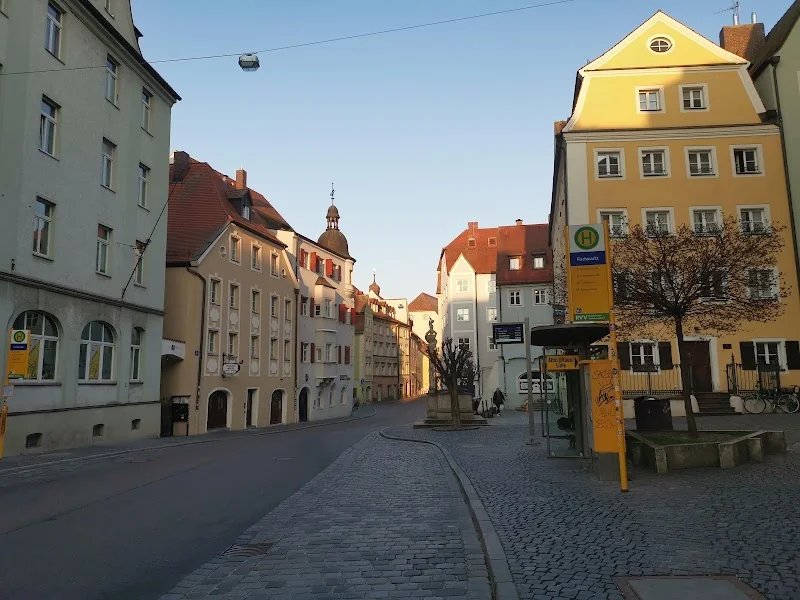
The Fish Market in Regensburg is not a loud event location, but a historic square that continues to shape the image of the old town today. Those searching for Fish Market Regensburg usually mean a place where history, urban space, and short distances between the town hall, Danube waterfront, and old town alleys converge in a small area. This is exactly what makes this place so interesting: it serves as a point of orientation, a historical memorial site, and a practical meeting point in the heart of the city. Official Regensburg sources connect the area with the former marketplace for Danube fish and clearly locate it on the old town map along the line of Keplerstraße, Fischmarkt, and Thundorferstraße. The Old Town Hall, which is only a few steps away, also uses the stop Altes Rathaus, Fischmarkt as an important arrival point. For visitors, the Fish Market is therefore primarily one thing: an easily accessible, historically significant place that fits perfectly into a stroll through the old town. Those interested in Fish Market Regensburg opening hours are usually looking for practical visit planning. Since it is a public square, there is no fixed opening time, but rather the question of when the surrounding houses, exhibitions, and gastronomic offerings are available. This mix of public urban space and lively environment makes the Fish Market so versatile. ([regensburg.de](https://www.regensburg.de/kultur/kulturdatenbank/eintrag/116521?utm_source=openai))
Where is the Fish Market in Regensburg and how do I get there?
The location of the Fish Market is one of the most important reasons why so many people specifically travel to Fish Market Regensburg or search for Fish Market Regensburg bus. The square is located in the old town and appears on the official Regensburg city map as part of the inner-city structure between Keplerstraße, Fischmarkt, and Thundorferstraße. This places it in an area that is heavily influenced by pedestrian traffic and is ideal for a city stroll. Particularly convenient is the connection to public transport: The city of Regensburg names the stop Altes Rathaus, Fischmarkt for bus lines 1, 2, 4, and 11 as well as the old town bus. This makes the Fish Market easily accessible not only for tourists but also for locals. Those coming from the train station or other districts do not get off somewhere far outside but land directly in the historical core that represents the old town, town hall, and Danube waterfront. Additionally, it is important to know that the area along the Danube in the old town is treated as a sensitive urban space. For visitors, this means: the most pleasant combination is bus, a short walk, and then a stroll through the old town. This way, one experiences the Fish Market not just as a destination but as part of a route that belongs to the most beautiful paths in Regensburg. It is also worth taking a look at the city map, as it quickly reveals how closely the Fish Market is connected to the Old Town Hall, Danube waterfront, and other historical sites. ([tourismus.regensburg.de](https://tourismus.regensburg.de/fileadmin/user_upload/Bilder_Unterseiten/Fuehrungen__Rundfahrten/Stadtplan_der_Regensburger_Altstadt.pdf))
Those arriving by car should not misunderstand the Fish Market as a classic location with right of way and large access. The Regensburg old town is designed for proximity, not for transit. For appointments at the Old Town Hall, the city refers to parking options in the underground garages at Arnulfplatz and Bismarckplatz, as well as in the parking garages at Dachauplatz and St.-Peters-Weg. This is also the most sensible strategy for the Fish Market: park centrally, then switch to walking in the old town. The advantage is great, as the visit already begins in the atmosphere that characterizes the Fish Market and its surroundings. The paths are short, orientation is easy, and the most important points are closely located. Those looking to park at Fish Market Regensburg should therefore not look for parking spaces directly at the square but for suitable downtown garages. This saves time and avoids unnecessary detours through the historical alleys. For many guests, this is even a plus, as the walk from the parking lot to the Fish Market is already part of the experience. One sees old town facades, hears the traffic of the city center only muted, and finally reaches the square where city history and everyday life meet in a special way. ([regensburg.de](https://www.regensburg.de/kultur/veranstaltungen-des-kulturreferats/rathauskonzerte/8606?utm_source=openai))
Does the Fish Market in Regensburg have its own opening hours?
When searching for Fish Market Regensburg opening hours, there is often the assumption that it is a single attraction with ticket times, entry, and closing. This is not the case here. The Fish Market is a public square in the old town, meaning it is an urban space and not a closed facility. Therefore, there are no classic opening hours like in a museum or concert hall. Practically, the square is accessible at any time, as long as no extraordinary construction sites, closures, or events cause temporary restrictions. For visitors, this is very pleasant because the Fish Market can be integrated into a tour at any time of the day. In the morning, it appears calm and clear, at noon lively, and in the evening atmospheric with the character of a historical urban space. So, if one is looking for a specific time, it is better to check the surrounding offerings: the Old Town Hall, exhibitions, gastronomic businesses, or guided tours each have their own times. This is exactly why the question of the Fish Market's opening hours in a narrower sense can only be answered indirectly. The square itself is open, and the use of the surroundings follows individual time windows. This distinction is important so that visitors do not arrive with false expectations. Those marking the Fish Market should therefore not plan according to opening and closing times but according to weather, light, personal time windows, and their own route through the old town. This is especially ideal for spontaneous visits, as the square remains flexible and can be perfectly combined with other destinations. ([tourismus.regensburg.de](https://tourismus.regensburg.de/fileadmin/user_upload/Bilder_Unterseiten/Fuehrungen__Rundfahrten/Stadtplan_der_Regensburger_Altstadt.pdf))
For the visit, this means: If you come during the day, you benefit from good orientation, clear sightlines, and proximity to bus and footpaths. In the late afternoon or early evening, the special atmosphere of the square unfolds even more strongly because the old town slows down in this zone, and the historical facades gain more presence. Those planning a photo tour will find here a place that presents itself differently each time, without the need for a ticket or reservation. This makes the Fish Market Regensburg attractive even for those who only want to make a short stop. Instead of a fixed opening time, there is an invitation to linger. Those who cross the old town in just a few minutes may only notice the name. However, those who stop recognize how sensibly the square is embedded in the historical fabric. This is also where the SEO-relevant core of many search queries lies: people want to know if they can simply drop by, when a detour is worthwhile, and whether the place even requires a visit plan. The answer is: Yes, it is worth coming by, and no, the square itself does not require an entry time. Only the adjacent facilities plan with their own opening hours. ([tourismus.regensburg.de](https://tourismus.regensburg.de/fileadmin/user_upload/Bilder_Unterseiten/Fuehrungen__Rundfahrten/Stadtplan_der_Regensburger_Altstadt.pdf))
What history does the Fish Market in Regensburg have?
The history of the Fish Market is closely linked to the development of the Regensburg old town. Even the name indicates that fish trade once took place here, and an official cultural database of the city of Regensburg describes the site as a historical area between the former marketplace for Danube fish and the Danube quay. This is more than a pretty formulation: it shows that the square has emerged from a functional urban space where supply, trade, and proximity to the river were interconnected. Throughout the city's history, the area has been redesigned repeatedly and adapted to the needs of the respective time. Particularly interesting is the note from a municipal monument protection analysis, stating that the lower part of today's Fish Market was already paved in 1480 and later referred to as the Old Fish Market. This makes it clear that the development of the square dates back deep into the late Middle Ages. The Fish Market was never just an accessory but part of a developed urban structure shaped by trade, pathways, and urban representation. Today, those standing there see no market in the classical sense, but a historical urban space that has changed its function without losing its significance. This layering makes the place so exciting: the modern use as a public square, the proximity to authorities and cultural institutions, as well as the visible traces of former trade routes converge here. This is also the reason why the Fish Market does not appear arbitrary in the Regensburg cityscape. It visibly carries history outward without locking it away in a museum. ([regensburg.de](https://www.regensburg.de/kultur/kulturdatenbank/eintrag/116521?utm_source=openai))
This can be particularly well seen in the connection between the square and the fountain. The Fish Market Fountain is one of the distinctive historical elements of the site. According to a report from the city of Regensburg, the fountain structure received its current stone form at the beginning of the 17th century. The description emphasizes that the fountain stands on a two-tiered pedestal and features an allegorical figure related to fish. In municipal monument preservation, it is also noted that the current figure was replaced by a copy after a destruction around 1904 and that the fountain grille dates from the late 16th century. Such details are important because they show that the Fish Market is not just a name on a map but a place with materially tangible history. The fountain connects function and symbolism: it served for supply but also for the representation of the square. For visitors searching for Fish Market Regensburg history or Fish Market Regensburg fountain, this is precisely the decisive added value. The history is not only in documents but in the form of the square itself. Those reading the surface thus see more than just a pretty fountain. They recognize the transition from medieval supply to baroque or early modern square design and the later care of this heritage by the city. ([regensburg.de](https://www.regensburg.de/fm/121/werkbericht-2017.pdf?utm_source=openai))
Later urban development has also left traces. In archival and monument preservation sources, the Fish Market repeatedly appears as part of redesigns, building alignments, and urban planning. This shows that the square was never static. The Regensburg old town is characterized by overlays: medieval basic structure, early modern representation, later traffic management, and today's use as a public, often pedestrian urban space. The Fish Market exemplifies this. It is not the large monument that dominates from afar but a finely composed square within the fabric of the old town. Therefore, those visiting it do not only experience a single attraction but a piece of urban development history. This also explains why the place is often mentioned in the city topography together with the Old Town Hall, Danube waterfront, and old town alleys. All these elements belong together and tell a common story: Regensburg as a trading city by the river, as a bourgeois-shaped urban space, and as a place that does not hide its history but integrates it into everyday life. This is why the Fish Market remains interesting for history enthusiasts, strollers, and urban researchers alike. ([regensburg.de](https://www.regensburg.de/fm/121/denkmalschutzanalyse-altstadtplaetze.pdf?utm_source=openai))
What is worth seeing around the Fish Market?
There are several points around the Fish Market that make the visit particularly worthwhile. First and foremost is the Old Town Hall, which is only a few steps away and anchors the square in its historical context. The official old town map and the city's visitor information show the Fish Market as part of a tight network of town hall, Danube waterfront, and old town alleys. This proximity is crucial to the charm of the place. One does not stand isolated in a square but in the midst of a sequence of historical spaces. Those interested in Fish Market Regensburg attractions will therefore not find a list of large attractions directly at the edge of the square but an ensemble of impressions: the fountain, the old buildings, the paths to the Danube, and the short distance to other places in the city center. In the municipal cultural database, for example, Fischmarkt 3 is described as a historical building related to the former use of the area. This is a good indication that even individual addresses at the square are culturally and historically relevant. The Fish Market is therefore not just a passage but an anchor point. ([tourismus.regensburg.de](https://tourismus.regensburg.de/fileadmin/user_upload/Bilder_Unterseiten/Fuehrungen__Rundfahrten/Stadtplan_der_Regensburger_Altstadt.pdf))
Particular attention should be paid to the Fish Market Fountain. It is not just decoration but a historical sign of the square. The city describes it as a structure that originally began in a different form and received its stone shape at the beginning of the 17th century. The figure related to fish makes the name of the square visually understandable. Thus, the fountain is an ideal photo motif but also a historical lesson in square design. It shows how water, representation, and urban everyday life were once interconnected. Therefore, those visiting the Fish Market should definitely spend some time at the fountain instead of just passing by quickly. In the immediate vicinity, the old town as a whole can also be experienced: narrow alleys, historical facades, and proximity to the Danube waterfront create a mix of tranquility and movement. The square is thus an excellent starting or ending point for a tour through the Regensburg old town. Especially visitors searching for Fish Market nearby will find here what they are looking for, as the topography clearly shows how central the location is. From here, other destinations in the old town can be easily reached on foot without losing the character of the historical urban space. ([regensburg.de](https://www.regensburg.de/fm/121/werkbericht-2017.pdf?utm_source=openai))
Culinary and cultural offerings in the vicinity are also interesting, even if one does not understand the Fish Market itself as a gastronomic location. The old town map of Regensburg Tourism GmbH shows various cultural and gastronomic offerings in the immediate vicinity, including theaters, galleries, and traditional venues in the old town. This means for the visitor: the Fish Market is not an isolated point but part of a vibrant city center where one can easily combine a stroll with a café visit, an exhibition, or a walk along the Danube. This is precisely why the place often appears in search queries together with terms like Old Town Hall, Danube waterfront, old town, and directions. People are not only looking for an address but a meaningful use of their visit. The Fish Market provides exactly this connection. It is manageable enough to grasp in just a few minutes and significant enough to linger longer. Those who consciously perceive the square quickly realize that history does not stand behind glass but continues to play a role in urban life. This is probably the greatest strength of the Fish Market: it combines historical depth with everyday usability. ([tourismus.regensburg.de](https://tourismus.regensburg.de/fileadmin/user_upload/Bilder_Unterseiten/Fuehrungen__Rundfahrten/Stadtplan_der_Regensburger_Altstadt.pdf))
What tips help when visiting the Fish Market in Regensburg?
The most important tip is: do not view the Fish Market only as a destination but as part of an urban experience. Those searching for Fish Market Regensburg often expect practical information, and these are surprisingly uncomplicated here. Due to its central location in the old town, the square can be easily combined with a visit to the Old Town Hall, a walk to the Danube waterfront, or a stroll through the surrounding alleys. This is particularly helpful for first-time visitors, as one does not need to approach the place separately or plan it separately. The stop Altes Rathaus, Fischmarkt offers a direct public transport connection, and those arriving by car should choose a central parking garage as is usual for the old town and walk the rest of the way. This is not only more practical but also atmospherically more fitting. An old town square like the Fish Market fully unfolds its character only when one walks the last meters and consciously perceives the historical surroundings. ([regensburg.de](https://www.regensburg.de/kultur/veranstaltungen-des-kulturreferats/rathauskonzerte/8606?utm_source=openai))
A second tip concerns time planning. Since the Fish Market itself has no opening hours, the best time to visit is the one that fits your daily schedule. For many guests, late morning and early evening are particularly pleasant because light, movement, and urban space interact well at those times. Those who only want to make a short stop should focus on the fountain and the square's situation. Those with more time can choose the Fish Market as a starting point for a route along the town hall, Danube, and old town. It is worth paying attention to details: paving, facades, sightlines, and the spatial proximity to historical buildings tell much about the development of the square. Such details are what transform a simple city stroll into a memorable visit. The Fish Market is equally interesting for families, photographers, and culture enthusiasts because it has no entry threshold and still conveys a strong history. The combination of accessibility and history is rarely as clearly tangible as here. So, if you are looking for a place to experience Regensburg quickly yet impressively, the Fish Market is just the right spot. ([regensburg.de](https://www.regensburg.de/kultur/kulturdatenbank/eintrag/116521?utm_source=openai))
A third tip is to combine it with the surrounding attractions. Especially because the square is so centrally located, it is worthwhile not only to photograph the Fish Market itself but also the transitions to the neighboring areas. The Old Town Hall, the paths towards the Danube, and the historical old town together create the actual experience. For visitors searching for Fish Market Regensburg old town or Fish Market Regensburg Danube waterfront, this connection is the core: the place is not an individual object but a hub. Those who connect the surroundings meaningfully see more and understand Regensburg better. This is also advantageous when arriving by bus and footpath, as one lands directly in the historical center and can continue walking without detours. For practical visits, this means: arrive easily, orient quickly, let the fountain and square have an effect, and then depending on time, head towards the town hall, Danube, or city center. The Fish Market is not a place for haste but for clear, short, yet substantial urban experience. This is what makes it so attractive for seekers. ([tourismus.regensburg.de](https://tourismus.regensburg.de/fileadmin/user_upload/Bilder_Unterseiten/Fuehrungen__Rundfahrten/Stadtplan_der_Regensburger_Altstadt.pdf))
Fish Market Regensburg as part of a vibrant old town image
The Fish Market is a good example of how Regensburg deals with its history: not as a rigid museum but as a lived urban space. Those entering the square today experience a place that has grown historically and is simultaneously used in everyday life. This is particularly important for the search for Fish Market Regensburg because many users are looking for a place with real substance that cannot be explained just by a sign. This substance is indeed present. The square is related to old trade routes, the town hall, the Danube waterfront, and the buildings of the old town, which still allow recognition of the historical structure. The official Regensburg cultural database and the old town map clearly document this integration. At the same time, the Fish Market Fountain shows that even seemingly small elements of urban space can carry a long history. This creates an image of Regensburg that does not consist of individual postcard motifs but of a sequence of spaces that complement each other. ([regensburg.de](https://www.regensburg.de/kultur/kulturdatenbank/eintrag/116521?utm_source=openai))
For search queries like Fish Market nearby, Fish Market Regensburg history, or Fish Market Regensburg opening hours, this classification is crucial. People want to know if a visit is worthwhile, how to get there, and what they can expect. The answer is clear: the Fish Market is easily accessible, publicly accessible, and historically significant. Its impact does not rely on size but on location and context. Directly next to it are central destinations of the old town, and with bus or on foot, the place is easily reachable. At the same time, it is worth looking up, down, and to the sides: the facades, the paving, and the fountain tell of centuries of urban use. Those who only get to know Regensburg through its major attractions miss one of the finer but particularly credible places in the city with the Fish Market. It shows how traffic, trade, memory, and present can converge in a single square. This is why this place has retained its place in the cityscape to this day and remains a relevant search term for visitors who not only travel but also want to understand where they are. ([regensburg.de](https://www.regensburg.de/kultur/kulturdatenbank/eintrag/116521?utm_source=openai))
Sources:
- City of Regensburg – Cultural Database Gallery Erdel artspace & Schaulager ([regensburg.de](https://www.regensburg.de/kultur/kulturdatenbank/eintrag/116521?utm_source=openai))
- Regensburg Tourism – Old Town City Map ([tourismus.regensburg.de](https://tourismus.regensburg.de/fileadmin/user_upload/Bilder_Unterseiten/Fuehrungen__Rundfahrten/Stadtplan_der_Regensburger_Altstadt.pdf))
- City of Regensburg – Town Hall Concerts and Directions ([regensburg.de](https://www.regensburg.de/kultur/veranstaltungen-des-kulturreferats/rathauskonzerte/8606?utm_source=openai))
- City of Regensburg – Work Report 2017: Restoration of the Fountain at the Fish Market ([regensburg.de](https://www.regensburg.de/fm/121/werkbericht-2017.pdf?utm_source=openai))
- City of Regensburg – Parking Information at the Old Town Hall ([regensburg.de](https://www.regensburg.de/kultur/veranstaltungen-des-kulturreferats/rathauskonzerte/8606?utm_source=openai))
- City of Regensburg – 1000 Monuments: Fischmarkt 3 ([regensburg.de](https://www.regensburg.de/welterbe/welterbe-regensburg/1000-denkmaeler/52200/fischmarkt-3.html?utm_source=openai))
- City of Regensburg – Monument Protection Analysis of Old Town Squares ([regensburg.de](https://www.regensburg.de/fm/121/denkmalschutzanalyse-altstadtplaetze.pdf?utm_source=openai))
Mehr anzeigenWeniger anzeigen
Fish Market Regensburg | Opening Hours & Directions
The Fish Market in Regensburg is not a loud event location, but a historic square that continues to shape the image of the old town today. Those searching for Fish Market Regensburg usually mean a place where history, urban space, and short distances between the town hall, Danube waterfront, and old town alleys converge in a small area. This is exactly what makes this place so interesting: it serves as a point of orientation, a historical memorial site, and a practical meeting point in the heart of the city. Official Regensburg sources connect the area with the former marketplace for Danube fish and clearly locate it on the old town map along the line of Keplerstraße, Fischmarkt, and Thundorferstraße. The Old Town Hall, which is only a few steps away, also uses the stop Altes Rathaus, Fischmarkt as an important arrival point. For visitors, the Fish Market is therefore primarily one thing: an easily accessible, historically significant place that fits perfectly into a stroll through the old town. Those interested in Fish Market Regensburg opening hours are usually looking for practical visit planning. Since it is a public square, there is no fixed opening time, but rather the question of when the surrounding houses, exhibitions, and gastronomic offerings are available. This mix of public urban space and lively environment makes the Fish Market so versatile. ([regensburg.de](https://www.regensburg.de/kultur/kulturdatenbank/eintrag/116521?utm_source=openai))
Where is the Fish Market in Regensburg and how do I get there?
The location of the Fish Market is one of the most important reasons why so many people specifically travel to Fish Market Regensburg or search for Fish Market Regensburg bus. The square is located in the old town and appears on the official Regensburg city map as part of the inner-city structure between Keplerstraße, Fischmarkt, and Thundorferstraße. This places it in an area that is heavily influenced by pedestrian traffic and is ideal for a city stroll. Particularly convenient is the connection to public transport: The city of Regensburg names the stop Altes Rathaus, Fischmarkt for bus lines 1, 2, 4, and 11 as well as the old town bus. This makes the Fish Market easily accessible not only for tourists but also for locals. Those coming from the train station or other districts do not get off somewhere far outside but land directly in the historical core that represents the old town, town hall, and Danube waterfront. Additionally, it is important to know that the area along the Danube in the old town is treated as a sensitive urban space. For visitors, this means: the most pleasant combination is bus, a short walk, and then a stroll through the old town. This way, one experiences the Fish Market not just as a destination but as part of a route that belongs to the most beautiful paths in Regensburg. It is also worth taking a look at the city map, as it quickly reveals how closely the Fish Market is connected to the Old Town Hall, Danube waterfront, and other historical sites. ([tourismus.regensburg.de](https://tourismus.regensburg.de/fileadmin/user_upload/Bilder_Unterseiten/Fuehrungen__Rundfahrten/Stadtplan_der_Regensburger_Altstadt.pdf))
Those arriving by car should not misunderstand the Fish Market as a classic location with right of way and large access. The Regensburg old town is designed for proximity, not for transit. For appointments at the Old Town Hall, the city refers to parking options in the underground garages at Arnulfplatz and Bismarckplatz, as well as in the parking garages at Dachauplatz and St.-Peters-Weg. This is also the most sensible strategy for the Fish Market: park centrally, then switch to walking in the old town. The advantage is great, as the visit already begins in the atmosphere that characterizes the Fish Market and its surroundings. The paths are short, orientation is easy, and the most important points are closely located. Those looking to park at Fish Market Regensburg should therefore not look for parking spaces directly at the square but for suitable downtown garages. This saves time and avoids unnecessary detours through the historical alleys. For many guests, this is even a plus, as the walk from the parking lot to the Fish Market is already part of the experience. One sees old town facades, hears the traffic of the city center only muted, and finally reaches the square where city history and everyday life meet in a special way. ([regensburg.de](https://www.regensburg.de/kultur/veranstaltungen-des-kulturreferats/rathauskonzerte/8606?utm_source=openai))
Does the Fish Market in Regensburg have its own opening hours?
When searching for Fish Market Regensburg opening hours, there is often the assumption that it is a single attraction with ticket times, entry, and closing. This is not the case here. The Fish Market is a public square in the old town, meaning it is an urban space and not a closed facility. Therefore, there are no classic opening hours like in a museum or concert hall. Practically, the square is accessible at any time, as long as no extraordinary construction sites, closures, or events cause temporary restrictions. For visitors, this is very pleasant because the Fish Market can be integrated into a tour at any time of the day. In the morning, it appears calm and clear, at noon lively, and in the evening atmospheric with the character of a historical urban space. So, if one is looking for a specific time, it is better to check the surrounding offerings: the Old Town Hall, exhibitions, gastronomic businesses, or guided tours each have their own times. This is exactly why the question of the Fish Market's opening hours in a narrower sense can only be answered indirectly. The square itself is open, and the use of the surroundings follows individual time windows. This distinction is important so that visitors do not arrive with false expectations. Those marking the Fish Market should therefore not plan according to opening and closing times but according to weather, light, personal time windows, and their own route through the old town. This is especially ideal for spontaneous visits, as the square remains flexible and can be perfectly combined with other destinations. ([tourismus.regensburg.de](https://tourismus.regensburg.de/fileadmin/user_upload/Bilder_Unterseiten/Fuehrungen__Rundfahrten/Stadtplan_der_Regensburger_Altstadt.pdf))
For the visit, this means: If you come during the day, you benefit from good orientation, clear sightlines, and proximity to bus and footpaths. In the late afternoon or early evening, the special atmosphere of the square unfolds even more strongly because the old town slows down in this zone, and the historical facades gain more presence. Those planning a photo tour will find here a place that presents itself differently each time, without the need for a ticket or reservation. This makes the Fish Market Regensburg attractive even for those who only want to make a short stop. Instead of a fixed opening time, there is an invitation to linger. Those who cross the old town in just a few minutes may only notice the name. However, those who stop recognize how sensibly the square is embedded in the historical fabric. This is also where the SEO-relevant core of many search queries lies: people want to know if they can simply drop by, when a detour is worthwhile, and whether the place even requires a visit plan. The answer is: Yes, it is worth coming by, and no, the square itself does not require an entry time. Only the adjacent facilities plan with their own opening hours. ([tourismus.regensburg.de](https://tourismus.regensburg.de/fileadmin/user_upload/Bilder_Unterseiten/Fuehrungen__Rundfahrten/Stadtplan_der_Regensburger_Altstadt.pdf))
What history does the Fish Market in Regensburg have?
The history of the Fish Market is closely linked to the development of the Regensburg old town. Even the name indicates that fish trade once took place here, and an official cultural database of the city of Regensburg describes the site as a historical area between the former marketplace for Danube fish and the Danube quay. This is more than a pretty formulation: it shows that the square has emerged from a functional urban space where supply, trade, and proximity to the river were interconnected. Throughout the city's history, the area has been redesigned repeatedly and adapted to the needs of the respective time. Particularly interesting is the note from a municipal monument protection analysis, stating that the lower part of today's Fish Market was already paved in 1480 and later referred to as the Old Fish Market. This makes it clear that the development of the square dates back deep into the late Middle Ages. The Fish Market was never just an accessory but part of a developed urban structure shaped by trade, pathways, and urban representation. Today, those standing there see no market in the classical sense, but a historical urban space that has changed its function without losing its significance. This layering makes the place so exciting: the modern use as a public square, the proximity to authorities and cultural institutions, as well as the visible traces of former trade routes converge here. This is also the reason why the Fish Market does not appear arbitrary in the Regensburg cityscape. It visibly carries history outward without locking it away in a museum. ([regensburg.de](https://www.regensburg.de/kultur/kulturdatenbank/eintrag/116521?utm_source=openai))
This can be particularly well seen in the connection between the square and the fountain. The Fish Market Fountain is one of the distinctive historical elements of the site. According to a report from the city of Regensburg, the fountain structure received its current stone form at the beginning of the 17th century. The description emphasizes that the fountain stands on a two-tiered pedestal and features an allegorical figure related to fish. In municipal monument preservation, it is also noted that the current figure was replaced by a copy after a destruction around 1904 and that the fountain grille dates from the late 16th century. Such details are important because they show that the Fish Market is not just a name on a map but a place with materially tangible history. The fountain connects function and symbolism: it served for supply but also for the representation of the square. For visitors searching for Fish Market Regensburg history or Fish Market Regensburg fountain, this is precisely the decisive added value. The history is not only in documents but in the form of the square itself. Those reading the surface thus see more than just a pretty fountain. They recognize the transition from medieval supply to baroque or early modern square design and the later care of this heritage by the city. ([regensburg.de](https://www.regensburg.de/fm/121/werkbericht-2017.pdf?utm_source=openai))
Later urban development has also left traces. In archival and monument preservation sources, the Fish Market repeatedly appears as part of redesigns, building alignments, and urban planning. This shows that the square was never static. The Regensburg old town is characterized by overlays: medieval basic structure, early modern representation, later traffic management, and today's use as a public, often pedestrian urban space. The Fish Market exemplifies this. It is not the large monument that dominates from afar but a finely composed square within the fabric of the old town. Therefore, those visiting it do not only experience a single attraction but a piece of urban development history. This also explains why the place is often mentioned in the city topography together with the Old Town Hall, Danube waterfront, and old town alleys. All these elements belong together and tell a common story: Regensburg as a trading city by the river, as a bourgeois-shaped urban space, and as a place that does not hide its history but integrates it into everyday life. This is why the Fish Market remains interesting for history enthusiasts, strollers, and urban researchers alike. ([regensburg.de](https://www.regensburg.de/fm/121/denkmalschutzanalyse-altstadtplaetze.pdf?utm_source=openai))
What is worth seeing around the Fish Market?
There are several points around the Fish Market that make the visit particularly worthwhile. First and foremost is the Old Town Hall, which is only a few steps away and anchors the square in its historical context. The official old town map and the city's visitor information show the Fish Market as part of a tight network of town hall, Danube waterfront, and old town alleys. This proximity is crucial to the charm of the place. One does not stand isolated in a square but in the midst of a sequence of historical spaces. Those interested in Fish Market Regensburg attractions will therefore not find a list of large attractions directly at the edge of the square but an ensemble of impressions: the fountain, the old buildings, the paths to the Danube, and the short distance to other places in the city center. In the municipal cultural database, for example, Fischmarkt 3 is described as a historical building related to the former use of the area. This is a good indication that even individual addresses at the square are culturally and historically relevant. The Fish Market is therefore not just a passage but an anchor point. ([tourismus.regensburg.de](https://tourismus.regensburg.de/fileadmin/user_upload/Bilder_Unterseiten/Fuehrungen__Rundfahrten/Stadtplan_der_Regensburger_Altstadt.pdf))
Particular attention should be paid to the Fish Market Fountain. It is not just decoration but a historical sign of the square. The city describes it as a structure that originally began in a different form and received its stone shape at the beginning of the 17th century. The figure related to fish makes the name of the square visually understandable. Thus, the fountain is an ideal photo motif but also a historical lesson in square design. It shows how water, representation, and urban everyday life were once interconnected. Therefore, those visiting the Fish Market should definitely spend some time at the fountain instead of just passing by quickly. In the immediate vicinity, the old town as a whole can also be experienced: narrow alleys, historical facades, and proximity to the Danube waterfront create a mix of tranquility and movement. The square is thus an excellent starting or ending point for a tour through the Regensburg old town. Especially visitors searching for Fish Market nearby will find here what they are looking for, as the topography clearly shows how central the location is. From here, other destinations in the old town can be easily reached on foot without losing the character of the historical urban space. ([regensburg.de](https://www.regensburg.de/fm/121/werkbericht-2017.pdf?utm_source=openai))
Culinary and cultural offerings in the vicinity are also interesting, even if one does not understand the Fish Market itself as a gastronomic location. The old town map of Regensburg Tourism GmbH shows various cultural and gastronomic offerings in the immediate vicinity, including theaters, galleries, and traditional venues in the old town. This means for the visitor: the Fish Market is not an isolated point but part of a vibrant city center where one can easily combine a stroll with a café visit, an exhibition, or a walk along the Danube. This is precisely why the place often appears in search queries together with terms like Old Town Hall, Danube waterfront, old town, and directions. People are not only looking for an address but a meaningful use of their visit. The Fish Market provides exactly this connection. It is manageable enough to grasp in just a few minutes and significant enough to linger longer. Those who consciously perceive the square quickly realize that history does not stand behind glass but continues to play a role in urban life. This is probably the greatest strength of the Fish Market: it combines historical depth with everyday usability. ([tourismus.regensburg.de](https://tourismus.regensburg.de/fileadmin/user_upload/Bilder_Unterseiten/Fuehrungen__Rundfahrten/Stadtplan_der_Regensburger_Altstadt.pdf))
What tips help when visiting the Fish Market in Regensburg?
The most important tip is: do not view the Fish Market only as a destination but as part of an urban experience. Those searching for Fish Market Regensburg often expect practical information, and these are surprisingly uncomplicated here. Due to its central location in the old town, the square can be easily combined with a visit to the Old Town Hall, a walk to the Danube waterfront, or a stroll through the surrounding alleys. This is particularly helpful for first-time visitors, as one does not need to approach the place separately or plan it separately. The stop Altes Rathaus, Fischmarkt offers a direct public transport connection, and those arriving by car should choose a central parking garage as is usual for the old town and walk the rest of the way. This is not only more practical but also atmospherically more fitting. An old town square like the Fish Market fully unfolds its character only when one walks the last meters and consciously perceives the historical surroundings. ([regensburg.de](https://www.regensburg.de/kultur/veranstaltungen-des-kulturreferats/rathauskonzerte/8606?utm_source=openai))
A second tip concerns time planning. Since the Fish Market itself has no opening hours, the best time to visit is the one that fits your daily schedule. For many guests, late morning and early evening are particularly pleasant because light, movement, and urban space interact well at those times. Those who only want to make a short stop should focus on the fountain and the square's situation. Those with more time can choose the Fish Market as a starting point for a route along the town hall, Danube, and old town. It is worth paying attention to details: paving, facades, sightlines, and the spatial proximity to historical buildings tell much about the development of the square. Such details are what transform a simple city stroll into a memorable visit. The Fish Market is equally interesting for families, photographers, and culture enthusiasts because it has no entry threshold and still conveys a strong history. The combination of accessibility and history is rarely as clearly tangible as here. So, if you are looking for a place to experience Regensburg quickly yet impressively, the Fish Market is just the right spot. ([regensburg.de](https://www.regensburg.de/kultur/kulturdatenbank/eintrag/116521?utm_source=openai))
A third tip is to combine it with the surrounding attractions. Especially because the square is so centrally located, it is worthwhile not only to photograph the Fish Market itself but also the transitions to the neighboring areas. The Old Town Hall, the paths towards the Danube, and the historical old town together create the actual experience. For visitors searching for Fish Market Regensburg old town or Fish Market Regensburg Danube waterfront, this connection is the core: the place is not an individual object but a hub. Those who connect the surroundings meaningfully see more and understand Regensburg better. This is also advantageous when arriving by bus and footpath, as one lands directly in the historical center and can continue walking without detours. For practical visits, this means: arrive easily, orient quickly, let the fountain and square have an effect, and then depending on time, head towards the town hall, Danube, or city center. The Fish Market is not a place for haste but for clear, short, yet substantial urban experience. This is what makes it so attractive for seekers. ([tourismus.regensburg.de](https://tourismus.regensburg.de/fileadmin/user_upload/Bilder_Unterseiten/Fuehrungen__Rundfahrten/Stadtplan_der_Regensburger_Altstadt.pdf))
Fish Market Regensburg as part of a vibrant old town image
The Fish Market is a good example of how Regensburg deals with its history: not as a rigid museum but as a lived urban space. Those entering the square today experience a place that has grown historically and is simultaneously used in everyday life. This is particularly important for the search for Fish Market Regensburg because many users are looking for a place with real substance that cannot be explained just by a sign. This substance is indeed present. The square is related to old trade routes, the town hall, the Danube waterfront, and the buildings of the old town, which still allow recognition of the historical structure. The official Regensburg cultural database and the old town map clearly document this integration. At the same time, the Fish Market Fountain shows that even seemingly small elements of urban space can carry a long history. This creates an image of Regensburg that does not consist of individual postcard motifs but of a sequence of spaces that complement each other. ([regensburg.de](https://www.regensburg.de/kultur/kulturdatenbank/eintrag/116521?utm_source=openai))
For search queries like Fish Market nearby, Fish Market Regensburg history, or Fish Market Regensburg opening hours, this classification is crucial. People want to know if a visit is worthwhile, how to get there, and what they can expect. The answer is clear: the Fish Market is easily accessible, publicly accessible, and historically significant. Its impact does not rely on size but on location and context. Directly next to it are central destinations of the old town, and with bus or on foot, the place is easily reachable. At the same time, it is worth looking up, down, and to the sides: the facades, the paving, and the fountain tell of centuries of urban use. Those who only get to know Regensburg through its major attractions miss one of the finer but particularly credible places in the city with the Fish Market. It shows how traffic, trade, memory, and present can converge in a single square. This is why this place has retained its place in the cityscape to this day and remains a relevant search term for visitors who not only travel but also want to understand where they are. ([regensburg.de](https://www.regensburg.de/kultur/kulturdatenbank/eintrag/116521?utm_source=openai))
Sources:
- City of Regensburg – Cultural Database Gallery Erdel artspace & Schaulager ([regensburg.de](https://www.regensburg.de/kultur/kulturdatenbank/eintrag/116521?utm_source=openai))
- Regensburg Tourism – Old Town City Map ([tourismus.regensburg.de](https://tourismus.regensburg.de/fileadmin/user_upload/Bilder_Unterseiten/Fuehrungen__Rundfahrten/Stadtplan_der_Regensburger_Altstadt.pdf))
- City of Regensburg – Town Hall Concerts and Directions ([regensburg.de](https://www.regensburg.de/kultur/veranstaltungen-des-kulturreferats/rathauskonzerte/8606?utm_source=openai))
- City of Regensburg – Work Report 2017: Restoration of the Fountain at the Fish Market ([regensburg.de](https://www.regensburg.de/fm/121/werkbericht-2017.pdf?utm_source=openai))
- City of Regensburg – Parking Information at the Old Town Hall ([regensburg.de](https://www.regensburg.de/kultur/veranstaltungen-des-kulturreferats/rathauskonzerte/8606?utm_source=openai))
- City of Regensburg – 1000 Monuments: Fischmarkt 3 ([regensburg.de](https://www.regensburg.de/welterbe/welterbe-regensburg/1000-denkmaeler/52200/fischmarkt-3.html?utm_source=openai))
- City of Regensburg – Monument Protection Analysis of Old Town Squares ([regensburg.de](https://www.regensburg.de/fm/121/denkmalschutzanalyse-altstadtplaetze.pdf?utm_source=openai))
Upcoming Events
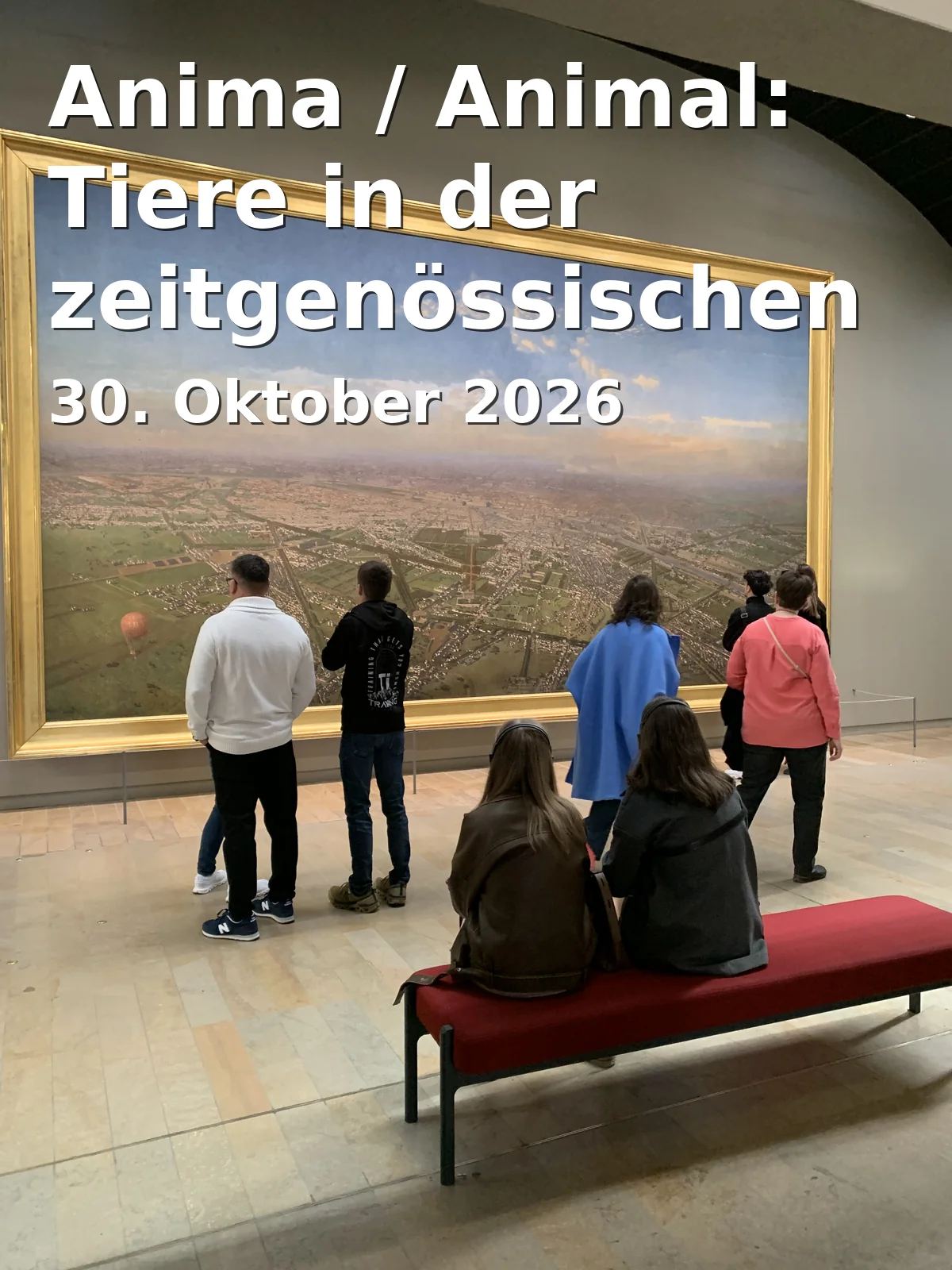
Anima / Animal: Animals in Contemporary Painting
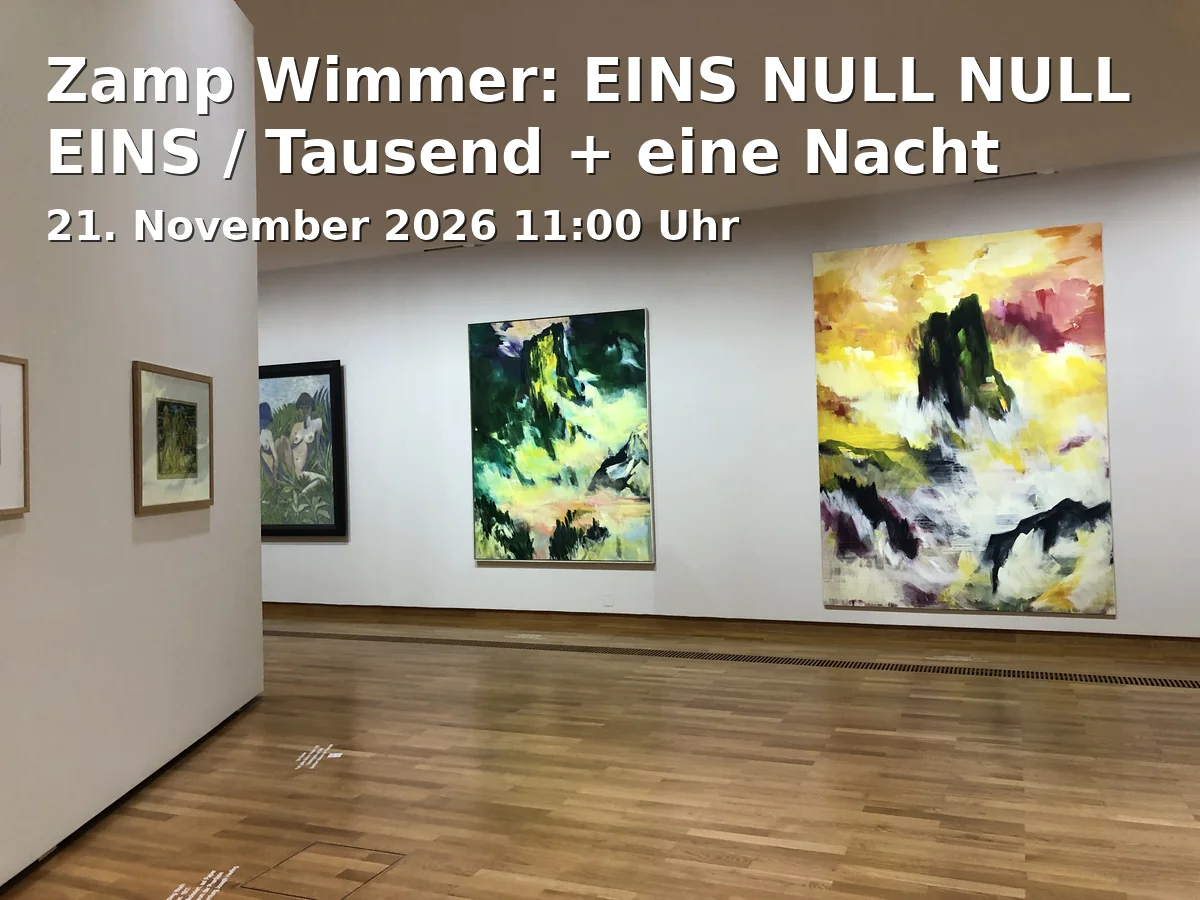
Zamp Wimmer: ONE ZERO ZERO ONE / A Thousand + One Night
Frequently Asked Questions
Reviews
No reviews found