
Dachaupl. 2, Regensburg
Dachaupl. 2, 93047 Regensburg, Germany
Former Minorite Church of St. Salvator | Tours & Concerts
The Former Minorite Church of St. Salvator in Regensburg is much more than a historical sacred space. Those who visit the site at Dachauplatz experience an ensemble of Gothic church architecture, monastic history, museum mediation, and cultural presence. The church is part of the Historical Museum of the City of Regensburg and, together with the former Minorite monastery, forms one of the most authentic historical spaces in the old town. The combination of medieval substance, tranquil atmosphere, and contemporary formats such as serenades, matinees, and light art makes the location particularly special. Visitors come not only for a single occasion but for the feeling of standing in one of the most impressive historical backdrops of the city. The search queries surrounding Minoritenkirche St. Salvator, Salvator Church, tours, events, directions, and parking clearly show: The place is both a cultural destination and a practical reference point for anyone wanting to experience Regensburg's history. This makes it a location that is equally relevant for culture enthusiasts, tourists, music lovers, and explorers. ([regensburg.de](https://www.regensburg.de/museen/die-museen/historisches-museum))
History and Architecture of the Minorite Church of St. Salvator
The historical depth of this place begins with its construction history. According to the monument description, the former mendicant order church St. Salvator is a three-nave, flat-roofed basilica with a vaulted polygonal choir; the main nave dates from the second half of the 13th century, and the choir from the second quarter of the 14th century. Thus, the church belongs to the early large order churches of southern Germany and still conveys an impressive idea of how monastic architecture developed in the High and Late Middle Ages. The city of Regensburg also describes the Minorite Church as one of the earliest and largest mendicant order churches in southern Germany. Particularly exciting for visitors is the connection between simple mendicant order architecture and artistic design: Gothic wall paintings uncovered between 1978 and 1993 show that the interior is historically much more than just an ascetic shell. It is a multifaceted testimony to religious image culture. ([regensburg.de](https://www.regensburg.de/sixcms/media.php/464/Dokumentation_Innerstaedtischen-Stadtbahnhaltestellen.pdf))
Additionally, there is the history of the Minorite monastery, which frames the church. The monument text for Dachauplatz 4 names the former Minorite monastery St. Salvator as now belonging to the Museum of the City of Regensburg. The building complex includes sacristy, cloisters, refectory or Paulsdorffer chapel, cellars from the Romanesque period, as well as High and Late Gothic components. This is crucial for the perception of the place: The church is not isolated but is part of a developed monastic ensemble, whose rooms make various epochs visible. According to the museum's website, the house essentially goes back to the former Minorite monastery, and in the preserved church and the adjacent cloister, the atmosphere of past centuries can still be distinctly felt. Therefore, for those interested in architecture, monument preservation, or sacred buildings, there is no mere backdrop here, but genuine building substance with historical depth. ([regensburg.de](https://www.regensburg.de/sixcms/media.php/464/Dokumentation_Innerstaedtischen-Stadtbahnhaltestellen.pdf))
The medieval authenticity is enhanced by several details that are explicitly mentioned in official descriptions. The monument text refers to the Romanesque cellar around 1200, the ribbed vault of the large cloister, and the refectory or Paulsdorffer chapel with a Renaissance ceiling from the late 16th century. This mixture of Romanesque, High Gothic, Late Gothic, and later layers makes the complex particularly valuable for architectural history. Here, one experiences not only a church but a partially preserved monastery that makes the history of monastic life, architectural change, and repurposing comprehensible. For visitors, this means: Every step through the space leads through centuries, and precisely for this reason, the location is excellently suited for tours and cultural-historical programs. ([regensburg.de](https://www.regensburg.de/sixcms/media.php/464/Dokumentation_Innerstaedtischen-Stadtbahnhaltestellen.pdf))
Historical Museum in the Former Minorite Monastery
The current use of the building explains why the location repeatedly appears in search queries about Regensburg. The Historical Museum of the City of Regensburg is housed in the former Minorite monastery and deals with the art and cultural history from the Stone Age to the 19th century. Its collections range from prehistory and early history through the Roman period and medieval stone sculpture to modern living culture and crafts. This is important for visitors because the Minorite Church functions not only as a monument but also as part of a museum's overall concept. Therefore, those searching for Minoritenkirche St. Salvator Regensburg often indirectly seek the Historical Museum, whose exhibition spaces meaningfully expand the historical context of the complex. ([regensburg.de](https://www.regensburg.de/museen/die-museen/historisches-museum))
Particularly strong is the medieval department because it is shown in the original environment of the former monastery. The museum's website emphasizes that the house provides ideal spaces for this department and that the atmosphere of past centuries is clearly perceptible in the preserved church and cloister. For guests, this is a significant added value: History is not only explained here but also spatially experienced. This also applies to the Roman department, which brings the city's history from the 1st to the 5th century to life with finds, founding inscriptions, coin treasures, models, and reconstructions. In visitor language, this means: Those who come here do not just visit a beautiful historical building but a museum that narrates the entire development of Regensburg in an authentic, monument-protected environment. ([regensburg.de](https://www.regensburg.de/museen/die-museen/historisches-museum))
For positioning as an event venue, it is also important that the museum regularly offers tours and mediation formats. The official site mentions public regular tours for individual visitors and small groups, such as on Roman Regensburg and Regensburg in the Middle Ages. This connection of education, experience, and place is one of the reasons why the Minorite Church fits so well into the tourism context. It is not just any hall but a space whose exhibition logic is based on history. This makes the location attractive for city visitors looking for a deeper cultural entry alongside the old town. ([regensburg.de](https://www.regensburg.de/museen/die-museen/historisches-museum))
Organizationally, the integration into the museum network is also significant. The city of Regensburg lists the address of the Historical Museum as Dachauplatz 4 and names the location as part of the museums of the city. Therefore, those who orient themselves have a clear anchor point: The name Minoritenkirche describes the historical space, while the museum designation describes the current use. This dual identity is important in the SEO context because searchers often fluctuate between the terms. Some want the church as a monument, others the museum as a destination, and still others a cultural venue for concerts or tours. The location bundles all these search intentions into a single authentic ensemble. ([regensburg.de](https://www.regensburg.de/rathaus/aemteruebersicht/kulturreferat/museen))
Concerts, Serenades, and Light Art in the Minorite Church
A central search theme around the location is events. The official pages clearly show that the Minorite Church is not only used for museum purposes but also functions as a special cultural space. Under the umbrella brand Klang.Raum.Museum, the evening serenades and Sunday matinees take place annually in the Minorite Church. The artistic direction is, according to the museum's website, with Prof. Stefan Baier and Andreas Meixner from the University of Catholic Church Music and Music Education. Additionally, the city names the traditional and popular serenade concerts as a platform for international artists and sought-after emerging formations. For visitors, this means: The space is acoustically and atmospherically so special that it is regularly chosen for high-quality music programs. ([regensburg.de](https://www.regensburg.de/museen/die-museen/historisches-museum))
The events do not follow any arbitrary pattern but deliberately focus on the dialogue between space and music. This is very clearly visible in the official descriptions, for example, when the city explains that concerts, matinees, and special programs for different ensembles take place in the Minorite Church. The advance ticket sales through okticket are also directly mentioned on the museum's website, which is important for users looking for tickets or pre-sale options. For SEO queries such as events Minoritenkirche, concerts Minoritenkirche, or serenades Minoritenkirche, this is a strong signal: The place has a concrete, regularly maintained cultural function and is therefore more than a historical sight. ([regensburg.de](https://www.regensburg.de/museen/die-museen/historisches-museum))
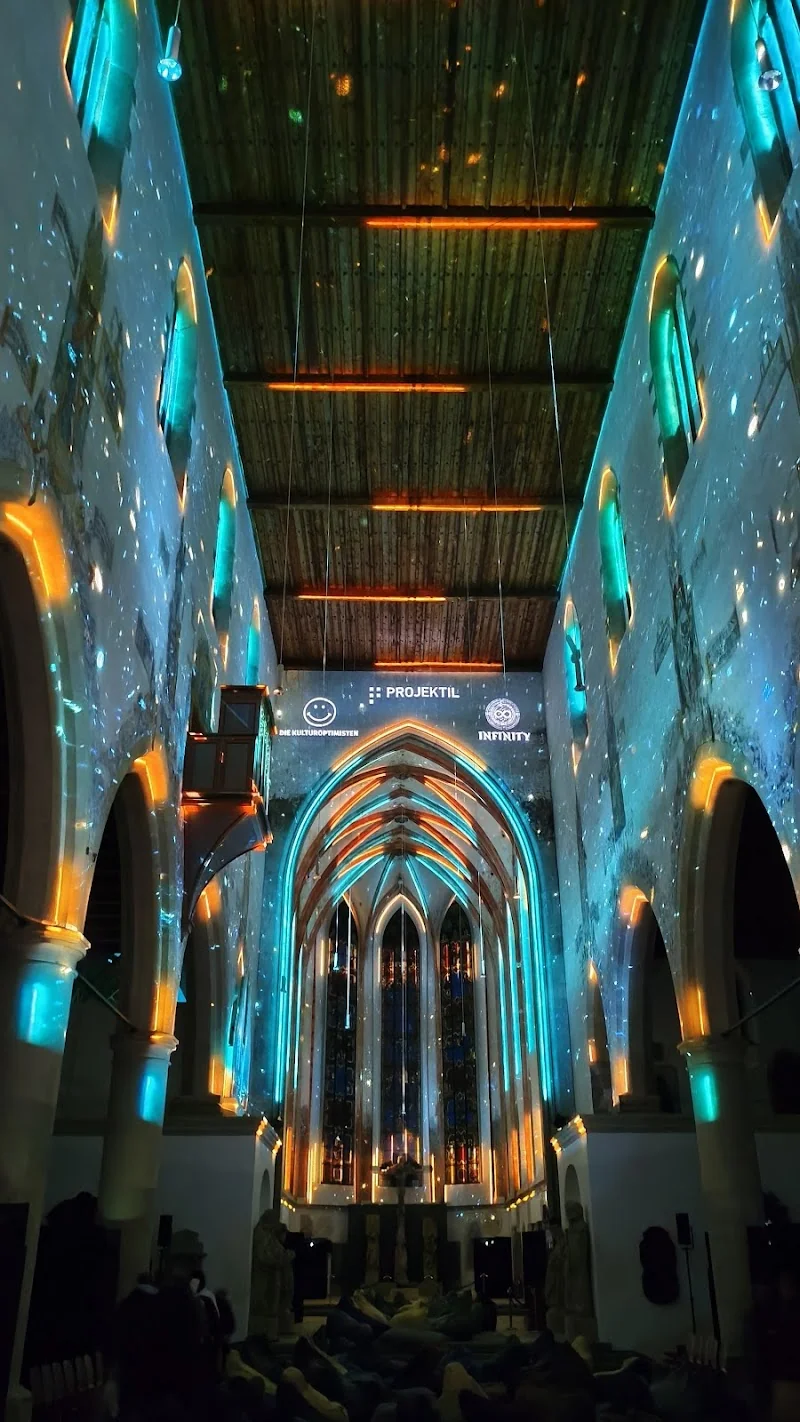
Particularly interesting are the light art and immersion formats that have increasingly taken place in the Minorite Church in recent years. The city of Regensburg describes the church as a venue for the international light art festival RE.LIGHT and reports that technical constructions for light and mirrors were installed there. In the festival program for 2026, the Minorite Church was one of 14 locations where light projections, installations, and immersive light and video shows were displayed; a combined ticket was required for the two light shows in the Minorite Church and in the Velodrome. This clearly shows: The church is not only suitable for traditional music but also for modern, space-related art forms with great visual impact. ([regensburg.de](https://www.regensburg.de/aktuelles/pressemitteilungen/159998/609203/aufbauarbeiten-fuer-das-internationale-lichtkunstfestival-re-light-gestartet.html))
Another officially documented form is the combination of tour and light show. The Regensburg tourism page and event announcements refer to tours that combine the history of the former monastery church with immersive light formats. This creates a hybrid experience of city explanation, architecture, and artistic staging. For visitors, this is attractive because the place can be experienced differently depending on the occasion: once as a quiet historical church, once as a concert hall, and once as a stage for art light. This versatility is one of the strongest selling points of the location. ([regensburg.de](https://www.regensburg.de/veranstaltungen/detail/600649?utm_source=openai))
This mixture of sacred space, museum environment, and contemporary event culture makes the Minorite Church St. Salvator so relevant. Those traveling to Regensburg often seek not just a classic museum but a place with atmosphere. The official programs deliver exactly that: Music in a historical sound space, art in a sacred space, and cultural formats that respectfully utilize the existing structure. For content positioning, this means that terms like tours, program, concert, light art, matinee, and serenade are semantically related and define the location as a vibrant cultural place. ([regensburg.de](https://www.regensburg.de/museen/die-museen/historisches-museum))
Directions, Dachauplatz, and Parking at the Dachauplatz Parking Garage
In many search queries, practical orientation is at the forefront. For the Former Minorite Church of St. Salvator, the address Dachauplatz 2-4 in 93047 Regensburg is particularly important because visitors can find both the Historical Museum and the church there. The official museum site lists the bus connection at the Dachauplatz stop. This is relevant for guests arriving by public transport who need an immediate city reference. The location is in the center of the action and is therefore well integrated into a visit to the old town. Those exploring Regensburg on foot can easily connect the location with other sights. ([regensburg.de](https://www.regensburg.de/rathaus/aemteruebersicht/kulturreferat/museen?utm_source=openai))
For drivers, the Dachauplatz parking garage is the most important option. The city of Regensburg names Stadtwerk Regensburg GmbH as the operator and lists the address D.-Martin-Luther-Straße 2, 93047 Regensburg. The parking page also provides specific information on tariffs, environmental zones, e-charging points, and disabled parking spaces. There are two charging points in front of the parking garage and additional charging points on the first floor, as well as three disabled parking spaces on parking level 1. The official site also points out that the parking garage is located in the environmental zone and therefore can only be accessed with a green particulate matter sticker. This is a clear advantage for visitors to the Minorite Church because the parking space is very close to the destination, keeping the distances short. ([regensburg.de](https://www.regensburg.de/leben/verkehr-u-mobilitaet/parken/parkhaus-dachauplatz))
The mention of free bus rides in the old town area with line A is also practical as it further facilitates mobility around Dachauplatz. The combination of a central bus stop, nearby parking garage, and historic old town location makes access overall uncomplicated. Especially for events such as serenades, matinees, or light art evenings, visitors benefit from the fact that the place is very well integrated into the inner-city transport network. Particularly for evening events, it may be advisable to arrive early or use public transport to start the visit relaxed. ([regensburg.de](https://www.regensburg.de/leben/verkehr-u-mobilitaet/parken/parkhaus-dachauplatz))
In the SEO context, the search intention for parking Dachauplatz or directions Dachauplatz is also significant. The official data answers these questions directly and without detours. Those searching for parking garage Dachauplatz not only find a parking space but also the most practical solution for a visit to the Minorite Church and the Historical Museum. This proximity is valuable for event guests, families, and cultural travelers alike. Therefore, the travel information should be prominently considered in any content about the location. ([regensburg.de](https://www.regensburg.de/leben/verkehr-u-mobilitaet/parken/parkhaus-dachauplatz))
Opening Hours, Tickets, and Practical Information for the Visit
Since the Minorite Church is part of the Historical Museum, opening hours and tickets are aligned with the museum structure. The official museum site lists the opening hours as Tuesday to Sunday and holidays from 10 AM to 4 PM. The museum is closed on certain days such as January 1, Shrove Tuesday, Good Friday, May 1, November 1, and on December 24, 25, and 31. For visitors, this is important information because ideally, the visit should be coordinated with the museum calendar. Those searching for program-related keywords such as opening hours, tickets, or admission find a reliable basis directly from the operator. ([regensburg.de](https://www.regensburg.de/museen/die-museen/historisches-museum))
The admission prices are also clearly stated. Adults pay 5 euros, reduced 2.50 euros, and families with children under 18 years 10 euros. Additionally, admission is free on the first Sunday of each month. This pricing structure is interesting for families, individual visitors, and tourists because it makes the visit accessible. Furthermore, the museum's website mentions numerous groups that can enter free of charge or at a reduced rate, such as children and young people under 18 years or students under 30 years. This makes the location visible as an easily accessible cultural offering. ([regensburg.de](https://www.regensburg.de/museen/die-museen/historisches-museum))
There is an organized offer for tours. Public regular tours are offered for individual visitors and small groups, such as on Roman Regensburg on Saturdays at 1 PM and on Regensburg in the Middle Ages on Sundays and holidays at 1 PM. Closed groups can book tours by arrangement during opening hours. This is important for search queries such as tours Regensburg or tours Minoritenkirche, as the place is not just a sightseeing object but also a learning and mediation space. Those wanting to delve deeper are therefore provided with structured opportunities. ([regensburg.de](https://www.regensburg.de/museen/die-museen/historisches-museum))
Another practical point is the ticket sales for events. The museum's website mentions advance sales for the serenades and matinees through okticket. This is useful for anyone interested in concert dates in the Minorite Church. Thus, the location is not only described but also classified as a concretely usable event spot. Especially for special cultural evenings, it is advisable to check the official dates early, as seats may be limited depending on the format. ([regensburg.de](https://www.regensburg.de/museen/die-museen/historisches-museum))
Those planning the visit should also know that the historical space itself is an essential part of the experience. In the Minorite Church, one encounters not only a program but a space that has grown over centuries and is now in museum and cultural use. This means: The place demands calm, respect, and time. That is precisely where its charm lies. It is neither a loud event hall nor a pure church but a mixture of both, complemented by the scientifically and curatorially supervised structure of a city museum. This makes the visit meaningful for a wide range of target groups. ([regensburg.de](https://www.regensburg.de/museen/die-museen/historisches-museum))
Why the Minorite Church is in High Demand for Tours and Special Experiences
The enormous demand for terms like Minoritenkirche St. Salvator Regensburg, Salvator Church, and historical location can be well explained: The place combines historical authenticity, cultural use, and central location. Upon entering the church, one experiences an ensemble that has not been artificially staged but consists of genuine building and usage history. The early construction phases of the church, the uncovered wall paintings, the cloister, and the monastic rooms ensure that tours here are particularly credible and atmospheric. Such places are what travelers seek when they want more than a quick photo stop in Regensburg. They want substance, and they get it here. ([regensburg.de](https://www.regensburg.de/sixcms/media.php/464/Dokumentation_Innerstaedtischen-Stadtbahnhaltestellen.pdf))
Additionally, there is the emotional impact of the space. The Historical Museum describes the atmosphere of past centuries as distinctly perceptible, and that is a central promise of experience for visitors. The location is therefore ideal for people who want to not only read about architecture and history but also experience it. The fact that concerts, matinees, serenades, and light art regularly take place here further enhances this impression. The space is not conserved but used vibrantly. This balance of protection and openness is rare and makes the Minorite Church a strong magnet for visitors. ([regensburg.de](https://www.regensburg.de/museen/die-museen/historisches-museum))
From an SEO perspective, the very different search intentions are also exciting. Some users simply want to know where the church is. Others are looking for tickets or the program. Still, others are interested in parking, directions, capacity, or history. That is precisely why the location is ideal for a comprehensive, semantically broad presentation. The official sources provide enough reliable facts: address, opening hours, admission prices, tours, museum context, concert series, and light art. Those who build the page well can combine these many entry terms while remaining content-wise precise. ([regensburg.de](https://www.regensburg.de/rathaus/aemteruebersicht/kulturreferat/museen?utm_source=openai))
For visitors on-site, the combination of location and experience is also ideal. Dachauplatz is central, the parking garage is nearby, the bus connection is clear, and the old town practically begins at the door. This lowers the threshold for a spontaneous visit and increases the likelihood that the location will be integrated into a day in Regensburg. That is why formats like tours and evening events work so well: They can easily be combined with a city stroll, museum visit, or restaurant visit. ([regensburg.de](https://www.regensburg.de/leben/verkehr-u-mobilitaet/parken/parkhaus-dachauplatz))
In the end, the Former Minorite Church of St. Salvator is a location with a strong profile: historically significant, architecturally impressive, culturally active, and easily accessible for visitors. It stands for Regensburg's ability to connect the past and present rather than oppose them. That is why it is relevant for seekers, culture fans, and event visitors alike. Those who visit the Minorite Church do not experience an interchangeable sight but a place with character, depth, and recognizability. ([regensburg.de](https://www.regensburg.de/museen/die-museen/historisches-museum))
Sources:
- Historical Museum - City of Regensburg
- Dachauplatz 4 / Former Minorite Monastery St. Salvator - City of Regensburg
- Museums of the City of Regensburg - City of Regensburg
- Dachauplatz Parking Garage - City of Regensburg
- Klang.Raum.Museum - Serenades in the Museum - City of Regensburg
- Preparations for the International Light Art Festival RE.LIGHT Started - City of Regensburg
Show moreShow less
Former Minorite Church of St. Salvator | Tours & Concerts
The Former Minorite Church of St. Salvator in Regensburg is much more than a historical sacred space. Those who visit the site at Dachauplatz experience an ensemble of Gothic church architecture, monastic history, museum mediation, and cultural presence. The church is part of the Historical Museum of the City of Regensburg and, together with the former Minorite monastery, forms one of the most authentic historical spaces in the old town. The combination of medieval substance, tranquil atmosphere, and contemporary formats such as serenades, matinees, and light art makes the location particularly special. Visitors come not only for a single occasion but for the feeling of standing in one of the most impressive historical backdrops of the city. The search queries surrounding Minoritenkirche St. Salvator, Salvator Church, tours, events, directions, and parking clearly show: The place is both a cultural destination and a practical reference point for anyone wanting to experience Regensburg's history. This makes it a location that is equally relevant for culture enthusiasts, tourists, music lovers, and explorers. ([regensburg.de](https://www.regensburg.de/museen/die-museen/historisches-museum))
History and Architecture of the Minorite Church of St. Salvator
The historical depth of this place begins with its construction history. According to the monument description, the former mendicant order church St. Salvator is a three-nave, flat-roofed basilica with a vaulted polygonal choir; the main nave dates from the second half of the 13th century, and the choir from the second quarter of the 14th century. Thus, the church belongs to the early large order churches of southern Germany and still conveys an impressive idea of how monastic architecture developed in the High and Late Middle Ages. The city of Regensburg also describes the Minorite Church as one of the earliest and largest mendicant order churches in southern Germany. Particularly exciting for visitors is the connection between simple mendicant order architecture and artistic design: Gothic wall paintings uncovered between 1978 and 1993 show that the interior is historically much more than just an ascetic shell. It is a multifaceted testimony to religious image culture. ([regensburg.de](https://www.regensburg.de/sixcms/media.php/464/Dokumentation_Innerstaedtischen-Stadtbahnhaltestellen.pdf))
Additionally, there is the history of the Minorite monastery, which frames the church. The monument text for Dachauplatz 4 names the former Minorite monastery St. Salvator as now belonging to the Museum of the City of Regensburg. The building complex includes sacristy, cloisters, refectory or Paulsdorffer chapel, cellars from the Romanesque period, as well as High and Late Gothic components. This is crucial for the perception of the place: The church is not isolated but is part of a developed monastic ensemble, whose rooms make various epochs visible. According to the museum's website, the house essentially goes back to the former Minorite monastery, and in the preserved church and the adjacent cloister, the atmosphere of past centuries can still be distinctly felt. Therefore, for those interested in architecture, monument preservation, or sacred buildings, there is no mere backdrop here, but genuine building substance with historical depth. ([regensburg.de](https://www.regensburg.de/sixcms/media.php/464/Dokumentation_Innerstaedtischen-Stadtbahnhaltestellen.pdf))
The medieval authenticity is enhanced by several details that are explicitly mentioned in official descriptions. The monument text refers to the Romanesque cellar around 1200, the ribbed vault of the large cloister, and the refectory or Paulsdorffer chapel with a Renaissance ceiling from the late 16th century. This mixture of Romanesque, High Gothic, Late Gothic, and later layers makes the complex particularly valuable for architectural history. Here, one experiences not only a church but a partially preserved monastery that makes the history of monastic life, architectural change, and repurposing comprehensible. For visitors, this means: Every step through the space leads through centuries, and precisely for this reason, the location is excellently suited for tours and cultural-historical programs. ([regensburg.de](https://www.regensburg.de/sixcms/media.php/464/Dokumentation_Innerstaedtischen-Stadtbahnhaltestellen.pdf))
Historical Museum in the Former Minorite Monastery
The current use of the building explains why the location repeatedly appears in search queries about Regensburg. The Historical Museum of the City of Regensburg is housed in the former Minorite monastery and deals with the art and cultural history from the Stone Age to the 19th century. Its collections range from prehistory and early history through the Roman period and medieval stone sculpture to modern living culture and crafts. This is important for visitors because the Minorite Church functions not only as a monument but also as part of a museum's overall concept. Therefore, those searching for Minoritenkirche St. Salvator Regensburg often indirectly seek the Historical Museum, whose exhibition spaces meaningfully expand the historical context of the complex. ([regensburg.de](https://www.regensburg.de/museen/die-museen/historisches-museum))
Particularly strong is the medieval department because it is shown in the original environment of the former monastery. The museum's website emphasizes that the house provides ideal spaces for this department and that the atmosphere of past centuries is clearly perceptible in the preserved church and cloister. For guests, this is a significant added value: History is not only explained here but also spatially experienced. This also applies to the Roman department, which brings the city's history from the 1st to the 5th century to life with finds, founding inscriptions, coin treasures, models, and reconstructions. In visitor language, this means: Those who come here do not just visit a beautiful historical building but a museum that narrates the entire development of Regensburg in an authentic, monument-protected environment. ([regensburg.de](https://www.regensburg.de/museen/die-museen/historisches-museum))
For positioning as an event venue, it is also important that the museum regularly offers tours and mediation formats. The official site mentions public regular tours for individual visitors and small groups, such as on Roman Regensburg and Regensburg in the Middle Ages. This connection of education, experience, and place is one of the reasons why the Minorite Church fits so well into the tourism context. It is not just any hall but a space whose exhibition logic is based on history. This makes the location attractive for city visitors looking for a deeper cultural entry alongside the old town. ([regensburg.de](https://www.regensburg.de/museen/die-museen/historisches-museum))
Organizationally, the integration into the museum network is also significant. The city of Regensburg lists the address of the Historical Museum as Dachauplatz 4 and names the location as part of the museums of the city. Therefore, those who orient themselves have a clear anchor point: The name Minoritenkirche describes the historical space, while the museum designation describes the current use. This dual identity is important in the SEO context because searchers often fluctuate between the terms. Some want the church as a monument, others the museum as a destination, and still others a cultural venue for concerts or tours. The location bundles all these search intentions into a single authentic ensemble. ([regensburg.de](https://www.regensburg.de/rathaus/aemteruebersicht/kulturreferat/museen))
Concerts, Serenades, and Light Art in the Minorite Church
A central search theme around the location is events. The official pages clearly show that the Minorite Church is not only used for museum purposes but also functions as a special cultural space. Under the umbrella brand Klang.Raum.Museum, the evening serenades and Sunday matinees take place annually in the Minorite Church. The artistic direction is, according to the museum's website, with Prof. Stefan Baier and Andreas Meixner from the University of Catholic Church Music and Music Education. Additionally, the city names the traditional and popular serenade concerts as a platform for international artists and sought-after emerging formations. For visitors, this means: The space is acoustically and atmospherically so special that it is regularly chosen for high-quality music programs. ([regensburg.de](https://www.regensburg.de/museen/die-museen/historisches-museum))
The events do not follow any arbitrary pattern but deliberately focus on the dialogue between space and music. This is very clearly visible in the official descriptions, for example, when the city explains that concerts, matinees, and special programs for different ensembles take place in the Minorite Church. The advance ticket sales through okticket are also directly mentioned on the museum's website, which is important for users looking for tickets or pre-sale options. For SEO queries such as events Minoritenkirche, concerts Minoritenkirche, or serenades Minoritenkirche, this is a strong signal: The place has a concrete, regularly maintained cultural function and is therefore more than a historical sight. ([regensburg.de](https://www.regensburg.de/museen/die-museen/historisches-museum))
Particularly interesting are the light art and immersion formats that have increasingly taken place in the Minorite Church in recent years. The city of Regensburg describes the church as a venue for the international light art festival RE.LIGHT and reports that technical constructions for light and mirrors were installed there. In the festival program for 2026, the Minorite Church was one of 14 locations where light projections, installations, and immersive light and video shows were displayed; a combined ticket was required for the two light shows in the Minorite Church and in the Velodrome. This clearly shows: The church is not only suitable for traditional music but also for modern, space-related art forms with great visual impact. ([regensburg.de](https://www.regensburg.de/aktuelles/pressemitteilungen/159998/609203/aufbauarbeiten-fuer-das-internationale-lichtkunstfestival-re-light-gestartet.html))
Another officially documented form is the combination of tour and light show. The Regensburg tourism page and event announcements refer to tours that combine the history of the former monastery church with immersive light formats. This creates a hybrid experience of city explanation, architecture, and artistic staging. For visitors, this is attractive because the place can be experienced differently depending on the occasion: once as a quiet historical church, once as a concert hall, and once as a stage for art light. This versatility is one of the strongest selling points of the location. ([regensburg.de](https://www.regensburg.de/veranstaltungen/detail/600649?utm_source=openai))
This mixture of sacred space, museum environment, and contemporary event culture makes the Minorite Church St. Salvator so relevant. Those traveling to Regensburg often seek not just a classic museum but a place with atmosphere. The official programs deliver exactly that: Music in a historical sound space, art in a sacred space, and cultural formats that respectfully utilize the existing structure. For content positioning, this means that terms like tours, program, concert, light art, matinee, and serenade are semantically related and define the location as a vibrant cultural place. ([regensburg.de](https://www.regensburg.de/museen/die-museen/historisches-museum))
Directions, Dachauplatz, and Parking at the Dachauplatz Parking Garage
In many search queries, practical orientation is at the forefront. For the Former Minorite Church of St. Salvator, the address Dachauplatz 2-4 in 93047 Regensburg is particularly important because visitors can find both the Historical Museum and the church there. The official museum site lists the bus connection at the Dachauplatz stop. This is relevant for guests arriving by public transport who need an immediate city reference. The location is in the center of the action and is therefore well integrated into a visit to the old town. Those exploring Regensburg on foot can easily connect the location with other sights. ([regensburg.de](https://www.regensburg.de/rathaus/aemteruebersicht/kulturreferat/museen?utm_source=openai))
For drivers, the Dachauplatz parking garage is the most important option. The city of Regensburg names Stadtwerk Regensburg GmbH as the operator and lists the address D.-Martin-Luther-Straße 2, 93047 Regensburg. The parking page also provides specific information on tariffs, environmental zones, e-charging points, and disabled parking spaces. There are two charging points in front of the parking garage and additional charging points on the first floor, as well as three disabled parking spaces on parking level 1. The official site also points out that the parking garage is located in the environmental zone and therefore can only be accessed with a green particulate matter sticker. This is a clear advantage for visitors to the Minorite Church because the parking space is very close to the destination, keeping the distances short. ([regensburg.de](https://www.regensburg.de/leben/verkehr-u-mobilitaet/parken/parkhaus-dachauplatz))
The mention of free bus rides in the old town area with line A is also practical as it further facilitates mobility around Dachauplatz. The combination of a central bus stop, nearby parking garage, and historic old town location makes access overall uncomplicated. Especially for events such as serenades, matinees, or light art evenings, visitors benefit from the fact that the place is very well integrated into the inner-city transport network. Particularly for evening events, it may be advisable to arrive early or use public transport to start the visit relaxed. ([regensburg.de](https://www.regensburg.de/leben/verkehr-u-mobilitaet/parken/parkhaus-dachauplatz))
In the SEO context, the search intention for parking Dachauplatz or directions Dachauplatz is also significant. The official data answers these questions directly and without detours. Those searching for parking garage Dachauplatz not only find a parking space but also the most practical solution for a visit to the Minorite Church and the Historical Museum. This proximity is valuable for event guests, families, and cultural travelers alike. Therefore, the travel information should be prominently considered in any content about the location. ([regensburg.de](https://www.regensburg.de/leben/verkehr-u-mobilitaet/parken/parkhaus-dachauplatz))
Opening Hours, Tickets, and Practical Information for the Visit
Since the Minorite Church is part of the Historical Museum, opening hours and tickets are aligned with the museum structure. The official museum site lists the opening hours as Tuesday to Sunday and holidays from 10 AM to 4 PM. The museum is closed on certain days such as January 1, Shrove Tuesday, Good Friday, May 1, November 1, and on December 24, 25, and 31. For visitors, this is important information because ideally, the visit should be coordinated with the museum calendar. Those searching for program-related keywords such as opening hours, tickets, or admission find a reliable basis directly from the operator. ([regensburg.de](https://www.regensburg.de/museen/die-museen/historisches-museum))
The admission prices are also clearly stated. Adults pay 5 euros, reduced 2.50 euros, and families with children under 18 years 10 euros. Additionally, admission is free on the first Sunday of each month. This pricing structure is interesting for families, individual visitors, and tourists because it makes the visit accessible. Furthermore, the museum's website mentions numerous groups that can enter free of charge or at a reduced rate, such as children and young people under 18 years or students under 30 years. This makes the location visible as an easily accessible cultural offering. ([regensburg.de](https://www.regensburg.de/museen/die-museen/historisches-museum))
There is an organized offer for tours. Public regular tours are offered for individual visitors and small groups, such as on Roman Regensburg on Saturdays at 1 PM and on Regensburg in the Middle Ages on Sundays and holidays at 1 PM. Closed groups can book tours by arrangement during opening hours. This is important for search queries such as tours Regensburg or tours Minoritenkirche, as the place is not just a sightseeing object but also a learning and mediation space. Those wanting to delve deeper are therefore provided with structured opportunities. ([regensburg.de](https://www.regensburg.de/museen/die-museen/historisches-museum))
Another practical point is the ticket sales for events. The museum's website mentions advance sales for the serenades and matinees through okticket. This is useful for anyone interested in concert dates in the Minorite Church. Thus, the location is not only described but also classified as a concretely usable event spot. Especially for special cultural evenings, it is advisable to check the official dates early, as seats may be limited depending on the format. ([regensburg.de](https://www.regensburg.de/museen/die-museen/historisches-museum))
Those planning the visit should also know that the historical space itself is an essential part of the experience. In the Minorite Church, one encounters not only a program but a space that has grown over centuries and is now in museum and cultural use. This means: The place demands calm, respect, and time. That is precisely where its charm lies. It is neither a loud event hall nor a pure church but a mixture of both, complemented by the scientifically and curatorially supervised structure of a city museum. This makes the visit meaningful for a wide range of target groups. ([regensburg.de](https://www.regensburg.de/museen/die-museen/historisches-museum))
Why the Minorite Church is in High Demand for Tours and Special Experiences
The enormous demand for terms like Minoritenkirche St. Salvator Regensburg, Salvator Church, and historical location can be well explained: The place combines historical authenticity, cultural use, and central location. Upon entering the church, one experiences an ensemble that has not been artificially staged but consists of genuine building and usage history. The early construction phases of the church, the uncovered wall paintings, the cloister, and the monastic rooms ensure that tours here are particularly credible and atmospheric. Such places are what travelers seek when they want more than a quick photo stop in Regensburg. They want substance, and they get it here. ([regensburg.de](https://www.regensburg.de/sixcms/media.php/464/Dokumentation_Innerstaedtischen-Stadtbahnhaltestellen.pdf))
Additionally, there is the emotional impact of the space. The Historical Museum describes the atmosphere of past centuries as distinctly perceptible, and that is a central promise of experience for visitors. The location is therefore ideal for people who want to not only read about architecture and history but also experience it. The fact that concerts, matinees, serenades, and light art regularly take place here further enhances this impression. The space is not conserved but used vibrantly. This balance of protection and openness is rare and makes the Minorite Church a strong magnet for visitors. ([regensburg.de](https://www.regensburg.de/museen/die-museen/historisches-museum))
From an SEO perspective, the very different search intentions are also exciting. Some users simply want to know where the church is. Others are looking for tickets or the program. Still, others are interested in parking, directions, capacity, or history. That is precisely why the location is ideal for a comprehensive, semantically broad presentation. The official sources provide enough reliable facts: address, opening hours, admission prices, tours, museum context, concert series, and light art. Those who build the page well can combine these many entry terms while remaining content-wise precise. ([regensburg.de](https://www.regensburg.de/rathaus/aemteruebersicht/kulturreferat/museen?utm_source=openai))
For visitors on-site, the combination of location and experience is also ideal. Dachauplatz is central, the parking garage is nearby, the bus connection is clear, and the old town practically begins at the door. This lowers the threshold for a spontaneous visit and increases the likelihood that the location will be integrated into a day in Regensburg. That is why formats like tours and evening events work so well: They can easily be combined with a city stroll, museum visit, or restaurant visit. ([regensburg.de](https://www.regensburg.de/leben/verkehr-u-mobilitaet/parken/parkhaus-dachauplatz))
In the end, the Former Minorite Church of St. Salvator is a location with a strong profile: historically significant, architecturally impressive, culturally active, and easily accessible for visitors. It stands for Regensburg's ability to connect the past and present rather than oppose them. That is why it is relevant for seekers, culture fans, and event visitors alike. Those who visit the Minorite Church do not experience an interchangeable sight but a place with character, depth, and recognizability. ([regensburg.de](https://www.regensburg.de/museen/die-museen/historisches-museum))
Sources:
- Historical Museum - City of Regensburg
- Dachauplatz 4 / Former Minorite Monastery St. Salvator - City of Regensburg
- Museums of the City of Regensburg - City of Regensburg
- Dachauplatz Parking Garage - City of Regensburg
- Klang.Raum.Museum - Serenades in the Museum - City of Regensburg
- Preparations for the International Light Art Festival RE.LIGHT Started - City of Regensburg
Former Minorite Church of St. Salvator | Tours & Concerts
The Former Minorite Church of St. Salvator in Regensburg is much more than a historical sacred space. Those who visit the site at Dachauplatz experience an ensemble of Gothic church architecture, monastic history, museum mediation, and cultural presence. The church is part of the Historical Museum of the City of Regensburg and, together with the former Minorite monastery, forms one of the most authentic historical spaces in the old town. The combination of medieval substance, tranquil atmosphere, and contemporary formats such as serenades, matinees, and light art makes the location particularly special. Visitors come not only for a single occasion but for the feeling of standing in one of the most impressive historical backdrops of the city. The search queries surrounding Minoritenkirche St. Salvator, Salvator Church, tours, events, directions, and parking clearly show: The place is both a cultural destination and a practical reference point for anyone wanting to experience Regensburg's history. This makes it a location that is equally relevant for culture enthusiasts, tourists, music lovers, and explorers. ([regensburg.de](https://www.regensburg.de/museen/die-museen/historisches-museum))
History and Architecture of the Minorite Church of St. Salvator
The historical depth of this place begins with its construction history. According to the monument description, the former mendicant order church St. Salvator is a three-nave, flat-roofed basilica with a vaulted polygonal choir; the main nave dates from the second half of the 13th century, and the choir from the second quarter of the 14th century. Thus, the church belongs to the early large order churches of southern Germany and still conveys an impressive idea of how monastic architecture developed in the High and Late Middle Ages. The city of Regensburg also describes the Minorite Church as one of the earliest and largest mendicant order churches in southern Germany. Particularly exciting for visitors is the connection between simple mendicant order architecture and artistic design: Gothic wall paintings uncovered between 1978 and 1993 show that the interior is historically much more than just an ascetic shell. It is a multifaceted testimony to religious image culture. ([regensburg.de](https://www.regensburg.de/sixcms/media.php/464/Dokumentation_Innerstaedtischen-Stadtbahnhaltestellen.pdf))
Additionally, there is the history of the Minorite monastery, which frames the church. The monument text for Dachauplatz 4 names the former Minorite monastery St. Salvator as now belonging to the Museum of the City of Regensburg. The building complex includes sacristy, cloisters, refectory or Paulsdorffer chapel, cellars from the Romanesque period, as well as High and Late Gothic components. This is crucial for the perception of the place: The church is not isolated but is part of a developed monastic ensemble, whose rooms make various epochs visible. According to the museum's website, the house essentially goes back to the former Minorite monastery, and in the preserved church and the adjacent cloister, the atmosphere of past centuries can still be distinctly felt. Therefore, for those interested in architecture, monument preservation, or sacred buildings, there is no mere backdrop here, but genuine building substance with historical depth. ([regensburg.de](https://www.regensburg.de/sixcms/media.php/464/Dokumentation_Innerstaedtischen-Stadtbahnhaltestellen.pdf))
The medieval authenticity is enhanced by several details that are explicitly mentioned in official descriptions. The monument text refers to the Romanesque cellar around 1200, the ribbed vault of the large cloister, and the refectory or Paulsdorffer chapel with a Renaissance ceiling from the late 16th century. This mixture of Romanesque, High Gothic, Late Gothic, and later layers makes the complex particularly valuable for architectural history. Here, one experiences not only a church but a partially preserved monastery that makes the history of monastic life, architectural change, and repurposing comprehensible. For visitors, this means: Every step through the space leads through centuries, and precisely for this reason, the location is excellently suited for tours and cultural-historical programs. ([regensburg.de](https://www.regensburg.de/sixcms/media.php/464/Dokumentation_Innerstaedtischen-Stadtbahnhaltestellen.pdf))
Historical Museum in the Former Minorite Monastery
The current use of the building explains why the location repeatedly appears in search queries about Regensburg. The Historical Museum of the City of Regensburg is housed in the former Minorite monastery and deals with the art and cultural history from the Stone Age to the 19th century. Its collections range from prehistory and early history through the Roman period and medieval stone sculpture to modern living culture and crafts. This is important for visitors because the Minorite Church functions not only as a monument but also as part of a museum's overall concept. Therefore, those searching for Minoritenkirche St. Salvator Regensburg often indirectly seek the Historical Museum, whose exhibition spaces meaningfully expand the historical context of the complex. ([regensburg.de](https://www.regensburg.de/museen/die-museen/historisches-museum))
Particularly strong is the medieval department because it is shown in the original environment of the former monastery. The museum's website emphasizes that the house provides ideal spaces for this department and that the atmosphere of past centuries is clearly perceptible in the preserved church and cloister. For guests, this is a significant added value: History is not only explained here but also spatially experienced. This also applies to the Roman department, which brings the city's history from the 1st to the 5th century to life with finds, founding inscriptions, coin treasures, models, and reconstructions. In visitor language, this means: Those who come here do not just visit a beautiful historical building but a museum that narrates the entire development of Regensburg in an authentic, monument-protected environment. ([regensburg.de](https://www.regensburg.de/museen/die-museen/historisches-museum))
For positioning as an event venue, it is also important that the museum regularly offers tours and mediation formats. The official site mentions public regular tours for individual visitors and small groups, such as on Roman Regensburg and Regensburg in the Middle Ages. This connection of education, experience, and place is one of the reasons why the Minorite Church fits so well into the tourism context. It is not just any hall but a space whose exhibition logic is based on history. This makes the location attractive for city visitors looking for a deeper cultural entry alongside the old town. ([regensburg.de](https://www.regensburg.de/museen/die-museen/historisches-museum))
Organizationally, the integration into the museum network is also significant. The city of Regensburg lists the address of the Historical Museum as Dachauplatz 4 and names the location as part of the museums of the city. Therefore, those who orient themselves have a clear anchor point: The name Minoritenkirche describes the historical space, while the museum designation describes the current use. This dual identity is important in the SEO context because searchers often fluctuate between the terms. Some want the church as a monument, others the museum as a destination, and still others a cultural venue for concerts or tours. The location bundles all these search intentions into a single authentic ensemble. ([regensburg.de](https://www.regensburg.de/rathaus/aemteruebersicht/kulturreferat/museen))
Concerts, Serenades, and Light Art in the Minorite Church
A central search theme around the location is events. The official pages clearly show that the Minorite Church is not only used for museum purposes but also functions as a special cultural space. Under the umbrella brand Klang.Raum.Museum, the evening serenades and Sunday matinees take place annually in the Minorite Church. The artistic direction is, according to the museum's website, with Prof. Stefan Baier and Andreas Meixner from the University of Catholic Church Music and Music Education. Additionally, the city names the traditional and popular serenade concerts as a platform for international artists and sought-after emerging formations. For visitors, this means: The space is acoustically and atmospherically so special that it is regularly chosen for high-quality music programs. ([regensburg.de](https://www.regensburg.de/museen/die-museen/historisches-museum))
The events do not follow any arbitrary pattern but deliberately focus on the dialogue between space and music. This is very clearly visible in the official descriptions, for example, when the city explains that concerts, matinees, and special programs for different ensembles take place in the Minorite Church. The advance ticket sales through okticket are also directly mentioned on the museum's website, which is important for users looking for tickets or pre-sale options. For SEO queries such as events Minoritenkirche, concerts Minoritenkirche, or serenades Minoritenkirche, this is a strong signal: The place has a concrete, regularly maintained cultural function and is therefore more than a historical sight. ([regensburg.de](https://www.regensburg.de/museen/die-museen/historisches-museum))
Particularly interesting are the light art and immersion formats that have increasingly taken place in the Minorite Church in recent years. The city of Regensburg describes the church as a venue for the international light art festival RE.LIGHT and reports that technical constructions for light and mirrors were installed there. In the festival program for 2026, the Minorite Church was one of 14 locations where light projections, installations, and immersive light and video shows were displayed; a combined ticket was required for the two light shows in the Minorite Church and in the Velodrome. This clearly shows: The church is not only suitable for traditional music but also for modern, space-related art forms with great visual impact. ([regensburg.de](https://www.regensburg.de/aktuelles/pressemitteilungen/159998/609203/aufbauarbeiten-fuer-das-internationale-lichtkunstfestival-re-light-gestartet.html))
Another officially documented form is the combination of tour and light show. The Regensburg tourism page and event announcements refer to tours that combine the history of the former monastery church with immersive light formats. This creates a hybrid experience of city explanation, architecture, and artistic staging. For visitors, this is attractive because the place can be experienced differently depending on the occasion: once as a quiet historical church, once as a concert hall, and once as a stage for art light. This versatility is one of the strongest selling points of the location. ([regensburg.de](https://www.regensburg.de/veranstaltungen/detail/600649?utm_source=openai))
This mixture of sacred space, museum environment, and contemporary event culture makes the Minorite Church St. Salvator so relevant. Those traveling to Regensburg often seek not just a classic museum but a place with atmosphere. The official programs deliver exactly that: Music in a historical sound space, art in a sacred space, and cultural formats that respectfully utilize the existing structure. For content positioning, this means that terms like tours, program, concert, light art, matinee, and serenade are semantically related and define the location as a vibrant cultural place. ([regensburg.de](https://www.regensburg.de/museen/die-museen/historisches-museum))
Directions, Dachauplatz, and Parking at the Dachauplatz Parking Garage
In many search queries, practical orientation is at the forefront. For the Former Minorite Church of St. Salvator, the address Dachauplatz 2-4 in 93047 Regensburg is particularly important because visitors can find both the Historical Museum and the church there. The official museum site lists the bus connection at the Dachauplatz stop. This is relevant for guests arriving by public transport who need an immediate city reference. The location is in the center of the action and is therefore well integrated into a visit to the old town. Those exploring Regensburg on foot can easily connect the location with other sights. ([regensburg.de](https://www.regensburg.de/rathaus/aemteruebersicht/kulturreferat/museen?utm_source=openai))
For drivers, the Dachauplatz parking garage is the most important option. The city of Regensburg names Stadtwerk Regensburg GmbH as the operator and lists the address D.-Martin-Luther-Straße 2, 93047 Regensburg. The parking page also provides specific information on tariffs, environmental zones, e-charging points, and disabled parking spaces. There are two charging points in front of the parking garage and additional charging points on the first floor, as well as three disabled parking spaces on parking level 1. The official site also points out that the parking garage is located in the environmental zone and therefore can only be accessed with a green particulate matter sticker. This is a clear advantage for visitors to the Minorite Church because the parking space is very close to the destination, keeping the distances short. ([regensburg.de](https://www.regensburg.de/leben/verkehr-u-mobilitaet/parken/parkhaus-dachauplatz))
The mention of free bus rides in the old town area with line A is also practical as it further facilitates mobility around Dachauplatz. The combination of a central bus stop, nearby parking garage, and historic old town location makes access overall uncomplicated. Especially for events such as serenades, matinees, or light art evenings, visitors benefit from the fact that the place is very well integrated into the inner-city transport network. Particularly for evening events, it may be advisable to arrive early or use public transport to start the visit relaxed. ([regensburg.de](https://www.regensburg.de/leben/verkehr-u-mobilitaet/parken/parkhaus-dachauplatz))
In the SEO context, the search intention for parking Dachauplatz or directions Dachauplatz is also significant. The official data answers these questions directly and without detours. Those searching for parking garage Dachauplatz not only find a parking space but also the most practical solution for a visit to the Minorite Church and the Historical Museum. This proximity is valuable for event guests, families, and cultural travelers alike. Therefore, the travel information should be prominently considered in any content about the location. ([regensburg.de](https://www.regensburg.de/leben/verkehr-u-mobilitaet/parken/parkhaus-dachauplatz))
Opening Hours, Tickets, and Practical Information for the Visit
Since the Minorite Church is part of the Historical Museum, opening hours and tickets are aligned with the museum structure. The official museum site lists the opening hours as Tuesday to Sunday and holidays from 10 AM to 4 PM. The museum is closed on certain days such as January 1, Shrove Tuesday, Good Friday, May 1, November 1, and on December 24, 25, and 31. For visitors, this is important information because ideally, the visit should be coordinated with the museum calendar. Those searching for program-related keywords such as opening hours, tickets, or admission find a reliable basis directly from the operator. ([regensburg.de](https://www.regensburg.de/museen/die-museen/historisches-museum))
The admission prices are also clearly stated. Adults pay 5 euros, reduced 2.50 euros, and families with children under 18 years 10 euros. Additionally, admission is free on the first Sunday of each month. This pricing structure is interesting for families, individual visitors, and tourists because it makes the visit accessible. Furthermore, the museum's website mentions numerous groups that can enter free of charge or at a reduced rate, such as children and young people under 18 years or students under 30 years. This makes the location visible as an easily accessible cultural offering. ([regensburg.de](https://www.regensburg.de/museen/die-museen/historisches-museum))
There is an organized offer for tours. Public regular tours are offered for individual visitors and small groups, such as on Roman Regensburg on Saturdays at 1 PM and on Regensburg in the Middle Ages on Sundays and holidays at 1 PM. Closed groups can book tours by arrangement during opening hours. This is important for search queries such as tours Regensburg or tours Minoritenkirche, as the place is not just a sightseeing object but also a learning and mediation space. Those wanting to delve deeper are therefore provided with structured opportunities. ([regensburg.de](https://www.regensburg.de/museen/die-museen/historisches-museum))
Another practical point is the ticket sales for events. The museum's website mentions advance sales for the serenades and matinees through okticket. This is useful for anyone interested in concert dates in the Minorite Church. Thus, the location is not only described but also classified as a concretely usable event spot. Especially for special cultural evenings, it is advisable to check the official dates early, as seats may be limited depending on the format. ([regensburg.de](https://www.regensburg.de/museen/die-museen/historisches-museum))
Those planning the visit should also know that the historical space itself is an essential part of the experience. In the Minorite Church, one encounters not only a program but a space that has grown over centuries and is now in museum and cultural use. This means: The place demands calm, respect, and time. That is precisely where its charm lies. It is neither a loud event hall nor a pure church but a mixture of both, complemented by the scientifically and curatorially supervised structure of a city museum. This makes the visit meaningful for a wide range of target groups. ([regensburg.de](https://www.regensburg.de/museen/die-museen/historisches-museum))
Why the Minorite Church is in High Demand for Tours and Special Experiences
The enormous demand for terms like Minoritenkirche St. Salvator Regensburg, Salvator Church, and historical location can be well explained: The place combines historical authenticity, cultural use, and central location. Upon entering the church, one experiences an ensemble that has not been artificially staged but consists of genuine building and usage history. The early construction phases of the church, the uncovered wall paintings, the cloister, and the monastic rooms ensure that tours here are particularly credible and atmospheric. Such places are what travelers seek when they want more than a quick photo stop in Regensburg. They want substance, and they get it here. ([regensburg.de](https://www.regensburg.de/sixcms/media.php/464/Dokumentation_Innerstaedtischen-Stadtbahnhaltestellen.pdf))
Additionally, there is the emotional impact of the space. The Historical Museum describes the atmosphere of past centuries as distinctly perceptible, and that is a central promise of experience for visitors. The location is therefore ideal for people who want to not only read about architecture and history but also experience it. The fact that concerts, matinees, serenades, and light art regularly take place here further enhances this impression. The space is not conserved but used vibrantly. This balance of protection and openness is rare and makes the Minorite Church a strong magnet for visitors. ([regensburg.de](https://www.regensburg.de/museen/die-museen/historisches-museum))
From an SEO perspective, the very different search intentions are also exciting. Some users simply want to know where the church is. Others are looking for tickets or the program. Still, others are interested in parking, directions, capacity, or history. That is precisely why the location is ideal for a comprehensive, semantically broad presentation. The official sources provide enough reliable facts: address, opening hours, admission prices, tours, museum context, concert series, and light art. Those who build the page well can combine these many entry terms while remaining content-wise precise. ([regensburg.de](https://www.regensburg.de/rathaus/aemteruebersicht/kulturreferat/museen?utm_source=openai))
For visitors on-site, the combination of location and experience is also ideal. Dachauplatz is central, the parking garage is nearby, the bus connection is clear, and the old town practically begins at the door. This lowers the threshold for a spontaneous visit and increases the likelihood that the location will be integrated into a day in Regensburg. That is why formats like tours and evening events work so well: They can easily be combined with a city stroll, museum visit, or restaurant visit. ([regensburg.de](https://www.regensburg.de/leben/verkehr-u-mobilitaet/parken/parkhaus-dachauplatz))
In the end, the Former Minorite Church of St. Salvator is a location with a strong profile: historically significant, architecturally impressive, culturally active, and easily accessible for visitors. It stands for Regensburg's ability to connect the past and present rather than oppose them. That is why it is relevant for seekers, culture fans, and event visitors alike. Those who visit the Minorite Church do not experience an interchangeable sight but a place with character, depth, and recognizability. ([regensburg.de](https://www.regensburg.de/museen/die-museen/historisches-museum))
Sources:
- Historical Museum - City of Regensburg
- Dachauplatz 4 / Former Minorite Monastery St. Salvator - City of Regensburg
- Museums of the City of Regensburg - City of Regensburg
- Dachauplatz Parking Garage - City of Regensburg
- Klang.Raum.Museum - Serenades in the Museum - City of Regensburg
- Preparations for the International Light Art Festival RE.LIGHT Started - City of Regensburg

Frequently Asked Questions
Reviews
E - Motion Physiotherapy
13. February 2024
We visited this church for the light and sound show of Genesis I & 2 with our 6 yr old son. And enjoyed the show.
David Smith
18. February 2024
Great Immersion Art Light show inside unique and historic site.
Weronika Ternavska
18. July 2024
Super
SS H
22. July 2024
Former Minorite Church of St. Salvator
Johann Lell
1. February 2026
Beautiful place, we were there for the light show and it was really lovely. A tip: bring blankets as it's very cold in the former church, and use the restroom beforehand.