
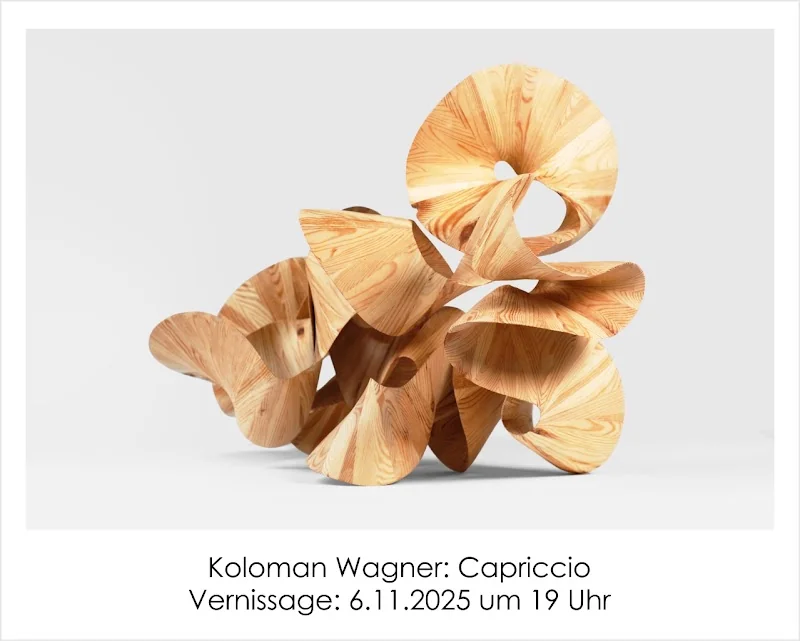
Regensburg
artspace: Fischmarkt 3 Schaulager:, Am Schallern 4, 93047 Regensburg, Deutschland
Galerie Erdel artspace & Schaulager | Exhibitions & Regensburg
The Galerie Erdel artspace & Schaulager is an art address in Regensburg that closely connects the old town, the Danube, and contemporary exhibition culture. The artspace at Fischmarkt 3 is located in a lovingly restored, over 500-year-old warehouse on the ground floor and is described by the gallery itself as a salon gallery. A few meters away, at Schallern 4, is the Schaulager as a second exhibition space. Both locations are situated in the heart of Regensburg's old town by the Danube, between the Stone Bridge and the Iron Bridge, and this location shapes the character of the house: historical, urban, easily accessible, and still focused on art. The gallery combines presentation, publishing, documentation, and publication, so that the visit is not just a brief glance at images, but an entry into a developed art and edition program. Therefore, those searching for Galerie Erdel Regensburg will find not just an exhibition space, but two complementary places with their own atmosphere, a clear profile, and a long continuity in working with visual arts. Between international art, regional positions, thematic exhibitions, artist books, and online documentation, a place emerges where exhibition, conversation, and follow-up intertwine. This is particularly interesting for visitors, as the gallery allows for both spontaneous discoveries and planned visits: the opening hours are clearly communicated, appointments outside regular hours are possible by arrangement, and openings and new projects are announced via newsletter and website. This mixture of historical substance, personal care, and curatorial consistency makes Galerie Erdel artspace & Schaulager an unusually dense art address in Regensburg. ([erdel.de](https://erdel.de/index.php/impressum))
Exhibitions, openings, and the gallery's program
The program of Galerie Erdel is clearly focused on exhibitions, but not in the narrow sense of merely hanging works. The official self-description names the core as the presentation and publishing of works of visual art, the publishing of texts, the curating of exhibitions and art projects, as well as the accompanying documentation and publication in print and online. It quickly becomes clear why the house has been showing not only individual positions for years but also developing thematically thought-out series. The website explicitly mentions not only solo exhibitions but also elaborate thematic exhibitions; as examples, the gallery cites the series 4 Elements, the relationships between theater and visual art in the cycle THEATRALE, and other projects that address transformation, adaptation, global change, or the handling of creation and perception. Thus, while the program is artistically broad, it is not arbitrary. It aims at content that becomes visible in images, drawings, prints, or installations and simultaneously provides material for discussion. Precisely for this reason, the gallery regularly accompanies its exhibitions with readings, concerts, dance performances, or discussion rounds. The visit is thus not understood as a static viewing but as a cultural experience with multiple levels. The Schaulager character fits this as well: In the smaller space, young art, small formats, art outside the mainstream, prints, drawings, and new presentations are shown. According to its own statement, exhibitions there last four weeks each, creating a high turnover rate and thus a recurring moment of discovery. For search queries like galerie erdel artspace schaulager or galerie erdel regensburg, this program profile is important because it explains why the gallery remains relevant beyond mere location searches: it stands for exhibitions that are connected with publication, context, and personal exchange. So, those looking for a current cultural destination in Regensburg will find here a gallery that consistently focuses on art mediation, long-term observation, and curatorial handwriting. ([erdel.de](https://erdel.de/index.php/impressum/verlagsgeschichte-profil))
artspace and Schaulager: two spaces with their own profile
The appeal of Galerie Erdel also lies in the fact that both spaces consciously function differently. The artspace at Fischmarkt 3 is described by the gallery as a true salon gallery, located on the ground floor of a very lovingly restored warehouse over 500 years old. Large wooden beams, the historical building substance, and the location in the heart of the old town create a calm, almost concentrated atmosphere in which contemporary art can be experienced without museum distance. The space feels open yet secure, which is particularly well-suited for exhibitions, drawings, painting, and thematically developed presentations. The Schaulager, on the other hand, is not just a second space, but the little sister of the gallery. It is located at Schallern 4, just about 30 meters west of the artspace, directly by the Danube and in close proximity to the Kepler Birthplace. The gallery describes the Schaulager as an independent place in a Romanesque building from the 13th century. There, especially young art, small formats, prints, drawings, and new presentations are shown. This focus is important because the Schaulager allows for a different interpretation of the gallery: less a classic gallery space, more an experimental field, while still being easily visible and content-wise precise. Additionally, the Schaulager holds works by artists from the gallery program, so that visitors not only see current exhibitions but also get an impression of the expanded portfolio. For SEO searches for schaulager or galerie erdel, a central feature becomes visible: the address consists of two interlocking places that complement each other architecturally, content-wise, and atmospherically. Those who visit both experience not only different spaces but also two perspectives on the same curatorial attitude. This is exactly what makes the gallery particularly credible and recognizable. ([erdel.de](https://erdel.de/index.php/impressum))
Opening hours, contact, and newsletter for the visit
For practical planning of a visit, the opening hours of the gallery are important, and here the house communicates very clearly. According to the current status on the official website, the gallery is open from Wednesday to Friday from 11 AM to 5 PM, and on Saturday from 11 AM to 3 PM; visits by appointment are also possible. Anyone who wants to see an exhibition in peace or discuss a work specifically can also request an appointment outside of regular hours. The contact methods are also low-threshold: the gallery provides a landline number, a mobile number, and the email address wolf@erdel.de. Furthermore, the house explicitly invites to the newsletter to receive news about the artspace and Schaulager, openings, and events via email. This is practical for visitors because exhibition changes, special dates, or new catalogs will not be missed. The social channels are also visibly integrated, including Instagram, Facebook, and YouTube, which shows that the gallery accompanies its content not only on-site but also digitally. For search queries like opening hours, contact, or openings, this is an important SEO building block: the gallery is not an anonymous cultural house but a personal place where exchange is explicitly desired. The website even speaks of discussion and exchange, making it clear that communication with the audience is part of the concept. Those who want to not only see art but get to know it in context will find here an operator who relies on direct communication, advance registration, and continuous information. Especially in connection with the two exhibition spaces, this is helpful because a visit can be planned flexibly and the way to the gallery does not depend on complicated processes. The central contact details and the transparent time frame are therefore a real plus in the visiting routine. ([erdel.de](https://www.erdel.de/index.php/impressum/1111-erdel-verlag-anfahrt))
Directions through the Regensburg old town and the location by the Danube
The location of Galerie Erdel artspace & Schaulager is one of the strongest advantages for visitors. The gallery describes its location as in the middle of the old town of Regensburg by the Danube, between the Stone Bridge and the Iron Bridge. The artspace at Fischmarkt 3 is diagonally opposite the East Bavarian Studio of the Bavarian Broadcasting Corporation, while the Schaulager at Schallern 4 is in a small alley just a few meters further west, leading from Fischmarkt to the Danube. This spatial proximity is not only practical for orientation but also for experiencing the city: the walk to the gallery automatically becomes a stroll through the old town. Those who know Regensburg understand how strongly the historical urban space shapes the impression; those who do not yet know the city get a particularly typical glimpse of the UNESCO World Heritage ambiance. For the gallery, this environment is not just a background but part of its identity. The historical building stock, the proximity to water, and the clear integration into the old town structure support exactly the calm that a concentrated art visit needs. At the same time, the path between the two spaces is pleasantly short, allowing artspace and Schaulager to be combined in one visit. In practice, this means: first the larger, historically shaped exhibition experience in the artspace, then a look into the more compact Schaulager with its smaller formats and new presentations. The location in the old town makes the gallery particularly attractive for pedestrians, for city explorations, and for cultural trips where multiple destinations are combined. So, those searching for galerie erdel regensburg are not just looking for a name but for a place that is intertwined with the city. This is exactly what the address conveys very convincingly. ([erdel.de](https://www.erdel.de/index.php/impressum/1111-erdel-verlag-anfahrt))
History, profile, and curatorial handwriting
The history of Galerie Erdel is closely linked to the Dr. Erdel Verlag. The publishing house was founded in 1983 as a GmbH in Waldkirchen and Regensburg and is now engaged in publishing works of visual art, planning and implementing projects with artistic intention, as well as managing exhibitions and events. The website also refers to the gallery's history, noting that the first exhibition of the gallery took place in April and May 2004 in another gallery space in Weingasse. This early presentation titled From Economic Miracle to New Economy marked the beginning of a series of exhibitions that dealt with value change and global transformations in the following years. Even in this historical retrospective, it becomes clear that the gallery has never aimed to merely line up individual images but has always also focused on themes, contexts, and societal observations. Later, solo exhibitions were consistently connected with online documentation and often with catalogs or exhibition reports. This orientation is also evident in the team: the gallery explicitly names curatorial, communicative, and journalistic work as part of its self-understanding. The profile also states that art is an experiment, and understanding arises through engagement and communication. This fits very well with the observable program logic of the house, which brings together established and young positions, builds thematic exhibitions, and understands discussion not as an addition but as part of the art process. For seekers, this is important because galerie erdel does not only function as a place name but as a brand with a developed attitude. The house stands for continuity, for documented work, and for an audience that does not just consume but thinks along. ([erdel.de](https://erdel.de/index.php/impressum/verlagsgeschichte-profil))
Art shop, publications, and artists
Another essential component of the presentation is the art shop, which meaningfully complements the exhibition activities. The website repeatedly refers to the shop and to documented or available works, catalogs, and artist positions there. This is particularly valuable for a gallery like this because visitors can not only see the current exhibition but also delve into the content. On the artist pages and in the publications, different positions from the gallery program can be found, such as works and documentation of artists from the house's environment. What is important here is less the sheer number of names than the attitude behind it: the gallery does not just show a temporary exhibition but builds a lasting archive through publications, artist portraits, and the art shop. For this reason, the search intention behind galerie erdel artspace & schaulager is often broader than just the desire for opening hours. Many users want to know which artists are represented, whether there are catalogs, whether one can view or purchase works, and how the program is contextually classified. The official website answers these questions by documenting exhibitions, offering supplementary texts, and revealing the connection between the analog space and the digital archive. This also makes the gallery attractive for returning visitors: those who have been there once can later read online, deepen their knowledge, and come back again. For an art address in Regensburg, this is a strong profile because the same claim remains visible both on-site and online: to take art seriously, make it accessible, and place it in a larger context. ([erdel.de](https://www.erdel.de/index.php/publikationen?utm_source=openai))
Current exhibitions and the gallery's archive
The website of Galerie Erdel clearly shows that the house not only talks about itself but continuously documents its work. On the homepage and in the exhibition area, current and upcoming presentations are made visible; currently, for example, the gallery refers to Barbara Muhr: Remember that summer in the Schaulager Erdel with the opening on July 17, 2026, as well as to the work of Juan Fernando de Laiglesia in the artspace. This combination of ongoing program and archived gallery history is helpful for seekers because they do not get stuck in a fleeting social media post but land on a structured page with historical retrospectives, artist pages, and publications. The archive goes back a long way and makes it clear that the gallery has been continuously working on exhibitions, themes, and artistic positions for years. So, anyone looking for an example of a Regensburg gallery with documented development will find here a good model: exhibitions are not only opened and closed but are captured with images, texts, and accompanying information. For visitors, this has practical benefits, as they can inform themselves before a visit and deepen their knowledge afterward. It is also an aesthetic added value because the exhibition does not end at the moment of presence but continues to resonate online. This reliability is precisely what is so important for the search for galerie erdel artspace schaulager or galerie erdel regensburg: the place is current, historically anchored, and digitally retrievable at the same time. ([erdel.de](https://erdel.de/))
Local classification and significance for the Regensburg cultural landscape
In the Regensburg cultural landscape, Galerie Erdel occupies a distinctive role because here exhibition, publishing, and public are thought together. The city of Regensburg lists the gallery in its cultural database as a gallery, thus referring to the institutional character of the house. At the same time, the web presence shows that the gallery does not work in isolation but understands itself as part of a conversation about contemporary art. The proximity to historical sites such as the Stone Bridge, the Old Town Hall, and the Kepler Birthplace, the location directly by the Danube, and the combination of old town location and contemporary art make the site interesting for city visitors who do not want to limit themselves to the obvious. Especially because artspace and Schaulager are so close together, a short, easily readable route is created that allows for a compact yet multifaceted visit. For search queries like galerie erdel regensburg, kunstgalerie regensburg, schaulager regensburg, or ausstellungen regensburg, this is relevant because the gallery is not only a meeting point for art lovers but also a cultural anchor point with a recognizable profile. The mixture of old town, archive, publications, current exhibition, and personal approach makes the address interesting in the long term and explains why many visitors return after their first visit. ([regensburg.de](https://www.regensburg.de/kultur/kulturdatenbank/eintrag/116521))
Why a visit to Galerie Erdel is worthwhile
Those who visit Galerie Erdel artspace & Schaulager receive more than a brief look at artworks. The house connects two very different spaces, a clear thematic program, personal care, and a strong embedding in the Regensburg old town. Especially the combination of a historical warehouse at Fischmarkt, a Romanesque Schaulager at Schallern, and the location by the Danube makes the visit atmospherically special. At the same time, the offer is practically designed: clear opening hours, visits by appointment, newsletter, social media, and a well-documented website with art shop and archive. This allows for a stay to be planned both spontaneously and purposefully. The gallery is aimed at people who appreciate contemporary art, printmaking, drawing, painting, thematic exhibitions, and cultural conversations. It also appeals to visitors who are looking for a strong place with profile during a city tour. For Regensburg, the address is thus a cultural focal point that goes beyond the mere exhibition space. Those searching for galerie erdel regensburg, artspace erdel, schaulager erdel, fischmarkt 3, or am schallern 4 will find here an offer that directly answers their most important questions: Where is the place, when is it open, what is being shown, and how can I find out more? This clarity is an advantage for visitors and for search engines alike. ([erdel.de](https://www.erdel.de/index.php/impressum/1111-erdel-verlag-anfahrt))
Sources:
Mehr anzeigenWeniger anzeigen
Galerie Erdel artspace & Schaulager | Exhibitions & Regensburg
The Galerie Erdel artspace & Schaulager is an art address in Regensburg that closely connects the old town, the Danube, and contemporary exhibition culture. The artspace at Fischmarkt 3 is located in a lovingly restored, over 500-year-old warehouse on the ground floor and is described by the gallery itself as a salon gallery. A few meters away, at Schallern 4, is the Schaulager as a second exhibition space. Both locations are situated in the heart of Regensburg's old town by the Danube, between the Stone Bridge and the Iron Bridge, and this location shapes the character of the house: historical, urban, easily accessible, and still focused on art. The gallery combines presentation, publishing, documentation, and publication, so that the visit is not just a brief glance at images, but an entry into a developed art and edition program. Therefore, those searching for Galerie Erdel Regensburg will find not just an exhibition space, but two complementary places with their own atmosphere, a clear profile, and a long continuity in working with visual arts. Between international art, regional positions, thematic exhibitions, artist books, and online documentation, a place emerges where exhibition, conversation, and follow-up intertwine. This is particularly interesting for visitors, as the gallery allows for both spontaneous discoveries and planned visits: the opening hours are clearly communicated, appointments outside regular hours are possible by arrangement, and openings and new projects are announced via newsletter and website. This mixture of historical substance, personal care, and curatorial consistency makes Galerie Erdel artspace & Schaulager an unusually dense art address in Regensburg. ([erdel.de](https://erdel.de/index.php/impressum))
Exhibitions, openings, and the gallery's program
The program of Galerie Erdel is clearly focused on exhibitions, but not in the narrow sense of merely hanging works. The official self-description names the core as the presentation and publishing of works of visual art, the publishing of texts, the curating of exhibitions and art projects, as well as the accompanying documentation and publication in print and online. It quickly becomes clear why the house has been showing not only individual positions for years but also developing thematically thought-out series. The website explicitly mentions not only solo exhibitions but also elaborate thematic exhibitions; as examples, the gallery cites the series 4 Elements, the relationships between theater and visual art in the cycle THEATRALE, and other projects that address transformation, adaptation, global change, or the handling of creation and perception. Thus, while the program is artistically broad, it is not arbitrary. It aims at content that becomes visible in images, drawings, prints, or installations and simultaneously provides material for discussion. Precisely for this reason, the gallery regularly accompanies its exhibitions with readings, concerts, dance performances, or discussion rounds. The visit is thus not understood as a static viewing but as a cultural experience with multiple levels. The Schaulager character fits this as well: In the smaller space, young art, small formats, art outside the mainstream, prints, drawings, and new presentations are shown. According to its own statement, exhibitions there last four weeks each, creating a high turnover rate and thus a recurring moment of discovery. For search queries like galerie erdel artspace schaulager or galerie erdel regensburg, this program profile is important because it explains why the gallery remains relevant beyond mere location searches: it stands for exhibitions that are connected with publication, context, and personal exchange. So, those looking for a current cultural destination in Regensburg will find here a gallery that consistently focuses on art mediation, long-term observation, and curatorial handwriting. ([erdel.de](https://erdel.de/index.php/impressum/verlagsgeschichte-profil))
artspace and Schaulager: two spaces with their own profile
The appeal of Galerie Erdel also lies in the fact that both spaces consciously function differently. The artspace at Fischmarkt 3 is described by the gallery as a true salon gallery, located on the ground floor of a very lovingly restored warehouse over 500 years old. Large wooden beams, the historical building substance, and the location in the heart of the old town create a calm, almost concentrated atmosphere in which contemporary art can be experienced without museum distance. The space feels open yet secure, which is particularly well-suited for exhibitions, drawings, painting, and thematically developed presentations. The Schaulager, on the other hand, is not just a second space, but the little sister of the gallery. It is located at Schallern 4, just about 30 meters west of the artspace, directly by the Danube and in close proximity to the Kepler Birthplace. The gallery describes the Schaulager as an independent place in a Romanesque building from the 13th century. There, especially young art, small formats, prints, drawings, and new presentations are shown. This focus is important because the Schaulager allows for a different interpretation of the gallery: less a classic gallery space, more an experimental field, while still being easily visible and content-wise precise. Additionally, the Schaulager holds works by artists from the gallery program, so that visitors not only see current exhibitions but also get an impression of the expanded portfolio. For SEO searches for schaulager or galerie erdel, a central feature becomes visible: the address consists of two interlocking places that complement each other architecturally, content-wise, and atmospherically. Those who visit both experience not only different spaces but also two perspectives on the same curatorial attitude. This is exactly what makes the gallery particularly credible and recognizable. ([erdel.de](https://erdel.de/index.php/impressum))
Opening hours, contact, and newsletter for the visit
For practical planning of a visit, the opening hours of the gallery are important, and here the house communicates very clearly. According to the current status on the official website, the gallery is open from Wednesday to Friday from 11 AM to 5 PM, and on Saturday from 11 AM to 3 PM; visits by appointment are also possible. Anyone who wants to see an exhibition in peace or discuss a work specifically can also request an appointment outside of regular hours. The contact methods are also low-threshold: the gallery provides a landline number, a mobile number, and the email address wolf@erdel.de. Furthermore, the house explicitly invites to the newsletter to receive news about the artspace and Schaulager, openings, and events via email. This is practical for visitors because exhibition changes, special dates, or new catalogs will not be missed. The social channels are also visibly integrated, including Instagram, Facebook, and YouTube, which shows that the gallery accompanies its content not only on-site but also digitally. For search queries like opening hours, contact, or openings, this is an important SEO building block: the gallery is not an anonymous cultural house but a personal place where exchange is explicitly desired. The website even speaks of discussion and exchange, making it clear that communication with the audience is part of the concept. Those who want to not only see art but get to know it in context will find here an operator who relies on direct communication, advance registration, and continuous information. Especially in connection with the two exhibition spaces, this is helpful because a visit can be planned flexibly and the way to the gallery does not depend on complicated processes. The central contact details and the transparent time frame are therefore a real plus in the visiting routine. ([erdel.de](https://www.erdel.de/index.php/impressum/1111-erdel-verlag-anfahrt))
Directions through the Regensburg old town and the location by the Danube
The location of Galerie Erdel artspace & Schaulager is one of the strongest advantages for visitors. The gallery describes its location as in the middle of the old town of Regensburg by the Danube, between the Stone Bridge and the Iron Bridge. The artspace at Fischmarkt 3 is diagonally opposite the East Bavarian Studio of the Bavarian Broadcasting Corporation, while the Schaulager at Schallern 4 is in a small alley just a few meters further west, leading from Fischmarkt to the Danube. This spatial proximity is not only practical for orientation but also for experiencing the city: the walk to the gallery automatically becomes a stroll through the old town. Those who know Regensburg understand how strongly the historical urban space shapes the impression; those who do not yet know the city get a particularly typical glimpse of the UNESCO World Heritage ambiance. For the gallery, this environment is not just a background but part of its identity. The historical building stock, the proximity to water, and the clear integration into the old town structure support exactly the calm that a concentrated art visit needs. At the same time, the path between the two spaces is pleasantly short, allowing artspace and Schaulager to be combined in one visit. In practice, this means: first the larger, historically shaped exhibition experience in the artspace, then a look into the more compact Schaulager with its smaller formats and new presentations. The location in the old town makes the gallery particularly attractive for pedestrians, for city explorations, and for cultural trips where multiple destinations are combined. So, those searching for galerie erdel regensburg are not just looking for a name but for a place that is intertwined with the city. This is exactly what the address conveys very convincingly. ([erdel.de](https://www.erdel.de/index.php/impressum/1111-erdel-verlag-anfahrt))
History, profile, and curatorial handwriting
The history of Galerie Erdel is closely linked to the Dr. Erdel Verlag. The publishing house was founded in 1983 as a GmbH in Waldkirchen and Regensburg and is now engaged in publishing works of visual art, planning and implementing projects with artistic intention, as well as managing exhibitions and events. The website also refers to the gallery's history, noting that the first exhibition of the gallery took place in April and May 2004 in another gallery space in Weingasse. This early presentation titled From Economic Miracle to New Economy marked the beginning of a series of exhibitions that dealt with value change and global transformations in the following years. Even in this historical retrospective, it becomes clear that the gallery has never aimed to merely line up individual images but has always also focused on themes, contexts, and societal observations. Later, solo exhibitions were consistently connected with online documentation and often with catalogs or exhibition reports. This orientation is also evident in the team: the gallery explicitly names curatorial, communicative, and journalistic work as part of its self-understanding. The profile also states that art is an experiment, and understanding arises through engagement and communication. This fits very well with the observable program logic of the house, which brings together established and young positions, builds thematic exhibitions, and understands discussion not as an addition but as part of the art process. For seekers, this is important because galerie erdel does not only function as a place name but as a brand with a developed attitude. The house stands for continuity, for documented work, and for an audience that does not just consume but thinks along. ([erdel.de](https://erdel.de/index.php/impressum/verlagsgeschichte-profil))
Art shop, publications, and artists
Another essential component of the presentation is the art shop, which meaningfully complements the exhibition activities. The website repeatedly refers to the shop and to documented or available works, catalogs, and artist positions there. This is particularly valuable for a gallery like this because visitors can not only see the current exhibition but also delve into the content. On the artist pages and in the publications, different positions from the gallery program can be found, such as works and documentation of artists from the house's environment. What is important here is less the sheer number of names than the attitude behind it: the gallery does not just show a temporary exhibition but builds a lasting archive through publications, artist portraits, and the art shop. For this reason, the search intention behind galerie erdel artspace & schaulager is often broader than just the desire for opening hours. Many users want to know which artists are represented, whether there are catalogs, whether one can view or purchase works, and how the program is contextually classified. The official website answers these questions by documenting exhibitions, offering supplementary texts, and revealing the connection between the analog space and the digital archive. This also makes the gallery attractive for returning visitors: those who have been there once can later read online, deepen their knowledge, and come back again. For an art address in Regensburg, this is a strong profile because the same claim remains visible both on-site and online: to take art seriously, make it accessible, and place it in a larger context. ([erdel.de](https://www.erdel.de/index.php/publikationen?utm_source=openai))
Current exhibitions and the gallery's archive
The website of Galerie Erdel clearly shows that the house not only talks about itself but continuously documents its work. On the homepage and in the exhibition area, current and upcoming presentations are made visible; currently, for example, the gallery refers to Barbara Muhr: Remember that summer in the Schaulager Erdel with the opening on July 17, 2026, as well as to the work of Juan Fernando de Laiglesia in the artspace. This combination of ongoing program and archived gallery history is helpful for seekers because they do not get stuck in a fleeting social media post but land on a structured page with historical retrospectives, artist pages, and publications. The archive goes back a long way and makes it clear that the gallery has been continuously working on exhibitions, themes, and artistic positions for years. So, anyone looking for an example of a Regensburg gallery with documented development will find here a good model: exhibitions are not only opened and closed but are captured with images, texts, and accompanying information. For visitors, this has practical benefits, as they can inform themselves before a visit and deepen their knowledge afterward. It is also an aesthetic added value because the exhibition does not end at the moment of presence but continues to resonate online. This reliability is precisely what is so important for the search for galerie erdel artspace schaulager or galerie erdel regensburg: the place is current, historically anchored, and digitally retrievable at the same time. ([erdel.de](https://erdel.de/))
Local classification and significance for the Regensburg cultural landscape
In the Regensburg cultural landscape, Galerie Erdel occupies a distinctive role because here exhibition, publishing, and public are thought together. The city of Regensburg lists the gallery in its cultural database as a gallery, thus referring to the institutional character of the house. At the same time, the web presence shows that the gallery does not work in isolation but understands itself as part of a conversation about contemporary art. The proximity to historical sites such as the Stone Bridge, the Old Town Hall, and the Kepler Birthplace, the location directly by the Danube, and the combination of old town location and contemporary art make the site interesting for city visitors who do not want to limit themselves to the obvious. Especially because artspace and Schaulager are so close together, a short, easily readable route is created that allows for a compact yet multifaceted visit. For search queries like galerie erdel regensburg, kunstgalerie regensburg, schaulager regensburg, or ausstellungen regensburg, this is relevant because the gallery is not only a meeting point for art lovers but also a cultural anchor point with a recognizable profile. The mixture of old town, archive, publications, current exhibition, and personal approach makes the address interesting in the long term and explains why many visitors return after their first visit. ([regensburg.de](https://www.regensburg.de/kultur/kulturdatenbank/eintrag/116521))
Why a visit to Galerie Erdel is worthwhile
Those who visit Galerie Erdel artspace & Schaulager receive more than a brief look at artworks. The house connects two very different spaces, a clear thematic program, personal care, and a strong embedding in the Regensburg old town. Especially the combination of a historical warehouse at Fischmarkt, a Romanesque Schaulager at Schallern, and the location by the Danube makes the visit atmospherically special. At the same time, the offer is practically designed: clear opening hours, visits by appointment, newsletter, social media, and a well-documented website with art shop and archive. This allows for a stay to be planned both spontaneously and purposefully. The gallery is aimed at people who appreciate contemporary art, printmaking, drawing, painting, thematic exhibitions, and cultural conversations. It also appeals to visitors who are looking for a strong place with profile during a city tour. For Regensburg, the address is thus a cultural focal point that goes beyond the mere exhibition space. Those searching for galerie erdel regensburg, artspace erdel, schaulager erdel, fischmarkt 3, or am schallern 4 will find here an offer that directly answers their most important questions: Where is the place, when is it open, what is being shown, and how can I find out more? This clarity is an advantage for visitors and for search engines alike. ([erdel.de](https://www.erdel.de/index.php/impressum/1111-erdel-verlag-anfahrt))
Sources:
Galerie Erdel artspace & Schaulager | Exhibitions & Regensburg
The Galerie Erdel artspace & Schaulager is an art address in Regensburg that closely connects the old town, the Danube, and contemporary exhibition culture. The artspace at Fischmarkt 3 is located in a lovingly restored, over 500-year-old warehouse on the ground floor and is described by the gallery itself as a salon gallery. A few meters away, at Schallern 4, is the Schaulager as a second exhibition space. Both locations are situated in the heart of Regensburg's old town by the Danube, between the Stone Bridge and the Iron Bridge, and this location shapes the character of the house: historical, urban, easily accessible, and still focused on art. The gallery combines presentation, publishing, documentation, and publication, so that the visit is not just a brief glance at images, but an entry into a developed art and edition program. Therefore, those searching for Galerie Erdel Regensburg will find not just an exhibition space, but two complementary places with their own atmosphere, a clear profile, and a long continuity in working with visual arts. Between international art, regional positions, thematic exhibitions, artist books, and online documentation, a place emerges where exhibition, conversation, and follow-up intertwine. This is particularly interesting for visitors, as the gallery allows for both spontaneous discoveries and planned visits: the opening hours are clearly communicated, appointments outside regular hours are possible by arrangement, and openings and new projects are announced via newsletter and website. This mixture of historical substance, personal care, and curatorial consistency makes Galerie Erdel artspace & Schaulager an unusually dense art address in Regensburg. ([erdel.de](https://erdel.de/index.php/impressum))
Exhibitions, openings, and the gallery's program
The program of Galerie Erdel is clearly focused on exhibitions, but not in the narrow sense of merely hanging works. The official self-description names the core as the presentation and publishing of works of visual art, the publishing of texts, the curating of exhibitions and art projects, as well as the accompanying documentation and publication in print and online. It quickly becomes clear why the house has been showing not only individual positions for years but also developing thematically thought-out series. The website explicitly mentions not only solo exhibitions but also elaborate thematic exhibitions; as examples, the gallery cites the series 4 Elements, the relationships between theater and visual art in the cycle THEATRALE, and other projects that address transformation, adaptation, global change, or the handling of creation and perception. Thus, while the program is artistically broad, it is not arbitrary. It aims at content that becomes visible in images, drawings, prints, or installations and simultaneously provides material for discussion. Precisely for this reason, the gallery regularly accompanies its exhibitions with readings, concerts, dance performances, or discussion rounds. The visit is thus not understood as a static viewing but as a cultural experience with multiple levels. The Schaulager character fits this as well: In the smaller space, young art, small formats, art outside the mainstream, prints, drawings, and new presentations are shown. According to its own statement, exhibitions there last four weeks each, creating a high turnover rate and thus a recurring moment of discovery. For search queries like galerie erdel artspace schaulager or galerie erdel regensburg, this program profile is important because it explains why the gallery remains relevant beyond mere location searches: it stands for exhibitions that are connected with publication, context, and personal exchange. So, those looking for a current cultural destination in Regensburg will find here a gallery that consistently focuses on art mediation, long-term observation, and curatorial handwriting. ([erdel.de](https://erdel.de/index.php/impressum/verlagsgeschichte-profil))
artspace and Schaulager: two spaces with their own profile
The appeal of Galerie Erdel also lies in the fact that both spaces consciously function differently. The artspace at Fischmarkt 3 is described by the gallery as a true salon gallery, located on the ground floor of a very lovingly restored warehouse over 500 years old. Large wooden beams, the historical building substance, and the location in the heart of the old town create a calm, almost concentrated atmosphere in which contemporary art can be experienced without museum distance. The space feels open yet secure, which is particularly well-suited for exhibitions, drawings, painting, and thematically developed presentations. The Schaulager, on the other hand, is not just a second space, but the little sister of the gallery. It is located at Schallern 4, just about 30 meters west of the artspace, directly by the Danube and in close proximity to the Kepler Birthplace. The gallery describes the Schaulager as an independent place in a Romanesque building from the 13th century. There, especially young art, small formats, prints, drawings, and new presentations are shown. This focus is important because the Schaulager allows for a different interpretation of the gallery: less a classic gallery space, more an experimental field, while still being easily visible and content-wise precise. Additionally, the Schaulager holds works by artists from the gallery program, so that visitors not only see current exhibitions but also get an impression of the expanded portfolio. For SEO searches for schaulager or galerie erdel, a central feature becomes visible: the address consists of two interlocking places that complement each other architecturally, content-wise, and atmospherically. Those who visit both experience not only different spaces but also two perspectives on the same curatorial attitude. This is exactly what makes the gallery particularly credible and recognizable. ([erdel.de](https://erdel.de/index.php/impressum))
Opening hours, contact, and newsletter for the visit
For practical planning of a visit, the opening hours of the gallery are important, and here the house communicates very clearly. According to the current status on the official website, the gallery is open from Wednesday to Friday from 11 AM to 5 PM, and on Saturday from 11 AM to 3 PM; visits by appointment are also possible. Anyone who wants to see an exhibition in peace or discuss a work specifically can also request an appointment outside of regular hours. The contact methods are also low-threshold: the gallery provides a landline number, a mobile number, and the email address wolf@erdel.de. Furthermore, the house explicitly invites to the newsletter to receive news about the artspace and Schaulager, openings, and events via email. This is practical for visitors because exhibition changes, special dates, or new catalogs will not be missed. The social channels are also visibly integrated, including Instagram, Facebook, and YouTube, which shows that the gallery accompanies its content not only on-site but also digitally. For search queries like opening hours, contact, or openings, this is an important SEO building block: the gallery is not an anonymous cultural house but a personal place where exchange is explicitly desired. The website even speaks of discussion and exchange, making it clear that communication with the audience is part of the concept. Those who want to not only see art but get to know it in context will find here an operator who relies on direct communication, advance registration, and continuous information. Especially in connection with the two exhibition spaces, this is helpful because a visit can be planned flexibly and the way to the gallery does not depend on complicated processes. The central contact details and the transparent time frame are therefore a real plus in the visiting routine. ([erdel.de](https://www.erdel.de/index.php/impressum/1111-erdel-verlag-anfahrt))
Directions through the Regensburg old town and the location by the Danube
The location of Galerie Erdel artspace & Schaulager is one of the strongest advantages for visitors. The gallery describes its location as in the middle of the old town of Regensburg by the Danube, between the Stone Bridge and the Iron Bridge. The artspace at Fischmarkt 3 is diagonally opposite the East Bavarian Studio of the Bavarian Broadcasting Corporation, while the Schaulager at Schallern 4 is in a small alley just a few meters further west, leading from Fischmarkt to the Danube. This spatial proximity is not only practical for orientation but also for experiencing the city: the walk to the gallery automatically becomes a stroll through the old town. Those who know Regensburg understand how strongly the historical urban space shapes the impression; those who do not yet know the city get a particularly typical glimpse of the UNESCO World Heritage ambiance. For the gallery, this environment is not just a background but part of its identity. The historical building stock, the proximity to water, and the clear integration into the old town structure support exactly the calm that a concentrated art visit needs. At the same time, the path between the two spaces is pleasantly short, allowing artspace and Schaulager to be combined in one visit. In practice, this means: first the larger, historically shaped exhibition experience in the artspace, then a look into the more compact Schaulager with its smaller formats and new presentations. The location in the old town makes the gallery particularly attractive for pedestrians, for city explorations, and for cultural trips where multiple destinations are combined. So, those searching for galerie erdel regensburg are not just looking for a name but for a place that is intertwined with the city. This is exactly what the address conveys very convincingly. ([erdel.de](https://www.erdel.de/index.php/impressum/1111-erdel-verlag-anfahrt))
History, profile, and curatorial handwriting
The history of Galerie Erdel is closely linked to the Dr. Erdel Verlag. The publishing house was founded in 1983 as a GmbH in Waldkirchen and Regensburg and is now engaged in publishing works of visual art, planning and implementing projects with artistic intention, as well as managing exhibitions and events. The website also refers to the gallery's history, noting that the first exhibition of the gallery took place in April and May 2004 in another gallery space in Weingasse. This early presentation titled From Economic Miracle to New Economy marked the beginning of a series of exhibitions that dealt with value change and global transformations in the following years. Even in this historical retrospective, it becomes clear that the gallery has never aimed to merely line up individual images but has always also focused on themes, contexts, and societal observations. Later, solo exhibitions were consistently connected with online documentation and often with catalogs or exhibition reports. This orientation is also evident in the team: the gallery explicitly names curatorial, communicative, and journalistic work as part of its self-understanding. The profile also states that art is an experiment, and understanding arises through engagement and communication. This fits very well with the observable program logic of the house, which brings together established and young positions, builds thematic exhibitions, and understands discussion not as an addition but as part of the art process. For seekers, this is important because galerie erdel does not only function as a place name but as a brand with a developed attitude. The house stands for continuity, for documented work, and for an audience that does not just consume but thinks along. ([erdel.de](https://erdel.de/index.php/impressum/verlagsgeschichte-profil))
Art shop, publications, and artists
Another essential component of the presentation is the art shop, which meaningfully complements the exhibition activities. The website repeatedly refers to the shop and to documented or available works, catalogs, and artist positions there. This is particularly valuable for a gallery like this because visitors can not only see the current exhibition but also delve into the content. On the artist pages and in the publications, different positions from the gallery program can be found, such as works and documentation of artists from the house's environment. What is important here is less the sheer number of names than the attitude behind it: the gallery does not just show a temporary exhibition but builds a lasting archive through publications, artist portraits, and the art shop. For this reason, the search intention behind galerie erdel artspace & schaulager is often broader than just the desire for opening hours. Many users want to know which artists are represented, whether there are catalogs, whether one can view or purchase works, and how the program is contextually classified. The official website answers these questions by documenting exhibitions, offering supplementary texts, and revealing the connection between the analog space and the digital archive. This also makes the gallery attractive for returning visitors: those who have been there once can later read online, deepen their knowledge, and come back again. For an art address in Regensburg, this is a strong profile because the same claim remains visible both on-site and online: to take art seriously, make it accessible, and place it in a larger context. ([erdel.de](https://www.erdel.de/index.php/publikationen?utm_source=openai))
Current exhibitions and the gallery's archive
The website of Galerie Erdel clearly shows that the house not only talks about itself but continuously documents its work. On the homepage and in the exhibition area, current and upcoming presentations are made visible; currently, for example, the gallery refers to Barbara Muhr: Remember that summer in the Schaulager Erdel with the opening on July 17, 2026, as well as to the work of Juan Fernando de Laiglesia in the artspace. This combination of ongoing program and archived gallery history is helpful for seekers because they do not get stuck in a fleeting social media post but land on a structured page with historical retrospectives, artist pages, and publications. The archive goes back a long way and makes it clear that the gallery has been continuously working on exhibitions, themes, and artistic positions for years. So, anyone looking for an example of a Regensburg gallery with documented development will find here a good model: exhibitions are not only opened and closed but are captured with images, texts, and accompanying information. For visitors, this has practical benefits, as they can inform themselves before a visit and deepen their knowledge afterward. It is also an aesthetic added value because the exhibition does not end at the moment of presence but continues to resonate online. This reliability is precisely what is so important for the search for galerie erdel artspace schaulager or galerie erdel regensburg: the place is current, historically anchored, and digitally retrievable at the same time. ([erdel.de](https://erdel.de/))
Local classification and significance for the Regensburg cultural landscape
In the Regensburg cultural landscape, Galerie Erdel occupies a distinctive role because here exhibition, publishing, and public are thought together. The city of Regensburg lists the gallery in its cultural database as a gallery, thus referring to the institutional character of the house. At the same time, the web presence shows that the gallery does not work in isolation but understands itself as part of a conversation about contemporary art. The proximity to historical sites such as the Stone Bridge, the Old Town Hall, and the Kepler Birthplace, the location directly by the Danube, and the combination of old town location and contemporary art make the site interesting for city visitors who do not want to limit themselves to the obvious. Especially because artspace and Schaulager are so close together, a short, easily readable route is created that allows for a compact yet multifaceted visit. For search queries like galerie erdel regensburg, kunstgalerie regensburg, schaulager regensburg, or ausstellungen regensburg, this is relevant because the gallery is not only a meeting point for art lovers but also a cultural anchor point with a recognizable profile. The mixture of old town, archive, publications, current exhibition, and personal approach makes the address interesting in the long term and explains why many visitors return after their first visit. ([regensburg.de](https://www.regensburg.de/kultur/kulturdatenbank/eintrag/116521))
Why a visit to Galerie Erdel is worthwhile
Those who visit Galerie Erdel artspace & Schaulager receive more than a brief look at artworks. The house connects two very different spaces, a clear thematic program, personal care, and a strong embedding in the Regensburg old town. Especially the combination of a historical warehouse at Fischmarkt, a Romanesque Schaulager at Schallern, and the location by the Danube makes the visit atmospherically special. At the same time, the offer is practically designed: clear opening hours, visits by appointment, newsletter, social media, and a well-documented website with art shop and archive. This allows for a stay to be planned both spontaneously and purposefully. The gallery is aimed at people who appreciate contemporary art, printmaking, drawing, painting, thematic exhibitions, and cultural conversations. It also appeals to visitors who are looking for a strong place with profile during a city tour. For Regensburg, the address is thus a cultural focal point that goes beyond the mere exhibition space. Those searching for galerie erdel regensburg, artspace erdel, schaulager erdel, fischmarkt 3, or am schallern 4 will find here an offer that directly answers their most important questions: Where is the place, when is it open, what is being shown, and how can I find out more? This clarity is an advantage for visitors and for search engines alike. ([erdel.de](https://www.erdel.de/index.php/impressum/1111-erdel-verlag-anfahrt))
Sources:
Upcoming Events
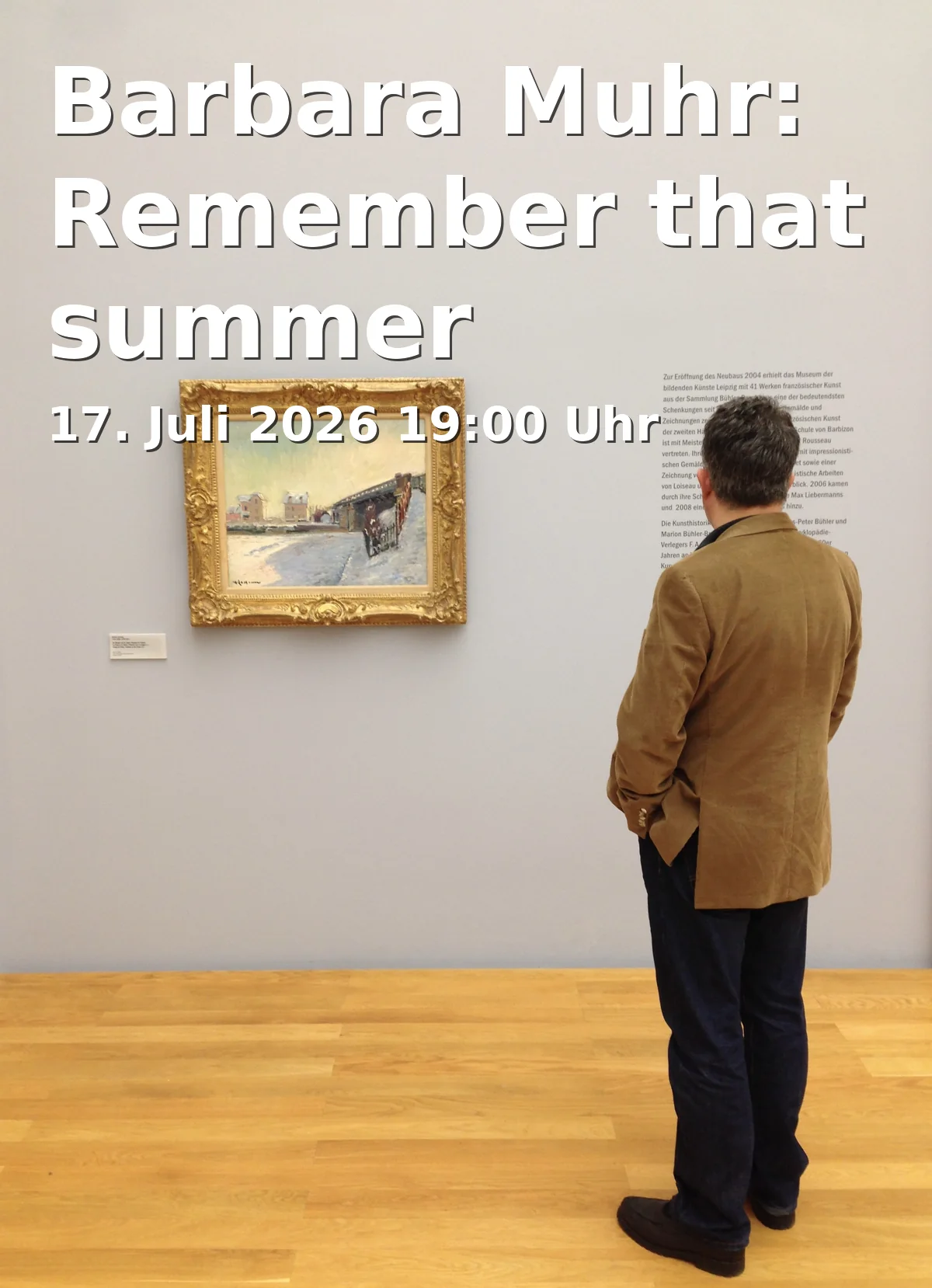
Barbara Muhr: Remember that summer
Summer, color, figure: Barbara Muhr invites you to an exhibition full of tension and memory in Regensburg. Discover for free! #Art
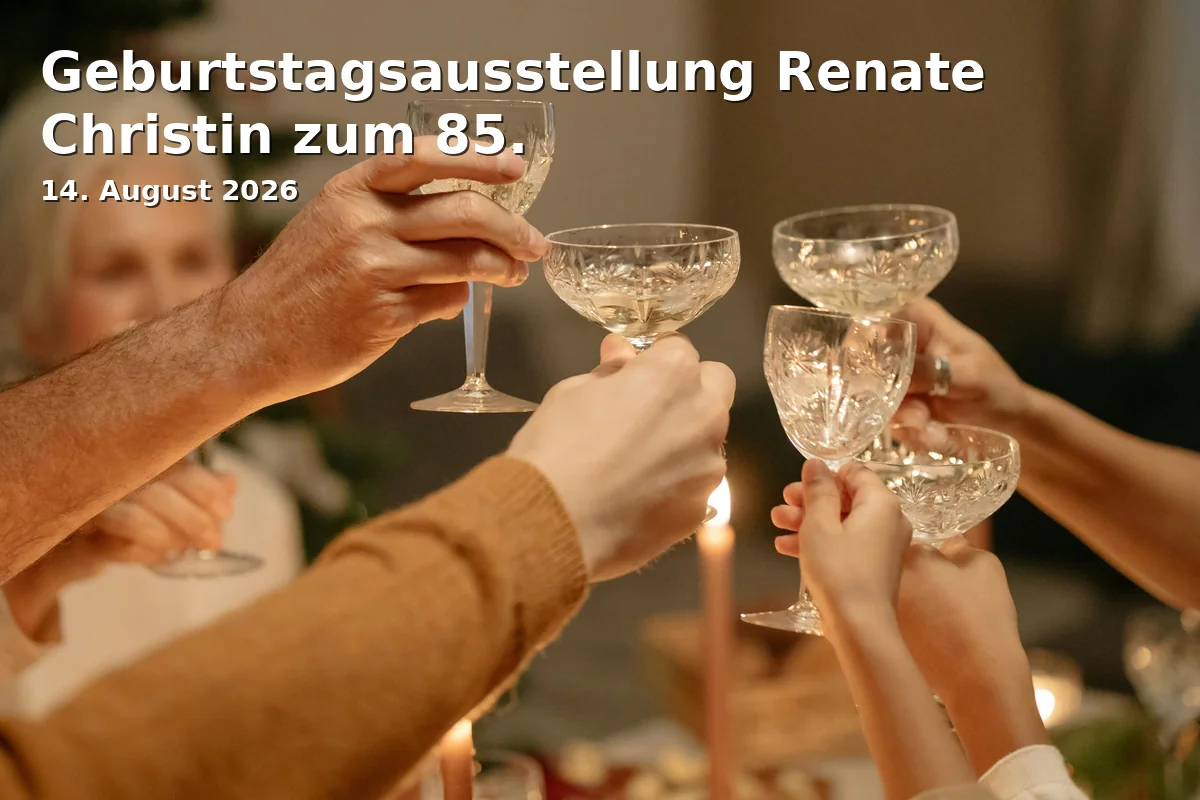
Birthday Exhibition Renate Christin for 85th Birthday
Renate Christin celebrates her 85th anniversary at artspace Erdel: Color, collage, and exhibition culture in Regensburg. A quiet, powerful art experience #Art
Frequently Asked Questions
Reviews
No reviews found