
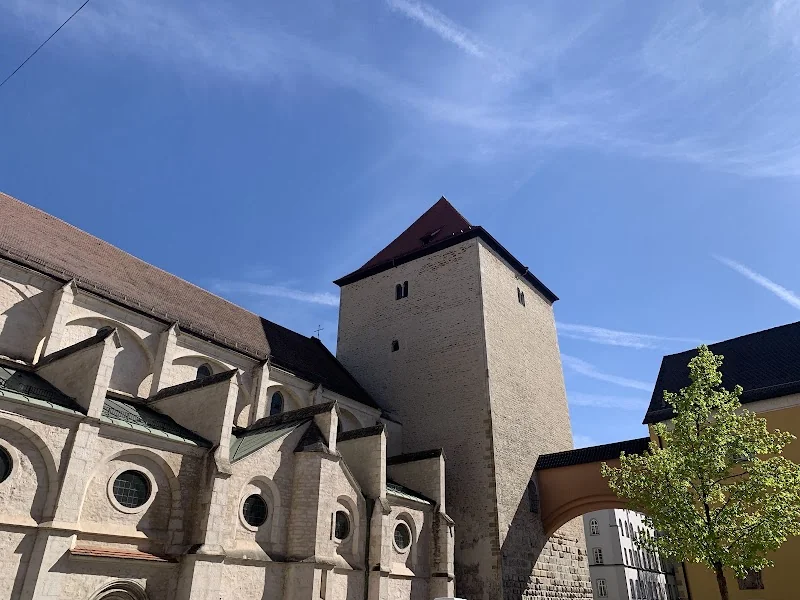
Regensburg
Domplatz 1, 93047 Regensburg, Deutschland
Historic Old Town Regensburg | Events & Tickets
The Historic Old Town of Regensburg is not an ordinary urban ensemble, but rather a nearly intact piece of European history. At the northernmost point of the Danube, Roman traces, medieval long-distance trade, and today's urban life come together directly. Since July 2006, the ensemble of Regensburg's Old Town with Stadtamhof has been a UNESCO World Heritage Site; in 2021, the Danube Limes was added as a second World Heritage title. Covering approximately 183 hectares with about 1,000 architectural monuments, Regensburg showcases itself as the best-preserved medieval city in Germany and as a city with the largest contiguous collection of Romanesque and Gothic architecture north of the Alps. This very mix of cohesion, diversity, and atmosphere makes the Old Town a place where one does not just tick off sights, but experiences history on foot, lingers in squares, strolls through alleys, and feels culture as a natural part of everyday life. Those looking for events, tickets, guided tours, or an inspiring city stroll will find a destination that remains vibrant almost year-round and yet never feels arbitrary. ([regensburg.de](https://www.regensburg.de/welterbe))
Events and Tickets in the Historic Old Town of Regensburg
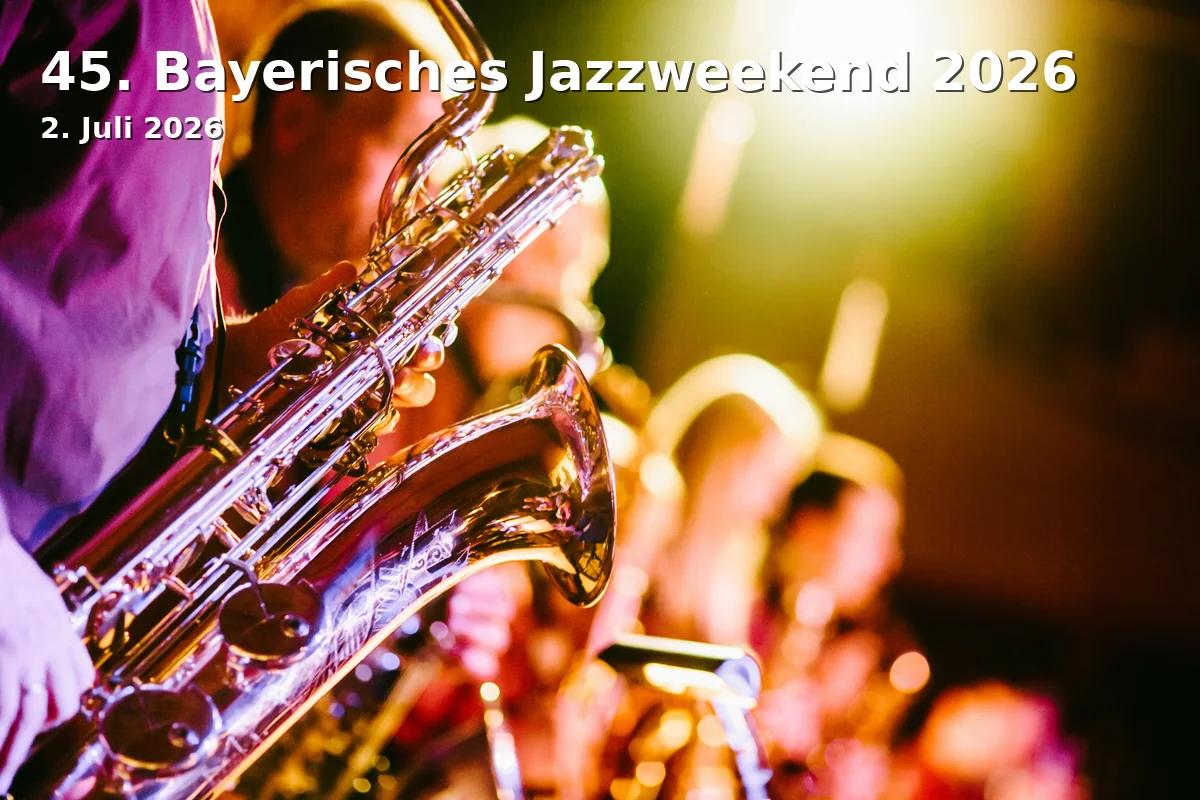
For visitors specifically looking for events and tickets, the Historic Old Town of Regensburg is particularly well-equipped. The official tourism presence of the city features its own section for events, tickets, and experiences, while also referring to the Regensburg event calendar, which makes the Old Town visible as a stage for culture, music, and city festivals. The city itself describes the historic city center as a place where regionally renowned cultural events attract visitors throughout the year. Among others, the days of early music, the Bavarian Jazz Weekend, the citizens' festival, the Thurn and Taxis Castle Festival, the Regensburg Short Film Weeks, the Regensburg Dance Days, as well as the Christmas markets at Neupfarrplatz, Haidplatz, and Kohlenmarkt are mentioned. This shows: The Old Town is not only a historical monument but also a venue with a clear seasonal density and a profile that ranges from classical music to large city festivals. For many guests, this very mix is attractive because one can directly combine a visit to the Old Town with a cultural appointment, a concert, or a seasonal experience. ([tourismus.regensburg.de](https://tourismus.regensburg.de/))
Even with tickets and bookings, the Old Town is well organized. The Tourist Information at Rathausplatz 4 is open according to the official site from Monday to Saturday from 9:30 AM to 6:00 PM and on Sundays and holidays from 9:30 AM to 4:00 PM; there, guests receive information about dates, tours, and bookable experiences. Regensburg Tourism GmbH also offers guided tours for groups that can be booked via email and subject to availability. The official offer pages mention both classic tours and thematic tours, allowing for a very precise planning of an Old Town visit. This is particularly useful if one wants to not just see the historical sites but understand them with background knowledge. Therefore, those looking for tickets will find not only individual admission options but a whole system of tours, information points, and event notices that closely align with the needs of day visitors, cultural travelers, and groups. ([tourismus.regensburg.de](https://tourismus.regensburg.de/))
UNESCO World Heritage, History, and the Unique Urban Structure
The historical depth of the Old Town begins long before the Middle Ages. The city of Regensburg points out that its history begins long before our era, linking Roman, early medieval, and high medieval layers into an exceptionally dense urban space. On the UNESCO World Heritage site, the Old Town is described as an ensemble whose extent corresponds to the medieval city expansion around 1320. The dense development mainly dates from the 12th to 14th centuries; because construction activity largely came to a halt after the decline of the trading metropolis in the late Middle Ages and the Old Town was largely spared during World War II, the medieval layout has been preserved in exceptional cohesion. For visitors, this is palpable at every corner: the paths are short, the sight lines are narrow, and many buildings tell not just individual stories but together form a cohesive urban image. This very cohesion is one of the reasons why Regensburg is considered the best-preserved medieval city in Germany. At the same time, the city was a wealthy trading metropolis and a political center of the Holy Roman Empire in the Middle Ages, which still gives it a special European dimension today. ([regensburg.de](https://www.regensburg.de/welterbe))
UNESCO evaluates Regensburg not only as a beautiful urban landscape but as a historically multifaceted ensemble with high significance. The World Heritage zone covers around 183 hectares and about 1,000 architectural monuments; it essentially corresponds to the last medieval city expansion and is surrounded by a clearly defined buffer zone that aligns with the heights of the Danube Valley as well as railway and main roads. Additionally, there is the Roman level with Castra Regina, the legionary camp of Emperor Marcus Aurelius, whose northern gate, the Porta Praetoria, is today visible as a prominent part of the Bishop's Wall at St. Peter's Cathedral. The city also emphasizes that Regensburg was located on important continental trade routes to Italy, Bohemia, Russia, and Byzantium, thus holding a key position not only architecturally but also economically and politically. Therefore, walking through the Old Town, one experiences not only half-timbered houses, stones, and squares but an urban structure where Roman military history, medieval trade, ecclesiastical power, and civic representation come together in an extraordinary density. This is precisely where the special quality of this World Heritage lies. ([regensburg.de](https://www.regensburg.de/welterbe/welterbe-regensburg))
Access, Parking, and Stress-Free Orientation
Access to the Historic Old Town of Regensburg is well planned thanks to several official parking offers, but it is not immediately carefree at first glance because the World Heritage core is intentionally traffic-calmed. Stadtwerk.Regensburg maintains three modern and cost-effective parking garages in the Old Town as well as two P+R facilities in the west and south of the city. The mentioned parking garages include Petersweg, Dachauplatz, and the underground garage at the theater; furthermore, the municipal parking site lists P+R West, P+R Jahnstadion Regensburg, and the Unterer Wöhrd parking lot among others. Those who prefer to take the bus into the city center can therefore resort to a park-and-ride system instead of searching for a parking space in the tightest Old Town area. The city of Regensburg also refers to an online inquiry of parking garage occupancy, which allows checking for available spaces in advance. For visitors, this means quite practically: The Old Town can be experienced much more relaxed if one prepares the arrival consciously and does not push into the last free gap on site. ([das-stadtwerk-regensburg.de](https://www.das-stadtwerk-regensburg.de/parken))
Additionally, the individual locations offer specific advantages that facilitate orientation. For P+R West, the city mentions that the parking ticket can also be used as a day bus ticket for the trip to and from the city center; the tickets are available on-site at machines or via the RVV app. The Unterer Wöhrd parking lot is described as a barrier-free, ticketless parking system with 24-hour opening and offers, according to the city, another option for longer or more flexible parking. Stadtwerk also refers to a parking garage card for cashless payments as well as to long-term parking spaces in the parking garages Petersweg, Dachauplatz, Theater, and TechCampus. The World Heritage Visitor Center explicitly points out that there are no parking spaces directly in front of the entrance; therefore, those wishing to go there should better plan for a parking garage, P+R, or a short walk. This very combination of a traffic-calmed Old Town, clearly designated parking options, and online accessible occupancy makes the visit planable, provided one understands the Old Town as a pedestrian zone in the best sense and not as a place for spontaneous parking right in front of the entrance. ([regensburg.de](https://www.regensburg.de/leben/verkehr-u-mobilitaet/parken/p-r-parkplatz-west?utm_source=openai))
Guided Tours, Visitor Center, and Tickets On-Site
The World Heritage Visitor Center Regensburg is particularly helpful for practical orientation because it consolidates history, exhibitions, and services. It is located in the Salzstadel at Weiße-Lamm-Gasse 1, 93047 Regensburg, and the main entrance is at the Stone Bridge. The center is open daily from 10:00 AM to 6:00 PM, and admission is free. Those who arrive first and want to get an overview can meaningfully start the Old Town tour here, as the location is right in the World Heritage core and thus in close proximity to one of the city's most important landmarks. The city of Regensburg also points out free guided tours, a virtual visit to the visitor center, and a workshop on trade in medieval Regensburg. This makes the center a good first stop for guests who want not only to see but to understand how Regensburg has grown as a trading, ecclesiastical, and administrative city. This offer is complemented by the Tourist Information at Rathausplatz 4, which is available with fixed opening hours and advice for visitors, groups, and individual guests. ([regensburg.de](https://www.regensburg.de/welterbe/besucherzentrum/anfahrt-und-oeffnungszeiten))
The official guided tours are also aimed at a broad visitor interest. The classic group tour of Regensburg Tourism GmbH leads to the most important places in the Old Town, including St. Peter's Cathedral, the Stone Bridge, Porta Praetoria, and the Old Town Hall. According to the official tour description, it lasts about 1.5 hours, is designed for up to 25 people, available in several languages, and planned as a barrier-free variant. In addition, the tourism page mentions other thematic tours that open various perspectives on the city, from the World Heritage walk to special tours with other focuses. This is particularly valuable for visitors because it allows the Old Town to be understood not just as a backdrop but as a narratable urban space. Those who organize tickets or tours in advance can structure their stay precisely: first a brief overview at the visitor center, then a thematic tour, and finally a leisurely stroll through the alleys. This way, a very dense city visit with structure, depth, and clear orientation emerges from just a few hours. ([tourismus.regensburg.de](https://tourismus.regensburg.de/en/experience-discover/guided-tours-walks-and-round-trips/guided-tours-for-groups/the-classic?utm_source=openai))
Cathedral, Stone Bridge, Old Town Hall, and Other Highlights
Those who discover the Historic Old Town of Regensburg on foot move between an exceptionally dense circle of sights. The official Regensburg highlights mention St. Peter's Cathedral, the Old Town and Stadtamhof as double UNESCO World Heritage, the Stone Bridge, the Old Town Hall, the Prince's Castle Thurn and Taxis, the House of Bavarian History, the Scottish Portal St. Jakob, the East Gate, the Trinity Church, the Neupfarrplatz with the Dani-Karavan Meeting Place, the northernmost point of the Danube, the World Heritage Visitor Center, Stadtamhof, Wahlenstraße and Bachgasse, as well as Haidplatz and Bismarckplatz. For a clear route, the combination of the major landmarks and the smaller alleys is worthwhile: St. Peter's Cathedral is, according to the city, the only Gothic cathedral in Bavaria, the Stone Bridge is a symbol of the city, and the Old Town Hall recalls the Eternal Diet. At the same time, the Porta Praetoria provides a direct glimpse into the Roman prehistory that continues to live in the same urban space. This very proximity between well-known places and quieter corners makes the Old Town so strong: One can connect great history, narrow alleys, open squares, sacred buildings, patrician architecture, and modern urban use in one day without covering long distances. ([tourismus.regensburg.de](https://tourismus.regensburg.de/))
What is particularly impressive is that these places do not stand isolated next to each other but explain each other. The Stone Bridge not only marks a beautiful view over the Danube but also the connection between the Old Town and Stadtamhof, while the Old Town Hall with its Reichstag history makes the political rank of Regensburg visible. St. Peter's Cathedral brings together the religious and architectural dimension, and the Porta Praetoria reminds us that beneath the medieval city lies a Roman foundation. Even smaller stations like Neupfarrplatz, Haidplatz, or the alleys around Wahlenstraße and Bachgasse contribute to the special quality of the urban image because they make the transition between public space, trade, everyday life, and history visible. The city itself emphasizes that in Regensburg, one experiences the history of a 2000-year-old city up close while shopping. This also applies to the walk between the main sights: Those who walk attentively quickly realize that Regensburg does not function as a collection of postcard motifs but as a grown historical city with vibrant spaces that are still in use today. ([regensburg.de](https://www.regensburg.de/welterbe/welterbe-regensburg/leben-im-welterbe))
Living in the World Heritage: Shopping, Cafés, and Atmosphere
The Historic Old Town of Regensburg functions not only as a monument but as a lively everyday space. The city describes life in the World Heritage as modern presence on historical ground, where alleys and squares are filled with vibrant life. Shopping is also explicitly part of it: Around 450 of the total 600 shops in Regensburg's Old Town utilize the special ambiance of the historic building substance. This ensures that the World Heritage does not become museum-like but remains economically and socially present. Walking through the Old Town, one finds not only sights but street cafés, taverns, small shops, and houses with centuries-old history. The city points out that espresso is served in historic halls, visitors look at the façade of the only Gothic cathedral in Bavaria, and the history of a 2000-year-old city unfolds directly during the shopping stroll. Especially in the evenings and on weekends, this mix of tradition and present shows: The historic city center then becomes a magnet for young and old, not least because of the many students who give the urban image a noticeably youthful note. ([regensburg.de](https://www.regensburg.de/welterbe/welterbe-regensburg/leben-im-welterbe/einkaufserlebnis-welterbe?utm_source=openai))
The culinary scene and the quality of stay also contribute to visitors staying longer. Regensburg has a long café culture; according to the official tourism site, it is home to not only one of the oldest coffee houses in Germany but also an inn with one of the most beautiful beer gardens in Bavaria. Together with the many historic squares, this creates an urban image that does not rely on quick consumption impulses but on lingering, observing, and returning. Throughout the year, festivals and seasonal highlights reinforce this impression: The Christmas markets, major cultural events, and the vibrant gastro scene ensure that the Old Town shows different faces at various times of the day and year. Therefore, those planning their visit should not only note a sight but consciously leave time for the transition between program, stroll, food, and spontaneous discoveries. This is precisely the strength of the Historic Old Town of Regensburg: It is simultaneously a UNESCO World Heritage Site, shopping city, event venue, historical space, and meeting point, without losing any of these roles. This makes it a destination that one does not just visit once but can discover anew time and again. ([tourismus.regensburg.de](https://tourismus.regensburg.de/en/experience-discover/guided-tours-walks-and-round-trips/guided-tours-for-groups/way-of-life?utm_source=openai))
Sources:
Mehr anzeigenWeniger anzeigen
Historic Old Town Regensburg | Events & Tickets
The Historic Old Town of Regensburg is not an ordinary urban ensemble, but rather a nearly intact piece of European history. At the northernmost point of the Danube, Roman traces, medieval long-distance trade, and today's urban life come together directly. Since July 2006, the ensemble of Regensburg's Old Town with Stadtamhof has been a UNESCO World Heritage Site; in 2021, the Danube Limes was added as a second World Heritage title. Covering approximately 183 hectares with about 1,000 architectural monuments, Regensburg showcases itself as the best-preserved medieval city in Germany and as a city with the largest contiguous collection of Romanesque and Gothic architecture north of the Alps. This very mix of cohesion, diversity, and atmosphere makes the Old Town a place where one does not just tick off sights, but experiences history on foot, lingers in squares, strolls through alleys, and feels culture as a natural part of everyday life. Those looking for events, tickets, guided tours, or an inspiring city stroll will find a destination that remains vibrant almost year-round and yet never feels arbitrary. ([regensburg.de](https://www.regensburg.de/welterbe))
Events and Tickets in the Historic Old Town of Regensburg
For visitors specifically looking for events and tickets, the Historic Old Town of Regensburg is particularly well-equipped. The official tourism presence of the city features its own section for events, tickets, and experiences, while also referring to the Regensburg event calendar, which makes the Old Town visible as a stage for culture, music, and city festivals. The city itself describes the historic city center as a place where regionally renowned cultural events attract visitors throughout the year. Among others, the days of early music, the Bavarian Jazz Weekend, the citizens' festival, the Thurn and Taxis Castle Festival, the Regensburg Short Film Weeks, the Regensburg Dance Days, as well as the Christmas markets at Neupfarrplatz, Haidplatz, and Kohlenmarkt are mentioned. This shows: The Old Town is not only a historical monument but also a venue with a clear seasonal density and a profile that ranges from classical music to large city festivals. For many guests, this very mix is attractive because one can directly combine a visit to the Old Town with a cultural appointment, a concert, or a seasonal experience. ([tourismus.regensburg.de](https://tourismus.regensburg.de/))
Even with tickets and bookings, the Old Town is well organized. The Tourist Information at Rathausplatz 4 is open according to the official site from Monday to Saturday from 9:30 AM to 6:00 PM and on Sundays and holidays from 9:30 AM to 4:00 PM; there, guests receive information about dates, tours, and bookable experiences. Regensburg Tourism GmbH also offers guided tours for groups that can be booked via email and subject to availability. The official offer pages mention both classic tours and thematic tours, allowing for a very precise planning of an Old Town visit. This is particularly useful if one wants to not just see the historical sites but understand them with background knowledge. Therefore, those looking for tickets will find not only individual admission options but a whole system of tours, information points, and event notices that closely align with the needs of day visitors, cultural travelers, and groups. ([tourismus.regensburg.de](https://tourismus.regensburg.de/))
UNESCO World Heritage, History, and the Unique Urban Structure
The historical depth of the Old Town begins long before the Middle Ages. The city of Regensburg points out that its history begins long before our era, linking Roman, early medieval, and high medieval layers into an exceptionally dense urban space. On the UNESCO World Heritage site, the Old Town is described as an ensemble whose extent corresponds to the medieval city expansion around 1320. The dense development mainly dates from the 12th to 14th centuries; because construction activity largely came to a halt after the decline of the trading metropolis in the late Middle Ages and the Old Town was largely spared during World War II, the medieval layout has been preserved in exceptional cohesion. For visitors, this is palpable at every corner: the paths are short, the sight lines are narrow, and many buildings tell not just individual stories but together form a cohesive urban image. This very cohesion is one of the reasons why Regensburg is considered the best-preserved medieval city in Germany. At the same time, the city was a wealthy trading metropolis and a political center of the Holy Roman Empire in the Middle Ages, which still gives it a special European dimension today. ([regensburg.de](https://www.regensburg.de/welterbe))
UNESCO evaluates Regensburg not only as a beautiful urban landscape but as a historically multifaceted ensemble with high significance. The World Heritage zone covers around 183 hectares and about 1,000 architectural monuments; it essentially corresponds to the last medieval city expansion and is surrounded by a clearly defined buffer zone that aligns with the heights of the Danube Valley as well as railway and main roads. Additionally, there is the Roman level with Castra Regina, the legionary camp of Emperor Marcus Aurelius, whose northern gate, the Porta Praetoria, is today visible as a prominent part of the Bishop's Wall at St. Peter's Cathedral. The city also emphasizes that Regensburg was located on important continental trade routes to Italy, Bohemia, Russia, and Byzantium, thus holding a key position not only architecturally but also economically and politically. Therefore, walking through the Old Town, one experiences not only half-timbered houses, stones, and squares but an urban structure where Roman military history, medieval trade, ecclesiastical power, and civic representation come together in an extraordinary density. This is precisely where the special quality of this World Heritage lies. ([regensburg.de](https://www.regensburg.de/welterbe/welterbe-regensburg))
Access, Parking, and Stress-Free Orientation
Access to the Historic Old Town of Regensburg is well planned thanks to several official parking offers, but it is not immediately carefree at first glance because the World Heritage core is intentionally traffic-calmed. Stadtwerk.Regensburg maintains three modern and cost-effective parking garages in the Old Town as well as two P+R facilities in the west and south of the city. The mentioned parking garages include Petersweg, Dachauplatz, and the underground garage at the theater; furthermore, the municipal parking site lists P+R West, P+R Jahnstadion Regensburg, and the Unterer Wöhrd parking lot among others. Those who prefer to take the bus into the city center can therefore resort to a park-and-ride system instead of searching for a parking space in the tightest Old Town area. The city of Regensburg also refers to an online inquiry of parking garage occupancy, which allows checking for available spaces in advance. For visitors, this means quite practically: The Old Town can be experienced much more relaxed if one prepares the arrival consciously and does not push into the last free gap on site. ([das-stadtwerk-regensburg.de](https://www.das-stadtwerk-regensburg.de/parken))
Additionally, the individual locations offer specific advantages that facilitate orientation. For P+R West, the city mentions that the parking ticket can also be used as a day bus ticket for the trip to and from the city center; the tickets are available on-site at machines or via the RVV app. The Unterer Wöhrd parking lot is described as a barrier-free, ticketless parking system with 24-hour opening and offers, according to the city, another option for longer or more flexible parking. Stadtwerk also refers to a parking garage card for cashless payments as well as to long-term parking spaces in the parking garages Petersweg, Dachauplatz, Theater, and TechCampus. The World Heritage Visitor Center explicitly points out that there are no parking spaces directly in front of the entrance; therefore, those wishing to go there should better plan for a parking garage, P+R, or a short walk. This very combination of a traffic-calmed Old Town, clearly designated parking options, and online accessible occupancy makes the visit planable, provided one understands the Old Town as a pedestrian zone in the best sense and not as a place for spontaneous parking right in front of the entrance. ([regensburg.de](https://www.regensburg.de/leben/verkehr-u-mobilitaet/parken/p-r-parkplatz-west?utm_source=openai))
Guided Tours, Visitor Center, and Tickets On-Site
The World Heritage Visitor Center Regensburg is particularly helpful for practical orientation because it consolidates history, exhibitions, and services. It is located in the Salzstadel at Weiße-Lamm-Gasse 1, 93047 Regensburg, and the main entrance is at the Stone Bridge. The center is open daily from 10:00 AM to 6:00 PM, and admission is free. Those who arrive first and want to get an overview can meaningfully start the Old Town tour here, as the location is right in the World Heritage core and thus in close proximity to one of the city's most important landmarks. The city of Regensburg also points out free guided tours, a virtual visit to the visitor center, and a workshop on trade in medieval Regensburg. This makes the center a good first stop for guests who want not only to see but to understand how Regensburg has grown as a trading, ecclesiastical, and administrative city. This offer is complemented by the Tourist Information at Rathausplatz 4, which is available with fixed opening hours and advice for visitors, groups, and individual guests. ([regensburg.de](https://www.regensburg.de/welterbe/besucherzentrum/anfahrt-und-oeffnungszeiten))
The official guided tours are also aimed at a broad visitor interest. The classic group tour of Regensburg Tourism GmbH leads to the most important places in the Old Town, including St. Peter's Cathedral, the Stone Bridge, Porta Praetoria, and the Old Town Hall. According to the official tour description, it lasts about 1.5 hours, is designed for up to 25 people, available in several languages, and planned as a barrier-free variant. In addition, the tourism page mentions other thematic tours that open various perspectives on the city, from the World Heritage walk to special tours with other focuses. This is particularly valuable for visitors because it allows the Old Town to be understood not just as a backdrop but as a narratable urban space. Those who organize tickets or tours in advance can structure their stay precisely: first a brief overview at the visitor center, then a thematic tour, and finally a leisurely stroll through the alleys. This way, a very dense city visit with structure, depth, and clear orientation emerges from just a few hours. ([tourismus.regensburg.de](https://tourismus.regensburg.de/en/experience-discover/guided-tours-walks-and-round-trips/guided-tours-for-groups/the-classic?utm_source=openai))
Cathedral, Stone Bridge, Old Town Hall, and Other Highlights
Those who discover the Historic Old Town of Regensburg on foot move between an exceptionally dense circle of sights. The official Regensburg highlights mention St. Peter's Cathedral, the Old Town and Stadtamhof as double UNESCO World Heritage, the Stone Bridge, the Old Town Hall, the Prince's Castle Thurn and Taxis, the House of Bavarian History, the Scottish Portal St. Jakob, the East Gate, the Trinity Church, the Neupfarrplatz with the Dani-Karavan Meeting Place, the northernmost point of the Danube, the World Heritage Visitor Center, Stadtamhof, Wahlenstraße and Bachgasse, as well as Haidplatz and Bismarckplatz. For a clear route, the combination of the major landmarks and the smaller alleys is worthwhile: St. Peter's Cathedral is, according to the city, the only Gothic cathedral in Bavaria, the Stone Bridge is a symbol of the city, and the Old Town Hall recalls the Eternal Diet. At the same time, the Porta Praetoria provides a direct glimpse into the Roman prehistory that continues to live in the same urban space. This very proximity between well-known places and quieter corners makes the Old Town so strong: One can connect great history, narrow alleys, open squares, sacred buildings, patrician architecture, and modern urban use in one day without covering long distances. ([tourismus.regensburg.de](https://tourismus.regensburg.de/))
What is particularly impressive is that these places do not stand isolated next to each other but explain each other. The Stone Bridge not only marks a beautiful view over the Danube but also the connection between the Old Town and Stadtamhof, while the Old Town Hall with its Reichstag history makes the political rank of Regensburg visible. St. Peter's Cathedral brings together the religious and architectural dimension, and the Porta Praetoria reminds us that beneath the medieval city lies a Roman foundation. Even smaller stations like Neupfarrplatz, Haidplatz, or the alleys around Wahlenstraße and Bachgasse contribute to the special quality of the urban image because they make the transition between public space, trade, everyday life, and history visible. The city itself emphasizes that in Regensburg, one experiences the history of a 2000-year-old city up close while shopping. This also applies to the walk between the main sights: Those who walk attentively quickly realize that Regensburg does not function as a collection of postcard motifs but as a grown historical city with vibrant spaces that are still in use today. ([regensburg.de](https://www.regensburg.de/welterbe/welterbe-regensburg/leben-im-welterbe))
Living in the World Heritage: Shopping, Cafés, and Atmosphere
The Historic Old Town of Regensburg functions not only as a monument but as a lively everyday space. The city describes life in the World Heritage as modern presence on historical ground, where alleys and squares are filled with vibrant life. Shopping is also explicitly part of it: Around 450 of the total 600 shops in Regensburg's Old Town utilize the special ambiance of the historic building substance. This ensures that the World Heritage does not become museum-like but remains economically and socially present. Walking through the Old Town, one finds not only sights but street cafés, taverns, small shops, and houses with centuries-old history. The city points out that espresso is served in historic halls, visitors look at the façade of the only Gothic cathedral in Bavaria, and the history of a 2000-year-old city unfolds directly during the shopping stroll. Especially in the evenings and on weekends, this mix of tradition and present shows: The historic city center then becomes a magnet for young and old, not least because of the many students who give the urban image a noticeably youthful note. ([regensburg.de](https://www.regensburg.de/welterbe/welterbe-regensburg/leben-im-welterbe/einkaufserlebnis-welterbe?utm_source=openai))
The culinary scene and the quality of stay also contribute to visitors staying longer. Regensburg has a long café culture; according to the official tourism site, it is home to not only one of the oldest coffee houses in Germany but also an inn with one of the most beautiful beer gardens in Bavaria. Together with the many historic squares, this creates an urban image that does not rely on quick consumption impulses but on lingering, observing, and returning. Throughout the year, festivals and seasonal highlights reinforce this impression: The Christmas markets, major cultural events, and the vibrant gastro scene ensure that the Old Town shows different faces at various times of the day and year. Therefore, those planning their visit should not only note a sight but consciously leave time for the transition between program, stroll, food, and spontaneous discoveries. This is precisely the strength of the Historic Old Town of Regensburg: It is simultaneously a UNESCO World Heritage Site, shopping city, event venue, historical space, and meeting point, without losing any of these roles. This makes it a destination that one does not just visit once but can discover anew time and again. ([tourismus.regensburg.de](https://tourismus.regensburg.de/en/experience-discover/guided-tours-walks-and-round-trips/guided-tours-for-groups/way-of-life?utm_source=openai))
Sources:
Historic Old Town Regensburg | Events & Tickets
The Historic Old Town of Regensburg is not an ordinary urban ensemble, but rather a nearly intact piece of European history. At the northernmost point of the Danube, Roman traces, medieval long-distance trade, and today's urban life come together directly. Since July 2006, the ensemble of Regensburg's Old Town with Stadtamhof has been a UNESCO World Heritage Site; in 2021, the Danube Limes was added as a second World Heritage title. Covering approximately 183 hectares with about 1,000 architectural monuments, Regensburg showcases itself as the best-preserved medieval city in Germany and as a city with the largest contiguous collection of Romanesque and Gothic architecture north of the Alps. This very mix of cohesion, diversity, and atmosphere makes the Old Town a place where one does not just tick off sights, but experiences history on foot, lingers in squares, strolls through alleys, and feels culture as a natural part of everyday life. Those looking for events, tickets, guided tours, or an inspiring city stroll will find a destination that remains vibrant almost year-round and yet never feels arbitrary. ([regensburg.de](https://www.regensburg.de/welterbe))
Events and Tickets in the Historic Old Town of Regensburg
For visitors specifically looking for events and tickets, the Historic Old Town of Regensburg is particularly well-equipped. The official tourism presence of the city features its own section for events, tickets, and experiences, while also referring to the Regensburg event calendar, which makes the Old Town visible as a stage for culture, music, and city festivals. The city itself describes the historic city center as a place where regionally renowned cultural events attract visitors throughout the year. Among others, the days of early music, the Bavarian Jazz Weekend, the citizens' festival, the Thurn and Taxis Castle Festival, the Regensburg Short Film Weeks, the Regensburg Dance Days, as well as the Christmas markets at Neupfarrplatz, Haidplatz, and Kohlenmarkt are mentioned. This shows: The Old Town is not only a historical monument but also a venue with a clear seasonal density and a profile that ranges from classical music to large city festivals. For many guests, this very mix is attractive because one can directly combine a visit to the Old Town with a cultural appointment, a concert, or a seasonal experience. ([tourismus.regensburg.de](https://tourismus.regensburg.de/))
Even with tickets and bookings, the Old Town is well organized. The Tourist Information at Rathausplatz 4 is open according to the official site from Monday to Saturday from 9:30 AM to 6:00 PM and on Sundays and holidays from 9:30 AM to 4:00 PM; there, guests receive information about dates, tours, and bookable experiences. Regensburg Tourism GmbH also offers guided tours for groups that can be booked via email and subject to availability. The official offer pages mention both classic tours and thematic tours, allowing for a very precise planning of an Old Town visit. This is particularly useful if one wants to not just see the historical sites but understand them with background knowledge. Therefore, those looking for tickets will find not only individual admission options but a whole system of tours, information points, and event notices that closely align with the needs of day visitors, cultural travelers, and groups. ([tourismus.regensburg.de](https://tourismus.regensburg.de/))
UNESCO World Heritage, History, and the Unique Urban Structure
The historical depth of the Old Town begins long before the Middle Ages. The city of Regensburg points out that its history begins long before our era, linking Roman, early medieval, and high medieval layers into an exceptionally dense urban space. On the UNESCO World Heritage site, the Old Town is described as an ensemble whose extent corresponds to the medieval city expansion around 1320. The dense development mainly dates from the 12th to 14th centuries; because construction activity largely came to a halt after the decline of the trading metropolis in the late Middle Ages and the Old Town was largely spared during World War II, the medieval layout has been preserved in exceptional cohesion. For visitors, this is palpable at every corner: the paths are short, the sight lines are narrow, and many buildings tell not just individual stories but together form a cohesive urban image. This very cohesion is one of the reasons why Regensburg is considered the best-preserved medieval city in Germany. At the same time, the city was a wealthy trading metropolis and a political center of the Holy Roman Empire in the Middle Ages, which still gives it a special European dimension today. ([regensburg.de](https://www.regensburg.de/welterbe))
UNESCO evaluates Regensburg not only as a beautiful urban landscape but as a historically multifaceted ensemble with high significance. The World Heritage zone covers around 183 hectares and about 1,000 architectural monuments; it essentially corresponds to the last medieval city expansion and is surrounded by a clearly defined buffer zone that aligns with the heights of the Danube Valley as well as railway and main roads. Additionally, there is the Roman level with Castra Regina, the legionary camp of Emperor Marcus Aurelius, whose northern gate, the Porta Praetoria, is today visible as a prominent part of the Bishop's Wall at St. Peter's Cathedral. The city also emphasizes that Regensburg was located on important continental trade routes to Italy, Bohemia, Russia, and Byzantium, thus holding a key position not only architecturally but also economically and politically. Therefore, walking through the Old Town, one experiences not only half-timbered houses, stones, and squares but an urban structure where Roman military history, medieval trade, ecclesiastical power, and civic representation come together in an extraordinary density. This is precisely where the special quality of this World Heritage lies. ([regensburg.de](https://www.regensburg.de/welterbe/welterbe-regensburg))
Access, Parking, and Stress-Free Orientation
Access to the Historic Old Town of Regensburg is well planned thanks to several official parking offers, but it is not immediately carefree at first glance because the World Heritage core is intentionally traffic-calmed. Stadtwerk.Regensburg maintains three modern and cost-effective parking garages in the Old Town as well as two P+R facilities in the west and south of the city. The mentioned parking garages include Petersweg, Dachauplatz, and the underground garage at the theater; furthermore, the municipal parking site lists P+R West, P+R Jahnstadion Regensburg, and the Unterer Wöhrd parking lot among others. Those who prefer to take the bus into the city center can therefore resort to a park-and-ride system instead of searching for a parking space in the tightest Old Town area. The city of Regensburg also refers to an online inquiry of parking garage occupancy, which allows checking for available spaces in advance. For visitors, this means quite practically: The Old Town can be experienced much more relaxed if one prepares the arrival consciously and does not push into the last free gap on site. ([das-stadtwerk-regensburg.de](https://www.das-stadtwerk-regensburg.de/parken))
Additionally, the individual locations offer specific advantages that facilitate orientation. For P+R West, the city mentions that the parking ticket can also be used as a day bus ticket for the trip to and from the city center; the tickets are available on-site at machines or via the RVV app. The Unterer Wöhrd parking lot is described as a barrier-free, ticketless parking system with 24-hour opening and offers, according to the city, another option for longer or more flexible parking. Stadtwerk also refers to a parking garage card for cashless payments as well as to long-term parking spaces in the parking garages Petersweg, Dachauplatz, Theater, and TechCampus. The World Heritage Visitor Center explicitly points out that there are no parking spaces directly in front of the entrance; therefore, those wishing to go there should better plan for a parking garage, P+R, or a short walk. This very combination of a traffic-calmed Old Town, clearly designated parking options, and online accessible occupancy makes the visit planable, provided one understands the Old Town as a pedestrian zone in the best sense and not as a place for spontaneous parking right in front of the entrance. ([regensburg.de](https://www.regensburg.de/leben/verkehr-u-mobilitaet/parken/p-r-parkplatz-west?utm_source=openai))
Guided Tours, Visitor Center, and Tickets On-Site
The World Heritage Visitor Center Regensburg is particularly helpful for practical orientation because it consolidates history, exhibitions, and services. It is located in the Salzstadel at Weiße-Lamm-Gasse 1, 93047 Regensburg, and the main entrance is at the Stone Bridge. The center is open daily from 10:00 AM to 6:00 PM, and admission is free. Those who arrive first and want to get an overview can meaningfully start the Old Town tour here, as the location is right in the World Heritage core and thus in close proximity to one of the city's most important landmarks. The city of Regensburg also points out free guided tours, a virtual visit to the visitor center, and a workshop on trade in medieval Regensburg. This makes the center a good first stop for guests who want not only to see but to understand how Regensburg has grown as a trading, ecclesiastical, and administrative city. This offer is complemented by the Tourist Information at Rathausplatz 4, which is available with fixed opening hours and advice for visitors, groups, and individual guests. ([regensburg.de](https://www.regensburg.de/welterbe/besucherzentrum/anfahrt-und-oeffnungszeiten))
The official guided tours are also aimed at a broad visitor interest. The classic group tour of Regensburg Tourism GmbH leads to the most important places in the Old Town, including St. Peter's Cathedral, the Stone Bridge, Porta Praetoria, and the Old Town Hall. According to the official tour description, it lasts about 1.5 hours, is designed for up to 25 people, available in several languages, and planned as a barrier-free variant. In addition, the tourism page mentions other thematic tours that open various perspectives on the city, from the World Heritage walk to special tours with other focuses. This is particularly valuable for visitors because it allows the Old Town to be understood not just as a backdrop but as a narratable urban space. Those who organize tickets or tours in advance can structure their stay precisely: first a brief overview at the visitor center, then a thematic tour, and finally a leisurely stroll through the alleys. This way, a very dense city visit with structure, depth, and clear orientation emerges from just a few hours. ([tourismus.regensburg.de](https://tourismus.regensburg.de/en/experience-discover/guided-tours-walks-and-round-trips/guided-tours-for-groups/the-classic?utm_source=openai))
Cathedral, Stone Bridge, Old Town Hall, and Other Highlights
Those who discover the Historic Old Town of Regensburg on foot move between an exceptionally dense circle of sights. The official Regensburg highlights mention St. Peter's Cathedral, the Old Town and Stadtamhof as double UNESCO World Heritage, the Stone Bridge, the Old Town Hall, the Prince's Castle Thurn and Taxis, the House of Bavarian History, the Scottish Portal St. Jakob, the East Gate, the Trinity Church, the Neupfarrplatz with the Dani-Karavan Meeting Place, the northernmost point of the Danube, the World Heritage Visitor Center, Stadtamhof, Wahlenstraße and Bachgasse, as well as Haidplatz and Bismarckplatz. For a clear route, the combination of the major landmarks and the smaller alleys is worthwhile: St. Peter's Cathedral is, according to the city, the only Gothic cathedral in Bavaria, the Stone Bridge is a symbol of the city, and the Old Town Hall recalls the Eternal Diet. At the same time, the Porta Praetoria provides a direct glimpse into the Roman prehistory that continues to live in the same urban space. This very proximity between well-known places and quieter corners makes the Old Town so strong: One can connect great history, narrow alleys, open squares, sacred buildings, patrician architecture, and modern urban use in one day without covering long distances. ([tourismus.regensburg.de](https://tourismus.regensburg.de/))
What is particularly impressive is that these places do not stand isolated next to each other but explain each other. The Stone Bridge not only marks a beautiful view over the Danube but also the connection between the Old Town and Stadtamhof, while the Old Town Hall with its Reichstag history makes the political rank of Regensburg visible. St. Peter's Cathedral brings together the religious and architectural dimension, and the Porta Praetoria reminds us that beneath the medieval city lies a Roman foundation. Even smaller stations like Neupfarrplatz, Haidplatz, or the alleys around Wahlenstraße and Bachgasse contribute to the special quality of the urban image because they make the transition between public space, trade, everyday life, and history visible. The city itself emphasizes that in Regensburg, one experiences the history of a 2000-year-old city up close while shopping. This also applies to the walk between the main sights: Those who walk attentively quickly realize that Regensburg does not function as a collection of postcard motifs but as a grown historical city with vibrant spaces that are still in use today. ([regensburg.de](https://www.regensburg.de/welterbe/welterbe-regensburg/leben-im-welterbe))
Living in the World Heritage: Shopping, Cafés, and Atmosphere
The Historic Old Town of Regensburg functions not only as a monument but as a lively everyday space. The city describes life in the World Heritage as modern presence on historical ground, where alleys and squares are filled with vibrant life. Shopping is also explicitly part of it: Around 450 of the total 600 shops in Regensburg's Old Town utilize the special ambiance of the historic building substance. This ensures that the World Heritage does not become museum-like but remains economically and socially present. Walking through the Old Town, one finds not only sights but street cafés, taverns, small shops, and houses with centuries-old history. The city points out that espresso is served in historic halls, visitors look at the façade of the only Gothic cathedral in Bavaria, and the history of a 2000-year-old city unfolds directly during the shopping stroll. Especially in the evenings and on weekends, this mix of tradition and present shows: The historic city center then becomes a magnet for young and old, not least because of the many students who give the urban image a noticeably youthful note. ([regensburg.de](https://www.regensburg.de/welterbe/welterbe-regensburg/leben-im-welterbe/einkaufserlebnis-welterbe?utm_source=openai))
The culinary scene and the quality of stay also contribute to visitors staying longer. Regensburg has a long café culture; according to the official tourism site, it is home to not only one of the oldest coffee houses in Germany but also an inn with one of the most beautiful beer gardens in Bavaria. Together with the many historic squares, this creates an urban image that does not rely on quick consumption impulses but on lingering, observing, and returning. Throughout the year, festivals and seasonal highlights reinforce this impression: The Christmas markets, major cultural events, and the vibrant gastro scene ensure that the Old Town shows different faces at various times of the day and year. Therefore, those planning their visit should not only note a sight but consciously leave time for the transition between program, stroll, food, and spontaneous discoveries. This is precisely the strength of the Historic Old Town of Regensburg: It is simultaneously a UNESCO World Heritage Site, shopping city, event venue, historical space, and meeting point, without losing any of these roles. This makes it a destination that one does not just visit once but can discover anew time and again. ([tourismus.regensburg.de](https://tourismus.regensburg.de/en/experience-discover/guided-tours-walks-and-round-trips/guided-tours-for-groups/way-of-life?utm_source=openai))
Sources:
Frequently Asked Questions
Reviews
Manfred Hogreve
28. April 2026
Love at first sight, especially the old town with the cathedral is a must.
Rudolf Simon
28. April 2026
The old town is always a dream.
Angeles Garcia
6. June 2026
The old town is beautiful and very well maintained. The city has a lot of atmosphere and young people, many girls dressed in dirndls and boys in lederhosen. I loved it.
Jürgen Thums
1. May 2026
Very interesting
Thea Ruder
7. June 2026
No comment