
Regensburg
Dachaupl. 2, 93047 Regensburg, Deutschland
Historical Museum Regensburg | Opening Hours & Admission
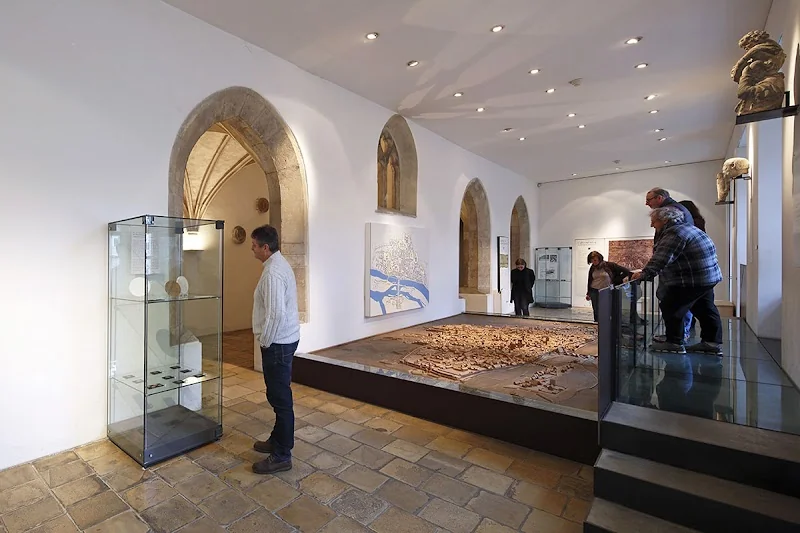
The Historical Museum Regensburg is one of the places where the city's history is not only explained but also experienced spatially. The building at Dachauplatz is housed in the former Minorite monastery and combines archaeological finds, art historical objects, monastic architecture, and city history into a tour that spans from the Stone Age to the 19th century. Those looking for opening hours, admission, directions, children's offerings, or special exhibitions will find here a museum with a clear structure and surprising depth. The contrast between the old monastery rooms and the collections that tell the development of Regensburg and the region in great breadth is particularly striking. This mixture makes the house interesting for both a short visit and a longer museum afternoon. The official presentation emphasizes especially the prehistory and early history, the Roman period, the medieval city, and the art and living culture of the early modern period. ([regensburg.de](https://www.regensburg.de/museen/die-museen/historisches-museum))
Opening Hours, Admission Prices, and Visit Planning
For the search query regarding opening hours, the situation is clear: The Historical Museum Regensburg is open from Tuesday to Sunday and on public holidays from 10 AM to 4 PM. The house remains closed on January 1, Shrove Tuesday, Good Friday, May 1, November 1, as well as on December 24, 25, and 31. These fixed times are particularly practical for museum planning, as they facilitate spontaneous visits as well as planned family outings or cultural trips to the old town. The admission prices are also straightforward: Adults pay 5 euros, reduced admission costs 2.50 euros, and families with children under 18 years pay 10 euros. Additionally, every first Sunday of the month, admission is free for all visitors. For many guests, this is a strong argument to consciously plan a visit on this day, especially when traveling with family or wanting to visit several museums in Regensburg. ([regensburg.de](https://www.regensburg.de/museen/die-museen/historisches-museum))
Even for visitors who have little time, the house is well suited, as the themes are compact but very rich in content. Those who want to focus on the essentials can orient the tour around the focal points of prehistory, the Roman department, and the medieval department, thus still gaining a very complete impression. The museum's website also mentions tours for individual visitors and small groups: Roman Regensburg on Saturdays at 1 PM and Regensburg in the Middle Ages on Sundays and public holidays at 1 PM. For groups, guided tours can be arranged by appointment. This makes the museum attractive not only for tourists but also for school classes, clubs, travel groups, and culture-interested locals. Those planning a visit can choose very well between free tours, guided tours, and special programs. Especially in connection with the free admission on the first Sunday of the month, a very flexible visiting logic arises, allowing the house to cater to a wide range of target groups. ([regensburg.de](https://www.regensburg.de/museen/die-museen/historisches-museum))
Roman Regensburg and the Collections from the Stone Age to the 19th Century
The content backbone of the museum consists of its collections on prehistory and early history, the Roman period, and the development of the city up to the 19th century. Particularly impressive is the prehistoric Upper Palatinate, which is presented in two large exhibition halls. There, the arc stretches from the Paleolithic to the end of Celtic civilization. The official museum description cites as the oldest artifact of the Upper Palatinate a roughly 250,000-year-old hand axe from Pösing and simultaneously refers to the first Regensburger from the Neolithic around 5500 BC. For SEO and for visitors, this is a strong signal: The Historical Museum is not only a city museum but a house of long time periods, where the history of the region begins very early and continues over millennia. This archaeological depth creates a framework in which Regensburg as a city is not understood in isolation but as a result of a long settlement and cultural history. ([regensburg.de](https://www.regensburg.de/museen/die-museen/historisches-museum))
Particularly popular is the Roman department, which presents evidence from the 1st to the 5th century AD. Regensburg was then the most important military base on the border of the Roman Empire in present-day Bavaria as Castra Regina. The exhibition shows the founding inscription, a treasure of coins, valuable finds, as well as models and reconstructions that make Roman Regensburg visible in its structure and daily life. According to the official description, the department was modernized in 2003. This is important for visitors because it brings together classic museum objects and modern mediation. This makes the Roman department not dry but lively and understandable. So, for those searching for Roman Regensburg, archaeological finds, or the historical identity of the city, this is one of the central addresses in the region. The collection combines professionalism with clarity and is therefore a key theme for any good SEO description of the house. ([regensburg.de](https://www.regensburg.de/museen/die-museen/historisches-museum))
Regensburg in the Middle Ages: Monastery, Cloister, and Historical Atmosphere
The medieval department is one of the strongest reasons for the special impact of the museum. The reason lies not only in the exhibits but in the place itself. The house is fundamentally based on the former Minorite monastery of St. Salvator. In the preserved church and the adjacent cloister, the atmosphere of past centuries is clearly tangible. This architectural authenticity is a significant advantage over many classic museum buildings, as here space and content are closely connected. The medieval city is not narrated in a neutral hall but in an environment that itself carries history. This is exactly what makes the charm of the museum: Visitors do not only see objects but move within a historical framework that credibly enhances the narrative. This is also a strong element from an SEO perspective, as search queries related to Regensburg in the Middle Ages, monastery, cloister, and historical atmosphere converge very well here. ([regensburg.de](https://www.regensburg.de/museen/die-museen/historisches-museum))
The content of the medieval presentation ranges from political constitution to economic activities to daily life and art of the city and the region. Thus, the city history is not reduced to a few famous buildings but shown as a complex cultural and social history. For visitors, this is helpful because it allows one to understand Regensburg not only as a UNESCO World Heritage City but also as a historical center with trade, crafts, religion, and urban order. This area is also important for photography enthusiasts: The mix of monastic architecture, cloister, and museum staging creates strong motifs that are clearly visible in the official imagery of the house. Those searching for photos will find numerous exterior views, interiors, and detail shots on the city pages that convey the character of the museum well. The visual language supports the content message: History in Regensburg is not abstract here but spatially and atmospherically present. ([regensburg.de](https://www.regensburg.de/kultur/kulturdatenbank/eintrag/116743))
Directions, Parking, and Location at Dachauplatz
The address of the house is Dachauplatz 2-4 in 93047 Regensburg. The city museum's website lists Dachauplatz as the nearest stop. This makes the museum very well connected for guests without a car, especially if one is planning a visit to the old town, other museums, or a stroll through the city center. The location at Dachauplatz is practical because it mediates between historical urban spaces and central infrastructure. For the search intent of directions, it is also important that the museum is directly connected to the inner-city transport network and the public space of the old town. So, anyone wanting to explore Regensburg in one day can easily incorporate the Historical Museum as a starting or stopping point in a tour. The official information is clear and pragmatic, without unnecessary detours or complicated travel instructions. ([regensburg.de](https://www.regensburg.de/rathaus/aemteruebersicht/kulturreferat/museen))
For drivers, the Dachauplatz parking garage is the obvious option. The city parking garage page lists the operator as Stadtwerk Regensburg GmbH and provides the address D.-Martin-Luther-Straße 2. The house is located in the environmental zone, for which a green fine dust sticker is required. The prices and rates are transparently displayed on the city page, and E-charging points as well as disabled parking spaces are also mentioned. For visitor planning, it is also important that the parking garage is in close proximity to the museum address. Those searching for parking at the Historical Museum Regensburg will find a realistic, official, and easily understandable answer. Especially in a city center location, this information is valuable as it reduces uncertainty and makes the museum visit practical. Thus, the combination of stop, parking garage, and central location creates a very practical visitor profile that is particularly interesting for families, groups, and day guests. ([regensburg.de](https://www.regensburg.de/leben/verkehr-u-mobilitaet/parken/parkhaus-dachauplatz))
Children, Children's Birthdays, and Family Offers
The search terms children, children's birthday, and family offers are very well served by the Historical Museum. Under the motto Experience History, the agency Cultheca offers activities for children and young people. The official museum page explicitly mentions children's birthdays, where small groups can celebrate a Stone Age party, a Roman games party, or a medieval party with knights and maidens. This is a strong offer because it conveys historical themes playfully while also having a clear experiential character. For families, the museum is therefore not only a place to look but also a place to participate. This increases relevance for search queries that seek not only facts but concrete leisure ideas for children in Regensburg. ([regensburg.de](https://www.regensburg.de/museen/die-museen/historisches-museum))
In addition, there are school classes and children's groups that are guided through the Roman department, medieval department, and special exhibitions with interactive and action-oriented tours. The workshop for museum education complements this with themes such as ancient writing and script, mosaic art, costumes and fashion, Roman games, medieval table and book painting, paper making, and felting. The offer is supplemented by family tours that take place once a month on Sundays, as well as senior tours on the first Tuesday of the month on changing topics. For SEO, this diversity is important because it shows that the museum is not only historically significant but also very broadly educationally positioned. So, those coming with children will find here much more than a quiet exhibition: The house actively conveys history, age-appropriate and with a clear educational concept. ([regensburg.de](https://www.regensburg.de/museen/die-museen/historisches-museum))
Special Exhibitions, Tours, and Sound.Space.Museum as well as Management, Staff, Jobs, Photos, Café, and Breakfast
Special exhibitions are an important search driver around the Historical Museum Regensburg, and the official pages show that the house regularly works with current themes. For 2026, the studio exhibition Destroyed, Found, Recovered? on the founding document of the Jewish synagogue Regensburg has been announced, which will be shown from March 13 to June 14, 2026, at the Historical Museum. In spring 2026, the exhibition City Trees with a natural history reference will also run, and in 2025, another joint exhibition project in the Historical Museum and the World Heritage Visitor Center Regensburg was presented with Border Values - The Roman World Heritage in Bavaria. So, anyone searching for special exhibitions in Regensburg or current programs will find here a house that regularly complements its historical core competence with changing perspectives. This significantly increases the attractiveness for repeat visits. Particularly noteworthy is also the concert and event series SOUND.SPACE.MUSEUM, which combines the matinées in the museum and the serenades in the museum in the Minorite church. The artistic direction is in the hands of Prof. Stefan Baier and Andreas Meixner, and ticket sales are conducted through okticket. This is clear evidence that the Historical Museum is not only a venue for exhibitions but also a cultural event space. ([regensburg.de](https://www.regensburg.de/museen/aktuelles/zerstoert-gefunden-geborgen))
For the search terms management, staff, and jobs, official information is also available. On the city page, Dr. Sebastian Karnatz is named as the head of the museums of the city of Regensburg. Additionally, the city career portal refers to current job offers, including a position for marketing and public relations for the museums of the city of Regensburg. For visitors looking for photos or reviews, the visual self-presentation of the page is particularly interesting: Exterior views, monastery rooms, the Roman founding inscription, and interior shots shape the image of the house. However, according to the available official museum information, no own café is mentioned, and a breakfast offer is not indicated as part of the museum operation. This is important for keyword analysis because the search intent for café and breakfast is visible, but the official museum information is rather focused on exhibitions, mediation, and events. So, those searching for a museum in Regensburg with a café should not tie this expectation to the museum itself but understand the focus of the house as a cultural and history museum. This clear classification makes the location credible and helpful in the SEO context. ([regensburg.de](https://www.regensburg.de/rathaus/aemteruebersicht/kulturreferat/museen))
In summary, the Historical Museum Regensburg is a house for many search intents at once: opening hours, admission, directions, parking, children, special exhibitions, tours, management, and jobs. The common thread remains the same: Regensburg's history is told here in the former Minorite monastery with strong spatial atmosphere, archaeological depth, and easily understandable mediation. Therefore, those searching for photos, reviews, or practical visitor information receive a very coherent overall picture. The combination of the Roman department, medieval room, monastic architecture, and family offerings makes the museum one of the most versatile cultural addresses in the city. For this reason, a visit is worthwhile not only for those with historical interest but also for families, school classes, city explorers, and anyone who wants to truly understand Regensburg through a museum. ([regensburg.de](https://www.regensburg.de/museen/die-museen/historisches-museum))
Sources:
- Historical Museum Regensburg - Official Museum Page
- Historical Museum Regensburg - Cultural Database
- Historical Museum Regensburg - Department Regensburg in the Middle Ages
- Destroyed, Found, Recovered? - Exhibition at the Historical Museum
- Special Exhibitions & Events - SOUND.SPACE.MUSEUM
- Parking Garage Dachauplatz - City Regensburg
- Job Offers - City Regensburg
Mehr anzeigenWeniger anzeigen
Historical Museum Regensburg | Opening Hours & Admission
The Historical Museum Regensburg is one of the places where the city's history is not only explained but also experienced spatially. The building at Dachauplatz is housed in the former Minorite monastery and combines archaeological finds, art historical objects, monastic architecture, and city history into a tour that spans from the Stone Age to the 19th century. Those looking for opening hours, admission, directions, children's offerings, or special exhibitions will find here a museum with a clear structure and surprising depth. The contrast between the old monastery rooms and the collections that tell the development of Regensburg and the region in great breadth is particularly striking. This mixture makes the house interesting for both a short visit and a longer museum afternoon. The official presentation emphasizes especially the prehistory and early history, the Roman period, the medieval city, and the art and living culture of the early modern period. ([regensburg.de](https://www.regensburg.de/museen/die-museen/historisches-museum))
Opening Hours, Admission Prices, and Visit Planning
For the search query regarding opening hours, the situation is clear: The Historical Museum Regensburg is open from Tuesday to Sunday and on public holidays from 10 AM to 4 PM. The house remains closed on January 1, Shrove Tuesday, Good Friday, May 1, November 1, as well as on December 24, 25, and 31. These fixed times are particularly practical for museum planning, as they facilitate spontaneous visits as well as planned family outings or cultural trips to the old town. The admission prices are also straightforward: Adults pay 5 euros, reduced admission costs 2.50 euros, and families with children under 18 years pay 10 euros. Additionally, every first Sunday of the month, admission is free for all visitors. For many guests, this is a strong argument to consciously plan a visit on this day, especially when traveling with family or wanting to visit several museums in Regensburg. ([regensburg.de](https://www.regensburg.de/museen/die-museen/historisches-museum))
Even for visitors who have little time, the house is well suited, as the themes are compact but very rich in content. Those who want to focus on the essentials can orient the tour around the focal points of prehistory, the Roman department, and the medieval department, thus still gaining a very complete impression. The museum's website also mentions tours for individual visitors and small groups: Roman Regensburg on Saturdays at 1 PM and Regensburg in the Middle Ages on Sundays and public holidays at 1 PM. For groups, guided tours can be arranged by appointment. This makes the museum attractive not only for tourists but also for school classes, clubs, travel groups, and culture-interested locals. Those planning a visit can choose very well between free tours, guided tours, and special programs. Especially in connection with the free admission on the first Sunday of the month, a very flexible visiting logic arises, allowing the house to cater to a wide range of target groups. ([regensburg.de](https://www.regensburg.de/museen/die-museen/historisches-museum))
Roman Regensburg and the Collections from the Stone Age to the 19th Century
The content backbone of the museum consists of its collections on prehistory and early history, the Roman period, and the development of the city up to the 19th century. Particularly impressive is the prehistoric Upper Palatinate, which is presented in two large exhibition halls. There, the arc stretches from the Paleolithic to the end of Celtic civilization. The official museum description cites as the oldest artifact of the Upper Palatinate a roughly 250,000-year-old hand axe from Pösing and simultaneously refers to the first Regensburger from the Neolithic around 5500 BC. For SEO and for visitors, this is a strong signal: The Historical Museum is not only a city museum but a house of long time periods, where the history of the region begins very early and continues over millennia. This archaeological depth creates a framework in which Regensburg as a city is not understood in isolation but as a result of a long settlement and cultural history. ([regensburg.de](https://www.regensburg.de/museen/die-museen/historisches-museum))
Particularly popular is the Roman department, which presents evidence from the 1st to the 5th century AD. Regensburg was then the most important military base on the border of the Roman Empire in present-day Bavaria as Castra Regina. The exhibition shows the founding inscription, a treasure of coins, valuable finds, as well as models and reconstructions that make Roman Regensburg visible in its structure and daily life. According to the official description, the department was modernized in 2003. This is important for visitors because it brings together classic museum objects and modern mediation. This makes the Roman department not dry but lively and understandable. So, for those searching for Roman Regensburg, archaeological finds, or the historical identity of the city, this is one of the central addresses in the region. The collection combines professionalism with clarity and is therefore a key theme for any good SEO description of the house. ([regensburg.de](https://www.regensburg.de/museen/die-museen/historisches-museum))
Regensburg in the Middle Ages: Monastery, Cloister, and Historical Atmosphere
The medieval department is one of the strongest reasons for the special impact of the museum. The reason lies not only in the exhibits but in the place itself. The house is fundamentally based on the former Minorite monastery of St. Salvator. In the preserved church and the adjacent cloister, the atmosphere of past centuries is clearly tangible. This architectural authenticity is a significant advantage over many classic museum buildings, as here space and content are closely connected. The medieval city is not narrated in a neutral hall but in an environment that itself carries history. This is exactly what makes the charm of the museum: Visitors do not only see objects but move within a historical framework that credibly enhances the narrative. This is also a strong element from an SEO perspective, as search queries related to Regensburg in the Middle Ages, monastery, cloister, and historical atmosphere converge very well here. ([regensburg.de](https://www.regensburg.de/museen/die-museen/historisches-museum))
The content of the medieval presentation ranges from political constitution to economic activities to daily life and art of the city and the region. Thus, the city history is not reduced to a few famous buildings but shown as a complex cultural and social history. For visitors, this is helpful because it allows one to understand Regensburg not only as a UNESCO World Heritage City but also as a historical center with trade, crafts, religion, and urban order. This area is also important for photography enthusiasts: The mix of monastic architecture, cloister, and museum staging creates strong motifs that are clearly visible in the official imagery of the house. Those searching for photos will find numerous exterior views, interiors, and detail shots on the city pages that convey the character of the museum well. The visual language supports the content message: History in Regensburg is not abstract here but spatially and atmospherically present. ([regensburg.de](https://www.regensburg.de/kultur/kulturdatenbank/eintrag/116743))
Directions, Parking, and Location at Dachauplatz
The address of the house is Dachauplatz 2-4 in 93047 Regensburg. The city museum's website lists Dachauplatz as the nearest stop. This makes the museum very well connected for guests without a car, especially if one is planning a visit to the old town, other museums, or a stroll through the city center. The location at Dachauplatz is practical because it mediates between historical urban spaces and central infrastructure. For the search intent of directions, it is also important that the museum is directly connected to the inner-city transport network and the public space of the old town. So, anyone wanting to explore Regensburg in one day can easily incorporate the Historical Museum as a starting or stopping point in a tour. The official information is clear and pragmatic, without unnecessary detours or complicated travel instructions. ([regensburg.de](https://www.regensburg.de/rathaus/aemteruebersicht/kulturreferat/museen))
For drivers, the Dachauplatz parking garage is the obvious option. The city parking garage page lists the operator as Stadtwerk Regensburg GmbH and provides the address D.-Martin-Luther-Straße 2. The house is located in the environmental zone, for which a green fine dust sticker is required. The prices and rates are transparently displayed on the city page, and E-charging points as well as disabled parking spaces are also mentioned. For visitor planning, it is also important that the parking garage is in close proximity to the museum address. Those searching for parking at the Historical Museum Regensburg will find a realistic, official, and easily understandable answer. Especially in a city center location, this information is valuable as it reduces uncertainty and makes the museum visit practical. Thus, the combination of stop, parking garage, and central location creates a very practical visitor profile that is particularly interesting for families, groups, and day guests. ([regensburg.de](https://www.regensburg.de/leben/verkehr-u-mobilitaet/parken/parkhaus-dachauplatz))
Children, Children's Birthdays, and Family Offers
The search terms children, children's birthday, and family offers are very well served by the Historical Museum. Under the motto Experience History, the agency Cultheca offers activities for children and young people. The official museum page explicitly mentions children's birthdays, where small groups can celebrate a Stone Age party, a Roman games party, or a medieval party with knights and maidens. This is a strong offer because it conveys historical themes playfully while also having a clear experiential character. For families, the museum is therefore not only a place to look but also a place to participate. This increases relevance for search queries that seek not only facts but concrete leisure ideas for children in Regensburg. ([regensburg.de](https://www.regensburg.de/museen/die-museen/historisches-museum))
In addition, there are school classes and children's groups that are guided through the Roman department, medieval department, and special exhibitions with interactive and action-oriented tours. The workshop for museum education complements this with themes such as ancient writing and script, mosaic art, costumes and fashion, Roman games, medieval table and book painting, paper making, and felting. The offer is supplemented by family tours that take place once a month on Sundays, as well as senior tours on the first Tuesday of the month on changing topics. For SEO, this diversity is important because it shows that the museum is not only historically significant but also very broadly educationally positioned. So, those coming with children will find here much more than a quiet exhibition: The house actively conveys history, age-appropriate and with a clear educational concept. ([regensburg.de](https://www.regensburg.de/museen/die-museen/historisches-museum))
Special Exhibitions, Tours, and Sound.Space.Museum as well as Management, Staff, Jobs, Photos, Café, and Breakfast
Special exhibitions are an important search driver around the Historical Museum Regensburg, and the official pages show that the house regularly works with current themes. For 2026, the studio exhibition Destroyed, Found, Recovered? on the founding document of the Jewish synagogue Regensburg has been announced, which will be shown from March 13 to June 14, 2026, at the Historical Museum. In spring 2026, the exhibition City Trees with a natural history reference will also run, and in 2025, another joint exhibition project in the Historical Museum and the World Heritage Visitor Center Regensburg was presented with Border Values - The Roman World Heritage in Bavaria. So, anyone searching for special exhibitions in Regensburg or current programs will find here a house that regularly complements its historical core competence with changing perspectives. This significantly increases the attractiveness for repeat visits. Particularly noteworthy is also the concert and event series SOUND.SPACE.MUSEUM, which combines the matinées in the museum and the serenades in the museum in the Minorite church. The artistic direction is in the hands of Prof. Stefan Baier and Andreas Meixner, and ticket sales are conducted through okticket. This is clear evidence that the Historical Museum is not only a venue for exhibitions but also a cultural event space. ([regensburg.de](https://www.regensburg.de/museen/aktuelles/zerstoert-gefunden-geborgen))
For the search terms management, staff, and jobs, official information is also available. On the city page, Dr. Sebastian Karnatz is named as the head of the museums of the city of Regensburg. Additionally, the city career portal refers to current job offers, including a position for marketing and public relations for the museums of the city of Regensburg. For visitors looking for photos or reviews, the visual self-presentation of the page is particularly interesting: Exterior views, monastery rooms, the Roman founding inscription, and interior shots shape the image of the house. However, according to the available official museum information, no own café is mentioned, and a breakfast offer is not indicated as part of the museum operation. This is important for keyword analysis because the search intent for café and breakfast is visible, but the official museum information is rather focused on exhibitions, mediation, and events. So, those searching for a museum in Regensburg with a café should not tie this expectation to the museum itself but understand the focus of the house as a cultural and history museum. This clear classification makes the location credible and helpful in the SEO context. ([regensburg.de](https://www.regensburg.de/rathaus/aemteruebersicht/kulturreferat/museen))
In summary, the Historical Museum Regensburg is a house for many search intents at once: opening hours, admission, directions, parking, children, special exhibitions, tours, management, and jobs. The common thread remains the same: Regensburg's history is told here in the former Minorite monastery with strong spatial atmosphere, archaeological depth, and easily understandable mediation. Therefore, those searching for photos, reviews, or practical visitor information receive a very coherent overall picture. The combination of the Roman department, medieval room, monastic architecture, and family offerings makes the museum one of the most versatile cultural addresses in the city. For this reason, a visit is worthwhile not only for those with historical interest but also for families, school classes, city explorers, and anyone who wants to truly understand Regensburg through a museum. ([regensburg.de](https://www.regensburg.de/museen/die-museen/historisches-museum))
Sources:
- Historical Museum Regensburg - Official Museum Page
- Historical Museum Regensburg - Cultural Database
- Historical Museum Regensburg - Department Regensburg in the Middle Ages
- Destroyed, Found, Recovered? - Exhibition at the Historical Museum
- Special Exhibitions & Events - SOUND.SPACE.MUSEUM
- Parking Garage Dachauplatz - City Regensburg
- Job Offers - City Regensburg
Historical Museum Regensburg | Opening Hours & Admission
The Historical Museum Regensburg is one of the places where the city's history is not only explained but also experienced spatially. The building at Dachauplatz is housed in the former Minorite monastery and combines archaeological finds, art historical objects, monastic architecture, and city history into a tour that spans from the Stone Age to the 19th century. Those looking for opening hours, admission, directions, children's offerings, or special exhibitions will find here a museum with a clear structure and surprising depth. The contrast between the old monastery rooms and the collections that tell the development of Regensburg and the region in great breadth is particularly striking. This mixture makes the house interesting for both a short visit and a longer museum afternoon. The official presentation emphasizes especially the prehistory and early history, the Roman period, the medieval city, and the art and living culture of the early modern period. ([regensburg.de](https://www.regensburg.de/museen/die-museen/historisches-museum))
Opening Hours, Admission Prices, and Visit Planning
For the search query regarding opening hours, the situation is clear: The Historical Museum Regensburg is open from Tuesday to Sunday and on public holidays from 10 AM to 4 PM. The house remains closed on January 1, Shrove Tuesday, Good Friday, May 1, November 1, as well as on December 24, 25, and 31. These fixed times are particularly practical for museum planning, as they facilitate spontaneous visits as well as planned family outings or cultural trips to the old town. The admission prices are also straightforward: Adults pay 5 euros, reduced admission costs 2.50 euros, and families with children under 18 years pay 10 euros. Additionally, every first Sunday of the month, admission is free for all visitors. For many guests, this is a strong argument to consciously plan a visit on this day, especially when traveling with family or wanting to visit several museums in Regensburg. ([regensburg.de](https://www.regensburg.de/museen/die-museen/historisches-museum))
Even for visitors who have little time, the house is well suited, as the themes are compact but very rich in content. Those who want to focus on the essentials can orient the tour around the focal points of prehistory, the Roman department, and the medieval department, thus still gaining a very complete impression. The museum's website also mentions tours for individual visitors and small groups: Roman Regensburg on Saturdays at 1 PM and Regensburg in the Middle Ages on Sundays and public holidays at 1 PM. For groups, guided tours can be arranged by appointment. This makes the museum attractive not only for tourists but also for school classes, clubs, travel groups, and culture-interested locals. Those planning a visit can choose very well between free tours, guided tours, and special programs. Especially in connection with the free admission on the first Sunday of the month, a very flexible visiting logic arises, allowing the house to cater to a wide range of target groups. ([regensburg.de](https://www.regensburg.de/museen/die-museen/historisches-museum))
Roman Regensburg and the Collections from the Stone Age to the 19th Century
The content backbone of the museum consists of its collections on prehistory and early history, the Roman period, and the development of the city up to the 19th century. Particularly impressive is the prehistoric Upper Palatinate, which is presented in two large exhibition halls. There, the arc stretches from the Paleolithic to the end of Celtic civilization. The official museum description cites as the oldest artifact of the Upper Palatinate a roughly 250,000-year-old hand axe from Pösing and simultaneously refers to the first Regensburger from the Neolithic around 5500 BC. For SEO and for visitors, this is a strong signal: The Historical Museum is not only a city museum but a house of long time periods, where the history of the region begins very early and continues over millennia. This archaeological depth creates a framework in which Regensburg as a city is not understood in isolation but as a result of a long settlement and cultural history. ([regensburg.de](https://www.regensburg.de/museen/die-museen/historisches-museum))
Particularly popular is the Roman department, which presents evidence from the 1st to the 5th century AD. Regensburg was then the most important military base on the border of the Roman Empire in present-day Bavaria as Castra Regina. The exhibition shows the founding inscription, a treasure of coins, valuable finds, as well as models and reconstructions that make Roman Regensburg visible in its structure and daily life. According to the official description, the department was modernized in 2003. This is important for visitors because it brings together classic museum objects and modern mediation. This makes the Roman department not dry but lively and understandable. So, for those searching for Roman Regensburg, archaeological finds, or the historical identity of the city, this is one of the central addresses in the region. The collection combines professionalism with clarity and is therefore a key theme for any good SEO description of the house. ([regensburg.de](https://www.regensburg.de/museen/die-museen/historisches-museum))
Regensburg in the Middle Ages: Monastery, Cloister, and Historical Atmosphere
The medieval department is one of the strongest reasons for the special impact of the museum. The reason lies not only in the exhibits but in the place itself. The house is fundamentally based on the former Minorite monastery of St. Salvator. In the preserved church and the adjacent cloister, the atmosphere of past centuries is clearly tangible. This architectural authenticity is a significant advantage over many classic museum buildings, as here space and content are closely connected. The medieval city is not narrated in a neutral hall but in an environment that itself carries history. This is exactly what makes the charm of the museum: Visitors do not only see objects but move within a historical framework that credibly enhances the narrative. This is also a strong element from an SEO perspective, as search queries related to Regensburg in the Middle Ages, monastery, cloister, and historical atmosphere converge very well here. ([regensburg.de](https://www.regensburg.de/museen/die-museen/historisches-museum))
The content of the medieval presentation ranges from political constitution to economic activities to daily life and art of the city and the region. Thus, the city history is not reduced to a few famous buildings but shown as a complex cultural and social history. For visitors, this is helpful because it allows one to understand Regensburg not only as a UNESCO World Heritage City but also as a historical center with trade, crafts, religion, and urban order. This area is also important for photography enthusiasts: The mix of monastic architecture, cloister, and museum staging creates strong motifs that are clearly visible in the official imagery of the house. Those searching for photos will find numerous exterior views, interiors, and detail shots on the city pages that convey the character of the museum well. The visual language supports the content message: History in Regensburg is not abstract here but spatially and atmospherically present. ([regensburg.de](https://www.regensburg.de/kultur/kulturdatenbank/eintrag/116743))
Directions, Parking, and Location at Dachauplatz
The address of the house is Dachauplatz 2-4 in 93047 Regensburg. The city museum's website lists Dachauplatz as the nearest stop. This makes the museum very well connected for guests without a car, especially if one is planning a visit to the old town, other museums, or a stroll through the city center. The location at Dachauplatz is practical because it mediates between historical urban spaces and central infrastructure. For the search intent of directions, it is also important that the museum is directly connected to the inner-city transport network and the public space of the old town. So, anyone wanting to explore Regensburg in one day can easily incorporate the Historical Museum as a starting or stopping point in a tour. The official information is clear and pragmatic, without unnecessary detours or complicated travel instructions. ([regensburg.de](https://www.regensburg.de/rathaus/aemteruebersicht/kulturreferat/museen))
For drivers, the Dachauplatz parking garage is the obvious option. The city parking garage page lists the operator as Stadtwerk Regensburg GmbH and provides the address D.-Martin-Luther-Straße 2. The house is located in the environmental zone, for which a green fine dust sticker is required. The prices and rates are transparently displayed on the city page, and E-charging points as well as disabled parking spaces are also mentioned. For visitor planning, it is also important that the parking garage is in close proximity to the museum address. Those searching for parking at the Historical Museum Regensburg will find a realistic, official, and easily understandable answer. Especially in a city center location, this information is valuable as it reduces uncertainty and makes the museum visit practical. Thus, the combination of stop, parking garage, and central location creates a very practical visitor profile that is particularly interesting for families, groups, and day guests. ([regensburg.de](https://www.regensburg.de/leben/verkehr-u-mobilitaet/parken/parkhaus-dachauplatz))
Children, Children's Birthdays, and Family Offers
The search terms children, children's birthday, and family offers are very well served by the Historical Museum. Under the motto Experience History, the agency Cultheca offers activities for children and young people. The official museum page explicitly mentions children's birthdays, where small groups can celebrate a Stone Age party, a Roman games party, or a medieval party with knights and maidens. This is a strong offer because it conveys historical themes playfully while also having a clear experiential character. For families, the museum is therefore not only a place to look but also a place to participate. This increases relevance for search queries that seek not only facts but concrete leisure ideas for children in Regensburg. ([regensburg.de](https://www.regensburg.de/museen/die-museen/historisches-museum))
In addition, there are school classes and children's groups that are guided through the Roman department, medieval department, and special exhibitions with interactive and action-oriented tours. The workshop for museum education complements this with themes such as ancient writing and script, mosaic art, costumes and fashion, Roman games, medieval table and book painting, paper making, and felting. The offer is supplemented by family tours that take place once a month on Sundays, as well as senior tours on the first Tuesday of the month on changing topics. For SEO, this diversity is important because it shows that the museum is not only historically significant but also very broadly educationally positioned. So, those coming with children will find here much more than a quiet exhibition: The house actively conveys history, age-appropriate and with a clear educational concept. ([regensburg.de](https://www.regensburg.de/museen/die-museen/historisches-museum))
Special Exhibitions, Tours, and Sound.Space.Museum as well as Management, Staff, Jobs, Photos, Café, and Breakfast
Special exhibitions are an important search driver around the Historical Museum Regensburg, and the official pages show that the house regularly works with current themes. For 2026, the studio exhibition Destroyed, Found, Recovered? on the founding document of the Jewish synagogue Regensburg has been announced, which will be shown from March 13 to June 14, 2026, at the Historical Museum. In spring 2026, the exhibition City Trees with a natural history reference will also run, and in 2025, another joint exhibition project in the Historical Museum and the World Heritage Visitor Center Regensburg was presented with Border Values - The Roman World Heritage in Bavaria. So, anyone searching for special exhibitions in Regensburg or current programs will find here a house that regularly complements its historical core competence with changing perspectives. This significantly increases the attractiveness for repeat visits. Particularly noteworthy is also the concert and event series SOUND.SPACE.MUSEUM, which combines the matinées in the museum and the serenades in the museum in the Minorite church. The artistic direction is in the hands of Prof. Stefan Baier and Andreas Meixner, and ticket sales are conducted through okticket. This is clear evidence that the Historical Museum is not only a venue for exhibitions but also a cultural event space. ([regensburg.de](https://www.regensburg.de/museen/aktuelles/zerstoert-gefunden-geborgen))
For the search terms management, staff, and jobs, official information is also available. On the city page, Dr. Sebastian Karnatz is named as the head of the museums of the city of Regensburg. Additionally, the city career portal refers to current job offers, including a position for marketing and public relations for the museums of the city of Regensburg. For visitors looking for photos or reviews, the visual self-presentation of the page is particularly interesting: Exterior views, monastery rooms, the Roman founding inscription, and interior shots shape the image of the house. However, according to the available official museum information, no own café is mentioned, and a breakfast offer is not indicated as part of the museum operation. This is important for keyword analysis because the search intent for café and breakfast is visible, but the official museum information is rather focused on exhibitions, mediation, and events. So, those searching for a museum in Regensburg with a café should not tie this expectation to the museum itself but understand the focus of the house as a cultural and history museum. This clear classification makes the location credible and helpful in the SEO context. ([regensburg.de](https://www.regensburg.de/rathaus/aemteruebersicht/kulturreferat/museen))
In summary, the Historical Museum Regensburg is a house for many search intents at once: opening hours, admission, directions, parking, children, special exhibitions, tours, management, and jobs. The common thread remains the same: Regensburg's history is told here in the former Minorite monastery with strong spatial atmosphere, archaeological depth, and easily understandable mediation. Therefore, those searching for photos, reviews, or practical visitor information receive a very coherent overall picture. The combination of the Roman department, medieval room, monastic architecture, and family offerings makes the museum one of the most versatile cultural addresses in the city. For this reason, a visit is worthwhile not only for those with historical interest but also for families, school classes, city explorers, and anyone who wants to truly understand Regensburg through a museum. ([regensburg.de](https://www.regensburg.de/museen/die-museen/historisches-museum))
Sources:
- Historical Museum Regensburg - Official Museum Page
- Historical Museum Regensburg - Cultural Database
- Historical Museum Regensburg - Department Regensburg in the Middle Ages
- Destroyed, Found, Recovered? - Exhibition at the Historical Museum
- Special Exhibitions & Events - SOUND.SPACE.MUSEUM
- Parking Garage Dachauplatz - City Regensburg
- Job Offers - City Regensburg
Upcoming Events
No events found
Frequently Asked Questions
Reviews
Mike Halblander
21. June 2026
Nice place to learn a bit about the early and middle ages history of the region. Tends to focus on pre-Roman history (Celtic), Roman history, and the middle ages. If you are not fluent in German, be prepared to use Google Translate (camera translation). Most signage is in Deutsch.
Evgeniia
30. November 2024
Nice and interesting museum. The entry fee is not high at all. There is a nice cafe also on the premises. Highly recommend to visit on your stay in Regensburg to learn about the city's culture and history. Expositions are well-curated.
Nicky Tomkin
22. May 2026
I was charged €5 instead of the normal €7.50 but once inside I noticed around half the exhibit spaces were closed. As was the church. I wasn’t informed of this when I bought the ticket and no signs about the closures. That’s pretty rude. Apart from that, what I could see was quite enjoyable.
Tyler Larsen
1. January 2025
Great museum that was half price the day we went. Had a lot of Roman history that we found interesting. Good place to spend some time seeing old stuff in a clean, warm and dry environment.
Lenka V.
14. July 2023
Interesting museum focusing on the history of Regensburg from its earliest times through Roman period up to Middle ages. Authentic exhibits on display, some interactive elements (mostly media), church building with frescoes, sacral art. Texts only in German but possibility of an audio guide.