
Regensburg
Innenstadt, 93047 Regensburg, Deutschland
City Center Regensburg | Old Town & Parking
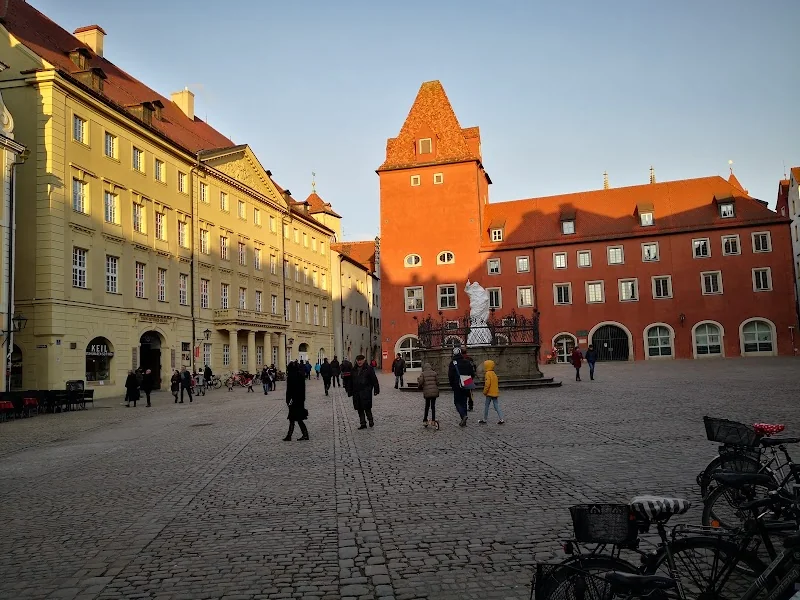
The city center of Regensburg is the district that many visitors first associate with the Danube city: a compact historical center, a lively pedestrian zone, and a UNESCO World Heritage site that combines Roman, Romanesque, and Gothic traces in a small area. The district covers 292 hectares and has been a core area of urban development since its founding as a legion camp Castra Regina in 179 AD. Today, the city center is the showcase of Regensburg, where history, everyday life, commerce, and tourism are closely intertwined. ([regensburg.de](https://www.regensburg.de/leben/regensburger-stadtteile/innenstadt))
With 17,565 inhabitants (as of December 31, 2024), the city center remains a place to live, work, and visit. This mix is precisely what makes it attractive: narrow alleys, significant buildings, short distances, and many opportunities to experience the old town on foot. Those who want to understand Regensburg should start here. ([regensburg.de](https://www.regensburg.de/leben/regensburger-stadtteile/innenstadt))
Old Town Regensburg and UNESCO World Heritage
The Regensburg city center is much more than a pretty town core. It forms the southern part of the UNESCO-protected ensemble of the Old Town of Regensburg, including Stadtamhof, which also encompasses the Danube islands of Wöhrde and the area of the former St. Katharina hospital in Stadtamhof. UNESCO describes the site as an outstanding example of a Central European medieval trading center, whose building substance visibly reflects political, religious, and economic significance over many centuries. For visitors, this means: almost every walk leads past original preserved testimonies from Roman times, Romanesque, and Gothic periods. ([whc.unesco.org](https://whc.unesco.org/en/list/1155))
Particularly defining is the historical density. UNESCO emphasizes that the urban structure of the 11th to 13th centuries still determines the character of the city today: tall buildings, narrow alleys, and strong fortifications. This structure is not only aesthetically impressive but also functionally remarkable, as it preserves the medieval trading place in a form that has become rare in Europe. For this reason, the Regensburg Old Town is considered an outstanding example of urban continuity. ([whc.unesco.org](https://whc.unesco.org/en/list/1155))
The city of Regensburg itself describes the city center as a treasure chest where historical gems become visible in a compact space. This is not a cliché but a well-observed reality: the Cathedral, Stone Bridge, Old Town Hall, Porta Praetoria, and East Gate are located in an area that can be comfortably explored in one day. Those who want to connect architecture, history, and urban feeling will find one of the densest old town landscapes in Germany here. ([regensburg.de](https://www.regensburg.de/leben/regensburger-stadtteile/innenstadt))
It is also important to note that the Old Town does not stand isolated but is part of a vibrant urban space that has developed along the river. The UNESCO description mentions the location on the Danube, the connection to the islands, and the role as a trading center, while the city of Regensburg describes the current district as a well-known, compact focal point. This creates a place where World Heritage does not act as a museum object but as a lived, utilized, and constantly experienceable urban structure. ([whc.unesco.org](https://whc.unesco.org/en/list/1155))
History from Castra Regina to the Present City Center
The history of the Regensburg city center begins in 179 AD when Emperor Marcus Aurelius had the legion camp Castra Regina established. The city itself points out that the current district boundaries trace back to this founding. Thus, the city center is not only a modern urban district but a place with one of the oldest continuously effective urban histories in Germany. The ancient settlement traces and the later development into a medieval power and trading center show why Regensburg plays such a special role in southern Germany. ([regensburg.de](https://www.regensburg.de/leben/regensburger-stadtteile/innenstadt))
The official city history ranks Regensburg as one of the oldest cities in Germany; settlement traces date back to around 5000 BC. In the early Middle Ages, Regensburg experienced a strong cultural upswing because dukes, bishops, emperors, and kings left their marks here. This long succession of power, trade, and religion is still visible in the city center today. Walking through the streets, one unconsciously follows several epochs at once. ([regensburg.de](https://www.regensburg.de/buergerservice/stadtgeschichte))
In the late Middle Ages, Regensburg became a central place of the Holy Roman Empire. UNESCO reminds us that the city had important trade connections to Italy, Bohemia, Russia, and Byzantium and was also a venue for imperial assemblies. From 1663 to 1806, the Permanent Imperial Assembly met here. This political significance is not an abstract historical topic but is directly observable in the cityscape, especially at the Old Town Hall, the patrician houses, and the fortified towers of the old town. ([whc.unesco.org](https://whc.unesco.org/en/list/1155))
Recent history has also contributed to the cohesive appearance of the city center today. UNESCO emphasizes that the old town has largely preserved its medieval layout since the 14th century and survived World War II in exceptionally good condition. Restorations since the 1970s have further secured this character. For visitors, this means: the city center is not a reconstructed backdrop but a grown urban district with visible historical depth. ([whc.unesco.org](https://whc.unesco.org/en/list/1155))
Attractions in the City Center: Porta Praetoria, Stone Bridge, Old Town Hall, and Cathedral
Among the most impressive attractions is the Porta Praetoria. The city of Regensburg describes it as one of the entrance gates of the former Roman camp and as one of the oldest still preserved buildings in the city. Standing here, one does not simply see a ruin but a direct link between the ancient origins of Regensburg and the current old town image. Especially for guests seeking short distances and great history, this place is an ideal starting point for a city tour. ([regensburg.de](https://www.regensburg.de/leben/regensburger-stadtteile/innenstadt))
Just a few minutes' walk away is the Stone Bridge, which the city itself calls a wonder of the Middle Ages. It measures about 315 meters and was built between 1135 and 1146 in just eleven years. These figures are remarkable because they make the technical and organizational achievements of the Middle Ages visible. Today, the bridge is not only a connection over the Danube but one of the strongest symbols of Regensburg and a central viewpoint of the old town, river, and Stadtamhof. ([regensburg.de](https://www.regensburg.de/leben/regensburger-stadtteile/innenstadt))
The Old Town Hall was and is a political center. According to the city of Regensburg, it was the seat of the city leaders and from 1663 until its dissolution, the meeting place of the Permanent Imperial Diet. In the immediate vicinity stands the Golden Tower on Wahlenstraße, at 52 meters the tallest residential tower north of the Alps. Together with the patrician houses, it gives the city center its vertical, almost fortified silhouette. Walking through these streets, one directly experiences how rich and powerful the free imperial city once was. ([regensburg.de](https://www.regensburg.de/leben/regensburger-stadtteile/innenstadt))
The Cathedral of St. Peter shapes the skyline with its 105-meter-high towers and is the tallest church in the city. At the eastern edge of the old town, the East Gate complements the image of the fortification architecture: it was built starting in 1284, was one of the six gate towers of the former city fortifications, and is the only completely preserved city gate of Regensburg. That it is still used daily by pedestrians and vehicles shows the remarkable mix of monument protection and urban everyday life that makes Regensburg so special. ([regensburg.de](https://www.regensburg.de/leben/regensburger-stadtteile/innenstadt))
For those who want to connect the attractions sensibly, it is best to start in the area of the Old Town Hall and then walk in a loop through the city center to the Stone Bridge, further to the Cathedral and Porta Praetoria, and then towards the East Gate. The paths are short, the perspectives change quickly, and that is precisely why Regensburg feels so intense. At no point does one feel the need to rush from one attraction to the next; rather, a calm, dense city tour emerges, where architecture and urban life intertwine. ([regensburg.de](https://www.regensburg.de/leben/regensburger-stadtteile/innenstadt))
Parking and Access in Regensburg's City Center
Those arriving by car should not consider the city center as a place for spontaneous parking searches but should plan accordingly. The city of Regensburg provides parking information with online queries of parking garage occupancy and refers to the parking space concept for the city center, which aims to permanently secure the offer for residents, customers, and visitors. At the same time, there is a clear traffic and parking regulation in the city center, as well as information about the environmental zone. For a historical old town, this is a sensible approach because it organizes traffic and improves the quality of stay. ([regensburg.de](https://www.regensburg.de/leben/verkehr-u-mobilitaet/parken))
Particularly practical are the park-and-ride offers. The P+R parking lot West at Kuglerplatz not only offers parking spaces but also a clear added value: the parking ticket serves as a day bus ticket for up to five people for the trip to the city center and back, specifically on lines 1 and 4. Tickets are available at the machines on site or via the RVV app. So, for those who want to visit the old town relaxed, they can leave the car outside the densest traffic area and conveniently take the last section by bus. ([regensburg.de](https://www.regensburg.de/leben/verkehr-u-mobilitaet/parken/p-r-parkplatz-west))
For travelers with larger vehicles, a solution is also available: the P+R parking lot West also offers 20 motorhome parking spaces; the maximum parking duration is three days. This is interesting for guests planning Regensburg as a stop on a longer journey. Especially in a city with historically narrow streets, it is helpful to know such details in advance so that arrival and departure can proceed without stress. ([regensburg.de](https://www.regensburg.de/leben/verkehr-u-mobilitaet/parken/p-r-parkplatz-west))
The tourism organization also points out park & ride, parking garages, and public parking spaces and consolidates information on arrival by bus, train, car, or airplane. This is as helpful for day visitors as it is for overnight guests, as the city center is compact but heavily frequented in everyday life. Especially during times of traffic calming, it is worth checking in advance which access or parking garage best suits one's destination. ([tourismus.regensburg.de](https://tourismus.regensburg.de/en/service-contact-tourist-information?utm_source=openai))
Those arriving without their own car benefit from the same logic. The central location of the old town makes the walking distance short, the tourist infrastructure is geared towards visitors, and the paths between the train station, old town, and Danube can be easily integrated into a day plan. Therefore, Regensburg's city center is a good example of how historical town centers can function today: not as a blocked monument but as a finely balanced space between mobility, protection, and everyday life. ([regensburg.de](https://www.regensburg.de/leben/verkehr-u-mobilitaet/parken))
Pedestrian Zone, Shopping, and Quality of Stay
The Regensburg city center is not only a monument space but also a lively everyday place. The city describes it as a central meeting space, and the ongoing traffic calming of the old town shows that the quality of stay and movement space for pedestrians are being further strengthened. In spring 2025, further central areas such as Obermünsterstraße, Obermünsterplatz, and Donaumarkt were reorganized and partially designated as pedestrian zones. For visitors, this means more space to stroll, linger, and observe city life. ([regensburg.de](https://www.regensburg.de/rathaus/aemteruebersicht/planungs-u-baureferat/tiefbauamt/abgeschlossene-massnahmen/2017-bis-2019-neugestaltung-fussgaengerzone?utm_source=openai))
The city is developing the central old town through an integrated urban development concept. This shows that the city center is not museum-like but is carefully adapted to modern needs. This is especially important in historical districts: a functioning city center needs short distances, safety, public spaces, and a good balance between tourism, commerce, and living. Regensburg is trying to make this balance visible. ([regensburg.de](https://www.regensburg.de/rathaus/aemteruebersicht/planungs-u-baureferat/amt-fuer-stadtentwicklung/stadterneuerung-und-wohnungswesen/sachgebiet-stadterneuerung/sanierungsgebiete/zentrale-fussgaengerzone/integriertes-staedtebauliches-entwicklungskonzept-zentrale-altstadt?utm_source=openai))
For guests, the practical side is also pleasant: the tourist information offers city maps, brochures, and programs for the stay. This allows for a quick structuring of a visit, whether one has only an afternoon or an entire weekend in the city center. The mix of shopping, gastronomy, culture, and World Heritage is exactly what distinguishes the Regensburg city center from many other city centers. ([tourismus.regensburg.de](https://tourismus.regensburg.de/en/service-contact-tourist-information?utm_source=openai))
Additionally, there is the special dynamism of the old town as a shopping location. In the urban planning documents of the city, the old town is explicitly named as the number one shopping location, while also pointing out vacancies and the need for new uses. This shows: Regensburg does not only think of the city center as a visitor destination but also as an economic and social space. This dual role makes it attractive because it brings life to the streets both during the day and in the evening. ([regensburg.de](https://www.regensburg.de/rathaus/aemteruebersicht/planungs-u-baureferat/amt-fuer-stadtentwicklung/stadterneuerung-und-wohnungswesen/konkretisierung-sanierungsziele?utm_source=openai))
Practical Tips for Your Visit to the City Center
It is best to plan the city center as a compact historical tour rather than a normal shopping district. The most important places are closely located, the paths are short, and much can be experienced on foot. Those who want to see the cathedral towers, the Stone Bridge, the Old Town Hall, and the East Gate in one day should plan enough time for breaks, as this is part of the Regensburg experience: stopping, looking, turning around, discovering new perspectives. ([regensburg.de](https://www.regensburg.de/leben/regensburger-stadtteile/innenstadt))
A good starting point is the tourist information in the area of the Old Town Hall. There, one not only gets orientation but also information about city tours and other topics related to the UNESCO heritage. Those visiting Regensburg for the first time will particularly benefit from this, as the historical density of the old town can quickly feel overwhelming without a plan. With a good route, a city tour becomes a very clear and relaxed visit. ([tourismus.regensburg.de](https://tourismus.regensburg.de/en/service-contact-tourist-information?utm_source=openai))
It is also important that the city center is not just a backdrop for visitors. Over 17,500 people live here, and that is why the district functions as a mix of living, working, shopping, and culture. Those who walk through the streets with respect immediately understand why the city places such strong emphasis on traffic calming, parking regulations, and public spaces. The city center thus remains a lively district while also being the most important historical showcase of Regensburg. ([regensburg.de](https://www.regensburg.de/leben/regensburger-stadtteile/innenstadt))
It is precisely the combination of residential city and visitor destination that makes it attractive. In the mornings, there are everyday paths, during the day, walks and sightseeing, and in the evenings, a quieter, atmospheric cityscape. This interaction has been particularly well achieved in Regensburg because the old town is not only preserved but is also being further developed. So, for those looking for a place that combines history, quality of life, and urban density, the city center of Regensburg offers a very convincing answer. ([whc.unesco.org](https://whc.unesco.org/en/list/1155))
Whether you are looking for Regensburg's city center, the old town, parking, or the main attractions: the center of the Danube city offers all of this in a compact space. The combination of UNESCO status, centuries-old architectural history, easily accessible park-and-ride offers, and a growing pedestrian zone makes the district attractive for day visitors as well as for longer stays. This is precisely where the strength of Regensburg's city center lies: it is historically unique and at the same time well usable in everyday life. ([whc.unesco.org](https://whc.unesco.org/en/list/1155))
Sources:
- City of Regensburg - Regensburg Districts - City Center
- UNESCO World Heritage Centre - Old town of Regensburg with Stadtamhof
- City of Regensburg - Citizen Service - City History
- City of Regensburg - Traffic & Mobility - Parking
- City of Regensburg - P+R Parking West
- Regensburg Tourism GmbH - East Gate
- Regensburg Tourism GmbH - Service, Contact & Tourist Info
Mehr anzeigenWeniger anzeigen
City Center Regensburg | Old Town & Parking
The city center of Regensburg is the district that many visitors first associate with the Danube city: a compact historical center, a lively pedestrian zone, and a UNESCO World Heritage site that combines Roman, Romanesque, and Gothic traces in a small area. The district covers 292 hectares and has been a core area of urban development since its founding as a legion camp Castra Regina in 179 AD. Today, the city center is the showcase of Regensburg, where history, everyday life, commerce, and tourism are closely intertwined. ([regensburg.de](https://www.regensburg.de/leben/regensburger-stadtteile/innenstadt))
With 17,565 inhabitants (as of December 31, 2024), the city center remains a place to live, work, and visit. This mix is precisely what makes it attractive: narrow alleys, significant buildings, short distances, and many opportunities to experience the old town on foot. Those who want to understand Regensburg should start here. ([regensburg.de](https://www.regensburg.de/leben/regensburger-stadtteile/innenstadt))
Old Town Regensburg and UNESCO World Heritage
The Regensburg city center is much more than a pretty town core. It forms the southern part of the UNESCO-protected ensemble of the Old Town of Regensburg, including Stadtamhof, which also encompasses the Danube islands of Wöhrde and the area of the former St. Katharina hospital in Stadtamhof. UNESCO describes the site as an outstanding example of a Central European medieval trading center, whose building substance visibly reflects political, religious, and economic significance over many centuries. For visitors, this means: almost every walk leads past original preserved testimonies from Roman times, Romanesque, and Gothic periods. ([whc.unesco.org](https://whc.unesco.org/en/list/1155))
Particularly defining is the historical density. UNESCO emphasizes that the urban structure of the 11th to 13th centuries still determines the character of the city today: tall buildings, narrow alleys, and strong fortifications. This structure is not only aesthetically impressive but also functionally remarkable, as it preserves the medieval trading place in a form that has become rare in Europe. For this reason, the Regensburg Old Town is considered an outstanding example of urban continuity. ([whc.unesco.org](https://whc.unesco.org/en/list/1155))
The city of Regensburg itself describes the city center as a treasure chest where historical gems become visible in a compact space. This is not a cliché but a well-observed reality: the Cathedral, Stone Bridge, Old Town Hall, Porta Praetoria, and East Gate are located in an area that can be comfortably explored in one day. Those who want to connect architecture, history, and urban feeling will find one of the densest old town landscapes in Germany here. ([regensburg.de](https://www.regensburg.de/leben/regensburger-stadtteile/innenstadt))
It is also important to note that the Old Town does not stand isolated but is part of a vibrant urban space that has developed along the river. The UNESCO description mentions the location on the Danube, the connection to the islands, and the role as a trading center, while the city of Regensburg describes the current district as a well-known, compact focal point. This creates a place where World Heritage does not act as a museum object but as a lived, utilized, and constantly experienceable urban structure. ([whc.unesco.org](https://whc.unesco.org/en/list/1155))
History from Castra Regina to the Present City Center
The history of the Regensburg city center begins in 179 AD when Emperor Marcus Aurelius had the legion camp Castra Regina established. The city itself points out that the current district boundaries trace back to this founding. Thus, the city center is not only a modern urban district but a place with one of the oldest continuously effective urban histories in Germany. The ancient settlement traces and the later development into a medieval power and trading center show why Regensburg plays such a special role in southern Germany. ([regensburg.de](https://www.regensburg.de/leben/regensburger-stadtteile/innenstadt))
The official city history ranks Regensburg as one of the oldest cities in Germany; settlement traces date back to around 5000 BC. In the early Middle Ages, Regensburg experienced a strong cultural upswing because dukes, bishops, emperors, and kings left their marks here. This long succession of power, trade, and religion is still visible in the city center today. Walking through the streets, one unconsciously follows several epochs at once. ([regensburg.de](https://www.regensburg.de/buergerservice/stadtgeschichte))
In the late Middle Ages, Regensburg became a central place of the Holy Roman Empire. UNESCO reminds us that the city had important trade connections to Italy, Bohemia, Russia, and Byzantium and was also a venue for imperial assemblies. From 1663 to 1806, the Permanent Imperial Assembly met here. This political significance is not an abstract historical topic but is directly observable in the cityscape, especially at the Old Town Hall, the patrician houses, and the fortified towers of the old town. ([whc.unesco.org](https://whc.unesco.org/en/list/1155))
Recent history has also contributed to the cohesive appearance of the city center today. UNESCO emphasizes that the old town has largely preserved its medieval layout since the 14th century and survived World War II in exceptionally good condition. Restorations since the 1970s have further secured this character. For visitors, this means: the city center is not a reconstructed backdrop but a grown urban district with visible historical depth. ([whc.unesco.org](https://whc.unesco.org/en/list/1155))
Attractions in the City Center: Porta Praetoria, Stone Bridge, Old Town Hall, and Cathedral
Among the most impressive attractions is the Porta Praetoria. The city of Regensburg describes it as one of the entrance gates of the former Roman camp and as one of the oldest still preserved buildings in the city. Standing here, one does not simply see a ruin but a direct link between the ancient origins of Regensburg and the current old town image. Especially for guests seeking short distances and great history, this place is an ideal starting point for a city tour. ([regensburg.de](https://www.regensburg.de/leben/regensburger-stadtteile/innenstadt))
Just a few minutes' walk away is the Stone Bridge, which the city itself calls a wonder of the Middle Ages. It measures about 315 meters and was built between 1135 and 1146 in just eleven years. These figures are remarkable because they make the technical and organizational achievements of the Middle Ages visible. Today, the bridge is not only a connection over the Danube but one of the strongest symbols of Regensburg and a central viewpoint of the old town, river, and Stadtamhof. ([regensburg.de](https://www.regensburg.de/leben/regensburger-stadtteile/innenstadt))
The Old Town Hall was and is a political center. According to the city of Regensburg, it was the seat of the city leaders and from 1663 until its dissolution, the meeting place of the Permanent Imperial Diet. In the immediate vicinity stands the Golden Tower on Wahlenstraße, at 52 meters the tallest residential tower north of the Alps. Together with the patrician houses, it gives the city center its vertical, almost fortified silhouette. Walking through these streets, one directly experiences how rich and powerful the free imperial city once was. ([regensburg.de](https://www.regensburg.de/leben/regensburger-stadtteile/innenstadt))
The Cathedral of St. Peter shapes the skyline with its 105-meter-high towers and is the tallest church in the city. At the eastern edge of the old town, the East Gate complements the image of the fortification architecture: it was built starting in 1284, was one of the six gate towers of the former city fortifications, and is the only completely preserved city gate of Regensburg. That it is still used daily by pedestrians and vehicles shows the remarkable mix of monument protection and urban everyday life that makes Regensburg so special. ([regensburg.de](https://www.regensburg.de/leben/regensburger-stadtteile/innenstadt))
For those who want to connect the attractions sensibly, it is best to start in the area of the Old Town Hall and then walk in a loop through the city center to the Stone Bridge, further to the Cathedral and Porta Praetoria, and then towards the East Gate. The paths are short, the perspectives change quickly, and that is precisely why Regensburg feels so intense. At no point does one feel the need to rush from one attraction to the next; rather, a calm, dense city tour emerges, where architecture and urban life intertwine. ([regensburg.de](https://www.regensburg.de/leben/regensburger-stadtteile/innenstadt))
Parking and Access in Regensburg's City Center
Those arriving by car should not consider the city center as a place for spontaneous parking searches but should plan accordingly. The city of Regensburg provides parking information with online queries of parking garage occupancy and refers to the parking space concept for the city center, which aims to permanently secure the offer for residents, customers, and visitors. At the same time, there is a clear traffic and parking regulation in the city center, as well as information about the environmental zone. For a historical old town, this is a sensible approach because it organizes traffic and improves the quality of stay. ([regensburg.de](https://www.regensburg.de/leben/verkehr-u-mobilitaet/parken))
Particularly practical are the park-and-ride offers. The P+R parking lot West at Kuglerplatz not only offers parking spaces but also a clear added value: the parking ticket serves as a day bus ticket for up to five people for the trip to the city center and back, specifically on lines 1 and 4. Tickets are available at the machines on site or via the RVV app. So, for those who want to visit the old town relaxed, they can leave the car outside the densest traffic area and conveniently take the last section by bus. ([regensburg.de](https://www.regensburg.de/leben/verkehr-u-mobilitaet/parken/p-r-parkplatz-west))
For travelers with larger vehicles, a solution is also available: the P+R parking lot West also offers 20 motorhome parking spaces; the maximum parking duration is three days. This is interesting for guests planning Regensburg as a stop on a longer journey. Especially in a city with historically narrow streets, it is helpful to know such details in advance so that arrival and departure can proceed without stress. ([regensburg.de](https://www.regensburg.de/leben/verkehr-u-mobilitaet/parken/p-r-parkplatz-west))
The tourism organization also points out park & ride, parking garages, and public parking spaces and consolidates information on arrival by bus, train, car, or airplane. This is as helpful for day visitors as it is for overnight guests, as the city center is compact but heavily frequented in everyday life. Especially during times of traffic calming, it is worth checking in advance which access or parking garage best suits one's destination. ([tourismus.regensburg.de](https://tourismus.regensburg.de/en/service-contact-tourist-information?utm_source=openai))
Those arriving without their own car benefit from the same logic. The central location of the old town makes the walking distance short, the tourist infrastructure is geared towards visitors, and the paths between the train station, old town, and Danube can be easily integrated into a day plan. Therefore, Regensburg's city center is a good example of how historical town centers can function today: not as a blocked monument but as a finely balanced space between mobility, protection, and everyday life. ([regensburg.de](https://www.regensburg.de/leben/verkehr-u-mobilitaet/parken))
Pedestrian Zone, Shopping, and Quality of Stay
The Regensburg city center is not only a monument space but also a lively everyday place. The city describes it as a central meeting space, and the ongoing traffic calming of the old town shows that the quality of stay and movement space for pedestrians are being further strengthened. In spring 2025, further central areas such as Obermünsterstraße, Obermünsterplatz, and Donaumarkt were reorganized and partially designated as pedestrian zones. For visitors, this means more space to stroll, linger, and observe city life. ([regensburg.de](https://www.regensburg.de/rathaus/aemteruebersicht/planungs-u-baureferat/tiefbauamt/abgeschlossene-massnahmen/2017-bis-2019-neugestaltung-fussgaengerzone?utm_source=openai))
The city is developing the central old town through an integrated urban development concept. This shows that the city center is not museum-like but is carefully adapted to modern needs. This is especially important in historical districts: a functioning city center needs short distances, safety, public spaces, and a good balance between tourism, commerce, and living. Regensburg is trying to make this balance visible. ([regensburg.de](https://www.regensburg.de/rathaus/aemteruebersicht/planungs-u-baureferat/amt-fuer-stadtentwicklung/stadterneuerung-und-wohnungswesen/sachgebiet-stadterneuerung/sanierungsgebiete/zentrale-fussgaengerzone/integriertes-staedtebauliches-entwicklungskonzept-zentrale-altstadt?utm_source=openai))
For guests, the practical side is also pleasant: the tourist information offers city maps, brochures, and programs for the stay. This allows for a quick structuring of a visit, whether one has only an afternoon or an entire weekend in the city center. The mix of shopping, gastronomy, culture, and World Heritage is exactly what distinguishes the Regensburg city center from many other city centers. ([tourismus.regensburg.de](https://tourismus.regensburg.de/en/service-contact-tourist-information?utm_source=openai))
Additionally, there is the special dynamism of the old town as a shopping location. In the urban planning documents of the city, the old town is explicitly named as the number one shopping location, while also pointing out vacancies and the need for new uses. This shows: Regensburg does not only think of the city center as a visitor destination but also as an economic and social space. This dual role makes it attractive because it brings life to the streets both during the day and in the evening. ([regensburg.de](https://www.regensburg.de/rathaus/aemteruebersicht/planungs-u-baureferat/amt-fuer-stadtentwicklung/stadterneuerung-und-wohnungswesen/konkretisierung-sanierungsziele?utm_source=openai))
Practical Tips for Your Visit to the City Center
It is best to plan the city center as a compact historical tour rather than a normal shopping district. The most important places are closely located, the paths are short, and much can be experienced on foot. Those who want to see the cathedral towers, the Stone Bridge, the Old Town Hall, and the East Gate in one day should plan enough time for breaks, as this is part of the Regensburg experience: stopping, looking, turning around, discovering new perspectives. ([regensburg.de](https://www.regensburg.de/leben/regensburger-stadtteile/innenstadt))
A good starting point is the tourist information in the area of the Old Town Hall. There, one not only gets orientation but also information about city tours and other topics related to the UNESCO heritage. Those visiting Regensburg for the first time will particularly benefit from this, as the historical density of the old town can quickly feel overwhelming without a plan. With a good route, a city tour becomes a very clear and relaxed visit. ([tourismus.regensburg.de](https://tourismus.regensburg.de/en/service-contact-tourist-information?utm_source=openai))
It is also important that the city center is not just a backdrop for visitors. Over 17,500 people live here, and that is why the district functions as a mix of living, working, shopping, and culture. Those who walk through the streets with respect immediately understand why the city places such strong emphasis on traffic calming, parking regulations, and public spaces. The city center thus remains a lively district while also being the most important historical showcase of Regensburg. ([regensburg.de](https://www.regensburg.de/leben/regensburger-stadtteile/innenstadt))
It is precisely the combination of residential city and visitor destination that makes it attractive. In the mornings, there are everyday paths, during the day, walks and sightseeing, and in the evenings, a quieter, atmospheric cityscape. This interaction has been particularly well achieved in Regensburg because the old town is not only preserved but is also being further developed. So, for those looking for a place that combines history, quality of life, and urban density, the city center of Regensburg offers a very convincing answer. ([whc.unesco.org](https://whc.unesco.org/en/list/1155))
Whether you are looking for Regensburg's city center, the old town, parking, or the main attractions: the center of the Danube city offers all of this in a compact space. The combination of UNESCO status, centuries-old architectural history, easily accessible park-and-ride offers, and a growing pedestrian zone makes the district attractive for day visitors as well as for longer stays. This is precisely where the strength of Regensburg's city center lies: it is historically unique and at the same time well usable in everyday life. ([whc.unesco.org](https://whc.unesco.org/en/list/1155))
Sources:
- City of Regensburg - Regensburg Districts - City Center
- UNESCO World Heritage Centre - Old town of Regensburg with Stadtamhof
- City of Regensburg - Citizen Service - City History
- City of Regensburg - Traffic & Mobility - Parking
- City of Regensburg - P+R Parking West
- Regensburg Tourism GmbH - East Gate
- Regensburg Tourism GmbH - Service, Contact & Tourist Info
City Center Regensburg | Old Town & Parking
The city center of Regensburg is the district that many visitors first associate with the Danube city: a compact historical center, a lively pedestrian zone, and a UNESCO World Heritage site that combines Roman, Romanesque, and Gothic traces in a small area. The district covers 292 hectares and has been a core area of urban development since its founding as a legion camp Castra Regina in 179 AD. Today, the city center is the showcase of Regensburg, where history, everyday life, commerce, and tourism are closely intertwined. ([regensburg.de](https://www.regensburg.de/leben/regensburger-stadtteile/innenstadt))
With 17,565 inhabitants (as of December 31, 2024), the city center remains a place to live, work, and visit. This mix is precisely what makes it attractive: narrow alleys, significant buildings, short distances, and many opportunities to experience the old town on foot. Those who want to understand Regensburg should start here. ([regensburg.de](https://www.regensburg.de/leben/regensburger-stadtteile/innenstadt))
Old Town Regensburg and UNESCO World Heritage
The Regensburg city center is much more than a pretty town core. It forms the southern part of the UNESCO-protected ensemble of the Old Town of Regensburg, including Stadtamhof, which also encompasses the Danube islands of Wöhrde and the area of the former St. Katharina hospital in Stadtamhof. UNESCO describes the site as an outstanding example of a Central European medieval trading center, whose building substance visibly reflects political, religious, and economic significance over many centuries. For visitors, this means: almost every walk leads past original preserved testimonies from Roman times, Romanesque, and Gothic periods. ([whc.unesco.org](https://whc.unesco.org/en/list/1155))
Particularly defining is the historical density. UNESCO emphasizes that the urban structure of the 11th to 13th centuries still determines the character of the city today: tall buildings, narrow alleys, and strong fortifications. This structure is not only aesthetically impressive but also functionally remarkable, as it preserves the medieval trading place in a form that has become rare in Europe. For this reason, the Regensburg Old Town is considered an outstanding example of urban continuity. ([whc.unesco.org](https://whc.unesco.org/en/list/1155))
The city of Regensburg itself describes the city center as a treasure chest where historical gems become visible in a compact space. This is not a cliché but a well-observed reality: the Cathedral, Stone Bridge, Old Town Hall, Porta Praetoria, and East Gate are located in an area that can be comfortably explored in one day. Those who want to connect architecture, history, and urban feeling will find one of the densest old town landscapes in Germany here. ([regensburg.de](https://www.regensburg.de/leben/regensburger-stadtteile/innenstadt))
It is also important to note that the Old Town does not stand isolated but is part of a vibrant urban space that has developed along the river. The UNESCO description mentions the location on the Danube, the connection to the islands, and the role as a trading center, while the city of Regensburg describes the current district as a well-known, compact focal point. This creates a place where World Heritage does not act as a museum object but as a lived, utilized, and constantly experienceable urban structure. ([whc.unesco.org](https://whc.unesco.org/en/list/1155))
History from Castra Regina to the Present City Center
The history of the Regensburg city center begins in 179 AD when Emperor Marcus Aurelius had the legion camp Castra Regina established. The city itself points out that the current district boundaries trace back to this founding. Thus, the city center is not only a modern urban district but a place with one of the oldest continuously effective urban histories in Germany. The ancient settlement traces and the later development into a medieval power and trading center show why Regensburg plays such a special role in southern Germany. ([regensburg.de](https://www.regensburg.de/leben/regensburger-stadtteile/innenstadt))
The official city history ranks Regensburg as one of the oldest cities in Germany; settlement traces date back to around 5000 BC. In the early Middle Ages, Regensburg experienced a strong cultural upswing because dukes, bishops, emperors, and kings left their marks here. This long succession of power, trade, and religion is still visible in the city center today. Walking through the streets, one unconsciously follows several epochs at once. ([regensburg.de](https://www.regensburg.de/buergerservice/stadtgeschichte))
In the late Middle Ages, Regensburg became a central place of the Holy Roman Empire. UNESCO reminds us that the city had important trade connections to Italy, Bohemia, Russia, and Byzantium and was also a venue for imperial assemblies. From 1663 to 1806, the Permanent Imperial Assembly met here. This political significance is not an abstract historical topic but is directly observable in the cityscape, especially at the Old Town Hall, the patrician houses, and the fortified towers of the old town. ([whc.unesco.org](https://whc.unesco.org/en/list/1155))
Recent history has also contributed to the cohesive appearance of the city center today. UNESCO emphasizes that the old town has largely preserved its medieval layout since the 14th century and survived World War II in exceptionally good condition. Restorations since the 1970s have further secured this character. For visitors, this means: the city center is not a reconstructed backdrop but a grown urban district with visible historical depth. ([whc.unesco.org](https://whc.unesco.org/en/list/1155))
Attractions in the City Center: Porta Praetoria, Stone Bridge, Old Town Hall, and Cathedral
Among the most impressive attractions is the Porta Praetoria. The city of Regensburg describes it as one of the entrance gates of the former Roman camp and as one of the oldest still preserved buildings in the city. Standing here, one does not simply see a ruin but a direct link between the ancient origins of Regensburg and the current old town image. Especially for guests seeking short distances and great history, this place is an ideal starting point for a city tour. ([regensburg.de](https://www.regensburg.de/leben/regensburger-stadtteile/innenstadt))
Just a few minutes' walk away is the Stone Bridge, which the city itself calls a wonder of the Middle Ages. It measures about 315 meters and was built between 1135 and 1146 in just eleven years. These figures are remarkable because they make the technical and organizational achievements of the Middle Ages visible. Today, the bridge is not only a connection over the Danube but one of the strongest symbols of Regensburg and a central viewpoint of the old town, river, and Stadtamhof. ([regensburg.de](https://www.regensburg.de/leben/regensburger-stadtteile/innenstadt))
The Old Town Hall was and is a political center. According to the city of Regensburg, it was the seat of the city leaders and from 1663 until its dissolution, the meeting place of the Permanent Imperial Diet. In the immediate vicinity stands the Golden Tower on Wahlenstraße, at 52 meters the tallest residential tower north of the Alps. Together with the patrician houses, it gives the city center its vertical, almost fortified silhouette. Walking through these streets, one directly experiences how rich and powerful the free imperial city once was. ([regensburg.de](https://www.regensburg.de/leben/regensburger-stadtteile/innenstadt))
The Cathedral of St. Peter shapes the skyline with its 105-meter-high towers and is the tallest church in the city. At the eastern edge of the old town, the East Gate complements the image of the fortification architecture: it was built starting in 1284, was one of the six gate towers of the former city fortifications, and is the only completely preserved city gate of Regensburg. That it is still used daily by pedestrians and vehicles shows the remarkable mix of monument protection and urban everyday life that makes Regensburg so special. ([regensburg.de](https://www.regensburg.de/leben/regensburger-stadtteile/innenstadt))
For those who want to connect the attractions sensibly, it is best to start in the area of the Old Town Hall and then walk in a loop through the city center to the Stone Bridge, further to the Cathedral and Porta Praetoria, and then towards the East Gate. The paths are short, the perspectives change quickly, and that is precisely why Regensburg feels so intense. At no point does one feel the need to rush from one attraction to the next; rather, a calm, dense city tour emerges, where architecture and urban life intertwine. ([regensburg.de](https://www.regensburg.de/leben/regensburger-stadtteile/innenstadt))
Parking and Access in Regensburg's City Center
Those arriving by car should not consider the city center as a place for spontaneous parking searches but should plan accordingly. The city of Regensburg provides parking information with online queries of parking garage occupancy and refers to the parking space concept for the city center, which aims to permanently secure the offer for residents, customers, and visitors. At the same time, there is a clear traffic and parking regulation in the city center, as well as information about the environmental zone. For a historical old town, this is a sensible approach because it organizes traffic and improves the quality of stay. ([regensburg.de](https://www.regensburg.de/leben/verkehr-u-mobilitaet/parken))
Particularly practical are the park-and-ride offers. The P+R parking lot West at Kuglerplatz not only offers parking spaces but also a clear added value: the parking ticket serves as a day bus ticket for up to five people for the trip to the city center and back, specifically on lines 1 and 4. Tickets are available at the machines on site or via the RVV app. So, for those who want to visit the old town relaxed, they can leave the car outside the densest traffic area and conveniently take the last section by bus. ([regensburg.de](https://www.regensburg.de/leben/verkehr-u-mobilitaet/parken/p-r-parkplatz-west))
For travelers with larger vehicles, a solution is also available: the P+R parking lot West also offers 20 motorhome parking spaces; the maximum parking duration is three days. This is interesting for guests planning Regensburg as a stop on a longer journey. Especially in a city with historically narrow streets, it is helpful to know such details in advance so that arrival and departure can proceed without stress. ([regensburg.de](https://www.regensburg.de/leben/verkehr-u-mobilitaet/parken/p-r-parkplatz-west))
The tourism organization also points out park & ride, parking garages, and public parking spaces and consolidates information on arrival by bus, train, car, or airplane. This is as helpful for day visitors as it is for overnight guests, as the city center is compact but heavily frequented in everyday life. Especially during times of traffic calming, it is worth checking in advance which access or parking garage best suits one's destination. ([tourismus.regensburg.de](https://tourismus.regensburg.de/en/service-contact-tourist-information?utm_source=openai))
Those arriving without their own car benefit from the same logic. The central location of the old town makes the walking distance short, the tourist infrastructure is geared towards visitors, and the paths between the train station, old town, and Danube can be easily integrated into a day plan. Therefore, Regensburg's city center is a good example of how historical town centers can function today: not as a blocked monument but as a finely balanced space between mobility, protection, and everyday life. ([regensburg.de](https://www.regensburg.de/leben/verkehr-u-mobilitaet/parken))
Pedestrian Zone, Shopping, and Quality of Stay
The Regensburg city center is not only a monument space but also a lively everyday place. The city describes it as a central meeting space, and the ongoing traffic calming of the old town shows that the quality of stay and movement space for pedestrians are being further strengthened. In spring 2025, further central areas such as Obermünsterstraße, Obermünsterplatz, and Donaumarkt were reorganized and partially designated as pedestrian zones. For visitors, this means more space to stroll, linger, and observe city life. ([regensburg.de](https://www.regensburg.de/rathaus/aemteruebersicht/planungs-u-baureferat/tiefbauamt/abgeschlossene-massnahmen/2017-bis-2019-neugestaltung-fussgaengerzone?utm_source=openai))
The city is developing the central old town through an integrated urban development concept. This shows that the city center is not museum-like but is carefully adapted to modern needs. This is especially important in historical districts: a functioning city center needs short distances, safety, public spaces, and a good balance between tourism, commerce, and living. Regensburg is trying to make this balance visible. ([regensburg.de](https://www.regensburg.de/rathaus/aemteruebersicht/planungs-u-baureferat/amt-fuer-stadtentwicklung/stadterneuerung-und-wohnungswesen/sachgebiet-stadterneuerung/sanierungsgebiete/zentrale-fussgaengerzone/integriertes-staedtebauliches-entwicklungskonzept-zentrale-altstadt?utm_source=openai))
For guests, the practical side is also pleasant: the tourist information offers city maps, brochures, and programs for the stay. This allows for a quick structuring of a visit, whether one has only an afternoon or an entire weekend in the city center. The mix of shopping, gastronomy, culture, and World Heritage is exactly what distinguishes the Regensburg city center from many other city centers. ([tourismus.regensburg.de](https://tourismus.regensburg.de/en/service-contact-tourist-information?utm_source=openai))
Additionally, there is the special dynamism of the old town as a shopping location. In the urban planning documents of the city, the old town is explicitly named as the number one shopping location, while also pointing out vacancies and the need for new uses. This shows: Regensburg does not only think of the city center as a visitor destination but also as an economic and social space. This dual role makes it attractive because it brings life to the streets both during the day and in the evening. ([regensburg.de](https://www.regensburg.de/rathaus/aemteruebersicht/planungs-u-baureferat/amt-fuer-stadtentwicklung/stadterneuerung-und-wohnungswesen/konkretisierung-sanierungsziele?utm_source=openai))
Practical Tips for Your Visit to the City Center
It is best to plan the city center as a compact historical tour rather than a normal shopping district. The most important places are closely located, the paths are short, and much can be experienced on foot. Those who want to see the cathedral towers, the Stone Bridge, the Old Town Hall, and the East Gate in one day should plan enough time for breaks, as this is part of the Regensburg experience: stopping, looking, turning around, discovering new perspectives. ([regensburg.de](https://www.regensburg.de/leben/regensburger-stadtteile/innenstadt))
A good starting point is the tourist information in the area of the Old Town Hall. There, one not only gets orientation but also information about city tours and other topics related to the UNESCO heritage. Those visiting Regensburg for the first time will particularly benefit from this, as the historical density of the old town can quickly feel overwhelming without a plan. With a good route, a city tour becomes a very clear and relaxed visit. ([tourismus.regensburg.de](https://tourismus.regensburg.de/en/service-contact-tourist-information?utm_source=openai))
It is also important that the city center is not just a backdrop for visitors. Over 17,500 people live here, and that is why the district functions as a mix of living, working, shopping, and culture. Those who walk through the streets with respect immediately understand why the city places such strong emphasis on traffic calming, parking regulations, and public spaces. The city center thus remains a lively district while also being the most important historical showcase of Regensburg. ([regensburg.de](https://www.regensburg.de/leben/regensburger-stadtteile/innenstadt))
It is precisely the combination of residential city and visitor destination that makes it attractive. In the mornings, there are everyday paths, during the day, walks and sightseeing, and in the evenings, a quieter, atmospheric cityscape. This interaction has been particularly well achieved in Regensburg because the old town is not only preserved but is also being further developed. So, for those looking for a place that combines history, quality of life, and urban density, the city center of Regensburg offers a very convincing answer. ([whc.unesco.org](https://whc.unesco.org/en/list/1155))
Whether you are looking for Regensburg's city center, the old town, parking, or the main attractions: the center of the Danube city offers all of this in a compact space. The combination of UNESCO status, centuries-old architectural history, easily accessible park-and-ride offers, and a growing pedestrian zone makes the district attractive for day visitors as well as for longer stays. This is precisely where the strength of Regensburg's city center lies: it is historically unique and at the same time well usable in everyday life. ([whc.unesco.org](https://whc.unesco.org/en/list/1155))
Sources:
- City of Regensburg - Regensburg Districts - City Center
- UNESCO World Heritage Centre - Old town of Regensburg with Stadtamhof
- City of Regensburg - Citizen Service - City History
- City of Regensburg - Traffic & Mobility - Parking
- City of Regensburg - P+R Parking West
- Regensburg Tourism GmbH - East Gate
- Regensburg Tourism GmbH - Service, Contact & Tourist Info
Frequently Asked Questions
Reviews
No reviews found