
Regensburg
Kumpfmühler Str. 52, 93051 Regensburg-Kumpfmühl-Ziegetsdorf-Neuprüll, Deutschland
Karl-Bauer-Park | History & Salettl
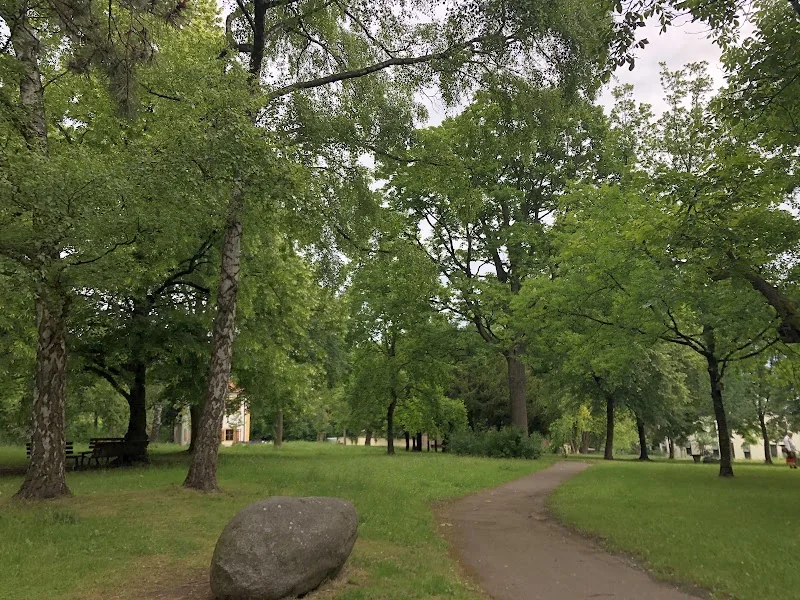
The Karl-Bauer-Park in Regensburg is a green space that appears small and quiet at first glance, but upon closer inspection covers surprisingly many search intents: history, Salettl, directions, parking, playground, and the question of what makes this place special in the Kumpfmühl-Ziegetsdorf-Neuprüll district. This is precisely what makes this park appealing. It is not a huge event venue, but a compact, everyday-friendly open space with historical depth, noticeable neighborhood proximity, and a clear focal point: the renovated Salettl. The city of Regensburg describes the park as a green diversity on historically significant ground, and this formulation fits very well because here leisure use, monument preservation, and city history directly intertwine. Those searching for the Karl-Bauer-Park often seek not just a park, but a concrete mix of relaxation, orientation, and background knowledge. Therefore, it is worthwhile to consider the location, history, and facilities separately. The park is publicly accessible, located in Kumpfmühl, and equipped with a small but versatile offering. At the same time, it tells of very old uses of the land, of medieval garden space, of Roman prehistory, and of a later cultural enhancement through the Salettl. Exactly these layers make the place interesting for walkers, families, residents, and anyone looking for a lesser-known but authentic green space in Regensburg. ([regensburg.de](https://www.regensburg.de/leben/parks-in-regensburg/karl-bauer-park))
Directions, Location, and Parking at Karl-Bauer-Park
Those looking for directions to Karl-Bauer-Park or parking need primarily a clear spatial orientation. The official park page names the park with the address Karl-Bauer-Park, 93051 Regensburg, and describes its location based on notable neighbors: to the east, the Kumpfmühl nursing home borders it, to the south the Simmernstraße, and to the west the St. Wolfgang Church. For the Salettl, the address Bischof-Wittmann-Straße 27 is additionally mentioned. Thus, the park is situated in an urban environment that does not resemble a classic large facility but rather like an embedded green space between residential and community structures. Practically, this means: The best initial orientation is not a large parking search but the exact address search and consideration of the surrounding streets. The official park page does not mention a dedicated parking garage or a separately designated parking space, which is why the search query for parking here relates more to travel planning than to a specific parking facility. Those arriving by bicycle or on foot can easily find the park through the known city layout. The city's tourism page also categorizes the Karl-Bauer-Park among the parks outside the old town, making it interesting for people who consciously seek a quieter green space away from the classic city center routes. Especially because the park is not among the most well-known large facilities, precise navigation is helpful: Kumpfmühl, Simmernstraße, Bischof-Wittmann-Straße, and St. Wolfgang Church are the most important landmarks. Thus, a general search query quickly becomes a clear destination with realistic expectations for the journey. ([regensburg.de](https://www.regensburg.de/leben/parks-in-regensburg/karl-bauer-park))
History of Karl-Bauer-Park: from 1496 to Opening for All
The history of Karl-Bauer-Park is significantly older than its function as a public city park. According to the city of Regensburg, the area was already documented in 1496 as an enclosed garden area of the St. Emmeram Monastery. This is an important indication as it shows that the place did not emerge only with modern green planning but is deeply rooted in the city's history. Even further back is the archaeological layer: beneath the current park was a Roman fort. Thus, the site stands on a foundation that overlays several epochs, from Roman times through the Middle Ages to the present. The medieval use as garden space fits well with this, as the monks grew vegetables there and kept poultry. Later, the area was not used as a freely accessible city park for a long time, but as a retreat and recreation place for the residents of the nursing home. It was not until 2007 that it was made accessible as a public park for all citizens. This transition is important for the perception of Karl-Bauer-Park: It is not just any piece of green, but a place where city history, social use, and opening to public life come together. Therefore, those visiting the park do not just see trees, paths, and seating areas, but move in a location where Regensburg's history can be read in the ground itself. For search queries related to history, background, and special features, this is a strong SEO factor, as the park not only offers something but also tells a story. The mix of Roman prehistory, monastic garden tradition, and public opening from 2007 makes it a historically rich yet very accessible green space. ([regensburg.de](https://www.regensburg.de/leben/parks-in-regensburg/karl-bauer-park))
The Salettl in Karl-Bauer-Park: Baroque Garden House, Cultural Venue, and Eye-Catcher
At the center of Karl-Bauer-Park stands the Salettl, and this building gives the place its special character. According to the city of Regensburg, it is a baroque, two-story garden house from the mid-18th century. Its history is closely linked to the historical uses of the area: Initially, it served the canonesses of the Obermünster convent, later also guests of the Secret Council Alexander von Westerholt as a retreat during the summer. At the beginning of the 20th century, there were considerations to use the building for infectious patients; as a result, it temporarily received the name Pesthäusl, although this plan was never implemented. In the following decades, the structure continued to deteriorate until civic engagement and the efforts of the gardening office, building authority, and monument preservation led to its restoration. The result today is a restored, enhanced building that significantly shapes the park. According to official information, the first floor can be rented for lectures, readings, exhibitions, or concerts. The city states a fee of 50 euros for a half-day and 100 euros for a full-day event; the maximum rental period is three days. Even during the restoration, the Salettl played an important role: it was renewed in 2016 as part of a project while simultaneously a neighborhood accommodation for the gardening office was created. The combination of historical substance, monument-conforming rescue, and current use makes the Salettl much more than just a beautiful backdrop. It is an example of how a previously dilapidated object can become a usable place for neighborhood culture. This is precisely why the Salettl is one of the most important search terms related to Karl-Bauer-Park. ([regensburg.de](https://www.regensburg.de/rathaus/aemteruebersicht/planungs-u-baureferat/amt-fuer-hochbau/fertiggestellte-projekte/salettl-und-quartiersunterkunft?utm_source=openai))
Facilities in Karl-Bauer-Park: Playground, Basketball, Soccer Field, and Table Tennis
Even though Karl-Bauer-Park is relatively compact in size, it offers surprisingly practical facilities for everyday life. The city of Regensburg states a size of 1.4 hectares and lists specific facilities including a playground, basketball, a soccer field, table tennis, and a public toilet. This mix is interesting for families, young people, and residents because the park functions not only as a visual green space but also as a usable meeting point in the neighborhood. One can not only take a short walk or sit on a bench here but also take small athletic or playful breaks. The two benches in front of the Salettl, which according to the city are about 150 years old, add historical value to this profile: they stand for tranquility but also for easy, low-threshold access to the green space. The combination of play and movement offerings on one side and quiet seating areas on the other makes the park versatile. For search terms like Karl-Bauer-Park playground, Karl-Bauer-Park basketball, or Karl-Bauer-Park table tennis, this equipment is central because it meets very specific expectations. The park is not just a pure monument area and not just a lawn, but a functional neighborhood park with recreational value. This is particularly important when comparing it to larger parks that may appear more spectacular but are less accessible in everyday life. Karl-Bauer-Park scores precisely because it can be used for short stays without much effort: a round of ball, a few minutes at the table tennis table, a quick stop with children at the playground, or a break in the sun in front of the Salettl. This practical versatility is a central reason why the park remains relevant for the neighborhood in Regensburg. ([regensburg.de](https://www.regensburg.de/leben/parks-in-regensburg/karl-bauer-park))
Peace, Relaxation, and Significance for Kumpfmühl
Karl-Bauer-Park is remarkable not only for its facilities but also for its atmosphere and significance for the Kumpfmühl district. The official park description emphasizes that the place has been a historically significant area for many centuries and can now be experienced as green diversity. An older city description additionally highlights that the park can easily be overlooked because it is framed by fences and green hedges, and this is precisely what makes its charm: it is not a loud magnet for mass tourism but rather a somewhat hidden oasis within the urban fabric. For people from the surrounding area, this means a special form of everyday relaxation. One does not come here to plan a whole day trip but to find peace in between, take a short walk, or use a manageable, safe green space with children. At the same time, the name carries a local layer of memory. The park is named after the Regensburg local researcher and educator Karl Bauer, who lived in Kumpfmühl and worked on his work about Regensburg. The city points out that his standard work has been a central source for the city's history since 1962 and that he has been awarded for his work. This naming is therefore not a coincidence but a conscious signal: the park honors a person who documented the history of Regensburg and thus shaped the collective memory of the city. Thus, nature, neighborhood reference, and historical memory connect in a tight space. For SEO and content purposes, this is particularly valuable because Karl-Bauer-Park can be understood not just as a park but as a local place of identification. Those searching for Karl-Bauer-Park Regensburg, history, Salettl, or directions will find here not just an address but a place with identity. ([regensburg.de](https://www.regensburg.de/regensburg-507/sehenswert/der-karl-bauer-park?utm_source=openai))
Sources:
- City of Regensburg – Karl-Bauer-Park
- City of Regensburg – The Salettl in Karl-Bauer-Park
- City of Regensburg – Renovation of the Salettl in Karl-Bauer-Park and Neighborhood Accommodation
- Regensburg Tourism – Parks and Green Spaces in Regensburg
- City of Regensburg – The Karl-Bauer-Park: Green Diversity on Historically Significant Ground
Mehr anzeigenWeniger anzeigen
Karl-Bauer-Park | History & Salettl
The Karl-Bauer-Park in Regensburg is a green space that appears small and quiet at first glance, but upon closer inspection covers surprisingly many search intents: history, Salettl, directions, parking, playground, and the question of what makes this place special in the Kumpfmühl-Ziegetsdorf-Neuprüll district. This is precisely what makes this park appealing. It is not a huge event venue, but a compact, everyday-friendly open space with historical depth, noticeable neighborhood proximity, and a clear focal point: the renovated Salettl. The city of Regensburg describes the park as a green diversity on historically significant ground, and this formulation fits very well because here leisure use, monument preservation, and city history directly intertwine. Those searching for the Karl-Bauer-Park often seek not just a park, but a concrete mix of relaxation, orientation, and background knowledge. Therefore, it is worthwhile to consider the location, history, and facilities separately. The park is publicly accessible, located in Kumpfmühl, and equipped with a small but versatile offering. At the same time, it tells of very old uses of the land, of medieval garden space, of Roman prehistory, and of a later cultural enhancement through the Salettl. Exactly these layers make the place interesting for walkers, families, residents, and anyone looking for a lesser-known but authentic green space in Regensburg. ([regensburg.de](https://www.regensburg.de/leben/parks-in-regensburg/karl-bauer-park))
Directions, Location, and Parking at Karl-Bauer-Park
Those looking for directions to Karl-Bauer-Park or parking need primarily a clear spatial orientation. The official park page names the park with the address Karl-Bauer-Park, 93051 Regensburg, and describes its location based on notable neighbors: to the east, the Kumpfmühl nursing home borders it, to the south the Simmernstraße, and to the west the St. Wolfgang Church. For the Salettl, the address Bischof-Wittmann-Straße 27 is additionally mentioned. Thus, the park is situated in an urban environment that does not resemble a classic large facility but rather like an embedded green space between residential and community structures. Practically, this means: The best initial orientation is not a large parking search but the exact address search and consideration of the surrounding streets. The official park page does not mention a dedicated parking garage or a separately designated parking space, which is why the search query for parking here relates more to travel planning than to a specific parking facility. Those arriving by bicycle or on foot can easily find the park through the known city layout. The city's tourism page also categorizes the Karl-Bauer-Park among the parks outside the old town, making it interesting for people who consciously seek a quieter green space away from the classic city center routes. Especially because the park is not among the most well-known large facilities, precise navigation is helpful: Kumpfmühl, Simmernstraße, Bischof-Wittmann-Straße, and St. Wolfgang Church are the most important landmarks. Thus, a general search query quickly becomes a clear destination with realistic expectations for the journey. ([regensburg.de](https://www.regensburg.de/leben/parks-in-regensburg/karl-bauer-park))
History of Karl-Bauer-Park: from 1496 to Opening for All
The history of Karl-Bauer-Park is significantly older than its function as a public city park. According to the city of Regensburg, the area was already documented in 1496 as an enclosed garden area of the St. Emmeram Monastery. This is an important indication as it shows that the place did not emerge only with modern green planning but is deeply rooted in the city's history. Even further back is the archaeological layer: beneath the current park was a Roman fort. Thus, the site stands on a foundation that overlays several epochs, from Roman times through the Middle Ages to the present. The medieval use as garden space fits well with this, as the monks grew vegetables there and kept poultry. Later, the area was not used as a freely accessible city park for a long time, but as a retreat and recreation place for the residents of the nursing home. It was not until 2007 that it was made accessible as a public park for all citizens. This transition is important for the perception of Karl-Bauer-Park: It is not just any piece of green, but a place where city history, social use, and opening to public life come together. Therefore, those visiting the park do not just see trees, paths, and seating areas, but move in a location where Regensburg's history can be read in the ground itself. For search queries related to history, background, and special features, this is a strong SEO factor, as the park not only offers something but also tells a story. The mix of Roman prehistory, monastic garden tradition, and public opening from 2007 makes it a historically rich yet very accessible green space. ([regensburg.de](https://www.regensburg.de/leben/parks-in-regensburg/karl-bauer-park))
The Salettl in Karl-Bauer-Park: Baroque Garden House, Cultural Venue, and Eye-Catcher
At the center of Karl-Bauer-Park stands the Salettl, and this building gives the place its special character. According to the city of Regensburg, it is a baroque, two-story garden house from the mid-18th century. Its history is closely linked to the historical uses of the area: Initially, it served the canonesses of the Obermünster convent, later also guests of the Secret Council Alexander von Westerholt as a retreat during the summer. At the beginning of the 20th century, there were considerations to use the building for infectious patients; as a result, it temporarily received the name Pesthäusl, although this plan was never implemented. In the following decades, the structure continued to deteriorate until civic engagement and the efforts of the gardening office, building authority, and monument preservation led to its restoration. The result today is a restored, enhanced building that significantly shapes the park. According to official information, the first floor can be rented for lectures, readings, exhibitions, or concerts. The city states a fee of 50 euros for a half-day and 100 euros for a full-day event; the maximum rental period is three days. Even during the restoration, the Salettl played an important role: it was renewed in 2016 as part of a project while simultaneously a neighborhood accommodation for the gardening office was created. The combination of historical substance, monument-conforming rescue, and current use makes the Salettl much more than just a beautiful backdrop. It is an example of how a previously dilapidated object can become a usable place for neighborhood culture. This is precisely why the Salettl is one of the most important search terms related to Karl-Bauer-Park. ([regensburg.de](https://www.regensburg.de/rathaus/aemteruebersicht/planungs-u-baureferat/amt-fuer-hochbau/fertiggestellte-projekte/salettl-und-quartiersunterkunft?utm_source=openai))
Facilities in Karl-Bauer-Park: Playground, Basketball, Soccer Field, and Table Tennis
Even though Karl-Bauer-Park is relatively compact in size, it offers surprisingly practical facilities for everyday life. The city of Regensburg states a size of 1.4 hectares and lists specific facilities including a playground, basketball, a soccer field, table tennis, and a public toilet. This mix is interesting for families, young people, and residents because the park functions not only as a visual green space but also as a usable meeting point in the neighborhood. One can not only take a short walk or sit on a bench here but also take small athletic or playful breaks. The two benches in front of the Salettl, which according to the city are about 150 years old, add historical value to this profile: they stand for tranquility but also for easy, low-threshold access to the green space. The combination of play and movement offerings on one side and quiet seating areas on the other makes the park versatile. For search terms like Karl-Bauer-Park playground, Karl-Bauer-Park basketball, or Karl-Bauer-Park table tennis, this equipment is central because it meets very specific expectations. The park is not just a pure monument area and not just a lawn, but a functional neighborhood park with recreational value. This is particularly important when comparing it to larger parks that may appear more spectacular but are less accessible in everyday life. Karl-Bauer-Park scores precisely because it can be used for short stays without much effort: a round of ball, a few minutes at the table tennis table, a quick stop with children at the playground, or a break in the sun in front of the Salettl. This practical versatility is a central reason why the park remains relevant for the neighborhood in Regensburg. ([regensburg.de](https://www.regensburg.de/leben/parks-in-regensburg/karl-bauer-park))
Peace, Relaxation, and Significance for Kumpfmühl
Karl-Bauer-Park is remarkable not only for its facilities but also for its atmosphere and significance for the Kumpfmühl district. The official park description emphasizes that the place has been a historically significant area for many centuries and can now be experienced as green diversity. An older city description additionally highlights that the park can easily be overlooked because it is framed by fences and green hedges, and this is precisely what makes its charm: it is not a loud magnet for mass tourism but rather a somewhat hidden oasis within the urban fabric. For people from the surrounding area, this means a special form of everyday relaxation. One does not come here to plan a whole day trip but to find peace in between, take a short walk, or use a manageable, safe green space with children. At the same time, the name carries a local layer of memory. The park is named after the Regensburg local researcher and educator Karl Bauer, who lived in Kumpfmühl and worked on his work about Regensburg. The city points out that his standard work has been a central source for the city's history since 1962 and that he has been awarded for his work. This naming is therefore not a coincidence but a conscious signal: the park honors a person who documented the history of Regensburg and thus shaped the collective memory of the city. Thus, nature, neighborhood reference, and historical memory connect in a tight space. For SEO and content purposes, this is particularly valuable because Karl-Bauer-Park can be understood not just as a park but as a local place of identification. Those searching for Karl-Bauer-Park Regensburg, history, Salettl, or directions will find here not just an address but a place with identity. ([regensburg.de](https://www.regensburg.de/regensburg-507/sehenswert/der-karl-bauer-park?utm_source=openai))
Sources:
- City of Regensburg – Karl-Bauer-Park
- City of Regensburg – The Salettl in Karl-Bauer-Park
- City of Regensburg – Renovation of the Salettl in Karl-Bauer-Park and Neighborhood Accommodation
- Regensburg Tourism – Parks and Green Spaces in Regensburg
- City of Regensburg – The Karl-Bauer-Park: Green Diversity on Historically Significant Ground
Karl-Bauer-Park | History & Salettl
The Karl-Bauer-Park in Regensburg is a green space that appears small and quiet at first glance, but upon closer inspection covers surprisingly many search intents: history, Salettl, directions, parking, playground, and the question of what makes this place special in the Kumpfmühl-Ziegetsdorf-Neuprüll district. This is precisely what makes this park appealing. It is not a huge event venue, but a compact, everyday-friendly open space with historical depth, noticeable neighborhood proximity, and a clear focal point: the renovated Salettl. The city of Regensburg describes the park as a green diversity on historically significant ground, and this formulation fits very well because here leisure use, monument preservation, and city history directly intertwine. Those searching for the Karl-Bauer-Park often seek not just a park, but a concrete mix of relaxation, orientation, and background knowledge. Therefore, it is worthwhile to consider the location, history, and facilities separately. The park is publicly accessible, located in Kumpfmühl, and equipped with a small but versatile offering. At the same time, it tells of very old uses of the land, of medieval garden space, of Roman prehistory, and of a later cultural enhancement through the Salettl. Exactly these layers make the place interesting for walkers, families, residents, and anyone looking for a lesser-known but authentic green space in Regensburg. ([regensburg.de](https://www.regensburg.de/leben/parks-in-regensburg/karl-bauer-park))
Directions, Location, and Parking at Karl-Bauer-Park
Those looking for directions to Karl-Bauer-Park or parking need primarily a clear spatial orientation. The official park page names the park with the address Karl-Bauer-Park, 93051 Regensburg, and describes its location based on notable neighbors: to the east, the Kumpfmühl nursing home borders it, to the south the Simmernstraße, and to the west the St. Wolfgang Church. For the Salettl, the address Bischof-Wittmann-Straße 27 is additionally mentioned. Thus, the park is situated in an urban environment that does not resemble a classic large facility but rather like an embedded green space between residential and community structures. Practically, this means: The best initial orientation is not a large parking search but the exact address search and consideration of the surrounding streets. The official park page does not mention a dedicated parking garage or a separately designated parking space, which is why the search query for parking here relates more to travel planning than to a specific parking facility. Those arriving by bicycle or on foot can easily find the park through the known city layout. The city's tourism page also categorizes the Karl-Bauer-Park among the parks outside the old town, making it interesting for people who consciously seek a quieter green space away from the classic city center routes. Especially because the park is not among the most well-known large facilities, precise navigation is helpful: Kumpfmühl, Simmernstraße, Bischof-Wittmann-Straße, and St. Wolfgang Church are the most important landmarks. Thus, a general search query quickly becomes a clear destination with realistic expectations for the journey. ([regensburg.de](https://www.regensburg.de/leben/parks-in-regensburg/karl-bauer-park))
History of Karl-Bauer-Park: from 1496 to Opening for All
The history of Karl-Bauer-Park is significantly older than its function as a public city park. According to the city of Regensburg, the area was already documented in 1496 as an enclosed garden area of the St. Emmeram Monastery. This is an important indication as it shows that the place did not emerge only with modern green planning but is deeply rooted in the city's history. Even further back is the archaeological layer: beneath the current park was a Roman fort. Thus, the site stands on a foundation that overlays several epochs, from Roman times through the Middle Ages to the present. The medieval use as garden space fits well with this, as the monks grew vegetables there and kept poultry. Later, the area was not used as a freely accessible city park for a long time, but as a retreat and recreation place for the residents of the nursing home. It was not until 2007 that it was made accessible as a public park for all citizens. This transition is important for the perception of Karl-Bauer-Park: It is not just any piece of green, but a place where city history, social use, and opening to public life come together. Therefore, those visiting the park do not just see trees, paths, and seating areas, but move in a location where Regensburg's history can be read in the ground itself. For search queries related to history, background, and special features, this is a strong SEO factor, as the park not only offers something but also tells a story. The mix of Roman prehistory, monastic garden tradition, and public opening from 2007 makes it a historically rich yet very accessible green space. ([regensburg.de](https://www.regensburg.de/leben/parks-in-regensburg/karl-bauer-park))
The Salettl in Karl-Bauer-Park: Baroque Garden House, Cultural Venue, and Eye-Catcher
At the center of Karl-Bauer-Park stands the Salettl, and this building gives the place its special character. According to the city of Regensburg, it is a baroque, two-story garden house from the mid-18th century. Its history is closely linked to the historical uses of the area: Initially, it served the canonesses of the Obermünster convent, later also guests of the Secret Council Alexander von Westerholt as a retreat during the summer. At the beginning of the 20th century, there were considerations to use the building for infectious patients; as a result, it temporarily received the name Pesthäusl, although this plan was never implemented. In the following decades, the structure continued to deteriorate until civic engagement and the efforts of the gardening office, building authority, and monument preservation led to its restoration. The result today is a restored, enhanced building that significantly shapes the park. According to official information, the first floor can be rented for lectures, readings, exhibitions, or concerts. The city states a fee of 50 euros for a half-day and 100 euros for a full-day event; the maximum rental period is three days. Even during the restoration, the Salettl played an important role: it was renewed in 2016 as part of a project while simultaneously a neighborhood accommodation for the gardening office was created. The combination of historical substance, monument-conforming rescue, and current use makes the Salettl much more than just a beautiful backdrop. It is an example of how a previously dilapidated object can become a usable place for neighborhood culture. This is precisely why the Salettl is one of the most important search terms related to Karl-Bauer-Park. ([regensburg.de](https://www.regensburg.de/rathaus/aemteruebersicht/planungs-u-baureferat/amt-fuer-hochbau/fertiggestellte-projekte/salettl-und-quartiersunterkunft?utm_source=openai))
Facilities in Karl-Bauer-Park: Playground, Basketball, Soccer Field, and Table Tennis
Even though Karl-Bauer-Park is relatively compact in size, it offers surprisingly practical facilities for everyday life. The city of Regensburg states a size of 1.4 hectares and lists specific facilities including a playground, basketball, a soccer field, table tennis, and a public toilet. This mix is interesting for families, young people, and residents because the park functions not only as a visual green space but also as a usable meeting point in the neighborhood. One can not only take a short walk or sit on a bench here but also take small athletic or playful breaks. The two benches in front of the Salettl, which according to the city are about 150 years old, add historical value to this profile: they stand for tranquility but also for easy, low-threshold access to the green space. The combination of play and movement offerings on one side and quiet seating areas on the other makes the park versatile. For search terms like Karl-Bauer-Park playground, Karl-Bauer-Park basketball, or Karl-Bauer-Park table tennis, this equipment is central because it meets very specific expectations. The park is not just a pure monument area and not just a lawn, but a functional neighborhood park with recreational value. This is particularly important when comparing it to larger parks that may appear more spectacular but are less accessible in everyday life. Karl-Bauer-Park scores precisely because it can be used for short stays without much effort: a round of ball, a few minutes at the table tennis table, a quick stop with children at the playground, or a break in the sun in front of the Salettl. This practical versatility is a central reason why the park remains relevant for the neighborhood in Regensburg. ([regensburg.de](https://www.regensburg.de/leben/parks-in-regensburg/karl-bauer-park))
Peace, Relaxation, and Significance for Kumpfmühl
Karl-Bauer-Park is remarkable not only for its facilities but also for its atmosphere and significance for the Kumpfmühl district. The official park description emphasizes that the place has been a historically significant area for many centuries and can now be experienced as green diversity. An older city description additionally highlights that the park can easily be overlooked because it is framed by fences and green hedges, and this is precisely what makes its charm: it is not a loud magnet for mass tourism but rather a somewhat hidden oasis within the urban fabric. For people from the surrounding area, this means a special form of everyday relaxation. One does not come here to plan a whole day trip but to find peace in between, take a short walk, or use a manageable, safe green space with children. At the same time, the name carries a local layer of memory. The park is named after the Regensburg local researcher and educator Karl Bauer, who lived in Kumpfmühl and worked on his work about Regensburg. The city points out that his standard work has been a central source for the city's history since 1962 and that he has been awarded for his work. This naming is therefore not a coincidence but a conscious signal: the park honors a person who documented the history of Regensburg and thus shaped the collective memory of the city. Thus, nature, neighborhood reference, and historical memory connect in a tight space. For SEO and content purposes, this is particularly valuable because Karl-Bauer-Park can be understood not just as a park but as a local place of identification. Those searching for Karl-Bauer-Park Regensburg, history, Salettl, or directions will find here not just an address but a place with identity. ([regensburg.de](https://www.regensburg.de/regensburg-507/sehenswert/der-karl-bauer-park?utm_source=openai))
Sources:
- City of Regensburg – Karl-Bauer-Park
- City of Regensburg – The Salettl in Karl-Bauer-Park
- City of Regensburg – Renovation of the Salettl in Karl-Bauer-Park and Neighborhood Accommodation
- Regensburg Tourism – Parks and Green Spaces in Regensburg
- City of Regensburg – The Karl-Bauer-Park: Green Diversity on Historically Significant Ground
Frequently Asked Questions
Reviews
No reviews found