
Regensburg
Dr.-Johann-Maier-Straße 5, 93049 Regensburg, Deutschland
Kunstforum East German Gallery | Exhibitions & Collection
The Kunstforum East German Gallery in Regensburg is an art museum with an exceptional view of the art history of Central, Eastern, and Southeastern Europe. Located on the western edge of the Regensburg old town, embedded in the city park, the building connects historical memory, modern research, changing exhibitions, and contemporary perspectives. Those searching for the Kunstforum East German Gallery Regensburg are often interested in photos, reviews, opening hours, the collection, current exhibitions, and the foundation behind the museum. However, it quickly becomes apparent on-site that this house is much more than a classic gallery. It is a place where biographies, landscapes, migration, cultural relationships, and artistic developments are interconnected.
The collection includes about 2,000 paintings, around 500 sculptures, and other three-dimensional objects, as well as approximately 40,000 paper works. The focus is on artists with biographical or thematic connections to regions such as Bohemia, Moravia, Silesia, West and East Prussia, and other historical German settlement areas in Eastern Europe. In addition to German positions, Czech, Slovak, Polish, and Russian artists are also part of the museum's profile.
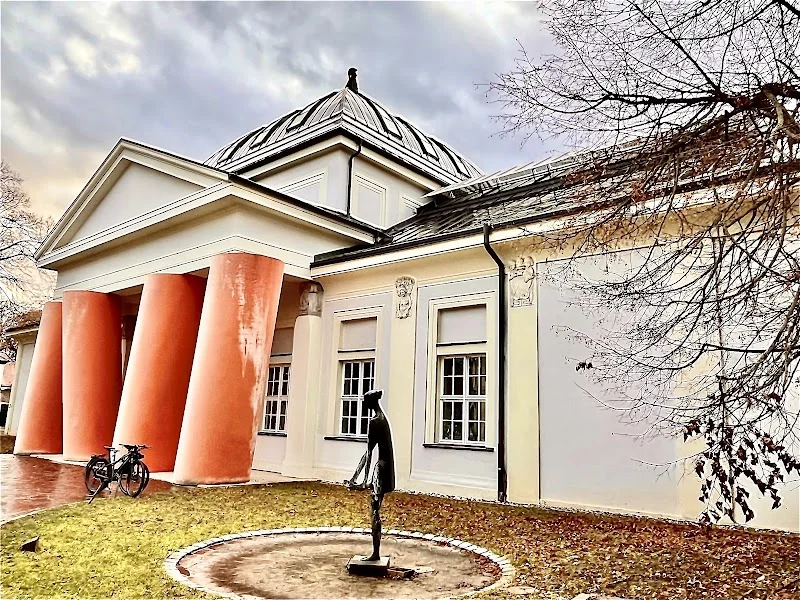
The Kunstforum is located at Dr.-Johann-Maier-Straße 5 in 93049 Regensburg. Its location in the city park makes the museum visit particularly pleasant, as the tour through the interior can be combined with a walk in the greenery and a view of sculptures in the outdoor area. The characteristic facade with red columns is a widely visible landmark. For a visit, regular opening hours, the current exhibition program, and notes on ongoing renovations should be considered.
Exhibitions and Program at Kunstforum East German Gallery Regensburg
The most important search topic related to the Kunstforum East German Gallery is the exhibition program. The museum combines a permanently established presentation with changing special exhibitions. This creates a program that offers both a reliable introduction to the collection and regular new reasons for a visit. The permanent exhibition is titled “Where do we come from, where are we going?” and spans approximately 200 years of art and history in Eastern Europe. It makes visible how strongly art is shaped by places, political changes, personal experiences, and cultural contacts.
The permanent exhibition features over 80 paintings and sculptures in six exhibition rooms. The selection is supplemented by loans from other museums and private collections. The presentation is not exclusively organized by individual artist names but establishes connections between works, regions, and historical developments. This allows a painting from Prague to relate to a landscape from Silesia, a sculpture from Germany, or a contemporary position from Eastern Europe. The tour invites visitors to reconsider the familiar and discover lesser-known art histories.
The special exhibitions each open up new perspectives. They may focus on individual artists, specific eras, collections, historical themes, or current societal issues. A special role is played by the Lovis Corinth Prize, awarded to visual artists and associated with an exhibition at the Kunstforum. The museum uses such projects to link the historical collection with contemporary art and current discourses.
The program also includes guided tours, workshops, museum educational offerings, events, and formats for different age groups. A free audio guide to the permanent exhibition provides additional information on selected works at several stations. Highlights include works by Katharina Sieverding, Oskar Kokoschka, Max Pechstein, and Alexander Kanoldt. Those planning to visit for a specific date should check the official event overview, as exhibition durations, tours, and special events regularly change.
Collection and Permanent Exhibition: Discovering Art from East Central Europe
The collection is the heart of the Kunstforum East German Gallery. Its uniqueness lies not only in the number of works but especially in their geographical and biographical context. The museum collects art associated with regions where German population groups once lived or worked. These include Bohemia, Moravia, Silesia, West Prussia, and East Prussia. The term “East German” is therefore explained historically and culturally in the museum. It does not simply refer to a current political region within Germany but points to a broadly defined European cultural area.
The collection comprises various media. About 2,000 paintings convey developments in painting from the 19th century to modern and contemporary times. Around 500 sculptures and other three-dimensional objects complement the pictorial positions. Particularly extensive is the graphic collection with approximately 40,000 paper works, including drawings, print graphics, watercolors, and photographs. Many of these works are light-sensitive and therefore cannot be permanently displayed. They are made accessible in special exhibitions, at events, or in selected presentations.
In the collection, German artists meet colleagues from the Czech Republic, Slovakia, Poland, and Russia. This international character is crucial for understanding the institution. The works tell not only of national art histories but also of exchange, border shifts, travel, exile, flight, displacement, and new cultural connections. A visit can thus be both art-historically and socially stimulating.
Since 2008, the growing collection of the Michaela Riese Foundation has also been integrated into the collection. This foundation is based on the art collection of Hans-Peter and Michaela Riese, which includes numerous artists from East and West. The expansion makes it clear that the Kunstforum does not understand its profile as static. The historical collection remains the starting point but is further developed through new works, research, and changing perspectives.
The permanent exhibition is suitable for both experienced museum visitors and those who are engaging with art from East Central Europe for the first time. Those who take enough time can compare formal developments, recurring landscape motifs, cityscapes, portraits, still lifes, and abstract visual languages. The exhibition thus creates an access that operates not only through dates and style terms but through stories, places, and human experiences.
History of the Foundation and the Kunstforum East German Gallery
The Kunstforum East German Gallery Foundation was established in 1966. Its historical starting point is related to the Federal Expellee Law of 1953 and the mandate to research, preserve, and convey the cultural heritage of Germans in the eastern regions of Europe. The federal government, the states, the city of Regensburg, the Adalbert Stifter Association, and the Artists' Guild were among the important initiators of the museum's founding. Today, the institution is supported by the foundation of the same name.
The museum itself was opened on June 10, 1970, as the East German Gallery. The initial focus was on art from the 19th and particularly the 20th century. The selection connected artists through their origin, biography, or activity in historical regions east of present-day Germany. In the following decades, the institution evolved. In 1987, it was renamed Museum East German Gallery. After a renovation-related closure, a new permanent exhibition was opened in 1993, designed as a chronological walk through art history.
With a new statute in 2003, the content perspective changed again. Since then, the museum has been named Kunstforum East German Gallery. The mandate was expanded to include contemporary art from the former German settlement areas in Eastern Europe. This was intended to make the house more of a place for exchange between East and West. Contemporary art from Poland, the Czech Republic, Slovakia, and other countries in Central, Eastern, and Southeastern Europe received greater importance.
This development continues to shape the museum today. The history of flight and displacement is not ignored, but it is also not used as the sole explanation for the collection. Instead, the Kunstforum raises questions about origin, memory, identity, and cultural connection. Artworks are considered testimonies of their time, while also being taken seriously as independent aesthetic works. This interplay is one of the greatest peculiarities of the institution.
The foundation is represented by various bodies, including a foundation board, a foundation council, and an artistic advisory board. The financing is supported by the federal government, the Free State of Bavaria, and the city of Regensburg. This institutional foundation enables exhibitions, collection care, research, education, and the long-term preservation of the holdings.
Museum Building, Photos, and Special Architecture in the City Park
Those searching for photos of the Kunstforum East German Gallery will often first find the striking exterior view with red columns. This installation was designed in 2006 by the artist Magdalena Jetelová and is now a landmark of the museum. The red columns set a strong contemporary accent in front of the historic building. They already make it visible from the outside that the Kunstforum does not separate past and present.
The history of the building dates back to 1871. Originally, it was a gymnasium. For the Upper Palatinate district exhibition of 1910, the building was converted into an art hall and integrated into the exhibition grounds in the city park. The historic Art Nouveau building with a dome and four columns at the portico still forms the entrance area today. After the foundation of the foundation in 1966, the building was generously expanded. In 1970, the current museum opened its doors to the city.
Particularly interesting is the connection between architecture and surroundings. The museum is located in the city park on the western edge of the old town. The building is not isolated in a closed city block but is surrounded by green spaces and paths. In front of the building is a sculpture park with 15 sculptures. This outdoor area is freely accessible and can be visited independently of the museum's opening hours. The art thus continues beyond the interior.
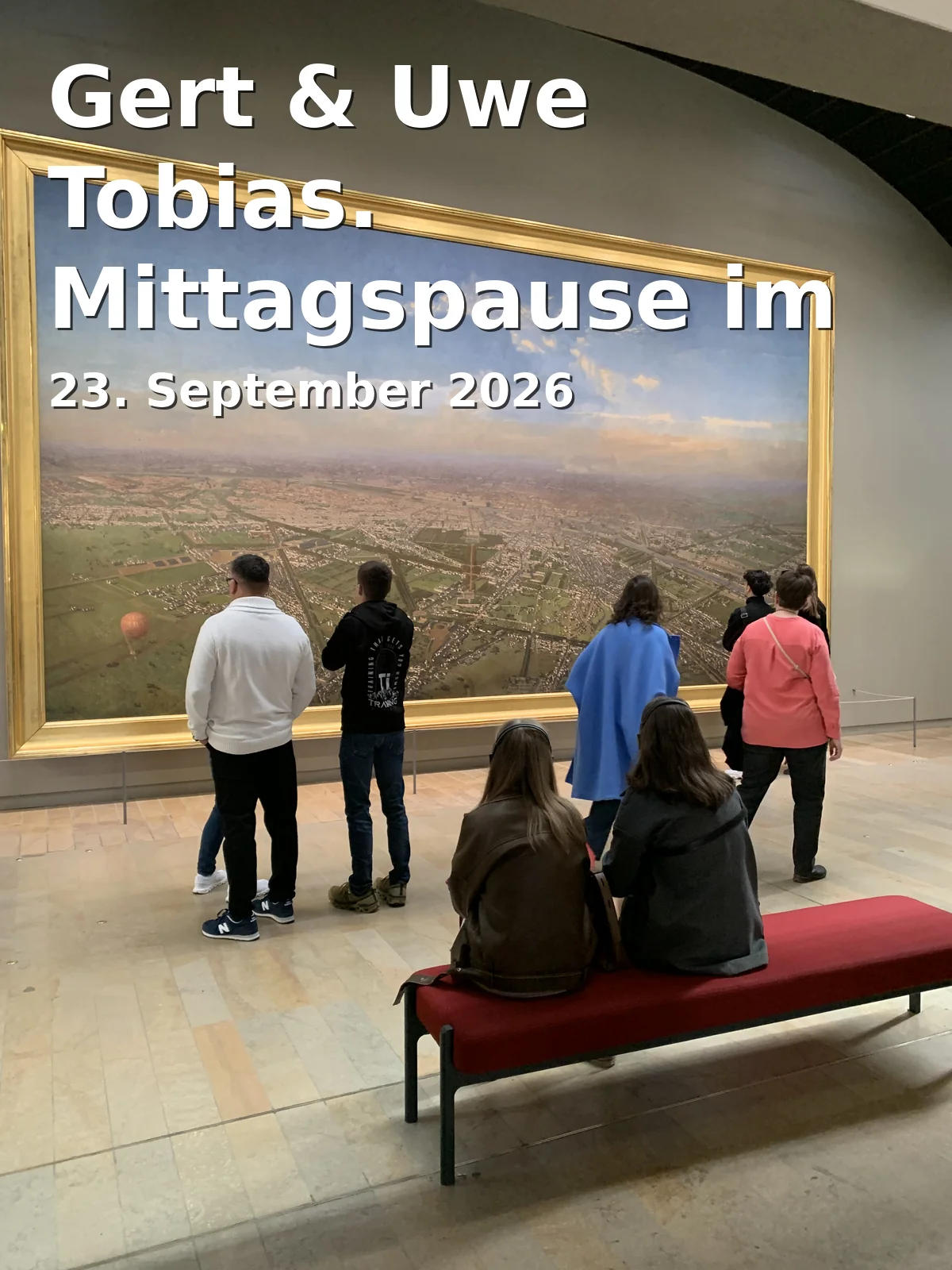
Inside, the entrance leads into a two-story Art Nouveau hall. From there, visitors access the exhibition rooms on the ground and upper floors. The foyer was designed as a total work of art for an exhibition by Gert and Uwe Tobias and is one of the special spatial experiences of the house. Architecture, light, materials, and artworks create an independent atmosphere upon entering.
The combination of historic museum building, contemporary interventions, park landscape, and sculptures makes the Kunstforum an attractive photo motif. At the same time, it should be noted that when using images, distinctions should be made between private shots, official press images, and copyright-protected artworks. Those needing images for publications should pay attention to the respective notes from the museum and the artists.
Address, Opening Hours, and Visit Planning
The address of the Kunstforum East German Gallery is Dr.-Johann-Maier-Straße 5, 93049 Regensburg. Its location on the western edge of the old town makes the museum easily combinable with a stay in Regensburg's city center or a walk through the city park. For specific travel arrangements, visitors should use current maps and timetable information, as traffic routes, construction sites, and parking options may change temporarily.
The regular opening hours are Tuesday to Sunday from 10 AM to 5 PM. On Thursdays, the museum is open until 8 PM. It is usually closed on Mondays. Deviating regulations may apply on public holidays. Individual exhibitions, events, or construction measures may also affect access to certain areas. Therefore, it is advisable to check the notes on the official website before a planned visit.
According to the published basic information, regular and reduced prices apply for admission. Children up to twelve years have free entry. Family tickets and annual passes are also offered. Discounts apply, among others, to students, trainees, federal volunteers, certain holders of volunteer cards, people with disabilities, and other eligible groups. Special prices may apply for special events.
Groups can book guided tours in German or English. The professional teams of art historians and art educators design tours through the permanent exhibition or the changing exhibitions. Multisensory tours are also possible. Special conditions apply for groups of ten or more. An early inquiry is recommended if a specific date, language, or educational focus is desired.
In front of the museum, there is also a mobile coffee bar called Rehorik at KOG. Coffee, other drinks, and snacks are offered there. The collaboration connects to the Bohemian roots of the Rehorik family, whose business was newly founded in Regensburg after their expulsion from Karlsbad. The coffee bar can complement the museum visit and offers an opportunity to linger in the vicinity of the house before or after the tour.
Accessibility, Education, and Offers for Different Visitors
The Kunstforum East German Gallery is working to make the museum visit more accessible and diverse. The entrance is at ground level. The museum also offers barrier-free educational offerings, including multisensory tours and tours in sign language. During ongoing construction work on the so-called graphic wing, the accessibility of individual areas may be restricted. A few adjacent cabinets of the permanent exhibition may be closed. The upper floor may temporarily not be accessible by elevator and must be visited via the stairwell. The special exhibitions on the ground floor are accessible without these restrictions according to the current visitor information. Those who depend on step-free access to the upper floor should inquire directly with the museum about the current status before their visit.
Families, school classes, teenagers, and adults also find suitable formats in the program. Workshops can focus on specific techniques, artists, or works. Events like the BrushHour use artworks from the collection as inspiration for one's own creative work. Such offerings create a connection between observation and practical experience.
For a quiet visit, the morning on a regular weekday is particularly recommended. On Thursdays until 8 PM, there is also the opportunity to combine the museum visit with a later walk through the city park. Since occupancy and event operations may vary, it is sensible to check the calendar before the visit.
Sculpture Park and Art in the City Park of Regensburg
The sculpture park in front of the Kunstforum East German Gallery is a standalone highlight of the museum location. The 15 sculptures are located in the city park and can be viewed freely. This creates a low-threshold access to art: even those who do not buy an admission ticket or are only planning a walk can discover works in public space.
The outdoor art changes with the seasons. In spring and summer, forms, materials, and colors enter into a dialogue with trees, paths, and lawns. In autumn, falling leaves and changing light create new contrasts. In winter, individual sculptures often appear more concentrated and clearer against the calmer background of the park. This change makes the outdoor area a place that can be visited multiple times.
The red columns by Magdalena Jetelová on the museum facade create a visual connection between the building and the park. They were originally designed in connection with an exhibition and have permanently become a hallmark of the Kunstforum. The installation exemplifies how contemporary art can intervene in architecture and reshape a historic building.
The sculpture park is also suitable for families and spontaneous visits. Individual works can be viewed up close while the paths provide ample space for a slow stroll. For a deeper engagement, it is advisable to combine it with a museum visit and a guided tour. This way, questions about material, scale, location, and impact in public space can be discussed in more detail.
The outdoor area offers numerous perspectives for photos. The view of the facade from different distances is particularly impressive. At the same time, visitors should note that individual artworks may have rights held by the artists. Private memory photos are unproblematic in many situations, while commercial or editorial use should be examined separately.
Reviews and Reasons for a Visit
When searching for reviews of the Kunstforum East German Gallery, the special collection, the quiet atmosphere, and the location in the city park are often highlighted. However, a single star rating can only convey a limited impression. The museum is not a large event hall or a classic leisure offering with constantly changing attractions. Its strength lies in the concentrated engagement with art, history, and cultural connections.
Many visitors appreciate that the collection connects well-known names with lesser-known positions. Works by Lovis Corinth, Käthe Kollwitz, Oskar Kokoschka, Max Pechstein, or Markus Lüpertz can be placed in relation to regional and Eastern European artist biographies. This broadens the view of art history, as not only the major centers but also historical places, landscapes, and personal origin stories are taken into account.
Another advantage is the manageable size of the museum. The visit can usually be well integrated into a few hours. The permanent exhibition can be viewed concentratedly without the tour becoming confusing. At the same time, special exhibitions ensure that returning visitors can discover new focal points. The free audio guide offers additional orientation if no guided tour has been booked.
The location in the city park also affects the visitor experience. Before or after the museum visit, one can explore the sculpture park, take a break at the coffee bar, or continue towards the old town. This creates a cultural excursion that connects interior, exterior, and urban landscape.
The Kunstforum is particularly worthwhile for people interested in art history, European memory culture, modernity, contemporary art, photography, graphics, or sculpture. Individuals with family ties to Bohemia, Moravia, Silesia, West Prussia, or East Prussia can also find points of connection here. The museum invites visitors to bring personal memories and historical developments into conversation.
Sources:
- Kunstforum East German Gallery – Official Website and Current Program
- Kunstforum East German Gallery – Museum, Collection, and Museum Building
- Kunstforum East German Gallery – Collection
- Kunstforum East German Gallery – Permanent Exhibition
- Kunstforum East German Gallery – History of the Museum Building
- Kunstforum East German Gallery – Background and Significance of East German
- Kunstforum East German Gallery – The Foundation
- Kunstforum East German Gallery – Accessibility
- Kunstforum East German Gallery – Information for Groups
- Kunstforum East German Gallery – Audio Guide and Highlights of the Permanent Exhibition
- Kunstforum East German Gallery – Outlook for the Year 2026
- Kunstforum East German Gallery – Basic Information on Address, Opening Hours, and Admission
Mehr anzeigenWeniger anzeigen
Kunstforum East German Gallery | Exhibitions & Collection
The Kunstforum East German Gallery in Regensburg is an art museum with an exceptional view of the art history of Central, Eastern, and Southeastern Europe. Located on the western edge of the Regensburg old town, embedded in the city park, the building connects historical memory, modern research, changing exhibitions, and contemporary perspectives. Those searching for the Kunstforum East German Gallery Regensburg are often interested in photos, reviews, opening hours, the collection, current exhibitions, and the foundation behind the museum. However, it quickly becomes apparent on-site that this house is much more than a classic gallery. It is a place where biographies, landscapes, migration, cultural relationships, and artistic developments are interconnected.
The collection includes about 2,000 paintings, around 500 sculptures, and other three-dimensional objects, as well as approximately 40,000 paper works. The focus is on artists with biographical or thematic connections to regions such as Bohemia, Moravia, Silesia, West and East Prussia, and other historical German settlement areas in Eastern Europe. In addition to German positions, Czech, Slovak, Polish, and Russian artists are also part of the museum's profile.
The Kunstforum is located at Dr.-Johann-Maier-Straße 5 in 93049 Regensburg. Its location in the city park makes the museum visit particularly pleasant, as the tour through the interior can be combined with a walk in the greenery and a view of sculptures in the outdoor area. The characteristic facade with red columns is a widely visible landmark. For a visit, regular opening hours, the current exhibition program, and notes on ongoing renovations should be considered.
Exhibitions and Program at Kunstforum East German Gallery Regensburg
The most important search topic related to the Kunstforum East German Gallery is the exhibition program. The museum combines a permanently established presentation with changing special exhibitions. This creates a program that offers both a reliable introduction to the collection and regular new reasons for a visit. The permanent exhibition is titled “Where do we come from, where are we going?” and spans approximately 200 years of art and history in Eastern Europe. It makes visible how strongly art is shaped by places, political changes, personal experiences, and cultural contacts.
The permanent exhibition features over 80 paintings and sculptures in six exhibition rooms. The selection is supplemented by loans from other museums and private collections. The presentation is not exclusively organized by individual artist names but establishes connections between works, regions, and historical developments. This allows a painting from Prague to relate to a landscape from Silesia, a sculpture from Germany, or a contemporary position from Eastern Europe. The tour invites visitors to reconsider the familiar and discover lesser-known art histories.
The special exhibitions each open up new perspectives. They may focus on individual artists, specific eras, collections, historical themes, or current societal issues. A special role is played by the Lovis Corinth Prize, awarded to visual artists and associated with an exhibition at the Kunstforum. The museum uses such projects to link the historical collection with contemporary art and current discourses.
The program also includes guided tours, workshops, museum educational offerings, events, and formats for different age groups. A free audio guide to the permanent exhibition provides additional information on selected works at several stations. Highlights include works by Katharina Sieverding, Oskar Kokoschka, Max Pechstein, and Alexander Kanoldt. Those planning to visit for a specific date should check the official event overview, as exhibition durations, tours, and special events regularly change.
Collection and Permanent Exhibition: Discovering Art from East Central Europe
The collection is the heart of the Kunstforum East German Gallery. Its uniqueness lies not only in the number of works but especially in their geographical and biographical context. The museum collects art associated with regions where German population groups once lived or worked. These include Bohemia, Moravia, Silesia, West Prussia, and East Prussia. The term “East German” is therefore explained historically and culturally in the museum. It does not simply refer to a current political region within Germany but points to a broadly defined European cultural area.
The collection comprises various media. About 2,000 paintings convey developments in painting from the 19th century to modern and contemporary times. Around 500 sculptures and other three-dimensional objects complement the pictorial positions. Particularly extensive is the graphic collection with approximately 40,000 paper works, including drawings, print graphics, watercolors, and photographs. Many of these works are light-sensitive and therefore cannot be permanently displayed. They are made accessible in special exhibitions, at events, or in selected presentations.
In the collection, German artists meet colleagues from the Czech Republic, Slovakia, Poland, and Russia. This international character is crucial for understanding the institution. The works tell not only of national art histories but also of exchange, border shifts, travel, exile, flight, displacement, and new cultural connections. A visit can thus be both art-historically and socially stimulating.
Since 2008, the growing collection of the Michaela Riese Foundation has also been integrated into the collection. This foundation is based on the art collection of Hans-Peter and Michaela Riese, which includes numerous artists from East and West. The expansion makes it clear that the Kunstforum does not understand its profile as static. The historical collection remains the starting point but is further developed through new works, research, and changing perspectives.
The permanent exhibition is suitable for both experienced museum visitors and those who are engaging with art from East Central Europe for the first time. Those who take enough time can compare formal developments, recurring landscape motifs, cityscapes, portraits, still lifes, and abstract visual languages. The exhibition thus creates an access that operates not only through dates and style terms but through stories, places, and human experiences.
History of the Foundation and the Kunstforum East German Gallery
The Kunstforum East German Gallery Foundation was established in 1966. Its historical starting point is related to the Federal Expellee Law of 1953 and the mandate to research, preserve, and convey the cultural heritage of Germans in the eastern regions of Europe. The federal government, the states, the city of Regensburg, the Adalbert Stifter Association, and the Artists' Guild were among the important initiators of the museum's founding. Today, the institution is supported by the foundation of the same name.
The museum itself was opened on June 10, 1970, as the East German Gallery. The initial focus was on art from the 19th and particularly the 20th century. The selection connected artists through their origin, biography, or activity in historical regions east of present-day Germany. In the following decades, the institution evolved. In 1987, it was renamed Museum East German Gallery. After a renovation-related closure, a new permanent exhibition was opened in 1993, designed as a chronological walk through art history.
With a new statute in 2003, the content perspective changed again. Since then, the museum has been named Kunstforum East German Gallery. The mandate was expanded to include contemporary art from the former German settlement areas in Eastern Europe. This was intended to make the house more of a place for exchange between East and West. Contemporary art from Poland, the Czech Republic, Slovakia, and other countries in Central, Eastern, and Southeastern Europe received greater importance.
This development continues to shape the museum today. The history of flight and displacement is not ignored, but it is also not used as the sole explanation for the collection. Instead, the Kunstforum raises questions about origin, memory, identity, and cultural connection. Artworks are considered testimonies of their time, while also being taken seriously as independent aesthetic works. This interplay is one of the greatest peculiarities of the institution.
The foundation is represented by various bodies, including a foundation board, a foundation council, and an artistic advisory board. The financing is supported by the federal government, the Free State of Bavaria, and the city of Regensburg. This institutional foundation enables exhibitions, collection care, research, education, and the long-term preservation of the holdings.
Museum Building, Photos, and Special Architecture in the City Park
Those searching for photos of the Kunstforum East German Gallery will often first find the striking exterior view with red columns. This installation was designed in 2006 by the artist Magdalena Jetelová and is now a landmark of the museum. The red columns set a strong contemporary accent in front of the historic building. They already make it visible from the outside that the Kunstforum does not separate past and present.
The history of the building dates back to 1871. Originally, it was a gymnasium. For the Upper Palatinate district exhibition of 1910, the building was converted into an art hall and integrated into the exhibition grounds in the city park. The historic Art Nouveau building with a dome and four columns at the portico still forms the entrance area today. After the foundation of the foundation in 1966, the building was generously expanded. In 1970, the current museum opened its doors to the city.
Particularly interesting is the connection between architecture and surroundings. The museum is located in the city park on the western edge of the old town. The building is not isolated in a closed city block but is surrounded by green spaces and paths. In front of the building is a sculpture park with 15 sculptures. This outdoor area is freely accessible and can be visited independently of the museum's opening hours. The art thus continues beyond the interior.
Inside, the entrance leads into a two-story Art Nouveau hall. From there, visitors access the exhibition rooms on the ground and upper floors. The foyer was designed as a total work of art for an exhibition by Gert and Uwe Tobias and is one of the special spatial experiences of the house. Architecture, light, materials, and artworks create an independent atmosphere upon entering.
The combination of historic museum building, contemporary interventions, park landscape, and sculptures makes the Kunstforum an attractive photo motif. At the same time, it should be noted that when using images, distinctions should be made between private shots, official press images, and copyright-protected artworks. Those needing images for publications should pay attention to the respective notes from the museum and the artists.
Address, Opening Hours, and Visit Planning
The address of the Kunstforum East German Gallery is Dr.-Johann-Maier-Straße 5, 93049 Regensburg. Its location on the western edge of the old town makes the museum easily combinable with a stay in Regensburg's city center or a walk through the city park. For specific travel arrangements, visitors should use current maps and timetable information, as traffic routes, construction sites, and parking options may change temporarily.
The regular opening hours are Tuesday to Sunday from 10 AM to 5 PM. On Thursdays, the museum is open until 8 PM. It is usually closed on Mondays. Deviating regulations may apply on public holidays. Individual exhibitions, events, or construction measures may also affect access to certain areas. Therefore, it is advisable to check the notes on the official website before a planned visit.
According to the published basic information, regular and reduced prices apply for admission. Children up to twelve years have free entry. Family tickets and annual passes are also offered. Discounts apply, among others, to students, trainees, federal volunteers, certain holders of volunteer cards, people with disabilities, and other eligible groups. Special prices may apply for special events.
Groups can book guided tours in German or English. The professional teams of art historians and art educators design tours through the permanent exhibition or the changing exhibitions. Multisensory tours are also possible. Special conditions apply for groups of ten or more. An early inquiry is recommended if a specific date, language, or educational focus is desired.
In front of the museum, there is also a mobile coffee bar called Rehorik at KOG. Coffee, other drinks, and snacks are offered there. The collaboration connects to the Bohemian roots of the Rehorik family, whose business was newly founded in Regensburg after their expulsion from Karlsbad. The coffee bar can complement the museum visit and offers an opportunity to linger in the vicinity of the house before or after the tour.
Accessibility, Education, and Offers for Different Visitors
The Kunstforum East German Gallery is working to make the museum visit more accessible and diverse. The entrance is at ground level. The museum also offers barrier-free educational offerings, including multisensory tours and tours in sign language. During ongoing construction work on the so-called graphic wing, the accessibility of individual areas may be restricted. A few adjacent cabinets of the permanent exhibition may be closed. The upper floor may temporarily not be accessible by elevator and must be visited via the stairwell. The special exhibitions on the ground floor are accessible without these restrictions according to the current visitor information. Those who depend on step-free access to the upper floor should inquire directly with the museum about the current status before their visit.
Families, school classes, teenagers, and adults also find suitable formats in the program. Workshops can focus on specific techniques, artists, or works. Events like the BrushHour use artworks from the collection as inspiration for one's own creative work. Such offerings create a connection between observation and practical experience.
For a quiet visit, the morning on a regular weekday is particularly recommended. On Thursdays until 8 PM, there is also the opportunity to combine the museum visit with a later walk through the city park. Since occupancy and event operations may vary, it is sensible to check the calendar before the visit.
Sculpture Park and Art in the City Park of Regensburg
The sculpture park in front of the Kunstforum East German Gallery is a standalone highlight of the museum location. The 15 sculptures are located in the city park and can be viewed freely. This creates a low-threshold access to art: even those who do not buy an admission ticket or are only planning a walk can discover works in public space.
The outdoor art changes with the seasons. In spring and summer, forms, materials, and colors enter into a dialogue with trees, paths, and lawns. In autumn, falling leaves and changing light create new contrasts. In winter, individual sculptures often appear more concentrated and clearer against the calmer background of the park. This change makes the outdoor area a place that can be visited multiple times.
The red columns by Magdalena Jetelová on the museum facade create a visual connection between the building and the park. They were originally designed in connection with an exhibition and have permanently become a hallmark of the Kunstforum. The installation exemplifies how contemporary art can intervene in architecture and reshape a historic building.
The sculpture park is also suitable for families and spontaneous visits. Individual works can be viewed up close while the paths provide ample space for a slow stroll. For a deeper engagement, it is advisable to combine it with a museum visit and a guided tour. This way, questions about material, scale, location, and impact in public space can be discussed in more detail.
The outdoor area offers numerous perspectives for photos. The view of the facade from different distances is particularly impressive. At the same time, visitors should note that individual artworks may have rights held by the artists. Private memory photos are unproblematic in many situations, while commercial or editorial use should be examined separately.
Reviews and Reasons for a Visit
When searching for reviews of the Kunstforum East German Gallery, the special collection, the quiet atmosphere, and the location in the city park are often highlighted. However, a single star rating can only convey a limited impression. The museum is not a large event hall or a classic leisure offering with constantly changing attractions. Its strength lies in the concentrated engagement with art, history, and cultural connections.
Many visitors appreciate that the collection connects well-known names with lesser-known positions. Works by Lovis Corinth, Käthe Kollwitz, Oskar Kokoschka, Max Pechstein, or Markus Lüpertz can be placed in relation to regional and Eastern European artist biographies. This broadens the view of art history, as not only the major centers but also historical places, landscapes, and personal origin stories are taken into account.
Another advantage is the manageable size of the museum. The visit can usually be well integrated into a few hours. The permanent exhibition can be viewed concentratedly without the tour becoming confusing. At the same time, special exhibitions ensure that returning visitors can discover new focal points. The free audio guide offers additional orientation if no guided tour has been booked.
The location in the city park also affects the visitor experience. Before or after the museum visit, one can explore the sculpture park, take a break at the coffee bar, or continue towards the old town. This creates a cultural excursion that connects interior, exterior, and urban landscape.
The Kunstforum is particularly worthwhile for people interested in art history, European memory culture, modernity, contemporary art, photography, graphics, or sculpture. Individuals with family ties to Bohemia, Moravia, Silesia, West Prussia, or East Prussia can also find points of connection here. The museum invites visitors to bring personal memories and historical developments into conversation.
Sources:
- Kunstforum East German Gallery – Official Website and Current Program
- Kunstforum East German Gallery – Museum, Collection, and Museum Building
- Kunstforum East German Gallery – Collection
- Kunstforum East German Gallery – Permanent Exhibition
- Kunstforum East German Gallery – History of the Museum Building
- Kunstforum East German Gallery – Background and Significance of East German
- Kunstforum East German Gallery – The Foundation
- Kunstforum East German Gallery – Accessibility
- Kunstforum East German Gallery – Information for Groups
- Kunstforum East German Gallery – Audio Guide and Highlights of the Permanent Exhibition
- Kunstforum East German Gallery – Outlook for the Year 2026
- Kunstforum East German Gallery – Basic Information on Address, Opening Hours, and Admission
Frequently Asked Questions
Reviews
Johannes Eiglsperger
18. January 2024
Very neat collection of art pieces. The permanent exhibition is really good and covers many different art styles. You can easily immerse yourself there for 2-3 hours. The temporary exhibitions vary a lot, e.g. there have been a Picasso themed exhibition just recently or a Pop-Art exhibition not too far in the past.
SD18 TS
7. January 2025
I discovered this gallery by chance on my way to the city west of Regensburg, and I was thoroughly impressed. The exhibition of illustrations based on Kafka’s works was exceptional, showcasing a remarkable selection of artists and imaginative interpretations. It’s one of the most inspiring exhibitions I’ve seen this year. I couldn’t resist buying a book of the illustrations as a keepsake. A must-visit for art lovers!
Q S
18. July 2026
A third of the exhibition is closed. Nobody tells you that when you enter. If you want to use the restrooms, you have to pay. You can't even take the smallest fanny pack with you - everything must go into the locker. The museum administration should rethink its approach.
Amit Epstein
25. July 2020
Very nice gallery with a small permanent collection with east European artists in focus, and changing exhibition with matching themes. Two floors, but not a large space, a thorough tour may take less than an hour. Nice park around it too. A few works are very beautiful and the curation is very light handed.
Hannah
29. May 2024
Great museum, a bit small but the paintings are all really beautiful.