
Regensburg
Maximilianstraße 26, 93047 Regensburg, Deutschland
M26 Regensburg | Events & Opening Hours
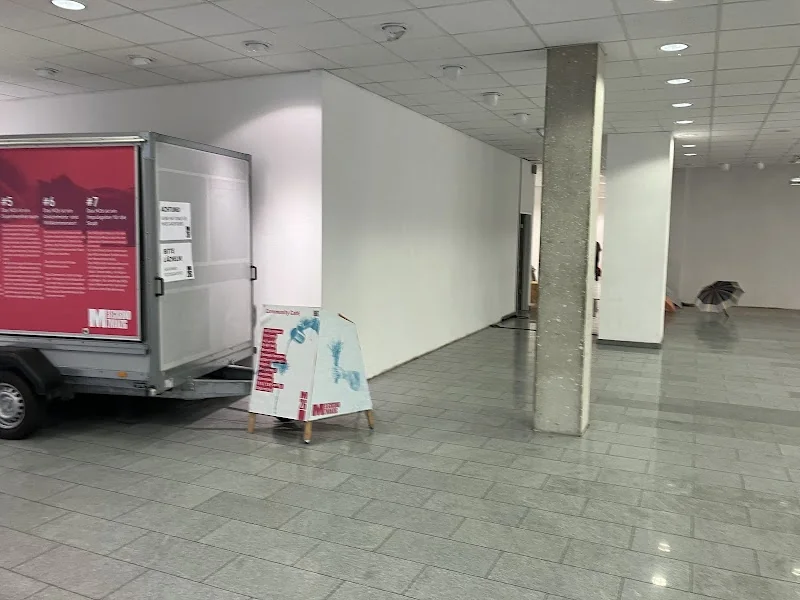
The M26 in Regensburg is not a classic event venue with a standardized program, but an open cultural space in one of the most visible locations in the city center: Maximilianstraße 26, right at the entrance to the city and in close proximity to the train station area. The city describes the project as a welcoming place where exhibitions, workshops, lectures, and a donation-based community café come together on approximately 400 square meters. This mix makes the M26 interesting for many people looking for a place where culture is not only showcased but developed together. Instead of a rigid schedule, a space for exchange, participation, social encounters, and experimental formats is created here, often working closely with societal issues. The M26 thus represents an accessible approach to art and culture, for volunteer engagement, and for an attitude that not only promises openness but also implements it spatially and programmatically. ([regensburg.de](https://www.regensburg.de/kultur/veranstaltungen-des-kulturreferats/kulturenraum-m26-ein-ort-fuer-kunst-kultur-und-gesellschaft))
The official program page and the city’s site also show how strongly the M26 is focused on participation and communal use. There are open meetings, recurring formats, and changing projects curated according to a charter developed during the project's pioneering phase. This charter provides the house with a clear thematic framework without losing its open character. The goal is not to place as many events as possible one after the other, but to create a place where different groups, initiatives, and cultural creators can take responsibility. For the search intent around M26 Regensburg, this is particularly important: Those looking for events, opening hours, or a community café will find here not just a calendar but a comprehensive usage concept that understands the place as a vibrant component of the urban society. ([regensburg.de](https://www.regensburg.de/kultur/veranstaltungen-des-kulturreferats/kulturenraum-m26-ein-ort-fuer-kunst-kultur-und-gesellschaft))
Opening Hours and Community Café
The opening hours of the M26 are clearly stated on the official website: Mondays from 9:30 AM to 4:00 PM, Tuesdays and Wednesdays from 9:30 AM to 6:00 PM, Thursdays from 9:30 AM to 6:00 PM, and Fridays from 9:30 AM to 4:00 PM. Additionally, the M26 is open during events. These times are important for visitors because the M26 functions not only as an event space but also as an everyday meeting place. Therefore, those interested in M26 opening hours are usually looking for a place for a quick coffee, a spontaneous conversation, a quiet workspace, or an uncomplicated visit as part of a program point. The M26 is designed exactly for this use: open, accessible, and anchored in everyday life. ([m26kultur.org](https://m26kultur.org/))
Particularly defining is the community café. A separate contribution describes it as a place of encounter and exchange, where coffee and tea are offered on a donation basis. The space is available for both short stays and longer visits, without a compulsion to consume. This is more than just a nice detail, as it shows the role the café plays in the overall concept of the M26: it serves as a meeting point, waiting area, retreat space, and low-threshold contact point at the same time. The city additionally describes it as a consumption-free place where one can learn, play, wait, or network. For many users, this atmosphere is crucial because it is not tied to the purchase of a product but places the stay itself at the center. Thus, a café becomes a social space with a cultural function. ([m26kultur.org](https://m26kultur.org/2024/10/community-cafe/))
The open meetings are also part of this concept. The website lists the community café as a regular meeting, as well as an open drawing meeting, an open creative evening, the philosophical café, the Fromm table, the ICL regulars' table, Architects4Future, Förderfuchs, Mietshäuser-Syndikat, theater regulars' table, Anders-Artig, Milonga Café Amorcito, and the papa bring-along brunch. This variety shows that the M26 is not aimed at a single target group. It connects cultural education, neighborhood, family offerings, politically-philosophical discussions, and creative practice. Therefore, those searching for M26 meetings or M26 programs will find no narrow event type but a network of regularly recurring formats that address different life situations and interests. This is precisely what creates the special perception of the place as an open cultural and meeting space. ([m26kultur.org](https://m26kultur.org/treffs/))
Exhibitions, Workshops, and Lectures
A central search term around the M26 is exhibitions, workshops, and lectures, and these three formats are, according to the city of Regensburg, at the heart of the place. The official description refers to the M26 as a cultural space where exhibitions, workshops, and lectures meet a donation-based community café. This is very strong for the external presentation because it makes the profile of the location immediately understandable: it is not about a pure stage, but about a space where content, participation, and exchange stand equally side by side. The programming is consciously socially oriented. According to the city, in the early development phase, themes that often receive too little attention in public discourse were brought to the forefront so that the cultural program carries socially relevant questions into the heart of urban society. ([regensburg.de](https://www.regensburg.de/kultur/veranstaltungen-des-kulturreferats/kulturenraum-m26-ein-ort-fuer-kunst-kultur-und-gesellschaft))
Current examples from June 2026 make this profile concrete. The website features, among other things, the exhibition visibly poor, a performance with calligraphy, Butoh, and music under the title thema MA, the discussion group FROMM TISCH, the creative format ARTSY AFTER WORK, the LUNCH LECTURE, the art playground, an open consultation hour for the InterCultureLab, a panel discussion on visible poverty, an open creative meeting, Anders-artig, the papa brunch, Café Amorcito, the philosophical café, and the Mietshäusersyndikats regulars' table. This enumeration not only shows diversity but also thematic depth. At the M26, it is about art, social issues, body, music, philosophy, family, housing, diversity, and participation. The M26 is thus suitable for people looking for a place where culture in the broader sense is experienced and not just as a finished product. ([m26kultur.org](https://m26kultur.org/))
In addition, there is the educational aspect. The city describes the M26 as a place of cultural education and participation. Mentioned are barrier-free exhibitions, easily understandable texts, multilingualism, and mediation offers. There is also a workshop area for participatory actions, participatory projects, mediation offers, and art courses. This is SEO-relevant because search queries like M26 workshops, M26 exhibition, or M26 lectures lead exactly into this thematic area. It is important content-wise that the M26 does not only offer events but creates access: for young cultural creators, for yet-to-be-established formats, for people with different linguistic or social backgrounds, and for visitors who want to not only consume art but understand and co-create it. ([regensburg.de](https://www.regensburg.de/kultur/veranstaltungen-des-kulturreferats/kulturenraum-m26-ein-ort-fuer-kunst-kultur-und-gesellschaft))
Cultural Sponsorships, Meetings, and Participation
The perhaps most important unique feature of the M26 is the cultural sponsorship. The city of Regensburg describes this model as the core of the place: independent cultural creators, associations, or initiatives from social or cultural fields as well as from science and education can independently use the M26 for one to a maximum of three weeks. The space is used according to the guidelines of the charter. This approach makes the M26 a place of cooperative production and not just presentation. For the search intent M26 participate or M26 organize an event, this is a crucial point because a real participation structure is offered here. The house is thus not only a stage but also a laboratory for content, networks, and new formats. ([regensburg.de](https://www.regensburg.de/kultur/veranstaltungen-des-kulturreferats/kulturenraum-m26-ein-ort-fuer-kunst-kultur-und-gesellschaft))
Equally important is the clear delineation: the M26 is, according to the city, not a rental event location. This means that interested parties cannot simply make a room booking as in a classic hall or event operation. Instead, a jury decides on the allocation of cultural sponsorships. Diversity, variety, and the type of formats are the focus. The cultural sponsorships are available free of charge, which explicitly promotes young, unknown, and non-profit projects. This model is interesting for Regensburg because it thinks of culture in terms of common good and not primarily in terms of rental. This creates a high social and cultural relevance: the M26 opens space for ideas that often fail elsewhere due to costs, access, or formal hurdles. ([regensburg.de](https://www.regensburg.de/kultur/veranstaltungen-des-kulturreferats/kulturenraum-m26-ein-ort-fuer-kunst-kultur-und-gesellschaft))
The regular meetings also reflect this participatory thought. According to the website, the M26 is a place where people can get to know each other, exchange ideas, network, and become active together. The open drawing meeting is aimed at creatives with pen and paper, the open creative evening at joint designing and conversation, the philosophical café at interdisciplinary discussions, the Fromm table at political humanism questions, the ICL regulars' table at artists from around the world, Anders-Artig at exchange and acceptance, and the papa bring-along brunch at fathers with children. These formats are not randomly so different but show a consciously low-threshold yet thematically demanding program. Therefore, those searching for M26 meetings or M26 programs will find here a place that is simultaneously open, organized, and thematically strong. ([m26kultur.org](https://m26kultur.org/treffs/))
Accessibility, Location, and Directions
The M26 is located at an address that is very prominent for Regensburg: Maximilianstraße 26, 93047 Regensburg. The city describes the place as a welcoming place at the entrance to the city, and another city page locates it in close proximity to the main train station. Additionally, the administration names specific bus connections for the location with the stops Hbf/Albertstraße, Dachauplatz, and Ernst-Reuter-Platz. For the search query M26 directions, this is the most important practical note: the location is central, urban, and particularly well connected by public transport. Especially because the M26 functions as an open cultural place, the combination of city center location and good accessibility is a real advantage. ([regensburg.de](https://www.regensburg.de/kultur/veranstaltungen-des-kulturreferats/kulturenraum-m26-ein-ort-fuer-kunst-kultur-und-gesellschaft))
The accessibility is also clearly documented. The official website describes the M26 as designed to be barrier-free, with ground-level rooms and a barrier-free toilet. The city adds that the place offers barrier-free toilets, a consumption-free retreat space, free access to electricity, water, and weather protection. Additionally, the M26 is listed as a certified children's emergency island and as a nice toilet. These are practical and trust-building information for many visitors, as they show that the place is not only culturally open but also practically usable and inclusively planned. Those coming with strollers, with disabilities, or simply with the desire for an uncomplicated stay will find an environment here that is low-threshold usable. ([m26kultur.org](https://m26kultur.org/))
The location itself also contributes to the profile. The city emphasizes that the M26 acts as a gateway to the city center and shapes the street space of Maximilianstraße. At the same time, the spatial proximity to the Office for Integration and Migration and the train station area is described as an opportunity to make the diversity of people in the heart of the city visible. This is not only a nice guiding principle but an important part of the actual location quality. The M26 is located where city, everyday life, and encounters intersect. For seekers looking for M26 Regensburg address, M26 parking, or M26 barrier-free, it is therefore especially relevant: the place is central, well connected publicly, and consciously designed to be open in its architectural and social accessibility. ([regensburg.de](https://www.regensburg.de/kultur/veranstaltungen-des-kulturreferats/kulturenraum-m26-ein-ort-fuer-kunst-kultur-und-gesellschaft))
History, Mission, and Importance for Regensburg
The M26 is not just a house with events but a municipal project with a clear cultural policy objective. The city of Regensburg describes it as a project of the cultural office in collaboration with the agency bauwärts. It is also explained that the underlying concept for the exploratory and participatory development of an operator and usage model was co-financed by the European Regional Development Fund as part of the EU city center funding initiative. This makes it clear that the M26 is understood as part of an urban and cultural strategy, not as an isolated individual measure. This is important for the public because it explains the long-term significance of the place: the M26 is intended to provide impulses for the city center and act as a building block in a possible cultural axis from the university to the cathedral. ([regensburg.de](https://www.regensburg.de/kultur/veranstaltungen-des-kulturreferats/kulturenraum-m26-ein-ort-fuer-kunst-kultur-und-gesellschaft))
The historical development is also made transparent. According to the city, the M26 has developed into an important part of the urban cultural scene since 2021. In the pioneering phase of the interim use project in 2023, cultural creators established a charter that still shapes the programming today. This charter is important because it consolidates the understanding of the place: art, culture, and society are at the center, consciously also with regard to topics that otherwise remain rather peripheral in public discourse. The M26 sees itself as a laboratory, an experimental space, and a space for participation. This self-description is not just an image statement but is concretely reflected in the programs, meetings, and cultural sponsorships. ([regensburg.de](https://www.regensburg.de/aktuelles/pressemitteilungen/159998/600668/kulturpatenschaften-im-m26.html))
For Regensburg, the M26 is thus more than just an address in the center. The place connects cultural education, social encounters, low-threshold participation, and artistic experiments. It addresses artists, initiatives, science, administration, and civil society alike and consciously opens itself to new formats as well as to people who might not otherwise use cultural spaces as a matter of course. Especially in a city center location with strong public life, this is significant because the M26 shows how an urban society can think of culture as a common good. Therefore, those searching for M26 Regensburg, M26 cultural space, or M26 events are actually looking for a place that moves between café, project space, meeting point, and urban laboratory and has its strength precisely in that. ([regensburg.de](https://www.regensburg.de/kultur/veranstaltungen-des-kulturreferats/kulturenraum-m26-ein-ort-fuer-kunst-kultur-und-gesellschaft))
Sources:
Mehr anzeigenWeniger anzeigen
M26 Regensburg | Events & Opening Hours
The M26 in Regensburg is not a classic event venue with a standardized program, but an open cultural space in one of the most visible locations in the city center: Maximilianstraße 26, right at the entrance to the city and in close proximity to the train station area. The city describes the project as a welcoming place where exhibitions, workshops, lectures, and a donation-based community café come together on approximately 400 square meters. This mix makes the M26 interesting for many people looking for a place where culture is not only showcased but developed together. Instead of a rigid schedule, a space for exchange, participation, social encounters, and experimental formats is created here, often working closely with societal issues. The M26 thus represents an accessible approach to art and culture, for volunteer engagement, and for an attitude that not only promises openness but also implements it spatially and programmatically. ([regensburg.de](https://www.regensburg.de/kultur/veranstaltungen-des-kulturreferats/kulturenraum-m26-ein-ort-fuer-kunst-kultur-und-gesellschaft))
The official program page and the city’s site also show how strongly the M26 is focused on participation and communal use. There are open meetings, recurring formats, and changing projects curated according to a charter developed during the project's pioneering phase. This charter provides the house with a clear thematic framework without losing its open character. The goal is not to place as many events as possible one after the other, but to create a place where different groups, initiatives, and cultural creators can take responsibility. For the search intent around M26 Regensburg, this is particularly important: Those looking for events, opening hours, or a community café will find here not just a calendar but a comprehensive usage concept that understands the place as a vibrant component of the urban society. ([regensburg.de](https://www.regensburg.de/kultur/veranstaltungen-des-kulturreferats/kulturenraum-m26-ein-ort-fuer-kunst-kultur-und-gesellschaft))
Opening Hours and Community Café
The opening hours of the M26 are clearly stated on the official website: Mondays from 9:30 AM to 4:00 PM, Tuesdays and Wednesdays from 9:30 AM to 6:00 PM, Thursdays from 9:30 AM to 6:00 PM, and Fridays from 9:30 AM to 4:00 PM. Additionally, the M26 is open during events. These times are important for visitors because the M26 functions not only as an event space but also as an everyday meeting place. Therefore, those interested in M26 opening hours are usually looking for a place for a quick coffee, a spontaneous conversation, a quiet workspace, or an uncomplicated visit as part of a program point. The M26 is designed exactly for this use: open, accessible, and anchored in everyday life. ([m26kultur.org](https://m26kultur.org/))
Particularly defining is the community café. A separate contribution describes it as a place of encounter and exchange, where coffee and tea are offered on a donation basis. The space is available for both short stays and longer visits, without a compulsion to consume. This is more than just a nice detail, as it shows the role the café plays in the overall concept of the M26: it serves as a meeting point, waiting area, retreat space, and low-threshold contact point at the same time. The city additionally describes it as a consumption-free place where one can learn, play, wait, or network. For many users, this atmosphere is crucial because it is not tied to the purchase of a product but places the stay itself at the center. Thus, a café becomes a social space with a cultural function. ([m26kultur.org](https://m26kultur.org/2024/10/community-cafe/))
The open meetings are also part of this concept. The website lists the community café as a regular meeting, as well as an open drawing meeting, an open creative evening, the philosophical café, the Fromm table, the ICL regulars' table, Architects4Future, Förderfuchs, Mietshäuser-Syndikat, theater regulars' table, Anders-Artig, Milonga Café Amorcito, and the papa bring-along brunch. This variety shows that the M26 is not aimed at a single target group. It connects cultural education, neighborhood, family offerings, politically-philosophical discussions, and creative practice. Therefore, those searching for M26 meetings or M26 programs will find no narrow event type but a network of regularly recurring formats that address different life situations and interests. This is precisely what creates the special perception of the place as an open cultural and meeting space. ([m26kultur.org](https://m26kultur.org/treffs/))
Exhibitions, Workshops, and Lectures
A central search term around the M26 is exhibitions, workshops, and lectures, and these three formats are, according to the city of Regensburg, at the heart of the place. The official description refers to the M26 as a cultural space where exhibitions, workshops, and lectures meet a donation-based community café. This is very strong for the external presentation because it makes the profile of the location immediately understandable: it is not about a pure stage, but about a space where content, participation, and exchange stand equally side by side. The programming is consciously socially oriented. According to the city, in the early development phase, themes that often receive too little attention in public discourse were brought to the forefront so that the cultural program carries socially relevant questions into the heart of urban society. ([regensburg.de](https://www.regensburg.de/kultur/veranstaltungen-des-kulturreferats/kulturenraum-m26-ein-ort-fuer-kunst-kultur-und-gesellschaft))
Current examples from June 2026 make this profile concrete. The website features, among other things, the exhibition visibly poor, a performance with calligraphy, Butoh, and music under the title thema MA, the discussion group FROMM TISCH, the creative format ARTSY AFTER WORK, the LUNCH LECTURE, the art playground, an open consultation hour for the InterCultureLab, a panel discussion on visible poverty, an open creative meeting, Anders-artig, the papa brunch, Café Amorcito, the philosophical café, and the Mietshäusersyndikats regulars' table. This enumeration not only shows diversity but also thematic depth. At the M26, it is about art, social issues, body, music, philosophy, family, housing, diversity, and participation. The M26 is thus suitable for people looking for a place where culture in the broader sense is experienced and not just as a finished product. ([m26kultur.org](https://m26kultur.org/))
In addition, there is the educational aspect. The city describes the M26 as a place of cultural education and participation. Mentioned are barrier-free exhibitions, easily understandable texts, multilingualism, and mediation offers. There is also a workshop area for participatory actions, participatory projects, mediation offers, and art courses. This is SEO-relevant because search queries like M26 workshops, M26 exhibition, or M26 lectures lead exactly into this thematic area. It is important content-wise that the M26 does not only offer events but creates access: for young cultural creators, for yet-to-be-established formats, for people with different linguistic or social backgrounds, and for visitors who want to not only consume art but understand and co-create it. ([regensburg.de](https://www.regensburg.de/kultur/veranstaltungen-des-kulturreferats/kulturenraum-m26-ein-ort-fuer-kunst-kultur-und-gesellschaft))
Cultural Sponsorships, Meetings, and Participation
The perhaps most important unique feature of the M26 is the cultural sponsorship. The city of Regensburg describes this model as the core of the place: independent cultural creators, associations, or initiatives from social or cultural fields as well as from science and education can independently use the M26 for one to a maximum of three weeks. The space is used according to the guidelines of the charter. This approach makes the M26 a place of cooperative production and not just presentation. For the search intent M26 participate or M26 organize an event, this is a crucial point because a real participation structure is offered here. The house is thus not only a stage but also a laboratory for content, networks, and new formats. ([regensburg.de](https://www.regensburg.de/kultur/veranstaltungen-des-kulturreferats/kulturenraum-m26-ein-ort-fuer-kunst-kultur-und-gesellschaft))
Equally important is the clear delineation: the M26 is, according to the city, not a rental event location. This means that interested parties cannot simply make a room booking as in a classic hall or event operation. Instead, a jury decides on the allocation of cultural sponsorships. Diversity, variety, and the type of formats are the focus. The cultural sponsorships are available free of charge, which explicitly promotes young, unknown, and non-profit projects. This model is interesting for Regensburg because it thinks of culture in terms of common good and not primarily in terms of rental. This creates a high social and cultural relevance: the M26 opens space for ideas that often fail elsewhere due to costs, access, or formal hurdles. ([regensburg.de](https://www.regensburg.de/kultur/veranstaltungen-des-kulturreferats/kulturenraum-m26-ein-ort-fuer-kunst-kultur-und-gesellschaft))
The regular meetings also reflect this participatory thought. According to the website, the M26 is a place where people can get to know each other, exchange ideas, network, and become active together. The open drawing meeting is aimed at creatives with pen and paper, the open creative evening at joint designing and conversation, the philosophical café at interdisciplinary discussions, the Fromm table at political humanism questions, the ICL regulars' table at artists from around the world, Anders-Artig at exchange and acceptance, and the papa bring-along brunch at fathers with children. These formats are not randomly so different but show a consciously low-threshold yet thematically demanding program. Therefore, those searching for M26 meetings or M26 programs will find here a place that is simultaneously open, organized, and thematically strong. ([m26kultur.org](https://m26kultur.org/treffs/))
Accessibility, Location, and Directions
The M26 is located at an address that is very prominent for Regensburg: Maximilianstraße 26, 93047 Regensburg. The city describes the place as a welcoming place at the entrance to the city, and another city page locates it in close proximity to the main train station. Additionally, the administration names specific bus connections for the location with the stops Hbf/Albertstraße, Dachauplatz, and Ernst-Reuter-Platz. For the search query M26 directions, this is the most important practical note: the location is central, urban, and particularly well connected by public transport. Especially because the M26 functions as an open cultural place, the combination of city center location and good accessibility is a real advantage. ([regensburg.de](https://www.regensburg.de/kultur/veranstaltungen-des-kulturreferats/kulturenraum-m26-ein-ort-fuer-kunst-kultur-und-gesellschaft))
The accessibility is also clearly documented. The official website describes the M26 as designed to be barrier-free, with ground-level rooms and a barrier-free toilet. The city adds that the place offers barrier-free toilets, a consumption-free retreat space, free access to electricity, water, and weather protection. Additionally, the M26 is listed as a certified children's emergency island and as a nice toilet. These are practical and trust-building information for many visitors, as they show that the place is not only culturally open but also practically usable and inclusively planned. Those coming with strollers, with disabilities, or simply with the desire for an uncomplicated stay will find an environment here that is low-threshold usable. ([m26kultur.org](https://m26kultur.org/))
The location itself also contributes to the profile. The city emphasizes that the M26 acts as a gateway to the city center and shapes the street space of Maximilianstraße. At the same time, the spatial proximity to the Office for Integration and Migration and the train station area is described as an opportunity to make the diversity of people in the heart of the city visible. This is not only a nice guiding principle but an important part of the actual location quality. The M26 is located where city, everyday life, and encounters intersect. For seekers looking for M26 Regensburg address, M26 parking, or M26 barrier-free, it is therefore especially relevant: the place is central, well connected publicly, and consciously designed to be open in its architectural and social accessibility. ([regensburg.de](https://www.regensburg.de/kultur/veranstaltungen-des-kulturreferats/kulturenraum-m26-ein-ort-fuer-kunst-kultur-und-gesellschaft))
History, Mission, and Importance for Regensburg
The M26 is not just a house with events but a municipal project with a clear cultural policy objective. The city of Regensburg describes it as a project of the cultural office in collaboration with the agency bauwärts. It is also explained that the underlying concept for the exploratory and participatory development of an operator and usage model was co-financed by the European Regional Development Fund as part of the EU city center funding initiative. This makes it clear that the M26 is understood as part of an urban and cultural strategy, not as an isolated individual measure. This is important for the public because it explains the long-term significance of the place: the M26 is intended to provide impulses for the city center and act as a building block in a possible cultural axis from the university to the cathedral. ([regensburg.de](https://www.regensburg.de/kultur/veranstaltungen-des-kulturreferats/kulturenraum-m26-ein-ort-fuer-kunst-kultur-und-gesellschaft))
The historical development is also made transparent. According to the city, the M26 has developed into an important part of the urban cultural scene since 2021. In the pioneering phase of the interim use project in 2023, cultural creators established a charter that still shapes the programming today. This charter is important because it consolidates the understanding of the place: art, culture, and society are at the center, consciously also with regard to topics that otherwise remain rather peripheral in public discourse. The M26 sees itself as a laboratory, an experimental space, and a space for participation. This self-description is not just an image statement but is concretely reflected in the programs, meetings, and cultural sponsorships. ([regensburg.de](https://www.regensburg.de/aktuelles/pressemitteilungen/159998/600668/kulturpatenschaften-im-m26.html))
For Regensburg, the M26 is thus more than just an address in the center. The place connects cultural education, social encounters, low-threshold participation, and artistic experiments. It addresses artists, initiatives, science, administration, and civil society alike and consciously opens itself to new formats as well as to people who might not otherwise use cultural spaces as a matter of course. Especially in a city center location with strong public life, this is significant because the M26 shows how an urban society can think of culture as a common good. Therefore, those searching for M26 Regensburg, M26 cultural space, or M26 events are actually looking for a place that moves between café, project space, meeting point, and urban laboratory and has its strength precisely in that. ([regensburg.de](https://www.regensburg.de/kultur/veranstaltungen-des-kulturreferats/kulturenraum-m26-ein-ort-fuer-kunst-kultur-und-gesellschaft))
Sources:
M26 Regensburg | Events & Opening Hours
The M26 in Regensburg is not a classic event venue with a standardized program, but an open cultural space in one of the most visible locations in the city center: Maximilianstraße 26, right at the entrance to the city and in close proximity to the train station area. The city describes the project as a welcoming place where exhibitions, workshops, lectures, and a donation-based community café come together on approximately 400 square meters. This mix makes the M26 interesting for many people looking for a place where culture is not only showcased but developed together. Instead of a rigid schedule, a space for exchange, participation, social encounters, and experimental formats is created here, often working closely with societal issues. The M26 thus represents an accessible approach to art and culture, for volunteer engagement, and for an attitude that not only promises openness but also implements it spatially and programmatically. ([regensburg.de](https://www.regensburg.de/kultur/veranstaltungen-des-kulturreferats/kulturenraum-m26-ein-ort-fuer-kunst-kultur-und-gesellschaft))
The official program page and the city’s site also show how strongly the M26 is focused on participation and communal use. There are open meetings, recurring formats, and changing projects curated according to a charter developed during the project's pioneering phase. This charter provides the house with a clear thematic framework without losing its open character. The goal is not to place as many events as possible one after the other, but to create a place where different groups, initiatives, and cultural creators can take responsibility. For the search intent around M26 Regensburg, this is particularly important: Those looking for events, opening hours, or a community café will find here not just a calendar but a comprehensive usage concept that understands the place as a vibrant component of the urban society. ([regensburg.de](https://www.regensburg.de/kultur/veranstaltungen-des-kulturreferats/kulturenraum-m26-ein-ort-fuer-kunst-kultur-und-gesellschaft))
Opening Hours and Community Café
The opening hours of the M26 are clearly stated on the official website: Mondays from 9:30 AM to 4:00 PM, Tuesdays and Wednesdays from 9:30 AM to 6:00 PM, Thursdays from 9:30 AM to 6:00 PM, and Fridays from 9:30 AM to 4:00 PM. Additionally, the M26 is open during events. These times are important for visitors because the M26 functions not only as an event space but also as an everyday meeting place. Therefore, those interested in M26 opening hours are usually looking for a place for a quick coffee, a spontaneous conversation, a quiet workspace, or an uncomplicated visit as part of a program point. The M26 is designed exactly for this use: open, accessible, and anchored in everyday life. ([m26kultur.org](https://m26kultur.org/))
Particularly defining is the community café. A separate contribution describes it as a place of encounter and exchange, where coffee and tea are offered on a donation basis. The space is available for both short stays and longer visits, without a compulsion to consume. This is more than just a nice detail, as it shows the role the café plays in the overall concept of the M26: it serves as a meeting point, waiting area, retreat space, and low-threshold contact point at the same time. The city additionally describes it as a consumption-free place where one can learn, play, wait, or network. For many users, this atmosphere is crucial because it is not tied to the purchase of a product but places the stay itself at the center. Thus, a café becomes a social space with a cultural function. ([m26kultur.org](https://m26kultur.org/2024/10/community-cafe/))
The open meetings are also part of this concept. The website lists the community café as a regular meeting, as well as an open drawing meeting, an open creative evening, the philosophical café, the Fromm table, the ICL regulars' table, Architects4Future, Förderfuchs, Mietshäuser-Syndikat, theater regulars' table, Anders-Artig, Milonga Café Amorcito, and the papa bring-along brunch. This variety shows that the M26 is not aimed at a single target group. It connects cultural education, neighborhood, family offerings, politically-philosophical discussions, and creative practice. Therefore, those searching for M26 meetings or M26 programs will find no narrow event type but a network of regularly recurring formats that address different life situations and interests. This is precisely what creates the special perception of the place as an open cultural and meeting space. ([m26kultur.org](https://m26kultur.org/treffs/))
Exhibitions, Workshops, and Lectures
A central search term around the M26 is exhibitions, workshops, and lectures, and these three formats are, according to the city of Regensburg, at the heart of the place. The official description refers to the M26 as a cultural space where exhibitions, workshops, and lectures meet a donation-based community café. This is very strong for the external presentation because it makes the profile of the location immediately understandable: it is not about a pure stage, but about a space where content, participation, and exchange stand equally side by side. The programming is consciously socially oriented. According to the city, in the early development phase, themes that often receive too little attention in public discourse were brought to the forefront so that the cultural program carries socially relevant questions into the heart of urban society. ([regensburg.de](https://www.regensburg.de/kultur/veranstaltungen-des-kulturreferats/kulturenraum-m26-ein-ort-fuer-kunst-kultur-und-gesellschaft))
Current examples from June 2026 make this profile concrete. The website features, among other things, the exhibition visibly poor, a performance with calligraphy, Butoh, and music under the title thema MA, the discussion group FROMM TISCH, the creative format ARTSY AFTER WORK, the LUNCH LECTURE, the art playground, an open consultation hour for the InterCultureLab, a panel discussion on visible poverty, an open creative meeting, Anders-artig, the papa brunch, Café Amorcito, the philosophical café, and the Mietshäusersyndikats regulars' table. This enumeration not only shows diversity but also thematic depth. At the M26, it is about art, social issues, body, music, philosophy, family, housing, diversity, and participation. The M26 is thus suitable for people looking for a place where culture in the broader sense is experienced and not just as a finished product. ([m26kultur.org](https://m26kultur.org/))
In addition, there is the educational aspect. The city describes the M26 as a place of cultural education and participation. Mentioned are barrier-free exhibitions, easily understandable texts, multilingualism, and mediation offers. There is also a workshop area for participatory actions, participatory projects, mediation offers, and art courses. This is SEO-relevant because search queries like M26 workshops, M26 exhibition, or M26 lectures lead exactly into this thematic area. It is important content-wise that the M26 does not only offer events but creates access: for young cultural creators, for yet-to-be-established formats, for people with different linguistic or social backgrounds, and for visitors who want to not only consume art but understand and co-create it. ([regensburg.de](https://www.regensburg.de/kultur/veranstaltungen-des-kulturreferats/kulturenraum-m26-ein-ort-fuer-kunst-kultur-und-gesellschaft))
Cultural Sponsorships, Meetings, and Participation
The perhaps most important unique feature of the M26 is the cultural sponsorship. The city of Regensburg describes this model as the core of the place: independent cultural creators, associations, or initiatives from social or cultural fields as well as from science and education can independently use the M26 for one to a maximum of three weeks. The space is used according to the guidelines of the charter. This approach makes the M26 a place of cooperative production and not just presentation. For the search intent M26 participate or M26 organize an event, this is a crucial point because a real participation structure is offered here. The house is thus not only a stage but also a laboratory for content, networks, and new formats. ([regensburg.de](https://www.regensburg.de/kultur/veranstaltungen-des-kulturreferats/kulturenraum-m26-ein-ort-fuer-kunst-kultur-und-gesellschaft))
Equally important is the clear delineation: the M26 is, according to the city, not a rental event location. This means that interested parties cannot simply make a room booking as in a classic hall or event operation. Instead, a jury decides on the allocation of cultural sponsorships. Diversity, variety, and the type of formats are the focus. The cultural sponsorships are available free of charge, which explicitly promotes young, unknown, and non-profit projects. This model is interesting for Regensburg because it thinks of culture in terms of common good and not primarily in terms of rental. This creates a high social and cultural relevance: the M26 opens space for ideas that often fail elsewhere due to costs, access, or formal hurdles. ([regensburg.de](https://www.regensburg.de/kultur/veranstaltungen-des-kulturreferats/kulturenraum-m26-ein-ort-fuer-kunst-kultur-und-gesellschaft))
The regular meetings also reflect this participatory thought. According to the website, the M26 is a place where people can get to know each other, exchange ideas, network, and become active together. The open drawing meeting is aimed at creatives with pen and paper, the open creative evening at joint designing and conversation, the philosophical café at interdisciplinary discussions, the Fromm table at political humanism questions, the ICL regulars' table at artists from around the world, Anders-Artig at exchange and acceptance, and the papa bring-along brunch at fathers with children. These formats are not randomly so different but show a consciously low-threshold yet thematically demanding program. Therefore, those searching for M26 meetings or M26 programs will find here a place that is simultaneously open, organized, and thematically strong. ([m26kultur.org](https://m26kultur.org/treffs/))
Accessibility, Location, and Directions
The M26 is located at an address that is very prominent for Regensburg: Maximilianstraße 26, 93047 Regensburg. The city describes the place as a welcoming place at the entrance to the city, and another city page locates it in close proximity to the main train station. Additionally, the administration names specific bus connections for the location with the stops Hbf/Albertstraße, Dachauplatz, and Ernst-Reuter-Platz. For the search query M26 directions, this is the most important practical note: the location is central, urban, and particularly well connected by public transport. Especially because the M26 functions as an open cultural place, the combination of city center location and good accessibility is a real advantage. ([regensburg.de](https://www.regensburg.de/kultur/veranstaltungen-des-kulturreferats/kulturenraum-m26-ein-ort-fuer-kunst-kultur-und-gesellschaft))
The accessibility is also clearly documented. The official website describes the M26 as designed to be barrier-free, with ground-level rooms and a barrier-free toilet. The city adds that the place offers barrier-free toilets, a consumption-free retreat space, free access to electricity, water, and weather protection. Additionally, the M26 is listed as a certified children's emergency island and as a nice toilet. These are practical and trust-building information for many visitors, as they show that the place is not only culturally open but also practically usable and inclusively planned. Those coming with strollers, with disabilities, or simply with the desire for an uncomplicated stay will find an environment here that is low-threshold usable. ([m26kultur.org](https://m26kultur.org/))
The location itself also contributes to the profile. The city emphasizes that the M26 acts as a gateway to the city center and shapes the street space of Maximilianstraße. At the same time, the spatial proximity to the Office for Integration and Migration and the train station area is described as an opportunity to make the diversity of people in the heart of the city visible. This is not only a nice guiding principle but an important part of the actual location quality. The M26 is located where city, everyday life, and encounters intersect. For seekers looking for M26 Regensburg address, M26 parking, or M26 barrier-free, it is therefore especially relevant: the place is central, well connected publicly, and consciously designed to be open in its architectural and social accessibility. ([regensburg.de](https://www.regensburg.de/kultur/veranstaltungen-des-kulturreferats/kulturenraum-m26-ein-ort-fuer-kunst-kultur-und-gesellschaft))
History, Mission, and Importance for Regensburg
The M26 is not just a house with events but a municipal project with a clear cultural policy objective. The city of Regensburg describes it as a project of the cultural office in collaboration with the agency bauwärts. It is also explained that the underlying concept for the exploratory and participatory development of an operator and usage model was co-financed by the European Regional Development Fund as part of the EU city center funding initiative. This makes it clear that the M26 is understood as part of an urban and cultural strategy, not as an isolated individual measure. This is important for the public because it explains the long-term significance of the place: the M26 is intended to provide impulses for the city center and act as a building block in a possible cultural axis from the university to the cathedral. ([regensburg.de](https://www.regensburg.de/kultur/veranstaltungen-des-kulturreferats/kulturenraum-m26-ein-ort-fuer-kunst-kultur-und-gesellschaft))
The historical development is also made transparent. According to the city, the M26 has developed into an important part of the urban cultural scene since 2021. In the pioneering phase of the interim use project in 2023, cultural creators established a charter that still shapes the programming today. This charter is important because it consolidates the understanding of the place: art, culture, and society are at the center, consciously also with regard to topics that otherwise remain rather peripheral in public discourse. The M26 sees itself as a laboratory, an experimental space, and a space for participation. This self-description is not just an image statement but is concretely reflected in the programs, meetings, and cultural sponsorships. ([regensburg.de](https://www.regensburg.de/aktuelles/pressemitteilungen/159998/600668/kulturpatenschaften-im-m26.html))
For Regensburg, the M26 is thus more than just an address in the center. The place connects cultural education, social encounters, low-threshold participation, and artistic experiments. It addresses artists, initiatives, science, administration, and civil society alike and consciously opens itself to new formats as well as to people who might not otherwise use cultural spaces as a matter of course. Especially in a city center location with strong public life, this is significant because the M26 shows how an urban society can think of culture as a common good. Therefore, those searching for M26 Regensburg, M26 cultural space, or M26 events are actually looking for a place that moves between café, project space, meeting point, and urban laboratory and has its strength precisely in that. ([regensburg.de](https://www.regensburg.de/kultur/veranstaltungen-des-kulturreferats/kulturenraum-m26-ein-ort-fuer-kunst-kultur-und-gesellschaft))
Sources:
Upcoming Events
No events found
Frequently Asked Questions
Reviews
Andrii Maslov
10. July 2024
The best place for holding events, exhibitions etc in Regensburg, it's located on a central, crowded street, very convenient, has enough space to hold events, good equipment, and very nice and helpful staff, I recommend M26👍
Claudia Huber
8. July 2025
We've been to M26 several times for various events, and I can only keep saying what a great and enriching place it is for our city! Cultural and social topics are made freely accessible to everyone here, the place invites you to linger, marvel, learn, and socialize. It offers artists from various fields the chance to showcase themselves, and everyone, regardless of their socioeconomic background, can participate in art and culture.
Lukas Kapfenberger
3. June 2025
Great experience. The service is really super nice :) The current exhibition was also totally interesting. There's a Turkish café available on a donation basis ☕️
M G
4. November 2025
I really enjoy being here in the community café with our little daughter or checking out the exhibitions. You can always find someone to chat with or play chess. The atmosphere is very relaxed.
Andreas Hanauer
11. November 2025
A lot of variety with consistently high quality at M26! Such a great institution! 🤩