
Regensburg
Am Prebrunntor 4, 93047 Regensburg, Deutschland
Naturkundemuseum Regensburg | Opening Hours & Prices
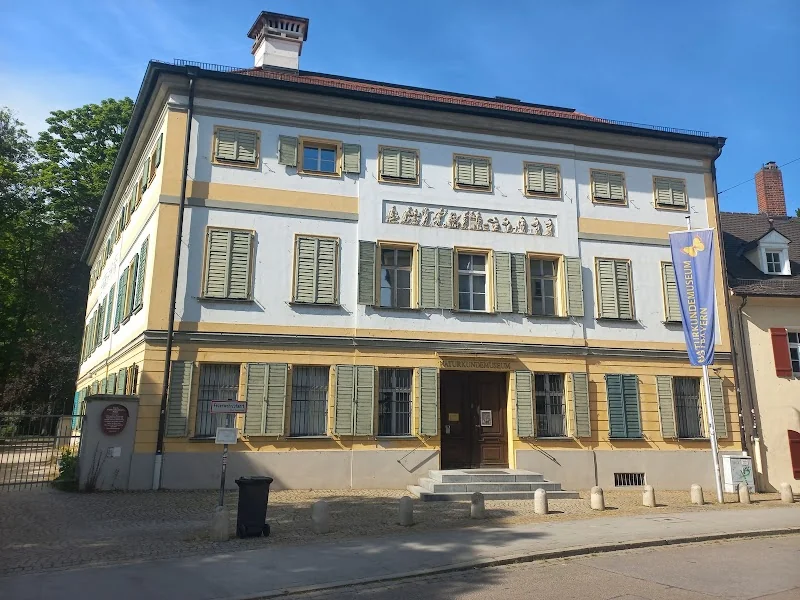
The Naturkundemuseum Regensburg, officially Naturkundemuseum Ostbayern, is a house for natural history, environmental education, and regional discoveries in Herzogspark. Its exhibitions connect East Bavaria's geological history with the present landscape, featuring rocks, soils, minerals, habitats, and historical cabinets. The museum is housed in a classicist ducal palace and has been located here since 1961; it is currently closed while the website points to new natural history offerings in Herzogspark and a careful refurbishment of the building. Those researching the museum online will find not only a classic excursion destination but also a traditional educational and event center with a strong regional profile. ([tourismus.regensburg.de](https://tourismus.regensburg.de/erleben-entdecken/kunst-kultur/naturkundemuseum))
Opening Hours and Current Status
The regularly communicated opening hours are Tuesday to Sunday from 10 AM to 4 PM; Monday is closed. At the same time, the official visitor information makes it clear that the museum is currently closed and that the building will be gradually refurbished in the coming years. The permanent exhibition will also be revised in parts, with museum educational programs and interactive, playful elements continuing to play an important role. This is the most important information for visitors in 2026: Anyone planning a trip to Regensburg should check the official website in advance and not rely solely on general museum hours. This check is especially sensible for spontaneous excursions, trips with children, or group visits, as status, offerings, and event formats may change. The website also already points to new natural history offerings in the adjacent Herzogspark, ensuring that the address remains a point of contact for nature education even during the closure. For ongoing dates and information, the event calendar is the best source, supplemented by the museum's newsletter. Thus, despite the temporary closure, the Naturkundemuseum Regensburg remains a current place in the urban cultural and educational network. ([nmo-regensburg.de](https://www.nmo-regensburg.de/))
Directions and Parking
The location at Am Prebrunntor 4 is central and also provides a small logistical advantage for those who want to explore Regensburg on foot. According to visitor information, those arriving by car should come from the A 93 at the Regensburg-West exit and then head towards the center. It is important to note from the official site: There is no parking available at the museum itself. Instead, there are underground garages a few minutes' walk away at Bismarckplatz and Arnulfsplatz. This makes the museum particularly practical for city visitors who are already planning a tour through the old town, Herzogspark, or nearby attractions. The house is also well connected by public transport: Lines 6 or 11 take guests to the Ostdeutsche Galerie stop, from where a short walk through Prebrunnallee leads towards the Danube and the museum. For people with mobility restrictions, it is also important that the museum is currently barrier-free to enter, according to visitor information. Staff assist with access, and the bell marked Pforte is located on the southern facade of the building, to the right of the gate to Herzogspark. Almost all exhibition areas are accessible via barrier-free entrances, with the exception of the museum education room on the 2nd floor, which is not barrier-free. These details show: Even though the address is located in the greenery, the house is well integrated into the city and is easily accessible for different visitor groups. ([nmo-regensburg.de](https://www.nmo-regensburg.de/museum/besucherinfo/))
Admission Prices and Practical Information
Regarding admission prices, the official visitor information communicates a clear, family-friendly structure: 5.00 euros for adults, 2.50 euros for those entitled to discounts, and 10.00 euros for families with children under 18 years. Additionally, the homepage mentions that children under 6 years are free. This mix of regular admission, discounts, and free access for various target groups makes the museum particularly attractive for families, school classes, and culturally interested groups. At the same time, visitors should note that card payments are unfortunately not possible, according to visitor information. Therefore, anyone preparing for a possible later visit should plan for cash and check the current conditions again, as the website regularly updates the information. In addition to the prices, some practical rules are also important: Dogs and other pets are not allowed, assistance animals are an exception and should be registered by phone in advance. The house is currently barrier-free for wheelchair users, and a barrier-free toilet is available on the 1st floor. The elevator to the upper exhibition rooms is 90 cm wide and 138 cm deep. This combination of clear pricing information and specific service details makes the Naturkundemuseum Regensburg a well-planned destination for a later visit after reopening. Until then, the website remains the most reliable source for all practical information regarding admission, accessibility, and visiting rules. ([nmo-regensburg.de](https://www.nmo-regensburg.de/museum/besucherinfo/))
Exhibitions and History of the House
Content-wise, the Naturkundemuseum focuses on the natural space of East Bavaria in the past and present. The permanent exhibition is divided into four sections: Natural space East Bavaria on the ground floor, past habitats on the ground floor, habitats today in East Bavaria on the two upper floors, and the natural cabinets on the 1st floor. This structure makes the house didactically strong, as it connects geological history, today's biotopes, and historical scientific culture. On the ground floor, the focus is on landscapes from the Bavarian Forest through the Franconian Jura to the tertiary hill country and Gäuboden, on water and wind formation, soils, micro-habitats, and mineral treasures from East Bavarian mining. In the upper levels, today's habitats are vividly conveyed through dioramas, animal sounds, learning play devices, children's books, and live examples. The natural cabinets, in turn, remind us with historical devices and furniture of the predecessors of modern natural history museums; in Regensburg, reference is made to the tradition of Jacob Christian Schäffer and the wooden library of Candidus Huber. The building itself is also part of the history: The ducal palace was built from 1804 to 1806 as a villa on the then outskirts of the city, constructed by Georg Friedrich Ritter von Müller according to plans by Emanuel d’Herigoyen. The classicist hall, with 60 square meters and eleven windows, is now used for lectures and concerts. The museum opened in 1961; after war destruction, the collections were rebuilt from 1950 onwards, and after a major renovation from 1986 to 1991, a museum concept was created that was modernized until 1996 and included media, experience-oriented, and playful elements. This historical depth makes the Naturkundemuseum Regensburg much more than a place with exhibits: It is a house where natural and cultural history visibly intertwines. ([nmo-regensburg.de](https://www.nmo-regensburg.de/museum/geschichte/?utm_source=openai))
Events, Concerts, and Program
Even though the museum is currently closed, its event profile remains a central search topic and a true unique selling point. The official site describes the historic hall as a beautiful place for lectures on scientific topics, live multi-visions, and richly illustrated travel reports. Occasionally, small ensemble concerts or solo performances also take place there, and readings have also been presented in this stylish setting. Particularly important are the recurring series: The summer serenades in Herzogspark have been running for over 20 years and bring two to three concert evenings to the balmy summer nights in August; in bad weather, the historic hall can be used as an alternative. The Night of Poetry, in turn, was initiated in 2010 by Regensburg writers' associations and has established the museum as a literary meeting point. The current program booklet for January to June 2026 also lists special exhibitions, guided tours, lectures, family activities, and concerts as fixed components of the semi-annual program. Among other things, an exhibition on city trees, a special exhibition on dormice, as well as several natural history guided tours and musical evenings are mentioned there. This makes it clear why many search queries understand the house not only as a museum but also as a cultural venue. Those looking for events, concerts, or the upcoming program are, in truth, searching for a place that brings together science, music, literature, and nature education. This mix makes the Naturkundemuseum's page so relevant for local SEO, for Discover, and for social media impulses. ([nmo-regensburg.de](https://www.nmo-regensburg.de/musik-literatur/))
Children, Families, and Environmental Education
For families and education, the Naturkundemuseum Regensburg is particularly well-equipped. The official children's page emphasizes that nature and environmental education has played an important role since the first partial opening of the exhibitions in 1993 and that numerous offerings for different target groups have been developed over the years. Schools and kindergartens can book themed tours that last about 1.5 to 2 hours, depending on the focus, and address content from the exhibition or the regional environment. Mentioned are, among others, Herzogspark, the water world of the museum pond, and the geological history in the brown coal mine Dechbetten. There are also child-friendly tours for preschool children. Additionally, children's birthdays for groups of up to 15 children can be organized, where a selection of topics with different speakers can be chosen. Booking should be made at least four weeks in advance. For families, there are also research boxes available for a rental fee of 3 euros; they contain game instructions, materials, and questionnaires and are designed for children aged about 8 to 12 years. School classes receive these boxes for free during their visit. In the warm season, approximately from mid-April to early October, the Nature City Game can also be borrowed: with a magnifying glass, identification book, binoculars, and a material bag, one explores urban nature along the Danube and in the city center, pays a fee of 5 euros plus a 30 euro deposit, and can even participate in a raffle at the end. These offerings beautifully demonstrate how the museum connects learning, movement, and discovery. This is a strong argument for parents, teachers, and those looking for vacation programs to keep the Naturkundemuseum Regensburg in mind. ([nmo-regensburg.de](https://www.nmo-regensburg.de/kinder/))
Why the Naturkundemuseum Regensburg Remains Relevant for Visitors and Search Engines
The search interest surrounding the Naturkundemuseum Regensburg is broad: People want to know opening hours, look for parking, compare admission prices, see photos, read reviews, find children's offerings, or find out if events are currently taking place. This is precisely why the combination of historical architecture, natural history, family programs, and cultural hall operations is so valuable. The museum showcases the natural diversity of East Bavaria, from rocks and soils to today's habitats, while preserving the tradition of natural cabinets and using the historic hall as a stage for lectures, concerts, and readings. The location at Herzogspark is also a plus, as it connects walking, city visits, and museum interest. Even the current closure period is SEO-relevant, as it provides searchers with a clear, honest answer: The house is currently not regularly open, but it is continuing to develop its educational work and is providing new offerings in the surrounding area. Therefore, anyone searching for Naturkundemuseum Ostbayern Regensburg, Naturkundemuseum Regensburg opening hours, parking, prices, or children is, in truth, searching for a place with recognition value, substance, and local relevance. For this need, the official material provides a reliable basis that can later be easily supplemented with new programs, special exhibitions, and current visitor information. ([nmo-regensburg.de](https://www.nmo-regensburg.de/museum/besucherinfo/))
Sources:
- Naturkundemuseum Ostbayern - Homepage
- Naturkundemuseum Ostbayern - Visitor Information
- Naturkundemuseum Ostbayern - History
- Naturkundemuseum Ostbayern - Permanent Exhibition
- Naturkundemuseum Ostbayern - Lectures, Music & Literature
- Naturkundemuseum Ostbayern - Children's Offers
- Regensburg Tourism - Naturkundemuseum
- Naturkundemuseum Ostbayern - Program Booklet January to June 2026
Mehr anzeigenWeniger anzeigen
Naturkundemuseum Regensburg | Opening Hours & Prices
The Naturkundemuseum Regensburg, officially Naturkundemuseum Ostbayern, is a house for natural history, environmental education, and regional discoveries in Herzogspark. Its exhibitions connect East Bavaria's geological history with the present landscape, featuring rocks, soils, minerals, habitats, and historical cabinets. The museum is housed in a classicist ducal palace and has been located here since 1961; it is currently closed while the website points to new natural history offerings in Herzogspark and a careful refurbishment of the building. Those researching the museum online will find not only a classic excursion destination but also a traditional educational and event center with a strong regional profile. ([tourismus.regensburg.de](https://tourismus.regensburg.de/erleben-entdecken/kunst-kultur/naturkundemuseum))
Opening Hours and Current Status
The regularly communicated opening hours are Tuesday to Sunday from 10 AM to 4 PM; Monday is closed. At the same time, the official visitor information makes it clear that the museum is currently closed and that the building will be gradually refurbished in the coming years. The permanent exhibition will also be revised in parts, with museum educational programs and interactive, playful elements continuing to play an important role. This is the most important information for visitors in 2026: Anyone planning a trip to Regensburg should check the official website in advance and not rely solely on general museum hours. This check is especially sensible for spontaneous excursions, trips with children, or group visits, as status, offerings, and event formats may change. The website also already points to new natural history offerings in the adjacent Herzogspark, ensuring that the address remains a point of contact for nature education even during the closure. For ongoing dates and information, the event calendar is the best source, supplemented by the museum's newsletter. Thus, despite the temporary closure, the Naturkundemuseum Regensburg remains a current place in the urban cultural and educational network. ([nmo-regensburg.de](https://www.nmo-regensburg.de/))
Directions and Parking
The location at Am Prebrunntor 4 is central and also provides a small logistical advantage for those who want to explore Regensburg on foot. According to visitor information, those arriving by car should come from the A 93 at the Regensburg-West exit and then head towards the center. It is important to note from the official site: There is no parking available at the museum itself. Instead, there are underground garages a few minutes' walk away at Bismarckplatz and Arnulfsplatz. This makes the museum particularly practical for city visitors who are already planning a tour through the old town, Herzogspark, or nearby attractions. The house is also well connected by public transport: Lines 6 or 11 take guests to the Ostdeutsche Galerie stop, from where a short walk through Prebrunnallee leads towards the Danube and the museum. For people with mobility restrictions, it is also important that the museum is currently barrier-free to enter, according to visitor information. Staff assist with access, and the bell marked Pforte is located on the southern facade of the building, to the right of the gate to Herzogspark. Almost all exhibition areas are accessible via barrier-free entrances, with the exception of the museum education room on the 2nd floor, which is not barrier-free. These details show: Even though the address is located in the greenery, the house is well integrated into the city and is easily accessible for different visitor groups. ([nmo-regensburg.de](https://www.nmo-regensburg.de/museum/besucherinfo/))
Admission Prices and Practical Information
Regarding admission prices, the official visitor information communicates a clear, family-friendly structure: 5.00 euros for adults, 2.50 euros for those entitled to discounts, and 10.00 euros for families with children under 18 years. Additionally, the homepage mentions that children under 6 years are free. This mix of regular admission, discounts, and free access for various target groups makes the museum particularly attractive for families, school classes, and culturally interested groups. At the same time, visitors should note that card payments are unfortunately not possible, according to visitor information. Therefore, anyone preparing for a possible later visit should plan for cash and check the current conditions again, as the website regularly updates the information. In addition to the prices, some practical rules are also important: Dogs and other pets are not allowed, assistance animals are an exception and should be registered by phone in advance. The house is currently barrier-free for wheelchair users, and a barrier-free toilet is available on the 1st floor. The elevator to the upper exhibition rooms is 90 cm wide and 138 cm deep. This combination of clear pricing information and specific service details makes the Naturkundemuseum Regensburg a well-planned destination for a later visit after reopening. Until then, the website remains the most reliable source for all practical information regarding admission, accessibility, and visiting rules. ([nmo-regensburg.de](https://www.nmo-regensburg.de/museum/besucherinfo/))
Exhibitions and History of the House
Content-wise, the Naturkundemuseum focuses on the natural space of East Bavaria in the past and present. The permanent exhibition is divided into four sections: Natural space East Bavaria on the ground floor, past habitats on the ground floor, habitats today in East Bavaria on the two upper floors, and the natural cabinets on the 1st floor. This structure makes the house didactically strong, as it connects geological history, today's biotopes, and historical scientific culture. On the ground floor, the focus is on landscapes from the Bavarian Forest through the Franconian Jura to the tertiary hill country and Gäuboden, on water and wind formation, soils, micro-habitats, and mineral treasures from East Bavarian mining. In the upper levels, today's habitats are vividly conveyed through dioramas, animal sounds, learning play devices, children's books, and live examples. The natural cabinets, in turn, remind us with historical devices and furniture of the predecessors of modern natural history museums; in Regensburg, reference is made to the tradition of Jacob Christian Schäffer and the wooden library of Candidus Huber. The building itself is also part of the history: The ducal palace was built from 1804 to 1806 as a villa on the then outskirts of the city, constructed by Georg Friedrich Ritter von Müller according to plans by Emanuel d’Herigoyen. The classicist hall, with 60 square meters and eleven windows, is now used for lectures and concerts. The museum opened in 1961; after war destruction, the collections were rebuilt from 1950 onwards, and after a major renovation from 1986 to 1991, a museum concept was created that was modernized until 1996 and included media, experience-oriented, and playful elements. This historical depth makes the Naturkundemuseum Regensburg much more than a place with exhibits: It is a house where natural and cultural history visibly intertwines. ([nmo-regensburg.de](https://www.nmo-regensburg.de/museum/geschichte/?utm_source=openai))
Events, Concerts, and Program
Even though the museum is currently closed, its event profile remains a central search topic and a true unique selling point. The official site describes the historic hall as a beautiful place for lectures on scientific topics, live multi-visions, and richly illustrated travel reports. Occasionally, small ensemble concerts or solo performances also take place there, and readings have also been presented in this stylish setting. Particularly important are the recurring series: The summer serenades in Herzogspark have been running for over 20 years and bring two to three concert evenings to the balmy summer nights in August; in bad weather, the historic hall can be used as an alternative. The Night of Poetry, in turn, was initiated in 2010 by Regensburg writers' associations and has established the museum as a literary meeting point. The current program booklet for January to June 2026 also lists special exhibitions, guided tours, lectures, family activities, and concerts as fixed components of the semi-annual program. Among other things, an exhibition on city trees, a special exhibition on dormice, as well as several natural history guided tours and musical evenings are mentioned there. This makes it clear why many search queries understand the house not only as a museum but also as a cultural venue. Those looking for events, concerts, or the upcoming program are, in truth, searching for a place that brings together science, music, literature, and nature education. This mix makes the Naturkundemuseum's page so relevant for local SEO, for Discover, and for social media impulses. ([nmo-regensburg.de](https://www.nmo-regensburg.de/musik-literatur/))
Children, Families, and Environmental Education
For families and education, the Naturkundemuseum Regensburg is particularly well-equipped. The official children's page emphasizes that nature and environmental education has played an important role since the first partial opening of the exhibitions in 1993 and that numerous offerings for different target groups have been developed over the years. Schools and kindergartens can book themed tours that last about 1.5 to 2 hours, depending on the focus, and address content from the exhibition or the regional environment. Mentioned are, among others, Herzogspark, the water world of the museum pond, and the geological history in the brown coal mine Dechbetten. There are also child-friendly tours for preschool children. Additionally, children's birthdays for groups of up to 15 children can be organized, where a selection of topics with different speakers can be chosen. Booking should be made at least four weeks in advance. For families, there are also research boxes available for a rental fee of 3 euros; they contain game instructions, materials, and questionnaires and are designed for children aged about 8 to 12 years. School classes receive these boxes for free during their visit. In the warm season, approximately from mid-April to early October, the Nature City Game can also be borrowed: with a magnifying glass, identification book, binoculars, and a material bag, one explores urban nature along the Danube and in the city center, pays a fee of 5 euros plus a 30 euro deposit, and can even participate in a raffle at the end. These offerings beautifully demonstrate how the museum connects learning, movement, and discovery. This is a strong argument for parents, teachers, and those looking for vacation programs to keep the Naturkundemuseum Regensburg in mind. ([nmo-regensburg.de](https://www.nmo-regensburg.de/kinder/))
Why the Naturkundemuseum Regensburg Remains Relevant for Visitors and Search Engines
The search interest surrounding the Naturkundemuseum Regensburg is broad: People want to know opening hours, look for parking, compare admission prices, see photos, read reviews, find children's offerings, or find out if events are currently taking place. This is precisely why the combination of historical architecture, natural history, family programs, and cultural hall operations is so valuable. The museum showcases the natural diversity of East Bavaria, from rocks and soils to today's habitats, while preserving the tradition of natural cabinets and using the historic hall as a stage for lectures, concerts, and readings. The location at Herzogspark is also a plus, as it connects walking, city visits, and museum interest. Even the current closure period is SEO-relevant, as it provides searchers with a clear, honest answer: The house is currently not regularly open, but it is continuing to develop its educational work and is providing new offerings in the surrounding area. Therefore, anyone searching for Naturkundemuseum Ostbayern Regensburg, Naturkundemuseum Regensburg opening hours, parking, prices, or children is, in truth, searching for a place with recognition value, substance, and local relevance. For this need, the official material provides a reliable basis that can later be easily supplemented with new programs, special exhibitions, and current visitor information. ([nmo-regensburg.de](https://www.nmo-regensburg.de/museum/besucherinfo/))
Sources:
- Naturkundemuseum Ostbayern - Homepage
- Naturkundemuseum Ostbayern - Visitor Information
- Naturkundemuseum Ostbayern - History
- Naturkundemuseum Ostbayern - Permanent Exhibition
- Naturkundemuseum Ostbayern - Lectures, Music & Literature
- Naturkundemuseum Ostbayern - Children's Offers
- Regensburg Tourism - Naturkundemuseum
- Naturkundemuseum Ostbayern - Program Booklet January to June 2026
Naturkundemuseum Regensburg | Opening Hours & Prices
The Naturkundemuseum Regensburg, officially Naturkundemuseum Ostbayern, is a house for natural history, environmental education, and regional discoveries in Herzogspark. Its exhibitions connect East Bavaria's geological history with the present landscape, featuring rocks, soils, minerals, habitats, and historical cabinets. The museum is housed in a classicist ducal palace and has been located here since 1961; it is currently closed while the website points to new natural history offerings in Herzogspark and a careful refurbishment of the building. Those researching the museum online will find not only a classic excursion destination but also a traditional educational and event center with a strong regional profile. ([tourismus.regensburg.de](https://tourismus.regensburg.de/erleben-entdecken/kunst-kultur/naturkundemuseum))
Opening Hours and Current Status
The regularly communicated opening hours are Tuesday to Sunday from 10 AM to 4 PM; Monday is closed. At the same time, the official visitor information makes it clear that the museum is currently closed and that the building will be gradually refurbished in the coming years. The permanent exhibition will also be revised in parts, with museum educational programs and interactive, playful elements continuing to play an important role. This is the most important information for visitors in 2026: Anyone planning a trip to Regensburg should check the official website in advance and not rely solely on general museum hours. This check is especially sensible for spontaneous excursions, trips with children, or group visits, as status, offerings, and event formats may change. The website also already points to new natural history offerings in the adjacent Herzogspark, ensuring that the address remains a point of contact for nature education even during the closure. For ongoing dates and information, the event calendar is the best source, supplemented by the museum's newsletter. Thus, despite the temporary closure, the Naturkundemuseum Regensburg remains a current place in the urban cultural and educational network. ([nmo-regensburg.de](https://www.nmo-regensburg.de/))
Directions and Parking
The location at Am Prebrunntor 4 is central and also provides a small logistical advantage for those who want to explore Regensburg on foot. According to visitor information, those arriving by car should come from the A 93 at the Regensburg-West exit and then head towards the center. It is important to note from the official site: There is no parking available at the museum itself. Instead, there are underground garages a few minutes' walk away at Bismarckplatz and Arnulfsplatz. This makes the museum particularly practical for city visitors who are already planning a tour through the old town, Herzogspark, or nearby attractions. The house is also well connected by public transport: Lines 6 or 11 take guests to the Ostdeutsche Galerie stop, from where a short walk through Prebrunnallee leads towards the Danube and the museum. For people with mobility restrictions, it is also important that the museum is currently barrier-free to enter, according to visitor information. Staff assist with access, and the bell marked Pforte is located on the southern facade of the building, to the right of the gate to Herzogspark. Almost all exhibition areas are accessible via barrier-free entrances, with the exception of the museum education room on the 2nd floor, which is not barrier-free. These details show: Even though the address is located in the greenery, the house is well integrated into the city and is easily accessible for different visitor groups. ([nmo-regensburg.de](https://www.nmo-regensburg.de/museum/besucherinfo/))
Admission Prices and Practical Information
Regarding admission prices, the official visitor information communicates a clear, family-friendly structure: 5.00 euros for adults, 2.50 euros for those entitled to discounts, and 10.00 euros for families with children under 18 years. Additionally, the homepage mentions that children under 6 years are free. This mix of regular admission, discounts, and free access for various target groups makes the museum particularly attractive for families, school classes, and culturally interested groups. At the same time, visitors should note that card payments are unfortunately not possible, according to visitor information. Therefore, anyone preparing for a possible later visit should plan for cash and check the current conditions again, as the website regularly updates the information. In addition to the prices, some practical rules are also important: Dogs and other pets are not allowed, assistance animals are an exception and should be registered by phone in advance. The house is currently barrier-free for wheelchair users, and a barrier-free toilet is available on the 1st floor. The elevator to the upper exhibition rooms is 90 cm wide and 138 cm deep. This combination of clear pricing information and specific service details makes the Naturkundemuseum Regensburg a well-planned destination for a later visit after reopening. Until then, the website remains the most reliable source for all practical information regarding admission, accessibility, and visiting rules. ([nmo-regensburg.de](https://www.nmo-regensburg.de/museum/besucherinfo/))
Exhibitions and History of the House
Content-wise, the Naturkundemuseum focuses on the natural space of East Bavaria in the past and present. The permanent exhibition is divided into four sections: Natural space East Bavaria on the ground floor, past habitats on the ground floor, habitats today in East Bavaria on the two upper floors, and the natural cabinets on the 1st floor. This structure makes the house didactically strong, as it connects geological history, today's biotopes, and historical scientific culture. On the ground floor, the focus is on landscapes from the Bavarian Forest through the Franconian Jura to the tertiary hill country and Gäuboden, on water and wind formation, soils, micro-habitats, and mineral treasures from East Bavarian mining. In the upper levels, today's habitats are vividly conveyed through dioramas, animal sounds, learning play devices, children's books, and live examples. The natural cabinets, in turn, remind us with historical devices and furniture of the predecessors of modern natural history museums; in Regensburg, reference is made to the tradition of Jacob Christian Schäffer and the wooden library of Candidus Huber. The building itself is also part of the history: The ducal palace was built from 1804 to 1806 as a villa on the then outskirts of the city, constructed by Georg Friedrich Ritter von Müller according to plans by Emanuel d’Herigoyen. The classicist hall, with 60 square meters and eleven windows, is now used for lectures and concerts. The museum opened in 1961; after war destruction, the collections were rebuilt from 1950 onwards, and after a major renovation from 1986 to 1991, a museum concept was created that was modernized until 1996 and included media, experience-oriented, and playful elements. This historical depth makes the Naturkundemuseum Regensburg much more than a place with exhibits: It is a house where natural and cultural history visibly intertwines. ([nmo-regensburg.de](https://www.nmo-regensburg.de/museum/geschichte/?utm_source=openai))
Events, Concerts, and Program
Even though the museum is currently closed, its event profile remains a central search topic and a true unique selling point. The official site describes the historic hall as a beautiful place for lectures on scientific topics, live multi-visions, and richly illustrated travel reports. Occasionally, small ensemble concerts or solo performances also take place there, and readings have also been presented in this stylish setting. Particularly important are the recurring series: The summer serenades in Herzogspark have been running for over 20 years and bring two to three concert evenings to the balmy summer nights in August; in bad weather, the historic hall can be used as an alternative. The Night of Poetry, in turn, was initiated in 2010 by Regensburg writers' associations and has established the museum as a literary meeting point. The current program booklet for January to June 2026 also lists special exhibitions, guided tours, lectures, family activities, and concerts as fixed components of the semi-annual program. Among other things, an exhibition on city trees, a special exhibition on dormice, as well as several natural history guided tours and musical evenings are mentioned there. This makes it clear why many search queries understand the house not only as a museum but also as a cultural venue. Those looking for events, concerts, or the upcoming program are, in truth, searching for a place that brings together science, music, literature, and nature education. This mix makes the Naturkundemuseum's page so relevant for local SEO, for Discover, and for social media impulses. ([nmo-regensburg.de](https://www.nmo-regensburg.de/musik-literatur/))
Children, Families, and Environmental Education
For families and education, the Naturkundemuseum Regensburg is particularly well-equipped. The official children's page emphasizes that nature and environmental education has played an important role since the first partial opening of the exhibitions in 1993 and that numerous offerings for different target groups have been developed over the years. Schools and kindergartens can book themed tours that last about 1.5 to 2 hours, depending on the focus, and address content from the exhibition or the regional environment. Mentioned are, among others, Herzogspark, the water world of the museum pond, and the geological history in the brown coal mine Dechbetten. There are also child-friendly tours for preschool children. Additionally, children's birthdays for groups of up to 15 children can be organized, where a selection of topics with different speakers can be chosen. Booking should be made at least four weeks in advance. For families, there are also research boxes available for a rental fee of 3 euros; they contain game instructions, materials, and questionnaires and are designed for children aged about 8 to 12 years. School classes receive these boxes for free during their visit. In the warm season, approximately from mid-April to early October, the Nature City Game can also be borrowed: with a magnifying glass, identification book, binoculars, and a material bag, one explores urban nature along the Danube and in the city center, pays a fee of 5 euros plus a 30 euro deposit, and can even participate in a raffle at the end. These offerings beautifully demonstrate how the museum connects learning, movement, and discovery. This is a strong argument for parents, teachers, and those looking for vacation programs to keep the Naturkundemuseum Regensburg in mind. ([nmo-regensburg.de](https://www.nmo-regensburg.de/kinder/))
Why the Naturkundemuseum Regensburg Remains Relevant for Visitors and Search Engines
The search interest surrounding the Naturkundemuseum Regensburg is broad: People want to know opening hours, look for parking, compare admission prices, see photos, read reviews, find children's offerings, or find out if events are currently taking place. This is precisely why the combination of historical architecture, natural history, family programs, and cultural hall operations is so valuable. The museum showcases the natural diversity of East Bavaria, from rocks and soils to today's habitats, while preserving the tradition of natural cabinets and using the historic hall as a stage for lectures, concerts, and readings. The location at Herzogspark is also a plus, as it connects walking, city visits, and museum interest. Even the current closure period is SEO-relevant, as it provides searchers with a clear, honest answer: The house is currently not regularly open, but it is continuing to develop its educational work and is providing new offerings in the surrounding area. Therefore, anyone searching for Naturkundemuseum Ostbayern Regensburg, Naturkundemuseum Regensburg opening hours, parking, prices, or children is, in truth, searching for a place with recognition value, substance, and local relevance. For this need, the official material provides a reliable basis that can later be easily supplemented with new programs, special exhibitions, and current visitor information. ([nmo-regensburg.de](https://www.nmo-regensburg.de/museum/besucherinfo/))
Sources:
- Naturkundemuseum Ostbayern - Homepage
- Naturkundemuseum Ostbayern - Visitor Information
- Naturkundemuseum Ostbayern - History
- Naturkundemuseum Ostbayern - Permanent Exhibition
- Naturkundemuseum Ostbayern - Lectures, Music & Literature
- Naturkundemuseum Ostbayern - Children's Offers
- Regensburg Tourism - Naturkundemuseum
- Naturkundemuseum Ostbayern - Program Booklet January to June 2026
Upcoming Events
No events found
Frequently Asked Questions
Reviews
Paola Silvani
9. March 2023
Very nice and rich museum, not much advertised, but in its three floors, it keeps what it promises. Staff is very friendly and helpful. Very interesting also for kids. The building itself - beginning of the 20th century - is very beautiful.
Simone Harms
15. October 2021
Very small museum. The highlight was the cute little chipmunk they had in a cage on the 2nd floor. Two of the fun interactive exhibits were still closed due to Corona.. Would not go back.
Justin N.
29. April 2017
Cute, small natural history museum with a beautiful garden. Emphasis on small. 4€ rate is quite fair.
Berm. Ho.
28. July 2024
Terrific!
Sathiyamoorthy Ramamoorthy
12. June 2019
Wonderful