
Dr.-Johann-Maier-Straße 5, Regensburg
Dr.-Johann-Maier-Straße 5, 93049 Regensburg, Germany
East German Gallery | Exhibitions & Opening Hours
The East German Gallery in Regensburg is today known as the East German Gallery Art Forum, or KOG for short, and is one of the most prominent art addresses in the city. Those who enter the building in the city park on the western edge of the old town encounter a museum with a clear identity but a wide horizon: The collection connects art from the 19th century with positions up to the present, focusing on artists with biographical or thematic references to Eastern and Southeastern Europe. The house not only shows paintings but also sculptures, three-dimensional objects, and extensive paper works. Thus, the East German Gallery is not a quick photo spot, but a place where a visit can be consciously planned, and where the paths through the collection, special exhibitions, and sculpture park are worthwhile. The location in the city park, the proximity to the old town, and the dense program make the museum interesting for both art lovers and visitors to Regensburg. ([kunstforum.net](https://www.kunstforum.net/en/))
Opening Hours, Admission, and Visit Planning
When searching for East German Gallery Regensburg opening hours, the most important information is quickly found: The museum is open from Tuesday to Sunday from 10 am to 5 pm, and on Thursdays even until 8 pm. On public holidays, it is generally open until 5 pm, while the house remains closed on certain days such as January 1, Good Friday, May 1, November 1, as well as on December 24, 25, and 31. At the same time, the website explicitly names Easter Monday and Whit Monday as opening days, even though Monday is usually a regular day off. Therefore, if you plan your visit on a public holiday or around Easter, you should check shortly in advance whether it is open on that specific day. This is particularly important because the website publishes current notices directly on the visit page, and special regulations can change at short notice. ([kunstforum.net](https://www.kunstforum.net/ihr-besuch))
The East German Gallery also offers clear orientation regarding admission. The regular admission fee is 6 euros, reduced 4 euros, and children up to 12 years have free admission. For families, there is a family ticket for 12 euros, and annual tickets and family annual tickets are also offered. The discount applies, among others, to students, apprentices, volunteers, holders of the Bavarian Volunteer Card, as well as various other eligible groups. Those coming with small children will also find practical service points: The website mentions a changing table, free Wi-Fi for three hours with a visitor code, a museum shop, and a museum café. Additionally, individual tours of the permanent or special exhibition can be booked privately. Thus, a normal museum visit quickly becomes a relaxed cultural appointment that is suitable for both the morning and the late Thursday afternoon. ([kunstforum.net](https://www.kunstforum.net/ihr-besuch))
Exhibition, Program, and Current Topics
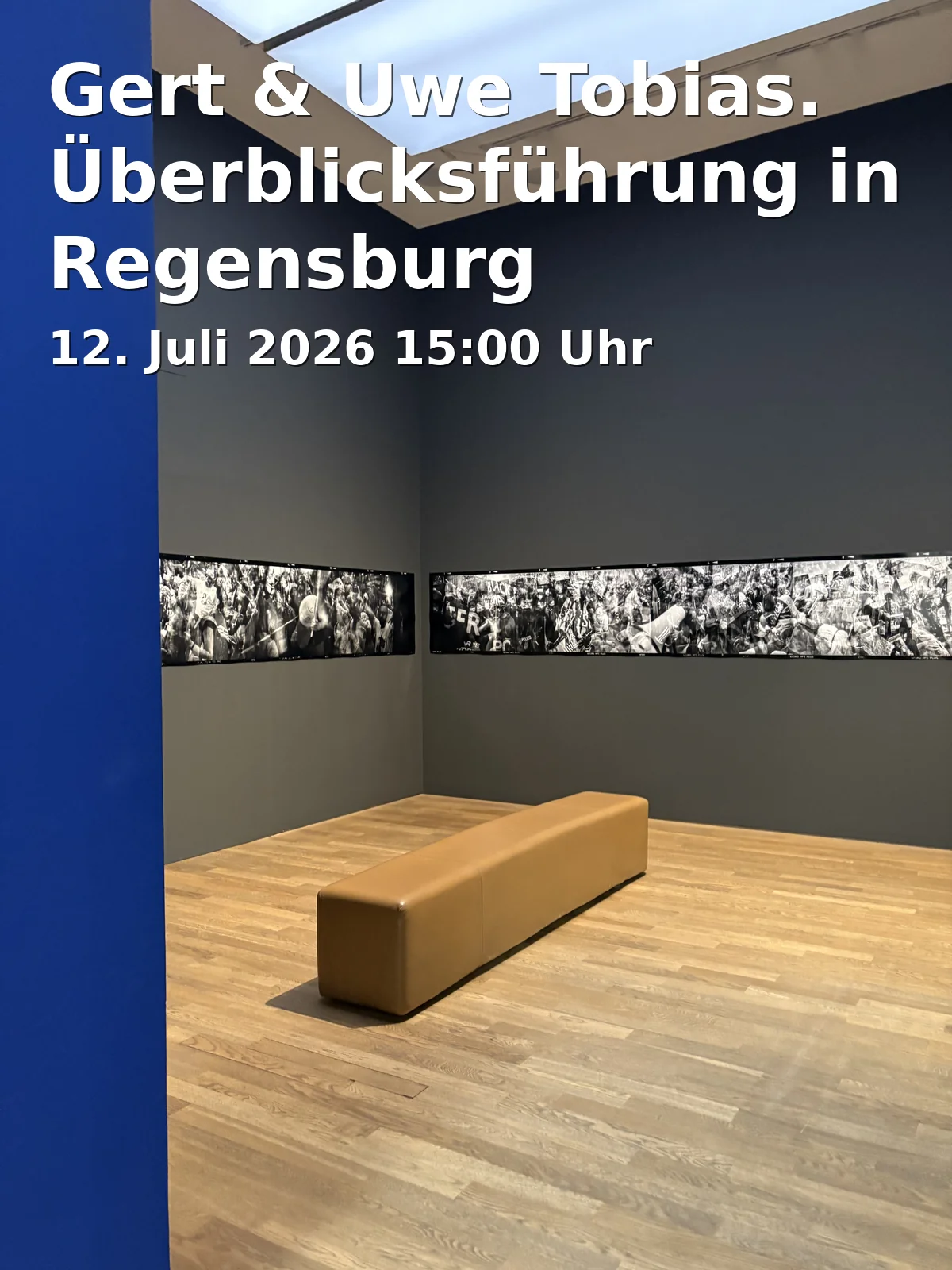
If users search for East German Gallery Regensburg exhibition or East German Gallery Regensburg current exhibition, looking at the official website is particularly fruitful. There, the current presentation is announced as the exhibition Gert & Uwe Tobias. Lovis-Corinth Prize 2026. The artist duo is known for color-intensive canvases, collages, drawings, objects, and spectacular color woodcuts; the house describes the works as a fantasy world with striking aesthetics. This fits well with the profile of the museum, as the KOG does not see itself as a static collection hall, but as a place where historical perspectives and contemporary art come into conversation. In addition to the special exhibition, the museum shows the permanent exhibition Where Do We Come From, Where Are We Going?, which is designed as a journey through time and space. Those interested in a specific date will find regular tours, introductions, workshops, and thematic walks in the program on the website. ([kunstforum.net](https://www.kunstforum.net/en/))
The program is broad enough to attract different target groups. Particularly important for search queries like East German Gallery Regensburg program is the mix of tours of the permanent exhibition, guided tours of special exhibitions, and outdoor offerings. The website lists events such as Space and Area, Gert & Uwe Tobias. Lovis-Corinth Prize 2026, Art in the Park, or special introductions for educators. Additionally, there are formats with a clear educational function, where visitors learn more about the work, technique, and context. Those who want to experience the East German Gallery not just in passing but with substantive depth are well advised with a combined strategy of exhibition, tour, and walk through the city park. The current program structure also shows that the museum tells its themes not only inside but also continues them in the outdoor space, sculptures, and facade. This is exactly what makes the East German Gallery Regensburg so attractive to a culture-interested audience. ([kunstforum.net](https://www.kunstforum.net/en/))
The Collection: East German Art, Lovis Corinth, and Great Names
The collection is the true heart of the East German Gallery. It is officially described as the core of the museum and includes around 2,000 paintings, about 500 sculptures, and other three-dimensional objects, as well as approximately 40,000 paper works, including drawings, prints, watercolors, and photographs. The collection is thematically and biographically focused on artists who have connections to those regions of Eastern and Southeastern Europe that were once settled by Germans. At the same time, alongside German artists, Czech, Slovak, Polish, and Russian colleagues are also represented. For search queries like East German Gallery Corinth or East German Gallery Lovis Corinth, it is important to note: The house not only includes the namesake of the Lovis-Corinth Prize but also displays works by many well-known artists of this art history. The collection includes works by Käthe Kollwitz, Lovis Corinth, Karl Schmidt-Rottluff, Max Pechstein, Otto Dix, and Gerhard Richter, among others. ([kunstforum.net](https://www.kunstforum.net/en/museum))
The internal logic of the collection is also interesting. It has not grown randomly but has emerged from the founding perspective of the museum. The collection began with the initiatives of the Adalbert Stifter Association in Munich and the then Artists' Guild in Esslingen and has been expanded over the decades through state support, foundations, estates, and long-term loans. The history of the museum also makes it clear that the KOG has become one of the major collection museums in the region over the years. For visitors, this means: Those interested in modern and contemporary art with historical and East Central European references will find here not a narrow thematic space but a collection with strong narrative power. Particularly appealing is that the collection not only looks back but also creates new contexts repeatedly in the upper floor of the museum and in the presentation of changing special exhibitions. Thus, a historically rich collection becomes a vibrant place of contemporary reading. ([kunstforum.net](https://www.kunstforum.net/en/museum/collection))
The Museum, the Building, and the History Since 1871
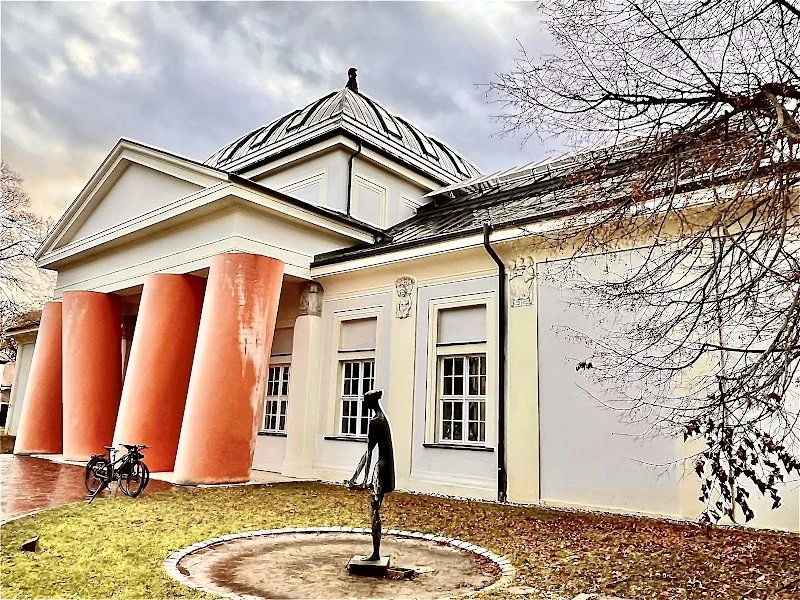
The East German Gallery is architecturally as exciting as it is thematically. The current museum goes back to a gymnasium from 1871. For the Upper Palatinate district exhibition in 1910, the building was transformed into an art hall and integrated into the exhibition area adjacent to the city park to the west. The Art Nouveau building with a dome and four columns at the portico still shapes the entrance area today. After further extensions, a generous expansion followed after the foundation of the East German Gallery Foundation in 1966, and the current museum opened in 1970. Thus, the house is a good example of how a historic building has become a modern museum ensemble in several stages. Today, when one sees the red columns on the facade, one does not look at mere decoration, but at a deliberately set sign with its own history. ([kunstforum.net](https://www.kunstforum.net/en/museum/museumsbau))
Particularly striking is the red entrance installation Venceremos/Sale by Magdalena Jetelová. It was designed in 2006 for an exhibition on the occasion of the Lovis-Corinth Prize, remained as a loan in the museum, and was later purchased. Since 2017, it has even shaped the museum's logo. Thus, the building connects art in architecture, memory culture, and contemporary art in a single gesture. The Lovis-Corinth Prize itself is also part of the house's history: it was founded in 1974 by the Artists' Guild e.V. and is awarded at the KOG. Since 2006, the museum has been involved in the selection, and since 2016, it has coordinated the award itself or with changing partners. This close connection between architecture, facade, prize, and exhibition makes the East German Gallery more than a classic gallery. It is a museum with character, history, and a clearly recognizable stance in the urban space of Regensburg. ([kunstforum.net](https://www.kunstforum.net/en/museum/museumsbau/saeuleninstallation-am-eingang))
Directions, Parking, and Location in Regensburg City Park
For search queries East German Gallery parking and East German Gallery Regensburg parking, the location is crucial. The museum is located in the city park on the western edge of the Regensburg old town. According to the official website, it can be reached on foot from the cathedral in about 15 minutes and from the main train station in about 20 minutes; by bus, lines 6 and 11 go to the Ostdeutsche Galerie stop. For visitors arriving by car, the website refers to the A93 exits Regensburg-Prüfening or Regensburg-West and asks to follow the signs towards the city center. This is practical because the gallery does not prominently highlight its own parking lot, but clearly describes the orientation for access. ([kunstforum.net](https://www.kunstforum.net/ihr-besuch))
The location in the city park is more than just an address. It connects the museum with one of the most pleasant green spaces in the city and makes the visit atmospherically attractive. Those coming from the old town experience the path to the house as a small transition from historical urban structure to open park landscape. This location helps the East German Gallery distinguish itself from many urban museums: Instead of narrow facades and noisy traffic axes, there is a place where one can linger in the park before or after the tour. This makes the gallery particularly interesting for day visitors, families, and visitors with a cultural focus. The tourism page of Regensburg also describes the museum as an ensemble of buildings in the city park on the western side of the old town and mentions an exhibition area of a total of 2,000 square meters. Thus, it is clear: The East German Gallery is easily accessible in terms of transport and is also pleasantly embedded in the landscape. ([kunstforum.net](https://www.kunstforum.net/ihr-besuch))
Families, Children, and Groups: Offers Around Children's Birthdays and Participation Formats
Those searching for East German Gallery children's birthday will find a surprisingly broad offer on the official website. Under the family section, the museum describes workshops, participatory tours, and creative formats where children can paint, draw, and create themselves. There are special children's openings, holiday workshops, and playful formats like Koggi, the museum mascot, who can slip into any picture and take children on a discovery journey. Additionally, the museum provides materials for their own artworks with the KunstKästchen. This is practical for families, as the museum visit thus consists not only of quiet tours but also of active participation. Furthermore, a changing table is mentioned on the family page, and children up to twelve years have free admission, which significantly eases planning with smaller children. ([kunstforum.net](https://www.kunstforum.net/en/program/for-families))
The area of children's birthdays is particularly strong. The page lists several fixed programs, including Art Adventures with Koggi for children aged 5 to 10, Clothes Make the People for ages 6 to 10, and Art-Full Cakes for ages 7 to 10. This allows the museum to cover different interests, from imaginative picture worlds to costumes and fashion to a playful approach to the theme of food and art. Those looking for group offers will also find information for school classes, kindergartens, and adults, as well as the possibility to book private tours. This is not only exciting for families but also for birthdays, children's groups, and small teams who want to experience culture together rather than just consume it. For the search intention East German Gallery Regensburg employees or job offers, the website also provides a dedicated service area, making the museum overall very service-oriented. Therefore, if you are looking for a place that takes art education seriously and actively invites families, you are at the right address. ([kunstforum.net](https://www.kunstforum.net/en/programm/fuer-kinder-und-familien/kindergeburtstag?utm_source=openai))
Sources:
- East German Gallery - Official Website
- East German Gallery - Your Visit
- East German Gallery - Museum
- East German Gallery - Collection
- East German Gallery - Museum Building
- East German Gallery - Lovis Corinth Prize
- Regensburg Tourism - Art Forum East German Gallery
- East German Gallery - Families
- East German Gallery - Children's Birthday
Mehr anzeigenWeniger anzeigen
East German Gallery | Exhibitions & Opening Hours
The East German Gallery in Regensburg is today known as the East German Gallery Art Forum, or KOG for short, and is one of the most prominent art addresses in the city. Those who enter the building in the city park on the western edge of the old town encounter a museum with a clear identity but a wide horizon: The collection connects art from the 19th century with positions up to the present, focusing on artists with biographical or thematic references to Eastern and Southeastern Europe. The house not only shows paintings but also sculptures, three-dimensional objects, and extensive paper works. Thus, the East German Gallery is not a quick photo spot, but a place where a visit can be consciously planned, and where the paths through the collection, special exhibitions, and sculpture park are worthwhile. The location in the city park, the proximity to the old town, and the dense program make the museum interesting for both art lovers and visitors to Regensburg. ([kunstforum.net](https://www.kunstforum.net/en/))
Opening Hours, Admission, and Visit Planning
When searching for East German Gallery Regensburg opening hours, the most important information is quickly found: The museum is open from Tuesday to Sunday from 10 am to 5 pm, and on Thursdays even until 8 pm. On public holidays, it is generally open until 5 pm, while the house remains closed on certain days such as January 1, Good Friday, May 1, November 1, as well as on December 24, 25, and 31. At the same time, the website explicitly names Easter Monday and Whit Monday as opening days, even though Monday is usually a regular day off. Therefore, if you plan your visit on a public holiday or around Easter, you should check shortly in advance whether it is open on that specific day. This is particularly important because the website publishes current notices directly on the visit page, and special regulations can change at short notice. ([kunstforum.net](https://www.kunstforum.net/ihr-besuch))
The East German Gallery also offers clear orientation regarding admission. The regular admission fee is 6 euros, reduced 4 euros, and children up to 12 years have free admission. For families, there is a family ticket for 12 euros, and annual tickets and family annual tickets are also offered. The discount applies, among others, to students, apprentices, volunteers, holders of the Bavarian Volunteer Card, as well as various other eligible groups. Those coming with small children will also find practical service points: The website mentions a changing table, free Wi-Fi for three hours with a visitor code, a museum shop, and a museum café. Additionally, individual tours of the permanent or special exhibition can be booked privately. Thus, a normal museum visit quickly becomes a relaxed cultural appointment that is suitable for both the morning and the late Thursday afternoon. ([kunstforum.net](https://www.kunstforum.net/ihr-besuch))
Exhibition, Program, and Current Topics
If users search for East German Gallery Regensburg exhibition or East German Gallery Regensburg current exhibition, looking at the official website is particularly fruitful. There, the current presentation is announced as the exhibition Gert & Uwe Tobias. Lovis-Corinth Prize 2026. The artist duo is known for color-intensive canvases, collages, drawings, objects, and spectacular color woodcuts; the house describes the works as a fantasy world with striking aesthetics. This fits well with the profile of the museum, as the KOG does not see itself as a static collection hall, but as a place where historical perspectives and contemporary art come into conversation. In addition to the special exhibition, the museum shows the permanent exhibition Where Do We Come From, Where Are We Going?, which is designed as a journey through time and space. Those interested in a specific date will find regular tours, introductions, workshops, and thematic walks in the program on the website. ([kunstforum.net](https://www.kunstforum.net/en/))
The program is broad enough to attract different target groups. Particularly important for search queries like East German Gallery Regensburg program is the mix of tours of the permanent exhibition, guided tours of special exhibitions, and outdoor offerings. The website lists events such as Space and Area, Gert & Uwe Tobias. Lovis-Corinth Prize 2026, Art in the Park, or special introductions for educators. Additionally, there are formats with a clear educational function, where visitors learn more about the work, technique, and context. Those who want to experience the East German Gallery not just in passing but with substantive depth are well advised with a combined strategy of exhibition, tour, and walk through the city park. The current program structure also shows that the museum tells its themes not only inside but also continues them in the outdoor space, sculptures, and facade. This is exactly what makes the East German Gallery Regensburg so attractive to a culture-interested audience. ([kunstforum.net](https://www.kunstforum.net/en/))
The Collection: East German Art, Lovis Corinth, and Great Names
The collection is the true heart of the East German Gallery. It is officially described as the core of the museum and includes around 2,000 paintings, about 500 sculptures, and other three-dimensional objects, as well as approximately 40,000 paper works, including drawings, prints, watercolors, and photographs. The collection is thematically and biographically focused on artists who have connections to those regions of Eastern and Southeastern Europe that were once settled by Germans. At the same time, alongside German artists, Czech, Slovak, Polish, and Russian colleagues are also represented. For search queries like East German Gallery Corinth or East German Gallery Lovis Corinth, it is important to note: The house not only includes the namesake of the Lovis-Corinth Prize but also displays works by many well-known artists of this art history. The collection includes works by Käthe Kollwitz, Lovis Corinth, Karl Schmidt-Rottluff, Max Pechstein, Otto Dix, and Gerhard Richter, among others. ([kunstforum.net](https://www.kunstforum.net/en/museum))
The internal logic of the collection is also interesting. It has not grown randomly but has emerged from the founding perspective of the museum. The collection began with the initiatives of the Adalbert Stifter Association in Munich and the then Artists' Guild in Esslingen and has been expanded over the decades through state support, foundations, estates, and long-term loans. The history of the museum also makes it clear that the KOG has become one of the major collection museums in the region over the years. For visitors, this means: Those interested in modern and contemporary art with historical and East Central European references will find here not a narrow thematic space but a collection with strong narrative power. Particularly appealing is that the collection not only looks back but also creates new contexts repeatedly in the upper floor of the museum and in the presentation of changing special exhibitions. Thus, a historically rich collection becomes a vibrant place of contemporary reading. ([kunstforum.net](https://www.kunstforum.net/en/museum/collection))
The Museum, the Building, and the History Since 1871
The East German Gallery is architecturally as exciting as it is thematically. The current museum goes back to a gymnasium from 1871. For the Upper Palatinate district exhibition in 1910, the building was transformed into an art hall and integrated into the exhibition area adjacent to the city park to the west. The Art Nouveau building with a dome and four columns at the portico still shapes the entrance area today. After further extensions, a generous expansion followed after the foundation of the East German Gallery Foundation in 1966, and the current museum opened in 1970. Thus, the house is a good example of how a historic building has become a modern museum ensemble in several stages. Today, when one sees the red columns on the facade, one does not look at mere decoration, but at a deliberately set sign with its own history. ([kunstforum.net](https://www.kunstforum.net/en/museum/museumsbau))
Particularly striking is the red entrance installation Venceremos/Sale by Magdalena Jetelová. It was designed in 2006 for an exhibition on the occasion of the Lovis-Corinth Prize, remained as a loan in the museum, and was later purchased. Since 2017, it has even shaped the museum's logo. Thus, the building connects art in architecture, memory culture, and contemporary art in a single gesture. The Lovis-Corinth Prize itself is also part of the house's history: it was founded in 1974 by the Artists' Guild e.V. and is awarded at the KOG. Since 2006, the museum has been involved in the selection, and since 2016, it has coordinated the award itself or with changing partners. This close connection between architecture, facade, prize, and exhibition makes the East German Gallery more than a classic gallery. It is a museum with character, history, and a clearly recognizable stance in the urban space of Regensburg. ([kunstforum.net](https://www.kunstforum.net/en/museum/museumsbau/saeuleninstallation-am-eingang))
Directions, Parking, and Location in Regensburg City Park
For search queries East German Gallery parking and East German Gallery Regensburg parking, the location is crucial. The museum is located in the city park on the western edge of the Regensburg old town. According to the official website, it can be reached on foot from the cathedral in about 15 minutes and from the main train station in about 20 minutes; by bus, lines 6 and 11 go to the Ostdeutsche Galerie stop. For visitors arriving by car, the website refers to the A93 exits Regensburg-Prüfening or Regensburg-West and asks to follow the signs towards the city center. This is practical because the gallery does not prominently highlight its own parking lot, but clearly describes the orientation for access. ([kunstforum.net](https://www.kunstforum.net/ihr-besuch))
The location in the city park is more than just an address. It connects the museum with one of the most pleasant green spaces in the city and makes the visit atmospherically attractive. Those coming from the old town experience the path to the house as a small transition from historical urban structure to open park landscape. This location helps the East German Gallery distinguish itself from many urban museums: Instead of narrow facades and noisy traffic axes, there is a place where one can linger in the park before or after the tour. This makes the gallery particularly interesting for day visitors, families, and visitors with a cultural focus. The tourism page of Regensburg also describes the museum as an ensemble of buildings in the city park on the western side of the old town and mentions an exhibition area of a total of 2,000 square meters. Thus, it is clear: The East German Gallery is easily accessible in terms of transport and is also pleasantly embedded in the landscape. ([kunstforum.net](https://www.kunstforum.net/ihr-besuch))
Families, Children, and Groups: Offers Around Children's Birthdays and Participation Formats
Those searching for East German Gallery children's birthday will find a surprisingly broad offer on the official website. Under the family section, the museum describes workshops, participatory tours, and creative formats where children can paint, draw, and create themselves. There are special children's openings, holiday workshops, and playful formats like Koggi, the museum mascot, who can slip into any picture and take children on a discovery journey. Additionally, the museum provides materials for their own artworks with the KunstKästchen. This is practical for families, as the museum visit thus consists not only of quiet tours but also of active participation. Furthermore, a changing table is mentioned on the family page, and children up to twelve years have free admission, which significantly eases planning with smaller children. ([kunstforum.net](https://www.kunstforum.net/en/program/for-families))
The area of children's birthdays is particularly strong. The page lists several fixed programs, including Art Adventures with Koggi for children aged 5 to 10, Clothes Make the People for ages 6 to 10, and Art-Full Cakes for ages 7 to 10. This allows the museum to cover different interests, from imaginative picture worlds to costumes and fashion to a playful approach to the theme of food and art. Those looking for group offers will also find information for school classes, kindergartens, and adults, as well as the possibility to book private tours. This is not only exciting for families but also for birthdays, children's groups, and small teams who want to experience culture together rather than just consume it. For the search intention East German Gallery Regensburg employees or job offers, the website also provides a dedicated service area, making the museum overall very service-oriented. Therefore, if you are looking for a place that takes art education seriously and actively invites families, you are at the right address. ([kunstforum.net](https://www.kunstforum.net/en/programm/fuer-kinder-und-familien/kindergeburtstag?utm_source=openai))
Sources:
- East German Gallery - Official Website
- East German Gallery - Your Visit
- East German Gallery - Museum
- East German Gallery - Collection
- East German Gallery - Museum Building
- East German Gallery - Lovis Corinth Prize
- Regensburg Tourism - Art Forum East German Gallery
- East German Gallery - Families
- East German Gallery - Children's Birthday
East German Gallery | Exhibitions & Opening Hours
The East German Gallery in Regensburg is today known as the East German Gallery Art Forum, or KOG for short, and is one of the most prominent art addresses in the city. Those who enter the building in the city park on the western edge of the old town encounter a museum with a clear identity but a wide horizon: The collection connects art from the 19th century with positions up to the present, focusing on artists with biographical or thematic references to Eastern and Southeastern Europe. The house not only shows paintings but also sculptures, three-dimensional objects, and extensive paper works. Thus, the East German Gallery is not a quick photo spot, but a place where a visit can be consciously planned, and where the paths through the collection, special exhibitions, and sculpture park are worthwhile. The location in the city park, the proximity to the old town, and the dense program make the museum interesting for both art lovers and visitors to Regensburg. ([kunstforum.net](https://www.kunstforum.net/en/))
Opening Hours, Admission, and Visit Planning
When searching for East German Gallery Regensburg opening hours, the most important information is quickly found: The museum is open from Tuesday to Sunday from 10 am to 5 pm, and on Thursdays even until 8 pm. On public holidays, it is generally open until 5 pm, while the house remains closed on certain days such as January 1, Good Friday, May 1, November 1, as well as on December 24, 25, and 31. At the same time, the website explicitly names Easter Monday and Whit Monday as opening days, even though Monday is usually a regular day off. Therefore, if you plan your visit on a public holiday or around Easter, you should check shortly in advance whether it is open on that specific day. This is particularly important because the website publishes current notices directly on the visit page, and special regulations can change at short notice. ([kunstforum.net](https://www.kunstforum.net/ihr-besuch))
The East German Gallery also offers clear orientation regarding admission. The regular admission fee is 6 euros, reduced 4 euros, and children up to 12 years have free admission. For families, there is a family ticket for 12 euros, and annual tickets and family annual tickets are also offered. The discount applies, among others, to students, apprentices, volunteers, holders of the Bavarian Volunteer Card, as well as various other eligible groups. Those coming with small children will also find practical service points: The website mentions a changing table, free Wi-Fi for three hours with a visitor code, a museum shop, and a museum café. Additionally, individual tours of the permanent or special exhibition can be booked privately. Thus, a normal museum visit quickly becomes a relaxed cultural appointment that is suitable for both the morning and the late Thursday afternoon. ([kunstforum.net](https://www.kunstforum.net/ihr-besuch))
Exhibition, Program, and Current Topics
If users search for East German Gallery Regensburg exhibition or East German Gallery Regensburg current exhibition, looking at the official website is particularly fruitful. There, the current presentation is announced as the exhibition Gert & Uwe Tobias. Lovis-Corinth Prize 2026. The artist duo is known for color-intensive canvases, collages, drawings, objects, and spectacular color woodcuts; the house describes the works as a fantasy world with striking aesthetics. This fits well with the profile of the museum, as the KOG does not see itself as a static collection hall, but as a place where historical perspectives and contemporary art come into conversation. In addition to the special exhibition, the museum shows the permanent exhibition Where Do We Come From, Where Are We Going?, which is designed as a journey through time and space. Those interested in a specific date will find regular tours, introductions, workshops, and thematic walks in the program on the website. ([kunstforum.net](https://www.kunstforum.net/en/))
The program is broad enough to attract different target groups. Particularly important for search queries like East German Gallery Regensburg program is the mix of tours of the permanent exhibition, guided tours of special exhibitions, and outdoor offerings. The website lists events such as Space and Area, Gert & Uwe Tobias. Lovis-Corinth Prize 2026, Art in the Park, or special introductions for educators. Additionally, there are formats with a clear educational function, where visitors learn more about the work, technique, and context. Those who want to experience the East German Gallery not just in passing but with substantive depth are well advised with a combined strategy of exhibition, tour, and walk through the city park. The current program structure also shows that the museum tells its themes not only inside but also continues them in the outdoor space, sculptures, and facade. This is exactly what makes the East German Gallery Regensburg so attractive to a culture-interested audience. ([kunstforum.net](https://www.kunstforum.net/en/))
The Collection: East German Art, Lovis Corinth, and Great Names
The collection is the true heart of the East German Gallery. It is officially described as the core of the museum and includes around 2,000 paintings, about 500 sculptures, and other three-dimensional objects, as well as approximately 40,000 paper works, including drawings, prints, watercolors, and photographs. The collection is thematically and biographically focused on artists who have connections to those regions of Eastern and Southeastern Europe that were once settled by Germans. At the same time, alongside German artists, Czech, Slovak, Polish, and Russian colleagues are also represented. For search queries like East German Gallery Corinth or East German Gallery Lovis Corinth, it is important to note: The house not only includes the namesake of the Lovis-Corinth Prize but also displays works by many well-known artists of this art history. The collection includes works by Käthe Kollwitz, Lovis Corinth, Karl Schmidt-Rottluff, Max Pechstein, Otto Dix, and Gerhard Richter, among others. ([kunstforum.net](https://www.kunstforum.net/en/museum))
The internal logic of the collection is also interesting. It has not grown randomly but has emerged from the founding perspective of the museum. The collection began with the initiatives of the Adalbert Stifter Association in Munich and the then Artists' Guild in Esslingen and has been expanded over the decades through state support, foundations, estates, and long-term loans. The history of the museum also makes it clear that the KOG has become one of the major collection museums in the region over the years. For visitors, this means: Those interested in modern and contemporary art with historical and East Central European references will find here not a narrow thematic space but a collection with strong narrative power. Particularly appealing is that the collection not only looks back but also creates new contexts repeatedly in the upper floor of the museum and in the presentation of changing special exhibitions. Thus, a historically rich collection becomes a vibrant place of contemporary reading. ([kunstforum.net](https://www.kunstforum.net/en/museum/collection))
The Museum, the Building, and the History Since 1871
The East German Gallery is architecturally as exciting as it is thematically. The current museum goes back to a gymnasium from 1871. For the Upper Palatinate district exhibition in 1910, the building was transformed into an art hall and integrated into the exhibition area adjacent to the city park to the west. The Art Nouveau building with a dome and four columns at the portico still shapes the entrance area today. After further extensions, a generous expansion followed after the foundation of the East German Gallery Foundation in 1966, and the current museum opened in 1970. Thus, the house is a good example of how a historic building has become a modern museum ensemble in several stages. Today, when one sees the red columns on the facade, one does not look at mere decoration, but at a deliberately set sign with its own history. ([kunstforum.net](https://www.kunstforum.net/en/museum/museumsbau))
Particularly striking is the red entrance installation Venceremos/Sale by Magdalena Jetelová. It was designed in 2006 for an exhibition on the occasion of the Lovis-Corinth Prize, remained as a loan in the museum, and was later purchased. Since 2017, it has even shaped the museum's logo. Thus, the building connects art in architecture, memory culture, and contemporary art in a single gesture. The Lovis-Corinth Prize itself is also part of the house's history: it was founded in 1974 by the Artists' Guild e.V. and is awarded at the KOG. Since 2006, the museum has been involved in the selection, and since 2016, it has coordinated the award itself or with changing partners. This close connection between architecture, facade, prize, and exhibition makes the East German Gallery more than a classic gallery. It is a museum with character, history, and a clearly recognizable stance in the urban space of Regensburg. ([kunstforum.net](https://www.kunstforum.net/en/museum/museumsbau/saeuleninstallation-am-eingang))
Directions, Parking, and Location in Regensburg City Park
For search queries East German Gallery parking and East German Gallery Regensburg parking, the location is crucial. The museum is located in the city park on the western edge of the Regensburg old town. According to the official website, it can be reached on foot from the cathedral in about 15 minutes and from the main train station in about 20 minutes; by bus, lines 6 and 11 go to the Ostdeutsche Galerie stop. For visitors arriving by car, the website refers to the A93 exits Regensburg-Prüfening or Regensburg-West and asks to follow the signs towards the city center. This is practical because the gallery does not prominently highlight its own parking lot, but clearly describes the orientation for access. ([kunstforum.net](https://www.kunstforum.net/ihr-besuch))
The location in the city park is more than just an address. It connects the museum with one of the most pleasant green spaces in the city and makes the visit atmospherically attractive. Those coming from the old town experience the path to the house as a small transition from historical urban structure to open park landscape. This location helps the East German Gallery distinguish itself from many urban museums: Instead of narrow facades and noisy traffic axes, there is a place where one can linger in the park before or after the tour. This makes the gallery particularly interesting for day visitors, families, and visitors with a cultural focus. The tourism page of Regensburg also describes the museum as an ensemble of buildings in the city park on the western side of the old town and mentions an exhibition area of a total of 2,000 square meters. Thus, it is clear: The East German Gallery is easily accessible in terms of transport and is also pleasantly embedded in the landscape. ([kunstforum.net](https://www.kunstforum.net/ihr-besuch))
Families, Children, and Groups: Offers Around Children's Birthdays and Participation Formats
Those searching for East German Gallery children's birthday will find a surprisingly broad offer on the official website. Under the family section, the museum describes workshops, participatory tours, and creative formats where children can paint, draw, and create themselves. There are special children's openings, holiday workshops, and playful formats like Koggi, the museum mascot, who can slip into any picture and take children on a discovery journey. Additionally, the museum provides materials for their own artworks with the KunstKästchen. This is practical for families, as the museum visit thus consists not only of quiet tours but also of active participation. Furthermore, a changing table is mentioned on the family page, and children up to twelve years have free admission, which significantly eases planning with smaller children. ([kunstforum.net](https://www.kunstforum.net/en/program/for-families))
The area of children's birthdays is particularly strong. The page lists several fixed programs, including Art Adventures with Koggi for children aged 5 to 10, Clothes Make the People for ages 6 to 10, and Art-Full Cakes for ages 7 to 10. This allows the museum to cover different interests, from imaginative picture worlds to costumes and fashion to a playful approach to the theme of food and art. Those looking for group offers will also find information for school classes, kindergartens, and adults, as well as the possibility to book private tours. This is not only exciting for families but also for birthdays, children's groups, and small teams who want to experience culture together rather than just consume it. For the search intention East German Gallery Regensburg employees or job offers, the website also provides a dedicated service area, making the museum overall very service-oriented. Therefore, if you are looking for a place that takes art education seriously and actively invites families, you are at the right address. ([kunstforum.net](https://www.kunstforum.net/en/programm/fuer-kinder-und-familien/kindergeburtstag?utm_source=openai))
Sources:
- East German Gallery - Official Website
- East German Gallery - Your Visit
- East German Gallery - Museum
- East German Gallery - Collection
- East German Gallery - Museum Building
- East German Gallery - Lovis Corinth Prize
- Regensburg Tourism - Art Forum East German Gallery
- East German Gallery - Families
- East German Gallery - Children's Birthday
Frequently Asked Questions
Reviews
Johannes Eiglsperger
18. January 2024
Very neat collection of art pieces. The permanent exhibition is really good and covers many different art styles. You can easily immerse yourself there for 2-3 hours. The temporary exhibitions vary a lot, e.g. there have been a Picasso themed exhibition just recently or a Pop-Art exhibition not too far in the past.
SD18 TS
7. January 2025
I discovered this gallery by chance on my way to the city west of Regensburg, and I was thoroughly impressed. The exhibition of illustrations based on Kafka’s works was exceptional, showcasing a remarkable selection of artists and imaginative interpretations. It’s one of the most inspiring exhibitions I’ve seen this year. I couldn’t resist buying a book of the illustrations as a keepsake. A must-visit for art lovers!
Amit Epstein
25. July 2020
Very nice gallery with a small permanent collection focused on East European artists, and changing exhibitions with matching themes. Two floors, but not a large space, a thorough tour may take less than an hour. Nice park around it too. A few works are very beautiful and the curation is very light-handed.
Hannah
29. May 2024
Great museum, a bit small but the paintings are all really beautiful.
Gramos Buçinca
28. August 2025
Excellent gallery. Excellent art works with excellent curation and showcasing.