
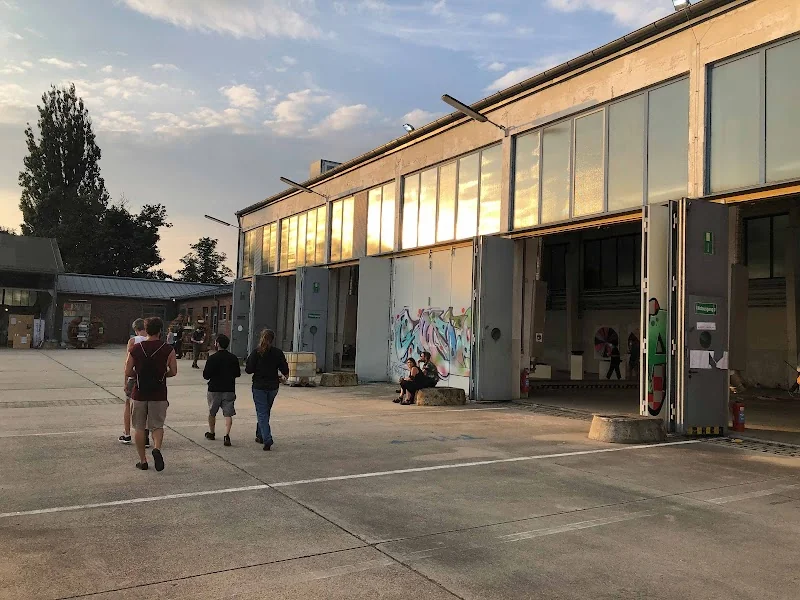
Regensburg
Dieselstraße 4, 93053 Regensburg, Deutschland
PLK - Prince Leopold Barracks | Regensburg & Area
The PLK - Prince Leopold Barracks is no longer a classic event venue with rigid structures, but a site in transformation that connects culture, urban development, and interim use. In the eastern part of Regensburg, specifically in the barracks district, a new neighborhood with green, social, and innovative uses is gradually emerging from a previously military-utilized area. At the same time, the PLK is already a place for concerts, festivals, open-air formats, exhibitions, and creative meeting points for many visitors. This transition makes the site so special: Here, history and the present meet very directly. The official city of Regensburg describes the area as the last significant conversion site in the city, which will be developed into an innovation district in the long term, while parallel cultural interim uses continue to enliven the site. Those searching for the PLK will find not only an address at Dieselstraße 4 but a city project with social relevance, visible transformation, and a strong cultural character. ([regensburg.de](https://www.regensburg.de/prinz-leopold-kaserne))
PLK Area, Address, and Location in the Eastern Part of Regensburg
The search queries around “plk area”, “prince leopold barracks regensburg” and “prince leopold barracks dieselstraße regensburg” clearly show that users are primarily looking for orientation: Where is the area located, what is its official name, and what can I expect there? The answer is quite clear. The city’s event pages list the PLK under the address Dieselstraße 4, 93053 Regensburg. The area is located in the inner southeast of the city, in the barracks district, and is part of the former Prince Leopold Barracks. Depending on the delineation, the city pages refer to about 15 hectares for the barracks area with adjacent areas and about 25.7 hectares for the total area of the Prince Leopold/Pioneer Barracks, of which 15.3 hectares are urban. These different figures are not a contradiction but explain that different planning statuses and sub-areas are being described. For orientation on-site, it is important: The PLK is not a single hall building with a single entrance, but an area with several buildings, halls, open spaces, and development steps. This is precisely why search terms like “photos” or “area” work so well, as the visual and spatial aspects play a significant role at the PLK. The city of Regensburg accordingly works with photographic documentation, aerial images, and project graphics on its pages to make the transformation comprehensible. ([regensburg.de](https://www.regensburg.de/veranstaltungen/detail/594105))
For visitors, the location is particularly exciting because the PLK is situated directly in a part of the city that has been rethought extensively for years. The barracks district is traditionally characterized by military history but is today gradually being transformed into an urban neighborhood that aims to bring together living, working, learning, movement, and culture. The PLK is a significant building block in this. On the official pages, the atmosphere is not sold as “finished,” but described as an open process: vacant buildings, ongoing planning, first new uses, and visible construction steps. This is what makes the area interesting for people who are not just looking for an event address but a place with development, transition, and urban relevance. Therefore, those looking at photos of the PLK do not just see architecture but a transformation that is taking shape in the urban space. In this sense, the area is less a backdrop than a stage for an ongoing transformation. ([regensburg.de](https://www.regensburg.de/prinz-leopold-kaserne/teilbereiche))
History of the Prince Leopold Barracks and the Transformation Since 2009
The history of the Prince Leopold Barracks is closely linked to the Bundeswehr. According to the city of Regensburg, the area was used until 2009 as a site for numerous logistics units. After that, the phase of site abandonment and rethinking began. Particularly, the New Technical Area of the former barracks is well documented: The city was able to acquire it from the federal government in 2016. It covers nearly 7.5 hectares and includes 14 standing buildings, including repair halls, vehicle halls, and storage buildings. These facts show that the PLK is not just a symbolic place of change, but a very concrete urban development project with significant spatial impact. Additionally, the city describes that the site was integrated into a development concept in 2018 as part of the Social City project, and the city council decided in 2019 to convert the barracks area. This transformed a military infrastructure into an urban future site. This development also explains why search terms like “prince leopold barracks” or “former prince leopold barracks regensburg” are so strongly associated with history, use, and transformation. ([regensburg.de](https://www.regensburg.de/rathaus/aemteruebersicht/planungs-u-baureferat/tiefbauamt/aktuelle-massnahmen/baufeldfreimachung-des-neuen-technischen-bereichs))
The official city communication openly refers to it as the last significant conversion area in Regensburg. This is an important term because it precisely captures the character of the place: conversion means not only demolition or new construction but the transformation of a previously military-used space into an urban, mixed-use, and future-oriented neighborhood. In the city pages, the Prince Leopold Barracks is described together with the neighboring Pioneer Barracks as part of a large development corridor in the eastern part of the city. The site should therefore not be viewed in isolation but as part of a larger urban transformation area. This is important for search intent because many users are not just referring to an event space but are also researching the urban historical context. Those interested in the history will therefore find not only dry data on the official pages but a clear narrative: from the logistics site of the Bundeswehr through urban acquisition and planning to the current transformation into an innovative urban neighborhood. ([regensburg.de](https://www.regensburg.de/kultur/veranstaltungen-des-kulturreferats/prinz-leo-kultur))
Prinz Leo Culture, Photos, and Open-Air Events at the PLK
A large part of the current attention surrounding the PLK comes from cultural interim use. Under the motto “Prinz Leo Culture,” the cultural department of the city of Regensburg called for a communal cultural use of the former barracks starting in May 2021. The free art and culture scenes of the city were thus given an experimental space in the east of Regensburg. According to the city page, this phase is expected to last until mid-2025, while the halls and spaces will be available for cultural use until the end of June 2025 or in parts until the end of 2027. The character of the offering is important: It is not just about individual evening events but about participation, open formats, and bringing together various actors. This fits perfectly with search terms like “plk photos,” “cultural quarter plk,” or “open air plk prince leopold barracks,” as the PLK is perceived in images and events as an open, vibrant space. The city also emphasizes that the cube will be preserved and some halls will continue to be used. This mix of existing architecture, artistic use, and gradual transformation is one of the strongest unique selling points of the site. ([regensburg.de](https://www.regensburg.de/kultur/veranstaltungen-des-kulturreferats/prinz-leo-kultur))
The specific event formats also show how diverse the place is used. On the city’s event pages, there are events such as the Teatime Festival and the Cultural Quarter Summer Festival 2025 at the PLK. At the Teatime Festival, there are five bands performing over two days, along with craft and juggling workshops, homemade goods, festival-type food, and an LED juggling show. The offerings are based on donations, giving the whole event an open, communal character. The Cultural Quarter Summer Festival 2025, on the other hand, describes a children’s program, live music and DJs, an electronic floor at the shooting range, open studios, free jam sessions in the void space, as well as homemade food, cakes, and drinks. Such details explain why the PLK is perceived not just as a construction or project area but as a lively cultural place. Those searching for “burn the scene plk prince leopold barracks May 17” or “rescue and shelter open air plk prince leopold barracks May 10” follow this pattern: The search targets specific events, but at its core, it is always about the special atmosphere of an area that combines culture, improvisation, and urban change. ([regensburg.de](https://www.regensburg.de/veranstaltungen/detail/592180))
The visual language also plays a significant role. On the official pages, the area is accompanied by photography, aerial images, and visual documentation. This is relevant for SEO and user expectations alike, as the search intent “photos” usually means: What does the place look like, which halls are visible, how open or industrial does the area appear? The PLK provides a clear answer: It is not a smooth event campus but a place with an industrial-military past, provisional cultural uses, and ongoing construction changes. This is precisely why photos are powerful here, as they show the contrast between vacant buildings, temporary stages, artistic interventions, and the emerging neighborhood. This makes the PLK attractive for social media, Google Discover, and search results. People want to know not only what is happening there but also how the place feels. And this feeling arises from the mix of history, open space, and the visible process of transformation. ([regensburg.de](https://www.regensburg.de/kultur/veranstaltungen-des-kulturreferats/prinz-leo-kultur))
Directions, Dieselstraße 4, and Parking at the PLK
The most important practical information is the address: Prince Leopold Barracks, Dieselstraße 4, 93053 Regensburg. This clearly locates the PLK in the eastern part of the city. The city pages documenting the area and its events focus primarily on location, project, and use; specific, separate visitor parking spaces are not highlighted as fixed parking facilities. Therefore, it is important to check the respective event information for directions and, if necessary, to consider the general parking offers of the city of Regensburg. The city operates its own pages with parking overviews, P+R offers, and general parking information in Regensburg. For people who want to visit the PLK, this is helpful because the surroundings are part of a changing neighborhood, and traffic management may be adjusted during the development. So those searching for “prince leopold barracks directions” or “prince leopold barracks parking” should not only inquire about a single parking space but also consider the mobility situation of the entire district. ([regensburg.de](https://www.regensburg.de/veranstaltungen/detail/594105))
Especially for cultural events, this is a sensible approach because the area does not function as a closed exhibition hall but as part of an urban development space. The city usually displays the address and specific times for its events but does not provide a standardized parking regulation for all formats. This makes sense, as events at the PLK can vary greatly: from festivals to exhibitions to summer festivals or lectures. Therefore, mobility-related planning is always dependent on the event. However, the general parking infrastructure of the city of Regensburg offers good orientation when visitors arrive by car. At the same time, the location in the eastern part of the city is designed to be integrated into the urban traffic network and will be even more strongly integrated into the new neighborhood in the future. For search engines, this topic is particularly strong because users are looking not only for the place but also for practical accessibility. The PLK thus remains a location that is defined from an SEO perspective by address, surroundings, and use. ([regensburg.de](https://www.regensburg.de/veranstaltungen/detail/594105))
Innovation District: Energy, Housing, School, and Sports in the New Neighborhood
The most exciting view of the future of the PLK leads to the innovation district. The city of Regensburg describes the area as a neighborhood for green, social, and innovative living and working. It becomes particularly concrete regarding energy: At the groundbreaking ceremony in April 2025, the energy center was presented as the heart of a climate-neutral residential neighborhood. A fully CO2-neutral heating supply based on renewable energies is planned. Environmental heat from the ground, air, and in the future also from wastewater is to be made usable with the help of heat pumps. The system is complemented by large photovoltaic areas on roofs and facades. In the first construction phase, 240 geothermal probes will be installed up to 70 meters deep. These figures show that the project is not only ambitious in urban planning but also technically. Therefore, those looking at the PLK today see not only culture and interim use but already the beginning of a significantly larger transformation story. ([regensburg.de](https://www.regensburg.de/prinz-leopold-kaserne/aktuelles/spatenstich-fuer-die-energiezentrale-und-die-prinzleoinfobase))
The sub-area page of the city additionally makes it clear how broad the development is laid out. The approximately 15-hectare barracks area with adjacent areas is divided into different sub-areas. In addition to socio-culture and smaller businesses, social housing, primary school and daycare, the New Technical Area, and further uses are planned. In the New Technical Area, the Sports Park East, the municipal sports facility East, football fields, playgrounds, and the kindergarten on Guerickestraße are currently being developed. At the same time, it is planned that subsidized housing will be built by the Stadtbau GmbH starting in summer 2025. The still existing halls in the socio-cultural area will remain usable until the end of 2027 before they are demolished and the areas developed for a commercial zone. For visitor perception, this means: The PLK is not only a place of reflection but a precisely planned future project with social, sporting, and housing policy components. ([regensburg.de](https://www.regensburg.de/prinz-leopold-kaserne/teilbereiche))
The New Technical Area itself is described separately. It was used by the Bundeswehr until 2009, the city acquired it in 2016, and it covers nearly 7.5 hectares and includes 14 buildings. The clearing of the construction site includes demolition, dismantling, investigation, and remediation of possible contaminants as well as the proper disposal of building pollutants. This sounds technical but is crucial for the entire development because without these preliminary works, no new social infrastructures and sports facilities could be created. This is precisely why the PLK is such a heavily discussed place in Regensburg: It bundles questions about housing, mobility, energy, open space, and social infrastructure. Therefore, search terms like “innovation district prince leopold barracks” do not only refer to a project but to an urban master plan with very concrete components. ([regensburg.de](https://www.regensburg.de/rathaus/aemteruebersicht/planungs-u-baureferat/tiefbauamt/aktuelle-massnahmen/baufeldfreimachung-des-neuen-technischen-bereichs))
Why the PLK is Particularly Important for Regensburg
The PLK is particularly relevant for Regensburg because it connects three levels simultaneously: history, present, and future. Historically, it stands for the former Bundeswehr site. In the present, it is an open experimental space with Prinz Leo Culture, festivals, and event formats. For the future, it will become the innovation district with housing, education, energy, and green structures. This multifaceted nature explains why the location appears so broadly in search engines and why visual terms like “plk photos” or spatial terms like “plk area” are so strong. Unlike a classic concert hall, there is no single main function here but a campus character with changing uses. Therefore, the city does not publish a uniform total capacity but orients itself to the individual areas, buildings, and events. For visitors, this is not a disadvantage but rather an indication that the place functions differently depending on the event. Those attending an exhibition experience something different than at an open-air festival or an informational event about the neighborhood. This adaptability makes the PLK one of the most interesting addresses in the east of Regensburg. ([regensburg.de](https://www.regensburg.de/prinz-leopold-kaserne/teilbereiche))
The search query with “prince leopold barracks munich” can also be contextualized: It does not refer to Munich but to the former Prince Leopold Barracks in Regensburg. The official address, the district assignment, and the project pages make this clear. Therefore, those interested in this area should not only understand it as a location but as an urban transformation project with cultural presence. This is particularly exciting for SEO because the user intent behind the keywords is not just aimed at tickets or dates but at a deeper understanding of the place. The PLK is a good example of how a military area can become a public, social, and cultural urban space. This makes it equally important for events, urban development, and local identity. ([regensburg.de](https://www.regensburg.de/veranstaltungen/detail/594105))
Sources:
- City of Regensburg - Innovation District Former Prince Leopold Barracks
- City of Regensburg - Prinz Leo Culture
- City of Regensburg - Clearing of the Construction Site New Technical Area
- City of Regensburg - Sub-Areas of the Innovation District
- City of Regensburg - Cultural Quarter Summer Festival 2025 at the PLK
- City of Regensburg - Timeline and Construction Progress
Mehr anzeigenWeniger anzeigen
PLK - Prince Leopold Barracks | Regensburg & Area
The PLK - Prince Leopold Barracks is no longer a classic event venue with rigid structures, but a site in transformation that connects culture, urban development, and interim use. In the eastern part of Regensburg, specifically in the barracks district, a new neighborhood with green, social, and innovative uses is gradually emerging from a previously military-utilized area. At the same time, the PLK is already a place for concerts, festivals, open-air formats, exhibitions, and creative meeting points for many visitors. This transition makes the site so special: Here, history and the present meet very directly. The official city of Regensburg describes the area as the last significant conversion site in the city, which will be developed into an innovation district in the long term, while parallel cultural interim uses continue to enliven the site. Those searching for the PLK will find not only an address at Dieselstraße 4 but a city project with social relevance, visible transformation, and a strong cultural character. ([regensburg.de](https://www.regensburg.de/prinz-leopold-kaserne))
PLK Area, Address, and Location in the Eastern Part of Regensburg
The search queries around “plk area”, “prince leopold barracks regensburg” and “prince leopold barracks dieselstraße regensburg” clearly show that users are primarily looking for orientation: Where is the area located, what is its official name, and what can I expect there? The answer is quite clear. The city’s event pages list the PLK under the address Dieselstraße 4, 93053 Regensburg. The area is located in the inner southeast of the city, in the barracks district, and is part of the former Prince Leopold Barracks. Depending on the delineation, the city pages refer to about 15 hectares for the barracks area with adjacent areas and about 25.7 hectares for the total area of the Prince Leopold/Pioneer Barracks, of which 15.3 hectares are urban. These different figures are not a contradiction but explain that different planning statuses and sub-areas are being described. For orientation on-site, it is important: The PLK is not a single hall building with a single entrance, but an area with several buildings, halls, open spaces, and development steps. This is precisely why search terms like “photos” or “area” work so well, as the visual and spatial aspects play a significant role at the PLK. The city of Regensburg accordingly works with photographic documentation, aerial images, and project graphics on its pages to make the transformation comprehensible. ([regensburg.de](https://www.regensburg.de/veranstaltungen/detail/594105))
For visitors, the location is particularly exciting because the PLK is situated directly in a part of the city that has been rethought extensively for years. The barracks district is traditionally characterized by military history but is today gradually being transformed into an urban neighborhood that aims to bring together living, working, learning, movement, and culture. The PLK is a significant building block in this. On the official pages, the atmosphere is not sold as “finished,” but described as an open process: vacant buildings, ongoing planning, first new uses, and visible construction steps. This is what makes the area interesting for people who are not just looking for an event address but a place with development, transition, and urban relevance. Therefore, those looking at photos of the PLK do not just see architecture but a transformation that is taking shape in the urban space. In this sense, the area is less a backdrop than a stage for an ongoing transformation. ([regensburg.de](https://www.regensburg.de/prinz-leopold-kaserne/teilbereiche))
History of the Prince Leopold Barracks and the Transformation Since 2009
The history of the Prince Leopold Barracks is closely linked to the Bundeswehr. According to the city of Regensburg, the area was used until 2009 as a site for numerous logistics units. After that, the phase of site abandonment and rethinking began. Particularly, the New Technical Area of the former barracks is well documented: The city was able to acquire it from the federal government in 2016. It covers nearly 7.5 hectares and includes 14 standing buildings, including repair halls, vehicle halls, and storage buildings. These facts show that the PLK is not just a symbolic place of change, but a very concrete urban development project with significant spatial impact. Additionally, the city describes that the site was integrated into a development concept in 2018 as part of the Social City project, and the city council decided in 2019 to convert the barracks area. This transformed a military infrastructure into an urban future site. This development also explains why search terms like “prince leopold barracks” or “former prince leopold barracks regensburg” are so strongly associated with history, use, and transformation. ([regensburg.de](https://www.regensburg.de/rathaus/aemteruebersicht/planungs-u-baureferat/tiefbauamt/aktuelle-massnahmen/baufeldfreimachung-des-neuen-technischen-bereichs))
The official city communication openly refers to it as the last significant conversion area in Regensburg. This is an important term because it precisely captures the character of the place: conversion means not only demolition or new construction but the transformation of a previously military-used space into an urban, mixed-use, and future-oriented neighborhood. In the city pages, the Prince Leopold Barracks is described together with the neighboring Pioneer Barracks as part of a large development corridor in the eastern part of the city. The site should therefore not be viewed in isolation but as part of a larger urban transformation area. This is important for search intent because many users are not just referring to an event space but are also researching the urban historical context. Those interested in the history will therefore find not only dry data on the official pages but a clear narrative: from the logistics site of the Bundeswehr through urban acquisition and planning to the current transformation into an innovative urban neighborhood. ([regensburg.de](https://www.regensburg.de/kultur/veranstaltungen-des-kulturreferats/prinz-leo-kultur))
Prinz Leo Culture, Photos, and Open-Air Events at the PLK
A large part of the current attention surrounding the PLK comes from cultural interim use. Under the motto “Prinz Leo Culture,” the cultural department of the city of Regensburg called for a communal cultural use of the former barracks starting in May 2021. The free art and culture scenes of the city were thus given an experimental space in the east of Regensburg. According to the city page, this phase is expected to last until mid-2025, while the halls and spaces will be available for cultural use until the end of June 2025 or in parts until the end of 2027. The character of the offering is important: It is not just about individual evening events but about participation, open formats, and bringing together various actors. This fits perfectly with search terms like “plk photos,” “cultural quarter plk,” or “open air plk prince leopold barracks,” as the PLK is perceived in images and events as an open, vibrant space. The city also emphasizes that the cube will be preserved and some halls will continue to be used. This mix of existing architecture, artistic use, and gradual transformation is one of the strongest unique selling points of the site. ([regensburg.de](https://www.regensburg.de/kultur/veranstaltungen-des-kulturreferats/prinz-leo-kultur))
The specific event formats also show how diverse the place is used. On the city’s event pages, there are events such as the Teatime Festival and the Cultural Quarter Summer Festival 2025 at the PLK. At the Teatime Festival, there are five bands performing over two days, along with craft and juggling workshops, homemade goods, festival-type food, and an LED juggling show. The offerings are based on donations, giving the whole event an open, communal character. The Cultural Quarter Summer Festival 2025, on the other hand, describes a children’s program, live music and DJs, an electronic floor at the shooting range, open studios, free jam sessions in the void space, as well as homemade food, cakes, and drinks. Such details explain why the PLK is perceived not just as a construction or project area but as a lively cultural place. Those searching for “burn the scene plk prince leopold barracks May 17” or “rescue and shelter open air plk prince leopold barracks May 10” follow this pattern: The search targets specific events, but at its core, it is always about the special atmosphere of an area that combines culture, improvisation, and urban change. ([regensburg.de](https://www.regensburg.de/veranstaltungen/detail/592180))
The visual language also plays a significant role. On the official pages, the area is accompanied by photography, aerial images, and visual documentation. This is relevant for SEO and user expectations alike, as the search intent “photos” usually means: What does the place look like, which halls are visible, how open or industrial does the area appear? The PLK provides a clear answer: It is not a smooth event campus but a place with an industrial-military past, provisional cultural uses, and ongoing construction changes. This is precisely why photos are powerful here, as they show the contrast between vacant buildings, temporary stages, artistic interventions, and the emerging neighborhood. This makes the PLK attractive for social media, Google Discover, and search results. People want to know not only what is happening there but also how the place feels. And this feeling arises from the mix of history, open space, and the visible process of transformation. ([regensburg.de](https://www.regensburg.de/kultur/veranstaltungen-des-kulturreferats/prinz-leo-kultur))
Directions, Dieselstraße 4, and Parking at the PLK
The most important practical information is the address: Prince Leopold Barracks, Dieselstraße 4, 93053 Regensburg. This clearly locates the PLK in the eastern part of the city. The city pages documenting the area and its events focus primarily on location, project, and use; specific, separate visitor parking spaces are not highlighted as fixed parking facilities. Therefore, it is important to check the respective event information for directions and, if necessary, to consider the general parking offers of the city of Regensburg. The city operates its own pages with parking overviews, P+R offers, and general parking information in Regensburg. For people who want to visit the PLK, this is helpful because the surroundings are part of a changing neighborhood, and traffic management may be adjusted during the development. So those searching for “prince leopold barracks directions” or “prince leopold barracks parking” should not only inquire about a single parking space but also consider the mobility situation of the entire district. ([regensburg.de](https://www.regensburg.de/veranstaltungen/detail/594105))
Especially for cultural events, this is a sensible approach because the area does not function as a closed exhibition hall but as part of an urban development space. The city usually displays the address and specific times for its events but does not provide a standardized parking regulation for all formats. This makes sense, as events at the PLK can vary greatly: from festivals to exhibitions to summer festivals or lectures. Therefore, mobility-related planning is always dependent on the event. However, the general parking infrastructure of the city of Regensburg offers good orientation when visitors arrive by car. At the same time, the location in the eastern part of the city is designed to be integrated into the urban traffic network and will be even more strongly integrated into the new neighborhood in the future. For search engines, this topic is particularly strong because users are looking not only for the place but also for practical accessibility. The PLK thus remains a location that is defined from an SEO perspective by address, surroundings, and use. ([regensburg.de](https://www.regensburg.de/veranstaltungen/detail/594105))
Innovation District: Energy, Housing, School, and Sports in the New Neighborhood
The most exciting view of the future of the PLK leads to the innovation district. The city of Regensburg describes the area as a neighborhood for green, social, and innovative living and working. It becomes particularly concrete regarding energy: At the groundbreaking ceremony in April 2025, the energy center was presented as the heart of a climate-neutral residential neighborhood. A fully CO2-neutral heating supply based on renewable energies is planned. Environmental heat from the ground, air, and in the future also from wastewater is to be made usable with the help of heat pumps. The system is complemented by large photovoltaic areas on roofs and facades. In the first construction phase, 240 geothermal probes will be installed up to 70 meters deep. These figures show that the project is not only ambitious in urban planning but also technically. Therefore, those looking at the PLK today see not only culture and interim use but already the beginning of a significantly larger transformation story. ([regensburg.de](https://www.regensburg.de/prinz-leopold-kaserne/aktuelles/spatenstich-fuer-die-energiezentrale-und-die-prinzleoinfobase))
The sub-area page of the city additionally makes it clear how broad the development is laid out. The approximately 15-hectare barracks area with adjacent areas is divided into different sub-areas. In addition to socio-culture and smaller businesses, social housing, primary school and daycare, the New Technical Area, and further uses are planned. In the New Technical Area, the Sports Park East, the municipal sports facility East, football fields, playgrounds, and the kindergarten on Guerickestraße are currently being developed. At the same time, it is planned that subsidized housing will be built by the Stadtbau GmbH starting in summer 2025. The still existing halls in the socio-cultural area will remain usable until the end of 2027 before they are demolished and the areas developed for a commercial zone. For visitor perception, this means: The PLK is not only a place of reflection but a precisely planned future project with social, sporting, and housing policy components. ([regensburg.de](https://www.regensburg.de/prinz-leopold-kaserne/teilbereiche))
The New Technical Area itself is described separately. It was used by the Bundeswehr until 2009, the city acquired it in 2016, and it covers nearly 7.5 hectares and includes 14 buildings. The clearing of the construction site includes demolition, dismantling, investigation, and remediation of possible contaminants as well as the proper disposal of building pollutants. This sounds technical but is crucial for the entire development because without these preliminary works, no new social infrastructures and sports facilities could be created. This is precisely why the PLK is such a heavily discussed place in Regensburg: It bundles questions about housing, mobility, energy, open space, and social infrastructure. Therefore, search terms like “innovation district prince leopold barracks” do not only refer to a project but to an urban master plan with very concrete components. ([regensburg.de](https://www.regensburg.de/rathaus/aemteruebersicht/planungs-u-baureferat/tiefbauamt/aktuelle-massnahmen/baufeldfreimachung-des-neuen-technischen-bereichs))
Why the PLK is Particularly Important for Regensburg
The PLK is particularly relevant for Regensburg because it connects three levels simultaneously: history, present, and future. Historically, it stands for the former Bundeswehr site. In the present, it is an open experimental space with Prinz Leo Culture, festivals, and event formats. For the future, it will become the innovation district with housing, education, energy, and green structures. This multifaceted nature explains why the location appears so broadly in search engines and why visual terms like “plk photos” or spatial terms like “plk area” are so strong. Unlike a classic concert hall, there is no single main function here but a campus character with changing uses. Therefore, the city does not publish a uniform total capacity but orients itself to the individual areas, buildings, and events. For visitors, this is not a disadvantage but rather an indication that the place functions differently depending on the event. Those attending an exhibition experience something different than at an open-air festival or an informational event about the neighborhood. This adaptability makes the PLK one of the most interesting addresses in the east of Regensburg. ([regensburg.de](https://www.regensburg.de/prinz-leopold-kaserne/teilbereiche))
The search query with “prince leopold barracks munich” can also be contextualized: It does not refer to Munich but to the former Prince Leopold Barracks in Regensburg. The official address, the district assignment, and the project pages make this clear. Therefore, those interested in this area should not only understand it as a location but as an urban transformation project with cultural presence. This is particularly exciting for SEO because the user intent behind the keywords is not just aimed at tickets or dates but at a deeper understanding of the place. The PLK is a good example of how a military area can become a public, social, and cultural urban space. This makes it equally important for events, urban development, and local identity. ([regensburg.de](https://www.regensburg.de/veranstaltungen/detail/594105))
Sources:
- City of Regensburg - Innovation District Former Prince Leopold Barracks
- City of Regensburg - Prinz Leo Culture
- City of Regensburg - Clearing of the Construction Site New Technical Area
- City of Regensburg - Sub-Areas of the Innovation District
- City of Regensburg - Cultural Quarter Summer Festival 2025 at the PLK
- City of Regensburg - Timeline and Construction Progress
PLK - Prince Leopold Barracks | Regensburg & Area
The PLK - Prince Leopold Barracks is no longer a classic event venue with rigid structures, but a site in transformation that connects culture, urban development, and interim use. In the eastern part of Regensburg, specifically in the barracks district, a new neighborhood with green, social, and innovative uses is gradually emerging from a previously military-utilized area. At the same time, the PLK is already a place for concerts, festivals, open-air formats, exhibitions, and creative meeting points for many visitors. This transition makes the site so special: Here, history and the present meet very directly. The official city of Regensburg describes the area as the last significant conversion site in the city, which will be developed into an innovation district in the long term, while parallel cultural interim uses continue to enliven the site. Those searching for the PLK will find not only an address at Dieselstraße 4 but a city project with social relevance, visible transformation, and a strong cultural character. ([regensburg.de](https://www.regensburg.de/prinz-leopold-kaserne))
PLK Area, Address, and Location in the Eastern Part of Regensburg
The search queries around “plk area”, “prince leopold barracks regensburg” and “prince leopold barracks dieselstraße regensburg” clearly show that users are primarily looking for orientation: Where is the area located, what is its official name, and what can I expect there? The answer is quite clear. The city’s event pages list the PLK under the address Dieselstraße 4, 93053 Regensburg. The area is located in the inner southeast of the city, in the barracks district, and is part of the former Prince Leopold Barracks. Depending on the delineation, the city pages refer to about 15 hectares for the barracks area with adjacent areas and about 25.7 hectares for the total area of the Prince Leopold/Pioneer Barracks, of which 15.3 hectares are urban. These different figures are not a contradiction but explain that different planning statuses and sub-areas are being described. For orientation on-site, it is important: The PLK is not a single hall building with a single entrance, but an area with several buildings, halls, open spaces, and development steps. This is precisely why search terms like “photos” or “area” work so well, as the visual and spatial aspects play a significant role at the PLK. The city of Regensburg accordingly works with photographic documentation, aerial images, and project graphics on its pages to make the transformation comprehensible. ([regensburg.de](https://www.regensburg.de/veranstaltungen/detail/594105))
For visitors, the location is particularly exciting because the PLK is situated directly in a part of the city that has been rethought extensively for years. The barracks district is traditionally characterized by military history but is today gradually being transformed into an urban neighborhood that aims to bring together living, working, learning, movement, and culture. The PLK is a significant building block in this. On the official pages, the atmosphere is not sold as “finished,” but described as an open process: vacant buildings, ongoing planning, first new uses, and visible construction steps. This is what makes the area interesting for people who are not just looking for an event address but a place with development, transition, and urban relevance. Therefore, those looking at photos of the PLK do not just see architecture but a transformation that is taking shape in the urban space. In this sense, the area is less a backdrop than a stage for an ongoing transformation. ([regensburg.de](https://www.regensburg.de/prinz-leopold-kaserne/teilbereiche))
History of the Prince Leopold Barracks and the Transformation Since 2009
The history of the Prince Leopold Barracks is closely linked to the Bundeswehr. According to the city of Regensburg, the area was used until 2009 as a site for numerous logistics units. After that, the phase of site abandonment and rethinking began. Particularly, the New Technical Area of the former barracks is well documented: The city was able to acquire it from the federal government in 2016. It covers nearly 7.5 hectares and includes 14 standing buildings, including repair halls, vehicle halls, and storage buildings. These facts show that the PLK is not just a symbolic place of change, but a very concrete urban development project with significant spatial impact. Additionally, the city describes that the site was integrated into a development concept in 2018 as part of the Social City project, and the city council decided in 2019 to convert the barracks area. This transformed a military infrastructure into an urban future site. This development also explains why search terms like “prince leopold barracks” or “former prince leopold barracks regensburg” are so strongly associated with history, use, and transformation. ([regensburg.de](https://www.regensburg.de/rathaus/aemteruebersicht/planungs-u-baureferat/tiefbauamt/aktuelle-massnahmen/baufeldfreimachung-des-neuen-technischen-bereichs))
The official city communication openly refers to it as the last significant conversion area in Regensburg. This is an important term because it precisely captures the character of the place: conversion means not only demolition or new construction but the transformation of a previously military-used space into an urban, mixed-use, and future-oriented neighborhood. In the city pages, the Prince Leopold Barracks is described together with the neighboring Pioneer Barracks as part of a large development corridor in the eastern part of the city. The site should therefore not be viewed in isolation but as part of a larger urban transformation area. This is important for search intent because many users are not just referring to an event space but are also researching the urban historical context. Those interested in the history will therefore find not only dry data on the official pages but a clear narrative: from the logistics site of the Bundeswehr through urban acquisition and planning to the current transformation into an innovative urban neighborhood. ([regensburg.de](https://www.regensburg.de/kultur/veranstaltungen-des-kulturreferats/prinz-leo-kultur))
Prinz Leo Culture, Photos, and Open-Air Events at the PLK
A large part of the current attention surrounding the PLK comes from cultural interim use. Under the motto “Prinz Leo Culture,” the cultural department of the city of Regensburg called for a communal cultural use of the former barracks starting in May 2021. The free art and culture scenes of the city were thus given an experimental space in the east of Regensburg. According to the city page, this phase is expected to last until mid-2025, while the halls and spaces will be available for cultural use until the end of June 2025 or in parts until the end of 2027. The character of the offering is important: It is not just about individual evening events but about participation, open formats, and bringing together various actors. This fits perfectly with search terms like “plk photos,” “cultural quarter plk,” or “open air plk prince leopold barracks,” as the PLK is perceived in images and events as an open, vibrant space. The city also emphasizes that the cube will be preserved and some halls will continue to be used. This mix of existing architecture, artistic use, and gradual transformation is one of the strongest unique selling points of the site. ([regensburg.de](https://www.regensburg.de/kultur/veranstaltungen-des-kulturreferats/prinz-leo-kultur))
The specific event formats also show how diverse the place is used. On the city’s event pages, there are events such as the Teatime Festival and the Cultural Quarter Summer Festival 2025 at the PLK. At the Teatime Festival, there are five bands performing over two days, along with craft and juggling workshops, homemade goods, festival-type food, and an LED juggling show. The offerings are based on donations, giving the whole event an open, communal character. The Cultural Quarter Summer Festival 2025, on the other hand, describes a children’s program, live music and DJs, an electronic floor at the shooting range, open studios, free jam sessions in the void space, as well as homemade food, cakes, and drinks. Such details explain why the PLK is perceived not just as a construction or project area but as a lively cultural place. Those searching for “burn the scene plk prince leopold barracks May 17” or “rescue and shelter open air plk prince leopold barracks May 10” follow this pattern: The search targets specific events, but at its core, it is always about the special atmosphere of an area that combines culture, improvisation, and urban change. ([regensburg.de](https://www.regensburg.de/veranstaltungen/detail/592180))
The visual language also plays a significant role. On the official pages, the area is accompanied by photography, aerial images, and visual documentation. This is relevant for SEO and user expectations alike, as the search intent “photos” usually means: What does the place look like, which halls are visible, how open or industrial does the area appear? The PLK provides a clear answer: It is not a smooth event campus but a place with an industrial-military past, provisional cultural uses, and ongoing construction changes. This is precisely why photos are powerful here, as they show the contrast between vacant buildings, temporary stages, artistic interventions, and the emerging neighborhood. This makes the PLK attractive for social media, Google Discover, and search results. People want to know not only what is happening there but also how the place feels. And this feeling arises from the mix of history, open space, and the visible process of transformation. ([regensburg.de](https://www.regensburg.de/kultur/veranstaltungen-des-kulturreferats/prinz-leo-kultur))
Directions, Dieselstraße 4, and Parking at the PLK
The most important practical information is the address: Prince Leopold Barracks, Dieselstraße 4, 93053 Regensburg. This clearly locates the PLK in the eastern part of the city. The city pages documenting the area and its events focus primarily on location, project, and use; specific, separate visitor parking spaces are not highlighted as fixed parking facilities. Therefore, it is important to check the respective event information for directions and, if necessary, to consider the general parking offers of the city of Regensburg. The city operates its own pages with parking overviews, P+R offers, and general parking information in Regensburg. For people who want to visit the PLK, this is helpful because the surroundings are part of a changing neighborhood, and traffic management may be adjusted during the development. So those searching for “prince leopold barracks directions” or “prince leopold barracks parking” should not only inquire about a single parking space but also consider the mobility situation of the entire district. ([regensburg.de](https://www.regensburg.de/veranstaltungen/detail/594105))
Especially for cultural events, this is a sensible approach because the area does not function as a closed exhibition hall but as part of an urban development space. The city usually displays the address and specific times for its events but does not provide a standardized parking regulation for all formats. This makes sense, as events at the PLK can vary greatly: from festivals to exhibitions to summer festivals or lectures. Therefore, mobility-related planning is always dependent on the event. However, the general parking infrastructure of the city of Regensburg offers good orientation when visitors arrive by car. At the same time, the location in the eastern part of the city is designed to be integrated into the urban traffic network and will be even more strongly integrated into the new neighborhood in the future. For search engines, this topic is particularly strong because users are looking not only for the place but also for practical accessibility. The PLK thus remains a location that is defined from an SEO perspective by address, surroundings, and use. ([regensburg.de](https://www.regensburg.de/veranstaltungen/detail/594105))
Innovation District: Energy, Housing, School, and Sports in the New Neighborhood
The most exciting view of the future of the PLK leads to the innovation district. The city of Regensburg describes the area as a neighborhood for green, social, and innovative living and working. It becomes particularly concrete regarding energy: At the groundbreaking ceremony in April 2025, the energy center was presented as the heart of a climate-neutral residential neighborhood. A fully CO2-neutral heating supply based on renewable energies is planned. Environmental heat from the ground, air, and in the future also from wastewater is to be made usable with the help of heat pumps. The system is complemented by large photovoltaic areas on roofs and facades. In the first construction phase, 240 geothermal probes will be installed up to 70 meters deep. These figures show that the project is not only ambitious in urban planning but also technically. Therefore, those looking at the PLK today see not only culture and interim use but already the beginning of a significantly larger transformation story. ([regensburg.de](https://www.regensburg.de/prinz-leopold-kaserne/aktuelles/spatenstich-fuer-die-energiezentrale-und-die-prinzleoinfobase))
The sub-area page of the city additionally makes it clear how broad the development is laid out. The approximately 15-hectare barracks area with adjacent areas is divided into different sub-areas. In addition to socio-culture and smaller businesses, social housing, primary school and daycare, the New Technical Area, and further uses are planned. In the New Technical Area, the Sports Park East, the municipal sports facility East, football fields, playgrounds, and the kindergarten on Guerickestraße are currently being developed. At the same time, it is planned that subsidized housing will be built by the Stadtbau GmbH starting in summer 2025. The still existing halls in the socio-cultural area will remain usable until the end of 2027 before they are demolished and the areas developed for a commercial zone. For visitor perception, this means: The PLK is not only a place of reflection but a precisely planned future project with social, sporting, and housing policy components. ([regensburg.de](https://www.regensburg.de/prinz-leopold-kaserne/teilbereiche))
The New Technical Area itself is described separately. It was used by the Bundeswehr until 2009, the city acquired it in 2016, and it covers nearly 7.5 hectares and includes 14 buildings. The clearing of the construction site includes demolition, dismantling, investigation, and remediation of possible contaminants as well as the proper disposal of building pollutants. This sounds technical but is crucial for the entire development because without these preliminary works, no new social infrastructures and sports facilities could be created. This is precisely why the PLK is such a heavily discussed place in Regensburg: It bundles questions about housing, mobility, energy, open space, and social infrastructure. Therefore, search terms like “innovation district prince leopold barracks” do not only refer to a project but to an urban master plan with very concrete components. ([regensburg.de](https://www.regensburg.de/rathaus/aemteruebersicht/planungs-u-baureferat/tiefbauamt/aktuelle-massnahmen/baufeldfreimachung-des-neuen-technischen-bereichs))
Why the PLK is Particularly Important for Regensburg
The PLK is particularly relevant for Regensburg because it connects three levels simultaneously: history, present, and future. Historically, it stands for the former Bundeswehr site. In the present, it is an open experimental space with Prinz Leo Culture, festivals, and event formats. For the future, it will become the innovation district with housing, education, energy, and green structures. This multifaceted nature explains why the location appears so broadly in search engines and why visual terms like “plk photos” or spatial terms like “plk area” are so strong. Unlike a classic concert hall, there is no single main function here but a campus character with changing uses. Therefore, the city does not publish a uniform total capacity but orients itself to the individual areas, buildings, and events. For visitors, this is not a disadvantage but rather an indication that the place functions differently depending on the event. Those attending an exhibition experience something different than at an open-air festival or an informational event about the neighborhood. This adaptability makes the PLK one of the most interesting addresses in the east of Regensburg. ([regensburg.de](https://www.regensburg.de/prinz-leopold-kaserne/teilbereiche))
The search query with “prince leopold barracks munich” can also be contextualized: It does not refer to Munich but to the former Prince Leopold Barracks in Regensburg. The official address, the district assignment, and the project pages make this clear. Therefore, those interested in this area should not only understand it as a location but as an urban transformation project with cultural presence. This is particularly exciting for SEO because the user intent behind the keywords is not just aimed at tickets or dates but at a deeper understanding of the place. The PLK is a good example of how a military area can become a public, social, and cultural urban space. This makes it equally important for events, urban development, and local identity. ([regensburg.de](https://www.regensburg.de/veranstaltungen/detail/594105))
Sources:
- City of Regensburg - Innovation District Former Prince Leopold Barracks
- City of Regensburg - Prinz Leo Culture
- City of Regensburg - Clearing of the Construction Site New Technical Area
- City of Regensburg - Sub-Areas of the Innovation District
- City of Regensburg - Cultural Quarter Summer Festival 2025 at the PLK
- City of Regensburg - Timeline and Construction Progress
Upcoming Events
No events found
Frequently Asked Questions
Reviews
Mo
26. June 2025
Very lovely place, nice people, and good music vibes. The thing is that the food selection could be better.
Bharani Shankar
11. September 2025
The kaserne doesn't exist anymore.
Michael Theiss
16. June 2024
An absolutely brilliant place used by various clubs and organizers. Here, artists find a home and connect with like-minded people. There are also band performances, film nights, festivals, and many other events. A great alternative spot that hopefully stays around for a few more years.
Lukas Heckl
12. December 2024
There's often a lot going on here. Nieschenkultur lovers get their money's worth. From theater plays, concerts, exhibitions, open workshops, and artist studios, you can find everything on the old kaserne grounds.
1elgran
20. March 2024
Fantastic. Really cool location. Rustic charm and always great and diverse events.