
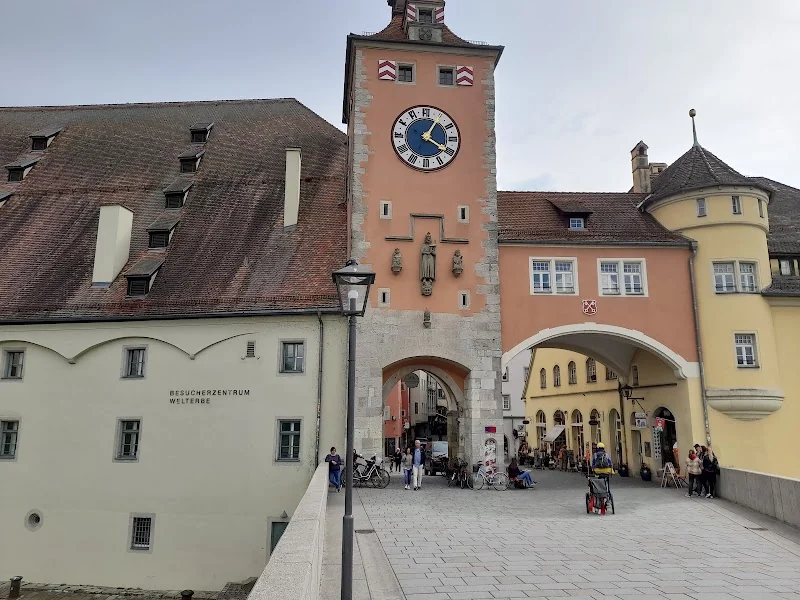
Regensburg
Kumpfmühl-Ziegetsdorf-Neuprüll, 93051 Regensburg, Deutschland
Regensburg Theresienkirche | Events & Exhibitions
The Regensburg Theresienkirche today represents an unusual transformation: From the historic church and monastery complex in the Kumpfmühl district, it has become an open cultural space for events, exhibitions, and new ideas. Under the name Theresia – Space for Ideas, the former monastery church is used for a versatile program. Concerts, lectures, readings, openings, charity events, balls, and experimental cultural formats take place here in an atmosphere that is distinctly different from classical venues.
The location combines history with contemporary use. According to the operator, the extensively renovated area covers 340 square meters and offers space for up to 400 people, depending on the event format. This makes the space suitable for both smaller gatherings and larger public events. The historical architecture not only serves as a backdrop but also shapes the impact of each individual event. Art, music, light, conversations, and communal experiences gain a special depth in the former sacred spaces.
For visitors, the Theresienkirche is particularly interesting when they seek events in Regensburg away from ordinary stages. For organizers, clubs, initiatives, and non-profit organizations, Theresia offers a versatile place where different ideas can be implemented. The location in Kumpfmühl combines proximity to the city with the independent character of a traditional district.
Theresienkirche Regensburg Events and Current Program
The event program of the Regensburg Theresienkirche is not limited to a single art form. Under the name Theresia – Space for Ideas, various cultural, social, and community formats are brought together. The program includes exhibitions, concerts, lectures, and public events. Additionally, readings, openings, charity events, balls, and events that combine multiple forms of expression are included.
An important feature of the location is its openness to different themes. In the former church, musical evenings can take place just as much as presentations, discussion events, or artistic projects. The current program shows that the space is interesting for both established cultural creators and local initiatives. Events featuring music, film, dance, light installations, and visual arts utilize the historical surroundings in their own unique ways.
Among the announced formats for the year 2026 are, among others, a charity concert by the Regensburg Chamber Orchestra, presentations and exhibitions on Ukraine, an opening about the Ukrainian Ganghofer settlement, lectures, as well as concerts with light, music, and illuminated art objects. Other program points include Ambient Strings, Cello-Tronics, sound meditations, and a concert format titled Sound of Theresia. The various offerings make it clear that Theresia is not intended as a classical concert hall with a fixed profile, but as a space that can accommodate changing cultural ideas.
For visitors, it is worthwhile to check the official event overview before traveling. Dates, start times, ticket prices, and information about ticket sales may vary from event to event. For some events, advance sales are conducted through the participating artists or organizers, while other offerings are announced with box office sales or free admission. Especially for exhibitions and multi-day event series, visitors should pay attention to the respective opening hours.
The special quality of the program lies in the connection between content and place. A concert has a different effect in the historical walls than in a neutral hall. An exhibition gains an additional layer through the room height, architecture, and history of the building. Conversations, readings, and lectures benefit from the concentrated ambiance. This way, the program appeals to both culture enthusiasts from Regensburg and guests who want to experience a special event location.
Exhibitions and Concerts in the Former Monastery Church
Exhibitions are among the most important forms of use for the Theresienkirche Regensburg. The spacious area allows for works, installations, and presentations to be displayed in a coherent historical space. Exhibitions can include classical hangings as well as media or site-specific projects. The former monastery church provides an environment where art does not appear isolated against neutral walls but enters into an architectural and historical context.
In the past, Theresia has implemented pop-up art exhibitions, presentations on social issues, and events featuring visual arts. Projects with a Ukrainian focus have also been part of the program. An exhibition about the Ukrainian aid organization Hell’s Kitchen from Kharkiv utilized the approximately 340 square meter area for an encounter with civil society engagement, history, and human solidarity. Such formats demonstrate how the building is also opened up for current social issues.
The event space is also suitable for openings and inaugural evenings, where art is combined with music, conversations, or lectures. This combination is attractive for visitors who want to experience an exhibition not just quietly but in a communal setting. The spatial effect can be further altered by light, sound, and movement. This creates a flexible environment that can appear calm, festive, focused, or experimental depending on the concept.
Concerts also form a fixed part of the program. Announced events include chamber music, charity concerts, ambient music, and sound events. The historical architecture lends a unique atmosphere to musical evenings. At the same time, the specific listening experience must always depend on the respective concert concept, seating arrangement, sound technology, and positioning of the musicians. Therefore, a blanket statement about the acoustics or a fixed seating area is not possible.
Interdisciplinary events, where music, art, and light interact, are particularly exciting. In formats with illuminated art objects, the former church is not only used as a hall but as a walkable experience space. Sound meditations and atmospheric concerts capture the contemplative character of the building without equating today’s cultural use with a church service. The Theresienkirche thus becomes a place where historical significance and contemporary art enter into dialogue.
Anyone wishing to visit an exhibition or concert should note that there is no permanently identical procedure. Admission, start, ticket prices, and seating arrangements are determined by the respective organizer. For highly sought-after dates, early information or reservation may be advisable. For spontaneous visits, especially public events with clearly designated opening hours are suitable.
History of the Theresienkirche in Regensburg and Its New Use
The Theresienkirche is located in the traditional district of Kumpfmühl, which is one of the oldest areas of Regensburg. The history of the district dates back far and is marked by Roman and medieval traces. Kumpfmühl developed from a historical settlement into an inner-city residential and living space. The Theresienkirche was a defining part of this environment for many decades and formed a church and monastery ensemble together with other buildings.
The former church was built about 125 years ago. The former monastery complex included not only the church but also an academy and a residential building. For a long time, the building was the religious center for the community. With its secularization, the function of the building changed fundamentally. The last church service and the subsequent disaffiliation marked the transition from sacred use to a new chapter in the history of the place.
The church was secularized in 2025 and subsequently developed into a space for cultural and community uses. The new designation Theresia – Space for Ideas consciously describes this transformation. The historical character should not be suppressed; at the same time, the building should be opened for contemporary and public use. Instead of vacancy, a venue emerged that brings together art, music, social issues, and local encounters.
The development of the ensemble includes already implemented measures on the roof and facade. Further adjustments, particularly in the areas of fire protection and infrastructure, are or were part of the gradual development. The repurposing of a historical church space requires special consideration of the building substance and a precise coordination of the event technology. The goal is a use that functions in the long term and preserves the character of the building.
The new orientation also pursues a community-oriented approach. Clubs, initiatives, and non-profit organizations should be able to use the space for their own projects. For these groups, a use without room rental has been announced, although ancillary costs may apply. In this way, the former church is not only to be available for commercial events but also to become a meeting point for the neighborhood and the city community.
The transformation from a church to a cultural space is therefore more than a mere change in the function of the space. It shows how historical buildings can receive a new social task. The Theresienkirche remains visible as a structure with its history but simultaneously becomes a place for current issues, creative projects, and personal encounters. It is precisely this contrast that makes the location unmistakable for events in Regensburg.
Address, Directions, and Parking at the Theresienkirche Regensburg
The Regensburg Theresienkirche is located in the Kumpfmühl-Ziegetsdorf-Neuprüll district in the area of 93051 Regensburg. As a location reference, the Theresienkirche is listed in the vicinity of Gutenbergstraße. For navigation, visitors should use the specific address of the respective organizer or the current information on the official event page, as event information and access may be communicated differently depending on the format.
The location is integrated into the public transport network of the district. The Theresienkirche stop is mentioned by the city of Regensburg as a point of orientation. Additionally, the Gutenbergstraße stop is listed in the vicinity. Those arriving by bus or bicycle should check the current connection, departure times, and possible construction sites before their visit. Especially for evening events, it is advisable to plan the return trip before entry.
For those arriving by car, it is important to distinguish between the event location and a designated event parking lot. The official website of Theresia does not mention a dedicated, permanently designated parking space. Therefore, visitors should not automatically assume they can park directly on the premises. Instead, it is advisable to use legal public parking spaces in the surrounding area, taking into account local signage and the applicable parking regulations.
For larger events with up to 400 possible guests, the parking situation may be more congested. Arriving early reduces time pressure and allows for the search for a suitable parking space. Those who rely on a barrier-free or particularly short route should inquire directly with the organizer about access, entry conditions, and possible support options in advance. Such details may depend on the respective event and the current infrastructure.
The location in Kumpfmühl has the advantage that the event venue is not solely dependent on car travel. The district is centrally located and accessible by public transport. For many visitors, it may therefore be sensible to combine the event with a walk, a bus ride, or a bicycle trip. Especially for concerts and evening events, arriving by public transport can be a relaxed alternative to searching for parking.
Since traffic routes, construction sites, and parking regulations can change, the information should be checked again on the day of the event. The most reliable information comes from the current event page, the information from the respective organizer, and the official mobility services of the city of Regensburg. A general recommendation for a specific parking space cannot be made without current event information.
Capacity, Seating Plan, and Equipment of the Event Venue
The Theresienkirche Regensburg offers an event area of 340 square meters and can be used for events with up to 400 people, according to the operator's information. This capacity is to be understood as a maximum guideline and depends on the respective concept. A seated concert event requires a different room layout than an exhibition, a lecture, a ball, or a standing event. Stages, technology, exhibition objects, escape routes, and catering areas also influence the actual number of visitors that can be accommodated.
A permanently published seating plan is not provided. This is understandable for a flexibly used cultural space, as the seating does not remain the same for all dates. Depending on the event, row seating, loose seating groups, standing places, or an open exhibition arrangement may be used. Visitors should therefore pay attention to the information on the ticket, the event page, or from the respective provider. If an event provides numbered seats or free seating, this must be explicitly stated in the respective visitor information.
The spatial effect of the former monastery church is one of the most important features of the venue. Historical architecture, generous room proportions, and the special atmosphere of the former sacred space shape the stay. The location is not designed as a standardized multipurpose hall but offers a characterful setting for cultural and social events. This uniqueness makes the space interesting for exhibitions, concerts, and staged formats.
According to the operator, the area is flexibly usable for small meetings to larger celebrations. However, the specific technical equipment may depend on the respective production. Organizers should clarify early on what requirements exist for lighting, sound, stage, power supply, seating, service, and setup. Additional organizational and safety-related requirements may apply for public events. The official event page invites interested parties to learn about the event possibilities or to inquire about hosting an event themselves.
The historical surroundings also offer special opportunities for corporate events, club evenings, panel discussions, and private celebrations. A ball or festive evening event has a different impact in the former church than in an ordinary hall. Similarly, workshops and presentations can benefit from the concentrated atmosphere. The open space is suitable for exhibitions because visitors can move among various works, installations, or presentation points.
In planning, it should still be considered that a historical repurposing does not automatically equate to a fully standardized congress infrastructure. Binding statements regarding stage, furniture, internet, cloakroom, gastronomy, accessibility, or technology should be clarified directly with the operator or organizer. The capacity of up to 400 people describes the possible scale but does not replace individual event planning.
Flea Market, Public Events, and Significance for Kumpfmühl
The search term Flea Market Theresienkirche Regensburg shows that the place is also associated with low-threshold public events and markets. For individual flea markets or market dates, visitors should always check the current announcement, as dates, areas, and organizers may change. A permanent, regularly published flea market program is not listed as a fixed part of the program on the official Theresia page.
Regardless, the idea of public markets fundamentally fits the new orientation of the place. Theresia aims to be a space for community and creative ideas. Markets, encounter formats, and open events can attract people who rarely attend classical cultural events. A former church thus becomes an accessible meeting point where different groups come together and the neighborhood becomes visible.
The significance for Kumpfmühl extends beyond individual dates. The district has a long history and has simultaneously developed into a vibrant residential area. A cultural space in the former Theresienkirche can connect these levels. Local history, contemporary art, music, neighborhood, and social issues receive a common place. Events can both look back at the past and present new ideas for the future of the district.
Already conducted events show the range of this use. These included projects with theater, dance, music, and art, exhibitions, sports and dance events, readings, as well as formats related to local history. Events that combine culinary offerings and workshops with cultural content have also been announced. This diversity indicates that Theresia is not intended as a monofunctional hall. The location can adapt to different target groups and event ideas.
For non-profit clubs and initiatives, it is particularly interesting that the opening of the house is explicitly part of the concept. According to the owner, no room rental will be charged for non-profit uses, although ancillary costs may apply. Interested groups should inquire directly about the conditions, dates, setup and teardown times, and technical requirements. Early coordination is advisable since the space is also used for other events.
The future of the Theresienkirche as a cultural venue thus depends not only on large individual events. Regular use by the city community is also crucial. Exhibitions, flea markets, concerts, lectures, and neighborhood projects can together ensure that the building remains anchored in the everyday life of Kumpfmühl. From a formerly religious institution, it thus becomes an open place where people with different interests come together.
Theresia as a Special Event Venue in Regensburg
Regensburg has numerous historical buildings and established cultural institutions. The Theresienkirche occupies a special position within this offering because it directly connects history and flexible use. Visitors do not enter a newly built event hall but a building whose former function is still palpable. At the same time, they do not expect regular church services but a contemporary cultural space with changing public offerings.
This tension between past and present is an important part of the visitor experience. An opening has a different effect in a former church space than in a gallery. A concert can evoke a different emotional response than on a neutral stage. A lecture on history or society gains additional significance through the location. Even a modern light installation can enter into an exciting dialogue with the architecture.
Organizers also benefit from the distinctive character. The location provides a recognizable framework for programs that aim to generate attention and remain memorable. For cultural organizers, clubs, artists, companies, and initiatives, it can be attractive to tell a story about an event not only through its content but also through its location. The historical surroundings create a visual and atmospheric reference that can be used for press work, invitations, and social media.
At the same time, the Theresienkirche is not a place for arbitrary promises. Visitors should orient themselves to the actual information about the respective event. Not every event offers the same seating, opening hours, or admission conditions. Capacity and accessibility may also vary depending on the setup. Serious event information remains more important than general promotional statements.
The official website of Theresia consolidates the current program and showcases past projects. There, visitors can find information on cultural events, exhibitions, concerts, and the opportunity to inquire about hosting an event themselves. For planning a visit, particularly important are the date, admission, start, ticket information, and the specific description of the event. For organizers, the contact options of the cultural space are central.
Those who want to experience Regensburg from a different perspective can combine their visit to Kumpfmühl with a walk through the district. The surroundings refer to the long history of the district and its development within the city. This way, a visit to an event can be combined with an impression of a Regensburg district that is often perceived as less touristy than the historic old town but has significant historical connections itself.
The Regensburg Theresienkirche, or Theresia – Space for Ideas, is thus a location for people who want to experience culture in a special ambiance. The program ranges from music and art to lectures, social issues, and community projects. The 340 square meter area and the possible capacity of up to 400 people open up different usage scenarios. However, the individual event always remains decisive, as it determines how the space is set up, animated, and experienced.
Sources
- Theresia – Space for Ideas: Official Website and Event Program
- Theresia – Press Area, History, and Current Reports
- Real Estate Center – New History in Old Walls
- City of Regensburg – Stops in the Kumpfmühl District
- City of Regensburg – History and Historical Significance of Kumpfmühl
- Mittelbayerische – Event Series with Art, Music, Workshops, and Culinary Offerings
Mehr anzeigenWeniger anzeigen
Regensburg Theresienkirche | Events & Exhibitions
The Regensburg Theresienkirche today represents an unusual transformation: From the historic church and monastery complex in the Kumpfmühl district, it has become an open cultural space for events, exhibitions, and new ideas. Under the name Theresia – Space for Ideas, the former monastery church is used for a versatile program. Concerts, lectures, readings, openings, charity events, balls, and experimental cultural formats take place here in an atmosphere that is distinctly different from classical venues.
The location combines history with contemporary use. According to the operator, the extensively renovated area covers 340 square meters and offers space for up to 400 people, depending on the event format. This makes the space suitable for both smaller gatherings and larger public events. The historical architecture not only serves as a backdrop but also shapes the impact of each individual event. Art, music, light, conversations, and communal experiences gain a special depth in the former sacred spaces.
For visitors, the Theresienkirche is particularly interesting when they seek events in Regensburg away from ordinary stages. For organizers, clubs, initiatives, and non-profit organizations, Theresia offers a versatile place where different ideas can be implemented. The location in Kumpfmühl combines proximity to the city with the independent character of a traditional district.
Theresienkirche Regensburg Events and Current Program
The event program of the Regensburg Theresienkirche is not limited to a single art form. Under the name Theresia – Space for Ideas, various cultural, social, and community formats are brought together. The program includes exhibitions, concerts, lectures, and public events. Additionally, readings, openings, charity events, balls, and events that combine multiple forms of expression are included.
An important feature of the location is its openness to different themes. In the former church, musical evenings can take place just as much as presentations, discussion events, or artistic projects. The current program shows that the space is interesting for both established cultural creators and local initiatives. Events featuring music, film, dance, light installations, and visual arts utilize the historical surroundings in their own unique ways.
Among the announced formats for the year 2026 are, among others, a charity concert by the Regensburg Chamber Orchestra, presentations and exhibitions on Ukraine, an opening about the Ukrainian Ganghofer settlement, lectures, as well as concerts with light, music, and illuminated art objects. Other program points include Ambient Strings, Cello-Tronics, sound meditations, and a concert format titled Sound of Theresia. The various offerings make it clear that Theresia is not intended as a classical concert hall with a fixed profile, but as a space that can accommodate changing cultural ideas.
For visitors, it is worthwhile to check the official event overview before traveling. Dates, start times, ticket prices, and information about ticket sales may vary from event to event. For some events, advance sales are conducted through the participating artists or organizers, while other offerings are announced with box office sales or free admission. Especially for exhibitions and multi-day event series, visitors should pay attention to the respective opening hours.
The special quality of the program lies in the connection between content and place. A concert has a different effect in the historical walls than in a neutral hall. An exhibition gains an additional layer through the room height, architecture, and history of the building. Conversations, readings, and lectures benefit from the concentrated ambiance. This way, the program appeals to both culture enthusiasts from Regensburg and guests who want to experience a special event location.
Exhibitions and Concerts in the Former Monastery Church
Exhibitions are among the most important forms of use for the Theresienkirche Regensburg. The spacious area allows for works, installations, and presentations to be displayed in a coherent historical space. Exhibitions can include classical hangings as well as media or site-specific projects. The former monastery church provides an environment where art does not appear isolated against neutral walls but enters into an architectural and historical context.
In the past, Theresia has implemented pop-up art exhibitions, presentations on social issues, and events featuring visual arts. Projects with a Ukrainian focus have also been part of the program. An exhibition about the Ukrainian aid organization Hell’s Kitchen from Kharkiv utilized the approximately 340 square meter area for an encounter with civil society engagement, history, and human solidarity. Such formats demonstrate how the building is also opened up for current social issues.
The event space is also suitable for openings and inaugural evenings, where art is combined with music, conversations, or lectures. This combination is attractive for visitors who want to experience an exhibition not just quietly but in a communal setting. The spatial effect can be further altered by light, sound, and movement. This creates a flexible environment that can appear calm, festive, focused, or experimental depending on the concept.
Concerts also form a fixed part of the program. Announced events include chamber music, charity concerts, ambient music, and sound events. The historical architecture lends a unique atmosphere to musical evenings. At the same time, the specific listening experience must always depend on the respective concert concept, seating arrangement, sound technology, and positioning of the musicians. Therefore, a blanket statement about the acoustics or a fixed seating area is not possible.
Interdisciplinary events, where music, art, and light interact, are particularly exciting. In formats with illuminated art objects, the former church is not only used as a hall but as a walkable experience space. Sound meditations and atmospheric concerts capture the contemplative character of the building without equating today’s cultural use with a church service. The Theresienkirche thus becomes a place where historical significance and contemporary art enter into dialogue.
Anyone wishing to visit an exhibition or concert should note that there is no permanently identical procedure. Admission, start, ticket prices, and seating arrangements are determined by the respective organizer. For highly sought-after dates, early information or reservation may be advisable. For spontaneous visits, especially public events with clearly designated opening hours are suitable.
History of the Theresienkirche in Regensburg and Its New Use
The Theresienkirche is located in the traditional district of Kumpfmühl, which is one of the oldest areas of Regensburg. The history of the district dates back far and is marked by Roman and medieval traces. Kumpfmühl developed from a historical settlement into an inner-city residential and living space. The Theresienkirche was a defining part of this environment for many decades and formed a church and monastery ensemble together with other buildings.
The former church was built about 125 years ago. The former monastery complex included not only the church but also an academy and a residential building. For a long time, the building was the religious center for the community. With its secularization, the function of the building changed fundamentally. The last church service and the subsequent disaffiliation marked the transition from sacred use to a new chapter in the history of the place.
The church was secularized in 2025 and subsequently developed into a space for cultural and community uses. The new designation Theresia – Space for Ideas consciously describes this transformation. The historical character should not be suppressed; at the same time, the building should be opened for contemporary and public use. Instead of vacancy, a venue emerged that brings together art, music, social issues, and local encounters.
The development of the ensemble includes already implemented measures on the roof and facade. Further adjustments, particularly in the areas of fire protection and infrastructure, are or were part of the gradual development. The repurposing of a historical church space requires special consideration of the building substance and a precise coordination of the event technology. The goal is a use that functions in the long term and preserves the character of the building.
The new orientation also pursues a community-oriented approach. Clubs, initiatives, and non-profit organizations should be able to use the space for their own projects. For these groups, a use without room rental has been announced, although ancillary costs may apply. In this way, the former church is not only to be available for commercial events but also to become a meeting point for the neighborhood and the city community.
The transformation from a church to a cultural space is therefore more than a mere change in the function of the space. It shows how historical buildings can receive a new social task. The Theresienkirche remains visible as a structure with its history but simultaneously becomes a place for current issues, creative projects, and personal encounters. It is precisely this contrast that makes the location unmistakable for events in Regensburg.
Address, Directions, and Parking at the Theresienkirche Regensburg
The Regensburg Theresienkirche is located in the Kumpfmühl-Ziegetsdorf-Neuprüll district in the area of 93051 Regensburg. As a location reference, the Theresienkirche is listed in the vicinity of Gutenbergstraße. For navigation, visitors should use the specific address of the respective organizer or the current information on the official event page, as event information and access may be communicated differently depending on the format.
The location is integrated into the public transport network of the district. The Theresienkirche stop is mentioned by the city of Regensburg as a point of orientation. Additionally, the Gutenbergstraße stop is listed in the vicinity. Those arriving by bus or bicycle should check the current connection, departure times, and possible construction sites before their visit. Especially for evening events, it is advisable to plan the return trip before entry.
For those arriving by car, it is important to distinguish between the event location and a designated event parking lot. The official website of Theresia does not mention a dedicated, permanently designated parking space. Therefore, visitors should not automatically assume they can park directly on the premises. Instead, it is advisable to use legal public parking spaces in the surrounding area, taking into account local signage and the applicable parking regulations.
For larger events with up to 400 possible guests, the parking situation may be more congested. Arriving early reduces time pressure and allows for the search for a suitable parking space. Those who rely on a barrier-free or particularly short route should inquire directly with the organizer about access, entry conditions, and possible support options in advance. Such details may depend on the respective event and the current infrastructure.
The location in Kumpfmühl has the advantage that the event venue is not solely dependent on car travel. The district is centrally located and accessible by public transport. For many visitors, it may therefore be sensible to combine the event with a walk, a bus ride, or a bicycle trip. Especially for concerts and evening events, arriving by public transport can be a relaxed alternative to searching for parking.
Since traffic routes, construction sites, and parking regulations can change, the information should be checked again on the day of the event. The most reliable information comes from the current event page, the information from the respective organizer, and the official mobility services of the city of Regensburg. A general recommendation for a specific parking space cannot be made without current event information.
Capacity, Seating Plan, and Equipment of the Event Venue
The Theresienkirche Regensburg offers an event area of 340 square meters and can be used for events with up to 400 people, according to the operator's information. This capacity is to be understood as a maximum guideline and depends on the respective concept. A seated concert event requires a different room layout than an exhibition, a lecture, a ball, or a standing event. Stages, technology, exhibition objects, escape routes, and catering areas also influence the actual number of visitors that can be accommodated.
A permanently published seating plan is not provided. This is understandable for a flexibly used cultural space, as the seating does not remain the same for all dates. Depending on the event, row seating, loose seating groups, standing places, or an open exhibition arrangement may be used. Visitors should therefore pay attention to the information on the ticket, the event page, or from the respective provider. If an event provides numbered seats or free seating, this must be explicitly stated in the respective visitor information.
The spatial effect of the former monastery church is one of the most important features of the venue. Historical architecture, generous room proportions, and the special atmosphere of the former sacred space shape the stay. The location is not designed as a standardized multipurpose hall but offers a characterful setting for cultural and social events. This uniqueness makes the space interesting for exhibitions, concerts, and staged formats.
According to the operator, the area is flexibly usable for small meetings to larger celebrations. However, the specific technical equipment may depend on the respective production. Organizers should clarify early on what requirements exist for lighting, sound, stage, power supply, seating, service, and setup. Additional organizational and safety-related requirements may apply for public events. The official event page invites interested parties to learn about the event possibilities or to inquire about hosting an event themselves.
The historical surroundings also offer special opportunities for corporate events, club evenings, panel discussions, and private celebrations. A ball or festive evening event has a different impact in the former church than in an ordinary hall. Similarly, workshops and presentations can benefit from the concentrated atmosphere. The open space is suitable for exhibitions because visitors can move among various works, installations, or presentation points.
In planning, it should still be considered that a historical repurposing does not automatically equate to a fully standardized congress infrastructure. Binding statements regarding stage, furniture, internet, cloakroom, gastronomy, accessibility, or technology should be clarified directly with the operator or organizer. The capacity of up to 400 people describes the possible scale but does not replace individual event planning.
Flea Market, Public Events, and Significance for Kumpfmühl
The search term Flea Market Theresienkirche Regensburg shows that the place is also associated with low-threshold public events and markets. For individual flea markets or market dates, visitors should always check the current announcement, as dates, areas, and organizers may change. A permanent, regularly published flea market program is not listed as a fixed part of the program on the official Theresia page.
Regardless, the idea of public markets fundamentally fits the new orientation of the place. Theresia aims to be a space for community and creative ideas. Markets, encounter formats, and open events can attract people who rarely attend classical cultural events. A former church thus becomes an accessible meeting point where different groups come together and the neighborhood becomes visible.
The significance for Kumpfmühl extends beyond individual dates. The district has a long history and has simultaneously developed into a vibrant residential area. A cultural space in the former Theresienkirche can connect these levels. Local history, contemporary art, music, neighborhood, and social issues receive a common place. Events can both look back at the past and present new ideas for the future of the district.
Already conducted events show the range of this use. These included projects with theater, dance, music, and art, exhibitions, sports and dance events, readings, as well as formats related to local history. Events that combine culinary offerings and workshops with cultural content have also been announced. This diversity indicates that Theresia is not intended as a monofunctional hall. The location can adapt to different target groups and event ideas.
For non-profit clubs and initiatives, it is particularly interesting that the opening of the house is explicitly part of the concept. According to the owner, no room rental will be charged for non-profit uses, although ancillary costs may apply. Interested groups should inquire directly about the conditions, dates, setup and teardown times, and technical requirements. Early coordination is advisable since the space is also used for other events.
The future of the Theresienkirche as a cultural venue thus depends not only on large individual events. Regular use by the city community is also crucial. Exhibitions, flea markets, concerts, lectures, and neighborhood projects can together ensure that the building remains anchored in the everyday life of Kumpfmühl. From a formerly religious institution, it thus becomes an open place where people with different interests come together.
Theresia as a Special Event Venue in Regensburg
Regensburg has numerous historical buildings and established cultural institutions. The Theresienkirche occupies a special position within this offering because it directly connects history and flexible use. Visitors do not enter a newly built event hall but a building whose former function is still palpable. At the same time, they do not expect regular church services but a contemporary cultural space with changing public offerings.
This tension between past and present is an important part of the visitor experience. An opening has a different effect in a former church space than in a gallery. A concert can evoke a different emotional response than on a neutral stage. A lecture on history or society gains additional significance through the location. Even a modern light installation can enter into an exciting dialogue with the architecture.
Organizers also benefit from the distinctive character. The location provides a recognizable framework for programs that aim to generate attention and remain memorable. For cultural organizers, clubs, artists, companies, and initiatives, it can be attractive to tell a story about an event not only through its content but also through its location. The historical surroundings create a visual and atmospheric reference that can be used for press work, invitations, and social media.
At the same time, the Theresienkirche is not a place for arbitrary promises. Visitors should orient themselves to the actual information about the respective event. Not every event offers the same seating, opening hours, or admission conditions. Capacity and accessibility may also vary depending on the setup. Serious event information remains more important than general promotional statements.
The official website of Theresia consolidates the current program and showcases past projects. There, visitors can find information on cultural events, exhibitions, concerts, and the opportunity to inquire about hosting an event themselves. For planning a visit, particularly important are the date, admission, start, ticket information, and the specific description of the event. For organizers, the contact options of the cultural space are central.
Those who want to experience Regensburg from a different perspective can combine their visit to Kumpfmühl with a walk through the district. The surroundings refer to the long history of the district and its development within the city. This way, a visit to an event can be combined with an impression of a Regensburg district that is often perceived as less touristy than the historic old town but has significant historical connections itself.
The Regensburg Theresienkirche, or Theresia – Space for Ideas, is thus a location for people who want to experience culture in a special ambiance. The program ranges from music and art to lectures, social issues, and community projects. The 340 square meter area and the possible capacity of up to 400 people open up different usage scenarios. However, the individual event always remains decisive, as it determines how the space is set up, animated, and experienced.
Sources
- Theresia – Space for Ideas: Official Website and Event Program
- Theresia – Press Area, History, and Current Reports
- Real Estate Center – New History in Old Walls
- City of Regensburg – Stops in the Kumpfmühl District
- City of Regensburg – History and Historical Significance of Kumpfmühl
- Mittelbayerische – Event Series with Art, Music, Workshops, and Culinary Offerings
Upcoming Events
No events found
Frequently Asked Questions
Reviews
No reviews found