
Regensburg
Furtmayrstraße 22, 93053 Regensburg, Deutschland
St. Anton Regensburg | History & Church Music
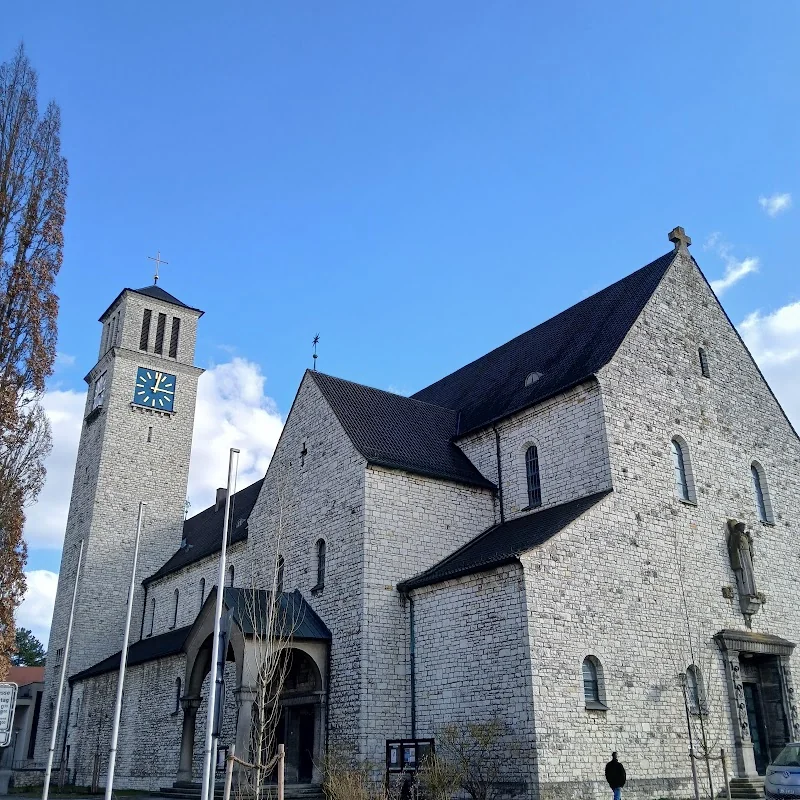
St. Anton in Regensburg is not an anonymous address, but a place with a clear identity, a grown history, and a very own rhythm of worship, music, and community life. Those who seek St. Anton do not end up at a pure event location, but at a Catholic parish church in the barracks district, which has been a fixed point of reference for people in the neighborhood for decades. The official parish community describes St. Anton and St. Albertus Magnus as a neighborhood church in the barracks district, and the parish church St. Anton itself is located at Furtmayrstraße 22; the parish office operates from Hermann-Geib-Straße 8a. This combination of a visible church, administrative proximity, and a lively community defines the character of the place. Here, architecture, liturgy, church music, and neighborhood come together in an ensemble that cannot be reduced to a single purpose. For visitors who want to experience Regensburg beyond the classic old town perspective, St. Anton is therefore an exciting place: historically significant, locally rooted, and still active in everyday life. ([anton-albertus.de](https://anton-albertus.de/))
History and Architecture of the Parish Church St. Anton
The history of St. Anton begins with the development of the barracks district and the expansion of Regensburg beyond its medieval boundaries. With the founding of the parish on December 1, 1921, a spiritual center for a newly grown neighborhood was created, but the final church building took several more years to wait. Initially, an emergency church served as a provisional space until the foundation stone for the current building was laid on July 24, 1927. The consecration took place on November 11, 1928, by Bishop Michael Buchberger. The church was designed by Karl Schmid senior; thus, it did not create a spectacular break with tradition but rather a consciously shaped building that follows the form language of the basilica while simultaneously incorporating the requirements of its time. This mixture of continuity and modernity is still palpable today and explains why St. Anton is perceived not only as a parish church but also as an architectural testimony. ([bistum-regensburg.de](https://bistum-regensburg.de/news/kirchen-aus-dem-bistum-st-anton-in-regensburg))
The building appears clear and orderly: The church is designed as a three-nave structure, about 70 meters long and around 25 meters wide, with the tower reaching just under 50 meters in height. The construction consists of a reinforced concrete skeleton with brick masonry, a typical technical solution for the early 20th century that allows for stability and spatial expansiveness without making the external appearance seem technically cold. Stylistically, St. Anton adopts the form of a Romanesque basilica and articulates it in a deliberately restrained, dignified language. It is precisely this restraint that makes the church interesting: it does not seek to impress but to organize, collect, and create a space where the gaze is directed toward the essential. The church is thus a good example of how sacred architecture in the 20th century does not copy tradition but rather thinks it further. The history of the building itself also lends it depth, as parts of the original furnishings were lost during World War II while the structural substance remained intact. Thus, St. Anton today stands for loss, continuity, and recovery. When viewed as a whole, one does not see just a church but a piece of city history that makes the transformation of Regensburg visible. ([bistum-regensburg.de](https://bistum-regensburg.de/news/kirchen-aus-dem-bistum-st-anton-in-regensburg))
Wall Paintings, Altar Area, and the Quiet Power of the Interior
The interior of St. Anton gains its special effect not only from the architectural form but primarily from the interplay of space, image, and symbol. The church features wall and apse paintings by Georg Winkler, created between 1928 and 1938, which unfold an iconographic narrative from salvation history. The images are not merely decorative additions but expand the space in content. They make it visible that the church space is not just a place for gatherings but a space of remembrance, storytelling, and spiritual collection. In looking at the artworks, it becomes clear how closely architecture and image program intertwine in St. Anton. The visitor does not merely perceive the space; they read it in a sense. This also applies to the symbolic order at the west portal, where the four symbols of the evangelists mark the Christian origin of the space and meaningfully frame the transition from the outside to the inside. This creates a quiet yet very dense image program that elevates the church space beyond mere function. ([bistum-regensburg.de](https://bistum-regensburg.de/news/kirchen-aus-dem-bistum-st-anton-in-regensburg))
The altars and the design of the altar area are also part of this special effect. The city of Regensburg explicitly emphasizes in the program for the Open Monument Day that the parish church St. Anton is known for its rich decorations and that the altars also deserve special attention. This reveals details that are easily overlooked in everyday life, such as the unusual shape of the high altar or the Greek symbols on the altar mensa. Such hints show that St. Anton not only offers pious art but also art-historically interesting solutions. The interior is therefore not loud but concentrated. It thrives on a dignified restraint that does not overwhelm the eye but leads it step by step into spatial and spiritual order. This is complemented by sculptural works that do not overload the space but deepen it. For visitors who wish to experience a church as a space for the staging of silence and meaning, St. Anton is a particularly impressive example. Here, sacred architecture is not experienced as a backdrop but as a walkable form of memory. ([bistum-regensburg.de](https://bistum-regensburg.de/news/kirchen-aus-dem-bistum-st-anton-in-regensburg))
Church Music, Jann Organ, and Concert Life in St. Anton
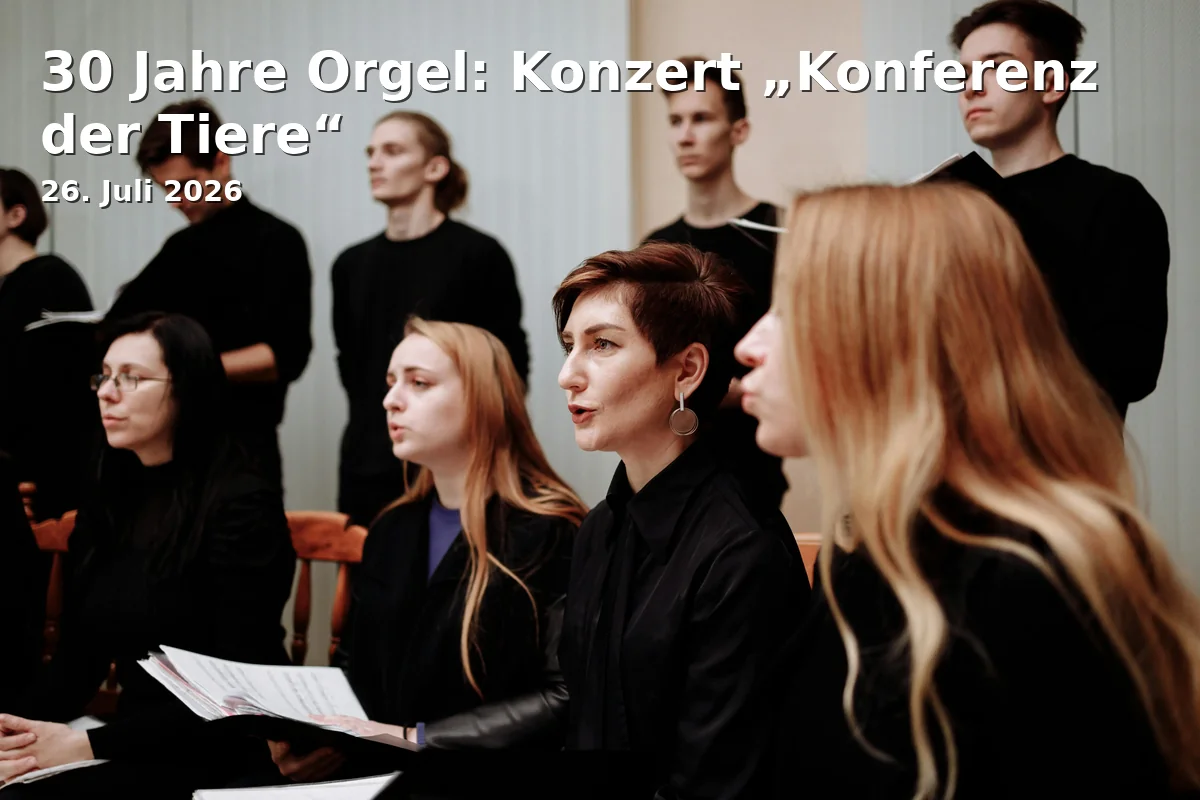
Church music is not a marginal topic in St. Anton but a central feature of the entire parish. The music promotion circle describes that church music in its diverse forms has held a high status for decades and is cultivated both in liturgy and in concerts. Particularly striking is the size and range of musical life: about 100 singers are engaged in the choirs, the St. Anton choir comprises around 60 participants, and there is also a children's choir and a youth choir. This structure shows that music in St. Anton is not only supported by a few but is deeply rooted in the community. The choir regularly shapes the liturgy but also performs a cappella works, oratorios, and masses with orchestra. This is important for the external perception because St. Anton is thus perceived not only as a parish church but also as a cultural resonance space. ([anton-albertus.de](https://anton-albertus.de/musikfoerderkreis-st-anton/))
A special attraction is the Jann organ, built in 1996, which has 39/III in its execution. The organ accompanies the service and can be heard at several organ concerts throughout the year. In 2026, the 30th anniversary of the Jann organ will be celebrated, further underscoring the musical significance of the instrument. The city of Regensburg explicitly highlights the active concert activity of the choir and describes it as a fixed entity in the city's musical life. This is precisely the uniqueness of St. Anton: the place is not only liturgically but also musically alive, in a way that connects generations. Children, teenagers, and adults make music together, and the concerts create a publicly perceivable added value beyond the community borders. For those looking for a place with genuine musical identity, St. Anton offers a church whose sound culture is as formative as its architecture. The combination of sacred space, choir work, organ sound, and concert formats makes St. Anton a destination for people who want to discover Regensburg acoustically as well. ([anton-albertus.de](https://anton-albertus.de/musikfoerderkreis-st-anton/))
Worship Services, Parish Bulletin, and Lively Community in the Neighborhood
St. Anton is not just a building but a community with many faces. The official website emphasizes that there are various groups and circles and that both traditional and new forms of worship are cultivated. Since September 1, 2023, St. Anton and St. Albertus Magnus have formed a parish community, making the joint orientation of community life even more visible. This is reflected in the regular offerings that do not target a small core group but address different age groups and interests. The ecumenical connection is also strong: St. Anton and St. Albertus Magnus have been friendly with the Evangelical Lutheran parish of St. Matthew for many years, regular ecumenical worship services take place in January and before Pentecost, and school services are also ecumenically designed. This openness shapes the self-understanding of the place and makes it connectable beyond its own Catholic community. ([anton-albertus.de](https://anton-albertus.de/?utm_source=openai))
In everyday life, the community is particularly evident in its fixed formats. The parish café invites everyone on the 3rd Thursday of the month to chat, drink coffee, and socialize, with coffee and cake offered for voluntary donations. The senior meeting is aimed monthly at seniors, takes place on the 1st Friday of the month at 2:30 PM in the parish center, and offers lectures, quiz afternoons, songs, barbecue meetings, and small excursions. Additionally, there are the altar servers, of whom there are about 40, who have weekly group meetings and fill the entire church year with hut camps, tent camps, forest Christmas, peace light, and star singing. The peace prayer on Mondays at 5:45 PM is also part of the fixed rhythm. Together, this creates a very dense picture of a community that does not only function on Sundays but remains present throughout the week. Therefore, those searching for keywords like parish bulletin, program, community, or groups will find in St. Anton not abstract terms but lived practice. ([anton-albertus.de](https://anton-albertus.de/pfarrcafe-st-anton/))
Location, Directions, Contact, and Practical Information for Visitors
For orientation, St. Anton is very clearly located: the church stands at Furtmayrstraße 22, in an area of the barracks district located south of the historic old town and shaped by the urban development of the 20th century. The official monument program of the city of Regensburg also lists the place exactly under this address. This is helpful for visitors because St. Anton can thus be easily found on maps, route planners, and city plans. The parish office St. Anton is located at Hermann-Geib-Straße 8a and can be reached by phone and email; the office hours are Monday, Tuesday, and Friday from 8:30 AM to 11:30 AM and Wednesday from 3:00 PM to 5:30 PM, with the office closed on Thursdays. Therefore, anyone with questions about worship services, groups, parish bulletin, or events will find a reliable point of contact here. Particularly practical is that the community maintains its own section for dates and events on its website, as well as a parish bulletin page, allowing current information to be quickly checked. ([regensburg.de](https://www.regensburg.de/fm/121/programm-denkmaltag-regensburg-2025.pdf))
Regarding parking, there is a useful, concrete hint: for individual liturgical events, the parking lot in front of the church is used as a meeting point. This shows that the immediate area around the church also plays a role for visitors and community members. At the same time, St. Anton is not a place with a large, separately advertised visitor parking garage but a parish church embedded in the inner city that primarily functions through its location in the neighborhood. Therefore, those planning a visit should think more like at a neighborhood church: short distance, good accessibility through the surroundings, quick coordination through the parish office or event notices. Especially for celebrations, concerts, or special church events, it is advisable to pay attention to current announcements. The official parish community makes it easy for visitors to orient themselves, as it bundles church, parish bulletin, groups, and events on a common website. This creates a practical advantage: one can plan the visit with just a few clicks and simultaneously get a sense of how strongly St. Anton is anchored in the everyday life of the neighborhood. ([sankt-anton-regensburg.de](https://sankt-anton-regensburg.de/wp-content/uploads/26-2-Pfarrblatt-01.02.-bis-15.02.2026.pdf?utm_source=openai))
Who Particularly Benefits from St. Anton
St. Anton is particularly suitable for those seeking more than a brief sight on a city route. Those interested in sacred architecture, Regensburg's city history, church music, or vibrant community culture will find many entry points here. The church is architecturally clear, historically substantial, and has arrived in the present. This makes it interesting for different target groups: for visitors who appreciate the style of a Romanesque basilica; for music lovers who want to experience the choir and organ; for people from the neighborhood seeking a place for worship, encounter, and support; and for guests who want to get to know Regensburg off the beaten tourist paths. Because the parish church St. Anton does not stand as an isolated monument but is embedded in a dense network of groups, events, and liturgical forms, the visit never feels static. The place is alive, and in a quiet, reliable way that remains sustainable in memory. ([anton-albertus.de](https://anton-albertus.de/unsere-kirchen/?utm_source=openai))
Those who visit St. Anton experience a church that can be explained from its history and yet has a clear impact on the present. The building tells of the emergence of a new neighborhood, the art speaks of faith and the imagery of the interwar period, the music of a remarkably strong choir and organ landscape, and the community of an openness that is reflected in the parish café, senior meetings, altar server work, peace prayers, and ecumenical encounters. This connection is the real added value: St. Anton is not just a place to look at but a place to walk with, celebrate with, and understand with. Those who want to explore Regensburg more intensively should therefore not overlook this neighborhood place. It connects history and everyday life, tranquility and activity, tradition and present in a way that remains credible and approachable. That is its strength. ([bistum-regensburg.de](https://bistum-regensburg.de/news/kirchen-aus-dem-bistum-st-anton-in-regensburg))
Sources:
- St. Anton & St. Albertus Magnus in Regensburg - Parish Church St. Anton
- St. Anton & St. Albertus Magnus in Regensburg - Music Promotion Circle St. Anton
- St. Anton & St. Albertus Magnus in Regensburg - Church Music in St. Anton
- St. Anton & St. Albertus Magnus in Regensburg - Contact
- St. Anton & St. Albertus Magnus in Regensburg - Senior Meeting St. Anton
- St. Anton & St. Albertus Magnus in Regensburg - Parish Café St. Anton
- Diocese of Regensburg - Churches from the Diocese: St. Anton in Regensburg
- City of Regensburg - Program Monument Day 2025
Mehr anzeigenWeniger anzeigen
St. Anton Regensburg | History & Church Music
St. Anton in Regensburg is not an anonymous address, but a place with a clear identity, a grown history, and a very own rhythm of worship, music, and community life. Those who seek St. Anton do not end up at a pure event location, but at a Catholic parish church in the barracks district, which has been a fixed point of reference for people in the neighborhood for decades. The official parish community describes St. Anton and St. Albertus Magnus as a neighborhood church in the barracks district, and the parish church St. Anton itself is located at Furtmayrstraße 22; the parish office operates from Hermann-Geib-Straße 8a. This combination of a visible church, administrative proximity, and a lively community defines the character of the place. Here, architecture, liturgy, church music, and neighborhood come together in an ensemble that cannot be reduced to a single purpose. For visitors who want to experience Regensburg beyond the classic old town perspective, St. Anton is therefore an exciting place: historically significant, locally rooted, and still active in everyday life. ([anton-albertus.de](https://anton-albertus.de/))
History and Architecture of the Parish Church St. Anton
The history of St. Anton begins with the development of the barracks district and the expansion of Regensburg beyond its medieval boundaries. With the founding of the parish on December 1, 1921, a spiritual center for a newly grown neighborhood was created, but the final church building took several more years to wait. Initially, an emergency church served as a provisional space until the foundation stone for the current building was laid on July 24, 1927. The consecration took place on November 11, 1928, by Bishop Michael Buchberger. The church was designed by Karl Schmid senior; thus, it did not create a spectacular break with tradition but rather a consciously shaped building that follows the form language of the basilica while simultaneously incorporating the requirements of its time. This mixture of continuity and modernity is still palpable today and explains why St. Anton is perceived not only as a parish church but also as an architectural testimony. ([bistum-regensburg.de](https://bistum-regensburg.de/news/kirchen-aus-dem-bistum-st-anton-in-regensburg))
The building appears clear and orderly: The church is designed as a three-nave structure, about 70 meters long and around 25 meters wide, with the tower reaching just under 50 meters in height. The construction consists of a reinforced concrete skeleton with brick masonry, a typical technical solution for the early 20th century that allows for stability and spatial expansiveness without making the external appearance seem technically cold. Stylistically, St. Anton adopts the form of a Romanesque basilica and articulates it in a deliberately restrained, dignified language. It is precisely this restraint that makes the church interesting: it does not seek to impress but to organize, collect, and create a space where the gaze is directed toward the essential. The church is thus a good example of how sacred architecture in the 20th century does not copy tradition but rather thinks it further. The history of the building itself also lends it depth, as parts of the original furnishings were lost during World War II while the structural substance remained intact. Thus, St. Anton today stands for loss, continuity, and recovery. When viewed as a whole, one does not see just a church but a piece of city history that makes the transformation of Regensburg visible. ([bistum-regensburg.de](https://bistum-regensburg.de/news/kirchen-aus-dem-bistum-st-anton-in-regensburg))
Wall Paintings, Altar Area, and the Quiet Power of the Interior
The interior of St. Anton gains its special effect not only from the architectural form but primarily from the interplay of space, image, and symbol. The church features wall and apse paintings by Georg Winkler, created between 1928 and 1938, which unfold an iconographic narrative from salvation history. The images are not merely decorative additions but expand the space in content. They make it visible that the church space is not just a place for gatherings but a space of remembrance, storytelling, and spiritual collection. In looking at the artworks, it becomes clear how closely architecture and image program intertwine in St. Anton. The visitor does not merely perceive the space; they read it in a sense. This also applies to the symbolic order at the west portal, where the four symbols of the evangelists mark the Christian origin of the space and meaningfully frame the transition from the outside to the inside. This creates a quiet yet very dense image program that elevates the church space beyond mere function. ([bistum-regensburg.de](https://bistum-regensburg.de/news/kirchen-aus-dem-bistum-st-anton-in-regensburg))
The altars and the design of the altar area are also part of this special effect. The city of Regensburg explicitly emphasizes in the program for the Open Monument Day that the parish church St. Anton is known for its rich decorations and that the altars also deserve special attention. This reveals details that are easily overlooked in everyday life, such as the unusual shape of the high altar or the Greek symbols on the altar mensa. Such hints show that St. Anton not only offers pious art but also art-historically interesting solutions. The interior is therefore not loud but concentrated. It thrives on a dignified restraint that does not overwhelm the eye but leads it step by step into spatial and spiritual order. This is complemented by sculptural works that do not overload the space but deepen it. For visitors who wish to experience a church as a space for the staging of silence and meaning, St. Anton is a particularly impressive example. Here, sacred architecture is not experienced as a backdrop but as a walkable form of memory. ([bistum-regensburg.de](https://bistum-regensburg.de/news/kirchen-aus-dem-bistum-st-anton-in-regensburg))
Church Music, Jann Organ, and Concert Life in St. Anton
Church music is not a marginal topic in St. Anton but a central feature of the entire parish. The music promotion circle describes that church music in its diverse forms has held a high status for decades and is cultivated both in liturgy and in concerts. Particularly striking is the size and range of musical life: about 100 singers are engaged in the choirs, the St. Anton choir comprises around 60 participants, and there is also a children's choir and a youth choir. This structure shows that music in St. Anton is not only supported by a few but is deeply rooted in the community. The choir regularly shapes the liturgy but also performs a cappella works, oratorios, and masses with orchestra. This is important for the external perception because St. Anton is thus perceived not only as a parish church but also as a cultural resonance space. ([anton-albertus.de](https://anton-albertus.de/musikfoerderkreis-st-anton/))
A special attraction is the Jann organ, built in 1996, which has 39/III in its execution. The organ accompanies the service and can be heard at several organ concerts throughout the year. In 2026, the 30th anniversary of the Jann organ will be celebrated, further underscoring the musical significance of the instrument. The city of Regensburg explicitly highlights the active concert activity of the choir and describes it as a fixed entity in the city's musical life. This is precisely the uniqueness of St. Anton: the place is not only liturgically but also musically alive, in a way that connects generations. Children, teenagers, and adults make music together, and the concerts create a publicly perceivable added value beyond the community borders. For those looking for a place with genuine musical identity, St. Anton offers a church whose sound culture is as formative as its architecture. The combination of sacred space, choir work, organ sound, and concert formats makes St. Anton a destination for people who want to discover Regensburg acoustically as well. ([anton-albertus.de](https://anton-albertus.de/musikfoerderkreis-st-anton/))
Worship Services, Parish Bulletin, and Lively Community in the Neighborhood
St. Anton is not just a building but a community with many faces. The official website emphasizes that there are various groups and circles and that both traditional and new forms of worship are cultivated. Since September 1, 2023, St. Anton and St. Albertus Magnus have formed a parish community, making the joint orientation of community life even more visible. This is reflected in the regular offerings that do not target a small core group but address different age groups and interests. The ecumenical connection is also strong: St. Anton and St. Albertus Magnus have been friendly with the Evangelical Lutheran parish of St. Matthew for many years, regular ecumenical worship services take place in January and before Pentecost, and school services are also ecumenically designed. This openness shapes the self-understanding of the place and makes it connectable beyond its own Catholic community. ([anton-albertus.de](https://anton-albertus.de/?utm_source=openai))
In everyday life, the community is particularly evident in its fixed formats. The parish café invites everyone on the 3rd Thursday of the month to chat, drink coffee, and socialize, with coffee and cake offered for voluntary donations. The senior meeting is aimed monthly at seniors, takes place on the 1st Friday of the month at 2:30 PM in the parish center, and offers lectures, quiz afternoons, songs, barbecue meetings, and small excursions. Additionally, there are the altar servers, of whom there are about 40, who have weekly group meetings and fill the entire church year with hut camps, tent camps, forest Christmas, peace light, and star singing. The peace prayer on Mondays at 5:45 PM is also part of the fixed rhythm. Together, this creates a very dense picture of a community that does not only function on Sundays but remains present throughout the week. Therefore, those searching for keywords like parish bulletin, program, community, or groups will find in St. Anton not abstract terms but lived practice. ([anton-albertus.de](https://anton-albertus.de/pfarrcafe-st-anton/))
Location, Directions, Contact, and Practical Information for Visitors
For orientation, St. Anton is very clearly located: the church stands at Furtmayrstraße 22, in an area of the barracks district located south of the historic old town and shaped by the urban development of the 20th century. The official monument program of the city of Regensburg also lists the place exactly under this address. This is helpful for visitors because St. Anton can thus be easily found on maps, route planners, and city plans. The parish office St. Anton is located at Hermann-Geib-Straße 8a and can be reached by phone and email; the office hours are Monday, Tuesday, and Friday from 8:30 AM to 11:30 AM and Wednesday from 3:00 PM to 5:30 PM, with the office closed on Thursdays. Therefore, anyone with questions about worship services, groups, parish bulletin, or events will find a reliable point of contact here. Particularly practical is that the community maintains its own section for dates and events on its website, as well as a parish bulletin page, allowing current information to be quickly checked. ([regensburg.de](https://www.regensburg.de/fm/121/programm-denkmaltag-regensburg-2025.pdf))
Regarding parking, there is a useful, concrete hint: for individual liturgical events, the parking lot in front of the church is used as a meeting point. This shows that the immediate area around the church also plays a role for visitors and community members. At the same time, St. Anton is not a place with a large, separately advertised visitor parking garage but a parish church embedded in the inner city that primarily functions through its location in the neighborhood. Therefore, those planning a visit should think more like at a neighborhood church: short distance, good accessibility through the surroundings, quick coordination through the parish office or event notices. Especially for celebrations, concerts, or special church events, it is advisable to pay attention to current announcements. The official parish community makes it easy for visitors to orient themselves, as it bundles church, parish bulletin, groups, and events on a common website. This creates a practical advantage: one can plan the visit with just a few clicks and simultaneously get a sense of how strongly St. Anton is anchored in the everyday life of the neighborhood. ([sankt-anton-regensburg.de](https://sankt-anton-regensburg.de/wp-content/uploads/26-2-Pfarrblatt-01.02.-bis-15.02.2026.pdf?utm_source=openai))
Who Particularly Benefits from St. Anton
St. Anton is particularly suitable for those seeking more than a brief sight on a city route. Those interested in sacred architecture, Regensburg's city history, church music, or vibrant community culture will find many entry points here. The church is architecturally clear, historically substantial, and has arrived in the present. This makes it interesting for different target groups: for visitors who appreciate the style of a Romanesque basilica; for music lovers who want to experience the choir and organ; for people from the neighborhood seeking a place for worship, encounter, and support; and for guests who want to get to know Regensburg off the beaten tourist paths. Because the parish church St. Anton does not stand as an isolated monument but is embedded in a dense network of groups, events, and liturgical forms, the visit never feels static. The place is alive, and in a quiet, reliable way that remains sustainable in memory. ([anton-albertus.de](https://anton-albertus.de/unsere-kirchen/?utm_source=openai))
Those who visit St. Anton experience a church that can be explained from its history and yet has a clear impact on the present. The building tells of the emergence of a new neighborhood, the art speaks of faith and the imagery of the interwar period, the music of a remarkably strong choir and organ landscape, and the community of an openness that is reflected in the parish café, senior meetings, altar server work, peace prayers, and ecumenical encounters. This connection is the real added value: St. Anton is not just a place to look at but a place to walk with, celebrate with, and understand with. Those who want to explore Regensburg more intensively should therefore not overlook this neighborhood place. It connects history and everyday life, tranquility and activity, tradition and present in a way that remains credible and approachable. That is its strength. ([bistum-regensburg.de](https://bistum-regensburg.de/news/kirchen-aus-dem-bistum-st-anton-in-regensburg))
Sources:
- St. Anton & St. Albertus Magnus in Regensburg - Parish Church St. Anton
- St. Anton & St. Albertus Magnus in Regensburg - Music Promotion Circle St. Anton
- St. Anton & St. Albertus Magnus in Regensburg - Church Music in St. Anton
- St. Anton & St. Albertus Magnus in Regensburg - Contact
- St. Anton & St. Albertus Magnus in Regensburg - Senior Meeting St. Anton
- St. Anton & St. Albertus Magnus in Regensburg - Parish Café St. Anton
- Diocese of Regensburg - Churches from the Diocese: St. Anton in Regensburg
- City of Regensburg - Program Monument Day 2025
St. Anton Regensburg | History & Church Music
St. Anton in Regensburg is not an anonymous address, but a place with a clear identity, a grown history, and a very own rhythm of worship, music, and community life. Those who seek St. Anton do not end up at a pure event location, but at a Catholic parish church in the barracks district, which has been a fixed point of reference for people in the neighborhood for decades. The official parish community describes St. Anton and St. Albertus Magnus as a neighborhood church in the barracks district, and the parish church St. Anton itself is located at Furtmayrstraße 22; the parish office operates from Hermann-Geib-Straße 8a. This combination of a visible church, administrative proximity, and a lively community defines the character of the place. Here, architecture, liturgy, church music, and neighborhood come together in an ensemble that cannot be reduced to a single purpose. For visitors who want to experience Regensburg beyond the classic old town perspective, St. Anton is therefore an exciting place: historically significant, locally rooted, and still active in everyday life. ([anton-albertus.de](https://anton-albertus.de/))
History and Architecture of the Parish Church St. Anton
The history of St. Anton begins with the development of the barracks district and the expansion of Regensburg beyond its medieval boundaries. With the founding of the parish on December 1, 1921, a spiritual center for a newly grown neighborhood was created, but the final church building took several more years to wait. Initially, an emergency church served as a provisional space until the foundation stone for the current building was laid on July 24, 1927. The consecration took place on November 11, 1928, by Bishop Michael Buchberger. The church was designed by Karl Schmid senior; thus, it did not create a spectacular break with tradition but rather a consciously shaped building that follows the form language of the basilica while simultaneously incorporating the requirements of its time. This mixture of continuity and modernity is still palpable today and explains why St. Anton is perceived not only as a parish church but also as an architectural testimony. ([bistum-regensburg.de](https://bistum-regensburg.de/news/kirchen-aus-dem-bistum-st-anton-in-regensburg))
The building appears clear and orderly: The church is designed as a three-nave structure, about 70 meters long and around 25 meters wide, with the tower reaching just under 50 meters in height. The construction consists of a reinforced concrete skeleton with brick masonry, a typical technical solution for the early 20th century that allows for stability and spatial expansiveness without making the external appearance seem technically cold. Stylistically, St. Anton adopts the form of a Romanesque basilica and articulates it in a deliberately restrained, dignified language. It is precisely this restraint that makes the church interesting: it does not seek to impress but to organize, collect, and create a space where the gaze is directed toward the essential. The church is thus a good example of how sacred architecture in the 20th century does not copy tradition but rather thinks it further. The history of the building itself also lends it depth, as parts of the original furnishings were lost during World War II while the structural substance remained intact. Thus, St. Anton today stands for loss, continuity, and recovery. When viewed as a whole, one does not see just a church but a piece of city history that makes the transformation of Regensburg visible. ([bistum-regensburg.de](https://bistum-regensburg.de/news/kirchen-aus-dem-bistum-st-anton-in-regensburg))
Wall Paintings, Altar Area, and the Quiet Power of the Interior
The interior of St. Anton gains its special effect not only from the architectural form but primarily from the interplay of space, image, and symbol. The church features wall and apse paintings by Georg Winkler, created between 1928 and 1938, which unfold an iconographic narrative from salvation history. The images are not merely decorative additions but expand the space in content. They make it visible that the church space is not just a place for gatherings but a space of remembrance, storytelling, and spiritual collection. In looking at the artworks, it becomes clear how closely architecture and image program intertwine in St. Anton. The visitor does not merely perceive the space; they read it in a sense. This also applies to the symbolic order at the west portal, where the four symbols of the evangelists mark the Christian origin of the space and meaningfully frame the transition from the outside to the inside. This creates a quiet yet very dense image program that elevates the church space beyond mere function. ([bistum-regensburg.de](https://bistum-regensburg.de/news/kirchen-aus-dem-bistum-st-anton-in-regensburg))
The altars and the design of the altar area are also part of this special effect. The city of Regensburg explicitly emphasizes in the program for the Open Monument Day that the parish church St. Anton is known for its rich decorations and that the altars also deserve special attention. This reveals details that are easily overlooked in everyday life, such as the unusual shape of the high altar or the Greek symbols on the altar mensa. Such hints show that St. Anton not only offers pious art but also art-historically interesting solutions. The interior is therefore not loud but concentrated. It thrives on a dignified restraint that does not overwhelm the eye but leads it step by step into spatial and spiritual order. This is complemented by sculptural works that do not overload the space but deepen it. For visitors who wish to experience a church as a space for the staging of silence and meaning, St. Anton is a particularly impressive example. Here, sacred architecture is not experienced as a backdrop but as a walkable form of memory. ([bistum-regensburg.de](https://bistum-regensburg.de/news/kirchen-aus-dem-bistum-st-anton-in-regensburg))
Church Music, Jann Organ, and Concert Life in St. Anton
Church music is not a marginal topic in St. Anton but a central feature of the entire parish. The music promotion circle describes that church music in its diverse forms has held a high status for decades and is cultivated both in liturgy and in concerts. Particularly striking is the size and range of musical life: about 100 singers are engaged in the choirs, the St. Anton choir comprises around 60 participants, and there is also a children's choir and a youth choir. This structure shows that music in St. Anton is not only supported by a few but is deeply rooted in the community. The choir regularly shapes the liturgy but also performs a cappella works, oratorios, and masses with orchestra. This is important for the external perception because St. Anton is thus perceived not only as a parish church but also as a cultural resonance space. ([anton-albertus.de](https://anton-albertus.de/musikfoerderkreis-st-anton/))
A special attraction is the Jann organ, built in 1996, which has 39/III in its execution. The organ accompanies the service and can be heard at several organ concerts throughout the year. In 2026, the 30th anniversary of the Jann organ will be celebrated, further underscoring the musical significance of the instrument. The city of Regensburg explicitly highlights the active concert activity of the choir and describes it as a fixed entity in the city's musical life. This is precisely the uniqueness of St. Anton: the place is not only liturgically but also musically alive, in a way that connects generations. Children, teenagers, and adults make music together, and the concerts create a publicly perceivable added value beyond the community borders. For those looking for a place with genuine musical identity, St. Anton offers a church whose sound culture is as formative as its architecture. The combination of sacred space, choir work, organ sound, and concert formats makes St. Anton a destination for people who want to discover Regensburg acoustically as well. ([anton-albertus.de](https://anton-albertus.de/musikfoerderkreis-st-anton/))
Worship Services, Parish Bulletin, and Lively Community in the Neighborhood
St. Anton is not just a building but a community with many faces. The official website emphasizes that there are various groups and circles and that both traditional and new forms of worship are cultivated. Since September 1, 2023, St. Anton and St. Albertus Magnus have formed a parish community, making the joint orientation of community life even more visible. This is reflected in the regular offerings that do not target a small core group but address different age groups and interests. The ecumenical connection is also strong: St. Anton and St. Albertus Magnus have been friendly with the Evangelical Lutheran parish of St. Matthew for many years, regular ecumenical worship services take place in January and before Pentecost, and school services are also ecumenically designed. This openness shapes the self-understanding of the place and makes it connectable beyond its own Catholic community. ([anton-albertus.de](https://anton-albertus.de/?utm_source=openai))
In everyday life, the community is particularly evident in its fixed formats. The parish café invites everyone on the 3rd Thursday of the month to chat, drink coffee, and socialize, with coffee and cake offered for voluntary donations. The senior meeting is aimed monthly at seniors, takes place on the 1st Friday of the month at 2:30 PM in the parish center, and offers lectures, quiz afternoons, songs, barbecue meetings, and small excursions. Additionally, there are the altar servers, of whom there are about 40, who have weekly group meetings and fill the entire church year with hut camps, tent camps, forest Christmas, peace light, and star singing. The peace prayer on Mondays at 5:45 PM is also part of the fixed rhythm. Together, this creates a very dense picture of a community that does not only function on Sundays but remains present throughout the week. Therefore, those searching for keywords like parish bulletin, program, community, or groups will find in St. Anton not abstract terms but lived practice. ([anton-albertus.de](https://anton-albertus.de/pfarrcafe-st-anton/))
Location, Directions, Contact, and Practical Information for Visitors
For orientation, St. Anton is very clearly located: the church stands at Furtmayrstraße 22, in an area of the barracks district located south of the historic old town and shaped by the urban development of the 20th century. The official monument program of the city of Regensburg also lists the place exactly under this address. This is helpful for visitors because St. Anton can thus be easily found on maps, route planners, and city plans. The parish office St. Anton is located at Hermann-Geib-Straße 8a and can be reached by phone and email; the office hours are Monday, Tuesday, and Friday from 8:30 AM to 11:30 AM and Wednesday from 3:00 PM to 5:30 PM, with the office closed on Thursdays. Therefore, anyone with questions about worship services, groups, parish bulletin, or events will find a reliable point of contact here. Particularly practical is that the community maintains its own section for dates and events on its website, as well as a parish bulletin page, allowing current information to be quickly checked. ([regensburg.de](https://www.regensburg.de/fm/121/programm-denkmaltag-regensburg-2025.pdf))
Regarding parking, there is a useful, concrete hint: for individual liturgical events, the parking lot in front of the church is used as a meeting point. This shows that the immediate area around the church also plays a role for visitors and community members. At the same time, St. Anton is not a place with a large, separately advertised visitor parking garage but a parish church embedded in the inner city that primarily functions through its location in the neighborhood. Therefore, those planning a visit should think more like at a neighborhood church: short distance, good accessibility through the surroundings, quick coordination through the parish office or event notices. Especially for celebrations, concerts, or special church events, it is advisable to pay attention to current announcements. The official parish community makes it easy for visitors to orient themselves, as it bundles church, parish bulletin, groups, and events on a common website. This creates a practical advantage: one can plan the visit with just a few clicks and simultaneously get a sense of how strongly St. Anton is anchored in the everyday life of the neighborhood. ([sankt-anton-regensburg.de](https://sankt-anton-regensburg.de/wp-content/uploads/26-2-Pfarrblatt-01.02.-bis-15.02.2026.pdf?utm_source=openai))
Who Particularly Benefits from St. Anton
St. Anton is particularly suitable for those seeking more than a brief sight on a city route. Those interested in sacred architecture, Regensburg's city history, church music, or vibrant community culture will find many entry points here. The church is architecturally clear, historically substantial, and has arrived in the present. This makes it interesting for different target groups: for visitors who appreciate the style of a Romanesque basilica; for music lovers who want to experience the choir and organ; for people from the neighborhood seeking a place for worship, encounter, and support; and for guests who want to get to know Regensburg off the beaten tourist paths. Because the parish church St. Anton does not stand as an isolated monument but is embedded in a dense network of groups, events, and liturgical forms, the visit never feels static. The place is alive, and in a quiet, reliable way that remains sustainable in memory. ([anton-albertus.de](https://anton-albertus.de/unsere-kirchen/?utm_source=openai))
Those who visit St. Anton experience a church that can be explained from its history and yet has a clear impact on the present. The building tells of the emergence of a new neighborhood, the art speaks of faith and the imagery of the interwar period, the music of a remarkably strong choir and organ landscape, and the community of an openness that is reflected in the parish café, senior meetings, altar server work, peace prayers, and ecumenical encounters. This connection is the real added value: St. Anton is not just a place to look at but a place to walk with, celebrate with, and understand with. Those who want to explore Regensburg more intensively should therefore not overlook this neighborhood place. It connects history and everyday life, tranquility and activity, tradition and present in a way that remains credible and approachable. That is its strength. ([bistum-regensburg.de](https://bistum-regensburg.de/news/kirchen-aus-dem-bistum-st-anton-in-regensburg))
Sources:
- St. Anton & St. Albertus Magnus in Regensburg - Parish Church St. Anton
- St. Anton & St. Albertus Magnus in Regensburg - Music Promotion Circle St. Anton
- St. Anton & St. Albertus Magnus in Regensburg - Church Music in St. Anton
- St. Anton & St. Albertus Magnus in Regensburg - Contact
- St. Anton & St. Albertus Magnus in Regensburg - Senior Meeting St. Anton
- St. Anton & St. Albertus Magnus in Regensburg - Parish Café St. Anton
- Diocese of Regensburg - Churches from the Diocese: St. Anton in Regensburg
- City of Regensburg - Program Monument Day 2025
Frequently Asked Questions
Reviews
No reviews found