
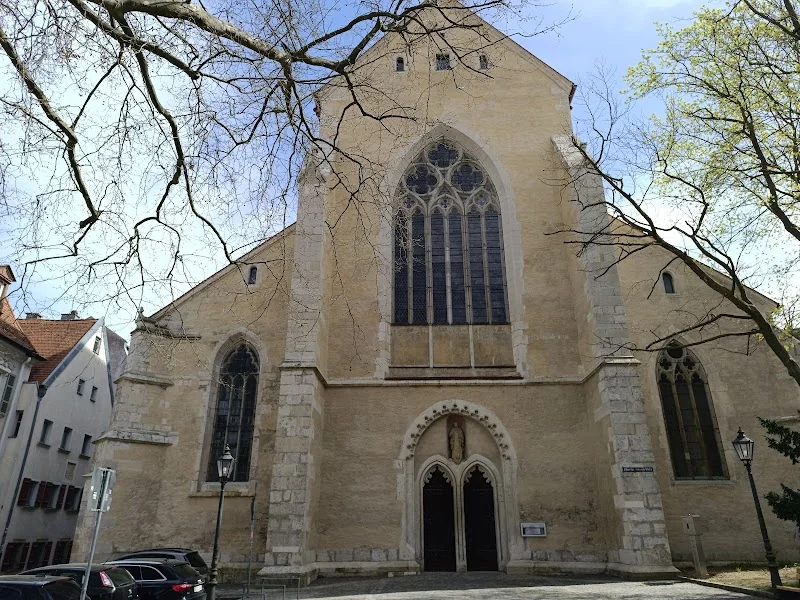
Regensburg
Albertus-Magnus-Platz 1, 93047 Regensburg, Deutschland
St. Blasius | Dominican Church & Services
St. Blasius in Regensburg is not just any church address, but a place with an extraordinary density of history, architecture, and current use. The Dominican Church is located at Albertus-Magnus-Platz 1 near Bismarckplatz in the western old town and has been one of the most significant mendicant order churches in the German-speaking world for centuries. After a comprehensive restoration completed in 2024, the building is once again publicly accessible and today combines sacred use, cultural events, and monument experience in a compact space. For many visitors, this mix is precisely why St. Blasius is so frequently sought after: Anyone asking about a church, service, concert, tour, or a special historical place in Regensburg quickly ends up at this Gothic structure. At the same time, St. Blasius is a space that wants to be experienced, not just viewed: with a spacious interior, minimalist effect, spiritual atmosphere, and a clear reference to the history of the city of Regensburg. ([regensburg.de](https://www.regensburg.de/veranstaltungen/detail/588988?utm_source=openai))
Why St. Blasius in Regensburg is so often searched
The search queries surrounding St. Blasius clearly show that people are drawn to this place for various reasons. Some are specifically looking for the church itself, others want to know if and when services are held there, while others are interested in concerts, tours, or practical topics such as directions and parking options. This mix makes the Dominican Church an exciting SEO topic: It is not just a monument, but a lively place where liturgical life, university pastoral care, and culture coexist. Particularly important is the regular Sunday mass of the Catholic University Community, which is celebrated every Sunday at 8 PM. Thus, St. Blasius remains a place where not only history is remembered but faith is concretely lived. The KHG describes the Dominican Church as an integral part of its spiritual offerings, and the diocese even refers to it as a place of divine encounter in connection with the service. ([khg-regensburg.de](https://khg-regensburg.de/spiritualitaet/blaue-stunde/?utm_source=openai))
Additionally, St. Blasius is also perceived strongly in cultural terms. The city of Regensburg lists the Dominican Church as a venue for events, such as festivals like “Young Voices,” and the diocese regularly announces spiritual and musical formats, including night concerts featuring Gregorian chants or thematic tours. This is particularly attractive for visitors because the church space is not limited to a single use. Rather, a profile emerges that is typical for Regensburg: historical substance, spiritual continuity, and an open event life. So, when someone searches for St. Blasius, they often mean not just a church building, but a real place of experience in the old town where architecture, music, and liturgy intertwine. This complexity explains why terms like church, service, concerts, and reviews repeatedly appear together. ([regensburg.de](https://www.regensburg.de/veranstaltungen/detail/588988?utm_source=openai))
As a congregational church, St. Blasius also has a special role. The Marian Men's Congregation refers to its historical connection to the Dominican Church, further emphasizing that this place is not only touristically significant but also deeply rooted in the church. For SEO planning, this is important because seekers come from very different motivations: students who want to attend a mass, music lovers looking for a concert, architecture enthusiasts inquiring about the Gothic building, and people who simply want to know what lies behind the name St. Blasius in Regensburg. For these reasons, a content representation that makes both the spiritual use and the cultural and historical dimension visible is sensible. ([mmc-regensburg.de](https://www.mmc-regensburg.de/congregationskirche/))
History of the Dominican Church St. Blasius from 1229 to 2024
The history of St. Blasius begins in the early 13th century and is closely linked to the settlement of the Dominican Order in Regensburg. According to available sources, the Dominicans were called to the city in 1229 by the Regensburg Bishop Siegfried; construction of the church likely began around 1246. The church developed over a construction period of about 150 years and was completed in 1383/84. Thus, St. Blasius is among the oldest and most significant church buildings of the order in Germany. The early establishment shows that this was not just any side building, but a major work of early Gothic architecture that was long-lasting for both the order and the city. The Dominican Church remains a visible sign of that phase in which Regensburg positioned itself as a religious and cultural center in medieval Europe. ([bistum-regensburg.de](https://bistum-regensburg.de/news/abschluss-der-sanierungsmassnahme-fuer-die-dominikanerkirche-st-blasius-in-regensburg))
Among the historical milestones is also the first documented altar consecration in 1254. Another remarkable finding is the roof structure of the choir, the oldest part of which is dated to 1279, making it one of the earliest sacred roof structures in Regensburg. For many centuries, the church remained part of a larger monastery area until it was detached from the old monastic context during the secularization. In 1956, the church and monastery building passed from the ownership of the Archiepiscopal Institute St. Paul to the Free State of Bavaria; a usage contract from 1960 ensured the continuation of the cathedral chapter and church use. This ownership and usage structure explains why St. Blasius is still both a state monument and a church-influenced space today. ([bistum-regensburg.de](https://bistum-regensburg.de/news/abschluss-der-sanierungsmassnahme-fuer-die-dominikanerkirche-st-blasius-in-regensburg))
The most recent major turning point in history is the restoration phase starting in April 2017, which lasted seven years and was completed in 2024. The State Building Authority Regensburg describes the measure as a comprehensive restoration involving roof, vault, and facade renovation as well as the strengthening of the spatial shell. Particularly interesting is that during the restoration of the tower cross, a time capsule containing relics from the original construction period was discovered and supplemented for posterity. On April 11, 2024, the church was reopened as part of an open house day. This not only secured St. Blasius structurally but also reestablished it as a publicly accessible place. For visitors, this is an important point: Anyone searching for St. Blasius today enters not a museum-like stillness but a restored, active, and still-used sacred space. ([stbar.bayern.de](https://www.stbar.bayern.de/hochbau/projekte/B32H.E0539000.01.html))
Architecture, Highlights, and Special Artworks in St. Blasius
Architecturally, the Dominican Church St. Blasius is a masterpiece of Gothic mendicant order architecture. The church is a three-nave, rib-vaulted basilica without a transept, ending in three apses. The main and choir buildings are clearly distinguishable, and the interior appears high, slender, and surprisingly calm. This simplicity is part of the Dominican Order's concept: the church should not distract with baroque splendor but create a concentrated spiritual space. The building does without flying buttresses, giving it a puristic and austere appearance both inside and out. In the official description, the Dominican Church is referred to as one of the largest and most significant church buildings of the order in Germany; in current tour documents, it is also described as a basilica over 70 meters long. Thus, entering St. Blasius offers not only a historical church but a space where medieval construction ideas and monumental effects come together very directly. ([stbar.bayern.de](https://www.stbar.bayern.de/hochbau/projekte/B32H.E0539000.01.html))
Particularly impressive are the art-historical details that remain visible in the church space today. In the southern aisle, there is the frieze of the Fourteen Holy Helpers from 1331, which is considered the oldest frieze-like decorative detail of this church. Also of great importance is the protective mantle Madonna, created around 1500, which is repeatedly highlighted in church tours. These objects make it clear that St. Blasius is significant not only for its architecture but also for its image and piety history. For many visitors, this is exactly the charm one expects from a Dominican church: sober Gothic form outside, deeply rooted spiritual imagery inside. This is a difference from many other Regensburg churches and a reason why tours here are so popular. ([bistum-regensburg.de](https://bistum-regensburg.de/veranstaltungen/veranstaltungsliste/details/nachtkonzert-in-st-blasius?utm_source=openai))
Another special space is the Albertus-Magnus Chapel, which was restored along with the sacristy, choir, and lay stalls during the renovation. This side room is important for the cultural and spiritual use of the church because it shows how closely the Dominican Church is connected to the educational and order thought. The city of Regensburg explicitly refers to the building at Albertus-Magnus-Platz 1 in its monument profiles, and church sources show that a historically grown area with cloisters, side rooms, and other usage zones has been preserved around the church. For SEO, this point is particularly relevant because users searching for Albertus-Magnus Chapel, Dominican Church, or St. Blasius often inquire about these spatial and contextual connections. Thus, St. Blasius is not just a church building but an ensemble with multiple layers that connects architecture, theology, and city history. ([stbar.bayern.de](https://www.stbar.bayern.de/hochbau/projekte/B32H.E0539000.01.html))
Services, Concerts, and Spiritual Use Today
Today, St. Blasius is primarily perceived as a vibrant spiritual space. The Catholic University Community celebrates Holy Mass there every Sunday at 8 PM, and the offer is directed not only at students but explicitly at all believers. This regular liturgical life is a central feature of the church, as it makes clear that the Dominican Church, despite its historical significance, is not merely a place for sightseeing. The Diocese of Regensburg has repeatedly highlighted the Sunday evening service while also pointing out that the space is again publicly accessible after the renovation. For visitors, this results in a strong profile: St. Blasius is a place of silence, prayer, and celebration, but also a place where one consciously gathers at a specific time and experiences the space in liturgical use. ([khg-regensburg.de](https://khg-regensburg.de/spiritualitaet/blaue-stunde/?utm_source=openai))
Moreover, the Dominican Church today is also a venue for classical and spiritual concerts. The city of Regensburg lists it in its event calendar for the festival “Young Voices,” while the diocese announced a night concert featuring Gregorian chants and a spiritual framework for summer 2025. In the KEB program, St. Blasius is described as a masterpiece of Gothic architecture, which, in addition to its historical value, is also used for tours and cultural formats. This is crucial for the perception of the location because the user intention behind many search queries targets not only the church itself but concrete experiences: When is the next concert? Is there a tour? Is a mass public? Can one experience the space in a special musical atmosphere? St. Blasius answers all these questions with a very clear yes. ([regensburg.de](https://www.regensburg.de/veranstaltungen/detail/588988?utm_source=openai))
Additionally, there is the role as a congregational church and spiritual home for various groups. The Marian Men's Congregation refers to its historical connection to the Dominican Church, and the university community also uses the place as a fixed part of its annual program. Particularly in Regensburg, a city with a strong church and cultural profile, this is important: St. Blasius does not stand alone but is part of a network of worship places, educational work, and musical life. This also explains why search terms like service, church, concerts, and tours are so closely connected. Visitors coming here rarely experience just a single program point but usually a combination of spatial effect, liturgical experience, and cultural encounter. This is what makes the Dominican Church so valuable for the cityscape. ([mmc-regensburg.de](https://www.mmc-regensburg.de/congregationskirche/))
Capacity, Equipment, and Special Rooms of the Church
As a venue, St. Blasius is clearly defined. In the city’s list of Regensburg event venues, the Dominican Church is listed as a church with 350 seats and up to 550 standing places. For SEO and user inquiries, this is a strong signal, as many interested parties want to know how large the space is, whether it is suitable for larger services, or how many visitors can fit. The answer is clear: St. Blasius is not a small side room but a large church building with considerable capacity. At the same time, the effect of the space remains calm and concentrated despite this size, as the Gothic architecture relies on clear lines and slender proportions. This combination of spaciousness and discipline makes the space particularly attractive for concerts, celebrations, and liturgical formats. ([regensburg.de](https://www.regensburg.de/fm/RBG_INTER1S_VM.a.253.de/r_upload/Veranstaltungsorte-Regensburg.pdf))
The church's equipment was not only secured during the renovation but also restored in essential parts. The State Building Authority explicitly mentions the spatial shell, the choir and lay stalls, as well as the side rooms with sacristy and Albertus-Magnus Chapel. The renovation also focused on roof and vault renovation, facade restoration, and the strengthening of the interior. For visitors, this means: The building presents itself today not as a random historical shell but as a carefully maintained monument in which the medieval structure remains experienceable. The official description also emphasizes that the interior, with its slender proportions, appears elegant and does without flying buttresses. This architectural clarity is a quality feature that is repeatedly explained during tours. ([stbar.bayern.de](https://www.stbar.bayern.de/hochbau/projekte/B32H.E0539000.01.html))
The practical details are also interesting. For tours, the meeting point is indicated at the main portal or at Albertus-Magnus-Platz, and the KEB lists selected tour dates in the 2026 season with 8 euros regular, 5 euros reduced, and free admission for children up to 16 years. This shows that St. Blasius can not only be visited spontaneously but also explored in an organized tour offer. Additionally, there is the barrier-free perspective: During the renovation, a barrier-free access was considered and already mentioned in the diocese's documents. For visitors, this is a hint to check current information before the visit, as details may change depending on use and construction condition. Overall, St. Blasius is thus a very well describable space for the SEO topics of capacity, seating, equipment, and tours. ([bistum-regensburg.de](https://bistum-regensburg.de/fileadmin/Dateien/pdf/Plakate_Flyer/260417_domfuehrungen-jahresprogramm_2026.pdf?utm_source=openai))
Location at Bismarckplatz, Directions, and Visiting Tips in the Old Town
The location of St. Blasius is one of its greatest advantages. The church is located in the western old town of Regensburg at Albertus-Magnus-Platz 1, right by Bismarckplatz. For visitors, this means a very central, city-close position that fits well into a tour of the old town. At the same time, the address is easy to remember, as it is used exactly like this in many official event announcements and tour pages. Anyone visiting the church for the first time finds themselves in an environment characterized by old town alleys, historical buildings, and other cultural sites. From an SEO perspective, this local reference is important because search queries about directions, Regensburg old town, and Bismarckplatz have a real spatial basis here. ([regensburg.de](https://www.regensburg.de/veranstaltungen/detail/588988?utm_source=openai))
For the actual visit, the main portal at Albertus-Magnus-Platz is the best orientation point, as official church tours also begin there. This is practical for guests attending tours, participating in a mass, or visiting a concert. Since St. Blasius is located in the historical center, walking from the city center is particularly convenient; at the same time, it is advisable to check the current city notices regarding traffic and parking in advance if coming by car. A blanket parking recommendation would be less sensible than looking at the specific day's situation, as the old town of Regensburg is very differently frequented depending on the event. For this reason, the combination of a central location, clearly named main portal, and current tour or event information is so helpful for visitors. ([keb-regensburg-stadt.de](https://www.keb-regensburg-stadt.de/aktuelle-veranstaltungen/7-81596-kirchenfuehrung-in-st-blasius-dominikanerkirche-und-albertus-magnus-kapelle/?utm_source=openai))
Also, a well-prepared visit is worthwhile. Anyone searching for St. Blasius due to review questions or general orientation should know that the existing location data shows a positive basic perception, while the official sources emphasize the historical significance, successful restoration, and current use. For a successful visit, it is advisable to take a look at the service schedule of the KHG or the next tours if one wants to experience the space not only from the outside but also in a liturgical or cultural context. St. Blasius is particularly impressive in the evening or in combination with music, as the Gothic spaciousness and the calm materiality of the interior come into strong effect. Thus, a historical name becomes a clear visit experience that adds a particularly impressive place to Regensburg's old town. ([khg-regensburg.de](https://khg-regensburg.de/gottesdienst-gebet/?utm_source=openai))
In summary, St. Blasius in Regensburg is a place that is very well suited for search queries about church, service, concerts, tours, capacity, and old town location. The Dominican Church combines a great building history, a restored interior world, and an active use in the 21st century. This connection makes it one of the most exciting spiritual and cultural places in the city. Anyone who truly wants to understand Regensburg should not see St. Blasius merely as an architectural monument but as a living space where the past and present meet in rare clarity. ([stbar.bayern.de](https://www.stbar.bayern.de/hochbau/projekte/B32H.E0539000.01.html))
Sources:
- State Building Authority Regensburg – Dominican Church St. Blasius - Restoration
- Diocese of Regensburg – Completion of the restoration measure for the Dominican Church St. Blasius in Regensburg
- KHG Regensburg – Service & Prayer
- City of Regensburg – Festival Young Voices - Double Feature 1
- City of Regensburg – Event Venues Regensburg (PDF)
- KEB Regensburg City – Church Tour in St. Blasius
- Info Center DOMPLATZ 5 – Dominican Church St. Blasius
Mehr anzeigenWeniger anzeigen
St. Blasius | Dominican Church & Services
St. Blasius in Regensburg is not just any church address, but a place with an extraordinary density of history, architecture, and current use. The Dominican Church is located at Albertus-Magnus-Platz 1 near Bismarckplatz in the western old town and has been one of the most significant mendicant order churches in the German-speaking world for centuries. After a comprehensive restoration completed in 2024, the building is once again publicly accessible and today combines sacred use, cultural events, and monument experience in a compact space. For many visitors, this mix is precisely why St. Blasius is so frequently sought after: Anyone asking about a church, service, concert, tour, or a special historical place in Regensburg quickly ends up at this Gothic structure. At the same time, St. Blasius is a space that wants to be experienced, not just viewed: with a spacious interior, minimalist effect, spiritual atmosphere, and a clear reference to the history of the city of Regensburg. ([regensburg.de](https://www.regensburg.de/veranstaltungen/detail/588988?utm_source=openai))
Why St. Blasius in Regensburg is so often searched
The search queries surrounding St. Blasius clearly show that people are drawn to this place for various reasons. Some are specifically looking for the church itself, others want to know if and when services are held there, while others are interested in concerts, tours, or practical topics such as directions and parking options. This mix makes the Dominican Church an exciting SEO topic: It is not just a monument, but a lively place where liturgical life, university pastoral care, and culture coexist. Particularly important is the regular Sunday mass of the Catholic University Community, which is celebrated every Sunday at 8 PM. Thus, St. Blasius remains a place where not only history is remembered but faith is concretely lived. The KHG describes the Dominican Church as an integral part of its spiritual offerings, and the diocese even refers to it as a place of divine encounter in connection with the service. ([khg-regensburg.de](https://khg-regensburg.de/spiritualitaet/blaue-stunde/?utm_source=openai))
Additionally, St. Blasius is also perceived strongly in cultural terms. The city of Regensburg lists the Dominican Church as a venue for events, such as festivals like “Young Voices,” and the diocese regularly announces spiritual and musical formats, including night concerts featuring Gregorian chants or thematic tours. This is particularly attractive for visitors because the church space is not limited to a single use. Rather, a profile emerges that is typical for Regensburg: historical substance, spiritual continuity, and an open event life. So, when someone searches for St. Blasius, they often mean not just a church building, but a real place of experience in the old town where architecture, music, and liturgy intertwine. This complexity explains why terms like church, service, concerts, and reviews repeatedly appear together. ([regensburg.de](https://www.regensburg.de/veranstaltungen/detail/588988?utm_source=openai))
As a congregational church, St. Blasius also has a special role. The Marian Men's Congregation refers to its historical connection to the Dominican Church, further emphasizing that this place is not only touristically significant but also deeply rooted in the church. For SEO planning, this is important because seekers come from very different motivations: students who want to attend a mass, music lovers looking for a concert, architecture enthusiasts inquiring about the Gothic building, and people who simply want to know what lies behind the name St. Blasius in Regensburg. For these reasons, a content representation that makes both the spiritual use and the cultural and historical dimension visible is sensible. ([mmc-regensburg.de](https://www.mmc-regensburg.de/congregationskirche/))
History of the Dominican Church St. Blasius from 1229 to 2024
The history of St. Blasius begins in the early 13th century and is closely linked to the settlement of the Dominican Order in Regensburg. According to available sources, the Dominicans were called to the city in 1229 by the Regensburg Bishop Siegfried; construction of the church likely began around 1246. The church developed over a construction period of about 150 years and was completed in 1383/84. Thus, St. Blasius is among the oldest and most significant church buildings of the order in Germany. The early establishment shows that this was not just any side building, but a major work of early Gothic architecture that was long-lasting for both the order and the city. The Dominican Church remains a visible sign of that phase in which Regensburg positioned itself as a religious and cultural center in medieval Europe. ([bistum-regensburg.de](https://bistum-regensburg.de/news/abschluss-der-sanierungsmassnahme-fuer-die-dominikanerkirche-st-blasius-in-regensburg))
Among the historical milestones is also the first documented altar consecration in 1254. Another remarkable finding is the roof structure of the choir, the oldest part of which is dated to 1279, making it one of the earliest sacred roof structures in Regensburg. For many centuries, the church remained part of a larger monastery area until it was detached from the old monastic context during the secularization. In 1956, the church and monastery building passed from the ownership of the Archiepiscopal Institute St. Paul to the Free State of Bavaria; a usage contract from 1960 ensured the continuation of the cathedral chapter and church use. This ownership and usage structure explains why St. Blasius is still both a state monument and a church-influenced space today. ([bistum-regensburg.de](https://bistum-regensburg.de/news/abschluss-der-sanierungsmassnahme-fuer-die-dominikanerkirche-st-blasius-in-regensburg))
The most recent major turning point in history is the restoration phase starting in April 2017, which lasted seven years and was completed in 2024. The State Building Authority Regensburg describes the measure as a comprehensive restoration involving roof, vault, and facade renovation as well as the strengthening of the spatial shell. Particularly interesting is that during the restoration of the tower cross, a time capsule containing relics from the original construction period was discovered and supplemented for posterity. On April 11, 2024, the church was reopened as part of an open house day. This not only secured St. Blasius structurally but also reestablished it as a publicly accessible place. For visitors, this is an important point: Anyone searching for St. Blasius today enters not a museum-like stillness but a restored, active, and still-used sacred space. ([stbar.bayern.de](https://www.stbar.bayern.de/hochbau/projekte/B32H.E0539000.01.html))
Architecture, Highlights, and Special Artworks in St. Blasius
Architecturally, the Dominican Church St. Blasius is a masterpiece of Gothic mendicant order architecture. The church is a three-nave, rib-vaulted basilica without a transept, ending in three apses. The main and choir buildings are clearly distinguishable, and the interior appears high, slender, and surprisingly calm. This simplicity is part of the Dominican Order's concept: the church should not distract with baroque splendor but create a concentrated spiritual space. The building does without flying buttresses, giving it a puristic and austere appearance both inside and out. In the official description, the Dominican Church is referred to as one of the largest and most significant church buildings of the order in Germany; in current tour documents, it is also described as a basilica over 70 meters long. Thus, entering St. Blasius offers not only a historical church but a space where medieval construction ideas and monumental effects come together very directly. ([stbar.bayern.de](https://www.stbar.bayern.de/hochbau/projekte/B32H.E0539000.01.html))
Particularly impressive are the art-historical details that remain visible in the church space today. In the southern aisle, there is the frieze of the Fourteen Holy Helpers from 1331, which is considered the oldest frieze-like decorative detail of this church. Also of great importance is the protective mantle Madonna, created around 1500, which is repeatedly highlighted in church tours. These objects make it clear that St. Blasius is significant not only for its architecture but also for its image and piety history. For many visitors, this is exactly the charm one expects from a Dominican church: sober Gothic form outside, deeply rooted spiritual imagery inside. This is a difference from many other Regensburg churches and a reason why tours here are so popular. ([bistum-regensburg.de](https://bistum-regensburg.de/veranstaltungen/veranstaltungsliste/details/nachtkonzert-in-st-blasius?utm_source=openai))
Another special space is the Albertus-Magnus Chapel, which was restored along with the sacristy, choir, and lay stalls during the renovation. This side room is important for the cultural and spiritual use of the church because it shows how closely the Dominican Church is connected to the educational and order thought. The city of Regensburg explicitly refers to the building at Albertus-Magnus-Platz 1 in its monument profiles, and church sources show that a historically grown area with cloisters, side rooms, and other usage zones has been preserved around the church. For SEO, this point is particularly relevant because users searching for Albertus-Magnus Chapel, Dominican Church, or St. Blasius often inquire about these spatial and contextual connections. Thus, St. Blasius is not just a church building but an ensemble with multiple layers that connects architecture, theology, and city history. ([stbar.bayern.de](https://www.stbar.bayern.de/hochbau/projekte/B32H.E0539000.01.html))
Services, Concerts, and Spiritual Use Today
Today, St. Blasius is primarily perceived as a vibrant spiritual space. The Catholic University Community celebrates Holy Mass there every Sunday at 8 PM, and the offer is directed not only at students but explicitly at all believers. This regular liturgical life is a central feature of the church, as it makes clear that the Dominican Church, despite its historical significance, is not merely a place for sightseeing. The Diocese of Regensburg has repeatedly highlighted the Sunday evening service while also pointing out that the space is again publicly accessible after the renovation. For visitors, this results in a strong profile: St. Blasius is a place of silence, prayer, and celebration, but also a place where one consciously gathers at a specific time and experiences the space in liturgical use. ([khg-regensburg.de](https://khg-regensburg.de/spiritualitaet/blaue-stunde/?utm_source=openai))
Moreover, the Dominican Church today is also a venue for classical and spiritual concerts. The city of Regensburg lists it in its event calendar for the festival “Young Voices,” while the diocese announced a night concert featuring Gregorian chants and a spiritual framework for summer 2025. In the KEB program, St. Blasius is described as a masterpiece of Gothic architecture, which, in addition to its historical value, is also used for tours and cultural formats. This is crucial for the perception of the location because the user intention behind many search queries targets not only the church itself but concrete experiences: When is the next concert? Is there a tour? Is a mass public? Can one experience the space in a special musical atmosphere? St. Blasius answers all these questions with a very clear yes. ([regensburg.de](https://www.regensburg.de/veranstaltungen/detail/588988?utm_source=openai))
Additionally, there is the role as a congregational church and spiritual home for various groups. The Marian Men's Congregation refers to its historical connection to the Dominican Church, and the university community also uses the place as a fixed part of its annual program. Particularly in Regensburg, a city with a strong church and cultural profile, this is important: St. Blasius does not stand alone but is part of a network of worship places, educational work, and musical life. This also explains why search terms like service, church, concerts, and tours are so closely connected. Visitors coming here rarely experience just a single program point but usually a combination of spatial effect, liturgical experience, and cultural encounter. This is what makes the Dominican Church so valuable for the cityscape. ([mmc-regensburg.de](https://www.mmc-regensburg.de/congregationskirche/))
Capacity, Equipment, and Special Rooms of the Church
As a venue, St. Blasius is clearly defined. In the city’s list of Regensburg event venues, the Dominican Church is listed as a church with 350 seats and up to 550 standing places. For SEO and user inquiries, this is a strong signal, as many interested parties want to know how large the space is, whether it is suitable for larger services, or how many visitors can fit. The answer is clear: St. Blasius is not a small side room but a large church building with considerable capacity. At the same time, the effect of the space remains calm and concentrated despite this size, as the Gothic architecture relies on clear lines and slender proportions. This combination of spaciousness and discipline makes the space particularly attractive for concerts, celebrations, and liturgical formats. ([regensburg.de](https://www.regensburg.de/fm/RBG_INTER1S_VM.a.253.de/r_upload/Veranstaltungsorte-Regensburg.pdf))
The church's equipment was not only secured during the renovation but also restored in essential parts. The State Building Authority explicitly mentions the spatial shell, the choir and lay stalls, as well as the side rooms with sacristy and Albertus-Magnus Chapel. The renovation also focused on roof and vault renovation, facade restoration, and the strengthening of the interior. For visitors, this means: The building presents itself today not as a random historical shell but as a carefully maintained monument in which the medieval structure remains experienceable. The official description also emphasizes that the interior, with its slender proportions, appears elegant and does without flying buttresses. This architectural clarity is a quality feature that is repeatedly explained during tours. ([stbar.bayern.de](https://www.stbar.bayern.de/hochbau/projekte/B32H.E0539000.01.html))
The practical details are also interesting. For tours, the meeting point is indicated at the main portal or at Albertus-Magnus-Platz, and the KEB lists selected tour dates in the 2026 season with 8 euros regular, 5 euros reduced, and free admission for children up to 16 years. This shows that St. Blasius can not only be visited spontaneously but also explored in an organized tour offer. Additionally, there is the barrier-free perspective: During the renovation, a barrier-free access was considered and already mentioned in the diocese's documents. For visitors, this is a hint to check current information before the visit, as details may change depending on use and construction condition. Overall, St. Blasius is thus a very well describable space for the SEO topics of capacity, seating, equipment, and tours. ([bistum-regensburg.de](https://bistum-regensburg.de/fileadmin/Dateien/pdf/Plakate_Flyer/260417_domfuehrungen-jahresprogramm_2026.pdf?utm_source=openai))
Location at Bismarckplatz, Directions, and Visiting Tips in the Old Town
The location of St. Blasius is one of its greatest advantages. The church is located in the western old town of Regensburg at Albertus-Magnus-Platz 1, right by Bismarckplatz. For visitors, this means a very central, city-close position that fits well into a tour of the old town. At the same time, the address is easy to remember, as it is used exactly like this in many official event announcements and tour pages. Anyone visiting the church for the first time finds themselves in an environment characterized by old town alleys, historical buildings, and other cultural sites. From an SEO perspective, this local reference is important because search queries about directions, Regensburg old town, and Bismarckplatz have a real spatial basis here. ([regensburg.de](https://www.regensburg.de/veranstaltungen/detail/588988?utm_source=openai))
For the actual visit, the main portal at Albertus-Magnus-Platz is the best orientation point, as official church tours also begin there. This is practical for guests attending tours, participating in a mass, or visiting a concert. Since St. Blasius is located in the historical center, walking from the city center is particularly convenient; at the same time, it is advisable to check the current city notices regarding traffic and parking in advance if coming by car. A blanket parking recommendation would be less sensible than looking at the specific day's situation, as the old town of Regensburg is very differently frequented depending on the event. For this reason, the combination of a central location, clearly named main portal, and current tour or event information is so helpful for visitors. ([keb-regensburg-stadt.de](https://www.keb-regensburg-stadt.de/aktuelle-veranstaltungen/7-81596-kirchenfuehrung-in-st-blasius-dominikanerkirche-und-albertus-magnus-kapelle/?utm_source=openai))
Also, a well-prepared visit is worthwhile. Anyone searching for St. Blasius due to review questions or general orientation should know that the existing location data shows a positive basic perception, while the official sources emphasize the historical significance, successful restoration, and current use. For a successful visit, it is advisable to take a look at the service schedule of the KHG or the next tours if one wants to experience the space not only from the outside but also in a liturgical or cultural context. St. Blasius is particularly impressive in the evening or in combination with music, as the Gothic spaciousness and the calm materiality of the interior come into strong effect. Thus, a historical name becomes a clear visit experience that adds a particularly impressive place to Regensburg's old town. ([khg-regensburg.de](https://khg-regensburg.de/gottesdienst-gebet/?utm_source=openai))
In summary, St. Blasius in Regensburg is a place that is very well suited for search queries about church, service, concerts, tours, capacity, and old town location. The Dominican Church combines a great building history, a restored interior world, and an active use in the 21st century. This connection makes it one of the most exciting spiritual and cultural places in the city. Anyone who truly wants to understand Regensburg should not see St. Blasius merely as an architectural monument but as a living space where the past and present meet in rare clarity. ([stbar.bayern.de](https://www.stbar.bayern.de/hochbau/projekte/B32H.E0539000.01.html))
Sources:
- State Building Authority Regensburg – Dominican Church St. Blasius - Restoration
- Diocese of Regensburg – Completion of the restoration measure for the Dominican Church St. Blasius in Regensburg
- KHG Regensburg – Service & Prayer
- City of Regensburg – Festival Young Voices - Double Feature 1
- City of Regensburg – Event Venues Regensburg (PDF)
- KEB Regensburg City – Church Tour in St. Blasius
- Info Center DOMPLATZ 5 – Dominican Church St. Blasius
St. Blasius | Dominican Church & Services
St. Blasius in Regensburg is not just any church address, but a place with an extraordinary density of history, architecture, and current use. The Dominican Church is located at Albertus-Magnus-Platz 1 near Bismarckplatz in the western old town and has been one of the most significant mendicant order churches in the German-speaking world for centuries. After a comprehensive restoration completed in 2024, the building is once again publicly accessible and today combines sacred use, cultural events, and monument experience in a compact space. For many visitors, this mix is precisely why St. Blasius is so frequently sought after: Anyone asking about a church, service, concert, tour, or a special historical place in Regensburg quickly ends up at this Gothic structure. At the same time, St. Blasius is a space that wants to be experienced, not just viewed: with a spacious interior, minimalist effect, spiritual atmosphere, and a clear reference to the history of the city of Regensburg. ([regensburg.de](https://www.regensburg.de/veranstaltungen/detail/588988?utm_source=openai))
Why St. Blasius in Regensburg is so often searched
The search queries surrounding St. Blasius clearly show that people are drawn to this place for various reasons. Some are specifically looking for the church itself, others want to know if and when services are held there, while others are interested in concerts, tours, or practical topics such as directions and parking options. This mix makes the Dominican Church an exciting SEO topic: It is not just a monument, but a lively place where liturgical life, university pastoral care, and culture coexist. Particularly important is the regular Sunday mass of the Catholic University Community, which is celebrated every Sunday at 8 PM. Thus, St. Blasius remains a place where not only history is remembered but faith is concretely lived. The KHG describes the Dominican Church as an integral part of its spiritual offerings, and the diocese even refers to it as a place of divine encounter in connection with the service. ([khg-regensburg.de](https://khg-regensburg.de/spiritualitaet/blaue-stunde/?utm_source=openai))
Additionally, St. Blasius is also perceived strongly in cultural terms. The city of Regensburg lists the Dominican Church as a venue for events, such as festivals like “Young Voices,” and the diocese regularly announces spiritual and musical formats, including night concerts featuring Gregorian chants or thematic tours. This is particularly attractive for visitors because the church space is not limited to a single use. Rather, a profile emerges that is typical for Regensburg: historical substance, spiritual continuity, and an open event life. So, when someone searches for St. Blasius, they often mean not just a church building, but a real place of experience in the old town where architecture, music, and liturgy intertwine. This complexity explains why terms like church, service, concerts, and reviews repeatedly appear together. ([regensburg.de](https://www.regensburg.de/veranstaltungen/detail/588988?utm_source=openai))
As a congregational church, St. Blasius also has a special role. The Marian Men's Congregation refers to its historical connection to the Dominican Church, further emphasizing that this place is not only touristically significant but also deeply rooted in the church. For SEO planning, this is important because seekers come from very different motivations: students who want to attend a mass, music lovers looking for a concert, architecture enthusiasts inquiring about the Gothic building, and people who simply want to know what lies behind the name St. Blasius in Regensburg. For these reasons, a content representation that makes both the spiritual use and the cultural and historical dimension visible is sensible. ([mmc-regensburg.de](https://www.mmc-regensburg.de/congregationskirche/))
History of the Dominican Church St. Blasius from 1229 to 2024
The history of St. Blasius begins in the early 13th century and is closely linked to the settlement of the Dominican Order in Regensburg. According to available sources, the Dominicans were called to the city in 1229 by the Regensburg Bishop Siegfried; construction of the church likely began around 1246. The church developed over a construction period of about 150 years and was completed in 1383/84. Thus, St. Blasius is among the oldest and most significant church buildings of the order in Germany. The early establishment shows that this was not just any side building, but a major work of early Gothic architecture that was long-lasting for both the order and the city. The Dominican Church remains a visible sign of that phase in which Regensburg positioned itself as a religious and cultural center in medieval Europe. ([bistum-regensburg.de](https://bistum-regensburg.de/news/abschluss-der-sanierungsmassnahme-fuer-die-dominikanerkirche-st-blasius-in-regensburg))
Among the historical milestones is also the first documented altar consecration in 1254. Another remarkable finding is the roof structure of the choir, the oldest part of which is dated to 1279, making it one of the earliest sacred roof structures in Regensburg. For many centuries, the church remained part of a larger monastery area until it was detached from the old monastic context during the secularization. In 1956, the church and monastery building passed from the ownership of the Archiepiscopal Institute St. Paul to the Free State of Bavaria; a usage contract from 1960 ensured the continuation of the cathedral chapter and church use. This ownership and usage structure explains why St. Blasius is still both a state monument and a church-influenced space today. ([bistum-regensburg.de](https://bistum-regensburg.de/news/abschluss-der-sanierungsmassnahme-fuer-die-dominikanerkirche-st-blasius-in-regensburg))
The most recent major turning point in history is the restoration phase starting in April 2017, which lasted seven years and was completed in 2024. The State Building Authority Regensburg describes the measure as a comprehensive restoration involving roof, vault, and facade renovation as well as the strengthening of the spatial shell. Particularly interesting is that during the restoration of the tower cross, a time capsule containing relics from the original construction period was discovered and supplemented for posterity. On April 11, 2024, the church was reopened as part of an open house day. This not only secured St. Blasius structurally but also reestablished it as a publicly accessible place. For visitors, this is an important point: Anyone searching for St. Blasius today enters not a museum-like stillness but a restored, active, and still-used sacred space. ([stbar.bayern.de](https://www.stbar.bayern.de/hochbau/projekte/B32H.E0539000.01.html))
Architecture, Highlights, and Special Artworks in St. Blasius
Architecturally, the Dominican Church St. Blasius is a masterpiece of Gothic mendicant order architecture. The church is a three-nave, rib-vaulted basilica without a transept, ending in three apses. The main and choir buildings are clearly distinguishable, and the interior appears high, slender, and surprisingly calm. This simplicity is part of the Dominican Order's concept: the church should not distract with baroque splendor but create a concentrated spiritual space. The building does without flying buttresses, giving it a puristic and austere appearance both inside and out. In the official description, the Dominican Church is referred to as one of the largest and most significant church buildings of the order in Germany; in current tour documents, it is also described as a basilica over 70 meters long. Thus, entering St. Blasius offers not only a historical church but a space where medieval construction ideas and monumental effects come together very directly. ([stbar.bayern.de](https://www.stbar.bayern.de/hochbau/projekte/B32H.E0539000.01.html))
Particularly impressive are the art-historical details that remain visible in the church space today. In the southern aisle, there is the frieze of the Fourteen Holy Helpers from 1331, which is considered the oldest frieze-like decorative detail of this church. Also of great importance is the protective mantle Madonna, created around 1500, which is repeatedly highlighted in church tours. These objects make it clear that St. Blasius is significant not only for its architecture but also for its image and piety history. For many visitors, this is exactly the charm one expects from a Dominican church: sober Gothic form outside, deeply rooted spiritual imagery inside. This is a difference from many other Regensburg churches and a reason why tours here are so popular. ([bistum-regensburg.de](https://bistum-regensburg.de/veranstaltungen/veranstaltungsliste/details/nachtkonzert-in-st-blasius?utm_source=openai))
Another special space is the Albertus-Magnus Chapel, which was restored along with the sacristy, choir, and lay stalls during the renovation. This side room is important for the cultural and spiritual use of the church because it shows how closely the Dominican Church is connected to the educational and order thought. The city of Regensburg explicitly refers to the building at Albertus-Magnus-Platz 1 in its monument profiles, and church sources show that a historically grown area with cloisters, side rooms, and other usage zones has been preserved around the church. For SEO, this point is particularly relevant because users searching for Albertus-Magnus Chapel, Dominican Church, or St. Blasius often inquire about these spatial and contextual connections. Thus, St. Blasius is not just a church building but an ensemble with multiple layers that connects architecture, theology, and city history. ([stbar.bayern.de](https://www.stbar.bayern.de/hochbau/projekte/B32H.E0539000.01.html))
Services, Concerts, and Spiritual Use Today
Today, St. Blasius is primarily perceived as a vibrant spiritual space. The Catholic University Community celebrates Holy Mass there every Sunday at 8 PM, and the offer is directed not only at students but explicitly at all believers. This regular liturgical life is a central feature of the church, as it makes clear that the Dominican Church, despite its historical significance, is not merely a place for sightseeing. The Diocese of Regensburg has repeatedly highlighted the Sunday evening service while also pointing out that the space is again publicly accessible after the renovation. For visitors, this results in a strong profile: St. Blasius is a place of silence, prayer, and celebration, but also a place where one consciously gathers at a specific time and experiences the space in liturgical use. ([khg-regensburg.de](https://khg-regensburg.de/spiritualitaet/blaue-stunde/?utm_source=openai))
Moreover, the Dominican Church today is also a venue for classical and spiritual concerts. The city of Regensburg lists it in its event calendar for the festival “Young Voices,” while the diocese announced a night concert featuring Gregorian chants and a spiritual framework for summer 2025. In the KEB program, St. Blasius is described as a masterpiece of Gothic architecture, which, in addition to its historical value, is also used for tours and cultural formats. This is crucial for the perception of the location because the user intention behind many search queries targets not only the church itself but concrete experiences: When is the next concert? Is there a tour? Is a mass public? Can one experience the space in a special musical atmosphere? St. Blasius answers all these questions with a very clear yes. ([regensburg.de](https://www.regensburg.de/veranstaltungen/detail/588988?utm_source=openai))
Additionally, there is the role as a congregational church and spiritual home for various groups. The Marian Men's Congregation refers to its historical connection to the Dominican Church, and the university community also uses the place as a fixed part of its annual program. Particularly in Regensburg, a city with a strong church and cultural profile, this is important: St. Blasius does not stand alone but is part of a network of worship places, educational work, and musical life. This also explains why search terms like service, church, concerts, and tours are so closely connected. Visitors coming here rarely experience just a single program point but usually a combination of spatial effect, liturgical experience, and cultural encounter. This is what makes the Dominican Church so valuable for the cityscape. ([mmc-regensburg.de](https://www.mmc-regensburg.de/congregationskirche/))
Capacity, Equipment, and Special Rooms of the Church
As a venue, St. Blasius is clearly defined. In the city’s list of Regensburg event venues, the Dominican Church is listed as a church with 350 seats and up to 550 standing places. For SEO and user inquiries, this is a strong signal, as many interested parties want to know how large the space is, whether it is suitable for larger services, or how many visitors can fit. The answer is clear: St. Blasius is not a small side room but a large church building with considerable capacity. At the same time, the effect of the space remains calm and concentrated despite this size, as the Gothic architecture relies on clear lines and slender proportions. This combination of spaciousness and discipline makes the space particularly attractive for concerts, celebrations, and liturgical formats. ([regensburg.de](https://www.regensburg.de/fm/RBG_INTER1S_VM.a.253.de/r_upload/Veranstaltungsorte-Regensburg.pdf))
The church's equipment was not only secured during the renovation but also restored in essential parts. The State Building Authority explicitly mentions the spatial shell, the choir and lay stalls, as well as the side rooms with sacristy and Albertus-Magnus Chapel. The renovation also focused on roof and vault renovation, facade restoration, and the strengthening of the interior. For visitors, this means: The building presents itself today not as a random historical shell but as a carefully maintained monument in which the medieval structure remains experienceable. The official description also emphasizes that the interior, with its slender proportions, appears elegant and does without flying buttresses. This architectural clarity is a quality feature that is repeatedly explained during tours. ([stbar.bayern.de](https://www.stbar.bayern.de/hochbau/projekte/B32H.E0539000.01.html))
The practical details are also interesting. For tours, the meeting point is indicated at the main portal or at Albertus-Magnus-Platz, and the KEB lists selected tour dates in the 2026 season with 8 euros regular, 5 euros reduced, and free admission for children up to 16 years. This shows that St. Blasius can not only be visited spontaneously but also explored in an organized tour offer. Additionally, there is the barrier-free perspective: During the renovation, a barrier-free access was considered and already mentioned in the diocese's documents. For visitors, this is a hint to check current information before the visit, as details may change depending on use and construction condition. Overall, St. Blasius is thus a very well describable space for the SEO topics of capacity, seating, equipment, and tours. ([bistum-regensburg.de](https://bistum-regensburg.de/fileadmin/Dateien/pdf/Plakate_Flyer/260417_domfuehrungen-jahresprogramm_2026.pdf?utm_source=openai))
Location at Bismarckplatz, Directions, and Visiting Tips in the Old Town
The location of St. Blasius is one of its greatest advantages. The church is located in the western old town of Regensburg at Albertus-Magnus-Platz 1, right by Bismarckplatz. For visitors, this means a very central, city-close position that fits well into a tour of the old town. At the same time, the address is easy to remember, as it is used exactly like this in many official event announcements and tour pages. Anyone visiting the church for the first time finds themselves in an environment characterized by old town alleys, historical buildings, and other cultural sites. From an SEO perspective, this local reference is important because search queries about directions, Regensburg old town, and Bismarckplatz have a real spatial basis here. ([regensburg.de](https://www.regensburg.de/veranstaltungen/detail/588988?utm_source=openai))
For the actual visit, the main portal at Albertus-Magnus-Platz is the best orientation point, as official church tours also begin there. This is practical for guests attending tours, participating in a mass, or visiting a concert. Since St. Blasius is located in the historical center, walking from the city center is particularly convenient; at the same time, it is advisable to check the current city notices regarding traffic and parking in advance if coming by car. A blanket parking recommendation would be less sensible than looking at the specific day's situation, as the old town of Regensburg is very differently frequented depending on the event. For this reason, the combination of a central location, clearly named main portal, and current tour or event information is so helpful for visitors. ([keb-regensburg-stadt.de](https://www.keb-regensburg-stadt.de/aktuelle-veranstaltungen/7-81596-kirchenfuehrung-in-st-blasius-dominikanerkirche-und-albertus-magnus-kapelle/?utm_source=openai))
Also, a well-prepared visit is worthwhile. Anyone searching for St. Blasius due to review questions or general orientation should know that the existing location data shows a positive basic perception, while the official sources emphasize the historical significance, successful restoration, and current use. For a successful visit, it is advisable to take a look at the service schedule of the KHG or the next tours if one wants to experience the space not only from the outside but also in a liturgical or cultural context. St. Blasius is particularly impressive in the evening or in combination with music, as the Gothic spaciousness and the calm materiality of the interior come into strong effect. Thus, a historical name becomes a clear visit experience that adds a particularly impressive place to Regensburg's old town. ([khg-regensburg.de](https://khg-regensburg.de/gottesdienst-gebet/?utm_source=openai))
In summary, St. Blasius in Regensburg is a place that is very well suited for search queries about church, service, concerts, tours, capacity, and old town location. The Dominican Church combines a great building history, a restored interior world, and an active use in the 21st century. This connection makes it one of the most exciting spiritual and cultural places in the city. Anyone who truly wants to understand Regensburg should not see St. Blasius merely as an architectural monument but as a living space where the past and present meet in rare clarity. ([stbar.bayern.de](https://www.stbar.bayern.de/hochbau/projekte/B32H.E0539000.01.html))
Sources:
- State Building Authority Regensburg – Dominican Church St. Blasius - Restoration
- Diocese of Regensburg – Completion of the restoration measure for the Dominican Church St. Blasius in Regensburg
- KHG Regensburg – Service & Prayer
- City of Regensburg – Festival Young Voices - Double Feature 1
- City of Regensburg – Event Venues Regensburg (PDF)
- KEB Regensburg City – Church Tour in St. Blasius
- Info Center DOMPLATZ 5 – Dominican Church St. Blasius
Upcoming Events
No events found
Frequently Asked Questions
Reviews
kazimierz s. ozog
10. August 2016
Tickets to the church?! No way!
Martin Seiberl
28. January 2025
Seit dem 20. Oktober 2024 wird in der renovierten Dominikanerkirche St. Blasius jeden Sonntagabend um 20:00 Uhr die Hl. Messe gefeiert (Katholischer Sonntagsgottesdienst).
CHRISTOF Färber
1. May 2025
Very beautiful church that has been renovated for years; here the annual service of the MMC main festival takes place.
F. R.
5. April 2025
I was here for a concert of the Regensburg Cathedral Sparrows. Great concert, beautiful church.
Татьяна Татьяна
8. April 2025
It's always nice in church when you talk to God, especially in summer when it's hot outside!) But in spring, autumn, and winter, it's hard to stay long - it's very cold! God knows and understands this :)