
Regensburg
Prüfeninger Schloßstraße 73C, 93051 Regensburg, Deutschland
St. Georg Regensburg-Prüfening | History & Services
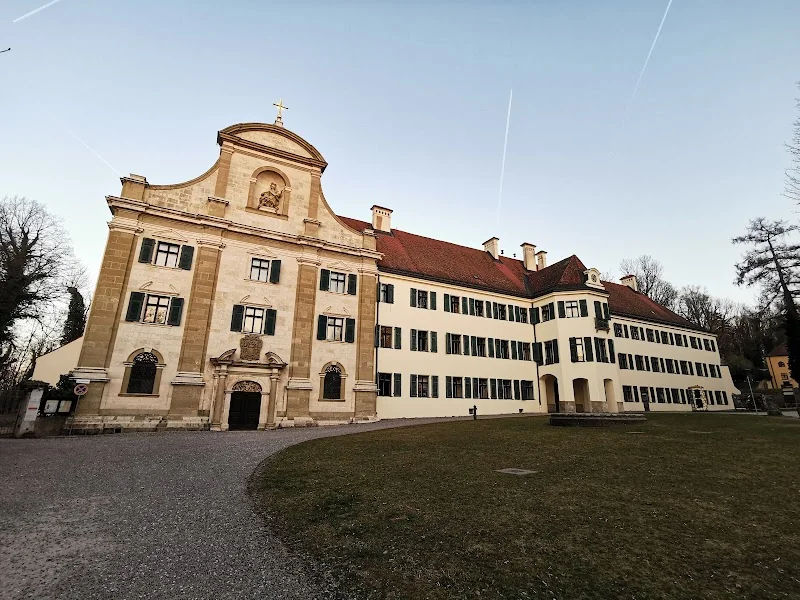
St. Georg in Regensburg-Prüfening is a place where history, faith, and culture come together in a very immediate way. The castle church is located on the grounds of the former Prüfening monastery and is now part of the Catholic parish of St. Bonifaz – St. Georg in Regensburg-Prüfening. Those interested in old churches, Romanesque architecture, or the spiritual life of a developed district will find here not only a monument of exceptional significance but also a vibrant parish with services, events, and open visiting hours. The official parish describes St. Georg as an ancient venerable former parish church; at the same time, the historical embedding in the former monastery complex adds to the special charm of this place. Prüfening itself is the old place in the west of Regensburg between railway lines and the Danube, which has belonged to the city since 1938 and is still strongly influenced by its monastic past. It is precisely this mixture of topography, religious history, and art-historical value that makes St. Georg a destination that goes far beyond a mere church visit. ([st-bonifaz-regensburg.de](https://www.st-bonifaz-regensburg.de/unsere-pfarrei/kirchen-in-der-pfarrei.html))
History of the Monastery Church of St. Georg in Prüfening
The history of St. Georg begins with the founding of the Prüfening monastery in 1109 by Bishop Otto of Bamberg. He summoned Benedictine monks from the reform monastery of Hirsau and appointed Erminold of Lorsch as the first abbot. The first altar consecrations for the church of St. Georg are documented in 1119; thus, it is among the earliest and most significant Romanesque sacred buildings in Old Bavaria. The House of Bavarian History emphasizes that the three-nave basilica with an eastern transept and two towers is considered one of the first Romanesque block buildings in the region. The parish itself points out that despite later changes, the church has uniquely preserved its Romanesque style. Therefore, anyone standing in front of the building today is not looking at an arbitrary church space but at an early masterpiece of the monastic reform period, directly connected to the spiritual and political reorganization of the 12th century. St. Georg is thus not only a house of worship but a historical document in stone that continues to tell the story of its founding time. ([hdbg.eu](https://hdbg.eu/kloster/index.php/detail/geschichte?id=KS0320))
This history also includes the dramatic figure of the first abbot, Erminold. He was regarded as an advocate of strict monastic discipline and was murdered by a fellow brother in 1121. His tomb, erected in 1283, is still located in St. Georg and is among the most famous works of art in the church. Furthermore, sources document the high spiritual culture of the monastery: library, writing school, book painting, as well as theological and scientific works made Prüfening widely known beyond Regensburg in the 12th century. A book catalog from 1165 lists about 300 works by various authors, which is extraordinary for a monastery of that time. The function as a mother monastery for other houses, such as in Banz and Münchsmünster, also shows the significance of Prüfening in the Benedictine network of southern Germany. The church of St. Georg is thus not only a memorial to a holy patron but also to a center of religious education, discipline, and intellectual productivity. It is precisely this multifaceted history that gives the place its depth to this day. ([hdbg.eu](https://hdbg.eu/kloster/index.php/detail/geschichte?id=KS0320))
Romanesque Architecture, Frescoes, and the Erminold Tomb
Architecturally, St. Georg is a fortunate example of Romanesque architecture. The House of Bavarian History describes the church as a three-nave pillar basilica with an eastern transept and rib-vaulted presbytery, elevated by two towers. It is particularly important that the original character has been preserved despite later renovations. The parish adds that the church has uniquely maintained its Romanesque style and, despite Baroque furnishings, serves as an impressive testimony to early monastic culture. Those who read the building mentally discover layers from different epochs: the Romanesque basic structure, the Baroque redesign of the 17th and 18th centuries, and the careful restoration of more recent times. This layering is precisely what makes the charm of the church, as here not an idealized single image has emerged, but a grown whole that makes the long history of use visible. The church is therefore a place for people who seek not only a beautiful house of worship but also want to trace the development of religious architecture in southern Germany. ([hdbg.eu](https://hdbg.eu/kloster/index.php/detail/geschichte?id=KS0320))
Particularly significant are the Romanesque wall paintings from the 1120s. The House of Bavarian History counts them among the most outstanding testimonies of Romanesque art in Germany. In the presbytery and in the crossing, visitors encounter a visual language that vividly illustrates medieval faith, the power of the papacy, and the spiritual tensions of the time. The PDF text by Eberhard Dünninger emphasizes that the frescoes have preserved their original character despite losses and later restorations and have been conserved in parts of the church. Additionally, the Baroque design, which was influenced by the painter Johann Gebhard, adds to this. This connection of Romanesque and Baroque is not a break but a lively narrative of the centuries. The interplay of frescoes, high choir, and the tomb of Erminold is particularly strong, as here architecture, sculpture, and painting merge into a single cultural statement. Therefore, those who visit St. Georg experience not only a church space but a cultural-historical composition of national significance. ([hdbg.eu](https://hdbg.eu/kloster/index.php/detail/geschichte?id=KS0320))
The restorations of recent years also belong to the architectural history. The Diocese of Regensburg reported in 2019 on an extensive interior and exterior renovation costing around 4.4 million euros. After this renovation, the church appeared again in a new, bright shine. The measure was not merely a technical intervention but a conscious sign that St. Georg as a historical site should continue to be used and preserved. Especially with a building that has so many historical layers, monument preservation is not a trivial matter but the prerequisite for the church to be visited, celebrated, and researched in the future. For visitors, this means: one does not see a museum-like frozen backdrop here, but a carefully maintained monastery church where Romanesque substance, Baroque addition, and modern preservation work together. This is exactly what makes St. Georg exciting for architecture enthusiasts, art historians, and spiritually interested guests alike. ([bistum-regensburg.de](https://bistum-regensburg.de/news/st-georg-in-pruefening-wiedereroeffnung-zum-900jaehrigen-weihejubilaeum-der-klosterkirche-6733))
Services, Opening, and Church Life
St. Georg is still a place of prayer and not just a monument. The parish of St. Bonifaz – St. Georg lists the church as one of the four churches of the parish; the current times are published on the services page and supplemented in the parish newsletter. The Diocese of Regensburg reported on the reopening in 2019 that the Eucharist is celebrated in St. Georg every two weeks and that the church is open on Sunday afternoons. This information shows that the place is intended not only for special holidays but also as a regular spiritual space. For visitors, this is important because St. Georg thus remains both a historical sight and a vibrant part of community life. Therefore, those planning a visit should always pay attention to the current notices from the parish, as the official dates are crucial, especially for churches with changing liturgical times. Thus, St. Georg combines the quiet character of an old monastery with the rhythm of an active community. ([st-bonifaz-regensburg.de](https://www.st-bonifaz-regensburg.de/gottesdienste.html))
An official announcement from the parish also mentions an opening of the church every second Sunday of the month from 3:00 PM to 5:00 PM. This regular opening is of interest to all who wish to experience the space in silence or engage with the history without time pressure. The reopening in 2019 was not only a festive event but also an invitation to the city community to perceive St. Georg more strongly as a place of prayer. In the diocesan reporting, the church was explicitly described as a place that invites people to pray and should not be merely a museum backdrop. At the same time, events such as patronage services, guided tours, Stations of the Cross, Bible study groups, and church music formats are offered in the church and in the surroundings of the former monastery. Thus, St. Georg fulfills a dual function: as a liturgical space for worship and sacraments and as a cultural meeting point in a district with a strong historical identity. This mixture makes the place particularly attractive for visitors who want to not only look at the church but also experience it. ([st-bonifaz-regensburg.de](https://www.st-bonifaz-regensburg.de/aktuelle-informationen/999-%C3%B6ffnung-der-kirche-st-georg%2C-schlosskirche-in-pr%C3%BCfening.html))
Location in Prüfening, Address, and Access
The official address of the castle church is Prüfeninger Schlossstraße 73b, 93049 Regensburg. The parish and the event page clearly assign St. Georg to the grounds of the former Prüfening monastery. Thus, the church is situated in a historical context that continues to shape the character of western Regensburg to this day. Those who wish to orient themselves should know that St. Georg is in immediate proximity to other historical points of the former monastery area, including St. Andrew's Church, which, according to the official parish page, is located about 100 meters west of St. Georg. For the visit, this means: one does not move in an isolated location but in the midst of a developed ensemble, whose paths and buildings are closely interconnected. It is precisely this spatial embedding that makes the charm of the visit, as the church becomes perceivable not only as a single object but as part of a historical complex. ([st-bonifaz-regensburg.de](https://st-bonifaz-regensburg.de/veranstaltungen/venue/10-kirche-st-georg.html))
For travel by train, the Regensburg stop Prüfening is an important reference point. The city of Regensburg lists it as one of the train connections that make the local and long-distance transport services easily accessible in the urban area; it also refers to station information on access, barrier-free access, ticket sales, service, and bus connections. For visitors to St. Georg, this is particularly helpful because the church location is in the western part of the city, and the train stop Prüfening thus represents a sensible travel option in the vicinity. However, specific parking information is not mentioned on the official pages evaluated here. Therefore, those arriving by car should check the current parking situation on-site and allow sufficient time for the walk through the historical area. This combination of train connection and footpath fits well with the character of the place: St. Georg is not a loud event center but a historical church that is best entered calmly and consciously. ([regensburg.de](https://www.regensburg.de/leben/verkehr-u-mobilitaet/bus-und-bahn/regensburger-bahnhoefe))
Parking, Visitor Information, and Practical Planning
Those wishing to visit St. Georg should take practical planning as seriously as the historical. The official pages evaluated here do not mention a dedicated parking space for the church. Therefore, it is sensible not to plan the visit with the expectation of a large, clearly designated parking space but to understand the immediate surroundings as part of the historical ensemble. Especially with a monastery church that stands on former monastic grounds, the spatial situation is often different from that of a modern event hall. This also affects the expectation of a classic seating plan or event logistics: St. Georg is primarily a church space, not a multipurpose arena. Therefore, those visiting the space should bring time for orientation, for silence, and for consciously exploring the complex. This way, a short stop becomes a genuine cultural and church visit. ([st-bonifaz-regensburg.de](https://st-bonifaz-regensburg.de/veranstaltungen/venue/10-kirche-st-georg.html))
For travel without a car, orientation to the Regensburg train network is advisable, as the city explicitly names the stop Prüfening as one of the reachable train stops. Additionally, it provides general information on access and bus connections. Those traveling by bicycle or on foot benefit from the district character of Prüfening, which has historically grown and is clearly connected to modern Regensburg. Practically, this means: before the visit, one should check the current dates of the parish, observe the opening hours, and plan some buffer time for special services or events. The church is particularly suitable for photos, quiet visits, or art-historical notes when it is open and there is enough time for a calm walk. It is precisely the combination of regular parish life, limited opening hours, and a listed environment that makes the charm. St. Georg does not demand haste but attention. ([st-bonifaz-regensburg.de](https://www.st-bonifaz-regensburg.de/aktuelle-informationen/999-%C3%B6ffnung-der-kirche-st-georg%2C-schlosskirche-in-pr%C3%BCfening.html))
What Makes St. Georg Special for Regensburg Today
St. Georg is particularly special today because multiple levels remain visible here simultaneously: the early medieval foundation, the Romanesque high culture of the 12th century, the Baroque transformation that continues to shape the space today, and the more recent restoration that has secured the structure. The House of Bavarian History refers to the church as one of the first Romanesque block buildings in Old Bavaria; the parish and the diocese emphasize that St. Georg is not only a historical heritage but also a living place of prayer. This connection of monument and present is rarely felt so distinctly in the ecclesiastical space. Many visitors come for the art, others for the silence, and still others for a service or an event. All find here the same fundamental character: dignity, history, and a space that has never lost its religious function. Thus, St. Georg is not merely a highlight for experts but also for people looking for a place in Regensburg that radiates authenticity. ([hdbg.eu](https://hdbg.eu/kloster/index.php/detail/geschichte?id=KS0320))
Additionally, it is embedded in the former monastery ensemble, which continues to live on as Schloss Prüfening and has received a new chapter in its history through the Montessori school, ecclesiastical use, and the engagement of volunteers. The PDF text by Eberhard Dünninger and the HDBG presentation make it clear how strongly Prüfening has acted as a spiritual, cultural, and scientific center for centuries. Today, particularly the church of St. Georg, St. Andrew, and the memory of the monastery complex are present. The place is thus a good example of how cultural heritage can assert itself in the present: not as a rigid museum but as a vibrant urban space with religious practice, cultural mediation, and historical depth. Anyone wishing to understand Regensburg beyond the famous downtown motifs should definitely add St. Georg in Prüfening to their list. Here, it can be clearly seen that the true heritage of a city often lies where history, community, and architecture have grown together over centuries. ([st-bonifaz-regensburg.de](https://www.st-bonifaz-regensburg.de/images/pruefgDuenninger_240417Neu.pdf))
Sources:
- Catholic Parish St. Bonifaz / St. Georg Regensburg-Prüfening - Castle Church St. Georg
- Catholic Parish St. Bonifaz / St. Georg Regensburg-Prüfening - Churches in the Parish
- Catholic Parish St. Bonifaz / St. Georg Regensburg-Prüfening - Opening of the Church St. Georg, Castle Church in Prüfening
- Eberhard Dünninger - Former Benedictine Monastery St. Georg and today's Schloss Thurn und Taxis in Prüfening
- House of Bavarian History - Monasteries in Bavaria - Prüfening
- Diocese of Regensburg - St. Georg in Prüfening – Reopening for the 900th Anniversary of the Consecration of the Monastery Church
- City of Regensburg - Regensburg Train Stations
- Catholic Parish St. Bonifaz / St. Georg Regensburg-Prüfening - Church St. Andrew
Show moreShow less
St. Georg Regensburg-Prüfening | History & Services
St. Georg in Regensburg-Prüfening is a place where history, faith, and culture come together in a very immediate way. The castle church is located on the grounds of the former Prüfening monastery and is now part of the Catholic parish of St. Bonifaz – St. Georg in Regensburg-Prüfening. Those interested in old churches, Romanesque architecture, or the spiritual life of a developed district will find here not only a monument of exceptional significance but also a vibrant parish with services, events, and open visiting hours. The official parish describes St. Georg as an ancient venerable former parish church; at the same time, the historical embedding in the former monastery complex adds to the special charm of this place. Prüfening itself is the old place in the west of Regensburg between railway lines and the Danube, which has belonged to the city since 1938 and is still strongly influenced by its monastic past. It is precisely this mixture of topography, religious history, and art-historical value that makes St. Georg a destination that goes far beyond a mere church visit. ([st-bonifaz-regensburg.de](https://www.st-bonifaz-regensburg.de/unsere-pfarrei/kirchen-in-der-pfarrei.html))
History of the Monastery Church of St. Georg in Prüfening
The history of St. Georg begins with the founding of the Prüfening monastery in 1109 by Bishop Otto of Bamberg. He summoned Benedictine monks from the reform monastery of Hirsau and appointed Erminold of Lorsch as the first abbot. The first altar consecrations for the church of St. Georg are documented in 1119; thus, it is among the earliest and most significant Romanesque sacred buildings in Old Bavaria. The House of Bavarian History emphasizes that the three-nave basilica with an eastern transept and two towers is considered one of the first Romanesque block buildings in the region. The parish itself points out that despite later changes, the church has uniquely preserved its Romanesque style. Therefore, anyone standing in front of the building today is not looking at an arbitrary church space but at an early masterpiece of the monastic reform period, directly connected to the spiritual and political reorganization of the 12th century. St. Georg is thus not only a house of worship but a historical document in stone that continues to tell the story of its founding time. ([hdbg.eu](https://hdbg.eu/kloster/index.php/detail/geschichte?id=KS0320))
This history also includes the dramatic figure of the first abbot, Erminold. He was regarded as an advocate of strict monastic discipline and was murdered by a fellow brother in 1121. His tomb, erected in 1283, is still located in St. Georg and is among the most famous works of art in the church. Furthermore, sources document the high spiritual culture of the monastery: library, writing school, book painting, as well as theological and scientific works made Prüfening widely known beyond Regensburg in the 12th century. A book catalog from 1165 lists about 300 works by various authors, which is extraordinary for a monastery of that time. The function as a mother monastery for other houses, such as in Banz and Münchsmünster, also shows the significance of Prüfening in the Benedictine network of southern Germany. The church of St. Georg is thus not only a memorial to a holy patron but also to a center of religious education, discipline, and intellectual productivity. It is precisely this multifaceted history that gives the place its depth to this day. ([hdbg.eu](https://hdbg.eu/kloster/index.php/detail/geschichte?id=KS0320))
Romanesque Architecture, Frescoes, and the Erminold Tomb
Architecturally, St. Georg is a fortunate example of Romanesque architecture. The House of Bavarian History describes the church as a three-nave pillar basilica with an eastern transept and rib-vaulted presbytery, elevated by two towers. It is particularly important that the original character has been preserved despite later renovations. The parish adds that the church has uniquely maintained its Romanesque style and, despite Baroque furnishings, serves as an impressive testimony to early monastic culture. Those who read the building mentally discover layers from different epochs: the Romanesque basic structure, the Baroque redesign of the 17th and 18th centuries, and the careful restoration of more recent times. This layering is precisely what makes the charm of the church, as here not an idealized single image has emerged, but a grown whole that makes the long history of use visible. The church is therefore a place for people who seek not only a beautiful house of worship but also want to trace the development of religious architecture in southern Germany. ([hdbg.eu](https://hdbg.eu/kloster/index.php/detail/geschichte?id=KS0320))
Particularly significant are the Romanesque wall paintings from the 1120s. The House of Bavarian History counts them among the most outstanding testimonies of Romanesque art in Germany. In the presbytery and in the crossing, visitors encounter a visual language that vividly illustrates medieval faith, the power of the papacy, and the spiritual tensions of the time. The PDF text by Eberhard Dünninger emphasizes that the frescoes have preserved their original character despite losses and later restorations and have been conserved in parts of the church. Additionally, the Baroque design, which was influenced by the painter Johann Gebhard, adds to this. This connection of Romanesque and Baroque is not a break but a lively narrative of the centuries. The interplay of frescoes, high choir, and the tomb of Erminold is particularly strong, as here architecture, sculpture, and painting merge into a single cultural statement. Therefore, those who visit St. Georg experience not only a church space but a cultural-historical composition of national significance. ([hdbg.eu](https://hdbg.eu/kloster/index.php/detail/geschichte?id=KS0320))
The restorations of recent years also belong to the architectural history. The Diocese of Regensburg reported in 2019 on an extensive interior and exterior renovation costing around 4.4 million euros. After this renovation, the church appeared again in a new, bright shine. The measure was not merely a technical intervention but a conscious sign that St. Georg as a historical site should continue to be used and preserved. Especially with a building that has so many historical layers, monument preservation is not a trivial matter but the prerequisite for the church to be visited, celebrated, and researched in the future. For visitors, this means: one does not see a museum-like frozen backdrop here, but a carefully maintained monastery church where Romanesque substance, Baroque addition, and modern preservation work together. This is exactly what makes St. Georg exciting for architecture enthusiasts, art historians, and spiritually interested guests alike. ([bistum-regensburg.de](https://bistum-regensburg.de/news/st-georg-in-pruefening-wiedereroeffnung-zum-900jaehrigen-weihejubilaeum-der-klosterkirche-6733))
Services, Opening, and Church Life
St. Georg is still a place of prayer and not just a monument. The parish of St. Bonifaz – St. Georg lists the church as one of the four churches of the parish; the current times are published on the services page and supplemented in the parish newsletter. The Diocese of Regensburg reported on the reopening in 2019 that the Eucharist is celebrated in St. Georg every two weeks and that the church is open on Sunday afternoons. This information shows that the place is intended not only for special holidays but also as a regular spiritual space. For visitors, this is important because St. Georg thus remains both a historical sight and a vibrant part of community life. Therefore, those planning a visit should always pay attention to the current notices from the parish, as the official dates are crucial, especially for churches with changing liturgical times. Thus, St. Georg combines the quiet character of an old monastery with the rhythm of an active community. ([st-bonifaz-regensburg.de](https://www.st-bonifaz-regensburg.de/gottesdienste.html))
An official announcement from the parish also mentions an opening of the church every second Sunday of the month from 3:00 PM to 5:00 PM. This regular opening is of interest to all who wish to experience the space in silence or engage with the history without time pressure. The reopening in 2019 was not only a festive event but also an invitation to the city community to perceive St. Georg more strongly as a place of prayer. In the diocesan reporting, the church was explicitly described as a place that invites people to pray and should not be merely a museum backdrop. At the same time, events such as patronage services, guided tours, Stations of the Cross, Bible study groups, and church music formats are offered in the church and in the surroundings of the former monastery. Thus, St. Georg fulfills a dual function: as a liturgical space for worship and sacraments and as a cultural meeting point in a district with a strong historical identity. This mixture makes the place particularly attractive for visitors who want to not only look at the church but also experience it. ([st-bonifaz-regensburg.de](https://www.st-bonifaz-regensburg.de/aktuelle-informationen/999-%C3%B6ffnung-der-kirche-st-georg%2C-schlosskirche-in-pr%C3%BCfening.html))
Location in Prüfening, Address, and Access
The official address of the castle church is Prüfeninger Schlossstraße 73b, 93049 Regensburg. The parish and the event page clearly assign St. Georg to the grounds of the former Prüfening monastery. Thus, the church is situated in a historical context that continues to shape the character of western Regensburg to this day. Those who wish to orient themselves should know that St. Georg is in immediate proximity to other historical points of the former monastery area, including St. Andrew's Church, which, according to the official parish page, is located about 100 meters west of St. Georg. For the visit, this means: one does not move in an isolated location but in the midst of a developed ensemble, whose paths and buildings are closely interconnected. It is precisely this spatial embedding that makes the charm of the visit, as the church becomes perceivable not only as a single object but as part of a historical complex. ([st-bonifaz-regensburg.de](https://st-bonifaz-regensburg.de/veranstaltungen/venue/10-kirche-st-georg.html))
For travel by train, the Regensburg stop Prüfening is an important reference point. The city of Regensburg lists it as one of the train connections that make the local and long-distance transport services easily accessible in the urban area; it also refers to station information on access, barrier-free access, ticket sales, service, and bus connections. For visitors to St. Georg, this is particularly helpful because the church location is in the western part of the city, and the train stop Prüfening thus represents a sensible travel option in the vicinity. However, specific parking information is not mentioned on the official pages evaluated here. Therefore, those arriving by car should check the current parking situation on-site and allow sufficient time for the walk through the historical area. This combination of train connection and footpath fits well with the character of the place: St. Georg is not a loud event center but a historical church that is best entered calmly and consciously. ([regensburg.de](https://www.regensburg.de/leben/verkehr-u-mobilitaet/bus-und-bahn/regensburger-bahnhoefe))
Parking, Visitor Information, and Practical Planning
Those wishing to visit St. Georg should take practical planning as seriously as the historical. The official pages evaluated here do not mention a dedicated parking space for the church. Therefore, it is sensible not to plan the visit with the expectation of a large, clearly designated parking space but to understand the immediate surroundings as part of the historical ensemble. Especially with a monastery church that stands on former monastic grounds, the spatial situation is often different from that of a modern event hall. This also affects the expectation of a classic seating plan or event logistics: St. Georg is primarily a church space, not a multipurpose arena. Therefore, those visiting the space should bring time for orientation, for silence, and for consciously exploring the complex. This way, a short stop becomes a genuine cultural and church visit. ([st-bonifaz-regensburg.de](https://st-bonifaz-regensburg.de/veranstaltungen/venue/10-kirche-st-georg.html))
For travel without a car, orientation to the Regensburg train network is advisable, as the city explicitly names the stop Prüfening as one of the reachable train stops. Additionally, it provides general information on access and bus connections. Those traveling by bicycle or on foot benefit from the district character of Prüfening, which has historically grown and is clearly connected to modern Regensburg. Practically, this means: before the visit, one should check the current dates of the parish, observe the opening hours, and plan some buffer time for special services or events. The church is particularly suitable for photos, quiet visits, or art-historical notes when it is open and there is enough time for a calm walk. It is precisely the combination of regular parish life, limited opening hours, and a listed environment that makes the charm. St. Georg does not demand haste but attention. ([st-bonifaz-regensburg.de](https://www.st-bonifaz-regensburg.de/aktuelle-informationen/999-%C3%B6ffnung-der-kirche-st-georg%2C-schlosskirche-in-pr%C3%BCfening.html))
What Makes St. Georg Special for Regensburg Today
St. Georg is particularly special today because multiple levels remain visible here simultaneously: the early medieval foundation, the Romanesque high culture of the 12th century, the Baroque transformation that continues to shape the space today, and the more recent restoration that has secured the structure. The House of Bavarian History refers to the church as one of the first Romanesque block buildings in Old Bavaria; the parish and the diocese emphasize that St. Georg is not only a historical heritage but also a living place of prayer. This connection of monument and present is rarely felt so distinctly in the ecclesiastical space. Many visitors come for the art, others for the silence, and still others for a service or an event. All find here the same fundamental character: dignity, history, and a space that has never lost its religious function. Thus, St. Georg is not merely a highlight for experts but also for people looking for a place in Regensburg that radiates authenticity. ([hdbg.eu](https://hdbg.eu/kloster/index.php/detail/geschichte?id=KS0320))
Additionally, it is embedded in the former monastery ensemble, which continues to live on as Schloss Prüfening and has received a new chapter in its history through the Montessori school, ecclesiastical use, and the engagement of volunteers. The PDF text by Eberhard Dünninger and the HDBG presentation make it clear how strongly Prüfening has acted as a spiritual, cultural, and scientific center for centuries. Today, particularly the church of St. Georg, St. Andrew, and the memory of the monastery complex are present. The place is thus a good example of how cultural heritage can assert itself in the present: not as a rigid museum but as a vibrant urban space with religious practice, cultural mediation, and historical depth. Anyone wishing to understand Regensburg beyond the famous downtown motifs should definitely add St. Georg in Prüfening to their list. Here, it can be clearly seen that the true heritage of a city often lies where history, community, and architecture have grown together over centuries. ([st-bonifaz-regensburg.de](https://www.st-bonifaz-regensburg.de/images/pruefgDuenninger_240417Neu.pdf))
Sources:
- Catholic Parish St. Bonifaz / St. Georg Regensburg-Prüfening - Castle Church St. Georg
- Catholic Parish St. Bonifaz / St. Georg Regensburg-Prüfening - Churches in the Parish
- Catholic Parish St. Bonifaz / St. Georg Regensburg-Prüfening - Opening of the Church St. Georg, Castle Church in Prüfening
- Eberhard Dünninger - Former Benedictine Monastery St. Georg and today's Schloss Thurn und Taxis in Prüfening
- House of Bavarian History - Monasteries in Bavaria - Prüfening
- Diocese of Regensburg - St. Georg in Prüfening – Reopening for the 900th Anniversary of the Consecration of the Monastery Church
- City of Regensburg - Regensburg Train Stations
- Catholic Parish St. Bonifaz / St. Georg Regensburg-Prüfening - Church St. Andrew
St. Georg Regensburg-Prüfening | History & Services
St. Georg in Regensburg-Prüfening is a place where history, faith, and culture come together in a very immediate way. The castle church is located on the grounds of the former Prüfening monastery and is now part of the Catholic parish of St. Bonifaz – St. Georg in Regensburg-Prüfening. Those interested in old churches, Romanesque architecture, or the spiritual life of a developed district will find here not only a monument of exceptional significance but also a vibrant parish with services, events, and open visiting hours. The official parish describes St. Georg as an ancient venerable former parish church; at the same time, the historical embedding in the former monastery complex adds to the special charm of this place. Prüfening itself is the old place in the west of Regensburg between railway lines and the Danube, which has belonged to the city since 1938 and is still strongly influenced by its monastic past. It is precisely this mixture of topography, religious history, and art-historical value that makes St. Georg a destination that goes far beyond a mere church visit. ([st-bonifaz-regensburg.de](https://www.st-bonifaz-regensburg.de/unsere-pfarrei/kirchen-in-der-pfarrei.html))
History of the Monastery Church of St. Georg in Prüfening
The history of St. Georg begins with the founding of the Prüfening monastery in 1109 by Bishop Otto of Bamberg. He summoned Benedictine monks from the reform monastery of Hirsau and appointed Erminold of Lorsch as the first abbot. The first altar consecrations for the church of St. Georg are documented in 1119; thus, it is among the earliest and most significant Romanesque sacred buildings in Old Bavaria. The House of Bavarian History emphasizes that the three-nave basilica with an eastern transept and two towers is considered one of the first Romanesque block buildings in the region. The parish itself points out that despite later changes, the church has uniquely preserved its Romanesque style. Therefore, anyone standing in front of the building today is not looking at an arbitrary church space but at an early masterpiece of the monastic reform period, directly connected to the spiritual and political reorganization of the 12th century. St. Georg is thus not only a house of worship but a historical document in stone that continues to tell the story of its founding time. ([hdbg.eu](https://hdbg.eu/kloster/index.php/detail/geschichte?id=KS0320))
This history also includes the dramatic figure of the first abbot, Erminold. He was regarded as an advocate of strict monastic discipline and was murdered by a fellow brother in 1121. His tomb, erected in 1283, is still located in St. Georg and is among the most famous works of art in the church. Furthermore, sources document the high spiritual culture of the monastery: library, writing school, book painting, as well as theological and scientific works made Prüfening widely known beyond Regensburg in the 12th century. A book catalog from 1165 lists about 300 works by various authors, which is extraordinary for a monastery of that time. The function as a mother monastery for other houses, such as in Banz and Münchsmünster, also shows the significance of Prüfening in the Benedictine network of southern Germany. The church of St. Georg is thus not only a memorial to a holy patron but also to a center of religious education, discipline, and intellectual productivity. It is precisely this multifaceted history that gives the place its depth to this day. ([hdbg.eu](https://hdbg.eu/kloster/index.php/detail/geschichte?id=KS0320))
Romanesque Architecture, Frescoes, and the Erminold Tomb
Architecturally, St. Georg is a fortunate example of Romanesque architecture. The House of Bavarian History describes the church as a three-nave pillar basilica with an eastern transept and rib-vaulted presbytery, elevated by two towers. It is particularly important that the original character has been preserved despite later renovations. The parish adds that the church has uniquely maintained its Romanesque style and, despite Baroque furnishings, serves as an impressive testimony to early monastic culture. Those who read the building mentally discover layers from different epochs: the Romanesque basic structure, the Baroque redesign of the 17th and 18th centuries, and the careful restoration of more recent times. This layering is precisely what makes the charm of the church, as here not an idealized single image has emerged, but a grown whole that makes the long history of use visible. The church is therefore a place for people who seek not only a beautiful house of worship but also want to trace the development of religious architecture in southern Germany. ([hdbg.eu](https://hdbg.eu/kloster/index.php/detail/geschichte?id=KS0320))
Particularly significant are the Romanesque wall paintings from the 1120s. The House of Bavarian History counts them among the most outstanding testimonies of Romanesque art in Germany. In the presbytery and in the crossing, visitors encounter a visual language that vividly illustrates medieval faith, the power of the papacy, and the spiritual tensions of the time. The PDF text by Eberhard Dünninger emphasizes that the frescoes have preserved their original character despite losses and later restorations and have been conserved in parts of the church. Additionally, the Baroque design, which was influenced by the painter Johann Gebhard, adds to this. This connection of Romanesque and Baroque is not a break but a lively narrative of the centuries. The interplay of frescoes, high choir, and the tomb of Erminold is particularly strong, as here architecture, sculpture, and painting merge into a single cultural statement. Therefore, those who visit St. Georg experience not only a church space but a cultural-historical composition of national significance. ([hdbg.eu](https://hdbg.eu/kloster/index.php/detail/geschichte?id=KS0320))
The restorations of recent years also belong to the architectural history. The Diocese of Regensburg reported in 2019 on an extensive interior and exterior renovation costing around 4.4 million euros. After this renovation, the church appeared again in a new, bright shine. The measure was not merely a technical intervention but a conscious sign that St. Georg as a historical site should continue to be used and preserved. Especially with a building that has so many historical layers, monument preservation is not a trivial matter but the prerequisite for the church to be visited, celebrated, and researched in the future. For visitors, this means: one does not see a museum-like frozen backdrop here, but a carefully maintained monastery church where Romanesque substance, Baroque addition, and modern preservation work together. This is exactly what makes St. Georg exciting for architecture enthusiasts, art historians, and spiritually interested guests alike. ([bistum-regensburg.de](https://bistum-regensburg.de/news/st-georg-in-pruefening-wiedereroeffnung-zum-900jaehrigen-weihejubilaeum-der-klosterkirche-6733))
Services, Opening, and Church Life
St. Georg is still a place of prayer and not just a monument. The parish of St. Bonifaz – St. Georg lists the church as one of the four churches of the parish; the current times are published on the services page and supplemented in the parish newsletter. The Diocese of Regensburg reported on the reopening in 2019 that the Eucharist is celebrated in St. Georg every two weeks and that the church is open on Sunday afternoons. This information shows that the place is intended not only for special holidays but also as a regular spiritual space. For visitors, this is important because St. Georg thus remains both a historical sight and a vibrant part of community life. Therefore, those planning a visit should always pay attention to the current notices from the parish, as the official dates are crucial, especially for churches with changing liturgical times. Thus, St. Georg combines the quiet character of an old monastery with the rhythm of an active community. ([st-bonifaz-regensburg.de](https://www.st-bonifaz-regensburg.de/gottesdienste.html))
An official announcement from the parish also mentions an opening of the church every second Sunday of the month from 3:00 PM to 5:00 PM. This regular opening is of interest to all who wish to experience the space in silence or engage with the history without time pressure. The reopening in 2019 was not only a festive event but also an invitation to the city community to perceive St. Georg more strongly as a place of prayer. In the diocesan reporting, the church was explicitly described as a place that invites people to pray and should not be merely a museum backdrop. At the same time, events such as patronage services, guided tours, Stations of the Cross, Bible study groups, and church music formats are offered in the church and in the surroundings of the former monastery. Thus, St. Georg fulfills a dual function: as a liturgical space for worship and sacraments and as a cultural meeting point in a district with a strong historical identity. This mixture makes the place particularly attractive for visitors who want to not only look at the church but also experience it. ([st-bonifaz-regensburg.de](https://www.st-bonifaz-regensburg.de/aktuelle-informationen/999-%C3%B6ffnung-der-kirche-st-georg%2C-schlosskirche-in-pr%C3%BCfening.html))
Location in Prüfening, Address, and Access
The official address of the castle church is Prüfeninger Schlossstraße 73b, 93049 Regensburg. The parish and the event page clearly assign St. Georg to the grounds of the former Prüfening monastery. Thus, the church is situated in a historical context that continues to shape the character of western Regensburg to this day. Those who wish to orient themselves should know that St. Georg is in immediate proximity to other historical points of the former monastery area, including St. Andrew's Church, which, according to the official parish page, is located about 100 meters west of St. Georg. For the visit, this means: one does not move in an isolated location but in the midst of a developed ensemble, whose paths and buildings are closely interconnected. It is precisely this spatial embedding that makes the charm of the visit, as the church becomes perceivable not only as a single object but as part of a historical complex. ([st-bonifaz-regensburg.de](https://st-bonifaz-regensburg.de/veranstaltungen/venue/10-kirche-st-georg.html))
For travel by train, the Regensburg stop Prüfening is an important reference point. The city of Regensburg lists it as one of the train connections that make the local and long-distance transport services easily accessible in the urban area; it also refers to station information on access, barrier-free access, ticket sales, service, and bus connections. For visitors to St. Georg, this is particularly helpful because the church location is in the western part of the city, and the train stop Prüfening thus represents a sensible travel option in the vicinity. However, specific parking information is not mentioned on the official pages evaluated here. Therefore, those arriving by car should check the current parking situation on-site and allow sufficient time for the walk through the historical area. This combination of train connection and footpath fits well with the character of the place: St. Georg is not a loud event center but a historical church that is best entered calmly and consciously. ([regensburg.de](https://www.regensburg.de/leben/verkehr-u-mobilitaet/bus-und-bahn/regensburger-bahnhoefe))
Parking, Visitor Information, and Practical Planning
Those wishing to visit St. Georg should take practical planning as seriously as the historical. The official pages evaluated here do not mention a dedicated parking space for the church. Therefore, it is sensible not to plan the visit with the expectation of a large, clearly designated parking space but to understand the immediate surroundings as part of the historical ensemble. Especially with a monastery church that stands on former monastic grounds, the spatial situation is often different from that of a modern event hall. This also affects the expectation of a classic seating plan or event logistics: St. Georg is primarily a church space, not a multipurpose arena. Therefore, those visiting the space should bring time for orientation, for silence, and for consciously exploring the complex. This way, a short stop becomes a genuine cultural and church visit. ([st-bonifaz-regensburg.de](https://st-bonifaz-regensburg.de/veranstaltungen/venue/10-kirche-st-georg.html))
For travel without a car, orientation to the Regensburg train network is advisable, as the city explicitly names the stop Prüfening as one of the reachable train stops. Additionally, it provides general information on access and bus connections. Those traveling by bicycle or on foot benefit from the district character of Prüfening, which has historically grown and is clearly connected to modern Regensburg. Practically, this means: before the visit, one should check the current dates of the parish, observe the opening hours, and plan some buffer time for special services or events. The church is particularly suitable for photos, quiet visits, or art-historical notes when it is open and there is enough time for a calm walk. It is precisely the combination of regular parish life, limited opening hours, and a listed environment that makes the charm. St. Georg does not demand haste but attention. ([st-bonifaz-regensburg.de](https://www.st-bonifaz-regensburg.de/aktuelle-informationen/999-%C3%B6ffnung-der-kirche-st-georg%2C-schlosskirche-in-pr%C3%BCfening.html))
What Makes St. Georg Special for Regensburg Today
St. Georg is particularly special today because multiple levels remain visible here simultaneously: the early medieval foundation, the Romanesque high culture of the 12th century, the Baroque transformation that continues to shape the space today, and the more recent restoration that has secured the structure. The House of Bavarian History refers to the church as one of the first Romanesque block buildings in Old Bavaria; the parish and the diocese emphasize that St. Georg is not only a historical heritage but also a living place of prayer. This connection of monument and present is rarely felt so distinctly in the ecclesiastical space. Many visitors come for the art, others for the silence, and still others for a service or an event. All find here the same fundamental character: dignity, history, and a space that has never lost its religious function. Thus, St. Georg is not merely a highlight for experts but also for people looking for a place in Regensburg that radiates authenticity. ([hdbg.eu](https://hdbg.eu/kloster/index.php/detail/geschichte?id=KS0320))
Additionally, it is embedded in the former monastery ensemble, which continues to live on as Schloss Prüfening and has received a new chapter in its history through the Montessori school, ecclesiastical use, and the engagement of volunteers. The PDF text by Eberhard Dünninger and the HDBG presentation make it clear how strongly Prüfening has acted as a spiritual, cultural, and scientific center for centuries. Today, particularly the church of St. Georg, St. Andrew, and the memory of the monastery complex are present. The place is thus a good example of how cultural heritage can assert itself in the present: not as a rigid museum but as a vibrant urban space with religious practice, cultural mediation, and historical depth. Anyone wishing to understand Regensburg beyond the famous downtown motifs should definitely add St. Georg in Prüfening to their list. Here, it can be clearly seen that the true heritage of a city often lies where history, community, and architecture have grown together over centuries. ([st-bonifaz-regensburg.de](https://www.st-bonifaz-regensburg.de/images/pruefgDuenninger_240417Neu.pdf))
Sources:
- Catholic Parish St. Bonifaz / St. Georg Regensburg-Prüfening - Castle Church St. Georg
- Catholic Parish St. Bonifaz / St. Georg Regensburg-Prüfening - Churches in the Parish
- Catholic Parish St. Bonifaz / St. Georg Regensburg-Prüfening - Opening of the Church St. Georg, Castle Church in Prüfening
- Eberhard Dünninger - Former Benedictine Monastery St. Georg and today's Schloss Thurn und Taxis in Prüfening
- House of Bavarian History - Monasteries in Bavaria - Prüfening
- Diocese of Regensburg - St. Georg in Prüfening – Reopening for the 900th Anniversary of the Consecration of the Monastery Church
- City of Regensburg - Regensburg Train Stations
- Catholic Parish St. Bonifaz / St. Georg Regensburg-Prüfening - Church St. Andrew
Upcoming Events
No events found
Frequently Asked Questions
Reviews
Cv B
18. November 2020
The magnificent wall paintings in very good condition tell of the power struggle between the Pope and King Henry IV in the year 1077.
d d
13. May 2019
After the renovation, the church is much brighter and more radiant than before. Very beautiful church, with unusual painting.
Sieglinde
14. January 2023
A noteworthy gem adjacent to a former castle in expansive parkland, but only accessible during tours/services/events.
Filou's Nuancen
25. January 2023
An interesting object, beautifully restored, and the responsible pastor was also very helpful.
Gaby Kilian
24. October 2019
Unfortunately not publicly accessible. The most significant Romanesque church in Upper Bavaria.