
Regensburg
Siebenbürgener Str. 12, 93057 Regensburg-Konradsiedlung-Wutzlhofen, Deutschland
St. Lukas Regensburg | Church & Parking
St. Lukas in Regensburg is not just a church name, but a defining place for an entire district and a much larger community area. The Protestant Lukas congregation is one of the largest church communities in Regensburg, and the Lukaskirche at Siebenbürgener Straße 12 serves as a place of worship, community center, meeting point for groups, and a place of silence. Those looking for St. Lukas will find here not an anonymous address, but a vibrant focal point of church life in the northern part of the city. The community describes its location as spacious, historically grown, and diverse: it extends beyond the northern part of Regensburg, encompasses large areas north of the Danube and east of the Regen, and combines traditional community work with modern use of the building. This mixture makes St. Lukas interesting for visitors, community members, families, music lovers, and people seeking a quiet place with history. ([lukas-evangelisch.de](https://www.lukas-evangelisch.de/st-lukas))
History of the Lukaskirche in Regensburg
The history of St. Lukas is closely linked to the years after World War II. As many refugees and displaced persons found a new home in Regensburg, the desire for a Protestant community also grew in the northern part of the city. According to the community, a wooden emergency church was initially built in 1948, before the Lukaskirche could be consecrated in 1957. This path from a provisional solution to a permanent building vividly illustrates how a pressing need became a lasting church center. The church thus stands not only for architecture but also for rebuilding, stabilization, and new community in a time of upheaval. Later, in 1968, the Martin Luther Church was added in Tegernheim, further expanding and structuring the community area. This historical development is important for visitors because it explains why St. Lukas today is more than just a single church space: the building and the community are the result of a long history of need, rebuilding, and community formation. ([lukas-evangelisch.de](https://www.lukas-evangelisch.de/st-lukas))
The name and spiritual identity of St. Lukas are also deliberately chosen. The community points out that Lukas, according to church tradition, is the author of the Gospel of Luke and the Acts of the Apostles. At the same time, the symbolic animal of the evangelist plays a role, which is often associated with the bull or ox in Christian imagery. The community has incorporated this reference into its logo and its public representation without reducing itself to just one image. This is noteworthy because it shows how traditionally rooted churches today work with language, symbols, and design. St. Lukas thus represents a connection of biblical memory, regional roots, and modern community communication. Those who visit the site or the building quickly sense that historical data do not merely line up here, but a consciously cultivated self-understanding is displayed: Christian tradition, openness to different target groups, and a community that knows its origins. ([lukas-evangelisch.de](https://www.lukas-evangelisch.de/wer-war-der-evangelist-lukas?utm_source=openai))
Location, Directions, and Parking at the Lukaskirche
The location of the Lukaskirche is a real plus for many visitors because it is situated in the northern part of the city at a prominent point. The community describes the site as the first outcrop of the Upper Palatinate Jura, from which the church looks over the old town from about 350 meters above sea level. This position gives the place a special presence: on the one hand, it is easily recognizable as a church center, while on the other hand, it appears calm and almost secluded due to its elevated location. The official address is Siebenbürgener Straße 12, 93057 Regensburg. So, anyone searching for St. Lukas Regensburg, Lukaskirche Regensburg, or church in northern Regensburg will reliably find this address. Particularly helpful is that the parish office is located in the building complex of the Lukaskirche. This means that the church is not only used for services in everyday life but also as a point of contact for administration, personal conversations, and community contacts. ([lukas-evangelisch.de](https://www.lukas-evangelisch.de/node/204/lukaskirche))
However, attention is required when parking. The community explicitly points out that there are only about 9 parking spaces available in front of the Lukaskirche. Additionally, parking is not allowed in the parking lot of the neighboring property. As alternatives, the community mentions walkable parking spaces in Hiltnerweg, in Reichen Winkel above the Tempepark, and in Riesengebirgstraße. This clear information is important because St. Lukas is a popular place for services, events, and community meetings, and parking space remains limited. For visitors, this means: if you want to arrive on time, you should plan some time for finding a parking space or, if possible, look for alternatives nearby. This practical orientation makes the community's website so useful because it provides not only spiritual content but also everyday practical tips. Thus, those visiting the church experience a place with a comprehensible location but a consciously limited and neighbor-sensitive parking solution. ([lukas-evangelisch.de](https://www.lukas-evangelisch.de/unsere-naechsten-gottesdienste?utm_source=openai))
Services, Community Center, and Church Life
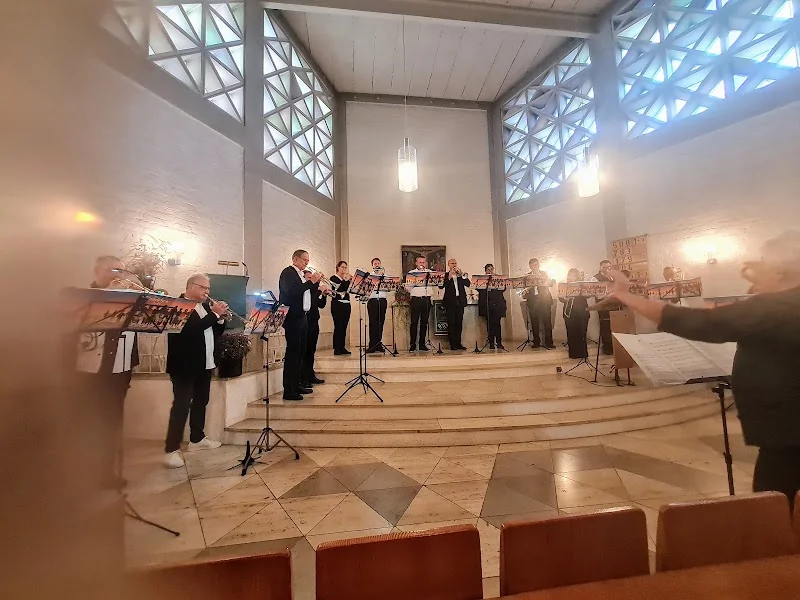
St. Lukas is not just a church to look at but primarily a place of lived community life. The community explicitly describes the large Lukaskirche in the northern part of Regensburg as a community center. This is crucial for its use because not only the Sunday service takes place here, but also a diverse interaction of groups, circles, projects, and encounters. The official website showcases, among other things, the brass choir, the LUX choir, the Repair Initiative Regensburg-North, the aid project Elonwabeni, and other offerings. This creates a picture of a community that cannot be reduced to a single purpose. Visitors and members experience a place where worship, music, volunteer work, social engagement, and encounters intertwine. Therefore, those searching for St. Lukas Regensburg often seek a place where church becomes practical in everyday life and does not only take place in the Sunday room. This is one of the great strengths of this community. ([lukas-evangelisch.de](https://www.lukas-evangelisch.de/st-lukas))
Additionally, there is the size of the community area. With over 180 square kilometers, St. Lukas is considered one of the largest Protestant church communities in Regensburg in terms of area. The community covers the city area north of the Danube and east of the Regen and extends far into the surrounding area. The official text also mentions about 4500 community members. These numbers make it clear why the Lukaskirche has a special significance as a center: it bundles a large, geographically stretched community life. The community is divided into three districts, and there are also contacts, offerings, and meeting points outside the actual church location. Therefore, those visiting St. Lukas do not just see a single building but the center of an entire network. This also explains why so many different topics appear on the website: family services, children's work, groups, music, and social projects naturally belong together here. For a location page, this is an important selling point because St. Lukas offers not event glamour but a genuine church everyday life with depth, breadth, and reliability. ([lukas-evangelisch.de](https://www.lukas-evangelisch.de/st-lukas))
Organ, Bells, and the Musical Identity of the Lukaskirche
A particularly defining element of the Lukaskirche is its organ. According to the community, it was built in 1964 by the organ building company Walcker in Ludwigsburg. It has 13 stops distributed over two manuals and a pedal. This is a remarkable feature for a community church, as it allows for a differentiated sound that is suitable for both services and concert-like church music formats. Additionally, the instrument was overhauled, cleaned, supplemented, and tuned again at the end of 2011. This shows that the community not only preserves its musical infrastructure but actively maintains it. This is an important note for visitors who pay attention to sound, liturgy, and church music. The organ is not a decorative side object but an essential part of the liturgical and musical identity of St. Lukas. It convincingly connects craftsmanship, sound culture, and church practice. ([lukas-evangelisch.de](https://www.lukas-evangelisch.de/node/204/lukaskirche/orgel-lukaskirche?utm_source=openai))
Even more impressive is the ringing of the Lukaskirche. St. Lukas has the largest Protestant bell ringing in Regensburg with six bells. They were cast in 1958 by F. W. Schilling in Heidelberg, and the total weight is 1,995 kilograms. The community describes the bells in detail, naming both their names and pitches and inscriptions. However, they are currently decommissioned due to advanced corrosion at the bell tower. This is unfortunate on the one hand because an important part of the acoustic appearance is paused, but on the other hand, it shows the real condition of the building and the community's responsibility in dealing with historical substance. Additionally, the daily evening ringing at 6 PM is anchored in the community, which underscores the significance of the ringing for church life. For visitors, this creates a clear impression: St. Lukas is not just any church, but a place with audible identity, where the organ and bells shape the rhythm of community life. ([lukas-evangelisch.de](https://www.lukas-evangelisch.de/node/204/lukaskirche/glocken-der-lukaskirche?utm_source=openai))
Chapel, Silence, and Spaces for Reflection
A completely different but equally important aspect of St. Lukas is the chapel of the Lukaskirche. It was opened on March 1, 2009, and is intentionally designed as a space of silence. The community describes it as a place where people can find peace, retreat for a few minutes from the hustle and bustle, light a candle, meditate, pray, or write a petition. This wording makes it clear that the chapel is not just an additional room but an independent offering for spiritual concentration and personal reflection. In a loud, dense, and fast-paced everyday world, such a place gains significance. Therefore, those visiting the Lukaskirche find not only community activities and events but also an explicitly quiet counterpoint. The opening hours are also clearly regulated: Monday to Thursday from 9:00 AM to 6:00 PM, Friday from 9:00 AM to 1:00 PM, as well as before and after services. This makes the chapel very practically usable and at the same time protected enough to maintain its character as a place of peace. ([lukas-evangelisch.de](https://www.lukas-evangelisch.de/kapelle-der-lukaskirche))
The location of the chapel is also interesting because it is located directly beneath the altar area at the southern tip of the building. Access is via the church meadow at a door on the south side; access through the church itself is not possible. This architectural solution is important for visitors because it deliberately separates the space from the main church and gives it its own atmosphere. The chapel cleverly complements the profile of St. Lukas: while the Lukaskirche functions as a community center, worship space, and meeting point, the chapel offers a concentrated, quiet counter space. This makes the church as a whole much more multifaceted and attractive for different needs. Some come for the liturgy, others for music, and still others for a short break or a quiet prayer. This multiple use is a strong feature of the location. It shows that St. Lukas not only focuses on external impact but also on inner quality and spiritual relief. For a church location, this is a remarkable added value because here space, function, and spiritual aspiration are interconnected. ([lukas-evangelisch.de](https://www.lukas-evangelisch.de/kapelle-der-lukaskirche))
Kindergarten, Community Area, and Why St. Lukas is More Than a Church
Finally, St. Lukas is also special because church life here is not limited to the main building. The community includes the St. Lukas Kindergarten, a three-group regular kindergarten that is affiliated with the Protestant St. Lukaskirche. It cares for children from 2 years and 9 months until they start school, making it an important building block of family work. The kindergarten is located at Berliner Straße 53 in Regensburg and complements community work with a practical, social, and educational area. For families, this is important information because it shows that St. Lukas is not just a place for festive services but also a place where children, parents, and staff can build relationships over time. Especially in the Protestant context, this connection of education, care, and faith reference is a strong sign of lived responsibility. The community also transparently provides opening hours, fees, and contact methods, emphasizing the practical character of the offering. ([lukas-evangelisch.de](https://www.lukas-evangelisch.de/kindergarten))
Together with the size of the community area, this results in a very broad profile. St. Lukas encompasses northern districts, neighboring towns, and large parts of the surrounding area. The community is divided into three districts and sees itself as a large, networked structure with many people and tasks. It fits that the website refers not only to classic community topics but also to the community newsletter, groups, children's and youth work, social projects, and musical offerings. Therefore, anyone searching for St. Lukas Regensburg encounters a church that has grown historically, is spatially extensive, socially active, and well anchored organizationally. The place stands not only for sacred space but for an entire culture of togetherness. Visitors can experience here the architecture, history, the view over the city, the silence of the chapel, the music of the organ, and the life of a large community in a single ensemble. This is what makes St. Lukas a location with character, depth, and recognizability. Those wanting to get to know Regensburg from its Protestant side will find here an authentic, well-documented, and vibrant entry point. ([lukas-evangelisch.de](https://www.lukas-evangelisch.de/st-lukas))
Sources:
- St. Lukas – Church Community Regensburg
- Lukaskirche – Church Community Regensburg
- Organ Lukaskirche – Church Community Regensburg
- Bells of the Lukaskirche – Church Community Regensburg
- Chapel of the Lukaskirche – Church Community Regensburg
- Kindergarten St. Lukas – Church Community Regensburg
- Our Next Services – Church Community Regensburg
([lukas-evangelisch.de](https://www.lukas-evangelisch.de/st-lukas))Mehr anzeigenWeniger anzeigen
St. Lukas Regensburg | Church & Parking
St. Lukas in Regensburg is not just a church name, but a defining place for an entire district and a much larger community area. The Protestant Lukas congregation is one of the largest church communities in Regensburg, and the Lukaskirche at Siebenbürgener Straße 12 serves as a place of worship, community center, meeting point for groups, and a place of silence. Those looking for St. Lukas will find here not an anonymous address, but a vibrant focal point of church life in the northern part of the city. The community describes its location as spacious, historically grown, and diverse: it extends beyond the northern part of Regensburg, encompasses large areas north of the Danube and east of the Regen, and combines traditional community work with modern use of the building. This mixture makes St. Lukas interesting for visitors, community members, families, music lovers, and people seeking a quiet place with history. ([lukas-evangelisch.de](https://www.lukas-evangelisch.de/st-lukas))
History of the Lukaskirche in Regensburg
The history of St. Lukas is closely linked to the years after World War II. As many refugees and displaced persons found a new home in Regensburg, the desire for a Protestant community also grew in the northern part of the city. According to the community, a wooden emergency church was initially built in 1948, before the Lukaskirche could be consecrated in 1957. This path from a provisional solution to a permanent building vividly illustrates how a pressing need became a lasting church center. The church thus stands not only for architecture but also for rebuilding, stabilization, and new community in a time of upheaval. Later, in 1968, the Martin Luther Church was added in Tegernheim, further expanding and structuring the community area. This historical development is important for visitors because it explains why St. Lukas today is more than just a single church space: the building and the community are the result of a long history of need, rebuilding, and community formation. ([lukas-evangelisch.de](https://www.lukas-evangelisch.de/st-lukas))
The name and spiritual identity of St. Lukas are also deliberately chosen. The community points out that Lukas, according to church tradition, is the author of the Gospel of Luke and the Acts of the Apostles. At the same time, the symbolic animal of the evangelist plays a role, which is often associated with the bull or ox in Christian imagery. The community has incorporated this reference into its logo and its public representation without reducing itself to just one image. This is noteworthy because it shows how traditionally rooted churches today work with language, symbols, and design. St. Lukas thus represents a connection of biblical memory, regional roots, and modern community communication. Those who visit the site or the building quickly sense that historical data do not merely line up here, but a consciously cultivated self-understanding is displayed: Christian tradition, openness to different target groups, and a community that knows its origins. ([lukas-evangelisch.de](https://www.lukas-evangelisch.de/wer-war-der-evangelist-lukas?utm_source=openai))
Location, Directions, and Parking at the Lukaskirche
The location of the Lukaskirche is a real plus for many visitors because it is situated in the northern part of the city at a prominent point. The community describes the site as the first outcrop of the Upper Palatinate Jura, from which the church looks over the old town from about 350 meters above sea level. This position gives the place a special presence: on the one hand, it is easily recognizable as a church center, while on the other hand, it appears calm and almost secluded due to its elevated location. The official address is Siebenbürgener Straße 12, 93057 Regensburg. So, anyone searching for St. Lukas Regensburg, Lukaskirche Regensburg, or church in northern Regensburg will reliably find this address. Particularly helpful is that the parish office is located in the building complex of the Lukaskirche. This means that the church is not only used for services in everyday life but also as a point of contact for administration, personal conversations, and community contacts. ([lukas-evangelisch.de](https://www.lukas-evangelisch.de/node/204/lukaskirche))
However, attention is required when parking. The community explicitly points out that there are only about 9 parking spaces available in front of the Lukaskirche. Additionally, parking is not allowed in the parking lot of the neighboring property. As alternatives, the community mentions walkable parking spaces in Hiltnerweg, in Reichen Winkel above the Tempepark, and in Riesengebirgstraße. This clear information is important because St. Lukas is a popular place for services, events, and community meetings, and parking space remains limited. For visitors, this means: if you want to arrive on time, you should plan some time for finding a parking space or, if possible, look for alternatives nearby. This practical orientation makes the community's website so useful because it provides not only spiritual content but also everyday practical tips. Thus, those visiting the church experience a place with a comprehensible location but a consciously limited and neighbor-sensitive parking solution. ([lukas-evangelisch.de](https://www.lukas-evangelisch.de/unsere-naechsten-gottesdienste?utm_source=openai))
Services, Community Center, and Church Life
St. Lukas is not just a church to look at but primarily a place of lived community life. The community explicitly describes the large Lukaskirche in the northern part of Regensburg as a community center. This is crucial for its use because not only the Sunday service takes place here, but also a diverse interaction of groups, circles, projects, and encounters. The official website showcases, among other things, the brass choir, the LUX choir, the Repair Initiative Regensburg-North, the aid project Elonwabeni, and other offerings. This creates a picture of a community that cannot be reduced to a single purpose. Visitors and members experience a place where worship, music, volunteer work, social engagement, and encounters intertwine. Therefore, those searching for St. Lukas Regensburg often seek a place where church becomes practical in everyday life and does not only take place in the Sunday room. This is one of the great strengths of this community. ([lukas-evangelisch.de](https://www.lukas-evangelisch.de/st-lukas))
Additionally, there is the size of the community area. With over 180 square kilometers, St. Lukas is considered one of the largest Protestant church communities in Regensburg in terms of area. The community covers the city area north of the Danube and east of the Regen and extends far into the surrounding area. The official text also mentions about 4500 community members. These numbers make it clear why the Lukaskirche has a special significance as a center: it bundles a large, geographically stretched community life. The community is divided into three districts, and there are also contacts, offerings, and meeting points outside the actual church location. Therefore, those visiting St. Lukas do not just see a single building but the center of an entire network. This also explains why so many different topics appear on the website: family services, children's work, groups, music, and social projects naturally belong together here. For a location page, this is an important selling point because St. Lukas offers not event glamour but a genuine church everyday life with depth, breadth, and reliability. ([lukas-evangelisch.de](https://www.lukas-evangelisch.de/st-lukas))
Organ, Bells, and the Musical Identity of the Lukaskirche
A particularly defining element of the Lukaskirche is its organ. According to the community, it was built in 1964 by the organ building company Walcker in Ludwigsburg. It has 13 stops distributed over two manuals and a pedal. This is a remarkable feature for a community church, as it allows for a differentiated sound that is suitable for both services and concert-like church music formats. Additionally, the instrument was overhauled, cleaned, supplemented, and tuned again at the end of 2011. This shows that the community not only preserves its musical infrastructure but actively maintains it. This is an important note for visitors who pay attention to sound, liturgy, and church music. The organ is not a decorative side object but an essential part of the liturgical and musical identity of St. Lukas. It convincingly connects craftsmanship, sound culture, and church practice. ([lukas-evangelisch.de](https://www.lukas-evangelisch.de/node/204/lukaskirche/orgel-lukaskirche?utm_source=openai))
Even more impressive is the ringing of the Lukaskirche. St. Lukas has the largest Protestant bell ringing in Regensburg with six bells. They were cast in 1958 by F. W. Schilling in Heidelberg, and the total weight is 1,995 kilograms. The community describes the bells in detail, naming both their names and pitches and inscriptions. However, they are currently decommissioned due to advanced corrosion at the bell tower. This is unfortunate on the one hand because an important part of the acoustic appearance is paused, but on the other hand, it shows the real condition of the building and the community's responsibility in dealing with historical substance. Additionally, the daily evening ringing at 6 PM is anchored in the community, which underscores the significance of the ringing for church life. For visitors, this creates a clear impression: St. Lukas is not just any church, but a place with audible identity, where the organ and bells shape the rhythm of community life. ([lukas-evangelisch.de](https://www.lukas-evangelisch.de/node/204/lukaskirche/glocken-der-lukaskirche?utm_source=openai))
Chapel, Silence, and Spaces for Reflection
A completely different but equally important aspect of St. Lukas is the chapel of the Lukaskirche. It was opened on March 1, 2009, and is intentionally designed as a space of silence. The community describes it as a place where people can find peace, retreat for a few minutes from the hustle and bustle, light a candle, meditate, pray, or write a petition. This wording makes it clear that the chapel is not just an additional room but an independent offering for spiritual concentration and personal reflection. In a loud, dense, and fast-paced everyday world, such a place gains significance. Therefore, those visiting the Lukaskirche find not only community activities and events but also an explicitly quiet counterpoint. The opening hours are also clearly regulated: Monday to Thursday from 9:00 AM to 6:00 PM, Friday from 9:00 AM to 1:00 PM, as well as before and after services. This makes the chapel very practically usable and at the same time protected enough to maintain its character as a place of peace. ([lukas-evangelisch.de](https://www.lukas-evangelisch.de/kapelle-der-lukaskirche))
The location of the chapel is also interesting because it is located directly beneath the altar area at the southern tip of the building. Access is via the church meadow at a door on the south side; access through the church itself is not possible. This architectural solution is important for visitors because it deliberately separates the space from the main church and gives it its own atmosphere. The chapel cleverly complements the profile of St. Lukas: while the Lukaskirche functions as a community center, worship space, and meeting point, the chapel offers a concentrated, quiet counter space. This makes the church as a whole much more multifaceted and attractive for different needs. Some come for the liturgy, others for music, and still others for a short break or a quiet prayer. This multiple use is a strong feature of the location. It shows that St. Lukas not only focuses on external impact but also on inner quality and spiritual relief. For a church location, this is a remarkable added value because here space, function, and spiritual aspiration are interconnected. ([lukas-evangelisch.de](https://www.lukas-evangelisch.de/kapelle-der-lukaskirche))
Kindergarten, Community Area, and Why St. Lukas is More Than a Church
Finally, St. Lukas is also special because church life here is not limited to the main building. The community includes the St. Lukas Kindergarten, a three-group regular kindergarten that is affiliated with the Protestant St. Lukaskirche. It cares for children from 2 years and 9 months until they start school, making it an important building block of family work. The kindergarten is located at Berliner Straße 53 in Regensburg and complements community work with a practical, social, and educational area. For families, this is important information because it shows that St. Lukas is not just a place for festive services but also a place where children, parents, and staff can build relationships over time. Especially in the Protestant context, this connection of education, care, and faith reference is a strong sign of lived responsibility. The community also transparently provides opening hours, fees, and contact methods, emphasizing the practical character of the offering. ([lukas-evangelisch.de](https://www.lukas-evangelisch.de/kindergarten))
Together with the size of the community area, this results in a very broad profile. St. Lukas encompasses northern districts, neighboring towns, and large parts of the surrounding area. The community is divided into three districts and sees itself as a large, networked structure with many people and tasks. It fits that the website refers not only to classic community topics but also to the community newsletter, groups, children's and youth work, social projects, and musical offerings. Therefore, anyone searching for St. Lukas Regensburg encounters a church that has grown historically, is spatially extensive, socially active, and well anchored organizationally. The place stands not only for sacred space but for an entire culture of togetherness. Visitors can experience here the architecture, history, the view over the city, the silence of the chapel, the music of the organ, and the life of a large community in a single ensemble. This is what makes St. Lukas a location with character, depth, and recognizability. Those wanting to get to know Regensburg from its Protestant side will find here an authentic, well-documented, and vibrant entry point. ([lukas-evangelisch.de](https://www.lukas-evangelisch.de/st-lukas))
Sources:
- St. Lukas – Church Community Regensburg
- Lukaskirche – Church Community Regensburg
- Organ Lukaskirche – Church Community Regensburg
- Bells of the Lukaskirche – Church Community Regensburg
- Chapel of the Lukaskirche – Church Community Regensburg
- Kindergarten St. Lukas – Church Community Regensburg
- Our Next Services – Church Community Regensburg
St. Lukas Regensburg | Church & Parking
St. Lukas in Regensburg is not just a church name, but a defining place for an entire district and a much larger community area. The Protestant Lukas congregation is one of the largest church communities in Regensburg, and the Lukaskirche at Siebenbürgener Straße 12 serves as a place of worship, community center, meeting point for groups, and a place of silence. Those looking for St. Lukas will find here not an anonymous address, but a vibrant focal point of church life in the northern part of the city. The community describes its location as spacious, historically grown, and diverse: it extends beyond the northern part of Regensburg, encompasses large areas north of the Danube and east of the Regen, and combines traditional community work with modern use of the building. This mixture makes St. Lukas interesting for visitors, community members, families, music lovers, and people seeking a quiet place with history. ([lukas-evangelisch.de](https://www.lukas-evangelisch.de/st-lukas))
History of the Lukaskirche in Regensburg
The history of St. Lukas is closely linked to the years after World War II. As many refugees and displaced persons found a new home in Regensburg, the desire for a Protestant community also grew in the northern part of the city. According to the community, a wooden emergency church was initially built in 1948, before the Lukaskirche could be consecrated in 1957. This path from a provisional solution to a permanent building vividly illustrates how a pressing need became a lasting church center. The church thus stands not only for architecture but also for rebuilding, stabilization, and new community in a time of upheaval. Later, in 1968, the Martin Luther Church was added in Tegernheim, further expanding and structuring the community area. This historical development is important for visitors because it explains why St. Lukas today is more than just a single church space: the building and the community are the result of a long history of need, rebuilding, and community formation. ([lukas-evangelisch.de](https://www.lukas-evangelisch.de/st-lukas))
The name and spiritual identity of St. Lukas are also deliberately chosen. The community points out that Lukas, according to church tradition, is the author of the Gospel of Luke and the Acts of the Apostles. At the same time, the symbolic animal of the evangelist plays a role, which is often associated with the bull or ox in Christian imagery. The community has incorporated this reference into its logo and its public representation without reducing itself to just one image. This is noteworthy because it shows how traditionally rooted churches today work with language, symbols, and design. St. Lukas thus represents a connection of biblical memory, regional roots, and modern community communication. Those who visit the site or the building quickly sense that historical data do not merely line up here, but a consciously cultivated self-understanding is displayed: Christian tradition, openness to different target groups, and a community that knows its origins. ([lukas-evangelisch.de](https://www.lukas-evangelisch.de/wer-war-der-evangelist-lukas?utm_source=openai))
Location, Directions, and Parking at the Lukaskirche
The location of the Lukaskirche is a real plus for many visitors because it is situated in the northern part of the city at a prominent point. The community describes the site as the first outcrop of the Upper Palatinate Jura, from which the church looks over the old town from about 350 meters above sea level. This position gives the place a special presence: on the one hand, it is easily recognizable as a church center, while on the other hand, it appears calm and almost secluded due to its elevated location. The official address is Siebenbürgener Straße 12, 93057 Regensburg. So, anyone searching for St. Lukas Regensburg, Lukaskirche Regensburg, or church in northern Regensburg will reliably find this address. Particularly helpful is that the parish office is located in the building complex of the Lukaskirche. This means that the church is not only used for services in everyday life but also as a point of contact for administration, personal conversations, and community contacts. ([lukas-evangelisch.de](https://www.lukas-evangelisch.de/node/204/lukaskirche))
However, attention is required when parking. The community explicitly points out that there are only about 9 parking spaces available in front of the Lukaskirche. Additionally, parking is not allowed in the parking lot of the neighboring property. As alternatives, the community mentions walkable parking spaces in Hiltnerweg, in Reichen Winkel above the Tempepark, and in Riesengebirgstraße. This clear information is important because St. Lukas is a popular place for services, events, and community meetings, and parking space remains limited. For visitors, this means: if you want to arrive on time, you should plan some time for finding a parking space or, if possible, look for alternatives nearby. This practical orientation makes the community's website so useful because it provides not only spiritual content but also everyday practical tips. Thus, those visiting the church experience a place with a comprehensible location but a consciously limited and neighbor-sensitive parking solution. ([lukas-evangelisch.de](https://www.lukas-evangelisch.de/unsere-naechsten-gottesdienste?utm_source=openai))
Services, Community Center, and Church Life
St. Lukas is not just a church to look at but primarily a place of lived community life. The community explicitly describes the large Lukaskirche in the northern part of Regensburg as a community center. This is crucial for its use because not only the Sunday service takes place here, but also a diverse interaction of groups, circles, projects, and encounters. The official website showcases, among other things, the brass choir, the LUX choir, the Repair Initiative Regensburg-North, the aid project Elonwabeni, and other offerings. This creates a picture of a community that cannot be reduced to a single purpose. Visitors and members experience a place where worship, music, volunteer work, social engagement, and encounters intertwine. Therefore, those searching for St. Lukas Regensburg often seek a place where church becomes practical in everyday life and does not only take place in the Sunday room. This is one of the great strengths of this community. ([lukas-evangelisch.de](https://www.lukas-evangelisch.de/st-lukas))
Additionally, there is the size of the community area. With over 180 square kilometers, St. Lukas is considered one of the largest Protestant church communities in Regensburg in terms of area. The community covers the city area north of the Danube and east of the Regen and extends far into the surrounding area. The official text also mentions about 4500 community members. These numbers make it clear why the Lukaskirche has a special significance as a center: it bundles a large, geographically stretched community life. The community is divided into three districts, and there are also contacts, offerings, and meeting points outside the actual church location. Therefore, those visiting St. Lukas do not just see a single building but the center of an entire network. This also explains why so many different topics appear on the website: family services, children's work, groups, music, and social projects naturally belong together here. For a location page, this is an important selling point because St. Lukas offers not event glamour but a genuine church everyday life with depth, breadth, and reliability. ([lukas-evangelisch.de](https://www.lukas-evangelisch.de/st-lukas))
Organ, Bells, and the Musical Identity of the Lukaskirche
A particularly defining element of the Lukaskirche is its organ. According to the community, it was built in 1964 by the organ building company Walcker in Ludwigsburg. It has 13 stops distributed over two manuals and a pedal. This is a remarkable feature for a community church, as it allows for a differentiated sound that is suitable for both services and concert-like church music formats. Additionally, the instrument was overhauled, cleaned, supplemented, and tuned again at the end of 2011. This shows that the community not only preserves its musical infrastructure but actively maintains it. This is an important note for visitors who pay attention to sound, liturgy, and church music. The organ is not a decorative side object but an essential part of the liturgical and musical identity of St. Lukas. It convincingly connects craftsmanship, sound culture, and church practice. ([lukas-evangelisch.de](https://www.lukas-evangelisch.de/node/204/lukaskirche/orgel-lukaskirche?utm_source=openai))
Even more impressive is the ringing of the Lukaskirche. St. Lukas has the largest Protestant bell ringing in Regensburg with six bells. They were cast in 1958 by F. W. Schilling in Heidelberg, and the total weight is 1,995 kilograms. The community describes the bells in detail, naming both their names and pitches and inscriptions. However, they are currently decommissioned due to advanced corrosion at the bell tower. This is unfortunate on the one hand because an important part of the acoustic appearance is paused, but on the other hand, it shows the real condition of the building and the community's responsibility in dealing with historical substance. Additionally, the daily evening ringing at 6 PM is anchored in the community, which underscores the significance of the ringing for church life. For visitors, this creates a clear impression: St. Lukas is not just any church, but a place with audible identity, where the organ and bells shape the rhythm of community life. ([lukas-evangelisch.de](https://www.lukas-evangelisch.de/node/204/lukaskirche/glocken-der-lukaskirche?utm_source=openai))
Chapel, Silence, and Spaces for Reflection
A completely different but equally important aspect of St. Lukas is the chapel of the Lukaskirche. It was opened on March 1, 2009, and is intentionally designed as a space of silence. The community describes it as a place where people can find peace, retreat for a few minutes from the hustle and bustle, light a candle, meditate, pray, or write a petition. This wording makes it clear that the chapel is not just an additional room but an independent offering for spiritual concentration and personal reflection. In a loud, dense, and fast-paced everyday world, such a place gains significance. Therefore, those visiting the Lukaskirche find not only community activities and events but also an explicitly quiet counterpoint. The opening hours are also clearly regulated: Monday to Thursday from 9:00 AM to 6:00 PM, Friday from 9:00 AM to 1:00 PM, as well as before and after services. This makes the chapel very practically usable and at the same time protected enough to maintain its character as a place of peace. ([lukas-evangelisch.de](https://www.lukas-evangelisch.de/kapelle-der-lukaskirche))
The location of the chapel is also interesting because it is located directly beneath the altar area at the southern tip of the building. Access is via the church meadow at a door on the south side; access through the church itself is not possible. This architectural solution is important for visitors because it deliberately separates the space from the main church and gives it its own atmosphere. The chapel cleverly complements the profile of St. Lukas: while the Lukaskirche functions as a community center, worship space, and meeting point, the chapel offers a concentrated, quiet counter space. This makes the church as a whole much more multifaceted and attractive for different needs. Some come for the liturgy, others for music, and still others for a short break or a quiet prayer. This multiple use is a strong feature of the location. It shows that St. Lukas not only focuses on external impact but also on inner quality and spiritual relief. For a church location, this is a remarkable added value because here space, function, and spiritual aspiration are interconnected. ([lukas-evangelisch.de](https://www.lukas-evangelisch.de/kapelle-der-lukaskirche))
Kindergarten, Community Area, and Why St. Lukas is More Than a Church
Finally, St. Lukas is also special because church life here is not limited to the main building. The community includes the St. Lukas Kindergarten, a three-group regular kindergarten that is affiliated with the Protestant St. Lukaskirche. It cares for children from 2 years and 9 months until they start school, making it an important building block of family work. The kindergarten is located at Berliner Straße 53 in Regensburg and complements community work with a practical, social, and educational area. For families, this is important information because it shows that St. Lukas is not just a place for festive services but also a place where children, parents, and staff can build relationships over time. Especially in the Protestant context, this connection of education, care, and faith reference is a strong sign of lived responsibility. The community also transparently provides opening hours, fees, and contact methods, emphasizing the practical character of the offering. ([lukas-evangelisch.de](https://www.lukas-evangelisch.de/kindergarten))
Together with the size of the community area, this results in a very broad profile. St. Lukas encompasses northern districts, neighboring towns, and large parts of the surrounding area. The community is divided into three districts and sees itself as a large, networked structure with many people and tasks. It fits that the website refers not only to classic community topics but also to the community newsletter, groups, children's and youth work, social projects, and musical offerings. Therefore, anyone searching for St. Lukas Regensburg encounters a church that has grown historically, is spatially extensive, socially active, and well anchored organizationally. The place stands not only for sacred space but for an entire culture of togetherness. Visitors can experience here the architecture, history, the view over the city, the silence of the chapel, the music of the organ, and the life of a large community in a single ensemble. This is what makes St. Lukas a location with character, depth, and recognizability. Those wanting to get to know Regensburg from its Protestant side will find here an authentic, well-documented, and vibrant entry point. ([lukas-evangelisch.de](https://www.lukas-evangelisch.de/st-lukas))
Sources:
- St. Lukas – Church Community Regensburg
- Lukaskirche – Church Community Regensburg
- Organ Lukaskirche – Church Community Regensburg
- Bells of the Lukaskirche – Church Community Regensburg
- Chapel of the Lukaskirche – Church Community Regensburg
- Kindergarten St. Lukas – Church Community Regensburg
- Our Next Services – Church Community Regensburg
Frequently Asked Questions
Reviews
No reviews found