
Regensburg
Kumpfmühler Str. 39, 93051 Regensburg, Deutschland
St. Theresia Regensburg | Events & Cultural Space
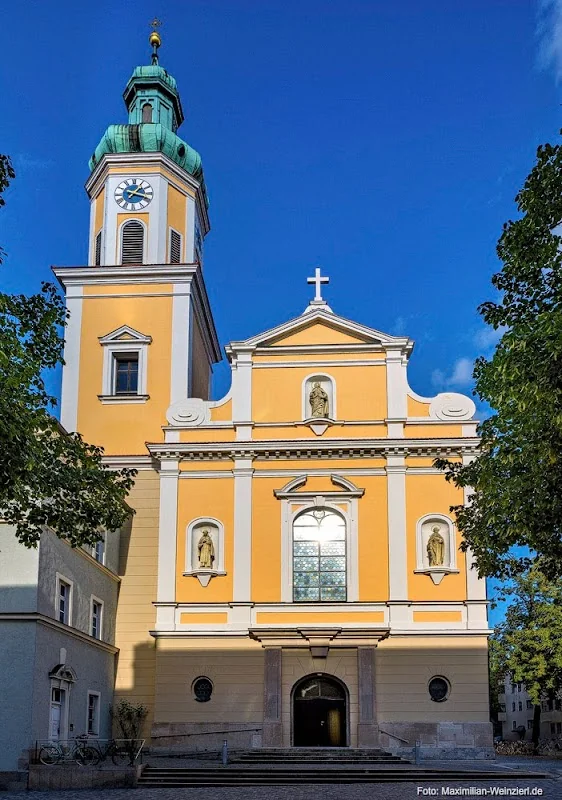
St. Theresia in Regensburg-Kumpfmühl today combines culture and history in a place described on the official website as a cultural center for creative ideas. The location is situated at Kumpfmühler Straße 39 and offers 340 square meters of space for up to 400 people. However, its roots go back much further: The former Carmelite church was deconsecrated in 2024 and is now used as a space for ideas, while it remains a prominent memorial site in the district. This combination of historical substance, clear address, and new cultural orientation explains why the location is so strongly perceived in searches for events, reviews, directions, or programs. Today, those searching for St. Theresia are not just looking for a building name, but a place where the past and present visibly touch. This is precisely the unique strength of this cultural space: it is not interchangeable but carries its own biography, which visitors can immediately feel upon entering the space. ([theresia-regensburg.de](https://theresia-regensburg.de/kontakt/))
Current Events, Exhibitions, and Program
The current profile of St. Theresia is distinctly culturally shaped. The homepage showcases concerts, exhibitions, and public events as the core of the offerings, with examples ranging from benefit concerts to zither evenings and a cappella formats. Event announcements include the concert Sounds of Hope, a benefit concert Prayer for Ukraine, and the zither concert Sound Art through Fingertip Sensitivity. The city’s event calendar page also lists dates at the same address, including concerts in rock, pop, jazz, and folk, as well as exhibitions and lecture formats. Therefore, anyone looking for a compact overview quickly realizes: St. Theresia is not a static memorial site but a space where music, visual arts, and community events actively come together. This mix makes the location interesting for a wide audience, from culture enthusiasts to local clubs, choirs, and initiatives seeking a special framework for their ideas. The place does not appear over-staged but is open enough to accommodate very different programs without losing its identity. ([theresia-regensburg.de](https://theresia-regensburg.de/))
A good example of this is the exhibition usage: The homepage mentions visiting hours for the exhibition After the Amen from Friday to Sunday and on holidays from 3 PM to 6 PM. This shows that the venue offers not only individual concert evenings but also clearly scheduled visiting windows for art presentations, depending on the format. The website also emphasizes that the historic space is open for public events and creative uses after extensive renovation. For the search intent behind terms like program, today, event, or exhibitions, this is crucial: users want not only the name of the location but also specific occasions they can attend. St. Theresia currently provides exactly the right image for this, as the program selection is visibly diverse and focuses on both artistic formats and community events. At the same time, the changing event titles create the impression of a house that continually reinvents itself without denying its origins. This balance of reliability and change makes the place strong from an SEO perspective and content-wise exciting for visitors. ([theresia-regensburg.de](https://theresia-regensburg.de/?utm_source=openai))
History of St. Theresia: From Monastery Church to Cultural Space
Historically, St. Theresia is a neo-baroque church built in 1900. The parish of St. Wolfgang describes it as the former monastery church of the Discalced Carmelites, which was until July 31, 2024, a subsidiary church of St. Wolfgang. Also important for understanding the place: next to the adjacent monastery complex and the boys' seminar, the building once served the order's youth, and the church was the first new church building in Regensburg since St. Cecilia in 250 years. This classification makes it clear why St. Theresia still holds a special position in the cityscape. It is not just any sacred building but a house that is closely connected to Kumpfmühl in terms of architecture, order history, and urban development. Therefore, when visiting the place, one experiences not only a space but a piece of Regensburg's religious and cultural history. This historical depth is a strong unique selling point for content related to history, background, and special features. The combination of monastic life, monastery complex, church building, and neighborhood development provides far more than a simple location description and makes the venue attractive even for culture-historically interested visitors. ([wolfgangskirche-regensburg.de](https://www.wolfgangskirche-regensburg.de/andere-kirchen-und-kreuze/?utm_source=openai))
The most recent change is as formative as the long ecclesiastical past. The Carmelite side describes the deconsecration on July 31, 2024, as a farewell to the church, which was closed after 125 years due to a lack of funds for necessary general renovation. At the same time, it was announced that the building would initially be available for cultural events after the exterior renovation. The official website picks up on this new role and presents St. Theresia today as a cultural center under the name Theresia - Space for Ideas. For SEO and user intent, this transition is central: many are still searching for the old church but actually mean the current cultural space. Therefore, both levels must be considered together - history explains the name, the present explains the use. This tension between sacred origins and cultural future makes the place extraordinary. Additionally, the repurposing is communicated not as an abrupt end but as a gentle transition: from a place of worship to a place of encounter, from the former subsidiary church to a space for ideas. This narrative makes St. Theresia relevant for readers and search engines alike. ([karmelitenkloster-stjoseph.de](https://www.karmelitenkloster-stjoseph.de/st-theresia/))
Space, Capacity, and Atmosphere in St. Theresia Regensburg
With 340 square meters and a capacity of up to 400 people, St. Theresia is an astonishingly flexible space for Regensburg standards. The official website emphasizes that both small meetings and larger celebrations and public events are possible here. This is particularly relevant for organizers, as the architecture of a former church offers far more than just pure seating capacity: high spatial impact, clear sight lines, and an atmosphere that immediately creates presence during concerts and exhibitions. The event titles on the website showcase this diversity, including art and music, light and sound formats, gala dinners, or a Venetian masquerade ball with electronic music. This makes it clear that the space is not limited to a single event format. Depending on the staging, it can appear very festive, very intimate, or very experimental. For visitors, this means: every event at St. Theresia feels different, even though the architectural backdrop remains the same. This versatility is a key part of the search interest in seating, capacity, room layout, or best seat selection, as users want to know whether the place is more of a concert hall, gallery, meeting place, or event location. In this case, the answer is deliberately open: St. Theresia is all of these at once, but always with historical character. ([theresia-regensburg.de](https://theresia-regensburg.de/))
The historical atmosphere is not a decorative side aspect but a genuine part of the experience. The website explicitly speaks of the unique charm of the former monastery church. In practice, this means that art, music, and conversation take place in a space that automatically focuses attention. Especially for cultural formats that thrive on silence, acoustics, or concentration, this is an advantage. Concerts, readings, and exhibitions benefit from a place that does not appear sterile or overloaded. The titles of past events also reflect this ambition: they range from sound, light, and art to a cappella evenings, benefit formats, and photography projects. Therefore, anyone looking for capacity, spatial feeling, or special highlights will find a location here that translates size not only into numbers but primarily into impact. At the same time, the house creates a clear emotional differentiation from classic multipurpose spaces: it is not just any hall but a place with history, acoustics, and character. This is precisely why St. Theresia is suitable for organizers looking for more than mere functionality and for guests who value atmosphere as much as the actual program. ([theresia-regensburg.de](https://theresia-regensburg.de/))
Address, Directions, and Practical Information for Visitors
For travel, the address is the most important anchor point: Kumpfmühler Straße 39, 93051 Regensburg, Germany. The contact page additionally lists phone and email, clearly indicating that St. Theresia is organizationally accessible. The Regensburg event pages also list the same address for the dates, confirming its findability in the Kumpfmühl district. This is practical for visitors because the place appears both under its historical name and its current cultural profile. Anyone searching for directions, location, or input into a navigation system should therefore always plan with the complete address. The official pages emphasize the accessibility of the location, not a large transportation infrastructure around the building. This is why the precise address is so important. It replaces lengthy explanations and leads directly to the destination. Additionally, it helps that current dates on the city platform are also communicated with the same address, reducing the risk of confusion when wanting to attend an event. For the first visit, this is a real advantage, as the location information is clear and can be easily found in map applications. ([theresia-regensburg.de](https://theresia-regensburg.de/kontakt/))
Specific visitor parking is not separately indicated on the official pages; primarily visible are the address, contact, and event announcements. This leads to practical implications: anyone attending an event at St. Theresia should plan their arrival with some buffer and keep an eye on the current parking situation in Regensburg. This is particularly sensible for evening events or well-attended exhibitions when the district may be busier. For the SEO logic behind the keyword parking, this honest classification is even helpful, as users do not expect a fabricated parking guarantee but a clear, reliable orientation. St. Theresia is therefore not a place with standardized exhibition parking but an inner-city cultural address where the exact approach is more important than a blanket promise. If desired, one can ask questions in advance by phone or email, as the contact page explicitly provides the organizational data. This creates an image that is transparent for visitors and planable for organizers: the address is clear, communication is open, and the specific traffic situation should be individually checked if necessary. ([theresia-regensburg.de](https://theresia-regensburg.de/kontakt/))
Reviews, Target Groups, and Why St. Theresia Stands Out
Those searching for reviews are usually looking for a sense of how the place is perceived today. The publicly visible content shows primarily one thing: St. Theresia is understood as a cultural space with its own profile, not as a classic event hall. The program spectrum ranges from concerts to exhibitions and lectures to benefit evenings and community formats, and this is precisely what gives the house its attractiveness. For culture enthusiasts, this is good news because the place does not appear arbitrary but has a clear identity. From a visitor's perspective, this creates an environment that charges emotionally but is not over-staged. People come for music, art, or encounters - and often stay for the atmosphere. This effect is a plausible reason why the location repeatedly appears in search queries with ratings and experiences. Even without individual reviews being in the spotlight, much can be inferred about the resonance from the published program: where concerts, exhibitions, and benefit formats regularly take place, an audience that appreciates this character usually emerges. The place thus appears more curated than arbitrary, more cultural than commercial, and this is precisely what makes it interesting for many people. ([theresia-regensburg.de](https://theresia-regensburg.de/))
St. Theresia is particularly suitable for people who appreciate special spaces: concert audiences, exhibition visitors, choirs, cultural initiatives, local organizers, and groups wanting to connect a historical framework with modern use. The current image of the house shows a high range without denying the building's origins. This is precisely the strength of the location for Regensburg: it is not just a place to look at but a place to experience. Therefore, anyone looking for a mix of history, present, and programmatic diversity will find a compelling meeting point in St. Theresia in the Kumpfmühl district. This applies to spontaneous culture enthusiasts as well as event planners seeking a characterful space with a clear identity. From an SEO perspective, this is also an advantage, as the place serves multiple relevant search intents simultaneously: program, history, directions, capacity, reviews, and use as a cultural space. The combination of former monastery church, flexible event space, and visible public use ensures that St. Theresia remains present in both the digital and real cityscape. ([theresia-regensburg.de](https://theresia-regensburg.de/))
Sources:
Mehr anzeigenWeniger anzeigen
St. Theresia Regensburg | Events & Cultural Space
St. Theresia in Regensburg-Kumpfmühl today combines culture and history in a place described on the official website as a cultural center for creative ideas. The location is situated at Kumpfmühler Straße 39 and offers 340 square meters of space for up to 400 people. However, its roots go back much further: The former Carmelite church was deconsecrated in 2024 and is now used as a space for ideas, while it remains a prominent memorial site in the district. This combination of historical substance, clear address, and new cultural orientation explains why the location is so strongly perceived in searches for events, reviews, directions, or programs. Today, those searching for St. Theresia are not just looking for a building name, but a place where the past and present visibly touch. This is precisely the unique strength of this cultural space: it is not interchangeable but carries its own biography, which visitors can immediately feel upon entering the space. ([theresia-regensburg.de](https://theresia-regensburg.de/kontakt/))
Current Events, Exhibitions, and Program
The current profile of St. Theresia is distinctly culturally shaped. The homepage showcases concerts, exhibitions, and public events as the core of the offerings, with examples ranging from benefit concerts to zither evenings and a cappella formats. Event announcements include the concert Sounds of Hope, a benefit concert Prayer for Ukraine, and the zither concert Sound Art through Fingertip Sensitivity. The city’s event calendar page also lists dates at the same address, including concerts in rock, pop, jazz, and folk, as well as exhibitions and lecture formats. Therefore, anyone looking for a compact overview quickly realizes: St. Theresia is not a static memorial site but a space where music, visual arts, and community events actively come together. This mix makes the location interesting for a wide audience, from culture enthusiasts to local clubs, choirs, and initiatives seeking a special framework for their ideas. The place does not appear over-staged but is open enough to accommodate very different programs without losing its identity. ([theresia-regensburg.de](https://theresia-regensburg.de/))
A good example of this is the exhibition usage: The homepage mentions visiting hours for the exhibition After the Amen from Friday to Sunday and on holidays from 3 PM to 6 PM. This shows that the venue offers not only individual concert evenings but also clearly scheduled visiting windows for art presentations, depending on the format. The website also emphasizes that the historic space is open for public events and creative uses after extensive renovation. For the search intent behind terms like program, today, event, or exhibitions, this is crucial: users want not only the name of the location but also specific occasions they can attend. St. Theresia currently provides exactly the right image for this, as the program selection is visibly diverse and focuses on both artistic formats and community events. At the same time, the changing event titles create the impression of a house that continually reinvents itself without denying its origins. This balance of reliability and change makes the place strong from an SEO perspective and content-wise exciting for visitors. ([theresia-regensburg.de](https://theresia-regensburg.de/?utm_source=openai))
History of St. Theresia: From Monastery Church to Cultural Space
Historically, St. Theresia is a neo-baroque church built in 1900. The parish of St. Wolfgang describes it as the former monastery church of the Discalced Carmelites, which was until July 31, 2024, a subsidiary church of St. Wolfgang. Also important for understanding the place: next to the adjacent monastery complex and the boys' seminar, the building once served the order's youth, and the church was the first new church building in Regensburg since St. Cecilia in 250 years. This classification makes it clear why St. Theresia still holds a special position in the cityscape. It is not just any sacred building but a house that is closely connected to Kumpfmühl in terms of architecture, order history, and urban development. Therefore, when visiting the place, one experiences not only a space but a piece of Regensburg's religious and cultural history. This historical depth is a strong unique selling point for content related to history, background, and special features. The combination of monastic life, monastery complex, church building, and neighborhood development provides far more than a simple location description and makes the venue attractive even for culture-historically interested visitors. ([wolfgangskirche-regensburg.de](https://www.wolfgangskirche-regensburg.de/andere-kirchen-und-kreuze/?utm_source=openai))
The most recent change is as formative as the long ecclesiastical past. The Carmelite side describes the deconsecration on July 31, 2024, as a farewell to the church, which was closed after 125 years due to a lack of funds for necessary general renovation. At the same time, it was announced that the building would initially be available for cultural events after the exterior renovation. The official website picks up on this new role and presents St. Theresia today as a cultural center under the name Theresia - Space for Ideas. For SEO and user intent, this transition is central: many are still searching for the old church but actually mean the current cultural space. Therefore, both levels must be considered together - history explains the name, the present explains the use. This tension between sacred origins and cultural future makes the place extraordinary. Additionally, the repurposing is communicated not as an abrupt end but as a gentle transition: from a place of worship to a place of encounter, from the former subsidiary church to a space for ideas. This narrative makes St. Theresia relevant for readers and search engines alike. ([karmelitenkloster-stjoseph.de](https://www.karmelitenkloster-stjoseph.de/st-theresia/))
Space, Capacity, and Atmosphere in St. Theresia Regensburg
With 340 square meters and a capacity of up to 400 people, St. Theresia is an astonishingly flexible space for Regensburg standards. The official website emphasizes that both small meetings and larger celebrations and public events are possible here. This is particularly relevant for organizers, as the architecture of a former church offers far more than just pure seating capacity: high spatial impact, clear sight lines, and an atmosphere that immediately creates presence during concerts and exhibitions. The event titles on the website showcase this diversity, including art and music, light and sound formats, gala dinners, or a Venetian masquerade ball with electronic music. This makes it clear that the space is not limited to a single event format. Depending on the staging, it can appear very festive, very intimate, or very experimental. For visitors, this means: every event at St. Theresia feels different, even though the architectural backdrop remains the same. This versatility is a key part of the search interest in seating, capacity, room layout, or best seat selection, as users want to know whether the place is more of a concert hall, gallery, meeting place, or event location. In this case, the answer is deliberately open: St. Theresia is all of these at once, but always with historical character. ([theresia-regensburg.de](https://theresia-regensburg.de/))
The historical atmosphere is not a decorative side aspect but a genuine part of the experience. The website explicitly speaks of the unique charm of the former monastery church. In practice, this means that art, music, and conversation take place in a space that automatically focuses attention. Especially for cultural formats that thrive on silence, acoustics, or concentration, this is an advantage. Concerts, readings, and exhibitions benefit from a place that does not appear sterile or overloaded. The titles of past events also reflect this ambition: they range from sound, light, and art to a cappella evenings, benefit formats, and photography projects. Therefore, anyone looking for capacity, spatial feeling, or special highlights will find a location here that translates size not only into numbers but primarily into impact. At the same time, the house creates a clear emotional differentiation from classic multipurpose spaces: it is not just any hall but a place with history, acoustics, and character. This is precisely why St. Theresia is suitable for organizers looking for more than mere functionality and for guests who value atmosphere as much as the actual program. ([theresia-regensburg.de](https://theresia-regensburg.de/))
Address, Directions, and Practical Information for Visitors
For travel, the address is the most important anchor point: Kumpfmühler Straße 39, 93051 Regensburg, Germany. The contact page additionally lists phone and email, clearly indicating that St. Theresia is organizationally accessible. The Regensburg event pages also list the same address for the dates, confirming its findability in the Kumpfmühl district. This is practical for visitors because the place appears both under its historical name and its current cultural profile. Anyone searching for directions, location, or input into a navigation system should therefore always plan with the complete address. The official pages emphasize the accessibility of the location, not a large transportation infrastructure around the building. This is why the precise address is so important. It replaces lengthy explanations and leads directly to the destination. Additionally, it helps that current dates on the city platform are also communicated with the same address, reducing the risk of confusion when wanting to attend an event. For the first visit, this is a real advantage, as the location information is clear and can be easily found in map applications. ([theresia-regensburg.de](https://theresia-regensburg.de/kontakt/))
Specific visitor parking is not separately indicated on the official pages; primarily visible are the address, contact, and event announcements. This leads to practical implications: anyone attending an event at St. Theresia should plan their arrival with some buffer and keep an eye on the current parking situation in Regensburg. This is particularly sensible for evening events or well-attended exhibitions when the district may be busier. For the SEO logic behind the keyword parking, this honest classification is even helpful, as users do not expect a fabricated parking guarantee but a clear, reliable orientation. St. Theresia is therefore not a place with standardized exhibition parking but an inner-city cultural address where the exact approach is more important than a blanket promise. If desired, one can ask questions in advance by phone or email, as the contact page explicitly provides the organizational data. This creates an image that is transparent for visitors and planable for organizers: the address is clear, communication is open, and the specific traffic situation should be individually checked if necessary. ([theresia-regensburg.de](https://theresia-regensburg.de/kontakt/))
Reviews, Target Groups, and Why St. Theresia Stands Out
Those searching for reviews are usually looking for a sense of how the place is perceived today. The publicly visible content shows primarily one thing: St. Theresia is understood as a cultural space with its own profile, not as a classic event hall. The program spectrum ranges from concerts to exhibitions and lectures to benefit evenings and community formats, and this is precisely what gives the house its attractiveness. For culture enthusiasts, this is good news because the place does not appear arbitrary but has a clear identity. From a visitor's perspective, this creates an environment that charges emotionally but is not over-staged. People come for music, art, or encounters - and often stay for the atmosphere. This effect is a plausible reason why the location repeatedly appears in search queries with ratings and experiences. Even without individual reviews being in the spotlight, much can be inferred about the resonance from the published program: where concerts, exhibitions, and benefit formats regularly take place, an audience that appreciates this character usually emerges. The place thus appears more curated than arbitrary, more cultural than commercial, and this is precisely what makes it interesting for many people. ([theresia-regensburg.de](https://theresia-regensburg.de/))
St. Theresia is particularly suitable for people who appreciate special spaces: concert audiences, exhibition visitors, choirs, cultural initiatives, local organizers, and groups wanting to connect a historical framework with modern use. The current image of the house shows a high range without denying the building's origins. This is precisely the strength of the location for Regensburg: it is not just a place to look at but a place to experience. Therefore, anyone looking for a mix of history, present, and programmatic diversity will find a compelling meeting point in St. Theresia in the Kumpfmühl district. This applies to spontaneous culture enthusiasts as well as event planners seeking a characterful space with a clear identity. From an SEO perspective, this is also an advantage, as the place serves multiple relevant search intents simultaneously: program, history, directions, capacity, reviews, and use as a cultural space. The combination of former monastery church, flexible event space, and visible public use ensures that St. Theresia remains present in both the digital and real cityscape. ([theresia-regensburg.de](https://theresia-regensburg.de/))
Sources:
St. Theresia Regensburg | Events & Cultural Space
St. Theresia in Regensburg-Kumpfmühl today combines culture and history in a place described on the official website as a cultural center for creative ideas. The location is situated at Kumpfmühler Straße 39 and offers 340 square meters of space for up to 400 people. However, its roots go back much further: The former Carmelite church was deconsecrated in 2024 and is now used as a space for ideas, while it remains a prominent memorial site in the district. This combination of historical substance, clear address, and new cultural orientation explains why the location is so strongly perceived in searches for events, reviews, directions, or programs. Today, those searching for St. Theresia are not just looking for a building name, but a place where the past and present visibly touch. This is precisely the unique strength of this cultural space: it is not interchangeable but carries its own biography, which visitors can immediately feel upon entering the space. ([theresia-regensburg.de](https://theresia-regensburg.de/kontakt/))
Current Events, Exhibitions, and Program
The current profile of St. Theresia is distinctly culturally shaped. The homepage showcases concerts, exhibitions, and public events as the core of the offerings, with examples ranging from benefit concerts to zither evenings and a cappella formats. Event announcements include the concert Sounds of Hope, a benefit concert Prayer for Ukraine, and the zither concert Sound Art through Fingertip Sensitivity. The city’s event calendar page also lists dates at the same address, including concerts in rock, pop, jazz, and folk, as well as exhibitions and lecture formats. Therefore, anyone looking for a compact overview quickly realizes: St. Theresia is not a static memorial site but a space where music, visual arts, and community events actively come together. This mix makes the location interesting for a wide audience, from culture enthusiasts to local clubs, choirs, and initiatives seeking a special framework for their ideas. The place does not appear over-staged but is open enough to accommodate very different programs without losing its identity. ([theresia-regensburg.de](https://theresia-regensburg.de/))
A good example of this is the exhibition usage: The homepage mentions visiting hours for the exhibition After the Amen from Friday to Sunday and on holidays from 3 PM to 6 PM. This shows that the venue offers not only individual concert evenings but also clearly scheduled visiting windows for art presentations, depending on the format. The website also emphasizes that the historic space is open for public events and creative uses after extensive renovation. For the search intent behind terms like program, today, event, or exhibitions, this is crucial: users want not only the name of the location but also specific occasions they can attend. St. Theresia currently provides exactly the right image for this, as the program selection is visibly diverse and focuses on both artistic formats and community events. At the same time, the changing event titles create the impression of a house that continually reinvents itself without denying its origins. This balance of reliability and change makes the place strong from an SEO perspective and content-wise exciting for visitors. ([theresia-regensburg.de](https://theresia-regensburg.de/?utm_source=openai))
History of St. Theresia: From Monastery Church to Cultural Space
Historically, St. Theresia is a neo-baroque church built in 1900. The parish of St. Wolfgang describes it as the former monastery church of the Discalced Carmelites, which was until July 31, 2024, a subsidiary church of St. Wolfgang. Also important for understanding the place: next to the adjacent monastery complex and the boys' seminar, the building once served the order's youth, and the church was the first new church building in Regensburg since St. Cecilia in 250 years. This classification makes it clear why St. Theresia still holds a special position in the cityscape. It is not just any sacred building but a house that is closely connected to Kumpfmühl in terms of architecture, order history, and urban development. Therefore, when visiting the place, one experiences not only a space but a piece of Regensburg's religious and cultural history. This historical depth is a strong unique selling point for content related to history, background, and special features. The combination of monastic life, monastery complex, church building, and neighborhood development provides far more than a simple location description and makes the venue attractive even for culture-historically interested visitors. ([wolfgangskirche-regensburg.de](https://www.wolfgangskirche-regensburg.de/andere-kirchen-und-kreuze/?utm_source=openai))
The most recent change is as formative as the long ecclesiastical past. The Carmelite side describes the deconsecration on July 31, 2024, as a farewell to the church, which was closed after 125 years due to a lack of funds for necessary general renovation. At the same time, it was announced that the building would initially be available for cultural events after the exterior renovation. The official website picks up on this new role and presents St. Theresia today as a cultural center under the name Theresia - Space for Ideas. For SEO and user intent, this transition is central: many are still searching for the old church but actually mean the current cultural space. Therefore, both levels must be considered together - history explains the name, the present explains the use. This tension between sacred origins and cultural future makes the place extraordinary. Additionally, the repurposing is communicated not as an abrupt end but as a gentle transition: from a place of worship to a place of encounter, from the former subsidiary church to a space for ideas. This narrative makes St. Theresia relevant for readers and search engines alike. ([karmelitenkloster-stjoseph.de](https://www.karmelitenkloster-stjoseph.de/st-theresia/))
Space, Capacity, and Atmosphere in St. Theresia Regensburg
With 340 square meters and a capacity of up to 400 people, St. Theresia is an astonishingly flexible space for Regensburg standards. The official website emphasizes that both small meetings and larger celebrations and public events are possible here. This is particularly relevant for organizers, as the architecture of a former church offers far more than just pure seating capacity: high spatial impact, clear sight lines, and an atmosphere that immediately creates presence during concerts and exhibitions. The event titles on the website showcase this diversity, including art and music, light and sound formats, gala dinners, or a Venetian masquerade ball with electronic music. This makes it clear that the space is not limited to a single event format. Depending on the staging, it can appear very festive, very intimate, or very experimental. For visitors, this means: every event at St. Theresia feels different, even though the architectural backdrop remains the same. This versatility is a key part of the search interest in seating, capacity, room layout, or best seat selection, as users want to know whether the place is more of a concert hall, gallery, meeting place, or event location. In this case, the answer is deliberately open: St. Theresia is all of these at once, but always with historical character. ([theresia-regensburg.de](https://theresia-regensburg.de/))
The historical atmosphere is not a decorative side aspect but a genuine part of the experience. The website explicitly speaks of the unique charm of the former monastery church. In practice, this means that art, music, and conversation take place in a space that automatically focuses attention. Especially for cultural formats that thrive on silence, acoustics, or concentration, this is an advantage. Concerts, readings, and exhibitions benefit from a place that does not appear sterile or overloaded. The titles of past events also reflect this ambition: they range from sound, light, and art to a cappella evenings, benefit formats, and photography projects. Therefore, anyone looking for capacity, spatial feeling, or special highlights will find a location here that translates size not only into numbers but primarily into impact. At the same time, the house creates a clear emotional differentiation from classic multipurpose spaces: it is not just any hall but a place with history, acoustics, and character. This is precisely why St. Theresia is suitable for organizers looking for more than mere functionality and for guests who value atmosphere as much as the actual program. ([theresia-regensburg.de](https://theresia-regensburg.de/))
Address, Directions, and Practical Information for Visitors
For travel, the address is the most important anchor point: Kumpfmühler Straße 39, 93051 Regensburg, Germany. The contact page additionally lists phone and email, clearly indicating that St. Theresia is organizationally accessible. The Regensburg event pages also list the same address for the dates, confirming its findability in the Kumpfmühl district. This is practical for visitors because the place appears both under its historical name and its current cultural profile. Anyone searching for directions, location, or input into a navigation system should therefore always plan with the complete address. The official pages emphasize the accessibility of the location, not a large transportation infrastructure around the building. This is why the precise address is so important. It replaces lengthy explanations and leads directly to the destination. Additionally, it helps that current dates on the city platform are also communicated with the same address, reducing the risk of confusion when wanting to attend an event. For the first visit, this is a real advantage, as the location information is clear and can be easily found in map applications. ([theresia-regensburg.de](https://theresia-regensburg.de/kontakt/))
Specific visitor parking is not separately indicated on the official pages; primarily visible are the address, contact, and event announcements. This leads to practical implications: anyone attending an event at St. Theresia should plan their arrival with some buffer and keep an eye on the current parking situation in Regensburg. This is particularly sensible for evening events or well-attended exhibitions when the district may be busier. For the SEO logic behind the keyword parking, this honest classification is even helpful, as users do not expect a fabricated parking guarantee but a clear, reliable orientation. St. Theresia is therefore not a place with standardized exhibition parking but an inner-city cultural address where the exact approach is more important than a blanket promise. If desired, one can ask questions in advance by phone or email, as the contact page explicitly provides the organizational data. This creates an image that is transparent for visitors and planable for organizers: the address is clear, communication is open, and the specific traffic situation should be individually checked if necessary. ([theresia-regensburg.de](https://theresia-regensburg.de/kontakt/))
Reviews, Target Groups, and Why St. Theresia Stands Out
Those searching for reviews are usually looking for a sense of how the place is perceived today. The publicly visible content shows primarily one thing: St. Theresia is understood as a cultural space with its own profile, not as a classic event hall. The program spectrum ranges from concerts to exhibitions and lectures to benefit evenings and community formats, and this is precisely what gives the house its attractiveness. For culture enthusiasts, this is good news because the place does not appear arbitrary but has a clear identity. From a visitor's perspective, this creates an environment that charges emotionally but is not over-staged. People come for music, art, or encounters - and often stay for the atmosphere. This effect is a plausible reason why the location repeatedly appears in search queries with ratings and experiences. Even without individual reviews being in the spotlight, much can be inferred about the resonance from the published program: where concerts, exhibitions, and benefit formats regularly take place, an audience that appreciates this character usually emerges. The place thus appears more curated than arbitrary, more cultural than commercial, and this is precisely what makes it interesting for many people. ([theresia-regensburg.de](https://theresia-regensburg.de/))
St. Theresia is particularly suitable for people who appreciate special spaces: concert audiences, exhibition visitors, choirs, cultural initiatives, local organizers, and groups wanting to connect a historical framework with modern use. The current image of the house shows a high range without denying the building's origins. This is precisely the strength of the location for Regensburg: it is not just a place to look at but a place to experience. Therefore, anyone looking for a mix of history, present, and programmatic diversity will find a compelling meeting point in St. Theresia in the Kumpfmühl district. This applies to spontaneous culture enthusiasts as well as event planners seeking a characterful space with a clear identity. From an SEO perspective, this is also an advantage, as the place serves multiple relevant search intents simultaneously: program, history, directions, capacity, reviews, and use as a cultural space. The combination of former monastery church, flexible event space, and visible public use ensures that St. Theresia remains present in both the digital and real cityscape. ([theresia-regensburg.de](https://theresia-regensburg.de/))
Sources:
Upcoming Events
No events found
Frequently Asked Questions
Reviews
Ezzay _53
10. May 2019
Nice
Zape Ute
15. October 2023
Beautiful neo-baroque church that looks older than it is. The Church of St. Theresia is a former monastery church of the Discalced Carmelites. Next door are the former monastery and seminary buildings. It has a small courtyard and a monastery pond in the area behind it. Today, the church is a subsidiary church of the Wolfgang Church in the parish of St. Wolfgang. In 1810, Kumpfmühl was incorporated into Regensburg, and the way to the then church was long. Therefore, a proposal from the prior of the Carmelite monastery received great approval to build a church with a monastery on the garden grounds in Kumpfmühl. In 1851, the Carmelite brothers acquired the land to build a monastery with a seminary building for the order's youth and also to construct the new Church of St. Theresia. The condition was to build the church in baroque style. The construction of the monastery and boys' seminary building east and north of the current church was completed fairly quickly. The church was consecrated in 1900. In 1902, the tower clock and the organ were installed. The interior of the church was initially just whitewashed. In 1911, the church painter Johann Böckl was commissioned to carry out a rich decoration in neo-baroque style, which was completed in 1911. In December 1944, the church was heavily hit in a bombing raid. The paintings were completely lost during the war-related restoration from 1948, except for the ceiling paintings. The boys' seminary was dissolved in 1975. Today, the building is used by the Catholic youth welfare. The former monastery building north of the church was used by the Carmelites until 1987. Today it is used as living space. The church is still used for holy mass. The church can be entered, but the church space is barred by a gate. The crypt is supposed to be open on All Souls' Day.
Monika Renate Barget
25. July 2023
Beautiful former monastery church without too much pomp. The service was rather shocking for me as a "Prussian". Very Bavarian sermon with strong language and anti-Green undertones. I wanted to feel a bit like at a political Ash Wednesday.
Christine Roedig
10. May 2023
As already mentioned, everything is very impressive, a beautiful church. The baptism itself was impressive with the pastor who also involved the children. I really thought it was great.
Martin Bachmaier
29. December 2022
Positive: Tridentine Mass on Sundays at 5 PM. Negative: There are pebbles in the holy water font (as of December 2022); there should actually be holy water in there.