
Regensburg
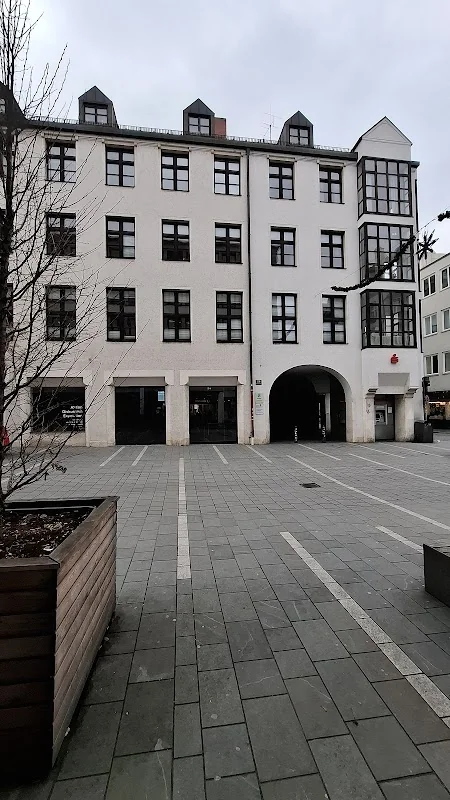
Maximilianstraße 26, 93047 Regensburg, Deutschland
City of Regensburg, Office for Integration and Migration | Counseling
The Office for Integration and Migration of the City of Regensburg is a central contact point for people who have questions about residence, foreign affairs, integration counseling, or municipal support services related to immigration. With the office address Maximilianstraße 26, the service is located in an area that is easily accessible for many visitors and is clearly structured on the official city website. There, not only can you find the individual departments of the office, but also information on opening hours, telephone contact, online appointment scheduling, bus connections, and other municipal offerings such as Integreat, sponsorships for refugees, or working in Regensburg. So, if you are looking for not just an address, but a reliable entry point into the next administrative steps, you will find here a factually clear and socially oriented contact point. ([regensburg.de](https://www.regensburg.de/integration))
Opening Hours and Appointment Scheduling
The official opening hours of the Office for Integration and Migration are intentionally designed to be compact and service-oriented. On Mondays, Tuesdays, and Wednesdays, the office is reachable from 8:30 AM to 12:00 PM, on Thursdays additionally from 8:30 AM to 1:00 PM and in the afternoon from 3:00 PM to 5:30 PM, and on Fridays again from 8:30 AM to 12:00 PM. For many visitors, it is also important that the city explicitly states on the main page that the office can be contacted by phone during opening hours from 8:30 AM to 12:00 PM at (0941) 507-1772. This is practical if a question needs to be clarified before the visit, such as regarding jurisdiction, documents, or the appropriate contact person. ([regensburg.de](https://www.regensburg.de/integration))
Particularly relevant is the distinction between the general office and the department for foreign affairs. There, different opening hours apply, and it is clearly stated that for many concerns, a prior appointment is necessary. Without an appointment, a visit is only possible on certain mornings, namely Mondays, Tuesdays, Thursdays, and Fridays from 8:00 AM to 10:30 AM. During this time window, registration matters and the collection of completed electronic residence permits are processed. The city also provides an online appointment scheduling system, which significantly simplifies the process for visitors with planned concerns. For SEO and user intent, this point is important: Those searching for opening hours, appointments, or foreign affairs do not want a general description but a clear answer to the question of when and how a visit is sensible. ([regensburg.de](https://www.regensburg.de/rathaus/aemteruebersicht/direktorium-1/amt-fuer-integration-und-migration/abteilung-auslaenderangelegenheiten))
The refugee and integration counseling also operates according to a structured appointment model. Consultations take place during general opening hours, but only with a prior appointment. This makes the counseling more focused on individual concerns, which is especially important for newly arrived individuals and people from communal accommodations. The combination of fixed times, appointment requirements for certain services, and clear telephone accessibility is a typical pattern of modern citizen services: people should not wait unnecessarily, while also knowing reliably when they can appear in person. This mixture of planable service time and specialized case processing makes the office particularly relevant in everyday life. ([regensburg.de](https://www.regensburg.de/rathaus/aemteruebersicht/direktorium-1/amt-fuer-integration-und-migration/abteilung-fluechtlings-und-integrationsberatung-und-soziales-ehrenamtliches-engagement/fluechtlings-und-integrationsberatung))
Address and Directions to Maximilianstraße 26
The office address of the Office for Integration and Migration is Maximilianstraße 26, 93047 Regensburg. The city also provides a mailing address of P.O. Box 11 06 43, 93019 Regensburg, which is useful for written correspondence. For personal travel, the city refers not only to a map but especially to specific bus connections. The stops mentioned are Hbf/Albertstraße, Dachauplatz, and Ernst-Reuter-Platz. This makes it clear: the office is well integrated into the public transport network and can be easily reached via central downtown and train station connections. ([regensburg.de](https://www.regensburg.de/integration))
The location is also noteworthy from a content perspective because the city situates the office in direct proximity to the train station area and other municipal structures. In the official description of the cultural space M26, the spatial closeness to the Office for Integration and Migration is explicitly seen as an opportunity to make the cultural diversity in the heart of the city visible. This helps visitors with orientation: those planning a meeting, a counseling appointment, or a follow-up question are moving in an area that is strongly oriented towards pedestrians, public transport, and urban infrastructure. Therefore, the official information logic of the city clearly focuses on access, maps, and bus connections rather than complicated directions. ([regensburg.de](https://www.regensburg.de/kultur/veranstaltungen-des-kulturreferats/kulturenraum-m26-ein-ort-fuer-kunst-kultur-und-gesellschaft))
For practical purposes, this means: those who want to orient themselves before their first visit should understand the central location on Maximilianstraße as part of an urban administrative and meeting space. The city itself emphasizes at several points that in this environment, administration, counseling, integration, and encounters interact. This is helpful for people arriving with multiple concerns, such as questions about residence, integration courses, or social support. Instead of a purely counter logic, a place emerges where several professional lines converge, and orientation through official city pages, bus connections, and clear department names is deliberately simplified. ([regensburg.de](https://www.regensburg.de/integration))
Foreign Affairs in Regensburg
The department for foreign affairs is the central specialist office for all foreigners with a usual residence in Regensburg. On the official page, it is described as responsible for all questions related to entry and residence. This makes it the first point of contact for many people when it comes to residence permits, registration issues, or formal questions about documents. Particularly important is the clear regulation for personal contact: on certain mornings, a visit without an appointment is possible, specifically for completed electronic residence permits, registration matters, as well as registrations, de-registrations, or re-registrations. For everything else, the city explicitly refers to telephone contact, email, or mail, as well as a possible personal appointment. ([regensburg.de](https://www.regensburg.de/rathaus/aemteruebersicht/direktorium-1/amt-fuer-integration-und-migration/abteilung-auslaenderangelegenheiten))
The electronic residence permits also play an important role in this context. The city explicitly states that these can be collected during open consultation hours. This is a good example of how the authority distinguishes between standardized processes and more individualized cases. Standard cases are handled in a fixed time window, while more complex questions are dealt with via appointments or contact channels. Therefore, those preparing for a visit should not only check the time but also their own jurisdiction: is it about a collection, a re-registration, or a more complex residence procedure? This distinction saves time and prevents unnecessary trips. ([regensburg.de](https://www.regensburg.de/rathaus/aemteruebersicht/direktorium-1/amt-fuer-integration-und-migration/abteilung-auslaenderangelegenheiten))
Another important component is the integration courses. The city points out that these are conducted by the Federal Office for Migration and Refugees and aim to convey language, legal order, culture, and history in Germany. At the same time, it is explained that the language skills taught are often necessary to obtain an unlimited residence permit, and that the foreign authority can require participation in an integration course according to the Residence Act. This makes it clear that the department not only fulfills administrative tasks but is also involved in a broader integration process. ([regensburg.de](https://www.regensburg.de/buergerservice/dienstleistungen/25687/integrationskurse.html))
For communication with the authority, the city also specifies a clear expectation: those writing by email should provide their concerns, name, date of birth, and address, and send the inquiry only once. Additional emails do not speed up processing according to the official page but increase the effort. These notes are more than just formalities; they are part of a service logic that aims to make the processing path more transparent for both sides. The department attempts, according to its own statement, to quickly capture concerns and find a solution with the affected individuals. For visitors, this is helpful information as it shows how the city expects factual and clearly structured communication. ([regensburg.de](https://www.regensburg.de/rathaus/aemteruebersicht/direktorium-1/amt-fuer-integration-und-migration/abteilung-auslaenderangelegenheiten))
Refugee and Integration Counseling for Newly Arrived Individuals
The refugee and integration counseling is aimed, according to the official city page, at all newly arrived individuals as well as residents of communal accommodations. This is a very broad but clearly defined target group. The counseling covers topics that are particularly important in the everyday life of settling in: asylum procedures and residence, health and health insurance, children, family and school, training, profession and work, German and integration courses, housing, applications and forms, as well as financial benefits. This is supplemented by questions about laws and regulations in Germany, leisure and sports offerings, return to the home country, and also LGBTQI-related topics. This breadth shows that the counseling does not only address legal or formal questions but also considers the entire start in the new everyday life. ([regensburg.de](https://www.regensburg.de/rathaus/aemteruebersicht/direktorium-1/amt-fuer-integration-und-migration/abteilung-fluechtlings-und-integrationsberatung-und-soziales-ehrenamtliches-engagement/fluechtlings-und-integrationsberatung))
A strong plus point is confidentiality. The city explicitly emphasizes that the counseling is free of charge and subject to confidentiality. For many people who are newly arriving in Regensburg or living in a communal accommodation, this is a crucial factor of trust. Especially on topics such as residence, school, medical care, or housing search, it is important to be able to speak openly. Additionally, the counseling locations are not limited to Maximilianstraße 26. Other locations mentioned include the communal accommodations Dieselstraße and Weinweg, the youth and family center Kontrast at Vilshofener Straße 14, and the youth and meeting center Guericke at Guerickestraße 79d. This distribution shows that the city deliberately brings counseling closer to the people. ([regensburg.de](https://www.regensburg.de/rathaus/aemteruebersicht/direktorium-1/amt-fuer-integration-und-migration/abteilung-fluechtlings-und-integrationsberatung-und-soziales-ehrenamtliches-engagement/fluechtlings-und-integrationsberatung))
The counseling hours are linked to the general opening hours and require a prior appointment. This is practical because counseling conversations are typically more individualized and time-consuming than mere counter transactions. For visitors, this means: those coming with a specific concern should have the appropriate documents ready and view the appointment not as a mere formality but as genuine working time with professional depth. The contents of the counseling range from questions about work and training to housing search, language, and rules of coexistence. Especially for people starting anew in Regensburg, this is a central bridge between administration and everyday life. ([regensburg.de](https://www.regensburg.de/rathaus/aemteruebersicht/direktorium-1/amt-fuer-integration-und-migration/abteilung-fluechtlings-und-integrationsberatung-und-soziales-ehrenamtliches-engagement/fluechtlings-und-integrationsberatung))
Welcoming Culture, Integration Offers, and Digital Help
The Office for Integration and Migration is not only an administrative office but also a hub for further municipal offerings. On the overview page for immigration and integration, the city refers to municipal integration offers, statistics and facts, entry and residence, refugees and asylum seekers, as well as additional aid and information formats. These include, among others, the integration concept, the Integreat app, the volunteer interpreter pool, working in Regensburg, sponsorships for refugees, and information on intercultural weeks or international weeks against racism. Those seeking orientation in the context of migration and integration thus receive not only official form knowledge but a whole information network. ([regensburg.de](https://www.regensburg.de/leben/zuwanderung-u-integration))
Particularly helpful is the digital orientation. The city refers to Integreat as an information offering for immigrants and refugees. The accompanying pages also highlight the role of interpreters and sponsorships for refugees. This shows that the office does not understand its tasks in isolation but is embedded in a larger support environment. For practical purposes, this means: those facing a language, organizational, or social barrier find answers not only at the counter but also in projects, digital formats, and volunteer structures. Especially in a city like Regensburg, where administration and welcoming culture are spatially and professionally close together, this creates a low-threshold access. ([regensburg.de](https://www.regensburg.de/leben/zuwanderung-u-integration))
A special neighbor of the office is the cultural space M26. The city describes it as a social meeting place, a place of welcome, and a space for exchange, encounter, and dialogue. In a further project description, it is explained that the approximately 400 square meter spaces in Maximilianstraße are operated in a self-managed interim use through cultural sponsorships. Additionally, there is an integrated community café. The spatial proximity to the Office for Integration and Migration and the train station area is explicitly seen as an opportunity to make the plurality of cultures visible in the heart of the city. For visitors, this is more than a footnote: it shows that the location is not just an office place but part of a social and cultural urban space. ([regensburg.de](https://www.regensburg.de/kultur/veranstaltungen-des-kulturreferats/kulturenraum-m26-ein-ort-fuer-kunst-kultur-und-gesellschaft))
The topic of settling in Regensburg is also broadly considered by the city. Among the additional information and thematic pages, there are references to Regensburg helps - Ukraine, housing for refugees, working in Regensburg, and the Ankommen app for the first weeks in Germany. This conveys a clear picture: the office is part of a municipal overall strategy that connects administration, information, social support, and cultural participation. Therefore, anyone looking for a place that not only manages migration but also accompanies it will find an unusually well-networked structure in Regensburg. This is a strong signal for the search intent behind terms like integration, migration, welcoming culture, or counseling. ([regensburg.de](https://www.regensburg.de/integration))
What You Should Know Before Your Visit
For a visit to the Office for Integration and Migration, good preparation is helpful. If you want to go to the department for foreign affairs, you should first check whether your concern falls within the open morning hours or requires an appointment. The city is very specific here: only certain standard cases such as collecting completed electronic residence permits, registration matters, as well as registrations, de-registrations, and re-registrations are scheduled during open hours without an appointment. All other services and questions are prepared via phone, email, or mail and, if necessary, continued with a personal appointment. This is more efficient for many people than a spontaneous visit without documents. ([regensburg.de](https://www.regensburg.de/rathaus/aemteruebersicht/direktorium-1/amt-fuer-integration-und-migration/abteilung-auslaenderangelegenheiten))
If you contact via email, the authority requires some basic information: the specific concern, name, date of birth, and address. The city also asks that the inquiry be sent only once. This rule may seem strict at first glance, but from the perspective of a heavily frequented authority, it is understandable as it aims to avoid double work and unnecessary delays. For visitors, this means in practice: better to send a clean, complete message than several short partial messages. Anyone planning an additional phone call should know that the telephone accessibility of the general office is linked to the opening hours according to the official page. ([regensburg.de](https://www.regensburg.de/rathaus/aemteruebersicht/direktorium-1/amt-fuer-integration-und-migration/abteilung-auslaenderangelegenheiten))
For people who are new to Regensburg, it is also worthwhile to look at the thematically relevant city pages. There, not only are there references to entry and residence, but also to municipal integration offers, sponsorships, interpreters, and digital aids like Integreat. This is particularly valuable when a single appointment cannot solve all questions. For example, if someone needs counseling on housing search, children's schooling, an integration course, or the next registration with the foreign authority, they can gradually find their way into the appropriate offering through the city pages. This transforms a single office visit into a well-structured path through the administrative system. ([regensburg.de](https://www.regensburg.de/leben/zuwanderung-u-integration))
The surroundings also deserve attention. The proximity to the train station area and other municipal uses like the M26 makes orientation on site relatively easy. Those looking for images, reviews, or photos often want to gain not only an impression but also to be sure they are at the right place. The official information on address, stops, jurisdictions, and opening hours is particularly valuable for this purpose. They replace speculation with reliable information and ensure that the visit remains planable. Thus, the location at Maximilianstraße 26 fulfills a classic administrative task with modern communication logic: clear, accessible, and with many supporting information pathways. ([regensburg.de](https://www.regensburg.de/integration))
Sources:
- City of Regensburg - Directorate 1 - Office for Integration and Migration
- City of Regensburg - Office for Integration and Migration - Department for Foreign Affairs
- City of Regensburg - Refugee and Integration Counseling of the City of Regensburg
- City of Regensburg - Life - Immigration and Integration
- City of Regensburg - Cultural Space M26 - a Place for Art, Culture, and Society
- City of Regensburg - R_NEXT - Social Meeting Spaces
Mehr anzeigenWeniger anzeigen
City of Regensburg, Office for Integration and Migration | Counseling
The Office for Integration and Migration of the City of Regensburg is a central contact point for people who have questions about residence, foreign affairs, integration counseling, or municipal support services related to immigration. With the office address Maximilianstraße 26, the service is located in an area that is easily accessible for many visitors and is clearly structured on the official city website. There, not only can you find the individual departments of the office, but also information on opening hours, telephone contact, online appointment scheduling, bus connections, and other municipal offerings such as Integreat, sponsorships for refugees, or working in Regensburg. So, if you are looking for not just an address, but a reliable entry point into the next administrative steps, you will find here a factually clear and socially oriented contact point. ([regensburg.de](https://www.regensburg.de/integration))
Opening Hours and Appointment Scheduling
The official opening hours of the Office for Integration and Migration are intentionally designed to be compact and service-oriented. On Mondays, Tuesdays, and Wednesdays, the office is reachable from 8:30 AM to 12:00 PM, on Thursdays additionally from 8:30 AM to 1:00 PM and in the afternoon from 3:00 PM to 5:30 PM, and on Fridays again from 8:30 AM to 12:00 PM. For many visitors, it is also important that the city explicitly states on the main page that the office can be contacted by phone during opening hours from 8:30 AM to 12:00 PM at (0941) 507-1772. This is practical if a question needs to be clarified before the visit, such as regarding jurisdiction, documents, or the appropriate contact person. ([regensburg.de](https://www.regensburg.de/integration))
Particularly relevant is the distinction between the general office and the department for foreign affairs. There, different opening hours apply, and it is clearly stated that for many concerns, a prior appointment is necessary. Without an appointment, a visit is only possible on certain mornings, namely Mondays, Tuesdays, Thursdays, and Fridays from 8:00 AM to 10:30 AM. During this time window, registration matters and the collection of completed electronic residence permits are processed. The city also provides an online appointment scheduling system, which significantly simplifies the process for visitors with planned concerns. For SEO and user intent, this point is important: Those searching for opening hours, appointments, or foreign affairs do not want a general description but a clear answer to the question of when and how a visit is sensible. ([regensburg.de](https://www.regensburg.de/rathaus/aemteruebersicht/direktorium-1/amt-fuer-integration-und-migration/abteilung-auslaenderangelegenheiten))
The refugee and integration counseling also operates according to a structured appointment model. Consultations take place during general opening hours, but only with a prior appointment. This makes the counseling more focused on individual concerns, which is especially important for newly arrived individuals and people from communal accommodations. The combination of fixed times, appointment requirements for certain services, and clear telephone accessibility is a typical pattern of modern citizen services: people should not wait unnecessarily, while also knowing reliably when they can appear in person. This mixture of planable service time and specialized case processing makes the office particularly relevant in everyday life. ([regensburg.de](https://www.regensburg.de/rathaus/aemteruebersicht/direktorium-1/amt-fuer-integration-und-migration/abteilung-fluechtlings-und-integrationsberatung-und-soziales-ehrenamtliches-engagement/fluechtlings-und-integrationsberatung))
Address and Directions to Maximilianstraße 26
The office address of the Office for Integration and Migration is Maximilianstraße 26, 93047 Regensburg. The city also provides a mailing address of P.O. Box 11 06 43, 93019 Regensburg, which is useful for written correspondence. For personal travel, the city refers not only to a map but especially to specific bus connections. The stops mentioned are Hbf/Albertstraße, Dachauplatz, and Ernst-Reuter-Platz. This makes it clear: the office is well integrated into the public transport network and can be easily reached via central downtown and train station connections. ([regensburg.de](https://www.regensburg.de/integration))
The location is also noteworthy from a content perspective because the city situates the office in direct proximity to the train station area and other municipal structures. In the official description of the cultural space M26, the spatial closeness to the Office for Integration and Migration is explicitly seen as an opportunity to make the cultural diversity in the heart of the city visible. This helps visitors with orientation: those planning a meeting, a counseling appointment, or a follow-up question are moving in an area that is strongly oriented towards pedestrians, public transport, and urban infrastructure. Therefore, the official information logic of the city clearly focuses on access, maps, and bus connections rather than complicated directions. ([regensburg.de](https://www.regensburg.de/kultur/veranstaltungen-des-kulturreferats/kulturenraum-m26-ein-ort-fuer-kunst-kultur-und-gesellschaft))
For practical purposes, this means: those who want to orient themselves before their first visit should understand the central location on Maximilianstraße as part of an urban administrative and meeting space. The city itself emphasizes at several points that in this environment, administration, counseling, integration, and encounters interact. This is helpful for people arriving with multiple concerns, such as questions about residence, integration courses, or social support. Instead of a purely counter logic, a place emerges where several professional lines converge, and orientation through official city pages, bus connections, and clear department names is deliberately simplified. ([regensburg.de](https://www.regensburg.de/integration))
Foreign Affairs in Regensburg
The department for foreign affairs is the central specialist office for all foreigners with a usual residence in Regensburg. On the official page, it is described as responsible for all questions related to entry and residence. This makes it the first point of contact for many people when it comes to residence permits, registration issues, or formal questions about documents. Particularly important is the clear regulation for personal contact: on certain mornings, a visit without an appointment is possible, specifically for completed electronic residence permits, registration matters, as well as registrations, de-registrations, or re-registrations. For everything else, the city explicitly refers to telephone contact, email, or mail, as well as a possible personal appointment. ([regensburg.de](https://www.regensburg.de/rathaus/aemteruebersicht/direktorium-1/amt-fuer-integration-und-migration/abteilung-auslaenderangelegenheiten))
The electronic residence permits also play an important role in this context. The city explicitly states that these can be collected during open consultation hours. This is a good example of how the authority distinguishes between standardized processes and more individualized cases. Standard cases are handled in a fixed time window, while more complex questions are dealt with via appointments or contact channels. Therefore, those preparing for a visit should not only check the time but also their own jurisdiction: is it about a collection, a re-registration, or a more complex residence procedure? This distinction saves time and prevents unnecessary trips. ([regensburg.de](https://www.regensburg.de/rathaus/aemteruebersicht/direktorium-1/amt-fuer-integration-und-migration/abteilung-auslaenderangelegenheiten))
Another important component is the integration courses. The city points out that these are conducted by the Federal Office for Migration and Refugees and aim to convey language, legal order, culture, and history in Germany. At the same time, it is explained that the language skills taught are often necessary to obtain an unlimited residence permit, and that the foreign authority can require participation in an integration course according to the Residence Act. This makes it clear that the department not only fulfills administrative tasks but is also involved in a broader integration process. ([regensburg.de](https://www.regensburg.de/buergerservice/dienstleistungen/25687/integrationskurse.html))
For communication with the authority, the city also specifies a clear expectation: those writing by email should provide their concerns, name, date of birth, and address, and send the inquiry only once. Additional emails do not speed up processing according to the official page but increase the effort. These notes are more than just formalities; they are part of a service logic that aims to make the processing path more transparent for both sides. The department attempts, according to its own statement, to quickly capture concerns and find a solution with the affected individuals. For visitors, this is helpful information as it shows how the city expects factual and clearly structured communication. ([regensburg.de](https://www.regensburg.de/rathaus/aemteruebersicht/direktorium-1/amt-fuer-integration-und-migration/abteilung-auslaenderangelegenheiten))
Refugee and Integration Counseling for Newly Arrived Individuals
The refugee and integration counseling is aimed, according to the official city page, at all newly arrived individuals as well as residents of communal accommodations. This is a very broad but clearly defined target group. The counseling covers topics that are particularly important in the everyday life of settling in: asylum procedures and residence, health and health insurance, children, family and school, training, profession and work, German and integration courses, housing, applications and forms, as well as financial benefits. This is supplemented by questions about laws and regulations in Germany, leisure and sports offerings, return to the home country, and also LGBTQI-related topics. This breadth shows that the counseling does not only address legal or formal questions but also considers the entire start in the new everyday life. ([regensburg.de](https://www.regensburg.de/rathaus/aemteruebersicht/direktorium-1/amt-fuer-integration-und-migration/abteilung-fluechtlings-und-integrationsberatung-und-soziales-ehrenamtliches-engagement/fluechtlings-und-integrationsberatung))
A strong plus point is confidentiality. The city explicitly emphasizes that the counseling is free of charge and subject to confidentiality. For many people who are newly arriving in Regensburg or living in a communal accommodation, this is a crucial factor of trust. Especially on topics such as residence, school, medical care, or housing search, it is important to be able to speak openly. Additionally, the counseling locations are not limited to Maximilianstraße 26. Other locations mentioned include the communal accommodations Dieselstraße and Weinweg, the youth and family center Kontrast at Vilshofener Straße 14, and the youth and meeting center Guericke at Guerickestraße 79d. This distribution shows that the city deliberately brings counseling closer to the people. ([regensburg.de](https://www.regensburg.de/rathaus/aemteruebersicht/direktorium-1/amt-fuer-integration-und-migration/abteilung-fluechtlings-und-integrationsberatung-und-soziales-ehrenamtliches-engagement/fluechtlings-und-integrationsberatung))
The counseling hours are linked to the general opening hours and require a prior appointment. This is practical because counseling conversations are typically more individualized and time-consuming than mere counter transactions. For visitors, this means: those coming with a specific concern should have the appropriate documents ready and view the appointment not as a mere formality but as genuine working time with professional depth. The contents of the counseling range from questions about work and training to housing search, language, and rules of coexistence. Especially for people starting anew in Regensburg, this is a central bridge between administration and everyday life. ([regensburg.de](https://www.regensburg.de/rathaus/aemteruebersicht/direktorium-1/amt-fuer-integration-und-migration/abteilung-fluechtlings-und-integrationsberatung-und-soziales-ehrenamtliches-engagement/fluechtlings-und-integrationsberatung))
Welcoming Culture, Integration Offers, and Digital Help
The Office for Integration and Migration is not only an administrative office but also a hub for further municipal offerings. On the overview page for immigration and integration, the city refers to municipal integration offers, statistics and facts, entry and residence, refugees and asylum seekers, as well as additional aid and information formats. These include, among others, the integration concept, the Integreat app, the volunteer interpreter pool, working in Regensburg, sponsorships for refugees, and information on intercultural weeks or international weeks against racism. Those seeking orientation in the context of migration and integration thus receive not only official form knowledge but a whole information network. ([regensburg.de](https://www.regensburg.de/leben/zuwanderung-u-integration))
Particularly helpful is the digital orientation. The city refers to Integreat as an information offering for immigrants and refugees. The accompanying pages also highlight the role of interpreters and sponsorships for refugees. This shows that the office does not understand its tasks in isolation but is embedded in a larger support environment. For practical purposes, this means: those facing a language, organizational, or social barrier find answers not only at the counter but also in projects, digital formats, and volunteer structures. Especially in a city like Regensburg, where administration and welcoming culture are spatially and professionally close together, this creates a low-threshold access. ([regensburg.de](https://www.regensburg.de/leben/zuwanderung-u-integration))
A special neighbor of the office is the cultural space M26. The city describes it as a social meeting place, a place of welcome, and a space for exchange, encounter, and dialogue. In a further project description, it is explained that the approximately 400 square meter spaces in Maximilianstraße are operated in a self-managed interim use through cultural sponsorships. Additionally, there is an integrated community café. The spatial proximity to the Office for Integration and Migration and the train station area is explicitly seen as an opportunity to make the plurality of cultures visible in the heart of the city. For visitors, this is more than a footnote: it shows that the location is not just an office place but part of a social and cultural urban space. ([regensburg.de](https://www.regensburg.de/kultur/veranstaltungen-des-kulturreferats/kulturenraum-m26-ein-ort-fuer-kunst-kultur-und-gesellschaft))
The topic of settling in Regensburg is also broadly considered by the city. Among the additional information and thematic pages, there are references to Regensburg helps - Ukraine, housing for refugees, working in Regensburg, and the Ankommen app for the first weeks in Germany. This conveys a clear picture: the office is part of a municipal overall strategy that connects administration, information, social support, and cultural participation. Therefore, anyone looking for a place that not only manages migration but also accompanies it will find an unusually well-networked structure in Regensburg. This is a strong signal for the search intent behind terms like integration, migration, welcoming culture, or counseling. ([regensburg.de](https://www.regensburg.de/integration))
What You Should Know Before Your Visit
For a visit to the Office for Integration and Migration, good preparation is helpful. If you want to go to the department for foreign affairs, you should first check whether your concern falls within the open morning hours or requires an appointment. The city is very specific here: only certain standard cases such as collecting completed electronic residence permits, registration matters, as well as registrations, de-registrations, and re-registrations are scheduled during open hours without an appointment. All other services and questions are prepared via phone, email, or mail and, if necessary, continued with a personal appointment. This is more efficient for many people than a spontaneous visit without documents. ([regensburg.de](https://www.regensburg.de/rathaus/aemteruebersicht/direktorium-1/amt-fuer-integration-und-migration/abteilung-auslaenderangelegenheiten))
If you contact via email, the authority requires some basic information: the specific concern, name, date of birth, and address. The city also asks that the inquiry be sent only once. This rule may seem strict at first glance, but from the perspective of a heavily frequented authority, it is understandable as it aims to avoid double work and unnecessary delays. For visitors, this means in practice: better to send a clean, complete message than several short partial messages. Anyone planning an additional phone call should know that the telephone accessibility of the general office is linked to the opening hours according to the official page. ([regensburg.de](https://www.regensburg.de/rathaus/aemteruebersicht/direktorium-1/amt-fuer-integration-und-migration/abteilung-auslaenderangelegenheiten))
For people who are new to Regensburg, it is also worthwhile to look at the thematically relevant city pages. There, not only are there references to entry and residence, but also to municipal integration offers, sponsorships, interpreters, and digital aids like Integreat. This is particularly valuable when a single appointment cannot solve all questions. For example, if someone needs counseling on housing search, children's schooling, an integration course, or the next registration with the foreign authority, they can gradually find their way into the appropriate offering through the city pages. This transforms a single office visit into a well-structured path through the administrative system. ([regensburg.de](https://www.regensburg.de/leben/zuwanderung-u-integration))
The surroundings also deserve attention. The proximity to the train station area and other municipal uses like the M26 makes orientation on site relatively easy. Those looking for images, reviews, or photos often want to gain not only an impression but also to be sure they are at the right place. The official information on address, stops, jurisdictions, and opening hours is particularly valuable for this purpose. They replace speculation with reliable information and ensure that the visit remains planable. Thus, the location at Maximilianstraße 26 fulfills a classic administrative task with modern communication logic: clear, accessible, and with many supporting information pathways. ([regensburg.de](https://www.regensburg.de/integration))
Sources:
- City of Regensburg - Directorate 1 - Office for Integration and Migration
- City of Regensburg - Office for Integration and Migration - Department for Foreign Affairs
- City of Regensburg - Refugee and Integration Counseling of the City of Regensburg
- City of Regensburg - Life - Immigration and Integration
- City of Regensburg - Cultural Space M26 - a Place for Art, Culture, and Society
- City of Regensburg - R_NEXT - Social Meeting Spaces
City of Regensburg, Office for Integration and Migration | Counseling
The Office for Integration and Migration of the City of Regensburg is a central contact point for people who have questions about residence, foreign affairs, integration counseling, or municipal support services related to immigration. With the office address Maximilianstraße 26, the service is located in an area that is easily accessible for many visitors and is clearly structured on the official city website. There, not only can you find the individual departments of the office, but also information on opening hours, telephone contact, online appointment scheduling, bus connections, and other municipal offerings such as Integreat, sponsorships for refugees, or working in Regensburg. So, if you are looking for not just an address, but a reliable entry point into the next administrative steps, you will find here a factually clear and socially oriented contact point. ([regensburg.de](https://www.regensburg.de/integration))
Opening Hours and Appointment Scheduling
The official opening hours of the Office for Integration and Migration are intentionally designed to be compact and service-oriented. On Mondays, Tuesdays, and Wednesdays, the office is reachable from 8:30 AM to 12:00 PM, on Thursdays additionally from 8:30 AM to 1:00 PM and in the afternoon from 3:00 PM to 5:30 PM, and on Fridays again from 8:30 AM to 12:00 PM. For many visitors, it is also important that the city explicitly states on the main page that the office can be contacted by phone during opening hours from 8:30 AM to 12:00 PM at (0941) 507-1772. This is practical if a question needs to be clarified before the visit, such as regarding jurisdiction, documents, or the appropriate contact person. ([regensburg.de](https://www.regensburg.de/integration))
Particularly relevant is the distinction between the general office and the department for foreign affairs. There, different opening hours apply, and it is clearly stated that for many concerns, a prior appointment is necessary. Without an appointment, a visit is only possible on certain mornings, namely Mondays, Tuesdays, Thursdays, and Fridays from 8:00 AM to 10:30 AM. During this time window, registration matters and the collection of completed electronic residence permits are processed. The city also provides an online appointment scheduling system, which significantly simplifies the process for visitors with planned concerns. For SEO and user intent, this point is important: Those searching for opening hours, appointments, or foreign affairs do not want a general description but a clear answer to the question of when and how a visit is sensible. ([regensburg.de](https://www.regensburg.de/rathaus/aemteruebersicht/direktorium-1/amt-fuer-integration-und-migration/abteilung-auslaenderangelegenheiten))
The refugee and integration counseling also operates according to a structured appointment model. Consultations take place during general opening hours, but only with a prior appointment. This makes the counseling more focused on individual concerns, which is especially important for newly arrived individuals and people from communal accommodations. The combination of fixed times, appointment requirements for certain services, and clear telephone accessibility is a typical pattern of modern citizen services: people should not wait unnecessarily, while also knowing reliably when they can appear in person. This mixture of planable service time and specialized case processing makes the office particularly relevant in everyday life. ([regensburg.de](https://www.regensburg.de/rathaus/aemteruebersicht/direktorium-1/amt-fuer-integration-und-migration/abteilung-fluechtlings-und-integrationsberatung-und-soziales-ehrenamtliches-engagement/fluechtlings-und-integrationsberatung))
Address and Directions to Maximilianstraße 26
The office address of the Office for Integration and Migration is Maximilianstraße 26, 93047 Regensburg. The city also provides a mailing address of P.O. Box 11 06 43, 93019 Regensburg, which is useful for written correspondence. For personal travel, the city refers not only to a map but especially to specific bus connections. The stops mentioned are Hbf/Albertstraße, Dachauplatz, and Ernst-Reuter-Platz. This makes it clear: the office is well integrated into the public transport network and can be easily reached via central downtown and train station connections. ([regensburg.de](https://www.regensburg.de/integration))
The location is also noteworthy from a content perspective because the city situates the office in direct proximity to the train station area and other municipal structures. In the official description of the cultural space M26, the spatial closeness to the Office for Integration and Migration is explicitly seen as an opportunity to make the cultural diversity in the heart of the city visible. This helps visitors with orientation: those planning a meeting, a counseling appointment, or a follow-up question are moving in an area that is strongly oriented towards pedestrians, public transport, and urban infrastructure. Therefore, the official information logic of the city clearly focuses on access, maps, and bus connections rather than complicated directions. ([regensburg.de](https://www.regensburg.de/kultur/veranstaltungen-des-kulturreferats/kulturenraum-m26-ein-ort-fuer-kunst-kultur-und-gesellschaft))
For practical purposes, this means: those who want to orient themselves before their first visit should understand the central location on Maximilianstraße as part of an urban administrative and meeting space. The city itself emphasizes at several points that in this environment, administration, counseling, integration, and encounters interact. This is helpful for people arriving with multiple concerns, such as questions about residence, integration courses, or social support. Instead of a purely counter logic, a place emerges where several professional lines converge, and orientation through official city pages, bus connections, and clear department names is deliberately simplified. ([regensburg.de](https://www.regensburg.de/integration))
Foreign Affairs in Regensburg
The department for foreign affairs is the central specialist office for all foreigners with a usual residence in Regensburg. On the official page, it is described as responsible for all questions related to entry and residence. This makes it the first point of contact for many people when it comes to residence permits, registration issues, or formal questions about documents. Particularly important is the clear regulation for personal contact: on certain mornings, a visit without an appointment is possible, specifically for completed electronic residence permits, registration matters, as well as registrations, de-registrations, or re-registrations. For everything else, the city explicitly refers to telephone contact, email, or mail, as well as a possible personal appointment. ([regensburg.de](https://www.regensburg.de/rathaus/aemteruebersicht/direktorium-1/amt-fuer-integration-und-migration/abteilung-auslaenderangelegenheiten))
The electronic residence permits also play an important role in this context. The city explicitly states that these can be collected during open consultation hours. This is a good example of how the authority distinguishes between standardized processes and more individualized cases. Standard cases are handled in a fixed time window, while more complex questions are dealt with via appointments or contact channels. Therefore, those preparing for a visit should not only check the time but also their own jurisdiction: is it about a collection, a re-registration, or a more complex residence procedure? This distinction saves time and prevents unnecessary trips. ([regensburg.de](https://www.regensburg.de/rathaus/aemteruebersicht/direktorium-1/amt-fuer-integration-und-migration/abteilung-auslaenderangelegenheiten))
Another important component is the integration courses. The city points out that these are conducted by the Federal Office for Migration and Refugees and aim to convey language, legal order, culture, and history in Germany. At the same time, it is explained that the language skills taught are often necessary to obtain an unlimited residence permit, and that the foreign authority can require participation in an integration course according to the Residence Act. This makes it clear that the department not only fulfills administrative tasks but is also involved in a broader integration process. ([regensburg.de](https://www.regensburg.de/buergerservice/dienstleistungen/25687/integrationskurse.html))
For communication with the authority, the city also specifies a clear expectation: those writing by email should provide their concerns, name, date of birth, and address, and send the inquiry only once. Additional emails do not speed up processing according to the official page but increase the effort. These notes are more than just formalities; they are part of a service logic that aims to make the processing path more transparent for both sides. The department attempts, according to its own statement, to quickly capture concerns and find a solution with the affected individuals. For visitors, this is helpful information as it shows how the city expects factual and clearly structured communication. ([regensburg.de](https://www.regensburg.de/rathaus/aemteruebersicht/direktorium-1/amt-fuer-integration-und-migration/abteilung-auslaenderangelegenheiten))
Refugee and Integration Counseling for Newly Arrived Individuals
The refugee and integration counseling is aimed, according to the official city page, at all newly arrived individuals as well as residents of communal accommodations. This is a very broad but clearly defined target group. The counseling covers topics that are particularly important in the everyday life of settling in: asylum procedures and residence, health and health insurance, children, family and school, training, profession and work, German and integration courses, housing, applications and forms, as well as financial benefits. This is supplemented by questions about laws and regulations in Germany, leisure and sports offerings, return to the home country, and also LGBTQI-related topics. This breadth shows that the counseling does not only address legal or formal questions but also considers the entire start in the new everyday life. ([regensburg.de](https://www.regensburg.de/rathaus/aemteruebersicht/direktorium-1/amt-fuer-integration-und-migration/abteilung-fluechtlings-und-integrationsberatung-und-soziales-ehrenamtliches-engagement/fluechtlings-und-integrationsberatung))
A strong plus point is confidentiality. The city explicitly emphasizes that the counseling is free of charge and subject to confidentiality. For many people who are newly arriving in Regensburg or living in a communal accommodation, this is a crucial factor of trust. Especially on topics such as residence, school, medical care, or housing search, it is important to be able to speak openly. Additionally, the counseling locations are not limited to Maximilianstraße 26. Other locations mentioned include the communal accommodations Dieselstraße and Weinweg, the youth and family center Kontrast at Vilshofener Straße 14, and the youth and meeting center Guericke at Guerickestraße 79d. This distribution shows that the city deliberately brings counseling closer to the people. ([regensburg.de](https://www.regensburg.de/rathaus/aemteruebersicht/direktorium-1/amt-fuer-integration-und-migration/abteilung-fluechtlings-und-integrationsberatung-und-soziales-ehrenamtliches-engagement/fluechtlings-und-integrationsberatung))
The counseling hours are linked to the general opening hours and require a prior appointment. This is practical because counseling conversations are typically more individualized and time-consuming than mere counter transactions. For visitors, this means: those coming with a specific concern should have the appropriate documents ready and view the appointment not as a mere formality but as genuine working time with professional depth. The contents of the counseling range from questions about work and training to housing search, language, and rules of coexistence. Especially for people starting anew in Regensburg, this is a central bridge between administration and everyday life. ([regensburg.de](https://www.regensburg.de/rathaus/aemteruebersicht/direktorium-1/amt-fuer-integration-und-migration/abteilung-fluechtlings-und-integrationsberatung-und-soziales-ehrenamtliches-engagement/fluechtlings-und-integrationsberatung))
Welcoming Culture, Integration Offers, and Digital Help
The Office for Integration and Migration is not only an administrative office but also a hub for further municipal offerings. On the overview page for immigration and integration, the city refers to municipal integration offers, statistics and facts, entry and residence, refugees and asylum seekers, as well as additional aid and information formats. These include, among others, the integration concept, the Integreat app, the volunteer interpreter pool, working in Regensburg, sponsorships for refugees, and information on intercultural weeks or international weeks against racism. Those seeking orientation in the context of migration and integration thus receive not only official form knowledge but a whole information network. ([regensburg.de](https://www.regensburg.de/leben/zuwanderung-u-integration))
Particularly helpful is the digital orientation. The city refers to Integreat as an information offering for immigrants and refugees. The accompanying pages also highlight the role of interpreters and sponsorships for refugees. This shows that the office does not understand its tasks in isolation but is embedded in a larger support environment. For practical purposes, this means: those facing a language, organizational, or social barrier find answers not only at the counter but also in projects, digital formats, and volunteer structures. Especially in a city like Regensburg, where administration and welcoming culture are spatially and professionally close together, this creates a low-threshold access. ([regensburg.de](https://www.regensburg.de/leben/zuwanderung-u-integration))
A special neighbor of the office is the cultural space M26. The city describes it as a social meeting place, a place of welcome, and a space for exchange, encounter, and dialogue. In a further project description, it is explained that the approximately 400 square meter spaces in Maximilianstraße are operated in a self-managed interim use through cultural sponsorships. Additionally, there is an integrated community café. The spatial proximity to the Office for Integration and Migration and the train station area is explicitly seen as an opportunity to make the plurality of cultures visible in the heart of the city. For visitors, this is more than a footnote: it shows that the location is not just an office place but part of a social and cultural urban space. ([regensburg.de](https://www.regensburg.de/kultur/veranstaltungen-des-kulturreferats/kulturenraum-m26-ein-ort-fuer-kunst-kultur-und-gesellschaft))
The topic of settling in Regensburg is also broadly considered by the city. Among the additional information and thematic pages, there are references to Regensburg helps - Ukraine, housing for refugees, working in Regensburg, and the Ankommen app for the first weeks in Germany. This conveys a clear picture: the office is part of a municipal overall strategy that connects administration, information, social support, and cultural participation. Therefore, anyone looking for a place that not only manages migration but also accompanies it will find an unusually well-networked structure in Regensburg. This is a strong signal for the search intent behind terms like integration, migration, welcoming culture, or counseling. ([regensburg.de](https://www.regensburg.de/integration))
What You Should Know Before Your Visit
For a visit to the Office for Integration and Migration, good preparation is helpful. If you want to go to the department for foreign affairs, you should first check whether your concern falls within the open morning hours or requires an appointment. The city is very specific here: only certain standard cases such as collecting completed electronic residence permits, registration matters, as well as registrations, de-registrations, and re-registrations are scheduled during open hours without an appointment. All other services and questions are prepared via phone, email, or mail and, if necessary, continued with a personal appointment. This is more efficient for many people than a spontaneous visit without documents. ([regensburg.de](https://www.regensburg.de/rathaus/aemteruebersicht/direktorium-1/amt-fuer-integration-und-migration/abteilung-auslaenderangelegenheiten))
If you contact via email, the authority requires some basic information: the specific concern, name, date of birth, and address. The city also asks that the inquiry be sent only once. This rule may seem strict at first glance, but from the perspective of a heavily frequented authority, it is understandable as it aims to avoid double work and unnecessary delays. For visitors, this means in practice: better to send a clean, complete message than several short partial messages. Anyone planning an additional phone call should know that the telephone accessibility of the general office is linked to the opening hours according to the official page. ([regensburg.de](https://www.regensburg.de/rathaus/aemteruebersicht/direktorium-1/amt-fuer-integration-und-migration/abteilung-auslaenderangelegenheiten))
For people who are new to Regensburg, it is also worthwhile to look at the thematically relevant city pages. There, not only are there references to entry and residence, but also to municipal integration offers, sponsorships, interpreters, and digital aids like Integreat. This is particularly valuable when a single appointment cannot solve all questions. For example, if someone needs counseling on housing search, children's schooling, an integration course, or the next registration with the foreign authority, they can gradually find their way into the appropriate offering through the city pages. This transforms a single office visit into a well-structured path through the administrative system. ([regensburg.de](https://www.regensburg.de/leben/zuwanderung-u-integration))
The surroundings also deserve attention. The proximity to the train station area and other municipal uses like the M26 makes orientation on site relatively easy. Those looking for images, reviews, or photos often want to gain not only an impression but also to be sure they are at the right place. The official information on address, stops, jurisdictions, and opening hours is particularly valuable for this purpose. They replace speculation with reliable information and ensure that the visit remains planable. Thus, the location at Maximilianstraße 26 fulfills a classic administrative task with modern communication logic: clear, accessible, and with many supporting information pathways. ([regensburg.de](https://www.regensburg.de/integration))
Sources:
- City of Regensburg - Directorate 1 - Office for Integration and Migration
- City of Regensburg - Office for Integration and Migration - Department for Foreign Affairs
- City of Regensburg - Refugee and Integration Counseling of the City of Regensburg
- City of Regensburg - Life - Immigration and Integration
- City of Regensburg - Cultural Space M26 - a Place for Art, Culture, and Society
- City of Regensburg - R_NEXT - Social Meeting Spaces
Frequently Asked Questions
Reviews
heda h
24. September 2024
We were in the office of Markus Heuber. His information was really high regarding the steps and helped us a lot. Great worker. Best Regards
Kabinraj Palanisamy
5. August 2023
Happy with the service provided.
Yuerui He
27. February 2026
The employees are all very friendly and eager, but the structure and system here are really poorly organized. A very bad foreign office. For a simple registration or re-registration, you don't need an appointment – which in practice means that you have to waste an extreme amount of time here. No matter when you come, the waiting time is always over two hours. That's really frustrating. Either more counters should be opened and additional staff deployed, or more locations should offer such services – alternatively, a functioning appointment system should be introduced. Foreigners also pay high taxes, but the effort and difficulty for such bureaucratic processes is significantly higher compared to German citizens. That's simply incomprehensible.
Susan Malajori
19. September 2025
All respect for the people at the office. Yesterday a woman with curls was still funny in the afternoon. I believe they work without a break. I got everything, even a small cow. The man was also nice. I'll come back to these people.
Alla
21. March 2025
I will leave my review in Ukrainian 😊 Thank you to the specialist Alexander Hummel for the qualified reception. The documents were processed quickly, and we received answers to the questions asked. We are very grateful for the help and support in a difficult time. // Thank you very much to Alexander Hummel for the qualified reception. The documents were processed quickly, and we received answers to the questions asked. We are very grateful for the help and support in a difficult time - this is very important for us.