
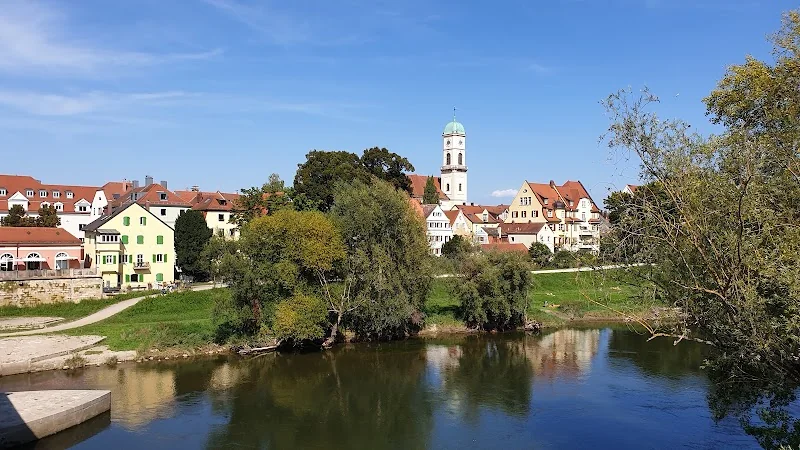
Stadtamhof, Regensburg
Stadtamhof, 93059 Regensburg, Germany
Stadtamhof | Parking & Cafés in Regensburg
Stadtamhof is more than just the northern view of the Stone Bridge: The district is small, historic, and for many residents of Regensburg, a special place with its own atmosphere. The official city website describes Stadtamhof as the smallest district of Regensburg, located on an island between the arms of the Danube, and classifies it along with the Old Town as part of the UNESCO World Heritage. Today, those who walk through the alleys experience not an anonymous outskirts, but a historic quarter with a strong identity, quiet corners, and direct paths to the Danube. This mix of history, water location, and urban proximity makes Stadtamhof particularly attractive for walks, café visits, and residential interest. ([regensburg.de](https://www.regensburg.de/regensburg-507/nah-dran/stadtteile/stadtamhof))
History of Stadtamhof and UNESCO World Heritage
The history of the district goes back a long way. The city of Regensburg refers to the first documentary mention in the year 981, when a estate named Scierstadt was transferred to the monastery of St. Emmeram. Later, the place came under the rule of the Wittelsbach family, and towards the end of the 15th century, the settlement was elevated to a town and provided with its own mayor. The fact that Stadtamhof remained an independent town for centuries also explains the pride in its own origins that is still felt today. At the same time, sources show that the connection to the neighboring city of Regensburg was never entirely straightforward: there were phases of pledging, political rivalry, and repeated new border delineations. ([regensburg.de](https://www.regensburg.de/regensburg-507/nah-dran/stadtteile/stadtamhof))
Particularly influential was the location at the Stone Bridge. According to the city walk of the city of Regensburg, the focus of the place only shifted westward with the construction of the bridge in the 12th century. The bridge made Stadtamhof the gateway to the city, but also a target for conflicts. In 1809, Stadtamhof and Steinweg were heavily damaged during the battles of the Austrian-French War; more than two-thirds of the houses went up in flames at that time. The subsequent reconstruction produced the typical low houses and shop structures that still characterize the bridge bazaar today. It is precisely these layers of destruction, reconstruction, and urban adaptation that define the historic character of the district. ([regensburg.de](https://www.regensburg.de/regensburg-507/nah-dran/stadtteilspaziergang-stadtamhof))
Since 2006, Stadtamhof, together with the Old Town and parts of Wöhrde, forms the Regensburg World Heritage Ensemble. The city and the tourism website emphasize that despite its proximity to the Old Town, the place was long an independent town with city rights and coat of arms. The historic Stadtamhof coat of arms with the three keys still reminds us of this independence today. For visitors, this is important because Stadtamhof does not only function as a pretty backdrop, but as an independent part of an urban ensemble, where churches, hospitals, courtyards, alleys, and riverside paths together create a very cohesive picture. ([tourismus.regensburg.de](https://tourismus.regensburg.de/erleben-entdecken/unesco-welterbe-sehenswuerdigkeiten/stadtamhof))
The current city structure also reflects this history. The city of Regensburg describes Stadtamhof as a comprehensively renovated and idyllic district located by the Danube, where only 1.3 percent of the Regensburg population lives. This indicates the small area and the special residential location. The tourist perspective complements the picture: here you can find picturesque corners, idyllic courtyards, and a very compact, almost village-like flair within the large UNESCO city. For inquiries about Stadtamhof Regensburg, it is therefore important to understand that it is a historic quarter with its own history, clear identity, and high quality of stay. ([regensburg.de](https://www.regensburg.de/regensburg-507/nah-dran/stadtteile/stadtamhof))
Parking in Stadtamhof: Access, Buses, and Alternatives
Those looking to park in Stadtamhof quickly realize: In such a historic and narrow district, space is limited. The city of Regensburg itself points out that there is high parking pressure in Stadtamhof. For residents, there is a special parking permit system; eligible are, among others, primary residents in Stadtamhof. For visitors, it is therefore important not to expect a large, modern parking landscape, but rather an Old Town logic of clearly regulated areas, short distances, and carefully selected alternatives. This also gives rise to the relevance of keywords such as Stadtamhof parking, Stadtamhof Regensburg parking, and parking nearby. ([regensburg.de](https://www.regensburg.de/fm/121/parkraumkonzept-strategiekonzept-parken-in-der-innenstadt.pdf?utm_source=openai))
For tour buses, the city provides a special stop: At Protzenweiher in Stadtamhof, buses can stop at the Stadtamhof bus terminal for 20 minutes for boarding and alighting. Afterwards, the free bus parking spaces at Bäckergasse are signposted; this area is located north of the Europakanal on Frankenstraße and is only a few minutes' walk away. At the same time, the city points out that the bus stop Schwanenplatz is currently unavailable due to a construction-related special situation and is expected to remain inaccessible until December 2026. These notes are particularly relevant for groups, tour operators, and city tours. ([regensburg.de](https://www.regensburg.de/leben/verkehr-u-mobilitaet/parken/parken-fuer-reisebusse))
The environment is also important for drivers. The city is working on traffic calming in the Old Town and refers to still accessible parking garages as well as the parking offer at Unteren Wöhrd as important complements. The current information explicitly describes Untere Wöhrd as a P+R offer, from which guests can reach the center in just a few minutes using bus lines and the free Old Town bus. This is particularly convenient for Stadtamhof, as the district is located directly at the northern edge of the Old Town and many visitors plan a short walk across the Stone Bridge anyway. Those who are flexible can reach Stadtamhof in a relaxed manner without search traffic. ([regensburg.de](https://www.regensburg.de/leben/verkehr-u-mobilitaet/verkehrsberuhigung-altstadt?utm_source=openai))
In practice, this means: Stadtamhof is best experienced on foot, by bike, by bus, or with a consciously chosen park-and-ride approach. This is precisely what makes the district attractive. It is not built as a large car area, but as a historic space for walks, short stays, and views of the Danube. Therefore, those specifically looking to park in Stadtamhof should think more about nearby public transport, bus stops, and clearly defined short-term parking areas rather than classic large parking lots directly in the district. ([regensburg.de](https://www.regensburg.de/leben/verkehr-u-mobilitaet/parken/parken-fuer-reisebusse))
Cafés, Restaurants, and Breakfast in Stadtamhof
The gastronomy is one of the strongest reasons to visit Stadtamhof. Regensburg Tourism generally describes the city as a place with one of the highest densities of gastronomy in Germany and highlights the coexistence of traditional inns, modern restaurants, and international establishments. For Stadtamhof itself, the tourism site mentions numerous small pubs, restaurants, and a beer garden. This creates exactly the search patterns that appear in the keywords: Stadtamhof café, Stadtamhof restaurant, Stadtamhof food, and Stadtamhof breakfast. The answer to this is not a single establishment, but a dense, historic gastronomic environment. ([tourismus.regensburg.de](https://tourismus.regensburg.de/erleben-entdecken/gastronomie))
Particularly notable is the Andreasstadel. The tourism site describes it as a former salt warehouse, now a hotel, restaurant, café, art academy, and cinema. The cultural database of the city also confirms its use as a cultural communication place with restaurant, program cinemas, and studios. For visitors, this means: Those who want to eat, drink coffee, or start the day with breakfast and brunch in Stadtamhof will not find a faceless gastro block here, but a place with history and multiple functions. This mix of culture, enjoyment, and architecture makes the Andreasstadel one of the most exciting meeting points in the district. ([tourismus.regensburg.de](https://tourismus.regensburg.de/erleben-entdecken/unesco-welterbe-sehenswuerdigkeiten/stadtamhof))
Breakfast and café search queries can therefore be well categorized: Stadtamhof is not a classic shopping or restaurant center, but a small, high-quality promenade district with a few, but significant points of interest. Those looking for coffee, a light breakfast, or a start with a view of the Danube in the morning are fundamentally in the right place. Since opening hours and offers in gastronomy naturally change, specific breakfast times should always be checked on a daily basis. However, it is clear that the combination of café, restaurant, beer garden, and riverside proximity makes Stadtamhof a very harmonious place for relaxed moments of enjoyment. ([tourismus.regensburg.de](https://tourismus.regensburg.de/erleben-entdecken/unesco-welterbe-sehenswuerdigkeiten/stadtamhof))
Even those looking for Greek food or international cuisines in Stadtamhof benefit indirectly from Regensburg's culinary diversity. The city generally points to a wide range of internationally oriented establishments in the World Heritage City. However, Stadtamhof thrives more on its small, individual addresses and the special historic ambiance than on a large chain or a single dominant cuisine. For SEO and user intention, this means: The sought-after cuisine may be available in the area, but the real charm of Stadtamhof lies in the local, compact, and atmospheric gastro experience. ([tourismus.regensburg.de](https://tourismus.regensburg.de/erleben-entdecken/gastronomie))
Sights in Stadtamhof: St. Mang, St. Katharina, and Andreasstadel
Among the most important sights are the Rococo church and monastery complex of St. Mang as well as the hospital church of St. Katharina. Regensburg Tourism explicitly highlights both and recommends visitors to walk through the alleys and enjoy the special flair. The combination of sacred architecture, narrow paths, and direct contact with the Danube gives Stadtamhof a high density of impressions in a small space. Those who are only briefly in Regensburg can experience a lot of city history, culture, and riverside atmosphere here in just a few minutes. ([tourismus.regensburg.de](https://tourismus.regensburg.de/erleben-entdecken/unesco-welterbe-sehenswuerdigkeiten/stadtamhof))
The so-called hospital is also of particular importance. The tourism site describes it as a medieval building complex of European significance that has existed since 1226. The city walk of Regensburg further clarifies that the hospital grounds were originally a Regensburg enclave on Stadtamhof soil and that the hospital church was already built around 1230. These historical connections explain why Stadtamhof not only looks beautiful but is also a place with a very dense building and social history. For culture-interested guests, this is one of the most important anchor points of the district. ([tourismus.regensburg.de](https://tourismus.regensburg.de/erleben-entdecken/unesco-welterbe-sehenswuerdigkeiten/stadtamhof))
The Andreasstadel is also one of the defining places. According to tourism and cultural database, it was originally a salt warehouse and transshipment point, and today it is a cultural and enjoyment location with a hotel, restaurant, café, art academy, cinema, and studios. This repurposing is exemplary for Stadtamhof: historical substance is not only preserved but integrated into a lively everyday and cultural life. This creates an offer that is attractive for both day visitors and residents of Regensburg. This place is particularly relevant for search queries related to café, restaurant, or food in Stadtamhof. ([regensburg.de](https://www.regensburg.de/kultur/kulturdatenbank/eintrag/116571?utm_source=openai))
At the end of the island lies the Grieser Spitz, which according to Regensburg Tourism is particularly popular with young people. There, concerts or knight spectacles take place in the summer, and even the walk along the Danube riverbank is recommended as a stroll. Together with the small courtyards, the view of the Old Town, and the riverside paths, this area forms an ideal conclusion for a walk. Therefore, those visiting Stadtamhof should not only see the main street but perceive the district as a cohesive experiential space between water, culture, and historic architecture. ([tourismus.regensburg.de](https://tourismus.regensburg.de/erleben-entdecken/unesco-welterbe-sehenswuerdigkeiten/stadtamhof))
Living in Stadtamhof: Small district with high demand
The inquiries about buying an apartment and buying a house in Stadtamhof are easily explained, as the district is small, renovated, and sought after. The city of Regensburg describes it as idyllically located by the Danube and as a popular residential area, especially for young and well-earning people. Moreover, only 1.3 percent of the Regensburg population lives here. This shows how limited the housing supply is and why Stadtamhof is often viewed with particular attention in the real estate context. Those who want to live here are not just looking for an address, but a rare location with its own character. ([regensburg.de](https://www.regensburg.de/regensburg-507/nah-dran/stadtteile/stadtamhof))
For everyday life, the mix of tranquility and proximity to the city center is crucial. Stadtamhof is located directly by the water and simultaneously right before the access to the Old Town. This location is attractive for many people because it offers short distances, a historic environment, and a strong identity. At the same time, the district brings typical Old Town side effects: limited parking space, visitor influx on nice days, and high pressure on street areas. This is precisely why resident parking permits, regulated parking spaces, and good planning are so important. This also shows how closely quality of life and mobility are connected here. ([regensburg.de](https://www.regensburg.de/buergerservice/digitale-verwaltung-und-online-service/online-services-der-stadt-regensburg/15175/bewohnerparkausweis.html?utm_source=openai))
The city of Regensburg also emphasizes the social and demographic uniqueness of the district. In Stadtamhof, the proportion of young adults is high; according to the city website, the majority of the 2,413 people living there are between 30 and 40 years old. This fits with a quarter that is compact, urban, and yet not overcrowded. For those interested in housing, this is a strong signal: Stadtamhof is not an anonymous residential block location, but a historic, very manageable quarter with a clear social structure and high recognition value. ([regensburg.de](https://www.regensburg.de/regensburg-507/nah-dran/stadtteile/stadtamhof?utm_source=openai))
Those searching online for Stadtamhof apartment for sale or Stadtamhof house for sale should therefore understand the special market situation. The supply is naturally small, demand is high, and the location is unique. Therefore, it is worthwhile to look not only at price or square meters but also at factors such as monument protection, parking, walking paths, riverside proximity, and the exact location within the district. Stadtamhof is a decision for quality of life and identity, not for arbitrariness. This is what makes the place valuable in the long term and explains the high visibility in search behavior. ([regensburg.de](https://www.regensburg.de/regensburg-507/nah-dran/stadtteile/stadtamhof))
Events and Seasonal Highlights in Stadtamhof
Stadtamhof is not only a residential and excursion spot but also a stage for recurring events. The city of Regensburg describes the Stadtamhof Wine Festival as a tradition that was a fixed part of the event calendar for over 20 years and has been continued again since 2019 after a break. The backdrop of the Danube riverbank, alleys, and historic ambiance makes the district particularly suitable for wine enjoyment, culinary experiences, and live music. Those searching for Stadtamhof events or Stadtamhof programs will quickly come across formats that are closely linked to the local image. ([regensburg.de](https://www.regensburg.de/veranstaltungen/detail/598994))
The summer program also plays a role. Regensburg Tourism mentions concerts or knight spectacles at Grieser Spitz as typical summer events. In addition, there are district walks, cultural tours, and smaller festivals that utilize the historic stage rather than working against it. Stadtamhof thus appears less like an event location with a large arena and more like a vibrant urban space that offers its atmosphere as a program. This is particularly attractive for visitors who are looking for not just a ticket destination but a place with ambiance. ([tourismus.regensburg.de](https://tourismus.regensburg.de/erleben-entdecken/unesco-welterbe-sehenswuerdigkeiten/stadtamhof))
Another seasonal connection point is markets and smaller festival formats. The city of Regensburg lists the Katharinenmarkt in Stadtamhof as a municipal market, among others. Additionally, there are special cultural events such as the Christmas walking theater, which according to the event calendar leads through the picturesque alleys of Stadtamhof. Such formats show that the district functions as a backdrop and experiential space both in summer and during the Advent season. For inquiries about programs, events, and special experiences, this is a clear added value. ([regensburg.de](https://www.regensburg.de/buergerservice/dienstleistungen/15509/marktwesen-wochenmaerkte-und-maerkte-auf-staedtischen-plaetzen.html?utm_source=openai))
In summary, Stadtamhof is a place where history, gastronomy, and event culture intertwine. The district thrives on its scale: not large, not loud, but impressive. This is precisely why search intentions like parking, eating, café, breakfast, living, or events work particularly well together here. Those visiting Stadtamhof experience one of the densest and most charming sides of Regensburg - with the Danube, history, small houses, and a very own urban stage. ([tourismus.regensburg.de](https://tourismus.regensburg.de/erleben-entdecken/unesco-welterbe-sehenswuerdigkeiten/stadtamhof))
Sources:
Mehr anzeigenWeniger anzeigen
Stadtamhof | Parking & Cafés in Regensburg
Stadtamhof is more than just the northern view of the Stone Bridge: The district is small, historic, and for many residents of Regensburg, a special place with its own atmosphere. The official city website describes Stadtamhof as the smallest district of Regensburg, located on an island between the arms of the Danube, and classifies it along with the Old Town as part of the UNESCO World Heritage. Today, those who walk through the alleys experience not an anonymous outskirts, but a historic quarter with a strong identity, quiet corners, and direct paths to the Danube. This mix of history, water location, and urban proximity makes Stadtamhof particularly attractive for walks, café visits, and residential interest. ([regensburg.de](https://www.regensburg.de/regensburg-507/nah-dran/stadtteile/stadtamhof))
History of Stadtamhof and UNESCO World Heritage
The history of the district goes back a long way. The city of Regensburg refers to the first documentary mention in the year 981, when a estate named Scierstadt was transferred to the monastery of St. Emmeram. Later, the place came under the rule of the Wittelsbach family, and towards the end of the 15th century, the settlement was elevated to a town and provided with its own mayor. The fact that Stadtamhof remained an independent town for centuries also explains the pride in its own origins that is still felt today. At the same time, sources show that the connection to the neighboring city of Regensburg was never entirely straightforward: there were phases of pledging, political rivalry, and repeated new border delineations. ([regensburg.de](https://www.regensburg.de/regensburg-507/nah-dran/stadtteile/stadtamhof))
Particularly influential was the location at the Stone Bridge. According to the city walk of the city of Regensburg, the focus of the place only shifted westward with the construction of the bridge in the 12th century. The bridge made Stadtamhof the gateway to the city, but also a target for conflicts. In 1809, Stadtamhof and Steinweg were heavily damaged during the battles of the Austrian-French War; more than two-thirds of the houses went up in flames at that time. The subsequent reconstruction produced the typical low houses and shop structures that still characterize the bridge bazaar today. It is precisely these layers of destruction, reconstruction, and urban adaptation that define the historic character of the district. ([regensburg.de](https://www.regensburg.de/regensburg-507/nah-dran/stadtteilspaziergang-stadtamhof))
Since 2006, Stadtamhof, together with the Old Town and parts of Wöhrde, forms the Regensburg World Heritage Ensemble. The city and the tourism website emphasize that despite its proximity to the Old Town, the place was long an independent town with city rights and coat of arms. The historic Stadtamhof coat of arms with the three keys still reminds us of this independence today. For visitors, this is important because Stadtamhof does not only function as a pretty backdrop, but as an independent part of an urban ensemble, where churches, hospitals, courtyards, alleys, and riverside paths together create a very cohesive picture. ([tourismus.regensburg.de](https://tourismus.regensburg.de/erleben-entdecken/unesco-welterbe-sehenswuerdigkeiten/stadtamhof))
The current city structure also reflects this history. The city of Regensburg describes Stadtamhof as a comprehensively renovated and idyllic district located by the Danube, where only 1.3 percent of the Regensburg population lives. This indicates the small area and the special residential location. The tourist perspective complements the picture: here you can find picturesque corners, idyllic courtyards, and a very compact, almost village-like flair within the large UNESCO city. For inquiries about Stadtamhof Regensburg, it is therefore important to understand that it is a historic quarter with its own history, clear identity, and high quality of stay. ([regensburg.de](https://www.regensburg.de/regensburg-507/nah-dran/stadtteile/stadtamhof))
Parking in Stadtamhof: Access, Buses, and Alternatives
Those looking to park in Stadtamhof quickly realize: In such a historic and narrow district, space is limited. The city of Regensburg itself points out that there is high parking pressure in Stadtamhof. For residents, there is a special parking permit system; eligible are, among others, primary residents in Stadtamhof. For visitors, it is therefore important not to expect a large, modern parking landscape, but rather an Old Town logic of clearly regulated areas, short distances, and carefully selected alternatives. This also gives rise to the relevance of keywords such as Stadtamhof parking, Stadtamhof Regensburg parking, and parking nearby. ([regensburg.de](https://www.regensburg.de/fm/121/parkraumkonzept-strategiekonzept-parken-in-der-innenstadt.pdf?utm_source=openai))
For tour buses, the city provides a special stop: At Protzenweiher in Stadtamhof, buses can stop at the Stadtamhof bus terminal for 20 minutes for boarding and alighting. Afterwards, the free bus parking spaces at Bäckergasse are signposted; this area is located north of the Europakanal on Frankenstraße and is only a few minutes' walk away. At the same time, the city points out that the bus stop Schwanenplatz is currently unavailable due to a construction-related special situation and is expected to remain inaccessible until December 2026. These notes are particularly relevant for groups, tour operators, and city tours. ([regensburg.de](https://www.regensburg.de/leben/verkehr-u-mobilitaet/parken/parken-fuer-reisebusse))
The environment is also important for drivers. The city is working on traffic calming in the Old Town and refers to still accessible parking garages as well as the parking offer at Unteren Wöhrd as important complements. The current information explicitly describes Untere Wöhrd as a P+R offer, from which guests can reach the center in just a few minutes using bus lines and the free Old Town bus. This is particularly convenient for Stadtamhof, as the district is located directly at the northern edge of the Old Town and many visitors plan a short walk across the Stone Bridge anyway. Those who are flexible can reach Stadtamhof in a relaxed manner without search traffic. ([regensburg.de](https://www.regensburg.de/leben/verkehr-u-mobilitaet/verkehrsberuhigung-altstadt?utm_source=openai))
In practice, this means: Stadtamhof is best experienced on foot, by bike, by bus, or with a consciously chosen park-and-ride approach. This is precisely what makes the district attractive. It is not built as a large car area, but as a historic space for walks, short stays, and views of the Danube. Therefore, those specifically looking to park in Stadtamhof should think more about nearby public transport, bus stops, and clearly defined short-term parking areas rather than classic large parking lots directly in the district. ([regensburg.de](https://www.regensburg.de/leben/verkehr-u-mobilitaet/parken/parken-fuer-reisebusse))
Cafés, Restaurants, and Breakfast in Stadtamhof
The gastronomy is one of the strongest reasons to visit Stadtamhof. Regensburg Tourism generally describes the city as a place with one of the highest densities of gastronomy in Germany and highlights the coexistence of traditional inns, modern restaurants, and international establishments. For Stadtamhof itself, the tourism site mentions numerous small pubs, restaurants, and a beer garden. This creates exactly the search patterns that appear in the keywords: Stadtamhof café, Stadtamhof restaurant, Stadtamhof food, and Stadtamhof breakfast. The answer to this is not a single establishment, but a dense, historic gastronomic environment. ([tourismus.regensburg.de](https://tourismus.regensburg.de/erleben-entdecken/gastronomie))
Particularly notable is the Andreasstadel. The tourism site describes it as a former salt warehouse, now a hotel, restaurant, café, art academy, and cinema. The cultural database of the city also confirms its use as a cultural communication place with restaurant, program cinemas, and studios. For visitors, this means: Those who want to eat, drink coffee, or start the day with breakfast and brunch in Stadtamhof will not find a faceless gastro block here, but a place with history and multiple functions. This mix of culture, enjoyment, and architecture makes the Andreasstadel one of the most exciting meeting points in the district. ([tourismus.regensburg.de](https://tourismus.regensburg.de/erleben-entdecken/unesco-welterbe-sehenswuerdigkeiten/stadtamhof))
Breakfast and café search queries can therefore be well categorized: Stadtamhof is not a classic shopping or restaurant center, but a small, high-quality promenade district with a few, but significant points of interest. Those looking for coffee, a light breakfast, or a start with a view of the Danube in the morning are fundamentally in the right place. Since opening hours and offers in gastronomy naturally change, specific breakfast times should always be checked on a daily basis. However, it is clear that the combination of café, restaurant, beer garden, and riverside proximity makes Stadtamhof a very harmonious place for relaxed moments of enjoyment. ([tourismus.regensburg.de](https://tourismus.regensburg.de/erleben-entdecken/unesco-welterbe-sehenswuerdigkeiten/stadtamhof))
Even those looking for Greek food or international cuisines in Stadtamhof benefit indirectly from Regensburg's culinary diversity. The city generally points to a wide range of internationally oriented establishments in the World Heritage City. However, Stadtamhof thrives more on its small, individual addresses and the special historic ambiance than on a large chain or a single dominant cuisine. For SEO and user intention, this means: The sought-after cuisine may be available in the area, but the real charm of Stadtamhof lies in the local, compact, and atmospheric gastro experience. ([tourismus.regensburg.de](https://tourismus.regensburg.de/erleben-entdecken/gastronomie))
Sights in Stadtamhof: St. Mang, St. Katharina, and Andreasstadel
Among the most important sights are the Rococo church and monastery complex of St. Mang as well as the hospital church of St. Katharina. Regensburg Tourism explicitly highlights both and recommends visitors to walk through the alleys and enjoy the special flair. The combination of sacred architecture, narrow paths, and direct contact with the Danube gives Stadtamhof a high density of impressions in a small space. Those who are only briefly in Regensburg can experience a lot of city history, culture, and riverside atmosphere here in just a few minutes. ([tourismus.regensburg.de](https://tourismus.regensburg.de/erleben-entdecken/unesco-welterbe-sehenswuerdigkeiten/stadtamhof))
The so-called hospital is also of particular importance. The tourism site describes it as a medieval building complex of European significance that has existed since 1226. The city walk of Regensburg further clarifies that the hospital grounds were originally a Regensburg enclave on Stadtamhof soil and that the hospital church was already built around 1230. These historical connections explain why Stadtamhof not only looks beautiful but is also a place with a very dense building and social history. For culture-interested guests, this is one of the most important anchor points of the district. ([tourismus.regensburg.de](https://tourismus.regensburg.de/erleben-entdecken/unesco-welterbe-sehenswuerdigkeiten/stadtamhof))
The Andreasstadel is also one of the defining places. According to tourism and cultural database, it was originally a salt warehouse and transshipment point, and today it is a cultural and enjoyment location with a hotel, restaurant, café, art academy, cinema, and studios. This repurposing is exemplary for Stadtamhof: historical substance is not only preserved but integrated into a lively everyday and cultural life. This creates an offer that is attractive for both day visitors and residents of Regensburg. This place is particularly relevant for search queries related to café, restaurant, or food in Stadtamhof. ([regensburg.de](https://www.regensburg.de/kultur/kulturdatenbank/eintrag/116571?utm_source=openai))
At the end of the island lies the Grieser Spitz, which according to Regensburg Tourism is particularly popular with young people. There, concerts or knight spectacles take place in the summer, and even the walk along the Danube riverbank is recommended as a stroll. Together with the small courtyards, the view of the Old Town, and the riverside paths, this area forms an ideal conclusion for a walk. Therefore, those visiting Stadtamhof should not only see the main street but perceive the district as a cohesive experiential space between water, culture, and historic architecture. ([tourismus.regensburg.de](https://tourismus.regensburg.de/erleben-entdecken/unesco-welterbe-sehenswuerdigkeiten/stadtamhof))
Living in Stadtamhof: Small district with high demand
The inquiries about buying an apartment and buying a house in Stadtamhof are easily explained, as the district is small, renovated, and sought after. The city of Regensburg describes it as idyllically located by the Danube and as a popular residential area, especially for young and well-earning people. Moreover, only 1.3 percent of the Regensburg population lives here. This shows how limited the housing supply is and why Stadtamhof is often viewed with particular attention in the real estate context. Those who want to live here are not just looking for an address, but a rare location with its own character. ([regensburg.de](https://www.regensburg.de/regensburg-507/nah-dran/stadtteile/stadtamhof))
For everyday life, the mix of tranquility and proximity to the city center is crucial. Stadtamhof is located directly by the water and simultaneously right before the access to the Old Town. This location is attractive for many people because it offers short distances, a historic environment, and a strong identity. At the same time, the district brings typical Old Town side effects: limited parking space, visitor influx on nice days, and high pressure on street areas. This is precisely why resident parking permits, regulated parking spaces, and good planning are so important. This also shows how closely quality of life and mobility are connected here. ([regensburg.de](https://www.regensburg.de/buergerservice/digitale-verwaltung-und-online-service/online-services-der-stadt-regensburg/15175/bewohnerparkausweis.html?utm_source=openai))
The city of Regensburg also emphasizes the social and demographic uniqueness of the district. In Stadtamhof, the proportion of young adults is high; according to the city website, the majority of the 2,413 people living there are between 30 and 40 years old. This fits with a quarter that is compact, urban, and yet not overcrowded. For those interested in housing, this is a strong signal: Stadtamhof is not an anonymous residential block location, but a historic, very manageable quarter with a clear social structure and high recognition value. ([regensburg.de](https://www.regensburg.de/regensburg-507/nah-dran/stadtteile/stadtamhof?utm_source=openai))
Those searching online for Stadtamhof apartment for sale or Stadtamhof house for sale should therefore understand the special market situation. The supply is naturally small, demand is high, and the location is unique. Therefore, it is worthwhile to look not only at price or square meters but also at factors such as monument protection, parking, walking paths, riverside proximity, and the exact location within the district. Stadtamhof is a decision for quality of life and identity, not for arbitrariness. This is what makes the place valuable in the long term and explains the high visibility in search behavior. ([regensburg.de](https://www.regensburg.de/regensburg-507/nah-dran/stadtteile/stadtamhof))
Events and Seasonal Highlights in Stadtamhof
Stadtamhof is not only a residential and excursion spot but also a stage for recurring events. The city of Regensburg describes the Stadtamhof Wine Festival as a tradition that was a fixed part of the event calendar for over 20 years and has been continued again since 2019 after a break. The backdrop of the Danube riverbank, alleys, and historic ambiance makes the district particularly suitable for wine enjoyment, culinary experiences, and live music. Those searching for Stadtamhof events or Stadtamhof programs will quickly come across formats that are closely linked to the local image. ([regensburg.de](https://www.regensburg.de/veranstaltungen/detail/598994))
The summer program also plays a role. Regensburg Tourism mentions concerts or knight spectacles at Grieser Spitz as typical summer events. In addition, there are district walks, cultural tours, and smaller festivals that utilize the historic stage rather than working against it. Stadtamhof thus appears less like an event location with a large arena and more like a vibrant urban space that offers its atmosphere as a program. This is particularly attractive for visitors who are looking for not just a ticket destination but a place with ambiance. ([tourismus.regensburg.de](https://tourismus.regensburg.de/erleben-entdecken/unesco-welterbe-sehenswuerdigkeiten/stadtamhof))
Another seasonal connection point is markets and smaller festival formats. The city of Regensburg lists the Katharinenmarkt in Stadtamhof as a municipal market, among others. Additionally, there are special cultural events such as the Christmas walking theater, which according to the event calendar leads through the picturesque alleys of Stadtamhof. Such formats show that the district functions as a backdrop and experiential space both in summer and during the Advent season. For inquiries about programs, events, and special experiences, this is a clear added value. ([regensburg.de](https://www.regensburg.de/buergerservice/dienstleistungen/15509/marktwesen-wochenmaerkte-und-maerkte-auf-staedtischen-plaetzen.html?utm_source=openai))
In summary, Stadtamhof is a place where history, gastronomy, and event culture intertwine. The district thrives on its scale: not large, not loud, but impressive. This is precisely why search intentions like parking, eating, café, breakfast, living, or events work particularly well together here. Those visiting Stadtamhof experience one of the densest and most charming sides of Regensburg - with the Danube, history, small houses, and a very own urban stage. ([tourismus.regensburg.de](https://tourismus.regensburg.de/erleben-entdecken/unesco-welterbe-sehenswuerdigkeiten/stadtamhof))
Sources:
Stadtamhof | Parking & Cafés in Regensburg
Stadtamhof is more than just the northern view of the Stone Bridge: The district is small, historic, and for many residents of Regensburg, a special place with its own atmosphere. The official city website describes Stadtamhof as the smallest district of Regensburg, located on an island between the arms of the Danube, and classifies it along with the Old Town as part of the UNESCO World Heritage. Today, those who walk through the alleys experience not an anonymous outskirts, but a historic quarter with a strong identity, quiet corners, and direct paths to the Danube. This mix of history, water location, and urban proximity makes Stadtamhof particularly attractive for walks, café visits, and residential interest. ([regensburg.de](https://www.regensburg.de/regensburg-507/nah-dran/stadtteile/stadtamhof))
History of Stadtamhof and UNESCO World Heritage
The history of the district goes back a long way. The city of Regensburg refers to the first documentary mention in the year 981, when a estate named Scierstadt was transferred to the monastery of St. Emmeram. Later, the place came under the rule of the Wittelsbach family, and towards the end of the 15th century, the settlement was elevated to a town and provided with its own mayor. The fact that Stadtamhof remained an independent town for centuries also explains the pride in its own origins that is still felt today. At the same time, sources show that the connection to the neighboring city of Regensburg was never entirely straightforward: there were phases of pledging, political rivalry, and repeated new border delineations. ([regensburg.de](https://www.regensburg.de/regensburg-507/nah-dran/stadtteile/stadtamhof))
Particularly influential was the location at the Stone Bridge. According to the city walk of the city of Regensburg, the focus of the place only shifted westward with the construction of the bridge in the 12th century. The bridge made Stadtamhof the gateway to the city, but also a target for conflicts. In 1809, Stadtamhof and Steinweg were heavily damaged during the battles of the Austrian-French War; more than two-thirds of the houses went up in flames at that time. The subsequent reconstruction produced the typical low houses and shop structures that still characterize the bridge bazaar today. It is precisely these layers of destruction, reconstruction, and urban adaptation that define the historic character of the district. ([regensburg.de](https://www.regensburg.de/regensburg-507/nah-dran/stadtteilspaziergang-stadtamhof))
Since 2006, Stadtamhof, together with the Old Town and parts of Wöhrde, forms the Regensburg World Heritage Ensemble. The city and the tourism website emphasize that despite its proximity to the Old Town, the place was long an independent town with city rights and coat of arms. The historic Stadtamhof coat of arms with the three keys still reminds us of this independence today. For visitors, this is important because Stadtamhof does not only function as a pretty backdrop, but as an independent part of an urban ensemble, where churches, hospitals, courtyards, alleys, and riverside paths together create a very cohesive picture. ([tourismus.regensburg.de](https://tourismus.regensburg.de/erleben-entdecken/unesco-welterbe-sehenswuerdigkeiten/stadtamhof))
The current city structure also reflects this history. The city of Regensburg describes Stadtamhof as a comprehensively renovated and idyllic district located by the Danube, where only 1.3 percent of the Regensburg population lives. This indicates the small area and the special residential location. The tourist perspective complements the picture: here you can find picturesque corners, idyllic courtyards, and a very compact, almost village-like flair within the large UNESCO city. For inquiries about Stadtamhof Regensburg, it is therefore important to understand that it is a historic quarter with its own history, clear identity, and high quality of stay. ([regensburg.de](https://www.regensburg.de/regensburg-507/nah-dran/stadtteile/stadtamhof))
Parking in Stadtamhof: Access, Buses, and Alternatives
Those looking to park in Stadtamhof quickly realize: In such a historic and narrow district, space is limited. The city of Regensburg itself points out that there is high parking pressure in Stadtamhof. For residents, there is a special parking permit system; eligible are, among others, primary residents in Stadtamhof. For visitors, it is therefore important not to expect a large, modern parking landscape, but rather an Old Town logic of clearly regulated areas, short distances, and carefully selected alternatives. This also gives rise to the relevance of keywords such as Stadtamhof parking, Stadtamhof Regensburg parking, and parking nearby. ([regensburg.de](https://www.regensburg.de/fm/121/parkraumkonzept-strategiekonzept-parken-in-der-innenstadt.pdf?utm_source=openai))
For tour buses, the city provides a special stop: At Protzenweiher in Stadtamhof, buses can stop at the Stadtamhof bus terminal for 20 minutes for boarding and alighting. Afterwards, the free bus parking spaces at Bäckergasse are signposted; this area is located north of the Europakanal on Frankenstraße and is only a few minutes' walk away. At the same time, the city points out that the bus stop Schwanenplatz is currently unavailable due to a construction-related special situation and is expected to remain inaccessible until December 2026. These notes are particularly relevant for groups, tour operators, and city tours. ([regensburg.de](https://www.regensburg.de/leben/verkehr-u-mobilitaet/parken/parken-fuer-reisebusse))
The environment is also important for drivers. The city is working on traffic calming in the Old Town and refers to still accessible parking garages as well as the parking offer at Unteren Wöhrd as important complements. The current information explicitly describes Untere Wöhrd as a P+R offer, from which guests can reach the center in just a few minutes using bus lines and the free Old Town bus. This is particularly convenient for Stadtamhof, as the district is located directly at the northern edge of the Old Town and many visitors plan a short walk across the Stone Bridge anyway. Those who are flexible can reach Stadtamhof in a relaxed manner without search traffic. ([regensburg.de](https://www.regensburg.de/leben/verkehr-u-mobilitaet/verkehrsberuhigung-altstadt?utm_source=openai))
In practice, this means: Stadtamhof is best experienced on foot, by bike, by bus, or with a consciously chosen park-and-ride approach. This is precisely what makes the district attractive. It is not built as a large car area, but as a historic space for walks, short stays, and views of the Danube. Therefore, those specifically looking to park in Stadtamhof should think more about nearby public transport, bus stops, and clearly defined short-term parking areas rather than classic large parking lots directly in the district. ([regensburg.de](https://www.regensburg.de/leben/verkehr-u-mobilitaet/parken/parken-fuer-reisebusse))
Cafés, Restaurants, and Breakfast in Stadtamhof
The gastronomy is one of the strongest reasons to visit Stadtamhof. Regensburg Tourism generally describes the city as a place with one of the highest densities of gastronomy in Germany and highlights the coexistence of traditional inns, modern restaurants, and international establishments. For Stadtamhof itself, the tourism site mentions numerous small pubs, restaurants, and a beer garden. This creates exactly the search patterns that appear in the keywords: Stadtamhof café, Stadtamhof restaurant, Stadtamhof food, and Stadtamhof breakfast. The answer to this is not a single establishment, but a dense, historic gastronomic environment. ([tourismus.regensburg.de](https://tourismus.regensburg.de/erleben-entdecken/gastronomie))
Particularly notable is the Andreasstadel. The tourism site describes it as a former salt warehouse, now a hotel, restaurant, café, art academy, and cinema. The cultural database of the city also confirms its use as a cultural communication place with restaurant, program cinemas, and studios. For visitors, this means: Those who want to eat, drink coffee, or start the day with breakfast and brunch in Stadtamhof will not find a faceless gastro block here, but a place with history and multiple functions. This mix of culture, enjoyment, and architecture makes the Andreasstadel one of the most exciting meeting points in the district. ([tourismus.regensburg.de](https://tourismus.regensburg.de/erleben-entdecken/unesco-welterbe-sehenswuerdigkeiten/stadtamhof))
Breakfast and café search queries can therefore be well categorized: Stadtamhof is not a classic shopping or restaurant center, but a small, high-quality promenade district with a few, but significant points of interest. Those looking for coffee, a light breakfast, or a start with a view of the Danube in the morning are fundamentally in the right place. Since opening hours and offers in gastronomy naturally change, specific breakfast times should always be checked on a daily basis. However, it is clear that the combination of café, restaurant, beer garden, and riverside proximity makes Stadtamhof a very harmonious place for relaxed moments of enjoyment. ([tourismus.regensburg.de](https://tourismus.regensburg.de/erleben-entdecken/unesco-welterbe-sehenswuerdigkeiten/stadtamhof))
Even those looking for Greek food or international cuisines in Stadtamhof benefit indirectly from Regensburg's culinary diversity. The city generally points to a wide range of internationally oriented establishments in the World Heritage City. However, Stadtamhof thrives more on its small, individual addresses and the special historic ambiance than on a large chain or a single dominant cuisine. For SEO and user intention, this means: The sought-after cuisine may be available in the area, but the real charm of Stadtamhof lies in the local, compact, and atmospheric gastro experience. ([tourismus.regensburg.de](https://tourismus.regensburg.de/erleben-entdecken/gastronomie))
Sights in Stadtamhof: St. Mang, St. Katharina, and Andreasstadel
Among the most important sights are the Rococo church and monastery complex of St. Mang as well as the hospital church of St. Katharina. Regensburg Tourism explicitly highlights both and recommends visitors to walk through the alleys and enjoy the special flair. The combination of sacred architecture, narrow paths, and direct contact with the Danube gives Stadtamhof a high density of impressions in a small space. Those who are only briefly in Regensburg can experience a lot of city history, culture, and riverside atmosphere here in just a few minutes. ([tourismus.regensburg.de](https://tourismus.regensburg.de/erleben-entdecken/unesco-welterbe-sehenswuerdigkeiten/stadtamhof))
The so-called hospital is also of particular importance. The tourism site describes it as a medieval building complex of European significance that has existed since 1226. The city walk of Regensburg further clarifies that the hospital grounds were originally a Regensburg enclave on Stadtamhof soil and that the hospital church was already built around 1230. These historical connections explain why Stadtamhof not only looks beautiful but is also a place with a very dense building and social history. For culture-interested guests, this is one of the most important anchor points of the district. ([tourismus.regensburg.de](https://tourismus.regensburg.de/erleben-entdecken/unesco-welterbe-sehenswuerdigkeiten/stadtamhof))
The Andreasstadel is also one of the defining places. According to tourism and cultural database, it was originally a salt warehouse and transshipment point, and today it is a cultural and enjoyment location with a hotel, restaurant, café, art academy, cinema, and studios. This repurposing is exemplary for Stadtamhof: historical substance is not only preserved but integrated into a lively everyday and cultural life. This creates an offer that is attractive for both day visitors and residents of Regensburg. This place is particularly relevant for search queries related to café, restaurant, or food in Stadtamhof. ([regensburg.de](https://www.regensburg.de/kultur/kulturdatenbank/eintrag/116571?utm_source=openai))
At the end of the island lies the Grieser Spitz, which according to Regensburg Tourism is particularly popular with young people. There, concerts or knight spectacles take place in the summer, and even the walk along the Danube riverbank is recommended as a stroll. Together with the small courtyards, the view of the Old Town, and the riverside paths, this area forms an ideal conclusion for a walk. Therefore, those visiting Stadtamhof should not only see the main street but perceive the district as a cohesive experiential space between water, culture, and historic architecture. ([tourismus.regensburg.de](https://tourismus.regensburg.de/erleben-entdecken/unesco-welterbe-sehenswuerdigkeiten/stadtamhof))
Living in Stadtamhof: Small district with high demand
The inquiries about buying an apartment and buying a house in Stadtamhof are easily explained, as the district is small, renovated, and sought after. The city of Regensburg describes it as idyllically located by the Danube and as a popular residential area, especially for young and well-earning people. Moreover, only 1.3 percent of the Regensburg population lives here. This shows how limited the housing supply is and why Stadtamhof is often viewed with particular attention in the real estate context. Those who want to live here are not just looking for an address, but a rare location with its own character. ([regensburg.de](https://www.regensburg.de/regensburg-507/nah-dran/stadtteile/stadtamhof))
For everyday life, the mix of tranquility and proximity to the city center is crucial. Stadtamhof is located directly by the water and simultaneously right before the access to the Old Town. This location is attractive for many people because it offers short distances, a historic environment, and a strong identity. At the same time, the district brings typical Old Town side effects: limited parking space, visitor influx on nice days, and high pressure on street areas. This is precisely why resident parking permits, regulated parking spaces, and good planning are so important. This also shows how closely quality of life and mobility are connected here. ([regensburg.de](https://www.regensburg.de/buergerservice/digitale-verwaltung-und-online-service/online-services-der-stadt-regensburg/15175/bewohnerparkausweis.html?utm_source=openai))
The city of Regensburg also emphasizes the social and demographic uniqueness of the district. In Stadtamhof, the proportion of young adults is high; according to the city website, the majority of the 2,413 people living there are between 30 and 40 years old. This fits with a quarter that is compact, urban, and yet not overcrowded. For those interested in housing, this is a strong signal: Stadtamhof is not an anonymous residential block location, but a historic, very manageable quarter with a clear social structure and high recognition value. ([regensburg.de](https://www.regensburg.de/regensburg-507/nah-dran/stadtteile/stadtamhof?utm_source=openai))
Those searching online for Stadtamhof apartment for sale or Stadtamhof house for sale should therefore understand the special market situation. The supply is naturally small, demand is high, and the location is unique. Therefore, it is worthwhile to look not only at price or square meters but also at factors such as monument protection, parking, walking paths, riverside proximity, and the exact location within the district. Stadtamhof is a decision for quality of life and identity, not for arbitrariness. This is what makes the place valuable in the long term and explains the high visibility in search behavior. ([regensburg.de](https://www.regensburg.de/regensburg-507/nah-dran/stadtteile/stadtamhof))
Events and Seasonal Highlights in Stadtamhof
Stadtamhof is not only a residential and excursion spot but also a stage for recurring events. The city of Regensburg describes the Stadtamhof Wine Festival as a tradition that was a fixed part of the event calendar for over 20 years and has been continued again since 2019 after a break. The backdrop of the Danube riverbank, alleys, and historic ambiance makes the district particularly suitable for wine enjoyment, culinary experiences, and live music. Those searching for Stadtamhof events or Stadtamhof programs will quickly come across formats that are closely linked to the local image. ([regensburg.de](https://www.regensburg.de/veranstaltungen/detail/598994))
The summer program also plays a role. Regensburg Tourism mentions concerts or knight spectacles at Grieser Spitz as typical summer events. In addition, there are district walks, cultural tours, and smaller festivals that utilize the historic stage rather than working against it. Stadtamhof thus appears less like an event location with a large arena and more like a vibrant urban space that offers its atmosphere as a program. This is particularly attractive for visitors who are looking for not just a ticket destination but a place with ambiance. ([tourismus.regensburg.de](https://tourismus.regensburg.de/erleben-entdecken/unesco-welterbe-sehenswuerdigkeiten/stadtamhof))
Another seasonal connection point is markets and smaller festival formats. The city of Regensburg lists the Katharinenmarkt in Stadtamhof as a municipal market, among others. Additionally, there are special cultural events such as the Christmas walking theater, which according to the event calendar leads through the picturesque alleys of Stadtamhof. Such formats show that the district functions as a backdrop and experiential space both in summer and during the Advent season. For inquiries about programs, events, and special experiences, this is a clear added value. ([regensburg.de](https://www.regensburg.de/buergerservice/dienstleistungen/15509/marktwesen-wochenmaerkte-und-maerkte-auf-staedtischen-plaetzen.html?utm_source=openai))
In summary, Stadtamhof is a place where history, gastronomy, and event culture intertwine. The district thrives on its scale: not large, not loud, but impressive. This is precisely why search intentions like parking, eating, café, breakfast, living, or events work particularly well together here. Those visiting Stadtamhof experience one of the densest and most charming sides of Regensburg - with the Danube, history, small houses, and a very own urban stage. ([tourismus.regensburg.de](https://tourismus.regensburg.de/erleben-entdecken/unesco-welterbe-sehenswuerdigkeiten/stadtamhof))
Sources:
Frequently Asked Questions
Reviews
No reviews found