

Regensburg
Stadtgebiet Regensburg, , , , , , Kontakt, Herr Michael GreinTelefon: +49/941/507-1007Fax: +49/941/507-1009E-Mail: nachhaltigkeitswoche@regensburg.de, , , Veranstalter, NachhaltigkeitswocheHerr Michael GreinRathausplatz 1, Regensburg
Regensburg Sustainability Week | Events & Tickets
The Regensburg Sustainability Week is not a classic event location with a fixed stage and fixed seating, but a city-wide series of events that transforms Regensburg into an open forum for sustainability, exchange, and participation in June 2026. From June 18 to 28, 2026, the NaWo brings together people from science, business, politics, education, culture, and civil society. It is organized by the city of Regensburg in collaboration with the Green Offices of the university and OTH Regensburg, as well as the Regensburg Energy Agency. The guiding motto “Shift happens?!” makes it clear what it’s about: change is real, but it can be actively, constructively, and locally shaped. That’s why the concept relies on different formats, on discussion instead of distance, and on participation instead of mere observation. ([regensburg.de](https://www.regensburg.de/nachhaltigkeitswoche/?utm_source=openai))
How the Regensburg Sustainability Week Came to Be
The current Sustainability Week has a clear development history closely linked to the Regensburg university context. According to the city of Regensburg, the first city-wide Regensburg Sustainability Week emerged in 2021 from the student initiative “#URweekforfuture.” What began on campus became an event that involved the entire city and made it clear that sustainability is not just an academic topic, but a communal, social, and economic field for the future. The city describes the NaWo as a joint process in which local networks, municipal offices, and engaged actors come together to develop concrete formats for a more sustainable city. ([regensburg.de](https://www.regensburg.de/nachhaltigkeitswoche/ueber-uns/ein-blick-zurueck?utm_source=openai))
Particularly noteworthy is the growth in the first years: For the premiere in 2021, the city reports about 40 local initiatives and around 150 events and actions related to the Agenda 2030. This shows that the NaWo was not intended from the beginning as a single event, but as a platform for many voices and many perspectives. This also explains the current diversity of lectures, exhibitions, participatory formats, school offerings, culture, and business. Understanding the NaWo means understanding Regensburg as a city that not only communicates sustainability but translates it into a visible, annual program. ([regensburg.de](https://www.regensburg.de/nachhaltigkeitswoche/ueber-uns/ein-blick-zurueck?utm_source=openai))
Events and Program 2026
The NaWo 2026 is themed “Shift happens?!” and runs from June 18 to 28, 2026. The city of Regensburg emphasizes that the complete program is to be published in spring 2026, but some central highlights are already confirmed. These include the opening with the NaWo-Slam, the sustainability mile at Donaumarkt, the Fair Film Week for school classes, a business day for companies, and other events that range in content from climate and energy to social cohesion and culture and transformation. The approach is deliberately broad: The week is intended not only to inform but also to set impulses, initiate discussions, and address different target groups. ([regensburg.de](https://www.regensburg.de/nachhaltigkeitswoche/?utm_source=openai))
The previously announced speakers also underscore this claim. Among others, Harald Welzer, Carla Reemtsma, Bernd Ulrich, Ulf Buermeyer, Estella Schweizer, and ARD meteorologist Karsten Schwanke are mentioned. The topics range from transformation research and climate movement to journalism and political debate to sustainable nutrition. Additionally, formats such as the exhibition “Frictions on Landscape – Perspectives on City, Nature, and Humanity” or the business day make it clear that the NaWo connects various societal areas. It is thus not just a date in the calendar but a thematically curated space for conversations about the future of the city and the region. ([regensburg.de](https://www.regensburg.de/nachhaltigkeitswoche/keynotespeaker-innen-2026?utm_source=openai))
Tickets, Registration, and Participation
Those looking for tickets should understand the NaWo more as a bundle of many individual formats rather than a single large event with a central ticket shop. The official pages of the city primarily rely on registrations, open calls, and participation forms. For the NaWo-Slam, for example, eight people are sought to share their perspective on change in three minutes each; the contribution should relate to at least one of the 17 UN Sustainable Development Goals. This is a good example of how the NaWo organizes participation: openly, thematically clear, and with a clear reference to the Agenda 2030. ([regensburg.de](https://www.regensburg.de/nachhaltigkeitswoche/eroeffnung-der-nachhaltigkeitswoche-mit-dem-nawo-slam?utm_source=openai))
There is also a clear framework for own events. According to the participation page, own contributions are only possible between June 27 and 28, 2026, and registration is to start in spring 2026 via an online form. Associations, initiatives, schools, companies, and other groups can participate as long as their projects address at least one of the Agenda 2030 goals and make this visible in the regional context. Associations, initiatives, and exhibitors can also register for the sustainability mile. This transforms the NaWo from a closed festival into an open city network that specifically collects and makes new ideas visible. ([regensburg.de](https://www.regensburg.de/nachhaltigkeitswoche/mitmachen/eigene-veranstaltung-anmelden?utm_source=openai))
The Most Important Event Locations in Regensburg
The Sustainability Week is spatially deliberately distributed. A central kickoff location is the Degginger, where the NaWo-Slam will take place on June 18, 2026. Additionally, the state theater location is where at least one of the keynote events of the Sustainability Week 2026 is to take place, according to the official page. Other locations include Donaumarkt as the stage for the sustainability mile, the Municipal Gallery in the Empty Bag with the exhibition “Frictions on Landscape,” and the Energy Education Center Um:welt, which will be used for the Fair Film Week. This mix creates an urban image characterized by culture, education, dialogue, and public presence. ([regensburg.de](https://www.regensburg.de/nachhaltigkeitswoche/eroeffnung-der-nachhaltigkeitswoche-mit-dem-nawo-slam?utm_source=openai))
This distribution is precisely what characterizes the NaWo. There is no single hall that bundles everything, but many places that each bring their own strengths: the Degginger for an approachable kickoff, the state theater for strong public impulses, the Donaumarkt for openness and visibility, the Empty Bag for cultural and artistic perspectives, and Um:welt for education and school formats. The city also explicitly describes the NaWo as an annual event that brings together experts from business, science, politics, and civil society. This means in practice: Those who visit the Sustainability Week move through different urban spaces and experience Regensburg in a thematically condensed but still very open format. ([regensburg.de](https://www.regensburg.de/nachhaltigkeitswoche/ueber-uns?utm_source=openai))
Sustainability Mile at Donaumarkt
A centerpiece of the NaWo is the sustainability mile at Donaumarkt. The city of Regensburg describes it as a place with a varied program around sustainability, where organic and regional specialties, refreshing drinks, street food stalls, information booths, participatory actions, and a music program come together. The mix of enjoyment and information is particularly important: The sustainability mile should not only explain sustainability but also make it tangible. Family-friendly offerings additionally ensure that the event is attractive to different age groups. The NaMei 2026 is planned from June 19 to 21. ([regensburg.de](https://www.regensburg.de/nachhaltigkeitswoche/nachhaltigkeit-erleben-die-nachhaltigkeitsmeile-am-donaumarkt?utm_source=openai))
Organizationally, the sustainability mile is also a good example of the working method of the NaWo. The city of Regensburg organizes it together with the Organic Donaumarkt, and associations, initiatives, and exhibitors can directly register for participation. Thus, the NaMei is not just a consumable public event but a participatory space for the city society. This point is particularly relevant for SEO because many users search not only for “Donaumarkt” or “program” but also for “participation,” “exhibitors,” or “events.” In content, the sustainability mile shows how Regensburg translates the idea of the Agenda 2030 into a visible, communicative, and accessible form. Those who pass by do not encounter an abstract message but concrete people, products, ideas, and projects. ([regensburg.de](https://www.regensburg.de/nachhaltigkeitswoche/ueber-uns?utm_source=openai))
Access and Parking in Regensburg City Center
Since the Sustainability Week is distributed across several locations in the city center, getting there plays an important role. The city of Regensburg points out a parking space concept for the city center with sufficient parking availability, parking garages, and good accessibility for residents, customers, and visitors. Additionally, there are official pages on parking in Regensburg, Park+Ride, and specific options for travel buses. Therefore, those who want to attend an event of the NaWo generally have several options: public transport, parking garages, P+R, or for larger groups, bus stops and bus parking spaces. This is particularly sensible for the city center because many of the announced program points are centrally located and reachable on foot or with short distances. ([regensburg.de](https://www.regensburg.de/rathaus/aemteruebersicht/planungs-u-baureferat/stadtplanungsamt/informationen-verkehrsplanung/parkraumkonzept-innenstadt?utm_source=openai))
For visitor groups, it is also important that the city points out current restrictions at the bus stops: The stop Schwanenplatz is currently unavailable due to a construction-related special situation and is expected to remain inaccessible until December 2026. At the same time, reference is made to the stop Stadtamhof as well as designated bus parking spaces. Therefore, those driving to the Sustainability Week should always check the respective event location and the current traffic situation. Especially since the NaWo is not a single location but encompasses many places, flexible travel planning is advisable. For city center events, the rule is: The earlier one plans the route, the more relaxed the visit will be. ([regensburg.de](https://www.regensburg.de/leben/verkehr-u-mobilitaet/parken/parken-fuer-reisebusse?utm_source=openai))
Sources:
Mehr anzeigenWeniger anzeigen
Regensburg Sustainability Week | Events & Tickets
The Regensburg Sustainability Week is not a classic event location with a fixed stage and fixed seating, but a city-wide series of events that transforms Regensburg into an open forum for sustainability, exchange, and participation in June 2026. From June 18 to 28, 2026, the NaWo brings together people from science, business, politics, education, culture, and civil society. It is organized by the city of Regensburg in collaboration with the Green Offices of the university and OTH Regensburg, as well as the Regensburg Energy Agency. The guiding motto “Shift happens?!” makes it clear what it’s about: change is real, but it can be actively, constructively, and locally shaped. That’s why the concept relies on different formats, on discussion instead of distance, and on participation instead of mere observation. ([regensburg.de](https://www.regensburg.de/nachhaltigkeitswoche/?utm_source=openai))
How the Regensburg Sustainability Week Came to Be
The current Sustainability Week has a clear development history closely linked to the Regensburg university context. According to the city of Regensburg, the first city-wide Regensburg Sustainability Week emerged in 2021 from the student initiative “#URweekforfuture.” What began on campus became an event that involved the entire city and made it clear that sustainability is not just an academic topic, but a communal, social, and economic field for the future. The city describes the NaWo as a joint process in which local networks, municipal offices, and engaged actors come together to develop concrete formats for a more sustainable city. ([regensburg.de](https://www.regensburg.de/nachhaltigkeitswoche/ueber-uns/ein-blick-zurueck?utm_source=openai))
Particularly noteworthy is the growth in the first years: For the premiere in 2021, the city reports about 40 local initiatives and around 150 events and actions related to the Agenda 2030. This shows that the NaWo was not intended from the beginning as a single event, but as a platform for many voices and many perspectives. This also explains the current diversity of lectures, exhibitions, participatory formats, school offerings, culture, and business. Understanding the NaWo means understanding Regensburg as a city that not only communicates sustainability but translates it into a visible, annual program. ([regensburg.de](https://www.regensburg.de/nachhaltigkeitswoche/ueber-uns/ein-blick-zurueck?utm_source=openai))
Events and Program 2026
The NaWo 2026 is themed “Shift happens?!” and runs from June 18 to 28, 2026. The city of Regensburg emphasizes that the complete program is to be published in spring 2026, but some central highlights are already confirmed. These include the opening with the NaWo-Slam, the sustainability mile at Donaumarkt, the Fair Film Week for school classes, a business day for companies, and other events that range in content from climate and energy to social cohesion and culture and transformation. The approach is deliberately broad: The week is intended not only to inform but also to set impulses, initiate discussions, and address different target groups. ([regensburg.de](https://www.regensburg.de/nachhaltigkeitswoche/?utm_source=openai))
The previously announced speakers also underscore this claim. Among others, Harald Welzer, Carla Reemtsma, Bernd Ulrich, Ulf Buermeyer, Estella Schweizer, and ARD meteorologist Karsten Schwanke are mentioned. The topics range from transformation research and climate movement to journalism and political debate to sustainable nutrition. Additionally, formats such as the exhibition “Frictions on Landscape – Perspectives on City, Nature, and Humanity” or the business day make it clear that the NaWo connects various societal areas. It is thus not just a date in the calendar but a thematically curated space for conversations about the future of the city and the region. ([regensburg.de](https://www.regensburg.de/nachhaltigkeitswoche/keynotespeaker-innen-2026?utm_source=openai))
Tickets, Registration, and Participation
Those looking for tickets should understand the NaWo more as a bundle of many individual formats rather than a single large event with a central ticket shop. The official pages of the city primarily rely on registrations, open calls, and participation forms. For the NaWo-Slam, for example, eight people are sought to share their perspective on change in three minutes each; the contribution should relate to at least one of the 17 UN Sustainable Development Goals. This is a good example of how the NaWo organizes participation: openly, thematically clear, and with a clear reference to the Agenda 2030. ([regensburg.de](https://www.regensburg.de/nachhaltigkeitswoche/eroeffnung-der-nachhaltigkeitswoche-mit-dem-nawo-slam?utm_source=openai))
There is also a clear framework for own events. According to the participation page, own contributions are only possible between June 27 and 28, 2026, and registration is to start in spring 2026 via an online form. Associations, initiatives, schools, companies, and other groups can participate as long as their projects address at least one of the Agenda 2030 goals and make this visible in the regional context. Associations, initiatives, and exhibitors can also register for the sustainability mile. This transforms the NaWo from a closed festival into an open city network that specifically collects and makes new ideas visible. ([regensburg.de](https://www.regensburg.de/nachhaltigkeitswoche/mitmachen/eigene-veranstaltung-anmelden?utm_source=openai))
The Most Important Event Locations in Regensburg
The Sustainability Week is spatially deliberately distributed. A central kickoff location is the Degginger, where the NaWo-Slam will take place on June 18, 2026. Additionally, the state theater location is where at least one of the keynote events of the Sustainability Week 2026 is to take place, according to the official page. Other locations include Donaumarkt as the stage for the sustainability mile, the Municipal Gallery in the Empty Bag with the exhibition “Frictions on Landscape,” and the Energy Education Center Um:welt, which will be used for the Fair Film Week. This mix creates an urban image characterized by culture, education, dialogue, and public presence. ([regensburg.de](https://www.regensburg.de/nachhaltigkeitswoche/eroeffnung-der-nachhaltigkeitswoche-mit-dem-nawo-slam?utm_source=openai))
This distribution is precisely what characterizes the NaWo. There is no single hall that bundles everything, but many places that each bring their own strengths: the Degginger for an approachable kickoff, the state theater for strong public impulses, the Donaumarkt for openness and visibility, the Empty Bag for cultural and artistic perspectives, and Um:welt for education and school formats. The city also explicitly describes the NaWo as an annual event that brings together experts from business, science, politics, and civil society. This means in practice: Those who visit the Sustainability Week move through different urban spaces and experience Regensburg in a thematically condensed but still very open format. ([regensburg.de](https://www.regensburg.de/nachhaltigkeitswoche/ueber-uns?utm_source=openai))
Sustainability Mile at Donaumarkt
A centerpiece of the NaWo is the sustainability mile at Donaumarkt. The city of Regensburg describes it as a place with a varied program around sustainability, where organic and regional specialties, refreshing drinks, street food stalls, information booths, participatory actions, and a music program come together. The mix of enjoyment and information is particularly important: The sustainability mile should not only explain sustainability but also make it tangible. Family-friendly offerings additionally ensure that the event is attractive to different age groups. The NaMei 2026 is planned from June 19 to 21. ([regensburg.de](https://www.regensburg.de/nachhaltigkeitswoche/nachhaltigkeit-erleben-die-nachhaltigkeitsmeile-am-donaumarkt?utm_source=openai))
Organizationally, the sustainability mile is also a good example of the working method of the NaWo. The city of Regensburg organizes it together with the Organic Donaumarkt, and associations, initiatives, and exhibitors can directly register for participation. Thus, the NaMei is not just a consumable public event but a participatory space for the city society. This point is particularly relevant for SEO because many users search not only for “Donaumarkt” or “program” but also for “participation,” “exhibitors,” or “events.” In content, the sustainability mile shows how Regensburg translates the idea of the Agenda 2030 into a visible, communicative, and accessible form. Those who pass by do not encounter an abstract message but concrete people, products, ideas, and projects. ([regensburg.de](https://www.regensburg.de/nachhaltigkeitswoche/ueber-uns?utm_source=openai))
Access and Parking in Regensburg City Center
Since the Sustainability Week is distributed across several locations in the city center, getting there plays an important role. The city of Regensburg points out a parking space concept for the city center with sufficient parking availability, parking garages, and good accessibility for residents, customers, and visitors. Additionally, there are official pages on parking in Regensburg, Park+Ride, and specific options for travel buses. Therefore, those who want to attend an event of the NaWo generally have several options: public transport, parking garages, P+R, or for larger groups, bus stops and bus parking spaces. This is particularly sensible for the city center because many of the announced program points are centrally located and reachable on foot or with short distances. ([regensburg.de](https://www.regensburg.de/rathaus/aemteruebersicht/planungs-u-baureferat/stadtplanungsamt/informationen-verkehrsplanung/parkraumkonzept-innenstadt?utm_source=openai))
For visitor groups, it is also important that the city points out current restrictions at the bus stops: The stop Schwanenplatz is currently unavailable due to a construction-related special situation and is expected to remain inaccessible until December 2026. At the same time, reference is made to the stop Stadtamhof as well as designated bus parking spaces. Therefore, those driving to the Sustainability Week should always check the respective event location and the current traffic situation. Especially since the NaWo is not a single location but encompasses many places, flexible travel planning is advisable. For city center events, the rule is: The earlier one plans the route, the more relaxed the visit will be. ([regensburg.de](https://www.regensburg.de/leben/verkehr-u-mobilitaet/parken/parken-fuer-reisebusse?utm_source=openai))
Sources:
Regensburg Sustainability Week | Events & Tickets
The Regensburg Sustainability Week is not a classic event location with a fixed stage and fixed seating, but a city-wide series of events that transforms Regensburg into an open forum for sustainability, exchange, and participation in June 2026. From June 18 to 28, 2026, the NaWo brings together people from science, business, politics, education, culture, and civil society. It is organized by the city of Regensburg in collaboration with the Green Offices of the university and OTH Regensburg, as well as the Regensburg Energy Agency. The guiding motto “Shift happens?!” makes it clear what it’s about: change is real, but it can be actively, constructively, and locally shaped. That’s why the concept relies on different formats, on discussion instead of distance, and on participation instead of mere observation. ([regensburg.de](https://www.regensburg.de/nachhaltigkeitswoche/?utm_source=openai))
How the Regensburg Sustainability Week Came to Be
The current Sustainability Week has a clear development history closely linked to the Regensburg university context. According to the city of Regensburg, the first city-wide Regensburg Sustainability Week emerged in 2021 from the student initiative “#URweekforfuture.” What began on campus became an event that involved the entire city and made it clear that sustainability is not just an academic topic, but a communal, social, and economic field for the future. The city describes the NaWo as a joint process in which local networks, municipal offices, and engaged actors come together to develop concrete formats for a more sustainable city. ([regensburg.de](https://www.regensburg.de/nachhaltigkeitswoche/ueber-uns/ein-blick-zurueck?utm_source=openai))
Particularly noteworthy is the growth in the first years: For the premiere in 2021, the city reports about 40 local initiatives and around 150 events and actions related to the Agenda 2030. This shows that the NaWo was not intended from the beginning as a single event, but as a platform for many voices and many perspectives. This also explains the current diversity of lectures, exhibitions, participatory formats, school offerings, culture, and business. Understanding the NaWo means understanding Regensburg as a city that not only communicates sustainability but translates it into a visible, annual program. ([regensburg.de](https://www.regensburg.de/nachhaltigkeitswoche/ueber-uns/ein-blick-zurueck?utm_source=openai))
Events and Program 2026
The NaWo 2026 is themed “Shift happens?!” and runs from June 18 to 28, 2026. The city of Regensburg emphasizes that the complete program is to be published in spring 2026, but some central highlights are already confirmed. These include the opening with the NaWo-Slam, the sustainability mile at Donaumarkt, the Fair Film Week for school classes, a business day for companies, and other events that range in content from climate and energy to social cohesion and culture and transformation. The approach is deliberately broad: The week is intended not only to inform but also to set impulses, initiate discussions, and address different target groups. ([regensburg.de](https://www.regensburg.de/nachhaltigkeitswoche/?utm_source=openai))
The previously announced speakers also underscore this claim. Among others, Harald Welzer, Carla Reemtsma, Bernd Ulrich, Ulf Buermeyer, Estella Schweizer, and ARD meteorologist Karsten Schwanke are mentioned. The topics range from transformation research and climate movement to journalism and political debate to sustainable nutrition. Additionally, formats such as the exhibition “Frictions on Landscape – Perspectives on City, Nature, and Humanity” or the business day make it clear that the NaWo connects various societal areas. It is thus not just a date in the calendar but a thematically curated space for conversations about the future of the city and the region. ([regensburg.de](https://www.regensburg.de/nachhaltigkeitswoche/keynotespeaker-innen-2026?utm_source=openai))
Tickets, Registration, and Participation
Those looking for tickets should understand the NaWo more as a bundle of many individual formats rather than a single large event with a central ticket shop. The official pages of the city primarily rely on registrations, open calls, and participation forms. For the NaWo-Slam, for example, eight people are sought to share their perspective on change in three minutes each; the contribution should relate to at least one of the 17 UN Sustainable Development Goals. This is a good example of how the NaWo organizes participation: openly, thematically clear, and with a clear reference to the Agenda 2030. ([regensburg.de](https://www.regensburg.de/nachhaltigkeitswoche/eroeffnung-der-nachhaltigkeitswoche-mit-dem-nawo-slam?utm_source=openai))
There is also a clear framework for own events. According to the participation page, own contributions are only possible between June 27 and 28, 2026, and registration is to start in spring 2026 via an online form. Associations, initiatives, schools, companies, and other groups can participate as long as their projects address at least one of the Agenda 2030 goals and make this visible in the regional context. Associations, initiatives, and exhibitors can also register for the sustainability mile. This transforms the NaWo from a closed festival into an open city network that specifically collects and makes new ideas visible. ([regensburg.de](https://www.regensburg.de/nachhaltigkeitswoche/mitmachen/eigene-veranstaltung-anmelden?utm_source=openai))
The Most Important Event Locations in Regensburg
The Sustainability Week is spatially deliberately distributed. A central kickoff location is the Degginger, where the NaWo-Slam will take place on June 18, 2026. Additionally, the state theater location is where at least one of the keynote events of the Sustainability Week 2026 is to take place, according to the official page. Other locations include Donaumarkt as the stage for the sustainability mile, the Municipal Gallery in the Empty Bag with the exhibition “Frictions on Landscape,” and the Energy Education Center Um:welt, which will be used for the Fair Film Week. This mix creates an urban image characterized by culture, education, dialogue, and public presence. ([regensburg.de](https://www.regensburg.de/nachhaltigkeitswoche/eroeffnung-der-nachhaltigkeitswoche-mit-dem-nawo-slam?utm_source=openai))
This distribution is precisely what characterizes the NaWo. There is no single hall that bundles everything, but many places that each bring their own strengths: the Degginger for an approachable kickoff, the state theater for strong public impulses, the Donaumarkt for openness and visibility, the Empty Bag for cultural and artistic perspectives, and Um:welt for education and school formats. The city also explicitly describes the NaWo as an annual event that brings together experts from business, science, politics, and civil society. This means in practice: Those who visit the Sustainability Week move through different urban spaces and experience Regensburg in a thematically condensed but still very open format. ([regensburg.de](https://www.regensburg.de/nachhaltigkeitswoche/ueber-uns?utm_source=openai))
Sustainability Mile at Donaumarkt
A centerpiece of the NaWo is the sustainability mile at Donaumarkt. The city of Regensburg describes it as a place with a varied program around sustainability, where organic and regional specialties, refreshing drinks, street food stalls, information booths, participatory actions, and a music program come together. The mix of enjoyment and information is particularly important: The sustainability mile should not only explain sustainability but also make it tangible. Family-friendly offerings additionally ensure that the event is attractive to different age groups. The NaMei 2026 is planned from June 19 to 21. ([regensburg.de](https://www.regensburg.de/nachhaltigkeitswoche/nachhaltigkeit-erleben-die-nachhaltigkeitsmeile-am-donaumarkt?utm_source=openai))
Organizationally, the sustainability mile is also a good example of the working method of the NaWo. The city of Regensburg organizes it together with the Organic Donaumarkt, and associations, initiatives, and exhibitors can directly register for participation. Thus, the NaMei is not just a consumable public event but a participatory space for the city society. This point is particularly relevant for SEO because many users search not only for “Donaumarkt” or “program” but also for “participation,” “exhibitors,” or “events.” In content, the sustainability mile shows how Regensburg translates the idea of the Agenda 2030 into a visible, communicative, and accessible form. Those who pass by do not encounter an abstract message but concrete people, products, ideas, and projects. ([regensburg.de](https://www.regensburg.de/nachhaltigkeitswoche/ueber-uns?utm_source=openai))
Access and Parking in Regensburg City Center
Since the Sustainability Week is distributed across several locations in the city center, getting there plays an important role. The city of Regensburg points out a parking space concept for the city center with sufficient parking availability, parking garages, and good accessibility for residents, customers, and visitors. Additionally, there are official pages on parking in Regensburg, Park+Ride, and specific options for travel buses. Therefore, those who want to attend an event of the NaWo generally have several options: public transport, parking garages, P+R, or for larger groups, bus stops and bus parking spaces. This is particularly sensible for the city center because many of the announced program points are centrally located and reachable on foot or with short distances. ([regensburg.de](https://www.regensburg.de/rathaus/aemteruebersicht/planungs-u-baureferat/stadtplanungsamt/informationen-verkehrsplanung/parkraumkonzept-innenstadt?utm_source=openai))
For visitor groups, it is also important that the city points out current restrictions at the bus stops: The stop Schwanenplatz is currently unavailable due to a construction-related special situation and is expected to remain inaccessible until December 2026. At the same time, reference is made to the stop Stadtamhof as well as designated bus parking spaces. Therefore, those driving to the Sustainability Week should always check the respective event location and the current traffic situation. Especially since the NaWo is not a single location but encompasses many places, flexible travel planning is advisable. For city center events, the rule is: The earlier one plans the route, the more relaxed the visit will be. ([regensburg.de](https://www.regensburg.de/leben/verkehr-u-mobilitaet/parken/parken-fuer-reisebusse?utm_source=openai))
Sources:
Upcoming Events
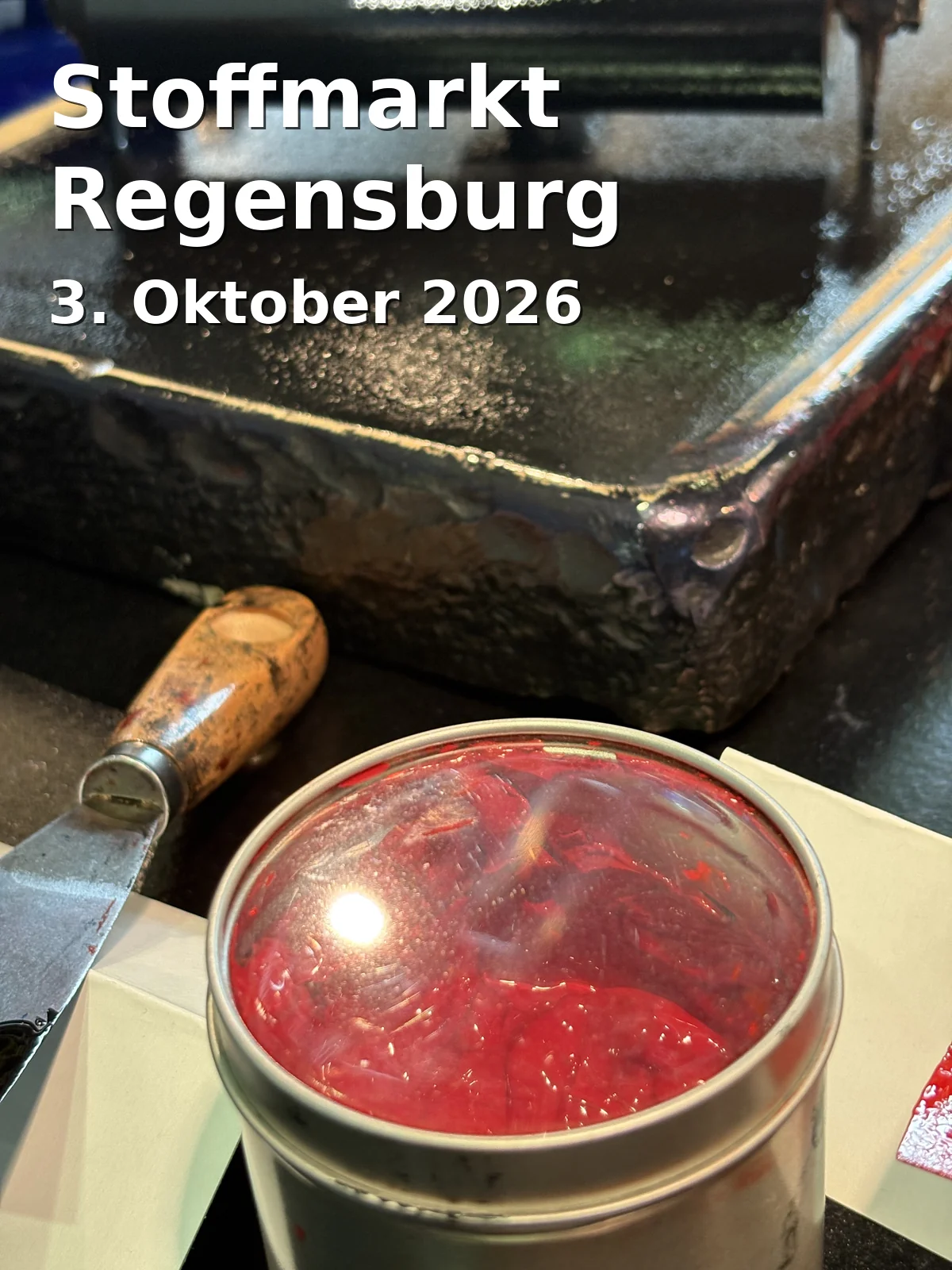
Fabric Market Regensburg
Experience the great fabric and craft market in Regensburg. Inspiration and fabrics for all creatives!
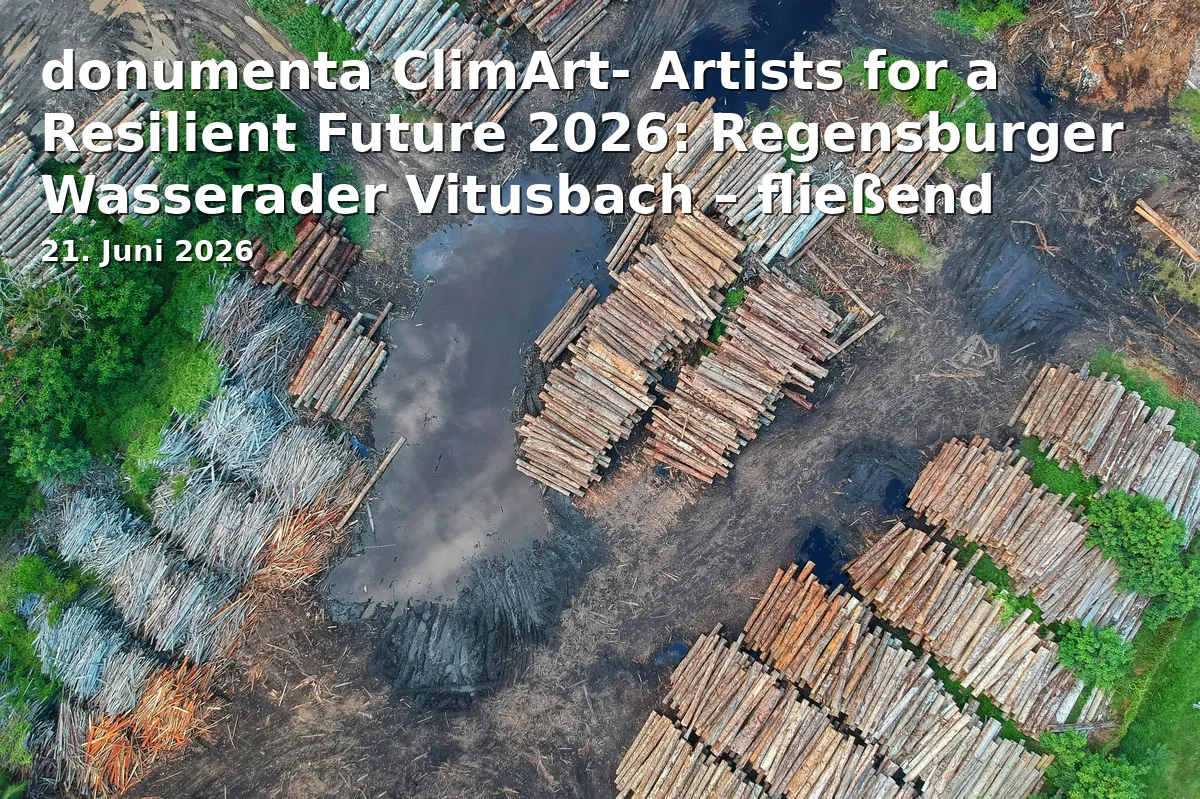
donumenta ClimArt- Artists for a Resilient Future 2026: Regensburg Watercourse Vitusbach – flowing flowed - Opening
21.06.2026 11:00 - 13:00 Uhr11:00 - 13:00 Uhr
Frequently Asked Questions
Reviews
No reviews found