
Prüfeninger Str., Regensburg
Prüfeninger Str., 93049 Regensburg, Germany
City Park Regensburg | Directions & History
The City Park Regensburg is one of those places where relaxation, city history, and culture overlap closely. Located on the western edge of the old town and covering around 9 hectares, it is large enough for quiet walks, short breaks, and family visits, making the park feel both open and multifaceted. Those who come here will find not only meadows, paths, and old trees but also traces of memory from several centuries, outdoor art, a playground, a barbecue area, and direct proximity to important cultural sites such as the East German Gallery and the Puppet Theatre. This very mix makes the City Park so special for Regensburg: it is neither a pure recreational park nor a pure cultural site, but an urban open space where nature, architecture, and history coexist naturally. The city describes it as a park close to the city center with a café, cultural offerings, and summer festivals; at the same time, it is a popular meeting point for families, walkers, art enthusiasts, and people simply looking for a piece of urban greenery. ([regensburg.de](https://www.regensburg.de/suche/Parken/6))
History of the City Park Regensburg: From the Lazarus Site to a Green Landscape of Remembrance
The history of the City Park goes back a long way and does not begin with a classic park layout, but with a place of remembrance, care, and change. According to the city of Regensburg, its origins date back to the beginning of the 13th century. At that time, a leper hospital was established on the road towards Prüfening, which also took in countless plague victims in the 17th century. The leprosy home and the associated St. Lazarus Church were destroyed during the Thirty Years' War, but the Protestant cemetery, which had already been established in 1528 outside the city gates, continued to exist until 1898. To the west of it, the Catholic Lazarus cemetery was consecrated in 1812. Even today, some gravestones overgrown with ivy and the renovated wrought-iron cemetery portal are visible witnesses of this long past. Additionally, the Jewish cemetery, which was renovated in the 1980s and is now publicly accessible, lies to the west of the park. Thus, the City Park is not only a green space but also a place where Regensburg's history is condensed in a small area. ([regensburg.de](https://www.regensburg.de/leben/parks-in-regensburg/stadtpark))
The City Park took on its current form only at the beginning of the 20th century. The city points out that it was created in the course of preparing for the Upper Palatinate District Exhibition, a kind of mini-expo that took place on the site in 1910. The city also mentions that a competition was announced for the exhibition as early as 1906, which was won by the Cottbus landscape architect Glum. The district exhibition sustainably shaped the area and gave the park that mix of representative layout and public use that characterizes it to this day. The so-called Chinese Tower, which is considered the only surviving structure from the exhibition's history, primarily reminds us of the former town hall. This connection of memory and redesign makes the City Park so interesting: it is not a static garden but a place that has emerged from several layers. Today, those who stroll between meadows, shrubs, and paths move through a space that spans from the medieval care history to the early modern period. ([regensburg.de](https://www.regensburg.de/leben/parks-in-regensburg/stadtpark))
Directions and Parking at City Park Regensburg: How to Get There Relaxed
The City Park is very well integrated into the inner-city location. The city names the address as Prüfeninger Straße or City Park, 93049 Regensburg, and indicates Taxisstraße as the stop for public transport. This is convenient because the park remains easily accessible from both the western part of the city and the city center. Those on foot can reach the park from the western old town area via short paths; those coming by bike benefit from the city-close location and the improved crossing and bike path structures along Prüfeninger Straße in recent years. The city explicitly describes the modernized sections as a gap closure for pedestrian and bike paths between Schillerstraße and City Park, including new bicycle parking options. This is a significant advantage, especially for visitors who do not want to park in the middle of the old town. Therefore, the City Park functions both as a destination for a short walk and as a starting point for a larger city stroll. The proximity to the East German Gallery, Puppet Theatre, and other facilities makes arrival particularly uncomplicated. ([regensburg.de](https://www.regensburg.de/leben/sport-u-freizeit/sportstaetten-und-freizeitanlagen/regensburger-spielplaetze/105189/stadtpark.html))
Those arriving by car should know that the city does not designate its own visitor parking space on the park side. A specific nearby parking option is the St. Hedwig parking garage at Prüfeninger Straße 25. It is open 24 hours, the parking duration is unlimited, and the rates are set at 1.00 Euro per 30 minutes and a maximum of 8.50 Euro per day. For people who combine their park visit with a cultural visit or a family outing, this is a reliable alternative. Additionally, the central location makes it advisable to approach the City Park by bus, bike, or on foot whenever possible, as this avoids traffic jams, parking searches, and unnecessary detours. Especially on days with events, guided tours, or sports offerings, this is the more relaxing solution. The good traffic accessibility is also demonstrated by the renovation of Prüfeninger Straße, where the city renewed pedestrian and bike paths and created parking options for bicycles. Thus, getting to the City Park does not become a hurdle but an uncomplicated part of the visit. ([regensburg.de](https://www.regensburg.de/leben/verkehr-u-mobilitaet/parken/parkhaus-st-hedwig))
Playground, Barbecue Area, and Leisure Activities in City Park Regensburg
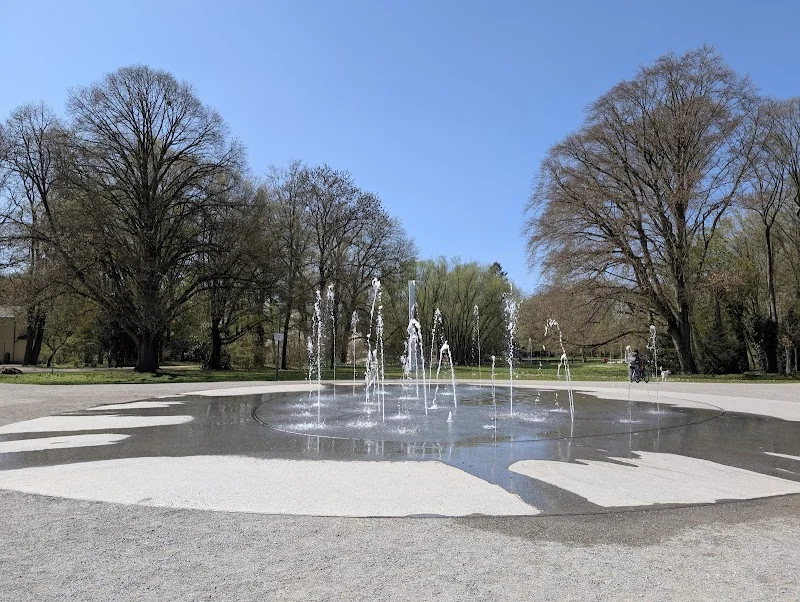
The City Park is an exceptionally family-friendly place, and this is particularly evident in the western part of the park. There, you will find a playground, a fountain, and a sledding hill. The municipal playground page also mentions table tennis and water play as features. This is ideal for families with children because a visit can be flexibly arranged: short play breaks, leisurely walks, picnics on the meadow, or simply a few quiet minutes on a bench. The park is open enough for movement and yet manageable enough for parents or companions to keep a good eye on the children. Older children and teenagers also find something to do here, as the city additionally marks the playground with equipment for older children aged 12 and up. This makes the City Park a place that appeals not only to small children but also considers several age groups. The mix of activity areas, water, shade, and paths gives the park a very practical quality: it is not just a destination for a big event but a place that can be visited repeatedly. ([regensburg.de](https://www.regensburg.de/leben/parks-in-regensburg/stadtpark))
The leisure quality also includes a designated barbecue area and slackline posts at the barbecue meadow. The city clearly names both as part of the offerings in the City Park. Additionally, there is a public toilet, which is particularly important for families, longer stays, or older visitors. These rather practical details make the park practical and popular. It is evident that the City Park is not just meant for beautiful photos but for actual use in city life. Those meeting friends, planning a drink at the café, playing with children, or simply wanting to spend an hour outdoors will find several meaningful ways to stay here. The city also points out that the park is a popular place for numerous festivals during the summer months. This makes it clear: the City Park thrives not only on its layout but also on the use by the urban community. It is a green stage for spontaneous stays, small meetings, activity offerings, and summery communal experiences. ([regensburg.de](https://www.regensburg.de/suche/Parken/6))
East German Gallery, Puppet Theatre, and Sculptures in City Park
A crucial part of the identity of the City Park is its cultural environment. Directly at the park lies the East German Gallery, which the city highlights as a cultural neighbor of the park. The museum is located in a building ensemble on the western edge of the old town and offers a total of around 2,000 square meters of exhibition space. The Art Nouveau building from 1910 was supplemented by a generous extension in the 1970s; additionally, three to four special exhibitions take place there each year. This is important for the City Park itself because many of the artistic and cultural impulses of the area originate from here. Therefore, those visiting the park do not move in an isolated green space but in an ensemble of landscape, museum, and public space. Furthermore, the East German Gallery shows additional artworks in the outdoor area and in the green spaces in front of the museum as well as in the adjacent City Park. This museum's external reference is one of the reasons why the City Park is also interesting for cultural walks. One can walk into art here without tickets and without a significant threshold, simply by walking through the park. ([regensburg.de](https://www.regensburg.de/museen/unsere-museen/weitere-museen/kunstforum-ostdeutsche-galerie?utm_source=openai))
This connection becomes particularly visible with the 12 sculptures that, according to city events, belong to the collection of the East German Gallery. A guided tour of these sculptures makes it clear how strongly art in the City Park is conceived as part of everyday experience. The works are not just accompanying objects but shape the perception of paths, meadows, and sight lines. Additionally, the Regensburg Puppet Theatre in the City Park is an important attraction. An official event announcement documents that the theatre was founded in 1980 by Evi-Maria Robl and Heinz Polkehn and moved into its own domicile in the City Park five years later. Thus, the Puppet Theatre is not just a business near the park but a grown part of the place. Families, school classes, and culture-interested adults are offered a very unique profile. The City Park thus becomes a space where museum art, performing arts, and open space mutually reinforce each other. This gives it a depth that goes beyond the classic city park. ([regensburg.de](https://www.regensburg.de/veranstaltungen/detail/592309))
Chinese Tower, Ginkgo, and Quiet Garden Images in City Park Regensburg
In addition to history and culture, the City Park also thrives on its distinctive garden images. A particularly characteristic element is the Chinese Tower in the eastern part of the park. The city emphasizes that it can be admired there while strolling through the perennial beds. These beds are not randomly laid out but grow on special karst soil. Plants such as evening primrose, sunrose, dittany, and various grasses, originally native to steppe regions or the Mediterranean, can be found there. This creates a botanically exciting contrast to the rest of the park's image. This is complemented by an old, gnarled ginkgo tree at the park entrance on Gumpelzhaimerstraße. The city refers to it as a living fossil and a botanical rarity in the urban area. Such details are what make a beautiful park a memorable place. One does not stop solely because of the area or the greenery but because of the combination of botanical uniqueness, historical form, and tranquil atmosphere. The Chinese Tower connects architecture and park history, while the ginkgo underscores the mood of a grown, almost timeless green space. ([regensburg.de](https://www.regensburg.de/leben/parks-in-regensburg/stadtpark))
The western areas of the park also contribute significantly to its character. There are shade beds, whose layout still shows traces from the 1950s, as well as the fountain at the highest point of the park. The city describes the fountain as having been created in the 1970s based on a design by the artist Poggi Pino; it is supposed to still mark the highest point of the facility today and represent the letter H. In the symbolic art alphabet, this H stands for hope. This formulation fits well with the impression that the City Park overall leaves: it is a place between transience and renewal, between memory and leisure. This is exactly why it works so well as a walking space. One can walk through various moods here in a small area, from the historical cemetery area through perennial plantings and art objects to open meadows. Those looking for a quiet but not empty urban space will find it here. The atmosphere is calm but not secluded; green but not arbitrary; historical but not museum-like frozen. This makes the City Park one of the most distinctive open spaces in Regensburg. ([regensburg.de](https://www.regensburg.de/regensburg-507/sehenswert/der-stadtpark))
Events, Tours, and Sports in the Park 2026
The City Park is not only a place for walking but also an event space with reliable repetition. The city explicitly points out that it is a popular place for numerous festivals during the summer months. Additionally, cultural tours such as Art in the Green, where visitors learn about the backgrounds of the sculptures in the park, are offered. Such formats show that the park is actively played in as a public space and does not merely serve as a backdrop. This makes the City Park interesting for people looking for urban open-air experiences, even if it is not a pure large event arena. The combination of size, location, and cultural environment makes it particularly suitable for smaller formats, tours, and summer gatherings. Those wanting to keep an eye on current dates should therefore closely follow the city's event calendars. Cultural walks, guided tours, family events, and neighborhood formats that are directly connected to the park regularly appear there. Thus, the City Park remains a place that presents itself differently depending on the season. ([regensburg.de](https://www.regensburg.de/leben/parks-in-regensburg/stadtpark))
For 2026, the free movement offering Sports in the Park is particularly relevant. The city announces the start from April 13, 2026; the program runs until mid-October and includes daily, varied offerings. Several events will take place in the City Park in front of the East German Gallery, including bike tours, head-body coordination, Qi Gong, and boules. This beautifully shows how lively the park is used as a place for movement. The offering is free, does not require prior registration, is suitable for all ages, and is explicitly aimed at spontaneous visitors. This is exactly where the strength of the City Park lies: it combines quiet quality of stay with active urban health. So, those who want to use the park not just as a green background but as a concrete place for movement, encounters, and culture will find particularly many opportunities in 2026. Additionally, the guided tours of the sculptures and performances at the Puppet Theatre make the park interesting for families and culture enthusiasts. The City Park is thus a place that provides new reasons for a visit from the start of spring to late summer. ([regensburg.de](https://www.regensburg.de/leben/sport-u-freizeit/sport-und-freizeitangebote/sport-im-park-2025))
Sources:
- City of Regensburg - Parks in Regensburg - City Park
- City of Regensburg - Regensburg Playgrounds - City Park
- City of Regensburg - Parking - St. Hedwig Parking Garage
- City of Regensburg - East German Gallery
- City of Regensburg - Art in the Green. Tour of the Sculptures in the City Park
- City of Regensburg - Sports in the Park 2026
- City of Regensburg - The Regensburg Puppet Theatre in the City Park
Mehr anzeigenWeniger anzeigen
City Park Regensburg | Directions & History
The City Park Regensburg is one of those places where relaxation, city history, and culture overlap closely. Located on the western edge of the old town and covering around 9 hectares, it is large enough for quiet walks, short breaks, and family visits, making the park feel both open and multifaceted. Those who come here will find not only meadows, paths, and old trees but also traces of memory from several centuries, outdoor art, a playground, a barbecue area, and direct proximity to important cultural sites such as the East German Gallery and the Puppet Theatre. This very mix makes the City Park so special for Regensburg: it is neither a pure recreational park nor a pure cultural site, but an urban open space where nature, architecture, and history coexist naturally. The city describes it as a park close to the city center with a café, cultural offerings, and summer festivals; at the same time, it is a popular meeting point for families, walkers, art enthusiasts, and people simply looking for a piece of urban greenery. ([regensburg.de](https://www.regensburg.de/suche/Parken/6))
History of the City Park Regensburg: From the Lazarus Site to a Green Landscape of Remembrance
The history of the City Park goes back a long way and does not begin with a classic park layout, but with a place of remembrance, care, and change. According to the city of Regensburg, its origins date back to the beginning of the 13th century. At that time, a leper hospital was established on the road towards Prüfening, which also took in countless plague victims in the 17th century. The leprosy home and the associated St. Lazarus Church were destroyed during the Thirty Years' War, but the Protestant cemetery, which had already been established in 1528 outside the city gates, continued to exist until 1898. To the west of it, the Catholic Lazarus cemetery was consecrated in 1812. Even today, some gravestones overgrown with ivy and the renovated wrought-iron cemetery portal are visible witnesses of this long past. Additionally, the Jewish cemetery, which was renovated in the 1980s and is now publicly accessible, lies to the west of the park. Thus, the City Park is not only a green space but also a place where Regensburg's history is condensed in a small area. ([regensburg.de](https://www.regensburg.de/leben/parks-in-regensburg/stadtpark))
The City Park took on its current form only at the beginning of the 20th century. The city points out that it was created in the course of preparing for the Upper Palatinate District Exhibition, a kind of mini-expo that took place on the site in 1910. The city also mentions that a competition was announced for the exhibition as early as 1906, which was won by the Cottbus landscape architect Glum. The district exhibition sustainably shaped the area and gave the park that mix of representative layout and public use that characterizes it to this day. The so-called Chinese Tower, which is considered the only surviving structure from the exhibition's history, primarily reminds us of the former town hall. This connection of memory and redesign makes the City Park so interesting: it is not a static garden but a place that has emerged from several layers. Today, those who stroll between meadows, shrubs, and paths move through a space that spans from the medieval care history to the early modern period. ([regensburg.de](https://www.regensburg.de/leben/parks-in-regensburg/stadtpark))
Directions and Parking at City Park Regensburg: How to Get There Relaxed
The City Park is very well integrated into the inner-city location. The city names the address as Prüfeninger Straße or City Park, 93049 Regensburg, and indicates Taxisstraße as the stop for public transport. This is convenient because the park remains easily accessible from both the western part of the city and the city center. Those on foot can reach the park from the western old town area via short paths; those coming by bike benefit from the city-close location and the improved crossing and bike path structures along Prüfeninger Straße in recent years. The city explicitly describes the modernized sections as a gap closure for pedestrian and bike paths between Schillerstraße and City Park, including new bicycle parking options. This is a significant advantage, especially for visitors who do not want to park in the middle of the old town. Therefore, the City Park functions both as a destination for a short walk and as a starting point for a larger city stroll. The proximity to the East German Gallery, Puppet Theatre, and other facilities makes arrival particularly uncomplicated. ([regensburg.de](https://www.regensburg.de/leben/sport-u-freizeit/sportstaetten-und-freizeitanlagen/regensburger-spielplaetze/105189/stadtpark.html))
Those arriving by car should know that the city does not designate its own visitor parking space on the park side. A specific nearby parking option is the St. Hedwig parking garage at Prüfeninger Straße 25. It is open 24 hours, the parking duration is unlimited, and the rates are set at 1.00 Euro per 30 minutes and a maximum of 8.50 Euro per day. For people who combine their park visit with a cultural visit or a family outing, this is a reliable alternative. Additionally, the central location makes it advisable to approach the City Park by bus, bike, or on foot whenever possible, as this avoids traffic jams, parking searches, and unnecessary detours. Especially on days with events, guided tours, or sports offerings, this is the more relaxing solution. The good traffic accessibility is also demonstrated by the renovation of Prüfeninger Straße, where the city renewed pedestrian and bike paths and created parking options for bicycles. Thus, getting to the City Park does not become a hurdle but an uncomplicated part of the visit. ([regensburg.de](https://www.regensburg.de/leben/verkehr-u-mobilitaet/parken/parkhaus-st-hedwig))
Playground, Barbecue Area, and Leisure Activities in City Park Regensburg
The City Park is an exceptionally family-friendly place, and this is particularly evident in the western part of the park. There, you will find a playground, a fountain, and a sledding hill. The municipal playground page also mentions table tennis and water play as features. This is ideal for families with children because a visit can be flexibly arranged: short play breaks, leisurely walks, picnics on the meadow, or simply a few quiet minutes on a bench. The park is open enough for movement and yet manageable enough for parents or companions to keep a good eye on the children. Older children and teenagers also find something to do here, as the city additionally marks the playground with equipment for older children aged 12 and up. This makes the City Park a place that appeals not only to small children but also considers several age groups. The mix of activity areas, water, shade, and paths gives the park a very practical quality: it is not just a destination for a big event but a place that can be visited repeatedly. ([regensburg.de](https://www.regensburg.de/leben/parks-in-regensburg/stadtpark))
The leisure quality also includes a designated barbecue area and slackline posts at the barbecue meadow. The city clearly names both as part of the offerings in the City Park. Additionally, there is a public toilet, which is particularly important for families, longer stays, or older visitors. These rather practical details make the park practical and popular. It is evident that the City Park is not just meant for beautiful photos but for actual use in city life. Those meeting friends, planning a drink at the café, playing with children, or simply wanting to spend an hour outdoors will find several meaningful ways to stay here. The city also points out that the park is a popular place for numerous festivals during the summer months. This makes it clear: the City Park thrives not only on its layout but also on the use by the urban community. It is a green stage for spontaneous stays, small meetings, activity offerings, and summery communal experiences. ([regensburg.de](https://www.regensburg.de/suche/Parken/6))
East German Gallery, Puppet Theatre, and Sculptures in City Park
A crucial part of the identity of the City Park is its cultural environment. Directly at the park lies the East German Gallery, which the city highlights as a cultural neighbor of the park. The museum is located in a building ensemble on the western edge of the old town and offers a total of around 2,000 square meters of exhibition space. The Art Nouveau building from 1910 was supplemented by a generous extension in the 1970s; additionally, three to four special exhibitions take place there each year. This is important for the City Park itself because many of the artistic and cultural impulses of the area originate from here. Therefore, those visiting the park do not move in an isolated green space but in an ensemble of landscape, museum, and public space. Furthermore, the East German Gallery shows additional artworks in the outdoor area and in the green spaces in front of the museum as well as in the adjacent City Park. This museum's external reference is one of the reasons why the City Park is also interesting for cultural walks. One can walk into art here without tickets and without a significant threshold, simply by walking through the park. ([regensburg.de](https://www.regensburg.de/museen/unsere-museen/weitere-museen/kunstforum-ostdeutsche-galerie?utm_source=openai))
This connection becomes particularly visible with the 12 sculptures that, according to city events, belong to the collection of the East German Gallery. A guided tour of these sculptures makes it clear how strongly art in the City Park is conceived as part of everyday experience. The works are not just accompanying objects but shape the perception of paths, meadows, and sight lines. Additionally, the Regensburg Puppet Theatre in the City Park is an important attraction. An official event announcement documents that the theatre was founded in 1980 by Evi-Maria Robl and Heinz Polkehn and moved into its own domicile in the City Park five years later. Thus, the Puppet Theatre is not just a business near the park but a grown part of the place. Families, school classes, and culture-interested adults are offered a very unique profile. The City Park thus becomes a space where museum art, performing arts, and open space mutually reinforce each other. This gives it a depth that goes beyond the classic city park. ([regensburg.de](https://www.regensburg.de/veranstaltungen/detail/592309))
Chinese Tower, Ginkgo, and Quiet Garden Images in City Park Regensburg
In addition to history and culture, the City Park also thrives on its distinctive garden images. A particularly characteristic element is the Chinese Tower in the eastern part of the park. The city emphasizes that it can be admired there while strolling through the perennial beds. These beds are not randomly laid out but grow on special karst soil. Plants such as evening primrose, sunrose, dittany, and various grasses, originally native to steppe regions or the Mediterranean, can be found there. This creates a botanically exciting contrast to the rest of the park's image. This is complemented by an old, gnarled ginkgo tree at the park entrance on Gumpelzhaimerstraße. The city refers to it as a living fossil and a botanical rarity in the urban area. Such details are what make a beautiful park a memorable place. One does not stop solely because of the area or the greenery but because of the combination of botanical uniqueness, historical form, and tranquil atmosphere. The Chinese Tower connects architecture and park history, while the ginkgo underscores the mood of a grown, almost timeless green space. ([regensburg.de](https://www.regensburg.de/leben/parks-in-regensburg/stadtpark))
The western areas of the park also contribute significantly to its character. There are shade beds, whose layout still shows traces from the 1950s, as well as the fountain at the highest point of the park. The city describes the fountain as having been created in the 1970s based on a design by the artist Poggi Pino; it is supposed to still mark the highest point of the facility today and represent the letter H. In the symbolic art alphabet, this H stands for hope. This formulation fits well with the impression that the City Park overall leaves: it is a place between transience and renewal, between memory and leisure. This is exactly why it works so well as a walking space. One can walk through various moods here in a small area, from the historical cemetery area through perennial plantings and art objects to open meadows. Those looking for a quiet but not empty urban space will find it here. The atmosphere is calm but not secluded; green but not arbitrary; historical but not museum-like frozen. This makes the City Park one of the most distinctive open spaces in Regensburg. ([regensburg.de](https://www.regensburg.de/regensburg-507/sehenswert/der-stadtpark))
Events, Tours, and Sports in the Park 2026
The City Park is not only a place for walking but also an event space with reliable repetition. The city explicitly points out that it is a popular place for numerous festivals during the summer months. Additionally, cultural tours such as Art in the Green, where visitors learn about the backgrounds of the sculptures in the park, are offered. Such formats show that the park is actively played in as a public space and does not merely serve as a backdrop. This makes the City Park interesting for people looking for urban open-air experiences, even if it is not a pure large event arena. The combination of size, location, and cultural environment makes it particularly suitable for smaller formats, tours, and summer gatherings. Those wanting to keep an eye on current dates should therefore closely follow the city's event calendars. Cultural walks, guided tours, family events, and neighborhood formats that are directly connected to the park regularly appear there. Thus, the City Park remains a place that presents itself differently depending on the season. ([regensburg.de](https://www.regensburg.de/leben/parks-in-regensburg/stadtpark))
For 2026, the free movement offering Sports in the Park is particularly relevant. The city announces the start from April 13, 2026; the program runs until mid-October and includes daily, varied offerings. Several events will take place in the City Park in front of the East German Gallery, including bike tours, head-body coordination, Qi Gong, and boules. This beautifully shows how lively the park is used as a place for movement. The offering is free, does not require prior registration, is suitable for all ages, and is explicitly aimed at spontaneous visitors. This is exactly where the strength of the City Park lies: it combines quiet quality of stay with active urban health. So, those who want to use the park not just as a green background but as a concrete place for movement, encounters, and culture will find particularly many opportunities in 2026. Additionally, the guided tours of the sculptures and performances at the Puppet Theatre make the park interesting for families and culture enthusiasts. The City Park is thus a place that provides new reasons for a visit from the start of spring to late summer. ([regensburg.de](https://www.regensburg.de/leben/sport-u-freizeit/sport-und-freizeitangebote/sport-im-park-2025))
Sources:
- City of Regensburg - Parks in Regensburg - City Park
- City of Regensburg - Regensburg Playgrounds - City Park
- City of Regensburg - Parking - St. Hedwig Parking Garage
- City of Regensburg - East German Gallery
- City of Regensburg - Art in the Green. Tour of the Sculptures in the City Park
- City of Regensburg - Sports in the Park 2026
- City of Regensburg - The Regensburg Puppet Theatre in the City Park
City Park Regensburg | Directions & History
The City Park Regensburg is one of those places where relaxation, city history, and culture overlap closely. Located on the western edge of the old town and covering around 9 hectares, it is large enough for quiet walks, short breaks, and family visits, making the park feel both open and multifaceted. Those who come here will find not only meadows, paths, and old trees but also traces of memory from several centuries, outdoor art, a playground, a barbecue area, and direct proximity to important cultural sites such as the East German Gallery and the Puppet Theatre. This very mix makes the City Park so special for Regensburg: it is neither a pure recreational park nor a pure cultural site, but an urban open space where nature, architecture, and history coexist naturally. The city describes it as a park close to the city center with a café, cultural offerings, and summer festivals; at the same time, it is a popular meeting point for families, walkers, art enthusiasts, and people simply looking for a piece of urban greenery. ([regensburg.de](https://www.regensburg.de/suche/Parken/6))
History of the City Park Regensburg: From the Lazarus Site to a Green Landscape of Remembrance
The history of the City Park goes back a long way and does not begin with a classic park layout, but with a place of remembrance, care, and change. According to the city of Regensburg, its origins date back to the beginning of the 13th century. At that time, a leper hospital was established on the road towards Prüfening, which also took in countless plague victims in the 17th century. The leprosy home and the associated St. Lazarus Church were destroyed during the Thirty Years' War, but the Protestant cemetery, which had already been established in 1528 outside the city gates, continued to exist until 1898. To the west of it, the Catholic Lazarus cemetery was consecrated in 1812. Even today, some gravestones overgrown with ivy and the renovated wrought-iron cemetery portal are visible witnesses of this long past. Additionally, the Jewish cemetery, which was renovated in the 1980s and is now publicly accessible, lies to the west of the park. Thus, the City Park is not only a green space but also a place where Regensburg's history is condensed in a small area. ([regensburg.de](https://www.regensburg.de/leben/parks-in-regensburg/stadtpark))
The City Park took on its current form only at the beginning of the 20th century. The city points out that it was created in the course of preparing for the Upper Palatinate District Exhibition, a kind of mini-expo that took place on the site in 1910. The city also mentions that a competition was announced for the exhibition as early as 1906, which was won by the Cottbus landscape architect Glum. The district exhibition sustainably shaped the area and gave the park that mix of representative layout and public use that characterizes it to this day. The so-called Chinese Tower, which is considered the only surviving structure from the exhibition's history, primarily reminds us of the former town hall. This connection of memory and redesign makes the City Park so interesting: it is not a static garden but a place that has emerged from several layers. Today, those who stroll between meadows, shrubs, and paths move through a space that spans from the medieval care history to the early modern period. ([regensburg.de](https://www.regensburg.de/leben/parks-in-regensburg/stadtpark))
Directions and Parking at City Park Regensburg: How to Get There Relaxed
The City Park is very well integrated into the inner-city location. The city names the address as Prüfeninger Straße or City Park, 93049 Regensburg, and indicates Taxisstraße as the stop for public transport. This is convenient because the park remains easily accessible from both the western part of the city and the city center. Those on foot can reach the park from the western old town area via short paths; those coming by bike benefit from the city-close location and the improved crossing and bike path structures along Prüfeninger Straße in recent years. The city explicitly describes the modernized sections as a gap closure for pedestrian and bike paths between Schillerstraße and City Park, including new bicycle parking options. This is a significant advantage, especially for visitors who do not want to park in the middle of the old town. Therefore, the City Park functions both as a destination for a short walk and as a starting point for a larger city stroll. The proximity to the East German Gallery, Puppet Theatre, and other facilities makes arrival particularly uncomplicated. ([regensburg.de](https://www.regensburg.de/leben/sport-u-freizeit/sportstaetten-und-freizeitanlagen/regensburger-spielplaetze/105189/stadtpark.html))
Those arriving by car should know that the city does not designate its own visitor parking space on the park side. A specific nearby parking option is the St. Hedwig parking garage at Prüfeninger Straße 25. It is open 24 hours, the parking duration is unlimited, and the rates are set at 1.00 Euro per 30 minutes and a maximum of 8.50 Euro per day. For people who combine their park visit with a cultural visit or a family outing, this is a reliable alternative. Additionally, the central location makes it advisable to approach the City Park by bus, bike, or on foot whenever possible, as this avoids traffic jams, parking searches, and unnecessary detours. Especially on days with events, guided tours, or sports offerings, this is the more relaxing solution. The good traffic accessibility is also demonstrated by the renovation of Prüfeninger Straße, where the city renewed pedestrian and bike paths and created parking options for bicycles. Thus, getting to the City Park does not become a hurdle but an uncomplicated part of the visit. ([regensburg.de](https://www.regensburg.de/leben/verkehr-u-mobilitaet/parken/parkhaus-st-hedwig))
Playground, Barbecue Area, and Leisure Activities in City Park Regensburg
The City Park is an exceptionally family-friendly place, and this is particularly evident in the western part of the park. There, you will find a playground, a fountain, and a sledding hill. The municipal playground page also mentions table tennis and water play as features. This is ideal for families with children because a visit can be flexibly arranged: short play breaks, leisurely walks, picnics on the meadow, or simply a few quiet minutes on a bench. The park is open enough for movement and yet manageable enough for parents or companions to keep a good eye on the children. Older children and teenagers also find something to do here, as the city additionally marks the playground with equipment for older children aged 12 and up. This makes the City Park a place that appeals not only to small children but also considers several age groups. The mix of activity areas, water, shade, and paths gives the park a very practical quality: it is not just a destination for a big event but a place that can be visited repeatedly. ([regensburg.de](https://www.regensburg.de/leben/parks-in-regensburg/stadtpark))
The leisure quality also includes a designated barbecue area and slackline posts at the barbecue meadow. The city clearly names both as part of the offerings in the City Park. Additionally, there is a public toilet, which is particularly important for families, longer stays, or older visitors. These rather practical details make the park practical and popular. It is evident that the City Park is not just meant for beautiful photos but for actual use in city life. Those meeting friends, planning a drink at the café, playing with children, or simply wanting to spend an hour outdoors will find several meaningful ways to stay here. The city also points out that the park is a popular place for numerous festivals during the summer months. This makes it clear: the City Park thrives not only on its layout but also on the use by the urban community. It is a green stage for spontaneous stays, small meetings, activity offerings, and summery communal experiences. ([regensburg.de](https://www.regensburg.de/suche/Parken/6))
East German Gallery, Puppet Theatre, and Sculptures in City Park
A crucial part of the identity of the City Park is its cultural environment. Directly at the park lies the East German Gallery, which the city highlights as a cultural neighbor of the park. The museum is located in a building ensemble on the western edge of the old town and offers a total of around 2,000 square meters of exhibition space. The Art Nouveau building from 1910 was supplemented by a generous extension in the 1970s; additionally, three to four special exhibitions take place there each year. This is important for the City Park itself because many of the artistic and cultural impulses of the area originate from here. Therefore, those visiting the park do not move in an isolated green space but in an ensemble of landscape, museum, and public space. Furthermore, the East German Gallery shows additional artworks in the outdoor area and in the green spaces in front of the museum as well as in the adjacent City Park. This museum's external reference is one of the reasons why the City Park is also interesting for cultural walks. One can walk into art here without tickets and without a significant threshold, simply by walking through the park. ([regensburg.de](https://www.regensburg.de/museen/unsere-museen/weitere-museen/kunstforum-ostdeutsche-galerie?utm_source=openai))
This connection becomes particularly visible with the 12 sculptures that, according to city events, belong to the collection of the East German Gallery. A guided tour of these sculptures makes it clear how strongly art in the City Park is conceived as part of everyday experience. The works are not just accompanying objects but shape the perception of paths, meadows, and sight lines. Additionally, the Regensburg Puppet Theatre in the City Park is an important attraction. An official event announcement documents that the theatre was founded in 1980 by Evi-Maria Robl and Heinz Polkehn and moved into its own domicile in the City Park five years later. Thus, the Puppet Theatre is not just a business near the park but a grown part of the place. Families, school classes, and culture-interested adults are offered a very unique profile. The City Park thus becomes a space where museum art, performing arts, and open space mutually reinforce each other. This gives it a depth that goes beyond the classic city park. ([regensburg.de](https://www.regensburg.de/veranstaltungen/detail/592309))
Chinese Tower, Ginkgo, and Quiet Garden Images in City Park Regensburg
In addition to history and culture, the City Park also thrives on its distinctive garden images. A particularly characteristic element is the Chinese Tower in the eastern part of the park. The city emphasizes that it can be admired there while strolling through the perennial beds. These beds are not randomly laid out but grow on special karst soil. Plants such as evening primrose, sunrose, dittany, and various grasses, originally native to steppe regions or the Mediterranean, can be found there. This creates a botanically exciting contrast to the rest of the park's image. This is complemented by an old, gnarled ginkgo tree at the park entrance on Gumpelzhaimerstraße. The city refers to it as a living fossil and a botanical rarity in the urban area. Such details are what make a beautiful park a memorable place. One does not stop solely because of the area or the greenery but because of the combination of botanical uniqueness, historical form, and tranquil atmosphere. The Chinese Tower connects architecture and park history, while the ginkgo underscores the mood of a grown, almost timeless green space. ([regensburg.de](https://www.regensburg.de/leben/parks-in-regensburg/stadtpark))
The western areas of the park also contribute significantly to its character. There are shade beds, whose layout still shows traces from the 1950s, as well as the fountain at the highest point of the park. The city describes the fountain as having been created in the 1970s based on a design by the artist Poggi Pino; it is supposed to still mark the highest point of the facility today and represent the letter H. In the symbolic art alphabet, this H stands for hope. This formulation fits well with the impression that the City Park overall leaves: it is a place between transience and renewal, between memory and leisure. This is exactly why it works so well as a walking space. One can walk through various moods here in a small area, from the historical cemetery area through perennial plantings and art objects to open meadows. Those looking for a quiet but not empty urban space will find it here. The atmosphere is calm but not secluded; green but not arbitrary; historical but not museum-like frozen. This makes the City Park one of the most distinctive open spaces in Regensburg. ([regensburg.de](https://www.regensburg.de/regensburg-507/sehenswert/der-stadtpark))
Events, Tours, and Sports in the Park 2026
The City Park is not only a place for walking but also an event space with reliable repetition. The city explicitly points out that it is a popular place for numerous festivals during the summer months. Additionally, cultural tours such as Art in the Green, where visitors learn about the backgrounds of the sculptures in the park, are offered. Such formats show that the park is actively played in as a public space and does not merely serve as a backdrop. This makes the City Park interesting for people looking for urban open-air experiences, even if it is not a pure large event arena. The combination of size, location, and cultural environment makes it particularly suitable for smaller formats, tours, and summer gatherings. Those wanting to keep an eye on current dates should therefore closely follow the city's event calendars. Cultural walks, guided tours, family events, and neighborhood formats that are directly connected to the park regularly appear there. Thus, the City Park remains a place that presents itself differently depending on the season. ([regensburg.de](https://www.regensburg.de/leben/parks-in-regensburg/stadtpark))
For 2026, the free movement offering Sports in the Park is particularly relevant. The city announces the start from April 13, 2026; the program runs until mid-October and includes daily, varied offerings. Several events will take place in the City Park in front of the East German Gallery, including bike tours, head-body coordination, Qi Gong, and boules. This beautifully shows how lively the park is used as a place for movement. The offering is free, does not require prior registration, is suitable for all ages, and is explicitly aimed at spontaneous visitors. This is exactly where the strength of the City Park lies: it combines quiet quality of stay with active urban health. So, those who want to use the park not just as a green background but as a concrete place for movement, encounters, and culture will find particularly many opportunities in 2026. Additionally, the guided tours of the sculptures and performances at the Puppet Theatre make the park interesting for families and culture enthusiasts. The City Park is thus a place that provides new reasons for a visit from the start of spring to late summer. ([regensburg.de](https://www.regensburg.de/leben/sport-u-freizeit/sport-und-freizeitangebote/sport-im-park-2025))
Sources:
- City of Regensburg - Parks in Regensburg - City Park
- City of Regensburg - Regensburg Playgrounds - City Park
- City of Regensburg - Parking - St. Hedwig Parking Garage
- City of Regensburg - East German Gallery
- City of Regensburg - Art in the Green. Tour of the Sculptures in the City Park
- City of Regensburg - Sports in the Park 2026
- City of Regensburg - The Regensburg Puppet Theatre in the City Park
Frequently Asked Questions
Reviews
Kupi Timea
21. April 2025
We were in Regensburg for a week. This park was great to walk and play with my little daughters. The playground was clean and in good condition.
Caitlin Johannson
5. November 2021
I love this park! It is always clean and exactly the right spot to come and read a book, have a coffee or talk to friends! The lake makes this place even lovelier, along with its trees, pretty benches and flowers! There are many nice cafés and bakeries nearby so you won't need to wander off too far either :)
Nadia Afonichkina
1. May 2021
Great area for relaxing and enjoying city nature.
Amanda Akatukunda
16. April 2024
Beautiful park. Perfect for a picnic with family and friends. The children's playground is amazing. There's a designated area for grilling and barbequing. Parking is a bit of a challenge but there's a hospital Parkhouse nearby where you can pay for parking.
Y Heng
18. April 2019
Good place to walk and picnic. Has large fields for pets or kids to run around.