
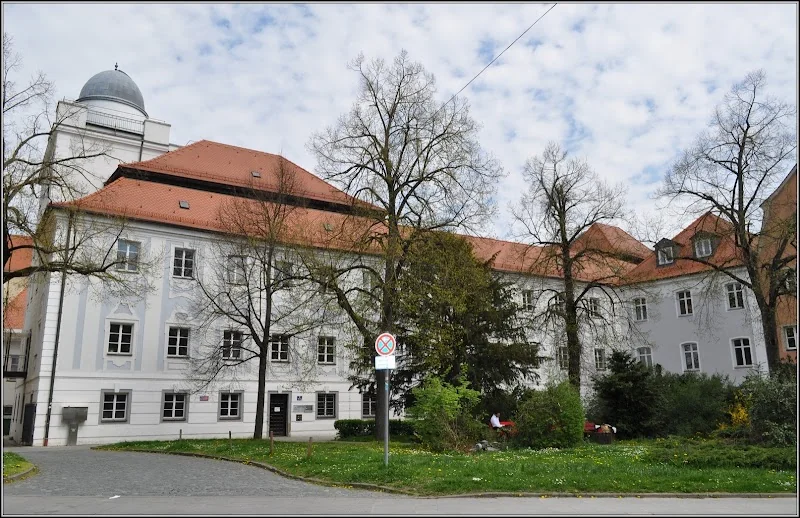
Regensburg
Ägidienpl. 2, 93047 Regensburg, Deutschland
Observatory Regensburg | Opening Hours & Program
The Observatory Regensburg is one of the most well-known addresses for astronomy in Eastern Bavaria and uniquely combines public education, historical architecture, and active club life. Those looking for opening hours, the current program, tours for children and schools, directions, or whether one can buy a star at the Observatory Regensburg will find a place with astonishingly many facets. The public observatory at Ägidienplatz 2 stands for weekly observations, monthly lectures, holiday courses, special events, and a long local astronomy history that dates back to the Middle Ages. It has been operated since 1976 by the Association of Friends of the Observatory Regensburg e. V., which maintains the facility on a voluntary, non-profit basis with a strong educational mission. At the same time, the observatory is not a museum in the quiet sense, but a lively meeting point above the rooftops of the old town, where research motivation, communication, and fascination meet directly. ([sternwarte-regensburg.de](https://sternwarte-regensburg.de/verein/?utm_source=openai))
Opening Hours, Admission, and Visit Today
The most important question for many visitors is: When is the Observatory Regensburg open today? The official answer is clear and straightforward. The observatory is open every Friday evening, regardless of the weather. From September to April, the public tour starts at 8:00 PM, from May to August at 9:00 PM. Admission begins about 15 minutes before the start, and the tour lasts about two hours. Pre-registration is not necessary on regular Fridays, but reservations are not possible due to limited participant numbers. Therefore, those deciding to visit should arrive on time, especially if a monthly lecture is taking place, as more visitors typically come. ([sternwarte-regensburg.de](https://sternwarte-regensburg.de/fuehrungen/?utm_source=openai))
As part of the practical visit, it is also important to note that the observatory does not charge admission. It is entirely operated by volunteer members, which is why donations are welcome and explicitly intended as support for operations, educational work, and equipment. The official notes also mention that dogs are not suitable for the premises, and visitors with dogs may be turned away. For planning purposes, it is important to note: The observatory is closed on public holidays and also takes a summer break from June 1 to July 15. Therefore, anyone specifically looking for a date should check the opening hours not only seasonally but also calendar-wise. This clear rhythm makes the observatory both simple and pleasantly predictable: Friday is observation night, summer break is summer break, and the rest of the year remains planable. ([sternwarte-regensburg.de](https://sternwarte-regensburg.de/fuehrungen/?utm_source=openai))
The observatory is particularly attractive for spontaneous visits because it operates without prior ticket purchase and still offers a structured visitor experience. You arrive, ring the doorbell, participate in the introduction, and then experience the observation through telescopes as well as often a tour through the exhibition rooms. This mix of reliability and openness is important for search queries like observatory regensburg today, opening hours, or program. The observatory is not a place for anonymous mass processing but for small, focused groups with a genuine interest in the sky, technology, and history. You can also tell by the fact that the team provides information on how to get there upon request and asks for inquiries regarding special tours with date, time, and group size. This creates a visit that remains both accessible and personal. ([sternwarte-regensburg.de](https://sternwarte-regensburg.de/fuehrungen/?utm_source=openai))
Monthly Lectures and the Current Program
A central keyword surrounding the Observatory Regensburg is the program, and for good reason. In addition to the regular Friday tours, there are monthly lectures that deal with topics from all areas of astronomy. The monthly lecture program for 2026 has been published on the website; the lectures are accessible without pre-registration and without admission fees. This makes them interesting for everyone who is not only enthusiastic about observing through the telescope but also about understandable astronomical backgrounds. The content ranges from current topics in astrophysics to galaxies, stars, and planetary systems, to cosmic events. The focus is not on technical jargon but on illustrative communication that also engages beginners. ([sternwarte-regensburg.de](https://sternwarte-regensburg.de/2025/12/20/das-monatsvortragsprogramm-2026-ist-online/?utm_source=openai))
Especially with keyword combinations like observatory regensburg lectures, program, and today, the timeliness plays a significant role. The observatory continuously publishes news and current dates on its homepage, so one can quickly see whether a monthly lecture, a special tour, or a special celestial event is upcoming. This exemplifies how flexibly the institution responds to astronomical topics: One month may focus on research priorities, the next on a virtual journey through the night sky, another on galaxy collisions or current developments in the universe. The lectures are not intended as dry presentations but as audience-friendly evenings with a clear structure and good reference to the observatory as a place of learning. Those looking for a program usually want just that: a clear overview, a real date, and an offering that goes beyond mere observation. ([sternwarte-regensburg.de](https://sternwarte-regensburg.de/2025/12/20/das-monatsvortragsprogramm-2026-ist-online/?utm_source=openai))
Special events are also part of the profile of the Observatory Regensburg. The website features entries for the Day of Astronomy and the Open House Day, where lectures, films, multimedia, children's programs, and solar observations come together. For the nationwide Day of Astronomy 2025, the observatory opened as early as 11 AM, during the day the telescopes were focused on the sun and the cathedral, and in the afternoon and evening, further program points followed. The observatory also published information on observing a total lunar eclipse. Such dates show that the program consists not only of regular Friday tours but also responds to current celestial events and public astronomy days. This makes the observatory particularly relevant for search queries regarding today, open house day, or lunar eclipse. ([sternwarte-regensburg.de](https://sternwarte-regensburg.de/event/tag-der-astronomie-tag-der-offenen-tuer-auf-der-sternwarte/?utm_source=openai))
Guided Tours for Children, Schools, and Adult Education Courses
A particularly strong theme surrounding the Observatory Regensburg is the offerings for children, schools, and families. The observatory has been closely collaborating with the adult education center for many years and offers numerous astronomy courses there every year. According to the official description, there is a comprehensive program for families, especially during the summer and Christmas holidays. Additionally, courses are offered where participants can dive deeper into individual areas of astronomy than would be possible in a regular Friday tour. It is important to note that even those without prior astronomical knowledge can participate. The courses are designed so that curiosity is sufficient, and the communication remains understandable. Registration and payment are fully handled through the adult education center, which significantly simplifies the organizational side for participants. ([sternwarte-regensburg.de](https://sternwarte-regensburg.de/fuehrungen/astronomiekurse/))
For search queries like observatory regensburg children, adult education regensburg observatory, or family offers, the program for schools and kindergartens is also important. There, the observatory describes its special commitment to bringing children and young people closer to the fascination of the night sky, nature, and culture. There are special tours for schools and kindergartens, where the basics of theory and practice of astronomy are conveyed in an age-appropriate manner. Thematic focuses can be set upon request, such as on the solar system, larger structures of space, or current questions regarding space travel and technology. Additionally, morning tours are possible, where, if the weather permits, the sun is observed through special solar telescopes. Training for teachers is also included, making the observatory not just a destination but a didactic partner for educational institutions. ([sternwarte-regensburg.de](https://sternwarte-regensburg.de/fuehrungen/programm-fuer-schulen/))
This combination of practice, explanation, and real observation makes the offerings for young people so attractive. The observatory operates entirely on a voluntary basis, which is why morning appointments for groups should be requested well in advance. This is not a disadvantage but part of the character of the institution: Here, knowledge is not produced industrially but passed on with much personal commitment. For families, it is particularly appealing that the offerings require neither astronomical prior knowledge nor complicated preparation. Those coming with children receive not abstract theory but immediate access to the sky, telescopes, and illustrative models. This makes the Observatory Regensburg a place of learning where wonder, understanding, and participation go hand in hand. That is why it also works so convincingly as a response to search terms like children, family, course, or adult education. ([sternwarte-regensburg.de](https://sternwarte-regensburg.de/fuehrungen/astronomiekurse/))
Directions, Parking, and Barrier-Free Access
For good visit planning, the directions to the Observatory Regensburg are an important point. The address is Ägidienplatz 2 in 93047 Regensburg. The observatory is easily accessible by public transport: The nearest stop is Bismarckplatz, served by lines 2, 6, and A, located about 100 meters from the entrance. The Arnulfsplatz stop is also nearby, where lines 1, 4, and 11 also stop. From the main train station, the observatory can be reached on foot via Sankt-Peters-Weg in about 15 to 20 minutes. For those wondering how centrally located the observatory is, the answer is clear: It is situated in the middle of a well-accessible old town environment, without the need for long planning routes. ([sternwarte-regensburg.de](https://sternwarte-regensburg.de/startseite/?utm_source=openai))
However, regarding parking: The observatory does not offer its own visitor parking. A short stop is usually possible, but those arriving by car should prepare for the surrounding parking garages. The nearest parking garages are at Bismarckplatz and Arnulfsplatz. Free parking options are only available according to the official directions when no events are taking place, such as at Dultplatz or at the lower Wöhrd or near the old ice rink. These spots are further away and require additional walking. Additionally, the observatory is not accessible by elevator for historical reasons, as it is located on the 3rd and 4th floors. Therefore, those who rely on a comfortable access should consider the circumstances in advance. This way, the visit can be planned without stress, and the focus remains where it belongs: on the starry sky and not on parking searches. ([sternwarte-regensburg.de](https://sternwarte-regensburg.de/startseite/?utm_source=openai))
In a historic city center, the combination of public transport, walking distance, and limited parking space is typical. For the Observatory Regensburg, this is not a flaw but part of its urban identity. It is not an isolated attraction on the outskirts but embedded in the historical center, in close proximity to city, culture, and education. Therefore, those looking for parking, directions, or barrier-free access should understand the observatory as a visit to the old town with a special goal: conveniently reachable by bus or on foot, with clear indications on site, but without extensive infrastructure like at a trade fair hall. This reality should simply be planned for when arriving. Then the journey becomes not a hindrance but the beginning of an evening above the rooftops of the city. ([sternwarte-regensburg.de](https://sternwarte-regensburg.de/startseite/?utm_source=openai))
History, Dome, and Telescopes
The history of the Observatory Regensburg is one of its greatest attractions. Astronomy has a long tradition in Regensburg that can be traced back to the High Middle Ages. Monks from the St. Emmeram monastery already observed the night sky and passed on their knowledge; the astrolabe of Wilhelm von Hirsau, now exhibited in the Historical Museum, is a remarkable testament to this early scientific engagement and is considered the oldest such instrument in Germany. Later, Johannes Kepler played an important role in the city's history, among other things through his observations in Regensburg Cathedral. In the 18th and 19th centuries, astronomy was closely linked to the seminary and the lyceum before the focus opened up to an independent public observatory. ([sternwarte-regensburg.de](https://sternwarte-regensburg.de/sternwarte/geschichte/))
The current dome over Ägidienplatz was created in response to urban change. When the former observation site at Placidusturm had to give way in 1902, the lyceum built a dome on its own building. This dome, four and a half meters in diameter, was constructed by the Dresden company Heyde, has largely been preserved in its original state, and is a listed building. It was equipped with a 150-millimeter refractor from Reinfelder, which is now on display in the auditorium of the observatory. In 1919, Karl Stöckl came to Regensburg, and in 1920 he opened the observatory with public lectures and tours for the general public. Since then, January 12, 1920, is considered the founding date of the public observatory Regensburg, which sees itself as the oldest public observatory in Southern Germany and one of the oldest in the world. ([sternwarte-regensburg.de](https://sternwarte-regensburg.de/sternwarte/geschichte/))
The current instrumentation also shows that the observatory has not remained stuck in the past. The dome houses, among other things, a refractor from Lichtenknecker with a diameter of 150 millimeters and a focal length of 2250 millimeters, as well as a Cassegrain with a diameter of 12.5 inches and a focal length of 4750 millimeters. Outside the dome, additional devices are used, including a Meade LX200 as a Schmidt-Cassegrain with a 12-inch aperture, a Heritage as a Newton reflector telescope for beginners, a Coronado solar telescope with H-alpha filter, a self-built Dobson made by members, and a Celestron C11. Therefore, those looking for photos of the Observatory Regensburg will find not only architecture but also very distinctive optical motifs: the historical dome, classic telescopes, and technical details that have immediate recognition value in pictures. ([sternwarte-regensburg.de](https://sternwarte-regensburg.de/sternwarte/instrumente/))
Star Sponsorships, Group Tours, and Special Exhibition Rooms
A popular search term is observatory regensburg buy star, and here it is worth taking a closer look at the official star sponsorships. The observatory makes it clear that one cannot buy a star in the legal sense because stars do not belong to anyone. The star sponsorship is rather a symbolic gesture. One receives a certificate, a star map, and information about the sponsored star, and the observatory shows the star upon request during a tour. The selection is made from more than 2,000 stars that are visible to the naked eye in the Regensburg night sky. The amount of the donation is based on the brightness of the chosen star, and the entire process is handled on a voluntary basis. This is a lovely gift with a personal connection for many people, without false ownership promises. At the same time, it directly supports the educational work and equipment of the observatory. ([sternwarte-regensburg.de](https://sternwarte-regensburg.de/fuehrungen/sternenpatenschaften/))
The observatory is also well-equipped for groups. Special tours are offered for groups of 15 or more and can be requested via email. The English subpage additionally explains that the regular lecture is conducted in German, but if necessary, English-speaking members can often offer a separate tour in parallel. This shows that the observatory is not only rooted locally but also includes visitors with different language skills. It describes its role as a bridge between astronomical research and the public, and this is felt throughout the entire visitor structure: scientific content is prepared in such a way that it remains understandable in a personal, almost neighborly atmosphere. ([sternwarte-regensburg.de](https://sternwarte-regensburg.de/english/?utm_source=openai))
Another advantage for visitors is the variety of exhibition rooms. The observatory offers three thematic rooms that complement the tours and make a visit worthwhile even in bad weather. The planetarium conveys illustrative 3D models of our solar system, the stellarium guides through the development of the universe and the life cycle of stars, and the geological showcase invites visitors to look at and touch geology and meteorites. This combination is interesting for anyone looking for photos, impressions, and special places, as it combines strong visual elements with understandable knowledge transfer. This creates the mix of wonder and learning that is rarely found in Regensburg. Therefore, those who want to see not just a telescope but truly understand astronomy are in the right place at the Observatory Regensburg. ([sternwarte-regensburg.de](https://sternwarte-regensburg.de/sternwarte/ausstellungsraeume/?utm_source=openai))
Sources:
- Observatory Regensburg - Official Website
- Observatory Regensburg - Tours and Opening Hours
- Observatory Regensburg - History
- Observatory Regensburg - Instruments
- Observatory Regensburg - Exhibition Rooms
- Observatory Regensburg - Astronomy Courses and Adult Education
- Observatory Regensburg - Schools and Kindergartens
- Observatory Regensburg - Star Sponsorships
- Observatory Regensburg - Monthly Lecture Program 2026
- Observatory Regensburg - Day of Astronomy
Mehr anzeigenWeniger anzeigen
Observatory Regensburg | Opening Hours & Program
The Observatory Regensburg is one of the most well-known addresses for astronomy in Eastern Bavaria and uniquely combines public education, historical architecture, and active club life. Those looking for opening hours, the current program, tours for children and schools, directions, or whether one can buy a star at the Observatory Regensburg will find a place with astonishingly many facets. The public observatory at Ägidienplatz 2 stands for weekly observations, monthly lectures, holiday courses, special events, and a long local astronomy history that dates back to the Middle Ages. It has been operated since 1976 by the Association of Friends of the Observatory Regensburg e. V., which maintains the facility on a voluntary, non-profit basis with a strong educational mission. At the same time, the observatory is not a museum in the quiet sense, but a lively meeting point above the rooftops of the old town, where research motivation, communication, and fascination meet directly. ([sternwarte-regensburg.de](https://sternwarte-regensburg.de/verein/?utm_source=openai))
Opening Hours, Admission, and Visit Today
The most important question for many visitors is: When is the Observatory Regensburg open today? The official answer is clear and straightforward. The observatory is open every Friday evening, regardless of the weather. From September to April, the public tour starts at 8:00 PM, from May to August at 9:00 PM. Admission begins about 15 minutes before the start, and the tour lasts about two hours. Pre-registration is not necessary on regular Fridays, but reservations are not possible due to limited participant numbers. Therefore, those deciding to visit should arrive on time, especially if a monthly lecture is taking place, as more visitors typically come. ([sternwarte-regensburg.de](https://sternwarte-regensburg.de/fuehrungen/?utm_source=openai))
As part of the practical visit, it is also important to note that the observatory does not charge admission. It is entirely operated by volunteer members, which is why donations are welcome and explicitly intended as support for operations, educational work, and equipment. The official notes also mention that dogs are not suitable for the premises, and visitors with dogs may be turned away. For planning purposes, it is important to note: The observatory is closed on public holidays and also takes a summer break from June 1 to July 15. Therefore, anyone specifically looking for a date should check the opening hours not only seasonally but also calendar-wise. This clear rhythm makes the observatory both simple and pleasantly predictable: Friday is observation night, summer break is summer break, and the rest of the year remains planable. ([sternwarte-regensburg.de](https://sternwarte-regensburg.de/fuehrungen/?utm_source=openai))
The observatory is particularly attractive for spontaneous visits because it operates without prior ticket purchase and still offers a structured visitor experience. You arrive, ring the doorbell, participate in the introduction, and then experience the observation through telescopes as well as often a tour through the exhibition rooms. This mix of reliability and openness is important for search queries like observatory regensburg today, opening hours, or program. The observatory is not a place for anonymous mass processing but for small, focused groups with a genuine interest in the sky, technology, and history. You can also tell by the fact that the team provides information on how to get there upon request and asks for inquiries regarding special tours with date, time, and group size. This creates a visit that remains both accessible and personal. ([sternwarte-regensburg.de](https://sternwarte-regensburg.de/fuehrungen/?utm_source=openai))
Monthly Lectures and the Current Program
A central keyword surrounding the Observatory Regensburg is the program, and for good reason. In addition to the regular Friday tours, there are monthly lectures that deal with topics from all areas of astronomy. The monthly lecture program for 2026 has been published on the website; the lectures are accessible without pre-registration and without admission fees. This makes them interesting for everyone who is not only enthusiastic about observing through the telescope but also about understandable astronomical backgrounds. The content ranges from current topics in astrophysics to galaxies, stars, and planetary systems, to cosmic events. The focus is not on technical jargon but on illustrative communication that also engages beginners. ([sternwarte-regensburg.de](https://sternwarte-regensburg.de/2025/12/20/das-monatsvortragsprogramm-2026-ist-online/?utm_source=openai))
Especially with keyword combinations like observatory regensburg lectures, program, and today, the timeliness plays a significant role. The observatory continuously publishes news and current dates on its homepage, so one can quickly see whether a monthly lecture, a special tour, or a special celestial event is upcoming. This exemplifies how flexibly the institution responds to astronomical topics: One month may focus on research priorities, the next on a virtual journey through the night sky, another on galaxy collisions or current developments in the universe. The lectures are not intended as dry presentations but as audience-friendly evenings with a clear structure and good reference to the observatory as a place of learning. Those looking for a program usually want just that: a clear overview, a real date, and an offering that goes beyond mere observation. ([sternwarte-regensburg.de](https://sternwarte-regensburg.de/2025/12/20/das-monatsvortragsprogramm-2026-ist-online/?utm_source=openai))
Special events are also part of the profile of the Observatory Regensburg. The website features entries for the Day of Astronomy and the Open House Day, where lectures, films, multimedia, children's programs, and solar observations come together. For the nationwide Day of Astronomy 2025, the observatory opened as early as 11 AM, during the day the telescopes were focused on the sun and the cathedral, and in the afternoon and evening, further program points followed. The observatory also published information on observing a total lunar eclipse. Such dates show that the program consists not only of regular Friday tours but also responds to current celestial events and public astronomy days. This makes the observatory particularly relevant for search queries regarding today, open house day, or lunar eclipse. ([sternwarte-regensburg.de](https://sternwarte-regensburg.de/event/tag-der-astronomie-tag-der-offenen-tuer-auf-der-sternwarte/?utm_source=openai))
Guided Tours for Children, Schools, and Adult Education Courses
A particularly strong theme surrounding the Observatory Regensburg is the offerings for children, schools, and families. The observatory has been closely collaborating with the adult education center for many years and offers numerous astronomy courses there every year. According to the official description, there is a comprehensive program for families, especially during the summer and Christmas holidays. Additionally, courses are offered where participants can dive deeper into individual areas of astronomy than would be possible in a regular Friday tour. It is important to note that even those without prior astronomical knowledge can participate. The courses are designed so that curiosity is sufficient, and the communication remains understandable. Registration and payment are fully handled through the adult education center, which significantly simplifies the organizational side for participants. ([sternwarte-regensburg.de](https://sternwarte-regensburg.de/fuehrungen/astronomiekurse/))
For search queries like observatory regensburg children, adult education regensburg observatory, or family offers, the program for schools and kindergartens is also important. There, the observatory describes its special commitment to bringing children and young people closer to the fascination of the night sky, nature, and culture. There are special tours for schools and kindergartens, where the basics of theory and practice of astronomy are conveyed in an age-appropriate manner. Thematic focuses can be set upon request, such as on the solar system, larger structures of space, or current questions regarding space travel and technology. Additionally, morning tours are possible, where, if the weather permits, the sun is observed through special solar telescopes. Training for teachers is also included, making the observatory not just a destination but a didactic partner for educational institutions. ([sternwarte-regensburg.de](https://sternwarte-regensburg.de/fuehrungen/programm-fuer-schulen/))
This combination of practice, explanation, and real observation makes the offerings for young people so attractive. The observatory operates entirely on a voluntary basis, which is why morning appointments for groups should be requested well in advance. This is not a disadvantage but part of the character of the institution: Here, knowledge is not produced industrially but passed on with much personal commitment. For families, it is particularly appealing that the offerings require neither astronomical prior knowledge nor complicated preparation. Those coming with children receive not abstract theory but immediate access to the sky, telescopes, and illustrative models. This makes the Observatory Regensburg a place of learning where wonder, understanding, and participation go hand in hand. That is why it also works so convincingly as a response to search terms like children, family, course, or adult education. ([sternwarte-regensburg.de](https://sternwarte-regensburg.de/fuehrungen/astronomiekurse/))
Directions, Parking, and Barrier-Free Access
For good visit planning, the directions to the Observatory Regensburg are an important point. The address is Ägidienplatz 2 in 93047 Regensburg. The observatory is easily accessible by public transport: The nearest stop is Bismarckplatz, served by lines 2, 6, and A, located about 100 meters from the entrance. The Arnulfsplatz stop is also nearby, where lines 1, 4, and 11 also stop. From the main train station, the observatory can be reached on foot via Sankt-Peters-Weg in about 15 to 20 minutes. For those wondering how centrally located the observatory is, the answer is clear: It is situated in the middle of a well-accessible old town environment, without the need for long planning routes. ([sternwarte-regensburg.de](https://sternwarte-regensburg.de/startseite/?utm_source=openai))
However, regarding parking: The observatory does not offer its own visitor parking. A short stop is usually possible, but those arriving by car should prepare for the surrounding parking garages. The nearest parking garages are at Bismarckplatz and Arnulfsplatz. Free parking options are only available according to the official directions when no events are taking place, such as at Dultplatz or at the lower Wöhrd or near the old ice rink. These spots are further away and require additional walking. Additionally, the observatory is not accessible by elevator for historical reasons, as it is located on the 3rd and 4th floors. Therefore, those who rely on a comfortable access should consider the circumstances in advance. This way, the visit can be planned without stress, and the focus remains where it belongs: on the starry sky and not on parking searches. ([sternwarte-regensburg.de](https://sternwarte-regensburg.de/startseite/?utm_source=openai))
In a historic city center, the combination of public transport, walking distance, and limited parking space is typical. For the Observatory Regensburg, this is not a flaw but part of its urban identity. It is not an isolated attraction on the outskirts but embedded in the historical center, in close proximity to city, culture, and education. Therefore, those looking for parking, directions, or barrier-free access should understand the observatory as a visit to the old town with a special goal: conveniently reachable by bus or on foot, with clear indications on site, but without extensive infrastructure like at a trade fair hall. This reality should simply be planned for when arriving. Then the journey becomes not a hindrance but the beginning of an evening above the rooftops of the city. ([sternwarte-regensburg.de](https://sternwarte-regensburg.de/startseite/?utm_source=openai))
History, Dome, and Telescopes
The history of the Observatory Regensburg is one of its greatest attractions. Astronomy has a long tradition in Regensburg that can be traced back to the High Middle Ages. Monks from the St. Emmeram monastery already observed the night sky and passed on their knowledge; the astrolabe of Wilhelm von Hirsau, now exhibited in the Historical Museum, is a remarkable testament to this early scientific engagement and is considered the oldest such instrument in Germany. Later, Johannes Kepler played an important role in the city's history, among other things through his observations in Regensburg Cathedral. In the 18th and 19th centuries, astronomy was closely linked to the seminary and the lyceum before the focus opened up to an independent public observatory. ([sternwarte-regensburg.de](https://sternwarte-regensburg.de/sternwarte/geschichte/))
The current dome over Ägidienplatz was created in response to urban change. When the former observation site at Placidusturm had to give way in 1902, the lyceum built a dome on its own building. This dome, four and a half meters in diameter, was constructed by the Dresden company Heyde, has largely been preserved in its original state, and is a listed building. It was equipped with a 150-millimeter refractor from Reinfelder, which is now on display in the auditorium of the observatory. In 1919, Karl Stöckl came to Regensburg, and in 1920 he opened the observatory with public lectures and tours for the general public. Since then, January 12, 1920, is considered the founding date of the public observatory Regensburg, which sees itself as the oldest public observatory in Southern Germany and one of the oldest in the world. ([sternwarte-regensburg.de](https://sternwarte-regensburg.de/sternwarte/geschichte/))
The current instrumentation also shows that the observatory has not remained stuck in the past. The dome houses, among other things, a refractor from Lichtenknecker with a diameter of 150 millimeters and a focal length of 2250 millimeters, as well as a Cassegrain with a diameter of 12.5 inches and a focal length of 4750 millimeters. Outside the dome, additional devices are used, including a Meade LX200 as a Schmidt-Cassegrain with a 12-inch aperture, a Heritage as a Newton reflector telescope for beginners, a Coronado solar telescope with H-alpha filter, a self-built Dobson made by members, and a Celestron C11. Therefore, those looking for photos of the Observatory Regensburg will find not only architecture but also very distinctive optical motifs: the historical dome, classic telescopes, and technical details that have immediate recognition value in pictures. ([sternwarte-regensburg.de](https://sternwarte-regensburg.de/sternwarte/instrumente/))
Star Sponsorships, Group Tours, and Special Exhibition Rooms
A popular search term is observatory regensburg buy star, and here it is worth taking a closer look at the official star sponsorships. The observatory makes it clear that one cannot buy a star in the legal sense because stars do not belong to anyone. The star sponsorship is rather a symbolic gesture. One receives a certificate, a star map, and information about the sponsored star, and the observatory shows the star upon request during a tour. The selection is made from more than 2,000 stars that are visible to the naked eye in the Regensburg night sky. The amount of the donation is based on the brightness of the chosen star, and the entire process is handled on a voluntary basis. This is a lovely gift with a personal connection for many people, without false ownership promises. At the same time, it directly supports the educational work and equipment of the observatory. ([sternwarte-regensburg.de](https://sternwarte-regensburg.de/fuehrungen/sternenpatenschaften/))
The observatory is also well-equipped for groups. Special tours are offered for groups of 15 or more and can be requested via email. The English subpage additionally explains that the regular lecture is conducted in German, but if necessary, English-speaking members can often offer a separate tour in parallel. This shows that the observatory is not only rooted locally but also includes visitors with different language skills. It describes its role as a bridge between astronomical research and the public, and this is felt throughout the entire visitor structure: scientific content is prepared in such a way that it remains understandable in a personal, almost neighborly atmosphere. ([sternwarte-regensburg.de](https://sternwarte-regensburg.de/english/?utm_source=openai))
Another advantage for visitors is the variety of exhibition rooms. The observatory offers three thematic rooms that complement the tours and make a visit worthwhile even in bad weather. The planetarium conveys illustrative 3D models of our solar system, the stellarium guides through the development of the universe and the life cycle of stars, and the geological showcase invites visitors to look at and touch geology and meteorites. This combination is interesting for anyone looking for photos, impressions, and special places, as it combines strong visual elements with understandable knowledge transfer. This creates the mix of wonder and learning that is rarely found in Regensburg. Therefore, those who want to see not just a telescope but truly understand astronomy are in the right place at the Observatory Regensburg. ([sternwarte-regensburg.de](https://sternwarte-regensburg.de/sternwarte/ausstellungsraeume/?utm_source=openai))
Sources:
- Observatory Regensburg - Official Website
- Observatory Regensburg - Tours and Opening Hours
- Observatory Regensburg - History
- Observatory Regensburg - Instruments
- Observatory Regensburg - Exhibition Rooms
- Observatory Regensburg - Astronomy Courses and Adult Education
- Observatory Regensburg - Schools and Kindergartens
- Observatory Regensburg - Star Sponsorships
- Observatory Regensburg - Monthly Lecture Program 2026
- Observatory Regensburg - Day of Astronomy
Observatory Regensburg | Opening Hours & Program
The Observatory Regensburg is one of the most well-known addresses for astronomy in Eastern Bavaria and uniquely combines public education, historical architecture, and active club life. Those looking for opening hours, the current program, tours for children and schools, directions, or whether one can buy a star at the Observatory Regensburg will find a place with astonishingly many facets. The public observatory at Ägidienplatz 2 stands for weekly observations, monthly lectures, holiday courses, special events, and a long local astronomy history that dates back to the Middle Ages. It has been operated since 1976 by the Association of Friends of the Observatory Regensburg e. V., which maintains the facility on a voluntary, non-profit basis with a strong educational mission. At the same time, the observatory is not a museum in the quiet sense, but a lively meeting point above the rooftops of the old town, where research motivation, communication, and fascination meet directly. ([sternwarte-regensburg.de](https://sternwarte-regensburg.de/verein/?utm_source=openai))
Opening Hours, Admission, and Visit Today
The most important question for many visitors is: When is the Observatory Regensburg open today? The official answer is clear and straightforward. The observatory is open every Friday evening, regardless of the weather. From September to April, the public tour starts at 8:00 PM, from May to August at 9:00 PM. Admission begins about 15 minutes before the start, and the tour lasts about two hours. Pre-registration is not necessary on regular Fridays, but reservations are not possible due to limited participant numbers. Therefore, those deciding to visit should arrive on time, especially if a monthly lecture is taking place, as more visitors typically come. ([sternwarte-regensburg.de](https://sternwarte-regensburg.de/fuehrungen/?utm_source=openai))
As part of the practical visit, it is also important to note that the observatory does not charge admission. It is entirely operated by volunteer members, which is why donations are welcome and explicitly intended as support for operations, educational work, and equipment. The official notes also mention that dogs are not suitable for the premises, and visitors with dogs may be turned away. For planning purposes, it is important to note: The observatory is closed on public holidays and also takes a summer break from June 1 to July 15. Therefore, anyone specifically looking for a date should check the opening hours not only seasonally but also calendar-wise. This clear rhythm makes the observatory both simple and pleasantly predictable: Friday is observation night, summer break is summer break, and the rest of the year remains planable. ([sternwarte-regensburg.de](https://sternwarte-regensburg.de/fuehrungen/?utm_source=openai))
The observatory is particularly attractive for spontaneous visits because it operates without prior ticket purchase and still offers a structured visitor experience. You arrive, ring the doorbell, participate in the introduction, and then experience the observation through telescopes as well as often a tour through the exhibition rooms. This mix of reliability and openness is important for search queries like observatory regensburg today, opening hours, or program. The observatory is not a place for anonymous mass processing but for small, focused groups with a genuine interest in the sky, technology, and history. You can also tell by the fact that the team provides information on how to get there upon request and asks for inquiries regarding special tours with date, time, and group size. This creates a visit that remains both accessible and personal. ([sternwarte-regensburg.de](https://sternwarte-regensburg.de/fuehrungen/?utm_source=openai))
Monthly Lectures and the Current Program
A central keyword surrounding the Observatory Regensburg is the program, and for good reason. In addition to the regular Friday tours, there are monthly lectures that deal with topics from all areas of astronomy. The monthly lecture program for 2026 has been published on the website; the lectures are accessible without pre-registration and without admission fees. This makes them interesting for everyone who is not only enthusiastic about observing through the telescope but also about understandable astronomical backgrounds. The content ranges from current topics in astrophysics to galaxies, stars, and planetary systems, to cosmic events. The focus is not on technical jargon but on illustrative communication that also engages beginners. ([sternwarte-regensburg.de](https://sternwarte-regensburg.de/2025/12/20/das-monatsvortragsprogramm-2026-ist-online/?utm_source=openai))
Especially with keyword combinations like observatory regensburg lectures, program, and today, the timeliness plays a significant role. The observatory continuously publishes news and current dates on its homepage, so one can quickly see whether a monthly lecture, a special tour, or a special celestial event is upcoming. This exemplifies how flexibly the institution responds to astronomical topics: One month may focus on research priorities, the next on a virtual journey through the night sky, another on galaxy collisions or current developments in the universe. The lectures are not intended as dry presentations but as audience-friendly evenings with a clear structure and good reference to the observatory as a place of learning. Those looking for a program usually want just that: a clear overview, a real date, and an offering that goes beyond mere observation. ([sternwarte-regensburg.de](https://sternwarte-regensburg.de/2025/12/20/das-monatsvortragsprogramm-2026-ist-online/?utm_source=openai))
Special events are also part of the profile of the Observatory Regensburg. The website features entries for the Day of Astronomy and the Open House Day, where lectures, films, multimedia, children's programs, and solar observations come together. For the nationwide Day of Astronomy 2025, the observatory opened as early as 11 AM, during the day the telescopes were focused on the sun and the cathedral, and in the afternoon and evening, further program points followed. The observatory also published information on observing a total lunar eclipse. Such dates show that the program consists not only of regular Friday tours but also responds to current celestial events and public astronomy days. This makes the observatory particularly relevant for search queries regarding today, open house day, or lunar eclipse. ([sternwarte-regensburg.de](https://sternwarte-regensburg.de/event/tag-der-astronomie-tag-der-offenen-tuer-auf-der-sternwarte/?utm_source=openai))
Guided Tours for Children, Schools, and Adult Education Courses
A particularly strong theme surrounding the Observatory Regensburg is the offerings for children, schools, and families. The observatory has been closely collaborating with the adult education center for many years and offers numerous astronomy courses there every year. According to the official description, there is a comprehensive program for families, especially during the summer and Christmas holidays. Additionally, courses are offered where participants can dive deeper into individual areas of astronomy than would be possible in a regular Friday tour. It is important to note that even those without prior astronomical knowledge can participate. The courses are designed so that curiosity is sufficient, and the communication remains understandable. Registration and payment are fully handled through the adult education center, which significantly simplifies the organizational side for participants. ([sternwarte-regensburg.de](https://sternwarte-regensburg.de/fuehrungen/astronomiekurse/))
For search queries like observatory regensburg children, adult education regensburg observatory, or family offers, the program for schools and kindergartens is also important. There, the observatory describes its special commitment to bringing children and young people closer to the fascination of the night sky, nature, and culture. There are special tours for schools and kindergartens, where the basics of theory and practice of astronomy are conveyed in an age-appropriate manner. Thematic focuses can be set upon request, such as on the solar system, larger structures of space, or current questions regarding space travel and technology. Additionally, morning tours are possible, where, if the weather permits, the sun is observed through special solar telescopes. Training for teachers is also included, making the observatory not just a destination but a didactic partner for educational institutions. ([sternwarte-regensburg.de](https://sternwarte-regensburg.de/fuehrungen/programm-fuer-schulen/))
This combination of practice, explanation, and real observation makes the offerings for young people so attractive. The observatory operates entirely on a voluntary basis, which is why morning appointments for groups should be requested well in advance. This is not a disadvantage but part of the character of the institution: Here, knowledge is not produced industrially but passed on with much personal commitment. For families, it is particularly appealing that the offerings require neither astronomical prior knowledge nor complicated preparation. Those coming with children receive not abstract theory but immediate access to the sky, telescopes, and illustrative models. This makes the Observatory Regensburg a place of learning where wonder, understanding, and participation go hand in hand. That is why it also works so convincingly as a response to search terms like children, family, course, or adult education. ([sternwarte-regensburg.de](https://sternwarte-regensburg.de/fuehrungen/astronomiekurse/))
Directions, Parking, and Barrier-Free Access
For good visit planning, the directions to the Observatory Regensburg are an important point. The address is Ägidienplatz 2 in 93047 Regensburg. The observatory is easily accessible by public transport: The nearest stop is Bismarckplatz, served by lines 2, 6, and A, located about 100 meters from the entrance. The Arnulfsplatz stop is also nearby, where lines 1, 4, and 11 also stop. From the main train station, the observatory can be reached on foot via Sankt-Peters-Weg in about 15 to 20 minutes. For those wondering how centrally located the observatory is, the answer is clear: It is situated in the middle of a well-accessible old town environment, without the need for long planning routes. ([sternwarte-regensburg.de](https://sternwarte-regensburg.de/startseite/?utm_source=openai))
However, regarding parking: The observatory does not offer its own visitor parking. A short stop is usually possible, but those arriving by car should prepare for the surrounding parking garages. The nearest parking garages are at Bismarckplatz and Arnulfsplatz. Free parking options are only available according to the official directions when no events are taking place, such as at Dultplatz or at the lower Wöhrd or near the old ice rink. These spots are further away and require additional walking. Additionally, the observatory is not accessible by elevator for historical reasons, as it is located on the 3rd and 4th floors. Therefore, those who rely on a comfortable access should consider the circumstances in advance. This way, the visit can be planned without stress, and the focus remains where it belongs: on the starry sky and not on parking searches. ([sternwarte-regensburg.de](https://sternwarte-regensburg.de/startseite/?utm_source=openai))
In a historic city center, the combination of public transport, walking distance, and limited parking space is typical. For the Observatory Regensburg, this is not a flaw but part of its urban identity. It is not an isolated attraction on the outskirts but embedded in the historical center, in close proximity to city, culture, and education. Therefore, those looking for parking, directions, or barrier-free access should understand the observatory as a visit to the old town with a special goal: conveniently reachable by bus or on foot, with clear indications on site, but without extensive infrastructure like at a trade fair hall. This reality should simply be planned for when arriving. Then the journey becomes not a hindrance but the beginning of an evening above the rooftops of the city. ([sternwarte-regensburg.de](https://sternwarte-regensburg.de/startseite/?utm_source=openai))
History, Dome, and Telescopes
The history of the Observatory Regensburg is one of its greatest attractions. Astronomy has a long tradition in Regensburg that can be traced back to the High Middle Ages. Monks from the St. Emmeram monastery already observed the night sky and passed on their knowledge; the astrolabe of Wilhelm von Hirsau, now exhibited in the Historical Museum, is a remarkable testament to this early scientific engagement and is considered the oldest such instrument in Germany. Later, Johannes Kepler played an important role in the city's history, among other things through his observations in Regensburg Cathedral. In the 18th and 19th centuries, astronomy was closely linked to the seminary and the lyceum before the focus opened up to an independent public observatory. ([sternwarte-regensburg.de](https://sternwarte-regensburg.de/sternwarte/geschichte/))
The current dome over Ägidienplatz was created in response to urban change. When the former observation site at Placidusturm had to give way in 1902, the lyceum built a dome on its own building. This dome, four and a half meters in diameter, was constructed by the Dresden company Heyde, has largely been preserved in its original state, and is a listed building. It was equipped with a 150-millimeter refractor from Reinfelder, which is now on display in the auditorium of the observatory. In 1919, Karl Stöckl came to Regensburg, and in 1920 he opened the observatory with public lectures and tours for the general public. Since then, January 12, 1920, is considered the founding date of the public observatory Regensburg, which sees itself as the oldest public observatory in Southern Germany and one of the oldest in the world. ([sternwarte-regensburg.de](https://sternwarte-regensburg.de/sternwarte/geschichte/))
The current instrumentation also shows that the observatory has not remained stuck in the past. The dome houses, among other things, a refractor from Lichtenknecker with a diameter of 150 millimeters and a focal length of 2250 millimeters, as well as a Cassegrain with a diameter of 12.5 inches and a focal length of 4750 millimeters. Outside the dome, additional devices are used, including a Meade LX200 as a Schmidt-Cassegrain with a 12-inch aperture, a Heritage as a Newton reflector telescope for beginners, a Coronado solar telescope with H-alpha filter, a self-built Dobson made by members, and a Celestron C11. Therefore, those looking for photos of the Observatory Regensburg will find not only architecture but also very distinctive optical motifs: the historical dome, classic telescopes, and technical details that have immediate recognition value in pictures. ([sternwarte-regensburg.de](https://sternwarte-regensburg.de/sternwarte/instrumente/))
Star Sponsorships, Group Tours, and Special Exhibition Rooms
A popular search term is observatory regensburg buy star, and here it is worth taking a closer look at the official star sponsorships. The observatory makes it clear that one cannot buy a star in the legal sense because stars do not belong to anyone. The star sponsorship is rather a symbolic gesture. One receives a certificate, a star map, and information about the sponsored star, and the observatory shows the star upon request during a tour. The selection is made from more than 2,000 stars that are visible to the naked eye in the Regensburg night sky. The amount of the donation is based on the brightness of the chosen star, and the entire process is handled on a voluntary basis. This is a lovely gift with a personal connection for many people, without false ownership promises. At the same time, it directly supports the educational work and equipment of the observatory. ([sternwarte-regensburg.de](https://sternwarte-regensburg.de/fuehrungen/sternenpatenschaften/))
The observatory is also well-equipped for groups. Special tours are offered for groups of 15 or more and can be requested via email. The English subpage additionally explains that the regular lecture is conducted in German, but if necessary, English-speaking members can often offer a separate tour in parallel. This shows that the observatory is not only rooted locally but also includes visitors with different language skills. It describes its role as a bridge between astronomical research and the public, and this is felt throughout the entire visitor structure: scientific content is prepared in such a way that it remains understandable in a personal, almost neighborly atmosphere. ([sternwarte-regensburg.de](https://sternwarte-regensburg.de/english/?utm_source=openai))
Another advantage for visitors is the variety of exhibition rooms. The observatory offers three thematic rooms that complement the tours and make a visit worthwhile even in bad weather. The planetarium conveys illustrative 3D models of our solar system, the stellarium guides through the development of the universe and the life cycle of stars, and the geological showcase invites visitors to look at and touch geology and meteorites. This combination is interesting for anyone looking for photos, impressions, and special places, as it combines strong visual elements with understandable knowledge transfer. This creates the mix of wonder and learning that is rarely found in Regensburg. Therefore, those who want to see not just a telescope but truly understand astronomy are in the right place at the Observatory Regensburg. ([sternwarte-regensburg.de](https://sternwarte-regensburg.de/sternwarte/ausstellungsraeume/?utm_source=openai))
Sources:
- Observatory Regensburg - Official Website
- Observatory Regensburg - Tours and Opening Hours
- Observatory Regensburg - History
- Observatory Regensburg - Instruments
- Observatory Regensburg - Exhibition Rooms
- Observatory Regensburg - Astronomy Courses and Adult Education
- Observatory Regensburg - Schools and Kindergartens
- Observatory Regensburg - Star Sponsorships
- Observatory Regensburg - Monthly Lecture Program 2026
- Observatory Regensburg - Day of Astronomy
Upcoming Events
No events found
Frequently Asked Questions
Reviews
Carlos Hof
1. February 2025
Incredible place, for all space, stars, planet lovers, this place is great. For beginners or experienced, it is really nice. Second oldest observatory in Germany, really nice people who work as volunteers and explain everything regarding space and the telescopes. They have lectures to explain things in space and have a nice museum, new meteorite, and really nice pictures. Worth going for a visit.
Arne Trautmann
13. August 2017
One of the things I was not even sure existed in Regensburg. There is lots to learn there and there are great views. Excursions are guided and typically rather late in the evening (it is about stars after all). Very interesting for adults and (not too young) kids.
Julia Z.
20. February 2022
Mega!
Bella Stangl
21. February 2026
All members are super nice, when you're new, everything is explained in detail and you immediately feel like you belong.
Marc Vincenz
9. November 2025
What a world full of wonders we live in. Here everyone realizes how small we actually are. It was breathtaking. It's worth attending a lecture.