
Weingasse 1, Regensburg
Weingasse 1, 93047 Regensburg, Germany
W1 - Center for Young Culture | Program & Parking
The W1 - Center for Young Culture is one of those places that you don't just visit, but experience. Located at Weingasse 1 in the heart of Regensburg, the venue combines culture, learning, experimentation, and networking under one roof across nearly 1,000 m². According to the city's description, the offerings primarily target teenagers and young adults between the ages of 14 and 26, but are explicitly open to anyone interested in young culture or wishing to contribute. This blend of openness, participation, and creative infrastructure makes the W1 a special place in the old town. It is not merely an event space or a classic youth center in the narrow sense, but a cultural house created by and for young people, connecting concerts, workshops, rehearsals, exhibitions, and discussion rooms. The current form of the house was newly opened as W1 in 2009; however, the history of the building goes back much further. ([regensburg.de](https://www.regensburg.de/kultur/kulturdatenbank/eintrag/121565))
Therefore, when someone searches for the W1, they usually mean more than just an address. They refer to a place where young people can develop their own projects, try themselves out on stages, showcase art, make music, perform theater, or simply connect with others. The venue works with spaces, equipment, and educational support to ensure that ideas do not fail due to a lack of space or technology. At the same time, the atmosphere remains intentionally low-threshold: open, approachable, and creative. This combination of professional infrastructure and youth cultural space has characterized the W1 for years and explains why the location is so relevant not only for events but also for workshops, collaborations, and project work in Regensburg. ([regensburg.de](https://www.regensburg.de/kultur/kulturdatenbank/eintrag/121565))
Program, Events, and Young Culture in Regensburg
The strongest search interest surrounding the W1 revolves around the program, meaning the question of what actually takes place there. The answer is broad and diverse. In the official descriptions of the house, concerts, exhibitions, film screenings, dance and theater events, open stages, and readings are mentioned. Additionally, there are courses and workshops in music, dance, theater and acting, visual arts, film and photography, handmade crafts, language arts, and lifestyle. This thematic diversity is a core aspect of the house: the W1 is not limited to one genre but covers many forms of expression of young culture. Therefore, for SEO, not only the word program is important, but also terms like events, workshop, art, theater, film, music, and handmade, as they accurately reflect the real use of the house. ([regensburg.de](https://www.regensburg.de/kultur/kulturdatenbank/eintrag/121565))
Particularly interesting is that the W1 is not only a stage but also a production site. The city describes cooperative projects such as PUSH - Regensburg Pop Culture Festival, International Short Film Week Regensburg, Upper Palatinate Youth Photography Award, and writing competitions as part of the environment. This makes it clear: the house is embedded in the cultural infrastructure of the city and functions as a place where young people can not only consume but also become active themselves. Culture does not solely emerge here as a finished program but often already in the process, during rehearsals, designing, and experimenting. This makes the location as interesting for visitors as it is for initiatives, collectives, and young creatives looking for spaces and opportunities to participate. ([regensburg.de](https://www.regensburg.de/kultur/kulturdatenbank/eintrag/121565))
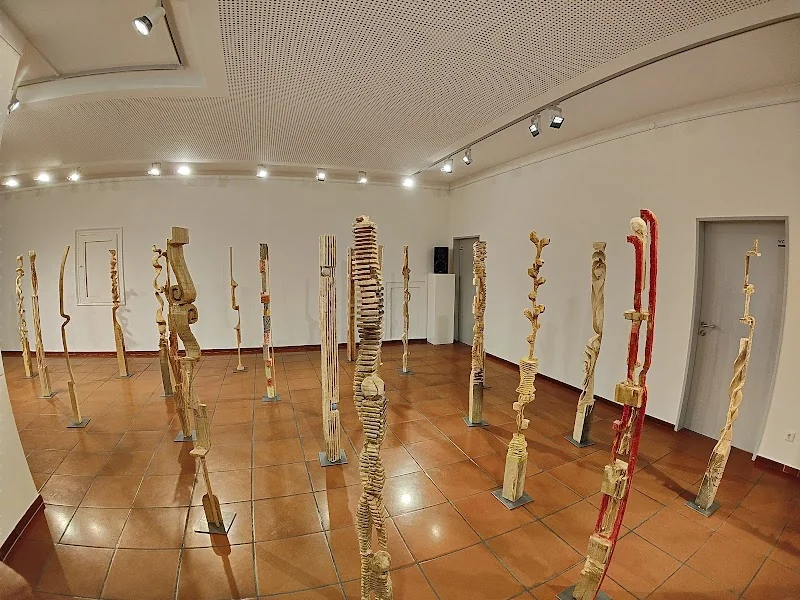
A good example of this mix of program, participatory offerings, and public engagement is the Handmade Fair, which the city states has already taken place in its twelfth edition and brings together DIY, sustainability, recycling, design, repurposing, and craftsmanship. Such formats show that W1 and young culture in Regensburg should not be understood merely as buzzwords but as lived practice. Additionally, regularly changing exhibitions, for example in the gallery area, as well as formats aimed at specific target groups or temporarily activating spaces, are part of the offering. Therefore, terms like program, events, workshop, exhibition, reading, concert, and handmade fair are particularly relevant for searching for the W1, as they directly reflect the content range of the house. ([regensburg.de](https://www.regensburg.de/aktuelles/pressemitteilungen/159998/601601/zwoelfte-handmademesse-im-w1-zentrum-fuer-junge-kultur.html?utm_source=openai))
The city's cultural database also emphasizes this breadth: there, the W1 is listed as a cultural center, municipal institution, and event venue. The description additionally mentions open stages, rehearsal and room usage, as well as networking, support, and consulting services. This makes it clear that the house does not exist only for individual events but is intended as a permanent platform for young culture. So, when someone searches for W1 program or W1 events, they are actually looking for a place where various cultural genres take place simultaneously, complement each other, and enable new collaborations. ([regensburg.de](https://www.regensburg.de/kultur/kulturdatenbank/eintrag/121565))
Access, Parking, and Public Transport around the W1
Access to the W1 is a central topic for many visitors, as the house is located in the middle of the Regensburg old town. The official address is Weingasse 1, 93047 Regensburg. The nearest stops are Haidplatz, Fischmarkt, and Arnulfsplatz, and according to the city, the Center for Young Culture is easily accessible by public transport. Therefore, for SEO analysis, not only the word access is important, but also terms like public transport, bus, Haidplatz, Fischmarkt, and old town. Those traveling to the city center should prepare for the fact that the W1 is situated in a developed, narrow urban area where pedestrian paths are often the most practical solution. ([regensburg.de](https://www.regensburg.de/w1/das-w1/kontakt-und-anfahrt?utm_source=openai))
When it comes to parking, the answer is also clear: there are no parking spaces directly around the W1. The city's access page explicitly points out that due to the special location, there are no parking spaces directly at the house. The venue information sheet mentions the parking garages at Arnulfsplatz or Bismarckplatz as the nearest parking options, both of which are paid. This makes the W1 a typical city center location, where it is best to plan the visit with a parking garage or public transport. Additionally, for delivery traffic: loading and unloading is only possible for a limited time, as the house is located in a pedestrian zone. So, when someone searches for W1 parking, they are actually looking for the best combination of garage, walking distance, and time planning. ([regensburg.de](https://www.regensburg.de/sixcms/media.php/464/Venue%20Info%20W1%2C%20Regensburg.pdf))
The location is also clearly described for taxi or short delivery services. The venue information sheet mentions the taxi stand at Haidplatz, about 100 meters away. This is convenient for later evening events, for guests with little time, or for people who want to quickly return to other districts or the train station after an event. At the same time, the proximity to the old town significantly eases the walk, as the W1 is situated in an area that is already heavily characterized by gastronomy, culture, and pedestrian traffic. This proximity to the city center is an advantage for visitor-friendliness but requires a bit of planning regarding parking and arrival. ([regensburg.de](https://www.regensburg.de/sixcms/media.php/464/Venue%20Info%20W1%2C%20Regensburg.pdf))
Particularly helpful is the combination of public transport and a short remaining distance on foot. Those arriving by bus can get off at Haidplatz or Fischmarkt and reach the house after just a few minutes of walking. This is the most convenient option, especially for events in the cultural café or theater hall. Therefore, for the content of this location, practical terms like W1 access, W1 parking, Haidplatz, and Fischmarkt are also SEO-relevant, as they cover real user questions. The W1 is not a location with a large forecourt or its own parking facility, but an inner-city cultural address that is best approached consciously and not spontaneously by car. ([regensburg.de](https://www.regensburg.de/w1/das-w1/kontakt-und-anfahrt?utm_source=openai))
Rooms, Equipment, and Capacity at the W1
A significant advantage of the W1 is the variety of rooms. The house spreads over four floors and nearly 1,000 m², offering much more than just a single event space. On the ground floor is the cultural café, serving as a central meeting point and event space. Here, the open café operation, concerts, readings, film screenings, and special formats take place. The dance hall on the first floor, equipped with a large mirror, sound system, and flexible usage, is an ideal space for choreographies and dance classes. The gallery on the first upper floor gives young artists the opportunity to showcase exhibitions. Additionally, there are project workshops, studios, a recording studio, and a theater hall as further components of a house focused on self-activity and creative work. ([regensburg.de](https://www.regensburg.de/w1/das-w1/raeume-ausstattung))
The capacities are practical and well documented. According to the venue info, the event space on the ground floor has an area of 93.79 m², including stage and bar area, and accommodates about 100 people without seating or around 50 people with seating. The stage itself measures 18.39 m². The theater hall on the third floor, with about 200 m², is one of the largest rooms in the house and offers up to 70 seats with a seated grandstand. This is an attractive size for smaller concerts, theater performances, readings, or workshop presentations, as it allows for closeness and atmosphere without losing professionalism. Therefore, those searching for capacity, seating, or hall size should always distinguish between the ground floor room and the theater hall. ([regensburg.de](https://www.regensburg.de/sixcms/media.php/464/Venue%20Info%20W1%2C%20Regensburg.pdf))
The technical equipment is also remarkably solid for a youth culture location. The venue document mentions, among other things, a front PA with subwoofers and full-range speakers, a digital mixing console, stage box, monitoring options, various microphones, and lighting technology. Additionally, there is a projector with ceiling installation and a motorized screen. This provides a good basic setup for events, presentations, workshops, or small performances, without external productions having to start from scratch with every little detail. At the same time, the description of the house shows that technology is not an end in itself but makes the space for art, music, and performance truly usable. ([regensburg.de](https://www.regensburg.de/sixcms/media.php/464/Venue%20Info%20W1%2C%20Regensburg.pdf))
In everyday life, the smaller but very practical rooms are also particularly important. The project workshop offers meeting tables, chairs, and storage areas for meetings, seminars, and workshops. The studio is equipped with sewing machines, an overlock sewing machine, fabrics, paints, easels, paper, and upcycling materials. The recording studio is suitable for demo recordings, simple music productions, film soundtracks, podcasts, and voice recordings, but is only used in cooperation with the house, as it is not fully soundproofed. These rooms make the W1 a true production house. It is not just about performance but also about preparation, development, and actual making. This is crucial for search intent related to W1 rooms, W1 equipment, W1 studio, and W1 recording studio. ([regensburg.de](https://www.regensburg.de/w1/das-w1/raeume-ausstattung))
The theater hall deserves special mention because it clearly illustrates the connection between room size and cultural use. It can be staged at ground level, can be modeled with room dividers, and is suitable for theater and film productions, rehearsal situations, as well as creative formats like the creative fair or clothing swap parties. At the same time, amplified music events are not planned there according to the room description, which shows the clear functional separation within the house. For an SEO strategy, this is important because W1 theater hall, W1 seating, W1 rooms, and W1 equipment are closely related in content but answer different user questions: How big is the room, what is it suitable for, and can it be rented independently? The W1 answers all these questions with a surprisingly open yet structured room logic. ([regensburg.de](https://www.regensburg.de/w1/das-w1/raeume-ausstattung))
Cultural Café, Workshops, and Room Usage
The cultural café is much more than a counter with drinks at the W1. The city describes it as a central meeting point and event space on the ground floor. Visitors meet here, concerts, readings, film screenings, and special formats take place, and this is often where the first contact with the house begins. The cultural café connects encounter and program, atmosphere and function. In the city's pages, it is described as the heart of the W1, enabling the experience, learning, creation, and networking of culture. For search terms like cultural café, café bar, open stage, or evening program, this is an important anchor point. ([regensburg.de](https://www.regensburg.de/w1/das-w1/raeume-ausstattung))
Particularly characteristic are the formats that run under the title FreiRaum. According to the city, these offerings invite users to independently utilize the rooms of the W1 along with their equipment on selected dates. This means that anyone wishing to realize their own painting, crafting, sewing, or dance project will find not only rooms but also a structure in which self-organized work is possible. Upon checking in at the office or in the cultural café, there is a brief introduction available if needed, after which participants can use the available equipment. This mix of openness and support is typical for the W1 and for its role in cultural youth education. The rooms are not just decoratively present but are activated in content. ([regensburg.de](https://www.regensburg.de/w1/kalender/266820/604462/freiraum-tanz.html?utm_source=openai))
The conditions for room usage are also clearly regulated. According to the service page, under certain conditions, the project workshop, dance hall, theater hall, and studio can be used or rented independently. A prerequisite is youth cultural relevance that aligns with the concepts and goals of the house. Commercial use is generally excluded. A fee of 10 euros per hour and room is mentioned for the spaces. The gallery, cultural café, and recording studio are typically only usable in cooperation with the W1. This regulation is important for SEO planning, as users often search not only for events but also for room rental, room booking, workshop space, or rehearsal space. ([regensburg.de](https://www.regensburg.de/w1/service/raumnutzung?utm_source=openai))
The studio particularly illustrates how the W1 is designed. With sewing machines, fabrics, paints, paper types, and materials for upcycling projects, it offers not just a room but a toolbox for creativity. The city even describes materials like bottle caps, cork, egg cartons, old bicycle tubes, and newspaper that can be used for personal ideas. Additionally, inspiring books and guides in the areas of handmade, art, and design are available. Such details make the house tangible for users and distinguish it from generic cultural venues. Those searching for W1 studio, W1 workshops, or W1 handmade want to understand this specific, practical equipment. ([regensburg.de](https://www.regensburg.de/w1/das-w1/raeume-ausstattung))
The dance hall is also more than just a practice room. It features a large mirror, a sound system with Bluetooth or Aux connection, and is suitable for dance classes and independent rehearsals. The city mentions examples like Lyrical Jazz Dance, Jazz Dance, and Urban Contemporary Dance. The theater hall, on the other hand, serves not only for performances but also for rehearsals and cultural formats, as long as the volume limits are adhered to. This creates an infrastructure at the W1 that does not merely showcase young culture but actually enables it. This makes the location particularly strong for SEO terms like dance hall, theater, workshop, and room usage. ([regensburg.de](https://www.regensburg.de/w1/das-w1/raeume-ausstattung))
Accessibility and History of the House
The history of the W1 is closely linked to the history of the building at Weingasse 1. The city describes that the W1 has existed for ten years as of 2019, but the history of the house goes back much further. Visible remnants of a stone support system trace the origin back to the Gothic period, while baroque details like a historical staircase and field stucco can be found inside the dance hall. At the same time, the house was extensively renovated in 1975/76 and reorganized in its current room layout in 2007/08. Previously, the building was known as the inn Alte Heimat or Zur Heimat, and later housed uses like the Podium Stage. This complexity explains why the W1 today does not feel like a new building but rather like a historically grown cultural house with a consciously utilized past. ([regensburg.de](https://www.regensburg.de/w1/das-w1/10-jahre-w1/ein-blick-zurueck))
A crucial step for modern use was the development from a youth center to a center for young culture. According to the city's account, the city of Regensburg purchased the building in 1965. After the renovation in the 1970s, the first municipal youth center opened on July 28, 1977, later also known as the Youth Communication Center. With the changing needs of young people and the lack of space for cultural youth education, the house was finally reopened in 2009 as W1. This development is more than just a sequence of dates: it shows that the W1 emerged from real urban needs and continues to focus on promoting young culture in Regensburg. This origin is central for content about W1 history, W1 Regensburg, and center for young culture. ([regensburg.de](https://www.regensburg.de/w1/das-w1/10-jahre-w1/ein-blick-zurueck))
Equally important is the question of accessibility. The W1 is located in a listed building and, according to the official page, is unfortunately not barrier-free. There are several floors but no elevator. The ground floor is accessible via a small step at the entrance, and the toilets are located on the upper floors and are not barrier-free. Positively, a portable wheelchair ramp is available, which can overcome up to two steps. Additionally, the team assists as much as possible and provides information by phone or email about which offerings can still be used despite impairments. This is not perfect accessibility, but a transparent and practical communication of the real situation. ([regensburg.de](https://www.regensburg.de/w1/das-w1/barrierefreiheit))
The venue info supplements this information with further details: a toilet for people with mobility impairments is located on the ground floor but is only partially usable, as access is through the audience area and the maximum width is 90 cm. Additionally, there is no elevator and no barrier-free access to the upper floors. Especially because the house is multi-story and historically grown, it is important to be aware of these limitations. For visitors with limited mobility, good preparation is therefore part of the planning. For SEO texts, it makes sense to clearly name terms like accessibility, wheelchair ramp, listed building, and not barrier-free, as they answer real user questions and honestly inform about the conditions. ([regensburg.de](https://www.regensburg.de/sixcms/media.php/464/Venue%20Info%20W1%2C%20Regensburg.pdf))
In the end, this combination of history and present shows why the W1 appears so unique: a house with medieval traces, baroque details, post-war and renovation-related breaks, and a current function as a vibrant platform for young culture. It is a place where the past does not remain museum-like but is translated into new use. This tension between historical substance and contemporary program is as attractive for Regensburg as it is for young people seeking space for experimentation, exchange, and creativity. The W1 is therefore not just an address in the old town but a cultural promise that is concretely expressed in spaces, programs, and participation. ([regensburg.de](https://www.regensburg.de/w1/das-w1/10-jahre-w1/ein-blick-zurueck))
Those wishing to visit the W1 should primarily bring three things: interest in contemporary, young culture, a bit of planning for the journey, and openness to formats that switch between stage, workshop, and meeting point. This is precisely where the special strength of this location lies. The W1 is not a static place but a house that continually presents itself anew depending on the program, cooperation, and usage. That is why it works so well as a cultural center, event venue, workshop, and meeting point at the same time. For search queries related to W1 Regensburg, W1 program, W1 parking, W1 access, and W1 cultural café, the location provides real, reliable answers: right in the old town, easily accessible, versatile, and clearly focused on young culture. ([regensburg.de](https://www.regensburg.de/w1/das-w1/kontakt-und-anfahrt?utm_source=openai))
Sources:
Show moreShow less
W1 - Center for Young Culture | Program & Parking
The W1 - Center for Young Culture is one of those places that you don't just visit, but experience. Located at Weingasse 1 in the heart of Regensburg, the venue combines culture, learning, experimentation, and networking under one roof across nearly 1,000 m². According to the city's description, the offerings primarily target teenagers and young adults between the ages of 14 and 26, but are explicitly open to anyone interested in young culture or wishing to contribute. This blend of openness, participation, and creative infrastructure makes the W1 a special place in the old town. It is not merely an event space or a classic youth center in the narrow sense, but a cultural house created by and for young people, connecting concerts, workshops, rehearsals, exhibitions, and discussion rooms. The current form of the house was newly opened as W1 in 2009; however, the history of the building goes back much further. ([regensburg.de](https://www.regensburg.de/kultur/kulturdatenbank/eintrag/121565))
Therefore, when someone searches for the W1, they usually mean more than just an address. They refer to a place where young people can develop their own projects, try themselves out on stages, showcase art, make music, perform theater, or simply connect with others. The venue works with spaces, equipment, and educational support to ensure that ideas do not fail due to a lack of space or technology. At the same time, the atmosphere remains intentionally low-threshold: open, approachable, and creative. This combination of professional infrastructure and youth cultural space has characterized the W1 for years and explains why the location is so relevant not only for events but also for workshops, collaborations, and project work in Regensburg. ([regensburg.de](https://www.regensburg.de/kultur/kulturdatenbank/eintrag/121565))
Program, Events, and Young Culture in Regensburg
The strongest search interest surrounding the W1 revolves around the program, meaning the question of what actually takes place there. The answer is broad and diverse. In the official descriptions of the house, concerts, exhibitions, film screenings, dance and theater events, open stages, and readings are mentioned. Additionally, there are courses and workshops in music, dance, theater and acting, visual arts, film and photography, handmade crafts, language arts, and lifestyle. This thematic diversity is a core aspect of the house: the W1 is not limited to one genre but covers many forms of expression of young culture. Therefore, for SEO, not only the word program is important, but also terms like events, workshop, art, theater, film, music, and handmade, as they accurately reflect the real use of the house. ([regensburg.de](https://www.regensburg.de/kultur/kulturdatenbank/eintrag/121565))
Particularly interesting is that the W1 is not only a stage but also a production site. The city describes cooperative projects such as PUSH - Regensburg Pop Culture Festival, International Short Film Week Regensburg, Upper Palatinate Youth Photography Award, and writing competitions as part of the environment. This makes it clear: the house is embedded in the cultural infrastructure of the city and functions as a place where young people can not only consume but also become active themselves. Culture does not solely emerge here as a finished program but often already in the process, during rehearsals, designing, and experimenting. This makes the location as interesting for visitors as it is for initiatives, collectives, and young creatives looking for spaces and opportunities to participate. ([regensburg.de](https://www.regensburg.de/kultur/kulturdatenbank/eintrag/121565))
A good example of this mix of program, participatory offerings, and public engagement is the Handmade Fair, which the city states has already taken place in its twelfth edition and brings together DIY, sustainability, recycling, design, repurposing, and craftsmanship. Such formats show that W1 and young culture in Regensburg should not be understood merely as buzzwords but as lived practice. Additionally, regularly changing exhibitions, for example in the gallery area, as well as formats aimed at specific target groups or temporarily activating spaces, are part of the offering. Therefore, terms like program, events, workshop, exhibition, reading, concert, and handmade fair are particularly relevant for searching for the W1, as they directly reflect the content range of the house. ([regensburg.de](https://www.regensburg.de/aktuelles/pressemitteilungen/159998/601601/zwoelfte-handmademesse-im-w1-zentrum-fuer-junge-kultur.html?utm_source=openai))
The city's cultural database also emphasizes this breadth: there, the W1 is listed as a cultural center, municipal institution, and event venue. The description additionally mentions open stages, rehearsal and room usage, as well as networking, support, and consulting services. This makes it clear that the house does not exist only for individual events but is intended as a permanent platform for young culture. So, when someone searches for W1 program or W1 events, they are actually looking for a place where various cultural genres take place simultaneously, complement each other, and enable new collaborations. ([regensburg.de](https://www.regensburg.de/kultur/kulturdatenbank/eintrag/121565))
Access, Parking, and Public Transport around the W1
Access to the W1 is a central topic for many visitors, as the house is located in the middle of the Regensburg old town. The official address is Weingasse 1, 93047 Regensburg. The nearest stops are Haidplatz, Fischmarkt, and Arnulfsplatz, and according to the city, the Center for Young Culture is easily accessible by public transport. Therefore, for SEO analysis, not only the word access is important, but also terms like public transport, bus, Haidplatz, Fischmarkt, and old town. Those traveling to the city center should prepare for the fact that the W1 is situated in a developed, narrow urban area where pedestrian paths are often the most practical solution. ([regensburg.de](https://www.regensburg.de/w1/das-w1/kontakt-und-anfahrt?utm_source=openai))
When it comes to parking, the answer is also clear: there are no parking spaces directly around the W1. The city's access page explicitly points out that due to the special location, there are no parking spaces directly at the house. The venue information sheet mentions the parking garages at Arnulfsplatz or Bismarckplatz as the nearest parking options, both of which are paid. This makes the W1 a typical city center location, where it is best to plan the visit with a parking garage or public transport. Additionally, for delivery traffic: loading and unloading is only possible for a limited time, as the house is located in a pedestrian zone. So, when someone searches for W1 parking, they are actually looking for the best combination of garage, walking distance, and time planning. ([regensburg.de](https://www.regensburg.de/sixcms/media.php/464/Venue%20Info%20W1%2C%20Regensburg.pdf))
The location is also clearly described for taxi or short delivery services. The venue information sheet mentions the taxi stand at Haidplatz, about 100 meters away. This is convenient for later evening events, for guests with little time, or for people who want to quickly return to other districts or the train station after an event. At the same time, the proximity to the old town significantly eases the walk, as the W1 is situated in an area that is already heavily characterized by gastronomy, culture, and pedestrian traffic. This proximity to the city center is an advantage for visitor-friendliness but requires a bit of planning regarding parking and arrival. ([regensburg.de](https://www.regensburg.de/sixcms/media.php/464/Venue%20Info%20W1%2C%20Regensburg.pdf))
Particularly helpful is the combination of public transport and a short remaining distance on foot. Those arriving by bus can get off at Haidplatz or Fischmarkt and reach the house after just a few minutes of walking. This is the most convenient option, especially for events in the cultural café or theater hall. Therefore, for the content of this location, practical terms like W1 access, W1 parking, Haidplatz, and Fischmarkt are also SEO-relevant, as they cover real user questions. The W1 is not a location with a large forecourt or its own parking facility, but an inner-city cultural address that is best approached consciously and not spontaneously by car. ([regensburg.de](https://www.regensburg.de/w1/das-w1/kontakt-und-anfahrt?utm_source=openai))
Rooms, Equipment, and Capacity at the W1
A significant advantage of the W1 is the variety of rooms. The house spreads over four floors and nearly 1,000 m², offering much more than just a single event space. On the ground floor is the cultural café, serving as a central meeting point and event space. Here, the open café operation, concerts, readings, film screenings, and special formats take place. The dance hall on the first floor, equipped with a large mirror, sound system, and flexible usage, is an ideal space for choreographies and dance classes. The gallery on the first upper floor gives young artists the opportunity to showcase exhibitions. Additionally, there are project workshops, studios, a recording studio, and a theater hall as further components of a house focused on self-activity and creative work. ([regensburg.de](https://www.regensburg.de/w1/das-w1/raeume-ausstattung))
The capacities are practical and well documented. According to the venue info, the event space on the ground floor has an area of 93.79 m², including stage and bar area, and accommodates about 100 people without seating or around 50 people with seating. The stage itself measures 18.39 m². The theater hall on the third floor, with about 200 m², is one of the largest rooms in the house and offers up to 70 seats with a seated grandstand. This is an attractive size for smaller concerts, theater performances, readings, or workshop presentations, as it allows for closeness and atmosphere without losing professionalism. Therefore, those searching for capacity, seating, or hall size should always distinguish between the ground floor room and the theater hall. ([regensburg.de](https://www.regensburg.de/sixcms/media.php/464/Venue%20Info%20W1%2C%20Regensburg.pdf))
The technical equipment is also remarkably solid for a youth culture location. The venue document mentions, among other things, a front PA with subwoofers and full-range speakers, a digital mixing console, stage box, monitoring options, various microphones, and lighting technology. Additionally, there is a projector with ceiling installation and a motorized screen. This provides a good basic setup for events, presentations, workshops, or small performances, without external productions having to start from scratch with every little detail. At the same time, the description of the house shows that technology is not an end in itself but makes the space for art, music, and performance truly usable. ([regensburg.de](https://www.regensburg.de/sixcms/media.php/464/Venue%20Info%20W1%2C%20Regensburg.pdf))
In everyday life, the smaller but very practical rooms are also particularly important. The project workshop offers meeting tables, chairs, and storage areas for meetings, seminars, and workshops. The studio is equipped with sewing machines, an overlock sewing machine, fabrics, paints, easels, paper, and upcycling materials. The recording studio is suitable for demo recordings, simple music productions, film soundtracks, podcasts, and voice recordings, but is only used in cooperation with the house, as it is not fully soundproofed. These rooms make the W1 a true production house. It is not just about performance but also about preparation, development, and actual making. This is crucial for search intent related to W1 rooms, W1 equipment, W1 studio, and W1 recording studio. ([regensburg.de](https://www.regensburg.de/w1/das-w1/raeume-ausstattung))
The theater hall deserves special mention because it clearly illustrates the connection between room size and cultural use. It can be staged at ground level, can be modeled with room dividers, and is suitable for theater and film productions, rehearsal situations, as well as creative formats like the creative fair or clothing swap parties. At the same time, amplified music events are not planned there according to the room description, which shows the clear functional separation within the house. For an SEO strategy, this is important because W1 theater hall, W1 seating, W1 rooms, and W1 equipment are closely related in content but answer different user questions: How big is the room, what is it suitable for, and can it be rented independently? The W1 answers all these questions with a surprisingly open yet structured room logic. ([regensburg.de](https://www.regensburg.de/w1/das-w1/raeume-ausstattung))
Cultural Café, Workshops, and Room Usage
The cultural café is much more than a counter with drinks at the W1. The city describes it as a central meeting point and event space on the ground floor. Visitors meet here, concerts, readings, film screenings, and special formats take place, and this is often where the first contact with the house begins. The cultural café connects encounter and program, atmosphere and function. In the city's pages, it is described as the heart of the W1, enabling the experience, learning, creation, and networking of culture. For search terms like cultural café, café bar, open stage, or evening program, this is an important anchor point. ([regensburg.de](https://www.regensburg.de/w1/das-w1/raeume-ausstattung))
Particularly characteristic are the formats that run under the title FreiRaum. According to the city, these offerings invite users to independently utilize the rooms of the W1 along with their equipment on selected dates. This means that anyone wishing to realize their own painting, crafting, sewing, or dance project will find not only rooms but also a structure in which self-organized work is possible. Upon checking in at the office or in the cultural café, there is a brief introduction available if needed, after which participants can use the available equipment. This mix of openness and support is typical for the W1 and for its role in cultural youth education. The rooms are not just decoratively present but are activated in content. ([regensburg.de](https://www.regensburg.de/w1/kalender/266820/604462/freiraum-tanz.html?utm_source=openai))
The conditions for room usage are also clearly regulated. According to the service page, under certain conditions, the project workshop, dance hall, theater hall, and studio can be used or rented independently. A prerequisite is youth cultural relevance that aligns with the concepts and goals of the house. Commercial use is generally excluded. A fee of 10 euros per hour and room is mentioned for the spaces. The gallery, cultural café, and recording studio are typically only usable in cooperation with the W1. This regulation is important for SEO planning, as users often search not only for events but also for room rental, room booking, workshop space, or rehearsal space. ([regensburg.de](https://www.regensburg.de/w1/service/raumnutzung?utm_source=openai))
The studio particularly illustrates how the W1 is designed. With sewing machines, fabrics, paints, paper types, and materials for upcycling projects, it offers not just a room but a toolbox for creativity. The city even describes materials like bottle caps, cork, egg cartons, old bicycle tubes, and newspaper that can be used for personal ideas. Additionally, inspiring books and guides in the areas of handmade, art, and design are available. Such details make the house tangible for users and distinguish it from generic cultural venues. Those searching for W1 studio, W1 workshops, or W1 handmade want to understand this specific, practical equipment. ([regensburg.de](https://www.regensburg.de/w1/das-w1/raeume-ausstattung))
The dance hall is also more than just a practice room. It features a large mirror, a sound system with Bluetooth or Aux connection, and is suitable for dance classes and independent rehearsals. The city mentions examples like Lyrical Jazz Dance, Jazz Dance, and Urban Contemporary Dance. The theater hall, on the other hand, serves not only for performances but also for rehearsals and cultural formats, as long as the volume limits are adhered to. This creates an infrastructure at the W1 that does not merely showcase young culture but actually enables it. This makes the location particularly strong for SEO terms like dance hall, theater, workshop, and room usage. ([regensburg.de](https://www.regensburg.de/w1/das-w1/raeume-ausstattung))
Accessibility and History of the House
The history of the W1 is closely linked to the history of the building at Weingasse 1. The city describes that the W1 has existed for ten years as of 2019, but the history of the house goes back much further. Visible remnants of a stone support system trace the origin back to the Gothic period, while baroque details like a historical staircase and field stucco can be found inside the dance hall. At the same time, the house was extensively renovated in 1975/76 and reorganized in its current room layout in 2007/08. Previously, the building was known as the inn Alte Heimat or Zur Heimat, and later housed uses like the Podium Stage. This complexity explains why the W1 today does not feel like a new building but rather like a historically grown cultural house with a consciously utilized past. ([regensburg.de](https://www.regensburg.de/w1/das-w1/10-jahre-w1/ein-blick-zurueck))
A crucial step for modern use was the development from a youth center to a center for young culture. According to the city's account, the city of Regensburg purchased the building in 1965. After the renovation in the 1970s, the first municipal youth center opened on July 28, 1977, later also known as the Youth Communication Center. With the changing needs of young people and the lack of space for cultural youth education, the house was finally reopened in 2009 as W1. This development is more than just a sequence of dates: it shows that the W1 emerged from real urban needs and continues to focus on promoting young culture in Regensburg. This origin is central for content about W1 history, W1 Regensburg, and center for young culture. ([regensburg.de](https://www.regensburg.de/w1/das-w1/10-jahre-w1/ein-blick-zurueck))
Equally important is the question of accessibility. The W1 is located in a listed building and, according to the official page, is unfortunately not barrier-free. There are several floors but no elevator. The ground floor is accessible via a small step at the entrance, and the toilets are located on the upper floors and are not barrier-free. Positively, a portable wheelchair ramp is available, which can overcome up to two steps. Additionally, the team assists as much as possible and provides information by phone or email about which offerings can still be used despite impairments. This is not perfect accessibility, but a transparent and practical communication of the real situation. ([regensburg.de](https://www.regensburg.de/w1/das-w1/barrierefreiheit))
The venue info supplements this information with further details: a toilet for people with mobility impairments is located on the ground floor but is only partially usable, as access is through the audience area and the maximum width is 90 cm. Additionally, there is no elevator and no barrier-free access to the upper floors. Especially because the house is multi-story and historically grown, it is important to be aware of these limitations. For visitors with limited mobility, good preparation is therefore part of the planning. For SEO texts, it makes sense to clearly name terms like accessibility, wheelchair ramp, listed building, and not barrier-free, as they answer real user questions and honestly inform about the conditions. ([regensburg.de](https://www.regensburg.de/sixcms/media.php/464/Venue%20Info%20W1%2C%20Regensburg.pdf))
In the end, this combination of history and present shows why the W1 appears so unique: a house with medieval traces, baroque details, post-war and renovation-related breaks, and a current function as a vibrant platform for young culture. It is a place where the past does not remain museum-like but is translated into new use. This tension between historical substance and contemporary program is as attractive for Regensburg as it is for young people seeking space for experimentation, exchange, and creativity. The W1 is therefore not just an address in the old town but a cultural promise that is concretely expressed in spaces, programs, and participation. ([regensburg.de](https://www.regensburg.de/w1/das-w1/10-jahre-w1/ein-blick-zurueck))
Those wishing to visit the W1 should primarily bring three things: interest in contemporary, young culture, a bit of planning for the journey, and openness to formats that switch between stage, workshop, and meeting point. This is precisely where the special strength of this location lies. The W1 is not a static place but a house that continually presents itself anew depending on the program, cooperation, and usage. That is why it works so well as a cultural center, event venue, workshop, and meeting point at the same time. For search queries related to W1 Regensburg, W1 program, W1 parking, W1 access, and W1 cultural café, the location provides real, reliable answers: right in the old town, easily accessible, versatile, and clearly focused on young culture. ([regensburg.de](https://www.regensburg.de/w1/das-w1/kontakt-und-anfahrt?utm_source=openai))
Sources:
W1 - Center for Young Culture | Program & Parking
The W1 - Center for Young Culture is one of those places that you don't just visit, but experience. Located at Weingasse 1 in the heart of Regensburg, the venue combines culture, learning, experimentation, and networking under one roof across nearly 1,000 m². According to the city's description, the offerings primarily target teenagers and young adults between the ages of 14 and 26, but are explicitly open to anyone interested in young culture or wishing to contribute. This blend of openness, participation, and creative infrastructure makes the W1 a special place in the old town. It is not merely an event space or a classic youth center in the narrow sense, but a cultural house created by and for young people, connecting concerts, workshops, rehearsals, exhibitions, and discussion rooms. The current form of the house was newly opened as W1 in 2009; however, the history of the building goes back much further. ([regensburg.de](https://www.regensburg.de/kultur/kulturdatenbank/eintrag/121565))
Therefore, when someone searches for the W1, they usually mean more than just an address. They refer to a place where young people can develop their own projects, try themselves out on stages, showcase art, make music, perform theater, or simply connect with others. The venue works with spaces, equipment, and educational support to ensure that ideas do not fail due to a lack of space or technology. At the same time, the atmosphere remains intentionally low-threshold: open, approachable, and creative. This combination of professional infrastructure and youth cultural space has characterized the W1 for years and explains why the location is so relevant not only for events but also for workshops, collaborations, and project work in Regensburg. ([regensburg.de](https://www.regensburg.de/kultur/kulturdatenbank/eintrag/121565))
Program, Events, and Young Culture in Regensburg
The strongest search interest surrounding the W1 revolves around the program, meaning the question of what actually takes place there. The answer is broad and diverse. In the official descriptions of the house, concerts, exhibitions, film screenings, dance and theater events, open stages, and readings are mentioned. Additionally, there are courses and workshops in music, dance, theater and acting, visual arts, film and photography, handmade crafts, language arts, and lifestyle. This thematic diversity is a core aspect of the house: the W1 is not limited to one genre but covers many forms of expression of young culture. Therefore, for SEO, not only the word program is important, but also terms like events, workshop, art, theater, film, music, and handmade, as they accurately reflect the real use of the house. ([regensburg.de](https://www.regensburg.de/kultur/kulturdatenbank/eintrag/121565))
Particularly interesting is that the W1 is not only a stage but also a production site. The city describes cooperative projects such as PUSH - Regensburg Pop Culture Festival, International Short Film Week Regensburg, Upper Palatinate Youth Photography Award, and writing competitions as part of the environment. This makes it clear: the house is embedded in the cultural infrastructure of the city and functions as a place where young people can not only consume but also become active themselves. Culture does not solely emerge here as a finished program but often already in the process, during rehearsals, designing, and experimenting. This makes the location as interesting for visitors as it is for initiatives, collectives, and young creatives looking for spaces and opportunities to participate. ([regensburg.de](https://www.regensburg.de/kultur/kulturdatenbank/eintrag/121565))
A good example of this mix of program, participatory offerings, and public engagement is the Handmade Fair, which the city states has already taken place in its twelfth edition and brings together DIY, sustainability, recycling, design, repurposing, and craftsmanship. Such formats show that W1 and young culture in Regensburg should not be understood merely as buzzwords but as lived practice. Additionally, regularly changing exhibitions, for example in the gallery area, as well as formats aimed at specific target groups or temporarily activating spaces, are part of the offering. Therefore, terms like program, events, workshop, exhibition, reading, concert, and handmade fair are particularly relevant for searching for the W1, as they directly reflect the content range of the house. ([regensburg.de](https://www.regensburg.de/aktuelles/pressemitteilungen/159998/601601/zwoelfte-handmademesse-im-w1-zentrum-fuer-junge-kultur.html?utm_source=openai))
The city's cultural database also emphasizes this breadth: there, the W1 is listed as a cultural center, municipal institution, and event venue. The description additionally mentions open stages, rehearsal and room usage, as well as networking, support, and consulting services. This makes it clear that the house does not exist only for individual events but is intended as a permanent platform for young culture. So, when someone searches for W1 program or W1 events, they are actually looking for a place where various cultural genres take place simultaneously, complement each other, and enable new collaborations. ([regensburg.de](https://www.regensburg.de/kultur/kulturdatenbank/eintrag/121565))
Access, Parking, and Public Transport around the W1
Access to the W1 is a central topic for many visitors, as the house is located in the middle of the Regensburg old town. The official address is Weingasse 1, 93047 Regensburg. The nearest stops are Haidplatz, Fischmarkt, and Arnulfsplatz, and according to the city, the Center for Young Culture is easily accessible by public transport. Therefore, for SEO analysis, not only the word access is important, but also terms like public transport, bus, Haidplatz, Fischmarkt, and old town. Those traveling to the city center should prepare for the fact that the W1 is situated in a developed, narrow urban area where pedestrian paths are often the most practical solution. ([regensburg.de](https://www.regensburg.de/w1/das-w1/kontakt-und-anfahrt?utm_source=openai))
When it comes to parking, the answer is also clear: there are no parking spaces directly around the W1. The city's access page explicitly points out that due to the special location, there are no parking spaces directly at the house. The venue information sheet mentions the parking garages at Arnulfsplatz or Bismarckplatz as the nearest parking options, both of which are paid. This makes the W1 a typical city center location, where it is best to plan the visit with a parking garage or public transport. Additionally, for delivery traffic: loading and unloading is only possible for a limited time, as the house is located in a pedestrian zone. So, when someone searches for W1 parking, they are actually looking for the best combination of garage, walking distance, and time planning. ([regensburg.de](https://www.regensburg.de/sixcms/media.php/464/Venue%20Info%20W1%2C%20Regensburg.pdf))
The location is also clearly described for taxi or short delivery services. The venue information sheet mentions the taxi stand at Haidplatz, about 100 meters away. This is convenient for later evening events, for guests with little time, or for people who want to quickly return to other districts or the train station after an event. At the same time, the proximity to the old town significantly eases the walk, as the W1 is situated in an area that is already heavily characterized by gastronomy, culture, and pedestrian traffic. This proximity to the city center is an advantage for visitor-friendliness but requires a bit of planning regarding parking and arrival. ([regensburg.de](https://www.regensburg.de/sixcms/media.php/464/Venue%20Info%20W1%2C%20Regensburg.pdf))
Particularly helpful is the combination of public transport and a short remaining distance on foot. Those arriving by bus can get off at Haidplatz or Fischmarkt and reach the house after just a few minutes of walking. This is the most convenient option, especially for events in the cultural café or theater hall. Therefore, for the content of this location, practical terms like W1 access, W1 parking, Haidplatz, and Fischmarkt are also SEO-relevant, as they cover real user questions. The W1 is not a location with a large forecourt or its own parking facility, but an inner-city cultural address that is best approached consciously and not spontaneously by car. ([regensburg.de](https://www.regensburg.de/w1/das-w1/kontakt-und-anfahrt?utm_source=openai))
Rooms, Equipment, and Capacity at the W1
A significant advantage of the W1 is the variety of rooms. The house spreads over four floors and nearly 1,000 m², offering much more than just a single event space. On the ground floor is the cultural café, serving as a central meeting point and event space. Here, the open café operation, concerts, readings, film screenings, and special formats take place. The dance hall on the first floor, equipped with a large mirror, sound system, and flexible usage, is an ideal space for choreographies and dance classes. The gallery on the first upper floor gives young artists the opportunity to showcase exhibitions. Additionally, there are project workshops, studios, a recording studio, and a theater hall as further components of a house focused on self-activity and creative work. ([regensburg.de](https://www.regensburg.de/w1/das-w1/raeume-ausstattung))
The capacities are practical and well documented. According to the venue info, the event space on the ground floor has an area of 93.79 m², including stage and bar area, and accommodates about 100 people without seating or around 50 people with seating. The stage itself measures 18.39 m². The theater hall on the third floor, with about 200 m², is one of the largest rooms in the house and offers up to 70 seats with a seated grandstand. This is an attractive size for smaller concerts, theater performances, readings, or workshop presentations, as it allows for closeness and atmosphere without losing professionalism. Therefore, those searching for capacity, seating, or hall size should always distinguish between the ground floor room and the theater hall. ([regensburg.de](https://www.regensburg.de/sixcms/media.php/464/Venue%20Info%20W1%2C%20Regensburg.pdf))
The technical equipment is also remarkably solid for a youth culture location. The venue document mentions, among other things, a front PA with subwoofers and full-range speakers, a digital mixing console, stage box, monitoring options, various microphones, and lighting technology. Additionally, there is a projector with ceiling installation and a motorized screen. This provides a good basic setup for events, presentations, workshops, or small performances, without external productions having to start from scratch with every little detail. At the same time, the description of the house shows that technology is not an end in itself but makes the space for art, music, and performance truly usable. ([regensburg.de](https://www.regensburg.de/sixcms/media.php/464/Venue%20Info%20W1%2C%20Regensburg.pdf))
In everyday life, the smaller but very practical rooms are also particularly important. The project workshop offers meeting tables, chairs, and storage areas for meetings, seminars, and workshops. The studio is equipped with sewing machines, an overlock sewing machine, fabrics, paints, easels, paper, and upcycling materials. The recording studio is suitable for demo recordings, simple music productions, film soundtracks, podcasts, and voice recordings, but is only used in cooperation with the house, as it is not fully soundproofed. These rooms make the W1 a true production house. It is not just about performance but also about preparation, development, and actual making. This is crucial for search intent related to W1 rooms, W1 equipment, W1 studio, and W1 recording studio. ([regensburg.de](https://www.regensburg.de/w1/das-w1/raeume-ausstattung))
The theater hall deserves special mention because it clearly illustrates the connection between room size and cultural use. It can be staged at ground level, can be modeled with room dividers, and is suitable for theater and film productions, rehearsal situations, as well as creative formats like the creative fair or clothing swap parties. At the same time, amplified music events are not planned there according to the room description, which shows the clear functional separation within the house. For an SEO strategy, this is important because W1 theater hall, W1 seating, W1 rooms, and W1 equipment are closely related in content but answer different user questions: How big is the room, what is it suitable for, and can it be rented independently? The W1 answers all these questions with a surprisingly open yet structured room logic. ([regensburg.de](https://www.regensburg.de/w1/das-w1/raeume-ausstattung))
Cultural Café, Workshops, and Room Usage
The cultural café is much more than a counter with drinks at the W1. The city describes it as a central meeting point and event space on the ground floor. Visitors meet here, concerts, readings, film screenings, and special formats take place, and this is often where the first contact with the house begins. The cultural café connects encounter and program, atmosphere and function. In the city's pages, it is described as the heart of the W1, enabling the experience, learning, creation, and networking of culture. For search terms like cultural café, café bar, open stage, or evening program, this is an important anchor point. ([regensburg.de](https://www.regensburg.de/w1/das-w1/raeume-ausstattung))
Particularly characteristic are the formats that run under the title FreiRaum. According to the city, these offerings invite users to independently utilize the rooms of the W1 along with their equipment on selected dates. This means that anyone wishing to realize their own painting, crafting, sewing, or dance project will find not only rooms but also a structure in which self-organized work is possible. Upon checking in at the office or in the cultural café, there is a brief introduction available if needed, after which participants can use the available equipment. This mix of openness and support is typical for the W1 and for its role in cultural youth education. The rooms are not just decoratively present but are activated in content. ([regensburg.de](https://www.regensburg.de/w1/kalender/266820/604462/freiraum-tanz.html?utm_source=openai))
The conditions for room usage are also clearly regulated. According to the service page, under certain conditions, the project workshop, dance hall, theater hall, and studio can be used or rented independently. A prerequisite is youth cultural relevance that aligns with the concepts and goals of the house. Commercial use is generally excluded. A fee of 10 euros per hour and room is mentioned for the spaces. The gallery, cultural café, and recording studio are typically only usable in cooperation with the W1. This regulation is important for SEO planning, as users often search not only for events but also for room rental, room booking, workshop space, or rehearsal space. ([regensburg.de](https://www.regensburg.de/w1/service/raumnutzung?utm_source=openai))
The studio particularly illustrates how the W1 is designed. With sewing machines, fabrics, paints, paper types, and materials for upcycling projects, it offers not just a room but a toolbox for creativity. The city even describes materials like bottle caps, cork, egg cartons, old bicycle tubes, and newspaper that can be used for personal ideas. Additionally, inspiring books and guides in the areas of handmade, art, and design are available. Such details make the house tangible for users and distinguish it from generic cultural venues. Those searching for W1 studio, W1 workshops, or W1 handmade want to understand this specific, practical equipment. ([regensburg.de](https://www.regensburg.de/w1/das-w1/raeume-ausstattung))
The dance hall is also more than just a practice room. It features a large mirror, a sound system with Bluetooth or Aux connection, and is suitable for dance classes and independent rehearsals. The city mentions examples like Lyrical Jazz Dance, Jazz Dance, and Urban Contemporary Dance. The theater hall, on the other hand, serves not only for performances but also for rehearsals and cultural formats, as long as the volume limits are adhered to. This creates an infrastructure at the W1 that does not merely showcase young culture but actually enables it. This makes the location particularly strong for SEO terms like dance hall, theater, workshop, and room usage. ([regensburg.de](https://www.regensburg.de/w1/das-w1/raeume-ausstattung))
Accessibility and History of the House
The history of the W1 is closely linked to the history of the building at Weingasse 1. The city describes that the W1 has existed for ten years as of 2019, but the history of the house goes back much further. Visible remnants of a stone support system trace the origin back to the Gothic period, while baroque details like a historical staircase and field stucco can be found inside the dance hall. At the same time, the house was extensively renovated in 1975/76 and reorganized in its current room layout in 2007/08. Previously, the building was known as the inn Alte Heimat or Zur Heimat, and later housed uses like the Podium Stage. This complexity explains why the W1 today does not feel like a new building but rather like a historically grown cultural house with a consciously utilized past. ([regensburg.de](https://www.regensburg.de/w1/das-w1/10-jahre-w1/ein-blick-zurueck))
A crucial step for modern use was the development from a youth center to a center for young culture. According to the city's account, the city of Regensburg purchased the building in 1965. After the renovation in the 1970s, the first municipal youth center opened on July 28, 1977, later also known as the Youth Communication Center. With the changing needs of young people and the lack of space for cultural youth education, the house was finally reopened in 2009 as W1. This development is more than just a sequence of dates: it shows that the W1 emerged from real urban needs and continues to focus on promoting young culture in Regensburg. This origin is central for content about W1 history, W1 Regensburg, and center for young culture. ([regensburg.de](https://www.regensburg.de/w1/das-w1/10-jahre-w1/ein-blick-zurueck))
Equally important is the question of accessibility. The W1 is located in a listed building and, according to the official page, is unfortunately not barrier-free. There are several floors but no elevator. The ground floor is accessible via a small step at the entrance, and the toilets are located on the upper floors and are not barrier-free. Positively, a portable wheelchair ramp is available, which can overcome up to two steps. Additionally, the team assists as much as possible and provides information by phone or email about which offerings can still be used despite impairments. This is not perfect accessibility, but a transparent and practical communication of the real situation. ([regensburg.de](https://www.regensburg.de/w1/das-w1/barrierefreiheit))
The venue info supplements this information with further details: a toilet for people with mobility impairments is located on the ground floor but is only partially usable, as access is through the audience area and the maximum width is 90 cm. Additionally, there is no elevator and no barrier-free access to the upper floors. Especially because the house is multi-story and historically grown, it is important to be aware of these limitations. For visitors with limited mobility, good preparation is therefore part of the planning. For SEO texts, it makes sense to clearly name terms like accessibility, wheelchair ramp, listed building, and not barrier-free, as they answer real user questions and honestly inform about the conditions. ([regensburg.de](https://www.regensburg.de/sixcms/media.php/464/Venue%20Info%20W1%2C%20Regensburg.pdf))
In the end, this combination of history and present shows why the W1 appears so unique: a house with medieval traces, baroque details, post-war and renovation-related breaks, and a current function as a vibrant platform for young culture. It is a place where the past does not remain museum-like but is translated into new use. This tension between historical substance and contemporary program is as attractive for Regensburg as it is for young people seeking space for experimentation, exchange, and creativity. The W1 is therefore not just an address in the old town but a cultural promise that is concretely expressed in spaces, programs, and participation. ([regensburg.de](https://www.regensburg.de/w1/das-w1/10-jahre-w1/ein-blick-zurueck))
Those wishing to visit the W1 should primarily bring three things: interest in contemporary, young culture, a bit of planning for the journey, and openness to formats that switch between stage, workshop, and meeting point. This is precisely where the special strength of this location lies. The W1 is not a static place but a house that continually presents itself anew depending on the program, cooperation, and usage. That is why it works so well as a cultural center, event venue, workshop, and meeting point at the same time. For search queries related to W1 Regensburg, W1 program, W1 parking, W1 access, and W1 cultural café, the location provides real, reliable answers: right in the old town, easily accessible, versatile, and clearly focused on young culture. ([regensburg.de](https://www.regensburg.de/w1/das-w1/kontakt-und-anfahrt?utm_source=openai))
Sources:
Frequently Asked Questions
Reviews
akshita agarwal
26. February 2026
Cool place to hangout
Jeenu Gilson
24. September 2024
Center for Art and Cultural activities.
Rye B.
16. December 2022
Super!
Zazyl Avendaño
10. November 2021
Great place
Paul Celan
18. July 2025
A very nice place, also a great gallery and an opportunity for young people to show their work.