
b. d. Sallermühle 17A, Regensburg-Sallern
b. d. Sallermühle 17A, 93057 Regensburg, Germany
Waterworks Sallern | Tours & Drinking Water Regensburg
The Waterworks Sallern is much more than just a technical supply location for Regensburg. It is a historical infrastructure monument, an important building block of the city's drinking water supply, and at the same time a place where history, technology, and public benefit meet very directly. The city of Regensburg classifies Sallern as a district with a long history and describes the waterworks there as one of the oldest in Bavaria; at the same time, a large part of Regensburg's drinking water still comes from this area today. It is particularly exciting for visitors that the site only comes into the public eye during special occasions such as the open house or guided tours. This is where the special fascination lies: a building that normally functions in the background becomes visible and understandable on selected days. Official information mentions three wells, the supply through REWAG, the historical origin in 1875, and the significance for the entire city. Thus, Sallern is not only a search term for technology enthusiasts but also for anyone who wants to experience Regensburg from an unusual perspective. ([regensburg.de](https://www.regensburg.de/leben/regensburger-stadtteile/sallern-gallingkofen))
Particularly appealing is the connection between past and present. While the historical classification dates back to the late 19th century, the facility today operates embedded in a modern network that, according to REWAG, covers over 1,100 kilometers and supplies around 195,000 people daily. The Waterworks Sallern is therefore not just a monument but part of a living infrastructure that stands for supply security, water quality, and regional independence. Those searching for Waterworks Sallern Regensburg, REWAG Waterworks Sallern, or Waterworks Sallern photos are often looking for this mix of rare access, technical significance, and local character. Official images on the REWAG and city pages already provide a first impression; a visit on-site complements this impression with the opportunity to better understand the path of drinking water. The rare opening for guests makes the waterworks a location that, despite its technical function, has a strong emotional impact. ([regensburg.de](https://www.regensburg.de/veranstaltungen/detail/594469))
Open House at Waterworks Sallern: Tours, Times, and Visitor Experience
The currently most important visitor event is the open house at Waterworks Sallern. The city of Regensburg announces a visiting period of 11:00 AM to 5:00 PM on April 19, 2026, free tours from 11:00 AM to 4:30 PM, and notes that no registration is required. REWAG also describes the event as an open insight behind the scenes as part of the 50th anniversary of the company and emphasizes that visitors can see where and how drinking water is obtained. For search queries such as Waterworks Sallern Open House, Waterworks Sallern Regensburg, or REWAG Waterworks Sallern, this is the central information because it determines actual access to the site. Instead of a classic event location with a permanent exhibition, Sallern is an infrastructure site with a very clear public viewing date. This is what makes it appealing: those who come here do not experience an arbitrary event space but a genuine insight into the city's supply. ([regensburg.de](https://www.regensburg.de/veranstaltungen/detail/594469))
The visiting offer is intentionally kept low-threshold. The official city website mentions a colorful children's program, food and drinks at prices like 50 years ago, as well as free drinking water fresh from the well. This mix of celebration, information, and regional reference makes the open house a family-friendly event. The event location is near Sallermühle and is easily accessible by bike and bus line 3; additionally, parking options on the street are mentioned. Thus, the open house meets several expectations at once: it is technology-oriented, locally anchored, and accessible to different target groups. Those who only know the waterworks by name get the chance to experience the place not abstractly but concretely. This is also interesting for people who are actually just looking for photos, history, or practical information, as the best impressions of the Waterworks Sallern are often created on such days. ([regensburg.de](https://www.regensburg.de/veranstaltungen/detail/594469))
History of Waterworks Sallern: Why This Place is Among the Oldest in Bavaria
The historical significance of Waterworks Sallern is extraordinary. The city of Regensburg notes for the district of Sallern that the waterworks dates back to 1875 and thus is one of the oldest in Bavaria. At the same time, the city describes the district as an area with a very long settlement history: the first settlements can be traced back to the year 1007, the parish of Sallern is mentioned for the first time in 1161, and in the 17th century, the quarry near Sallern played an important role in construction and repair work in the city. This long development explains why Sallern can be read not only as a drinking water location but also as part of Regensburg's urban history. The waterworks is therefore not isolated but part of a neighborhood that has grown over centuries and whose name is closely linked to location, river proximity, and regional identity. ([regensburg.de](https://www.regensburg.de/leben/regensburger-stadtteile/sallern-gallingkofen))
The municipal classification is also important. In 1924, Sallern was incorporated into Regensburg along with Stadtamhof; the city emphasizes retrospectively that the northern part of Regensburg benefited from water pipes, trams, and other infrastructure services due to this incorporation. At the same time, the city explicitly points out in 2024 that the Sallern waterworks is among the oldest in Bavaria and is perceived as a defining feature of the district. This is as important for SEO considerations as it is for content: those searching for Waterworks Sallern history expect not only a technical chronicle but also the connection between urban development, supply, and municipal modernization. Sallern provides exactly this connection. It is a place where the transformation from a historical periphery to a fundamental supply center can be traced. In this sense, the waterworks is not only old but historically relevant because it continues to contribute to the development of Regensburg to this day. ([regensburg.de](https://www.regensburg.de/aktuelles/ansprachen-und-reden/archiv-2024/100-jahre-eingemeindung-noerdliche-stadtteile))
Drinking Water for Regensburg: Wells, Depths, and Water Protection Area
Content-wise, the most important role of the waterworks is for the drinking water supply of the city. The city of Regensburg states that around 80 percent of the city's drinking water comes from three wells in Sallern. REWAG further specifies the entire supply: about 75 percent of Regensburg's drinking water comes from the Sallern water extraction facility, approximately 20 percent from the Oberer Wöhrd waterworks, and 5 percent from the Laub facility. The pipeline network is over 1,100 kilometers long, around 195,000 people are supplied daily, and the water supply is surrounded by a water protection area that is intended to ensure natural and hygienically flawless drinking water. For search queries like Waterworks Sallern drinking water, Waterworks Sallern water protection area, or Waterworks Sallern Regensburg, these are the decisive facts. They show that Sallern is not just any technical site but a central source of urban public services. ([regensburg.de](https://www.regensburg.de/leben/regensburger-stadtteile/sallern-gallingkofen))
The technical side is also remarkable. The city of Regensburg describes the groundwater as mineral-rich and mentions extraction at depths of 60 to 170 meters from a fractured karst layer of the White Jura. REWAG adds that the three wells can pump up to 600 liters per second and that the extracted raw water is treated in several steps. A precautionary disinfection, the use of very low amounts of chlorine dioxide at the Waterworks Sallern and Oberer Wöhrd, as well as activated carbon filtration are described by REWAG as part of the treatment process. For readers, this is exciting because it becomes visible how natural groundwater and modern water treatment interact. The Waterworks Sallern thus represents a high technical standard that does not rely on show effects but on safety, purity, and supply continuity. Therefore, those who visit the facility understand not just a building but the path of water from the underground to the tap. ([regensburg.de](https://www.regensburg.de/leben/regensburger-stadtteile/sallern-gallingkofen))
Directions and Parking at Waterworks Sallern
For many users, the practical question of directions and parking is at least as important as the history of the site. The city of Regensburg answers this question very concretely: The Waterworks Sallern is located near Sallermühle and is easily accessible by bicycle. Additionally, the city mentions bus line 3 with the stop Gallingkofen and points out parking options on the street. For search terms like Waterworks Sallern directions, Waterworks Sallern parking, or Waterworks Sallern bus 3, this is exactly the kind of information that is immediately helpful. The site is therefore not a classic inner-city space but also not a hard-to-reach excursion destination. It can be relatively easily accessed by public transport, bike, or car, provided one uses the hints from the official event calendar. This is crucial, especially for an open house, as visitor flows should be possible without complicated logistics. ([regensburg.de](https://www.regensburg.de/veranstaltungen/detail/594469))
In the SEO context, it is worthwhile to present this information clearly and user-oriented. Many people are not only looking for the place itself but also for a quick answer to the question of how to practically arrive there. Therefore, phrases like parking on the street, easily accessible by bicycle, and bus line 3 are not trivial but central conversion elements. The location in Regensburg-Sallern is also important because it geographically clearly locates the site and connects it with the northern urban area. For visitors, this means: The waterworks is not an anonymous industrial object but an accessible part of the district. Those planning a visit should pay attention to the official address and the city's hints, as access routes and visitor paths can differ from those of classic event locations at infrastructure sites. The best chances for a relaxed visit are when one aligns arrival and time window with the official opening times. ([regensburg.de](https://www.regensburg.de/veranstaltungen/detail/594469))
Photos, Impressions, and What Visitors Can Expect at Waterworks Sallern
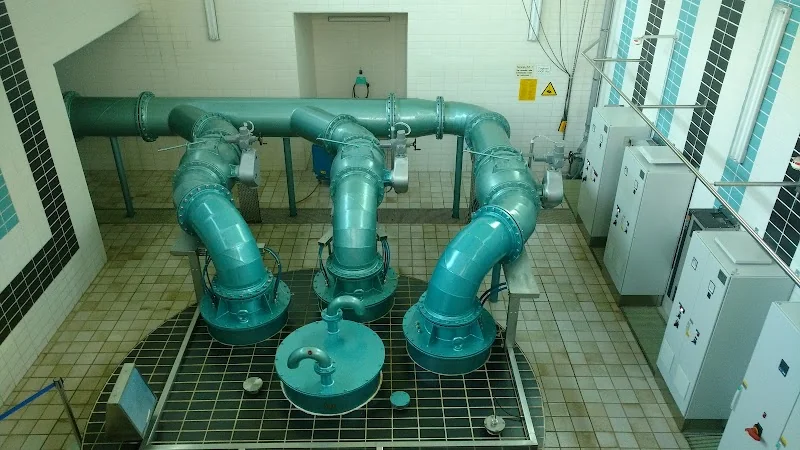
The interest in Waterworks Sallern photos is understandable because the place is visually unusual: no stage, no hall, no classic event building, but historical technology in a clearly functional environment. Official pages of REWAG and the city of Regensburg show images of the facility, including views of the historical machine house and pictures of the waterworks. This helps potential visitors to categorize the character of the place in advance. Those searching for photos usually want less a marketing image than a realistic impression of how the site feels, how historical the architecture is, and whether the place is worth a visit. This expectation is exactly what the official imagery fulfills: it presents the facility as a technically and historically charged environment and makes it clear that Sallern is not just any supply location but a significant piece of Regensburg's infrastructure history. ([rewag.de](https://www.rewag.de/))
It is particularly interesting that the visit on the open house day not only allows a look at buildings and wells but also changes the emotional perception of the place. From a usually rather invisible part of the city, it becomes a place of wonder and curiosity. The official description speaks of free tours, the path of drinking water from the well to the tap is explained, and visitors thus gain access that is normally not available in everyday life. For content planning, this perspective is important: photos, history, and tours are not separate topics but three perspectives on the same location. The Waterworks Sallern is particularly strong because it does not need to be staged. Its value lies in its authenticity. Therefore, anyone wanting to discover an authentic, technically historical Regensburg will find in Sallern a place that tells a lot with few visual means. ([regensburg.de](https://www.regensburg.de/veranstaltungen/detail/594469))
Frequently Asked Questions about REWAG, Tours, and Waterworks Sallern
In search queries like REWAG Waterworks Sallern, Waterworks Sallern tours, or Waterworks Sallern oldest waterworks, there are often very specific questions that should be answered directly. One of the most important is: Why is this place so relevant for Regensburg? The answer is clear: because it secures a very large share of the city's drinking water supply, according to the city and REWAG, and at the same time has a long history. A second common question concerns the visit itself. Here it is noted: The open house with free tours is officially highlighted; it is exactly there that visitors can get to know the facility. A third question concerns the technical significance. The answer is that three wells in Sallern pump water from great depths, this water is treated, and fed into a far-reaching network. Such facts make the waterworks a true key location in the city. ([regensburg.de](https://www.regensburg.de/veranstaltungen/detail/594469))
Also, the question of its classification in the city's history is central. The city of Regensburg connects Sallern with the incorporation of 1924 and emphasizes retrospectively that the northern districts benefited from water pipes and other infrastructures. The Waterworks Sallern therefore stands not only for supply but also for progress. Those wondering whether engaging with the site is worthwhile should start right here: it is not about a single building but about a piece of urban identity. Even search terms that refer to other places, such as Waterworks Salzkotten, Waterworks Salem, or Waterworks Salzuflen, indirectly show that users are looking for orientation. However, for Regensburg, Sallern is a distinct, clear reference point. This localization is important because it makes the content precise and anchors the place in the minds of users. That is why the Waterworks Sallern is a strong topic for both SEO and visitors alike. ([regensburg.de](https://www.regensburg.de/aktuelles/ansprachen-und-reden/archiv-2024/100-jahre-eingemeindung-noerdliche-stadtteile))
Sources:
Mehr anzeigenWeniger anzeigen
Waterworks Sallern | Tours & Drinking Water Regensburg
The Waterworks Sallern is much more than just a technical supply location for Regensburg. It is a historical infrastructure monument, an important building block of the city's drinking water supply, and at the same time a place where history, technology, and public benefit meet very directly. The city of Regensburg classifies Sallern as a district with a long history and describes the waterworks there as one of the oldest in Bavaria; at the same time, a large part of Regensburg's drinking water still comes from this area today. It is particularly exciting for visitors that the site only comes into the public eye during special occasions such as the open house or guided tours. This is where the special fascination lies: a building that normally functions in the background becomes visible and understandable on selected days. Official information mentions three wells, the supply through REWAG, the historical origin in 1875, and the significance for the entire city. Thus, Sallern is not only a search term for technology enthusiasts but also for anyone who wants to experience Regensburg from an unusual perspective. ([regensburg.de](https://www.regensburg.de/leben/regensburger-stadtteile/sallern-gallingkofen))
Particularly appealing is the connection between past and present. While the historical classification dates back to the late 19th century, the facility today operates embedded in a modern network that, according to REWAG, covers over 1,100 kilometers and supplies around 195,000 people daily. The Waterworks Sallern is therefore not just a monument but part of a living infrastructure that stands for supply security, water quality, and regional independence. Those searching for Waterworks Sallern Regensburg, REWAG Waterworks Sallern, or Waterworks Sallern photos are often looking for this mix of rare access, technical significance, and local character. Official images on the REWAG and city pages already provide a first impression; a visit on-site complements this impression with the opportunity to better understand the path of drinking water. The rare opening for guests makes the waterworks a location that, despite its technical function, has a strong emotional impact. ([regensburg.de](https://www.regensburg.de/veranstaltungen/detail/594469))
Open House at Waterworks Sallern: Tours, Times, and Visitor Experience
The currently most important visitor event is the open house at Waterworks Sallern. The city of Regensburg announces a visiting period of 11:00 AM to 5:00 PM on April 19, 2026, free tours from 11:00 AM to 4:30 PM, and notes that no registration is required. REWAG also describes the event as an open insight behind the scenes as part of the 50th anniversary of the company and emphasizes that visitors can see where and how drinking water is obtained. For search queries such as Waterworks Sallern Open House, Waterworks Sallern Regensburg, or REWAG Waterworks Sallern, this is the central information because it determines actual access to the site. Instead of a classic event location with a permanent exhibition, Sallern is an infrastructure site with a very clear public viewing date. This is what makes it appealing: those who come here do not experience an arbitrary event space but a genuine insight into the city's supply. ([regensburg.de](https://www.regensburg.de/veranstaltungen/detail/594469))
The visiting offer is intentionally kept low-threshold. The official city website mentions a colorful children's program, food and drinks at prices like 50 years ago, as well as free drinking water fresh from the well. This mix of celebration, information, and regional reference makes the open house a family-friendly event. The event location is near Sallermühle and is easily accessible by bike and bus line 3; additionally, parking options on the street are mentioned. Thus, the open house meets several expectations at once: it is technology-oriented, locally anchored, and accessible to different target groups. Those who only know the waterworks by name get the chance to experience the place not abstractly but concretely. This is also interesting for people who are actually just looking for photos, history, or practical information, as the best impressions of the Waterworks Sallern are often created on such days. ([regensburg.de](https://www.regensburg.de/veranstaltungen/detail/594469))
History of Waterworks Sallern: Why This Place is Among the Oldest in Bavaria
The historical significance of Waterworks Sallern is extraordinary. The city of Regensburg notes for the district of Sallern that the waterworks dates back to 1875 and thus is one of the oldest in Bavaria. At the same time, the city describes the district as an area with a very long settlement history: the first settlements can be traced back to the year 1007, the parish of Sallern is mentioned for the first time in 1161, and in the 17th century, the quarry near Sallern played an important role in construction and repair work in the city. This long development explains why Sallern can be read not only as a drinking water location but also as part of Regensburg's urban history. The waterworks is therefore not isolated but part of a neighborhood that has grown over centuries and whose name is closely linked to location, river proximity, and regional identity. ([regensburg.de](https://www.regensburg.de/leben/regensburger-stadtteile/sallern-gallingkofen))
The municipal classification is also important. In 1924, Sallern was incorporated into Regensburg along with Stadtamhof; the city emphasizes retrospectively that the northern part of Regensburg benefited from water pipes, trams, and other infrastructure services due to this incorporation. At the same time, the city explicitly points out in 2024 that the Sallern waterworks is among the oldest in Bavaria and is perceived as a defining feature of the district. This is as important for SEO considerations as it is for content: those searching for Waterworks Sallern history expect not only a technical chronicle but also the connection between urban development, supply, and municipal modernization. Sallern provides exactly this connection. It is a place where the transformation from a historical periphery to a fundamental supply center can be traced. In this sense, the waterworks is not only old but historically relevant because it continues to contribute to the development of Regensburg to this day. ([regensburg.de](https://www.regensburg.de/aktuelles/ansprachen-und-reden/archiv-2024/100-jahre-eingemeindung-noerdliche-stadtteile))
Drinking Water for Regensburg: Wells, Depths, and Water Protection Area
Content-wise, the most important role of the waterworks is for the drinking water supply of the city. The city of Regensburg states that around 80 percent of the city's drinking water comes from three wells in Sallern. REWAG further specifies the entire supply: about 75 percent of Regensburg's drinking water comes from the Sallern water extraction facility, approximately 20 percent from the Oberer Wöhrd waterworks, and 5 percent from the Laub facility. The pipeline network is over 1,100 kilometers long, around 195,000 people are supplied daily, and the water supply is surrounded by a water protection area that is intended to ensure natural and hygienically flawless drinking water. For search queries like Waterworks Sallern drinking water, Waterworks Sallern water protection area, or Waterworks Sallern Regensburg, these are the decisive facts. They show that Sallern is not just any technical site but a central source of urban public services. ([regensburg.de](https://www.regensburg.de/leben/regensburger-stadtteile/sallern-gallingkofen))
The technical side is also remarkable. The city of Regensburg describes the groundwater as mineral-rich and mentions extraction at depths of 60 to 170 meters from a fractured karst layer of the White Jura. REWAG adds that the three wells can pump up to 600 liters per second and that the extracted raw water is treated in several steps. A precautionary disinfection, the use of very low amounts of chlorine dioxide at the Waterworks Sallern and Oberer Wöhrd, as well as activated carbon filtration are described by REWAG as part of the treatment process. For readers, this is exciting because it becomes visible how natural groundwater and modern water treatment interact. The Waterworks Sallern thus represents a high technical standard that does not rely on show effects but on safety, purity, and supply continuity. Therefore, those who visit the facility understand not just a building but the path of water from the underground to the tap. ([regensburg.de](https://www.regensburg.de/leben/regensburger-stadtteile/sallern-gallingkofen))
Directions and Parking at Waterworks Sallern
For many users, the practical question of directions and parking is at least as important as the history of the site. The city of Regensburg answers this question very concretely: The Waterworks Sallern is located near Sallermühle and is easily accessible by bicycle. Additionally, the city mentions bus line 3 with the stop Gallingkofen and points out parking options on the street. For search terms like Waterworks Sallern directions, Waterworks Sallern parking, or Waterworks Sallern bus 3, this is exactly the kind of information that is immediately helpful. The site is therefore not a classic inner-city space but also not a hard-to-reach excursion destination. It can be relatively easily accessed by public transport, bike, or car, provided one uses the hints from the official event calendar. This is crucial, especially for an open house, as visitor flows should be possible without complicated logistics. ([regensburg.de](https://www.regensburg.de/veranstaltungen/detail/594469))
In the SEO context, it is worthwhile to present this information clearly and user-oriented. Many people are not only looking for the place itself but also for a quick answer to the question of how to practically arrive there. Therefore, phrases like parking on the street, easily accessible by bicycle, and bus line 3 are not trivial but central conversion elements. The location in Regensburg-Sallern is also important because it geographically clearly locates the site and connects it with the northern urban area. For visitors, this means: The waterworks is not an anonymous industrial object but an accessible part of the district. Those planning a visit should pay attention to the official address and the city's hints, as access routes and visitor paths can differ from those of classic event locations at infrastructure sites. The best chances for a relaxed visit are when one aligns arrival and time window with the official opening times. ([regensburg.de](https://www.regensburg.de/veranstaltungen/detail/594469))
Photos, Impressions, and What Visitors Can Expect at Waterworks Sallern
The interest in Waterworks Sallern photos is understandable because the place is visually unusual: no stage, no hall, no classic event building, but historical technology in a clearly functional environment. Official pages of REWAG and the city of Regensburg show images of the facility, including views of the historical machine house and pictures of the waterworks. This helps potential visitors to categorize the character of the place in advance. Those searching for photos usually want less a marketing image than a realistic impression of how the site feels, how historical the architecture is, and whether the place is worth a visit. This expectation is exactly what the official imagery fulfills: it presents the facility as a technically and historically charged environment and makes it clear that Sallern is not just any supply location but a significant piece of Regensburg's infrastructure history. ([rewag.de](https://www.rewag.de/))
It is particularly interesting that the visit on the open house day not only allows a look at buildings and wells but also changes the emotional perception of the place. From a usually rather invisible part of the city, it becomes a place of wonder and curiosity. The official description speaks of free tours, the path of drinking water from the well to the tap is explained, and visitors thus gain access that is normally not available in everyday life. For content planning, this perspective is important: photos, history, and tours are not separate topics but three perspectives on the same location. The Waterworks Sallern is particularly strong because it does not need to be staged. Its value lies in its authenticity. Therefore, anyone wanting to discover an authentic, technically historical Regensburg will find in Sallern a place that tells a lot with few visual means. ([regensburg.de](https://www.regensburg.de/veranstaltungen/detail/594469))
Frequently Asked Questions about REWAG, Tours, and Waterworks Sallern
In search queries like REWAG Waterworks Sallern, Waterworks Sallern tours, or Waterworks Sallern oldest waterworks, there are often very specific questions that should be answered directly. One of the most important is: Why is this place so relevant for Regensburg? The answer is clear: because it secures a very large share of the city's drinking water supply, according to the city and REWAG, and at the same time has a long history. A second common question concerns the visit itself. Here it is noted: The open house with free tours is officially highlighted; it is exactly there that visitors can get to know the facility. A third question concerns the technical significance. The answer is that three wells in Sallern pump water from great depths, this water is treated, and fed into a far-reaching network. Such facts make the waterworks a true key location in the city. ([regensburg.de](https://www.regensburg.de/veranstaltungen/detail/594469))
Also, the question of its classification in the city's history is central. The city of Regensburg connects Sallern with the incorporation of 1924 and emphasizes retrospectively that the northern districts benefited from water pipes and other infrastructures. The Waterworks Sallern therefore stands not only for supply but also for progress. Those wondering whether engaging with the site is worthwhile should start right here: it is not about a single building but about a piece of urban identity. Even search terms that refer to other places, such as Waterworks Salzkotten, Waterworks Salem, or Waterworks Salzuflen, indirectly show that users are looking for orientation. However, for Regensburg, Sallern is a distinct, clear reference point. This localization is important because it makes the content precise and anchors the place in the minds of users. That is why the Waterworks Sallern is a strong topic for both SEO and visitors alike. ([regensburg.de](https://www.regensburg.de/aktuelles/ansprachen-und-reden/archiv-2024/100-jahre-eingemeindung-noerdliche-stadtteile))
Sources:
Waterworks Sallern | Tours & Drinking Water Regensburg
The Waterworks Sallern is much more than just a technical supply location for Regensburg. It is a historical infrastructure monument, an important building block of the city's drinking water supply, and at the same time a place where history, technology, and public benefit meet very directly. The city of Regensburg classifies Sallern as a district with a long history and describes the waterworks there as one of the oldest in Bavaria; at the same time, a large part of Regensburg's drinking water still comes from this area today. It is particularly exciting for visitors that the site only comes into the public eye during special occasions such as the open house or guided tours. This is where the special fascination lies: a building that normally functions in the background becomes visible and understandable on selected days. Official information mentions three wells, the supply through REWAG, the historical origin in 1875, and the significance for the entire city. Thus, Sallern is not only a search term for technology enthusiasts but also for anyone who wants to experience Regensburg from an unusual perspective. ([regensburg.de](https://www.regensburg.de/leben/regensburger-stadtteile/sallern-gallingkofen))
Particularly appealing is the connection between past and present. While the historical classification dates back to the late 19th century, the facility today operates embedded in a modern network that, according to REWAG, covers over 1,100 kilometers and supplies around 195,000 people daily. The Waterworks Sallern is therefore not just a monument but part of a living infrastructure that stands for supply security, water quality, and regional independence. Those searching for Waterworks Sallern Regensburg, REWAG Waterworks Sallern, or Waterworks Sallern photos are often looking for this mix of rare access, technical significance, and local character. Official images on the REWAG and city pages already provide a first impression; a visit on-site complements this impression with the opportunity to better understand the path of drinking water. The rare opening for guests makes the waterworks a location that, despite its technical function, has a strong emotional impact. ([regensburg.de](https://www.regensburg.de/veranstaltungen/detail/594469))
Open House at Waterworks Sallern: Tours, Times, and Visitor Experience
The currently most important visitor event is the open house at Waterworks Sallern. The city of Regensburg announces a visiting period of 11:00 AM to 5:00 PM on April 19, 2026, free tours from 11:00 AM to 4:30 PM, and notes that no registration is required. REWAG also describes the event as an open insight behind the scenes as part of the 50th anniversary of the company and emphasizes that visitors can see where and how drinking water is obtained. For search queries such as Waterworks Sallern Open House, Waterworks Sallern Regensburg, or REWAG Waterworks Sallern, this is the central information because it determines actual access to the site. Instead of a classic event location with a permanent exhibition, Sallern is an infrastructure site with a very clear public viewing date. This is what makes it appealing: those who come here do not experience an arbitrary event space but a genuine insight into the city's supply. ([regensburg.de](https://www.regensburg.de/veranstaltungen/detail/594469))
The visiting offer is intentionally kept low-threshold. The official city website mentions a colorful children's program, food and drinks at prices like 50 years ago, as well as free drinking water fresh from the well. This mix of celebration, information, and regional reference makes the open house a family-friendly event. The event location is near Sallermühle and is easily accessible by bike and bus line 3; additionally, parking options on the street are mentioned. Thus, the open house meets several expectations at once: it is technology-oriented, locally anchored, and accessible to different target groups. Those who only know the waterworks by name get the chance to experience the place not abstractly but concretely. This is also interesting for people who are actually just looking for photos, history, or practical information, as the best impressions of the Waterworks Sallern are often created on such days. ([regensburg.de](https://www.regensburg.de/veranstaltungen/detail/594469))
History of Waterworks Sallern: Why This Place is Among the Oldest in Bavaria
The historical significance of Waterworks Sallern is extraordinary. The city of Regensburg notes for the district of Sallern that the waterworks dates back to 1875 and thus is one of the oldest in Bavaria. At the same time, the city describes the district as an area with a very long settlement history: the first settlements can be traced back to the year 1007, the parish of Sallern is mentioned for the first time in 1161, and in the 17th century, the quarry near Sallern played an important role in construction and repair work in the city. This long development explains why Sallern can be read not only as a drinking water location but also as part of Regensburg's urban history. The waterworks is therefore not isolated but part of a neighborhood that has grown over centuries and whose name is closely linked to location, river proximity, and regional identity. ([regensburg.de](https://www.regensburg.de/leben/regensburger-stadtteile/sallern-gallingkofen))
The municipal classification is also important. In 1924, Sallern was incorporated into Regensburg along with Stadtamhof; the city emphasizes retrospectively that the northern part of Regensburg benefited from water pipes, trams, and other infrastructure services due to this incorporation. At the same time, the city explicitly points out in 2024 that the Sallern waterworks is among the oldest in Bavaria and is perceived as a defining feature of the district. This is as important for SEO considerations as it is for content: those searching for Waterworks Sallern history expect not only a technical chronicle but also the connection between urban development, supply, and municipal modernization. Sallern provides exactly this connection. It is a place where the transformation from a historical periphery to a fundamental supply center can be traced. In this sense, the waterworks is not only old but historically relevant because it continues to contribute to the development of Regensburg to this day. ([regensburg.de](https://www.regensburg.de/aktuelles/ansprachen-und-reden/archiv-2024/100-jahre-eingemeindung-noerdliche-stadtteile))
Drinking Water for Regensburg: Wells, Depths, and Water Protection Area
Content-wise, the most important role of the waterworks is for the drinking water supply of the city. The city of Regensburg states that around 80 percent of the city's drinking water comes from three wells in Sallern. REWAG further specifies the entire supply: about 75 percent of Regensburg's drinking water comes from the Sallern water extraction facility, approximately 20 percent from the Oberer Wöhrd waterworks, and 5 percent from the Laub facility. The pipeline network is over 1,100 kilometers long, around 195,000 people are supplied daily, and the water supply is surrounded by a water protection area that is intended to ensure natural and hygienically flawless drinking water. For search queries like Waterworks Sallern drinking water, Waterworks Sallern water protection area, or Waterworks Sallern Regensburg, these are the decisive facts. They show that Sallern is not just any technical site but a central source of urban public services. ([regensburg.de](https://www.regensburg.de/leben/regensburger-stadtteile/sallern-gallingkofen))
The technical side is also remarkable. The city of Regensburg describes the groundwater as mineral-rich and mentions extraction at depths of 60 to 170 meters from a fractured karst layer of the White Jura. REWAG adds that the three wells can pump up to 600 liters per second and that the extracted raw water is treated in several steps. A precautionary disinfection, the use of very low amounts of chlorine dioxide at the Waterworks Sallern and Oberer Wöhrd, as well as activated carbon filtration are described by REWAG as part of the treatment process. For readers, this is exciting because it becomes visible how natural groundwater and modern water treatment interact. The Waterworks Sallern thus represents a high technical standard that does not rely on show effects but on safety, purity, and supply continuity. Therefore, those who visit the facility understand not just a building but the path of water from the underground to the tap. ([regensburg.de](https://www.regensburg.de/leben/regensburger-stadtteile/sallern-gallingkofen))
Directions and Parking at Waterworks Sallern
For many users, the practical question of directions and parking is at least as important as the history of the site. The city of Regensburg answers this question very concretely: The Waterworks Sallern is located near Sallermühle and is easily accessible by bicycle. Additionally, the city mentions bus line 3 with the stop Gallingkofen and points out parking options on the street. For search terms like Waterworks Sallern directions, Waterworks Sallern parking, or Waterworks Sallern bus 3, this is exactly the kind of information that is immediately helpful. The site is therefore not a classic inner-city space but also not a hard-to-reach excursion destination. It can be relatively easily accessed by public transport, bike, or car, provided one uses the hints from the official event calendar. This is crucial, especially for an open house, as visitor flows should be possible without complicated logistics. ([regensburg.de](https://www.regensburg.de/veranstaltungen/detail/594469))
In the SEO context, it is worthwhile to present this information clearly and user-oriented. Many people are not only looking for the place itself but also for a quick answer to the question of how to practically arrive there. Therefore, phrases like parking on the street, easily accessible by bicycle, and bus line 3 are not trivial but central conversion elements. The location in Regensburg-Sallern is also important because it geographically clearly locates the site and connects it with the northern urban area. For visitors, this means: The waterworks is not an anonymous industrial object but an accessible part of the district. Those planning a visit should pay attention to the official address and the city's hints, as access routes and visitor paths can differ from those of classic event locations at infrastructure sites. The best chances for a relaxed visit are when one aligns arrival and time window with the official opening times. ([regensburg.de](https://www.regensburg.de/veranstaltungen/detail/594469))
Photos, Impressions, and What Visitors Can Expect at Waterworks Sallern
The interest in Waterworks Sallern photos is understandable because the place is visually unusual: no stage, no hall, no classic event building, but historical technology in a clearly functional environment. Official pages of REWAG and the city of Regensburg show images of the facility, including views of the historical machine house and pictures of the waterworks. This helps potential visitors to categorize the character of the place in advance. Those searching for photos usually want less a marketing image than a realistic impression of how the site feels, how historical the architecture is, and whether the place is worth a visit. This expectation is exactly what the official imagery fulfills: it presents the facility as a technically and historically charged environment and makes it clear that Sallern is not just any supply location but a significant piece of Regensburg's infrastructure history. ([rewag.de](https://www.rewag.de/))
It is particularly interesting that the visit on the open house day not only allows a look at buildings and wells but also changes the emotional perception of the place. From a usually rather invisible part of the city, it becomes a place of wonder and curiosity. The official description speaks of free tours, the path of drinking water from the well to the tap is explained, and visitors thus gain access that is normally not available in everyday life. For content planning, this perspective is important: photos, history, and tours are not separate topics but three perspectives on the same location. The Waterworks Sallern is particularly strong because it does not need to be staged. Its value lies in its authenticity. Therefore, anyone wanting to discover an authentic, technically historical Regensburg will find in Sallern a place that tells a lot with few visual means. ([regensburg.de](https://www.regensburg.de/veranstaltungen/detail/594469))
Frequently Asked Questions about REWAG, Tours, and Waterworks Sallern
In search queries like REWAG Waterworks Sallern, Waterworks Sallern tours, or Waterworks Sallern oldest waterworks, there are often very specific questions that should be answered directly. One of the most important is: Why is this place so relevant for Regensburg? The answer is clear: because it secures a very large share of the city's drinking water supply, according to the city and REWAG, and at the same time has a long history. A second common question concerns the visit itself. Here it is noted: The open house with free tours is officially highlighted; it is exactly there that visitors can get to know the facility. A third question concerns the technical significance. The answer is that three wells in Sallern pump water from great depths, this water is treated, and fed into a far-reaching network. Such facts make the waterworks a true key location in the city. ([regensburg.de](https://www.regensburg.de/veranstaltungen/detail/594469))
Also, the question of its classification in the city's history is central. The city of Regensburg connects Sallern with the incorporation of 1924 and emphasizes retrospectively that the northern districts benefited from water pipes and other infrastructures. The Waterworks Sallern therefore stands not only for supply but also for progress. Those wondering whether engaging with the site is worthwhile should start right here: it is not about a single building but about a piece of urban identity. Even search terms that refer to other places, such as Waterworks Salzkotten, Waterworks Salem, or Waterworks Salzuflen, indirectly show that users are looking for orientation. However, for Regensburg, Sallern is a distinct, clear reference point. This localization is important because it makes the content precise and anchors the place in the minds of users. That is why the Waterworks Sallern is a strong topic for both SEO and visitors alike. ([regensburg.de](https://www.regensburg.de/aktuelles/ansprachen-und-reden/archiv-2024/100-jahre-eingemeindung-noerdliche-stadtteile))
Sources:
Upcoming Events
No events found
Frequently Asked Questions
Reviews
Roland
30. September 2018
We were here for a guided tour on Heritage Day. Otherwise, you can't get in. The old building houses an ancient pump and drive technology from the Wilhelminian era. Worth seeing.
Susanne Ach
7. January 2025
Very interesting insights
Roland Huber
30. November 2021
Nice people, would love to come again.
F Schmitt
19. April 2026
Karlotta Inge
14. November 2024