
Bonnie und Clyde
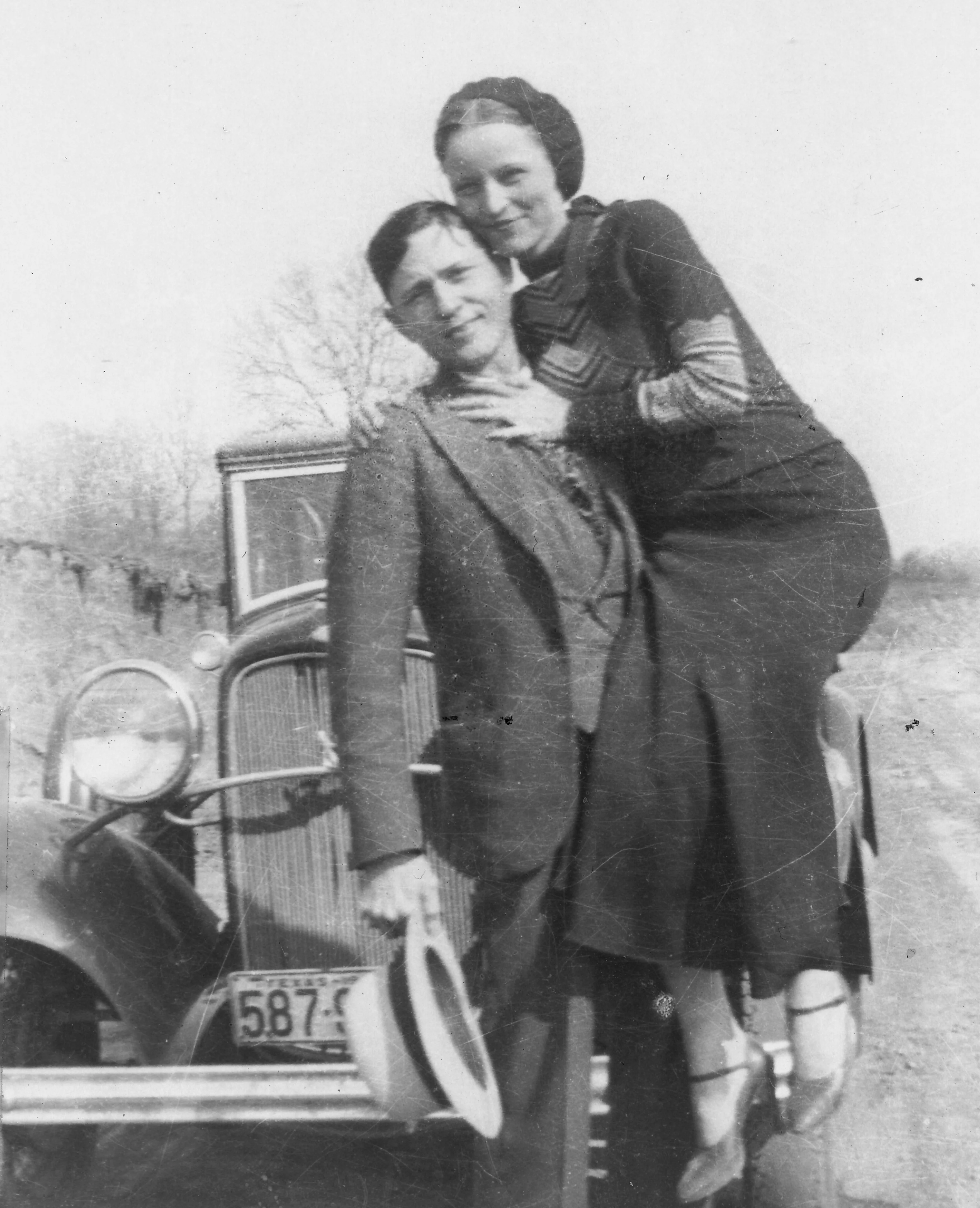
Image from Wikipedia
Image from Wikipedia
Bonnie and Clyde: The Notorious Gangster Couple That Became a Pop Culture Icon
Myth, Violence, and Media Frenzy During the Great Depression
Bonnie Parker and Clyde Barrow are not musicians but historical figures from American crime history: a couple that roamed the Midwest of the USA in the 1930s, leaving a trail of robberies, escapes, and murders as part of the Barrow Gang. Their story is intricately linked to the Great Depression, media publicity, and the romantic mythologizing of outlaws, giving it immense cultural resonance even today. From a criminal duo, they became a symbol of despair, rebellion, and deadly consequence. ([de.wikipedia.org](https://de.wikipedia.org/wiki/Bonnie_und_Clyde))
The Historical Figures Behind the Myth
Bonnie Elizabeth Parker was born in 1910 in Rowena, Texas, and grew up in West Dallas with her mother and siblings after her father's early death. Sources describe her as a good student with a penchant for writing and the arts; her poem The Story of Bonnie and Clyde was later published by newspapers and contributed to her legend. Clyde Chestnut Barrow was born in 1909 near Dallas, came from poor circumstances, and got into trouble with the law at an early age. ([de.wikipedia.org](https://de.wikipedia.org/wiki/Bonnie_und_Clyde))
Their connection did not arise from a classic love story but from a mix of loyalty, shared escape, and an increasingly brutal criminal dynamic. Biographical traces show how deeply personal bonds and social vulnerability intertwined. Especially Clyde developed into a highly dangerous criminal during his time in prison and on the run, while Bonnie, despite her involvement, was often perceived as the more literary, mythical figure. ([de.wikipedia.org](https://de.wikipedia.org/wiki/Bonnie_und_Clyde))
Criminal Career in the Public Enemy Era
Bonnie and Clyde became feared names during the Great Depression as they, along with other accomplices, robbed grocery stores, gas stations, and smaller banks. Wikipedia attributes a total of 14 murders to the duo and their associates, mostly of police officers; other reports emphasize the escalating violence of the Barrow Gang and the increasing brutality of their methods. From 1931 to 1935, the so-called "Public Enemy Era" emerged, where criminals like John Dillinger, Alvin Karpis, and Bonnie and Clyde shaped the public climate. ([de.wikipedia.org](https://de.wikipedia.org/wiki/Bonnie_und_Clyde))
Central to the myth was their constant flight from the authorities. Clyde escaped from the police multiple times in a Ford V8, whose speed became almost a trademark feature of his criminal career in reports. At the same time, law enforcement agencies were poorly coordinated during this time; this combination of mobility, chance, and state overreach made the crime spree a media spectacle. ([de.wikipedia.org](https://de.wikipedia.org/wiki/Bonnie_und_Clyde))
From Crime to Legend
The actual cultural breakthrough of Bonnie and Clyde occurred not only through their actions but through their images. The police released photographs in 1933 showing Bonnie posing with a gun and a cigarette; these images made the couple appear as "criminal superstars" and even sex symbols by contemporary standards. Thus, the legend did not arise in secrecy but in the interplay of police, tabloid press, and public fascination. ([geo.de](https://www.geo.de/wissen/weltgeschichte/bonnie-und-clyde--das-legendaere-verbrecherpaar-34735190.html))
Deutschlandfunk Kultur describes Bonnie and Clyde as integral to pop culture, a couple that has been filmed and sung about. The myth continues to resonate today because it tells much more than just a crime story: it addresses social hardship, powerlessness, loyalty, and the allure of the lawless. Historical research also shows that neither was a brilliant master criminal, but rather amateurs who were very good at driving cars and yet developed a destructive career of violence and flight. ([deutschlandfunkkultur.de](https://www.deutschlandfunkkultur.de/sozialgeschichte-bonnie-und-clyde-jenseits-des-mythos-100.html))
The Final Months and the Bloody End
The situation escalated further in 1934 when the Barrow Gang carried out a prison break in Eastham, leaving more casualties. The manhunt intensified after that; ultimately, an acquaintance lured the couple into a trap in Louisiana in May 1934. On May 23, 1934, their flight ended in an ambush by the police, who riddled the Ford with bullets, killing Bonnie Parker and Clyde Barrow. ([geo.de](https://www.geo.de/wissen/weltgeschichte/bonnie-und-clyde--das-legendaere-verbrecherpaar-34735190.html))
Particularly striking is how reports depict the end: brutal, swift, and devoid of any pathos. It was this uncompromising conclusion that retrospectively bolstered the formation of the legend, as death abruptly closed the narrative and opened the myth for later books, films, poems, songs, and even a Broadway musical. The historical reality and the cultural glorification have since become almost indistinguishable. ([geo.de](https://www.geo.de/wissen/weltgeschichte/bonnie-und-clyde--das-legendaere-verbrecherpaar-34735190.html))
Musical and Cultural Reception
Even though Bonnie and Clyde do not have a discography themselves, their story has significantly influenced music history. The motif of the romantically inseparable couple "against the rest of the world" reappears in songs, stage works, and pop narratives time and again. The fascination lies in the drama: two young people, pursuit, speed, loyalty, escalation, and a tragic finale. These very elements continue to make the story attractive to musicians, songwriters, and playwrights today. ([geo.de](https://www.geo.de/wissen/weltgeschichte/bonnie-und-clyde--das-legendaere-verbrecherpaar-34735190.html))
In cultural terms, Bonnie and Clyde are cited as an example of how media images transform criminals into icons. This distinguishes their posthumous fame from mere crime reporting: a crime turned into a narrative, a couple into a cipher, a police report into a collective myth. Anyone looking at their story today recognizes not only an American chapter from the 1930s but also an early example of modern pop and media logic. ([deutschlandfunkkultur.de](https://www.deutschlandfunkkultur.de/sozialgeschichte-bonnie-und-clyde-jenseits-des-mythos-100.html))
Social Media and Official Channels
- Instagram: no official profile found
- Facebook: no official profile found
- YouTube: no official profile found
- Spotify: no official profile found
- TikTok: no official profile found
Conclusion: Why Bonnie and Clyde Fascinate to This Day
Bonnie and Clyde remain intriguing because their story extends far beyond criminality. It connects social hardship, media staging, personal bonds, and an uncompromising escape into lawlessness. The couple represents one of the most famous and simultaneously contradictory legends in American cultural history. ([de.wikipedia.org](https://de.wikipedia.org/wiki/Bonnie_und_Clyde))
For those interested in myth, music, film, and cultural history, here lies a narrative of immense power. The presence of this story in literature, film, and songwriting demonstrates how strongly Bonnie and Clyde continue to resonate as a symbol today. For this reason, it is worthwhile to read the historical sources, question the legend, and explore the myth anew time and again. ([geo.de](https://www.geo.de/wissen/weltgeschichte/bonnie-und-clyde--das-legendaere-verbrecherpaar-34735190.html))