
Butch und Femme
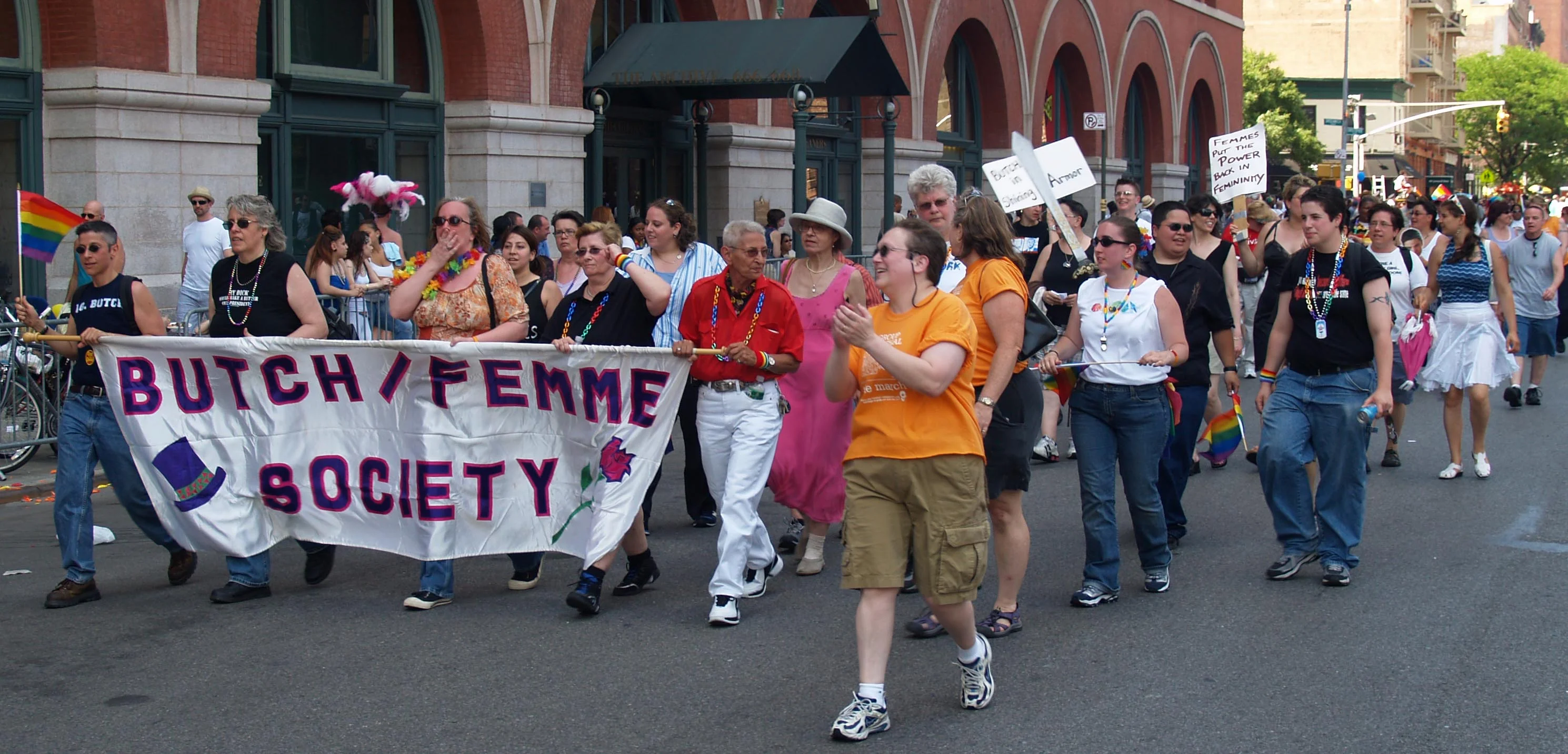
Image from Wikipedia
Image from Wikipedia
Butch and Femme: Queer Gender Codes, Cultural History, and the Language of Lesbian Visibility
A Historical Concept Pair: Butch and Femme Between Identity, Style, and Resistance
“Butch and Femme” does not refer to a specific musician, but rather to two historically grown, opposing forms of non-heterosexual gender expression in lesbian and queer contexts. The term describes a cultural practice in which masculinity and femininity do not appear as rigid opposites, but as consciously chosen, socially readable forms of expression. In queer history, this concept pair represents visibility, coding, and the power to shape bodies, clothing, and presence beyond heteronormative expectations. ([en.wikipedia.org](https://en.wikipedia.org/wiki/Butch_and_femme?utm_source=openai))
What Butch and Femme Mean
Butch refers to a masculine or masculinely read self-presentation, while Femme denotes a feminine or femininely read positioning within lesbian and sapphic subcultures. The terms originate from American lesbian communities of the 1940s and 1950s, where they emerged as forms of gender expression visible in everyday life, bars, romantic relationships, and the language of the scene. In research, the pair is not seen as mere imitation of heterosexual roles but as an independent, historically developed queer cultural form. ([en.wikipedia.org](https://en.wikipedia.org/wiki/Femme?utm_source=openai))
Historical Roots in Queer Subculture
The history of Butch and Femme is closely linked to the social conditions of lesbian life in the 20th century. Under conditions of taboo, police pressure, and social exclusion, codes for belonging, desire, and protection developed. Particularly in postwar bar cultures, butch-femme relationships became a readable form of lesbian intimacy, transforming roles, clothing, and gestures into a distinct cultural system. This practice was not merely decorative but a means of self-assertion in a hostile environment. ([en.wikipedia.org](https://en.wikipedia.org/wiki/History_of_lesbianism?utm_source=openai))
More than Role Stereotypes: Social Function and Cultural Tension
The significance of Butch and Femme has never been uniform, and therein lies its cultural tension. In some contexts, these identities were celebrated as expressions of erotic freedom and lesbian autonomy, while in others, they were criticized for being too close to heterosexual patterns. Research shows that the categories evolved over the decades: from visible scene codes to political points of contention and today's plural self-designations within queer communities. ([encyclopedia.com](https://www.encyclopedia.com/social-sciences/encyclopedias-almanacs-transcripts-and-maps/butchfemme?utm_source=openai))
Between Feminism, Visibility, and Conflict
In the 1970s, Butch and Femme identities came under pressure at times, as some lesbian feminist movements interpreted them as too normative or as a reflection of heterosexual gender order. At the same time, other voices insisted that these expressions made lesbian culture readable and must be understood not as subordination but as autonomous aesthetics. Joan Nestle and other authors emphasized that Butch-Femme forms possess their own language of attitude, clothing, love, and courage. ([encyclopedia.com](https://www.encyclopedia.com/social-sciences/encyclopedias-almanacs-transcripts-and-maps/butchfemme?utm_source=openai))
Butch, Femme, and Gender Performance Theory
From a queer-theoretical perspective, Butch and Femme are important examples of how gender is understood not only biologically or normatively but as a performative, culturally readable practice. Studies in gender and sexuality research examine how self-assignments relate to social behavior, relationship expectations, and sexual identity. Particularly, academic literature shows that Butch and Femme do not function as rigid boxes but as dynamic forms of self-description, desire, and social positioning. ([researchgate.net](https://www.researchgate.net/publication/233372836_Gender_within_lesbian_sexuality_Butch_and_femme_perspectives?utm_source=openai))
Representation in Research, Literature, and Pop Culture
The academic discourse on Butch and Femme spans from early lesbian studies to contemporary work on gender, subculture, and identity formation. Historical and cultural studies texts also explore the connection to music and performance: Butch Style, for example, has been linked with Black performers and blues artists, whose stage presence is read as a form of self-empowerment. This highlights that Butch and Femme are not merely private identities but also an aesthetic language of body, voice, and presence. ([academicworks.cuny.edu](https://academicworks.cuny.edu/gc_etds/2184/?utm_source=openai))
Why the Term Remains Relevant Today
Today, many queer individuals consciously reclaim the terms Butch and Femme in public to express clarity, nuance, and historical connectedness. The allure of these terms lies in their ambivalence: they are simultaneously political, intimate, stylistic, and community-oriented. At a time when gender is often discussed in simplified terms, Butch and Femme remind us that identity emerges not only in documents but also in attitude, language, desire, and social context. ([researchgate.net](https://www.researchgate.net/publication/249719861_Queer_Theory_ButchFemme_Identities_and_Lesbian_Space?utm_source=openai))
Context for Readers Seeking an "Artist Profile"
Those searching for Butch and Femme will not encounter a classic artist biography complete with discography, chart placements, or tour dates, but rather a culturally and historically significant pair of terms with enormous relevance for queer history. Precisely for this reason, the topic is suitable for an authoritative classification: It connects language history, gender studies, lesbian culture, social visibility, and aesthetic self-assertion. As a cultural phenomenon, Butch and Femme is a key to understanding queer identity in the 20th and 21st centuries. ([en.wikipedia.org](https://en.wikipedia.org/wiki/Butch_and_femme?utm_source=openai))
Conclusion: A Concept Pair That Makes Queer History Visible
Butch and Femme remain intriguing because they are more than just labels. This concept pair tells stories of emancipation, style consciousness, desire, and the right to stage gender independently. Anyone wanting to understand queer culture, lesbian history, and gender aesthetics cannot overlook Butch and Femme. Those wishing to experience this history live won't find it on a stage in the narrow sense, but within community, archives, literature, art, and the ongoing lives of queer identities. ([encyclopedia.com](https://www.encyclopedia.com/social-sciences/encyclopedias-almanacs-transcripts-and-maps/butchfemme?utm_source=openai))
Official Channels of Butch and Femme:
- Instagram: no official profile found
- Facebook: no official profile found
- YouTube: no official profile found
- Spotify: no official profile found
- TikTok: no official profile found
Sources:
- Wikipedia: Butch und Femme
- Wikipedia: Butch and femme
- Encyclopedia.com: Butch/Femme
- Encyclopedia.com: Femme
- PubMed: Butch-Femme Identity and Visuospatial Performance Among Lesbian and Bisexual Women in China
- PMC: Butch/Femme Differences in Substance Use and Abuse Among Young Lesbian and Bisexual Women
- Journal of Lesbian Studies: Explorations of Lesbian-Queer Genders: Butch, Femme, Androgynous or “Other”
- CUNY Academic Works: Butch Between the Wars