
Gerhard Polt
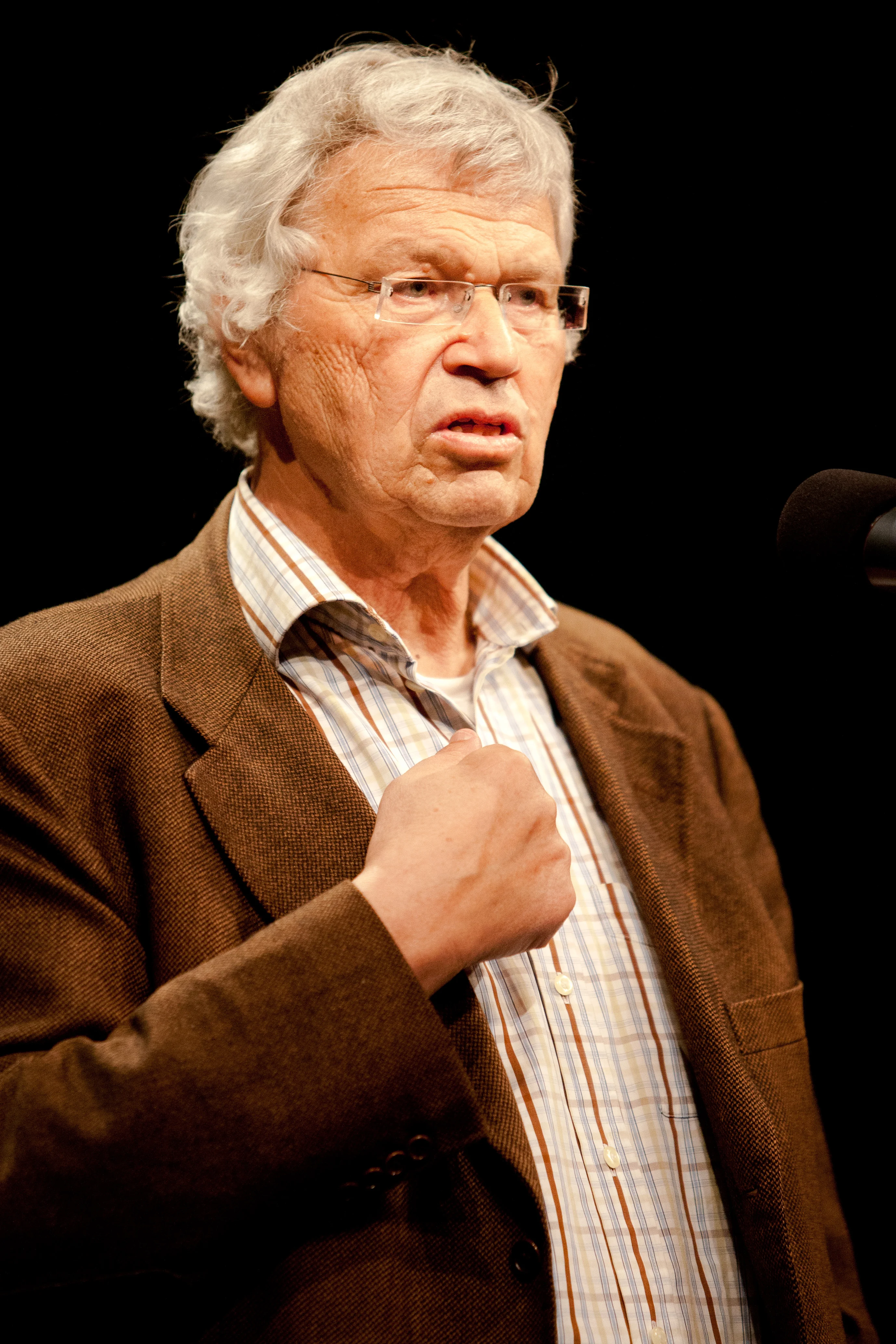
Image from Wikipedia
Image from Wikipedia
Gerhard Polt – the great grumbler of German cabaret history
An artist who condenses language, attitude, and societal sharpness into a distinctive stage art
Gerhard Polt, born on May 7, 1942, in Munich, is considered one of the most influential cabaret artists in the German-speaking world. As a writer, television and film actor, he developed an art form where linguistic wit, observational skills, and precise character portrayal intertwine. His career represents a rare mix of Bavarian grounding, intellectual sharpness, and bitter comedy. ([de.wikipedia.org](https://de.wikipedia.org/wiki/Gerhard_Polt))
Biographical roots: Munich, Altötting, Gothenburg
Polt's early life story is closely linked to the upheavals of the 20th century. After his birth, his mother moved with him to Altötting during World War II, and later the family returned to Munich. After graduating from high school, Polt studied political science, history, and later Scandinavian studies and Old Germanic studies in Gothenburg, where he also learned Swedish and even performed with a Swedish-language stage program. ([de.wikipedia.org](https://de.wikipedia.org/wiki/Gerhard_Polt))
This academic background continues to shape his work today: Polt thinks about societal roles not only comically but also historically and politically. From a translator, teacher, and interpreter, he became an artist who understands language as a social stage. This is where the core of his artistic development lies: observation becomes character for him, dialect becomes diagnosis, and everyday life becomes satire. ([de.wikipedia.org](https://de.wikipedia.org/wiki/Gerhard_Polt))
The breakthrough on stage: From radio play to cult status
His career began with a radio play production by Hessischer Rundfunk, before his first stage performance in the Munich Kleine Freiheit in 1975. Early on, Polt collaborated with director Hanns Christian Müller and created major audience successes at the Munich Kammerspiele with programs such as "Diridari" and "Tschurangrati." These works made him not only a prominent voice in cabaret regionally but also nationwide. ([de.wikipedia.org](https://de.wikipedia.org/wiki/Gerhard_Polt))
Polt experienced widespread success with the sketch series "Fast wia im richtigen Leben," which aired from 1979 to 1988 and made him known to millions of viewers. The show combined precise observations of everyday life with bitter comedy and became a pivotal point of his music career in the broader sense: not as a musician, but as a stage artist who uses rhythm, timing, and linguistic melody as musical means. He continued this signature style in works like "Kehraus," "Man spricht deutsh," and "Germanikus" in television and cinema. ([de.wikipedia.org](https://de.wikipedia.org/wiki/Gerhard_Polt))
Style and signature: Satire as a social scalpel
Polt's characters belong to the most penetrating types in German cabaret history. He often plays the narrow-minded, self-assured citizen who expresses his prejudices with disarming casualness. He works with clichés, dialect, pauses, and linguistic logic so precisely that entertainment becomes a deeper form of societal analysis. ([de.wikipedia.org](https://de.wikipedia.org/wiki/Gerhard_Polt))
The press has repeatedly emphasized this quality. The Süddeutsche Zeitung recently described a career that has grown over decades, portraying Polt as an authority on Munich's cultural scene. Die Zeit and Der Spiegel early on highlighted his extraordinary impact as a satirical observer, whose humor is rooted in the abysses of normality. Die Presse also honored him as a formative figure with "canon-forming" programs, films, and books. ([sueddeutsche.de](https://www.sueddeutsche.de/projekte/artikel/kultur/kammerspiele-gerhard-polt-muenchen-karriere-50-jahre-interview-e039376/?utm_source=openai))
Collaboration with Biermösl Blosn and the Well Brothers
A special driving force of his art is the musical partnerships. Polt performed many stages with Biermösl Blosn, whose folk music-colored, satirical energy sharpened and expanded his texts. This tradition later continued with the Well Brothers, with whom Polt realized theater evenings, CDs, and live projects. ([de.wikipedia.org](https://de.wikipedia.org/wiki/Gerhard_Polt))
Especially in these collaborations, Polt's extraordinary ability for musical dramaturgy is evident. Brass music, folk songs, cabaret, and improvisational elements blend into a form of musical theater that is deeply rooted in Bavarian culture while simultaneously exposing its mechanisms. The Deutschlandfunk-Kultur review highlighted how in projects like "E-Mam-Be-Le," Bavarian brass music and improvised jazz sounds meet. ([deutschlandfunkkultur.de](https://www.deutschlandfunkkultur.de/altmeister-des-bayerischen-lebensgefuehls-102.html?utm_source=openai))
Discography: Radio plays, CDs, stage recordings, and chart-relevant releases
Polt's discography is closely intertwined with his stage work and documents his development over decades. Among the early and important releases are "Als wenn man ein Dachs wär’ in seinem Bau" (1976), "Der Erwin I" (1977), "D’ Anni hat g’sagt …" (1979), "Leberkäs’ Hawaii" (1981), and "Fast wia im richtigen Leben" (1981). Later titles such as "Und, wer zahlt’s?", "Abfent, Abfent …!", "Eine menschliche Sau," and "40 Jahre" show how consistently his repertoire has been maintained, expanded, and reissued. ([de.wikipedia.org](https://de.wikipedia.org/wiki/Gerhard_Polt))
Polt also left his mark on the charts: "Und, wer zahlt’s?" reached number 94 in Germany, "Abfent, Abfent …!" number 91, "Eine menschliche Sau" number 100, and "40 Jahre" climbed to number 10 in Germany and number 42 in Austria in 2020. This demonstrates that his releases have remained relevant not only culturally but also commercially. He has often been critically regarded as a language artist and chronicler of Bavarian-German everyday life, whose influence extends far beyond cabaret. ([de.wikipedia.org](https://de.wikipedia.org/wiki/Gerhard_Polt))
Recent developments, awards, and late recognition
Polt remains present even in recent times. In 2024, he was awarded the Federal Cross of Merit, and in 2025, the Bavarian Art Prize as an honorary award from the Bavarian Minister-President followed. He had already received numerous honors, including the Große Karl-Valentin-Preis, the Salzburger Stier, the Bayerischen Verdienstorden, and the Cultural Honorary Award of the State Capital Munich. ([de.wikipedia.org](https://de.wikipedia.org/wiki/Gerhard_Polt))
This late recognition underscores the enduring nature of his artistic authority. Polt represents a cabaret tradition that does not aim for quick punchlines but instead focuses on cultural substance, linguistic precision, and societal relevance. His recent honors indicate that his work continues to be regarded as a reference for humor, attitude, and artistic independence. ([de.wikipedia.org](https://de.wikipedia.org/wiki/Gerhard_Polt))
Cultural influence: Bavaria, Germany, and the view on power
Gerhard Polt is more than a cabaret artist; he is a cultural institution. His characters, ways of speaking, and studies of social milieu have profoundly shaped the perception of Bavarian identity and German provincialism. With humor, he hits precisely where self-satisfaction, narrow-mindedness, and power mechanisms become visible. ([de.wikipedia.org](https://de.wikipedia.org/wiki/Gerhard_Polt))
His influence extends equally into film, television, literature, and live culture. He has written books, created plays, acted in films, and has been described by various media as an outstanding figure in German-speaking humor. The combination of regional rooting and universal insight into human nature makes him equally intriguing for audiences and the professional world. ([de.wikipedia.org](https://de.wikipedia.org/wiki/Gerhard_Polt))
Conclusion: A master of precise observation
Gerhard Polt remains fascinating because he never understands comedy as a mere effect. His art thrives on language, timing, musical sensitivity, and a sharp observation of society. Those who want to understand how cabaret becomes art find in his work one of the richest and most consistent signatures of German-speaking cultural life. ([de.wikipedia.org](https://de.wikipedia.org/wiki/Gerhard_Polt))
Experiencing Polt live reveals that unique blend of irony, warmth, and aggression that makes his stage presence so legendary. His programs are not nostalgia but vibrant contemporary art. Seeing him on stage means listening to language thinking. ([de.wikipedia.org](https://de.wikipedia.org/wiki/Gerhard_Polt))
Official channels of Gerhard Polt:
- Instagram: No official profile found
- Facebook: No official profile found
- YouTube: No official profile found
- Spotify: No official profile found
- TikTok: No official profile found
Sources:
- Wikipedia – Gerhard Polt
- polt.de – Friends and Partners
- Süddeutsche Zeitung – Gerhard Polt: "I was never particularly ambitious, it all just happened"
- Die Presse – The Homer of Humor
- DIE ZEIT – Wilde on the Move
- Deutschlandfunk Kultur – Master of Bavarian Life Feelings
- wissen.de – Polt, Gerhard
- Bayern.de – Press/Information Document on Gerhard Polt
- Wikipedia: Image and text source
Upcoming Events
Gerhard Polt & The Well Brothers at Ulm Tent
Gerhard Polt & Die Well Brüder
Schlossgarten Open Air - Gerhard Polt & the Well Brothers
GERHARD POLT & the WELL-BROTHERS
Gerhard Polt & the Well-Brothers live in Munich