
Jean-Guihen Queyras
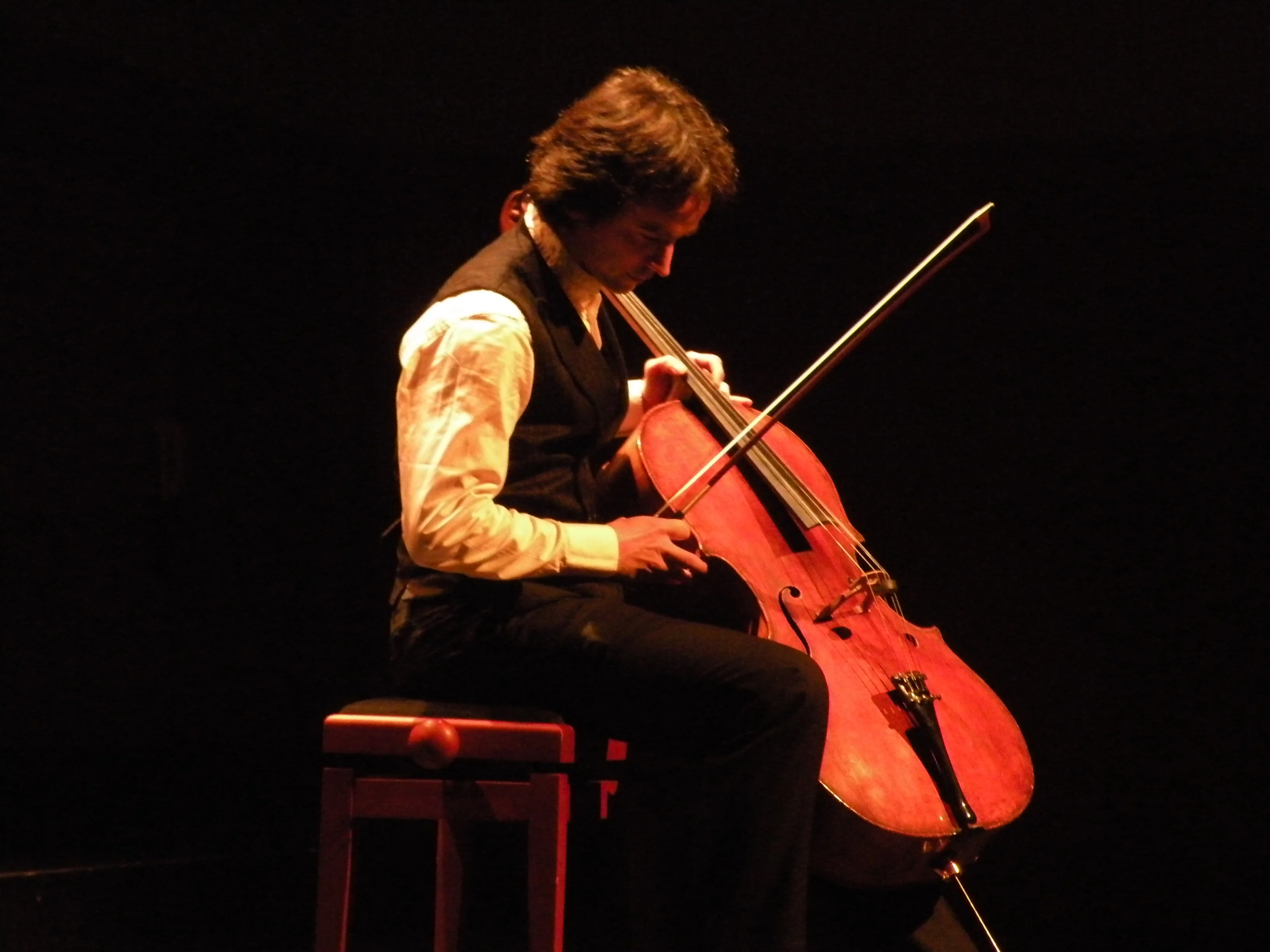
Image from Wikipedia
Image from Wikipedia
Jean-Guihen Queyras: The Cellist Rethinking Bach, Contemporary Music, and Musical Curiosity
A World-Class Cellist Bridging Historical Depth and Contemporary Risk-Taking
Jean-Guihen Queyras, born in 1967 in Montreal, is one of the defining cellists of his generation. His artistic profile combines baroque transparency, romantic expansiveness, and an extraordinarily strong commitment to contemporary music. Early in his career, he was shaped by his work with the Ensemble Intercontemporain and the influence of Pierre Boulez, which led his musical journey to transcend traditional repertoire considerations from the very start. (harmoniamundi.com)
Queyras embodies a stage presence that does not separate intellect from sound imagination. The press describes him as a musician who "speaks to the world through his bow" while simultaneously delivering interpretations of baroque, romantic, and contemporary music at the highest level. This blend of analytical clarity and poetic intensity has secured him a firm place in the international classical music scene. (jeanguihenqueyras.com)
Biographical Roots: Montreal, Europe, and an Early-Shaped Horizon
The biographical starting point of Jean-Guihen Queyras is characterized by mobility and cultural diversity. Born in Canada, he moved with his family first to Algeria and later to France as a child. This early experience among continents and languages is reflected in his openness to different musical traditions and sound ideals. (fr.wikipedia.org)
His artistic development leads directly into the European top tier of classical music. He gained decisive impulses in the environment of the Ensemble Intercontemporain, where his engagement with Pierre Boulez and contemporary composition shaped his musical thinking. From this school emerged a cello playing that combines precision, awareness of form, and expressive willingness to take risks. (harmoniamundi.com)
The Breakthrough: From Avant-Garde to International Solo Career
Queyras gained international visibility as a soloist and chamber musician because he not only masters the standard repertoire but also expands it through new perspectives. His intensive engagement with the Bach Suites, in which he related them to commissioned works by György Kurtág, Gilbert Amy, Ivan Fedele, Jonathan Harvey, Ichirō Nodaïra, and Misato Mochizuki, was particularly formative. This concept made him interesting far beyond cello literature. (harmoniamundi.com)
Recognition from the music community followed in important awards: in 2008, he was named "Instrumental Soloist of the Year" at the Victoires de la Musique Classique, and in the same year, the readers of Diapason chose him as "Artist of the Year." Such honors mark not a coincidence but affirm a career based on consistent repertoire work, interpretive independence, and high stylistic flexibility. (harmoniamundi.com)
Chamber Music as a Way of Life: Partnerships at the Highest Level
A key part of Queyras's artistic identity emerges in chamber music. He regularly performs with Emmanuel Pahud, Isabelle Faust, Alexander Melnikov, and Alexandre Tharaud and co-founded the Arcanto Quartet in 2004 with Tabea Zimmermann, Antje Weithaas, and Daniel Sepec. These configurations show a musician who views dialogue not as an addition but as the core of his art. (harmoniamundi.com)
He also demonstrates stylistic openness in collaborations with various sound cultures. The project Thrace: Sunday Morning Sessions combined contemporary works, improvisation, and traditional music from the Mediterranean with Sokratis Sinopoulos and the Chemirani brothers, Bijan and Keyvan. With this, Queyras opened the cello to an aesthetic where classical music, Mediterranean sound, and spontaneous form organically intertwine. (impresariat-simmenauer.de)
Discography: A Catalog with Weight and Profile
The discography of Jean-Guihen Queyras is notably diverse yet clearly curated. It includes, among others, Dvořák's and Elgar's cello concertos, works by Haydn on historical instruments, Beethoven recordings with Alexander Melnikov, the complete Bach Suites, and chamber music with Isabelle Faust and Alexandre Tharaud. Harmonia Mundi explicitly highlights this stylistic range as musical eclecticism. (harmoniamundi.com)
His reception of Bach particularly stands out as an interpretive long-term process. The recording of the Complete Cello Suites, recorded in 2007, already received significant resonance, and the renewed engagement with the cycle in 2023/2024 was once again highlighted; the press describes it as a matured, more internal, and simultaneously highly precise interpretation. The new edition and the accompanying concerts show that Queyras understands Bach not as a frozen monument but as a living space for thought. (jeanguihenqueyras.com)
His discography also includes concerts by C.P.E. Bach and Antonín Kraft, recordings with Ensemble Resonanz, Debussy and Brahms projects, as well as a duo catalog with Alexandre Tharaud, set to be released in 2026 under the title Anthologie – 30 ans de duo. The inclusion of new recordings of works by Britten, Fauré, and Weill emphasizes the ambition to not only document repertoire history but to continue writing it. (harmoniamundi.com)
Repertoire and Style: From Baroque Bow to the Present
Jean-Guihen Queyras masters the broad spectrum between historical performance practice and contemporary music with remarkable confidence. He plays both historical instruments and adopts a modern sound approach, establishing himself as an interpreter of Haydn, Bach, Dvořák, Elgar, Ligeti, Kurtág, Mantovani, Fedele, Murail, and Schoeller. This openness to repertoire lends exceptional depth to his artistic development. (harmoniamundi.com)
His technique never serves mere virtuosity, but rather the structure of the musical phrase. Press comments frequently highlight the inner balance between energy, measure, and emotional nuance; particularly in Bach, critics emphasize the humane warmth, clear articulation, and controlled, never mannered expressiveness. Queyras does not sound decorative but rather intellectually penetrating. (jeanguihenqueyras.com)
World Premieres, Contemporary Presence, and Cultural Influence
As an advocate for contemporary music, Queyras has actively expanded the cello literature. He has premiered works by Ivan Fedele, Gilbert Amy, Bruno Mantovani, Michael Jarrell, Johannes-Maria Staud, Thomas Larcher, and Tristan Murail; he also performed the cello concerto by Peter Eötvös under the direction of the composer himself. Such projects make him an authority on the contemporary relevance of the cello. (impresariat-simmenauer.de)
His cultural influence extends beyond the concert stage. Queyras teaches at the Freiburg University of Music and is the artistic director of the Rencontres Musicales de Haute-Provence. This positions him not only as a soloist but also as a mediator, educator, and source of inspiration for the next generation of musicians. (harmoniamundi.com)
Current Projects and Artistic Presence 2024/2025
In the years 2024 and 2025, Queyras remains remarkably active in concerts and recordings. He was an artist in residence at the Philharmonie de Paris, the Residentie Orkest Den Haag, and the Stavanger Symphony Orchestra; he also performed with the Orchestre de Paris, the Orchestre National de Belgique, the Orchestre symphonique de Québec, the Orchestra of the 18th Century, and other top formations. This season showcases a musician whose agenda remains at an international top level. (impresariat-simmenauer.de)
New releases also ensure his current relevance. Recordings such as the cello concertos of Kraft and C.P.E. Bach with Ensemble Resonanz released in 2024, as well as the duo anthology with Alexandre Tharaud set to be released in 2026, demonstrate that Queyras develops long-term artistic partnerships while also uncovering new repertoire axes. His work remains discographically relevant and present in concert life. (impresariat-simmenauer.de)
Conclusion: Why Jean-Guihen Queyras Remains So Exciting
Jean-Guihen Queyras is exciting because he understands the cello as an instrument for thinking and storytelling. He combines historical awareness, technical authority, and stylistic adventurousness into a musical career of rare profile. Listening to him is not experiencing routine, but an art that questions, deepens, and emotionally opens works anew. (jeanguihenqueyras.com)
This attitude unfolds with full power especially in live performances: the fine agogic, the transparent articulation, the sensitivity to form and sound space. Jean-Guihen Queyras remains one of the cellists who not only impresses the audience but musically engages them. Experiencing him on stage means hearing an interpretive exception at the moment of his own thinking. (en.residentieorkest.nl)
Official Channels of Jean-Guihen Queyras:
- Instagram: No official profile found
- Facebook: No official profile found
- YouTube: No official profile found
- Spotify: No official profile found
- TikTok: No official profile found
Sources:
Upcoming Events
Jean-Guihen Queyras: Cello Recital
Jean-Guihen Queyras at the Beethoven-Haus Bonn
Jean-Guihen Queyras: Recital at the Beethoven House