Jens-Christian Wagner
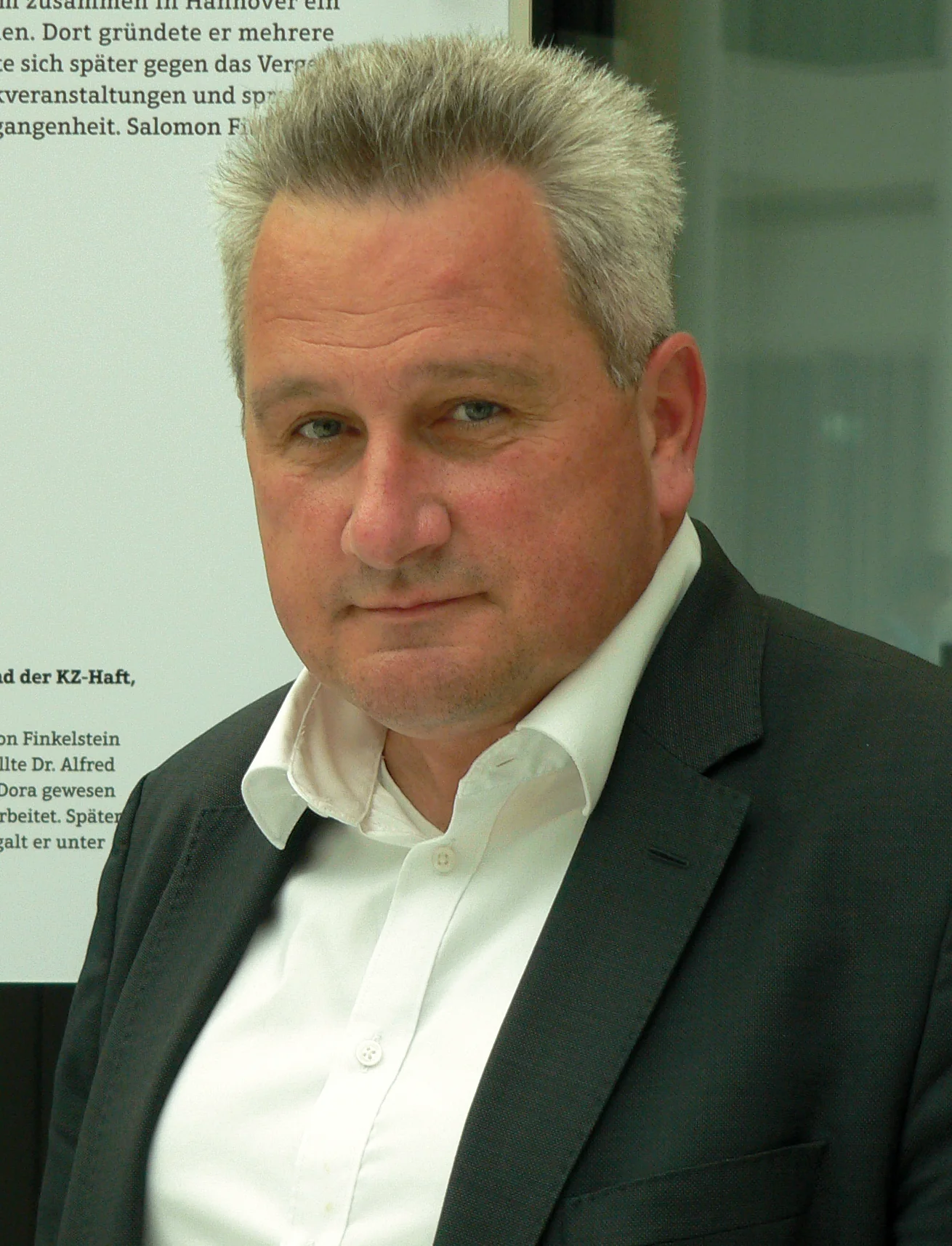
Image from Wikipedia
Image from Wikipedia
Jens-Christian Wagner: Historian of Memory Culture and Voice Against Forgetting
A Influential German Historian Bridging Research, Memorial Work, and Public Debate
Jens-Christian Wagner, born on March 20, 1966, in Göttingen, is one of the most prominent historians in German memory culture. His academic and institutional path is closely tied to the study of National Socialism, concentration camps, and the history of political violence. Since 2020, he has been the director of the Buchenwald and Mittelbau-Dora Memorial Foundation in Weimar; previously, he led the Lower Saxony Memorials Foundation from 2014 to 2020. ([de.wikipedia.org](https://de.wikipedia.org/wiki/Jens-Christian_Wagner?utm_source=openai))
Biographical Background: Study, Research, and Early Academic Influence
Wagner's professional development began in Göttingen and Santiago de Chile, where he studied history, geography, and Romance philology. In 1999, he earned his doctorate from the University of Göttingen with a dissertation on the history of the Mittelbau-Dora concentration camp, a research focus that would significantly shape his subsequent career. Early on, this indicated a scholarly concentration on forced labor under the Nazis, camp history, and the structures of Nazi rule. ([lage.de](https://www.lage.de/media/custom/2517_1420_1.PDF?1547733492=&utm_source=openai))
His academic career combines detailed historical work with a clear societal perspective. Wagner does not treat history as a closed archive but as a contemporary topic directly affecting political culture, education, and democratic responsibility. This attitude shapes both his scholarly publications and his work in public institutions. ([journals.openedition.org](https://journals.openedition.org/ifha/1231?lang=de&utm_source=openai))
Breakthrough in Memorial Work: Mittelbau-Dora and Institutional Responsibility
From 2001 to 2014, Wagner directed the Mittelbau-Dora Memorial in Nordhausen. In this role, he integrated museum education, research, and pedagogy into an approach that made the history of the camp visible in all its brutality. The memorial is at the heart of his scholarly identity, as it emerged from his dissertation and became the site of his practical memory work. ([lage.de](https://www.lage.de/media/custom/2517_1420_1.PDF?1547733492=&utm_source=openai))
In 2014, he took over leadership of the Lower Saxony Memorials Foundation, shaping one of the most important institutions for memory politics in Northern Germany. Since 2020, he has been at the helm of the Buchenwald and Mittelbau-Dora Memorial Foundation, which manages central memorial sites for the crimes of the Nazi regime. His career exemplifies a rare combination of scholarly authority and administrative responsibility. ([de.wikipedia.org](https://de.wikipedia.org/wiki/Jens-Christian_Wagner?utm_source=openai))
Research Focus: Nazi Crimes, Camp History, and Memory Politics
Wagner's research focuses on concentration camps, forced labor, perpetrator structures, and the post-history of Nazi violence. His work on the history of the Mittelbau-Dora concentration camp is among the significant contributions to camp research and has also gained him international visibility. Additionally, he addresses the mechanisms of public memory and the question of how historical responsibility is conveyed in democratic societies. ([journals.openedition.org](https://journals.openedition.org/ifha/1231?lang=de&utm_source=openai))
His approach to memory culture as a field of conflict is particularly influential. Wagner repeatedly emphasizes in interviews and public statements that memorials must not only showcase victim perspectives, but must also make perpetrators, bystanders, and profiteers visible. This historical precision makes his positions both influential and controversial in public debate. ([en.wikipedia.org](https://en.wikipedia.org/wiki/Jens-Christian_Wagner?utm_source=openai))
Public Impact and Debates: History as a Contemporary Issue
Jens-Christian Wagner is not only a scholar but also a skilled public speaker who translates historical arguments into political debates. In media contributions, he has warned against a shift to the right in what can be publicly discussed and against attacks on memory culture. His statements reflect his understanding of memorial work as a protective space for historical truth and democratic self-understanding. ([welt.de](https://www.welt.de/print/die_welt/hamburg/article205509911/Der-Respekt-schwindet.html?utm_source=openai))
In recent years, Wagner has faced multiple attacks and threats due to his positions that have provoked backlash in right-wing populist circles. This intensification underscores the societal relevance of his work: the engagement with Nazi history remains politically sensitive in Germany. Wagner embodies a form of historical authority that prioritizes accuracy, clarity, and conviction. ([mopo.de](https://www.mopo.de/im-norden/nach-kritik-an-afd-todesdrohungen-gegen-leiter-von-kz-gedenkstaette-33834410/?utm_source=openai))
Awards and Recognition
Wagner's accolades include being named Chevalier dans l’Ordre des Palmes Académiques in 2012. This honor recognizes his contributions to Franco-German cooperation and the memory of the deportation of resistance fighters to concentration camps. Such honors illustrate that his work has garnered attention far beyond the national framework. ([de.wikipedia.org](https://de.wikipedia.org/wiki/Jens-Christian_Wagner?utm_source=openai))
His profile is thus not that of a media sensation, but rather that of a meticulously working historian with long-term impact. Recognition stems from continuity, expertise, and institutional experience. This is precisely where his authority lies within German history and memory culture. ([de.wikipedia.org](https://de.wikipedia.org/wiki/Jens-Christian_Wagner?utm_source=openai))
Publications and Professional Presence
Wagner is present as an author and editor in academic contexts, including works that deal with the history of Buchenwald, Mittelbau-Dora, and other aspects of Nazi persecution. In bibliographical and academic records, he regularly appears with contributions to camp history, biography research, and memory practice. Through this, he has established himself as a reliable voice in a research field that demands both historical detail and ethical responsibility. ([de.wikipedia.org](https://de.wikipedia.org/wiki/Jens-Christian_Wagner?utm_source=openai))
The academic reception also indicates that his early studies on the history of Mittelbau-Dora were groundbreaking. His dissertation and the subsequent work at the memorial made him an expert in a field that has long been less visible than other sites of Nazi persecution. This specialization lends weight to his name within historical scholarship. ([journals.openedition.org](https://journals.openedition.org/ifha/1231?lang=de&utm_source=openai))
Cultural Influence and Significance for Memory Culture
Wagner's cultural influence lies in the connection between research, communication, and public engagement. He advocates for a memory culture that does not only admonish but also explains, structures, and historically contextualizes. Consequently, he shapes how memorials operate today: as places of documentation, political education, and democratic self-assurance. ([en.wikipedia.org](https://en.wikipedia.org/wiki/Jens-Christian_Wagner?utm_source=openai))
His positions are particularly relevant where history must be defended against trivialization, historical revisionism, or populist instrumentalization. The fact that his work is frequently referenced in both the media and academic circles demonstrates the breadth of his influence. Wagner represents a generation of historians who combine expertise with public responsibility. ([welt.de](https://www.welt.de/print/die_welt/hamburg/article205509911/Der-Respekt-schwindet.html?utm_source=openai))
Conclusion: Why Jens-Christian Wagner Remains Fascinating
Jens-Christian Wagner is fascinating because he does not separate historical research from social action. His career demonstrates how a historian, through accuracy, conviction, and institutional responsibility, shapes a country's memory culture. Those who follow his work encounter a professional who does not merely manage history but translates it into current debates. ([de.wikipedia.org](https://de.wikipedia.org/wiki/Jens-Christian_Wagner?utm_source=openai))
In this lies his significance: Wagner makes visible that memory is not a given, but requires daily work. Anyone interested in Nazi history, memorial work, and the political dimension of historical education should closely follow his public appearances, interviews, and publications. His impact compellingly shows how relevant historical expertise remains in the 21st century. ([mopo.de](https://www.mopo.de/im-norden/nach-kritik-an-afd-todesdrohungen-gegen-leiter-von-kz-gedenkstaette-33834410/?utm_source=openai))
Fans' Voices
No verified official social media channels were found for Jens-Christian Wagner; therefore, this section is intentionally omitted. There are no reliable fan comments from clearly official profiles. ([idcrawl.com](https://www.idcrawl.com/jens-wagner?utm_source=openai))
Official Channels of Jens-Christian Wagner:
- Instagram: no official profile found
- Facebook: no official profile found
- YouTube: no official profile found
- Spotify: no official profile found
- TikTok: no official profile found
Sources:
- Wikipedia - Jens-Christian Wagner
- Wikipedia (EN) - Jens-Christian Wagner
- Buchenwald and Mittelbau-Dora Memorial Foundation - Board
- Das Parlament - Interview with Jens-Christian Wagner
- WELT - Respect is dwindling
- MOPO - After criticism of the AfD: Death threats against the director of the concentration camp memorial
- OpenEdition - Review of the Production of Death: The Camp Mittelbau-Dora
- European Holocaust Memorial Day for Sinti and Roma - Dr. Jens-Christian Wagner
Upcoming Events
Contested History(ies): Right-Wing Historical Revisionism