
London Symphony Orchestra
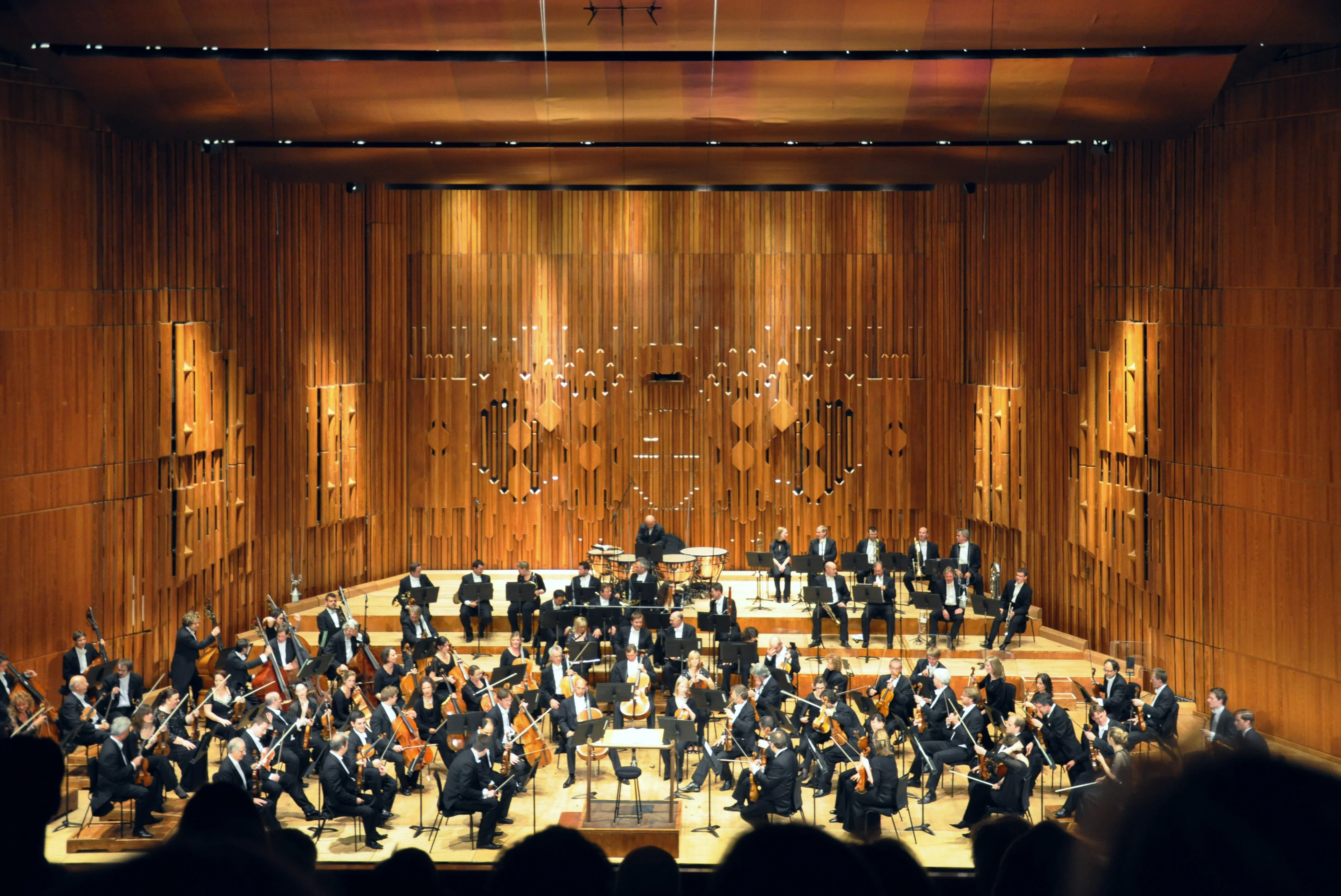
Image from Wikipedia
Image from Wikipedia
London Symphony Orchestra: A Century of Orchestral Culture Between Tradition, Sound Power, and the Present
The London Symphony Orchestra as a Living Institution of Classical Music
The London Symphony Orchestra is one of the defining orchestral ensembles of the United Kingdom and has been deeply rooted in London’s music history since its founding in 1904. As the oldest of the major London symphony orchestras, the LSO embodies an ideal that has rarely been so consistently pursued: the highest artistic discipline, stylistic adaptability, and an exceptionally long, internationally visible music career as an ensemble. Today, the orchestra is based at the Barbican Centre and is shaped by Sir Antonio Pappano as its Principal Conductor. ([en.wikipedia.org](https://en.wikipedia.org/wiki/London_Symphony_Orchestra))
The Foundation: Independence as an Artistic Principle
The beginnings of the London Symphony Orchestra tell the story of musical self-determination. The founding members left Henry Wood's Queen’s Hall Orchestra after a rule was introduced that bound musicians exclusively to that orchestra; the LSO was formed in 1904 as an independent ensemble and initially organized itself cooperatively. This early model, where players shared the season's profits, not only shaped the internal structure but also the orchestra's self-image: not as a mere apparatus, but as a solidarity-based community of highly specialized musicians. ([en.wikipedia.org](https://en.wikipedia.org/wiki/London_Symphony_Orchestra))
This independence gave the orchestra a distinctive profile early on, but also demanded artistic flexibility. The LSO had to assert itself in a crowded orchestral life in London and experienced phases of decreased appreciation in the 1930s and 1950s, as new ensembles posed competition in terms of quality and prestige. These crises are part of the ensemble's biography as they paved the way for later renewals and made the resilience of the institution visible. ([en.wikipedia.org](https://en.wikipedia.org/wiki/London_Symphony_Orchestra))
Career Path: From a British Traditional Orchestra to a Global Brand
Over the course of the 20th century, the LSO evolved into one of the most internationally recognized orchestras in the world. Official historiography emphasizes the immense stature of the ensemble in recording culture: The orchestra describes its discography as a document of the history of sound recording from its inception to the present, referencing sessions that encompass not only the classical core repertoire but also crossover, film, and video game projects. This broad conception of recording makes clear that the LSO has never thought purely academically but has always reflected the changing music world. ([lso.co.uk](https://www.lso.co.uk/about-us/about-the-lso/our-history-and-archives/discography/))
The orchestra's relevance in recording history is also evident in the aura of being the "world’s most recorded orchestra." A publication by the LSO describes the orchestra as the sound body likely to remain permanently associated with this title, which refers not only to quantity but to continuous presence in international repertoire management. This recording activity, combined with outstanding performances in concert halls, forms the core of the ensemble's authority: The LSO is not only a concert orchestra but a sounding reference library of classical music. ([lso.co.uk](https://www.lso.co.uk/recordings/))
Musical Development and Artistic Present
Today, the orchestra represents a connection of tradition and programmatic openness. The 2025/26 season under Sir Antonio Pappano includes American music from Bernstein and Copland, British repertoire from Britten, Vaughan Williams, Walton, Musgrave, and Imogen Holst, as well as Shostakovich, Tchaikovsky, and Wagner’s Tristan and Isolde. At the same time, the LSO emphasizes contemporary impulses with four world premieres and additional European and British premieres. This mix shows how the orchestra combines historical depth with current relevance. ([lso.co.uk](https://www.lso.co.uk/press-release-the-lso-announces-its-2025-26-season/))
It is particularly striking that the season not only focuses on the great symphonic repertoire but also emphasizes artistic collaboration and interdisciplinary presence. The collaboration with Sir Simon Rattle in the field of Janáček operas and the integration of new works by composers like Laura Bowler, Donghoon Shin, and Colin Matthews underscore the ambition to see musical development not as a footnote but as a central engine of orchestral identity. The LSO thus remains an ensemble that does not conserve the past but rather thinks productively about it. ([lso.co.uk](https://www.lso.co.uk/press-release-the-lso-announces-its-2025-26-season/))
Discography: An Archive of Recording Culture
The discography of the London Symphony Orchestra is more than a list of releases; it is a historical archive with cultural-historical significance. Notable milestones include the official opening of Abbey Road Studios on November 11 and 12, 1931, and Yehudi Menuhin's first violin concerto recording at the age of 15 with the Bruch Violin Concerto under Landon Ronald. Such recordings place the LSO at the center of early recording history and connect the orchestra with iconic moments of music production. ([lso.co.uk](https://www.lso.co.uk/about-us/about-the-lso/our-history-and-archives/discography/))
The official discography also documents that the LSO was present not only in the symphonic core repertoire but also in popular cultural and media contexts. According to orchestra sources, the range spans from core works of the classics to film sessions and video game recordings. It is this breadth that explains why the LSO has been perceived across generations as a reference ensemble both in professional circles and among the general public. ([lso.co.uk](https://www.lso.co.uk/about-us/about-the-lso/our-history-and-archives/discography/))
Repertoire, Style, and Sound Aesthetics
The typical LSO sound is associated by many listeners with technical precision, dramatic intensity, and a certain willingness to take risks. A Gramophone-based reissue assessment describes the playing as “dangerous, never dull” and highlights the “audacious virtuosity” that ignites the audience's enthusiasm. This characterization hits a central point: the LSO does not see virtuosity as a smooth surface but as an expression of artistic alertness and stage presence. ([lso.co.uk](https://www.lso.co.uk/recordings/))
In stylistic practice, this means a high adaptability. The orchestra naturally moves within Mahler, Beethoven, and Wagner but also nurtures British music traditions and contemporary compositions. The 2025/26 season and planned LSO Live releases with Vaughan Williams, Holst, and Bax show that the orchestra's repertoire profile is shaped not only internationally but also genuinely British. It is precisely this blend of national identity and global openness that defines the cultural value of the ensemble. ([lso.co.uk](https://www.lso.co.uk/press-release-the-lso-announces-its-2025-26-season/))
Cultural Influence: From the Concert Hall to the World
The influence of the London Symphony Orchestra extends far beyond the usual boundaries of a symphony orchestra. The ensemble acts as an ambassador of British music culture, as an educational and mediation platform, and as an active contributor to new concert formats. Programs like BMW Classics in Trafalgar Square or family-oriented formats within LSO Discovery show that the orchestra does not only play for a specialized audience but brings classical music into the public sphere. ([lso.co.uk](https://www.lso.co.uk/seasons/2025-26-season/))
Digitally, the LSO has consistently expanded its reach. The official website features social media channels for Facebook, Instagram, TikTok, YouTube, Spotify, and Apple Music; the orchestra also refers to LSO Live as its own label. This media presence fits an ensemble that has shaped recording culture for decades and continues to define its artistic identity not only on stage but also in its online reception. ([lso.co.uk](https://www.lso.co.uk/seasons/2025-26-season/))
Conclusion: Why the London Symphony Orchestra Remains So Exciting
The London Symphony Orchestra fascinates because it does not treat history as a monument but as a living workspace. Since 1904, the ensemble has evolved from a cooperatively organized group of musicians into a global reference orchestra that sets standards in repertoire, recording culture, and programming. Those who listen to the LSO do not only experience a richness of sound but also a unique connection of tradition, risk, and intellectual curiosity. ([en.wikipedia.org](https://en.wikipedia.org/wiki/London_Symphony_Orchestra))
Especially live, this energy is most powerfully unleashed: in the tension between precision and freedom, between grand symphonic architecture and immediate emotionality. Those who experience the London Symphony Orchestra in concert encounter an orchestra that does not manage classical music but translates it into the present. A live visit is always worthwhile. ([lso.co.uk](https://www.lso.co.uk/press-release-the-lso-announces-its-2025-26-season/))
Official Channels of the London Symphony Orchestra:
- Instagram: https://www.instagram.com/londonsymphonyorchestra/
- Facebook: https://www.facebook.com/londonsymphonyorchestra/
- YouTube: https://www.youtube.com/londonsymphonyorchestra
- Spotify: https://open.spotify.com/artist/5yxyJsFanEAuwSM5kOuZKc
- TikTok: https://www.tiktok.com/@londonsymphonyorchestra
Sources:
- London Symphony Orchestra - Official Website
- London Symphony Orchestra - Discography
- London Symphony Orchestra - Recordings
- London Symphony Orchestra - 2025/26 Season
- London Symphony Orchestra - Press Release, 8 April 2025
- Wikipedia: London Symphony Orchestra
- Facebook - London Symphony Orchestra
- Instagram - London Symphony Orchestra
- YouTube - London Symphony Orchestra
- Spotify - London Symphony Orchestra
- TikTok - London Symphony Orchestra
Upcoming Events
London Symphony Orchestra in Munich: Symphonic Grandeur in the Isarphilharmonie
Opening Concert: London Symphony Orchestra
Opening Concert: London Symphony Orchestra
Beethovenfest 2026: Opening Concert with the London Symphony Orchestra
Beethovenfest Workshop: Discover Music with the LSO