
Susanne Baer
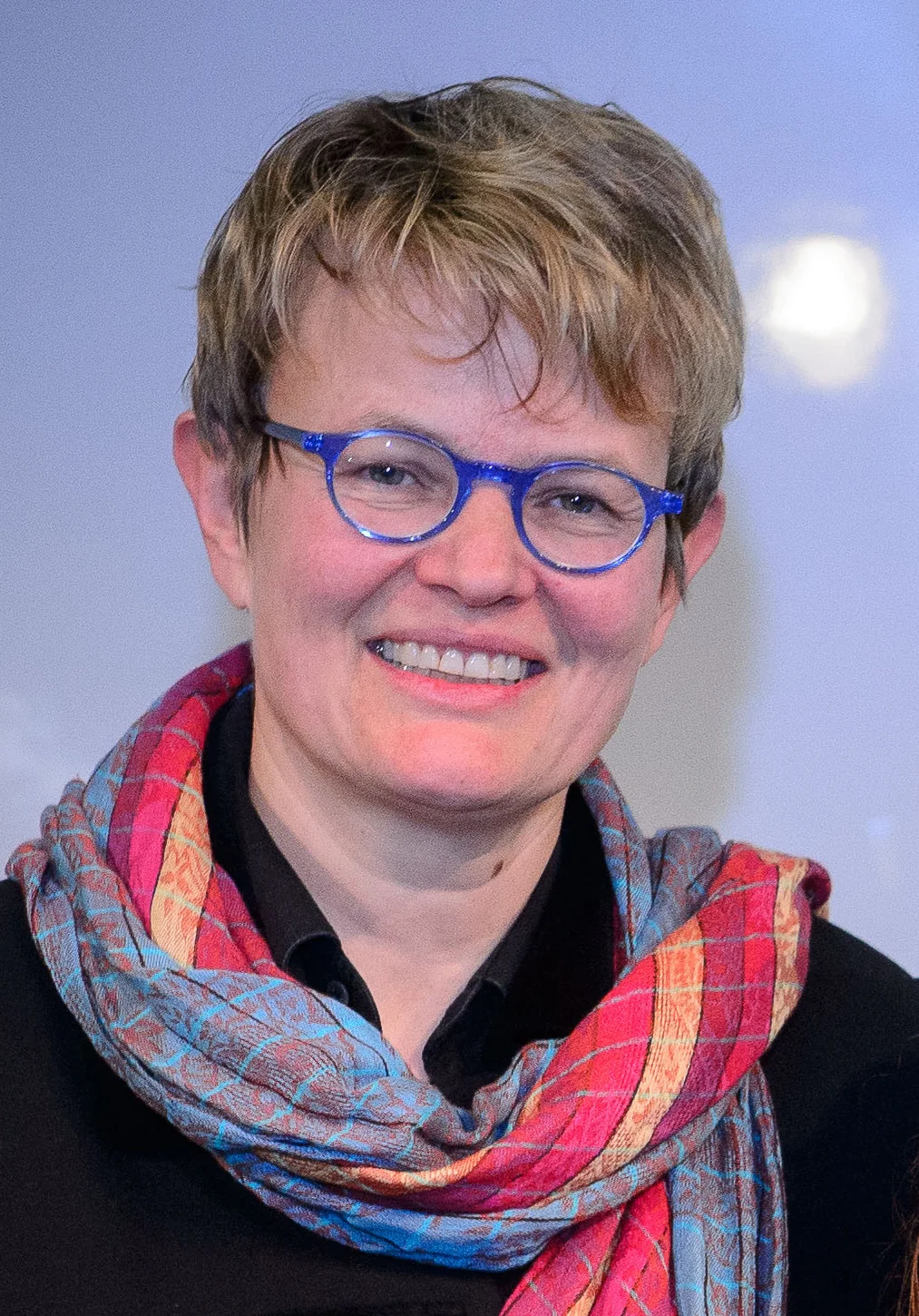
Image from Wikipedia
Image from Wikipedia
Susanne Baer: A Defining Jurist Between Fundamental Rights, Equality, and Constitutional Law
An Extraordinary Career at the Intersection of Science, Law, and Social Change
Susanne Baer, born on February 16, 1964, in Saarbrücken, is one of the most prominent German legal scholars of her generation. Her career combines academic excellence, public engagement, and an outstanding role in the German constitutional order. From 2011 to 2023, she served on the Federal Constitutional Court, where she significantly influenced the legal debate on fundamental rights, equality, and discrimination protection.
Looking at Susanne Baer, one does not see a classic artist biography, but rather an intellectual and institutional career of remarkable scope. Her work exemplifies analytical rigor, social responsibility, and a determined commitment to equality. It is precisely this blend of science, practice, and public impact that makes her personality so influential.
Early Influences and Academic Path
Susanne Baer studied law and political science at Freie Universität Berlin. After her legal traineeship, she worked at the Berlin Senate Administration before continuing her academic career and completing a master's program at the University of Michigan. This international education early on provided her with a broad legal perspective and sharpened her view on comparative legal issues.
In 1995, she earned her doctorate in Frankfurt am Main on fundamental rights against discrimination, focusing on sexual harassment in the workplace in Germany and the USA. Her habilitation in Berlin dealt with the role of the citizen in administrative law and confirmed her reputation as a precise thinker with a particular sensitivity to the societal effects of law. Already during these early stages, a central theme of her work emerged: the protection against disadvantage.
Career Between Research, Teaching, and Public Responsibility
Before her appointment to the Federal Constitutional Court, Susanne Baer worked for years in academic and applied contexts. She was involved in initiatives against domestic violence, participated in police training sessions, and worked with the Gender Competence Center of the Federal Government. This connected legal expertise with concrete social practice, bringing legal theory into direct contact with political and social realities.
Her scientific authority also grew steadily. At Humboldt University of Berlin, she became a central voice in public law and anti-discrimination law. Her work was characterized by the question of how constitutional law can become effective in everyday life, not just be formulated abstractly. This perspective made her visible far beyond the academic realm.
At the Federal Constitutional Court: Constitutional Law with Social Depth
In 2011, Susanne Baer was appointed as a judge of the Federal Constitutional Court, where she served until 2023. In this position, she was at one of the most important legal hubs in Germany and was part of the institution that interprets fundamental rights and sets constitutional guidelines for politics and society. Her presence in court underscored the high level of professional recognition she had earned over decades.
Her judicial and scholarly stance particularly supported issues of equality, anti-discrimination, and the constitutional protection of individual freedom. Her biography reveals a jurist who does not understand law as a static set of rules, but as a living framework for a pluralistic society. This attitude made her a defining voice in the German legal discourse.
Awards, Recognition, and Institutional Impact
Susanne Baer has received multiple honors for her work, including the Walter Kolb Memorial Prize from the City of Frankfurt am Main. Such awards not only refer to scientific achievement but also to her contribution to the development of the discourse on fundamental rights and discrimination protection. Her career exemplifies how professional excellence and societal relevance can converge.
After her time at the Federal Constitutional Court, she took on further responsibilities in association and equality contexts. In 2025, the German Women Lawyers Association appointed her as President, reaffirming her role as a public thought leader for equality. This demonstrates that her influence does not end with a judicial mandate but continues into new institutional spheres.
Legal Signature and Thematic Focus
Baer's academic profile is strongly influenced by questions of fundamental rights, anti-discrimination, and administrative law. Her works combine doctrinal precision with a clear social perspective, examining real power relations and legal inequalities. She has shaped a style that receives considerable attention both in academia and legal practice.
Her career can be read as a consistent development along a thematic core: the pursuit of a law that protects freedom and highlights disadvantage. This focus gives her work contour and depth. At a time when questions of equality and participation are being re-negotiated, her voice remains particularly relevant.
Cultural and Social Influence
Susanne Baer represents a jurisprudence that reaches beyond disciplinary boundaries. Her positions and actions have shaped debates on equality, diversity, and understandings of the constitution in Germany. She belongs to those figures who do not just write academic texts, but also think about and shape social developments.
Her influence is also evident in how naturally she appears as a reference point in political, academic, and legal contexts. She embodies a modern conception of authority: not hierarchical, but reasoned; not loud, but sustainable. It is precisely this combination of attitude, expertise, and institutional experience that makes her biography so remarkable.
Conclusion: Why Susanne Baer Remains Relevant Today
Susanne Baer is captivating because she combines legal excellence with social responsibility. Her career tells a story of scholarly discipline, constitutional authority, and a clear commitment to equality and discrimination protection. Those interested in the interplay between law, society, and institutional change will find in her biography an exceptionally dense and inspiring personality.
It is her consistent work on the fundamental questions of freedom and equality that makes her a defining voice of her time. Her career deserves attention because it demonstrates how law can not only be administered but also transformed. Anyone wanting to understand public debates about the constitution and justice should keep an eye on Susanne Baer.
Official Channels of Susanne Baer:
- Instagram: no official profile found
- Facebook: no official profile found
- YouTube: no official profile found
- Spotify: no official profile found
- TikTok: no official profile found