
Theodor Fontane
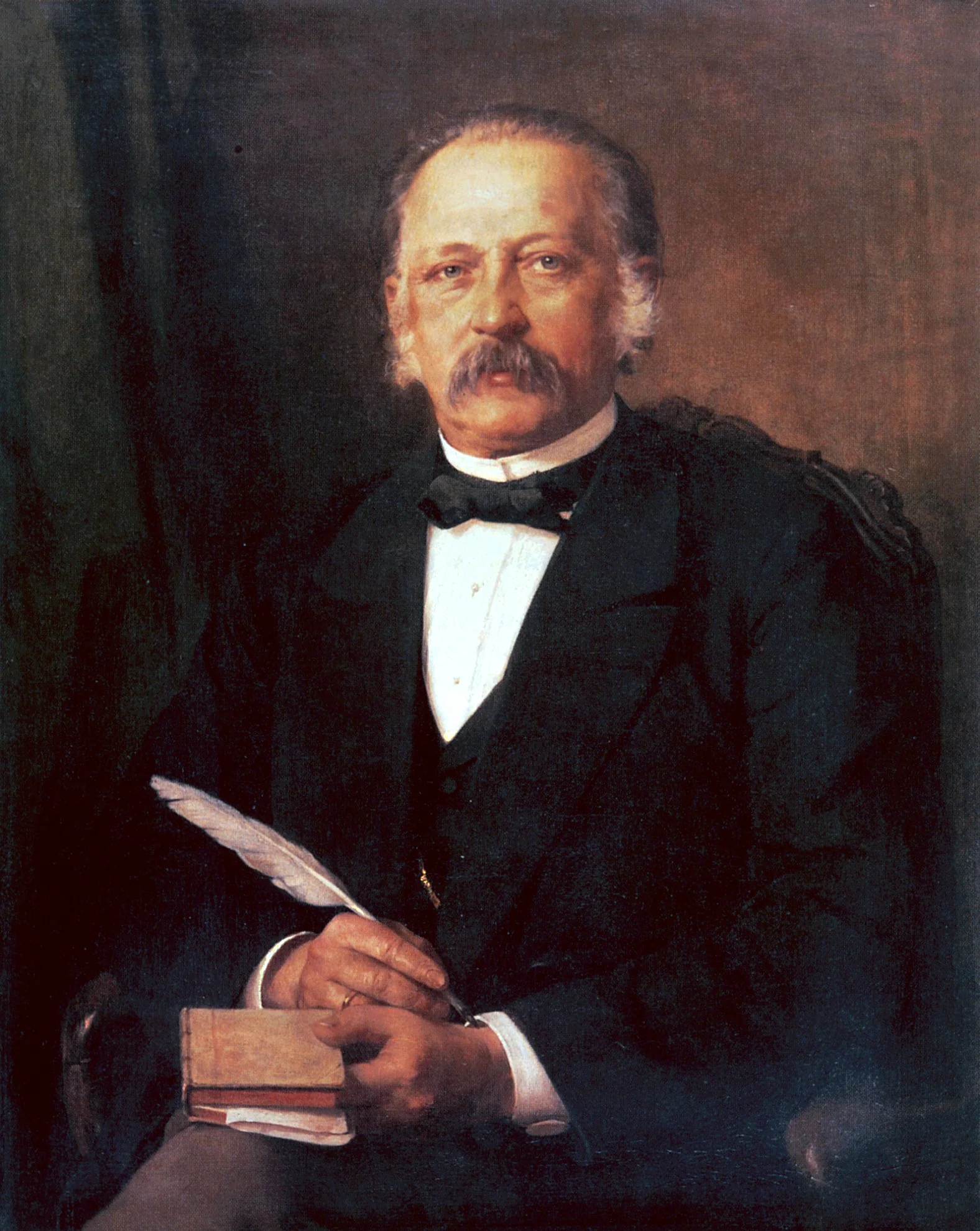
Image from Wikipedia
Image from Wikipedia
Theodor Fontane: The Great Narrator of Realism between Pharmacy, Journalism, and Literary Modernity
A Writer of Rare Precision, Political Experience, and Timeless Narrative Power
Theodor Fontane is one of the defining voices of 19th-century German literature. Born on December 30, 1819, in Neuruppin and died on September 20, 1898, in Berlin, he evolved from an apprentice pharmacist to a master of poetic realism. His fame is based on a late but all the more concentrated production of novels that includes works like Frau Jenny Treibel, Effi Briest, and Der Stechlin. ([de.wikipedia.org](https://de.wikipedia.org/wiki/Theodor_Fontane))
Biographical Beginnings: Origins, Education, and Early Literary Ambitions
Fontane grew up in a family with Huguenot roots and spent his childhood and youth in Neuruppin and Swinoujscie. Initially, he followed his father's professional path and completed a full apprenticeship as a pharmacist, but alongside that, his writing ambition matured early on. As a young man, he joined literary societies and emerged as a ballad poet. ([de.wikipedia.org](https://de.wikipedia.org/wiki/Theodor_Fontane))
Even during his apprenticeship, a dual talent became evident: while Fontane gained pharmaceutical experience, he simultaneously observed society with a keen, journalistic eye. Early contacts with literature, magazines, and literary circles shaped his sensitivity to language, milieu, and historical perspective. This combination of practical realism and artistic sensitivity influences his entire later work. ([de.wikipedia.org](https://de.wikipedia.org/wiki/Theodor_Fontane))
From Pharmacist to Publicist: Berlin Years and Political Realism
After stints in Berlin, Burg, Leipzig, and Dresden, Fontane increasingly delved into journalism. He worked in the Prussian state and newspaper system, among other roles as a government press officer and editorial member of the Kreuzzeitung. This work not only secured the livelihood of his young family but also provided him access to political and social observation spaces from which his literary accuracy emerged. ([de.wikipedia.org](https://de.wikipedia.org/wiki/Theodor_Fontane))
The revolution of 1848, in which he participated in Berlin on the side of the barricade fighters, and his later approach to conservative structures reveal an author who experienced political tensions not abstractly, but existentially. This tension between personal experience and observational distance became a core aspect of his prose. Therefore, Fontane's texts never feel merely documentary but are always also psychologically and socially penetrated. ([de.wikipedia.org](https://de.wikipedia.org/wiki/Theodor_Fontane))
The Maturity as a Chronicler: Travel Books, War Experiences, and Theater Criticism
Fontane's most significant precursor as a novelist includes his travel and history books, as well as his work as a theater critic. The Wanderungen durch die Mark Brandenburg, a five-volume work, was created over decades and positioned him as a sensitive chronicler of landscape, history, and regional awareness. At the same time, he dealt with the German unification wars in book publications, linking political contemporary history with narrative form. ([de.wikipedia.org](https://de.wikipedia.org/wiki/Theodor_Fontane))
After the Franco-Prussian War, Fontane was arrested under suspicion of espionage during on-site research in France and feared for his life. He later worked for around 20 years as a theater critic for the Vossische Zeitung. This combination of journalistic observation, cultural judgment, and personal crisis experience lent a remarkable breadth to his writing. ([hsozkult.de](https://www.hsozkult.de/publicationreview/id/reb-28803?utm_source=openai))
The Late Novelist Breakthrough: From Vor dem Sturm to Der Stechlin
Noteworthy about Fontane is the late start of his actual novel writing. Only in his later life did he embark on that productive phase that would make him permanently famous. Vor dem Sturm was published in 1878 and is considered the historically oriented beginning of a body of work that subsequently turned increasingly toward the present and its social conflicts. ([encyclopedia.com](https://www.encyclopedia.com/history/encyclopedias-almanacs-transcripts-and-maps/fontane-theodor))
In the 1880s and 1890s, a series of novels followed that are considered highlights of German realism: L’Adultera, Schach von Wuthenow, Irrungen, Wirrungen, Stine, Unwiederbringlich, Frau Jenny Treibel, Effi Briest, and finally Der Stechlin. These works combine finely observed societal panoramas with subtle irony, precise dialogue, and a masterful art of implication. ([encyclopedia.com](https://www.encyclopedia.com/history/encyclopedias-almanacs-transcripts-and-maps/fontane-theodor))
Literary Discography: Canon of Works, Central Titles, and Lasting Impact
When one reads Fontane’s oeuvre like a "discography" of his literary work, the late novels are at the center of the canon. Effi Briest is considered his most significant novel; Britannica highlights the precise character portrayal and the accurate representation of Brandenburg society while emphasizing the empathetic design of the character Effi. The work was initially published in installments and in book form in 1895. ([britannica.com](https://www.britannica.com/topic/Effi-Briest))
Both Irrungen, Wirrungen and Frau Jenny Treibel mark crucial points of his realism. While one novel examines social barriers and the renunciation of love, the other reveals bourgeois self-staging with fine satire. Der Stechlin, in turn, opens the view of a later, more serene Fontane, who contemplates societal upheavals with great calm and high formal sovereignty. ([encyclopedia.com](https://www.encyclopedia.com/history/encyclopedias-almanacs-transcripts-and-maps/fontane-theodor))
Style, Language, and Artistic Development
Fontane's style thrives on economy, tone control, and psychological accuracy. He did not favor pathetic climaxes but developed his characters through conversations, everyday observations, and social friction. This is where his narrational art feels modern: the plot often remains subdued while milieu, attitude, and language generate the actual tension. ([encyclopedia.com](https://www.encyclopedia.com/history/encyclopedias-almanacs-transcripts-and-maps/fontane-theodor))
His novels operate with a clear compositional logic. Place, social context, and historical situation in Fontane's work are not mere backdrops but the resonance space of the characters. Especially Effi Briest exemplifies this technique, as the novel does not explain the social order of Brandenburg but makes it visible through action, atmosphere, and dialogue. ([britannica.com](https://www.britannica.com/topic/Effi-Briest))
Cultural Influence, Legacy, and Literary Authority
Fontane is regarded as one of the great chroniclers of Berlin and Brandenburg as well as a central figure of European realism within the German context. His influence extends far beyond the era because his novels capture social codes, class relations, and moral conflicts with an accuracy that remains readable today. Research also acknowledges him as an author who decisively prepared the modern novel. ([encyclopedia.com](https://www.encyclopedia.com/history/encyclopedias-almanacs-transcripts-and-maps/fontane-theodor))
The legacy of Fontane is extensive and widely dispersed; large collections are housed in the Theodor Fontane Archive and the Berlin State Library. The archive was founded in 1935 and preserves, among other things, large parts of the existing reference library, newspaper clippings, and other collection complexes. This institutional presence underscores Fontane's lasting cultural authority and the scholarly relevance of his work. ([fontanearchiv.de](https://www.fontanearchiv.de/en/about-us/history-of-the-archive))
Conclusion: Why Theodor Fontane Continues to Fascinate Today
Theodor Fontane combines life experience, journalistic sharpness, and literary mastery into a work of extraordinary density. He writes about society, duty, passion, and social boundaries with a calmness that is more powerful than any pathos. Those who read Fontane encounter an author who not only describes the 19th century but makes its inner truth audible. ([encyclopedia.com](https://www.encyclopedia.com/history/encyclopedias-almanacs-transcripts-and-maps/fontane-theodor))
His novels remain engaging because they depict people in their vulnerability while simultaneously making entire social orders visible. Fontane is not a loud classic but a precise, clever, and surprisingly modern storyteller. Those who rediscover his works should not only read them but also experience them with attention and time. ([encyclopedia.com](https://www.encyclopedia.com/history/encyclopedias-almanacs-transcripts-and-maps/fontane-theodor))
Official Channels of Theodor Fontane:
- Instagram: No official profile found
- Facebook: No official profile found
- YouTube: No official profile found
- Spotify: No official profile found
- TikTok: No official profile found
Sources:
- Wikipedia – Theodor Fontane
- Theodor Fontane Archive – History of the Archive
- Theodor Fontane Archive – Holdings & Collections
- Britannica – Effi Briest
- Encyclopedia.com – Theodor Fontane
- H-Soz-Kult – Review of Fontane
- The Fontane Blog – Theodor Fontane
- Ministry of Science, Research and Culture of Brandenburg – Fontane on Tour in Havelland