
Thomas Cüpper
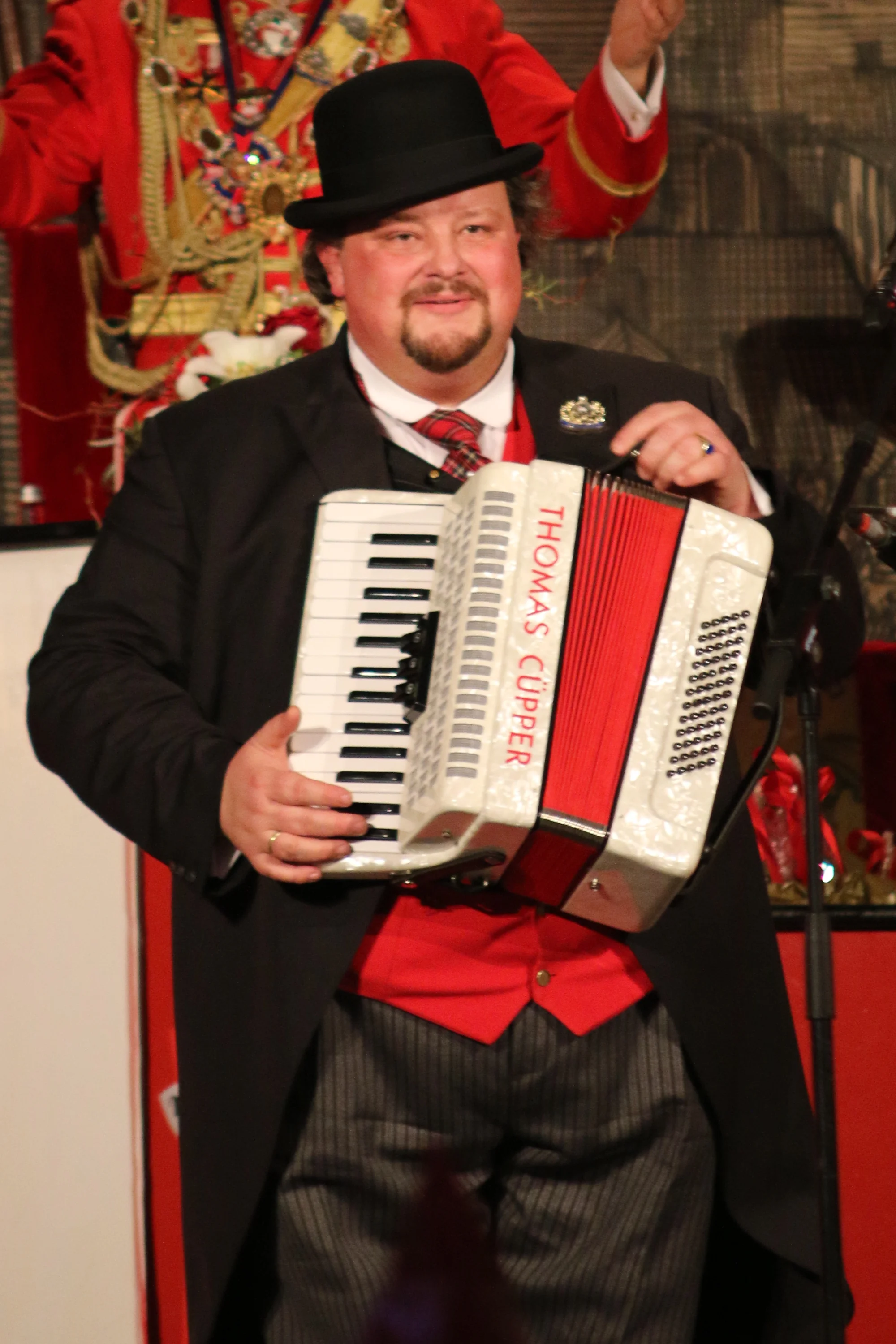
Image from Wikipedia
Image from Wikipedia
Thomas Cüpper – Et Klimpermännche: The Cologne Voice Between Carnival, Krätzchen, and Musical Tradition
A Cologne Original with Attitude, Humor, and Musical Memory
Thomas Peter Cüpper, better known as “Et Klimpermännche”, is one of the most distinctive figures of modern Cologne Carnival. Born in 1966 in Bensberg-Herkenrath, the artist works as a carnival speaker, compère, musician, composer, and lyricist, predominantly writing in the Kölsch language. Since 1998, he has been performing on the stages of Cologne Carnival, establishing himself as a genuine Cologne original with his blend of wit, musical authority, and lovingly maintained tradition. ([de.wikipedia.org](https://de.wikipedia.org/wiki/Thomas_C%C3%BCpper?utm_source=openai))
His career combines entertainment and customs in a way that has become rare in the Rhineland: Cüpper is not just an interpreter but also a preserver, mediator, and living archive of regional music culture. Performances in large halls, at traditional societies, and on television have made him a solid fixture of Cologne's repertoire. At the same time, his art remains close to the audience, immediate, and craftfully precise. ([thomas-cuepper.de](https://thomas-cuepper.de/))
Biography: From Early Musician to Carnival Artist
Thomas Cüpper's musical development began early. According to reports, he received an accordion at the age of five, soon after adding a home organ; by the age of twelve, he was performing at local fairs and gained a reputation as a solo entertainer. This early practice significantly shaped his stage presence: Cüpper developed not only musical skills but also an instinct for timing, audience engagement, and atmosphere. ([express.de](https://www.express.de/koeln/karneval/dreifach-jubilaeum-fuer-koelner-original-et-klimpermaennche-1-1367876))
His path into the carnival did not follow a typical youth biography but rather through immediate stage practice. In 1998, he made his debut at the prince proclamation in Gürzenich after Hans-Horst Engels noticed his voice. From then on, he became a familiar presence in Cologne Carnival, evolving into an artist who keeps traditional forms alive not in a museum-like manner but with stage experience and personality. ([express.de](https://www.express.de/koeln/karneval/dreifach-jubilaeum-fuer-koelner-original-et-klimpermaennche-1-1367876))
The Artistic Breakthrough: Kölsch Language as Artistic Center
His performances in Kölsch language early on became his trademark. Cüpper, who performs as “Et Klimpermännche,” relies on Ripuarian expressiveness, fine punchlines, and the musical flow of the dialect. This is precisely where the impact of his art lies: He connects humor, local identity, and sung traditions into a form of carnival that is as entertaining as it is culturally and historically readable. ([de.wikipedia.org](https://de.wikipedia.org/wiki/Thomas_C%C3%BCpper?utm_source=openai))
A key to his popularity was his consistent presence at large gatherings and traditional events. Performances with societies such as the Große von 1823, the Große Kölner Karnevalsgesellschaft, and the Kölsche Funken Rut-Weiß increased his visibility; he also collaborated with well-known Kölsch ensembles like BRINGS. His name became entrenched in an environment of music, speech, and tradition due to this consistent live work. ([de.wikipedia.org](https://de.wikipedia.org/wiki/Thomas_C%C3%BCpper?utm_source=openai))
Stage Figure and Moderation: Compère with a Sense for the Audience
Thomas Cüpper is not only a singer and speaker but also a compère and session president. Already as a teenager, he hosted a Women’s Carnival session at his school; later, he took on moderation duties at large Kölsch events and maintained the classical craft of announcements. His strength lies in the precise transition between program segments, the solid build-up of tension, and the ability to announce artists on stage effectively. ([thomas-cuepper.de](https://thomas-cuepper.de/))
The website describes him as someone who can engage with people, make them laugh, and promote other artists effectively. This is more than mere self-promotion: In the logic of carnival, a compère is strong when he guides the audience without pushing himself into the foreground. This mix of confidence, humor, and restraint is precisely what makes Cüpper so appreciated in the Cologne scene. ([thomas-cuepper.de](https://thomas-cuepper.de/))
Discography: Between Original Compositions, Tradition Maintenance, and Kölsch Homage
Thomas Cüpper's discography showcases a clearly defined artistic field. Key releases include Metallemann (2015), Höhnerwalzer (2016), Dä Zeddel (2017), Uns Sproch es Heimat (2018), Jo, wann et läuf, dann läuf et (2019), Un dröm jo’mer en die Kellerbar with Ludwig Sebus (2020), Der kölsche Algorithmus (2020), Janz janz höösch (2021), Dä Schwadlappe (2022), and Et gilt et Brauchtum zo bewahre (2023). This selection demonstrates a continuous productive phase that cleverly intertwines tradition and the present. ([thomas-cuepper.de](https://thomas-cuepper.de/discographie))
Particularly noteworthy is his proximity to Willi Ostermann, the historical reference point of Kölsch song culture. On the Kölsche Heimat website, Cüpper is highlighted for recordings like Die Höhnerfarm vum Zilla and Künnte mer nit e Milliönche han; it also emphasizes his work with original keys, original instrumentations, and careful arrangements. This points to an artist who does not merely sing but reconstructs musical tradition with respect and an awareness of sound. ([koelscheheimat.de](https://www.koelscheheimat.de/kuenstler/Thomas-C%C3%BCpper/))
Musical Development: Accordion, Organ, and the Art of Interpretation
Cüpper started instrumentally with the accordion and home organ, later adding the stage as the center of his work. This background is crucial to his aesthetics: His music remains close to the handcrafted entertainment culture, where melody, directness, and comprehensibility belong together. The website also emphasizes that he uses multiple microphones during performances, including for singing, speech, and accordion—a detail that makes his hybrid approach between music and speech visible. ([express.de](https://www.express.de/koeln/karneval/dreifach-jubilaeum-fuer-koelner-original-et-klimpermaennche-1-1367876))
His profile as an interpreter of the Kölsch tradition is further sharpened by being described as a “Krätzjessänger with a shellac voice” and as one of the best Willi Ostermann interpreters of his time. These descriptors reflect not a marketing cliché but a true stylistic position: Cüpper represents a performance that connects historical sound nuances, narrative precision, and local identity. ([thomas-cuepper.de](https://thomas-cuepper.de/media?utm_source=openai))
Cultural Influence: Recognition, Awards, and Kölsch Anchoring
The cultural significance of Thomas Cüpper manifests not only on stage but also in awards and institutional recognition. He has received, among others, the Golden Honor Pin of the City of Bergisch Gladbach, the Gold Medal of Merit from the Association of German Carnival in the Rhein Berg regional association, the Golden Mask, and other honors; new recognitions were added in 2024 and 2025. Such awards underscore that his work is understood as part of the preservation of customs. ([thomas-cuepper.de](https://thomas-cuepper.de/))
Media presence has also steadily increased: Reports mention performances at ZDF television sessions, WDR events, and large Kölsch festivals. Particularly noteworthy is how Cüpper has become a reliable figure within the carnival who not only comments on tradition but embodies it in real time. This embodies his cultural value: He makes Kölsch identity audible, understandable, and stage-worthy. ([thomas-cuepper.de](https://thomas-cuepper.de/?utm_source=openai))
Current Projects and Recent Developments
In recent years, Cüpper has remained active and visible. The website lists events and honors up to 2025, including his appointment as an honorary member of the Dritte Knubbels of the Kölsche Funke Rut-Wieß vun 1823, as well as an oath of allegiance as a supporter of the LNZ Lechenicher Narrenzunft. At the same time, his repertoire indicates a continuing presence in the Kölsch songbook that oscillates between festive halls, carnival sessions, and the maintenance of traditional music. ([thomas-cuepper.de](https://thomas-cuepper.de/awards?utm_source=openai))
At the heart of his music, the same principle remains crucial: Cüpper does not strive for grand pop gestures but for authenticity, recognizability, and regional resonance. His projects thrive on the connection between text, performance, and musical arrangement. Thus, even in contemporary carnival, he remains a voice with a clear artistic signature. ([thomas-cuepper.de](https://thomas-cuepper.de/discographie))
Conclusion: Why Thomas Cüpper Remains Exciting
Thomas Cüpper is compelling because he treats Kölsch culture not as folklore but as a vibrant contemporary art form. He unites musician, speaker, moderator, and tradition bearer in one person, having built a distinctive stage identity over decades. Anyone who wants to understand how deeply rooted carnival can be musically, linguistically, and culturally will find a striking example in Et Klimpermännche. Experiencing him live means not just hearing Kölsch but experiencing it in all its stage power. ([thomas-cuepper.de](https://thomas-cuepper.de/))
Official Channels of Thomas Cüpper:
- Instagram: No official profile found
- Facebook: https://www.facebook.com/thomas.cupper
- YouTube: https://www.youtube.com/@thomascupper157
- Spotify: https://open.spotify.com/intl-de/artist/2nBEO9tCmhJz9ST6zyUqPE?si=Zs72idsmS-a0vFuSVlzkng
- TikTok: No official profile found
Sources:
- Thomas Cüpper – Et Klimpermännche – Welcome!
- Discography – Thomas Cüpper – Et Klimpermännche
- DIRECTOR – Thomas Cüpper – Et Klimpermännche
- AWARDS – Thomas Cüpper – Et Klimpermännche
- Artist Details – Kölsche Heimat
- Kölner Stadt-Anzeiger – Carnival: How “Klimpermännche” Thomas Cüpper Found His Way to Carnival
- Express – Triple Anniversary for Cologne Original “Et Klimpermännche”
- Wikipedia: Image and Text Source